Dumpling Farmer

Tradition: Czech Mythology
Alternative Names: The Dumpling Farmer’s Wife
Category: Ghost


The Myth

The Dumpling Farmer was a miserly woman from Wischowitz who cared little for the hunger of those who worked for her. She was so stingy with food that her shepherd boy once nailed a noodle from the midday meal to the stable door and wrote beneath it: “Noodle, swear, have you ever seen lard?” The joke mocked the woman’s refusal to provide her servants with proper food.

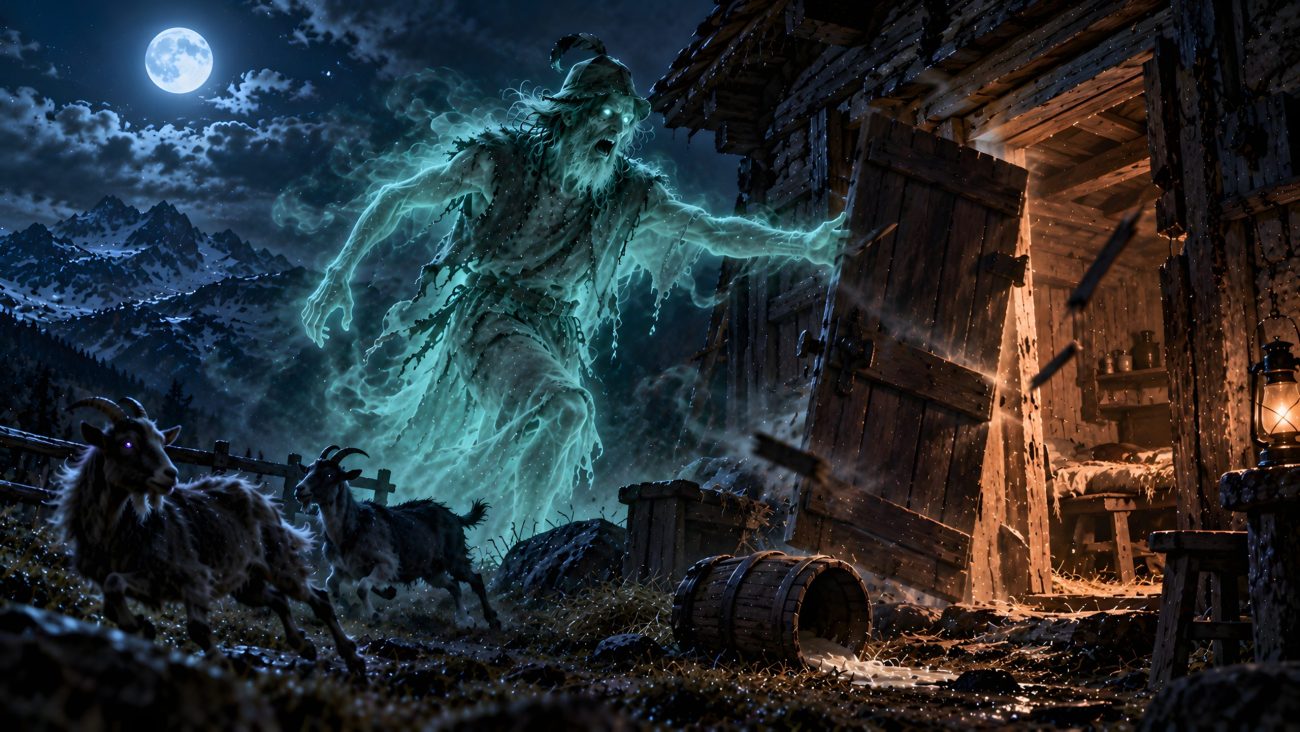
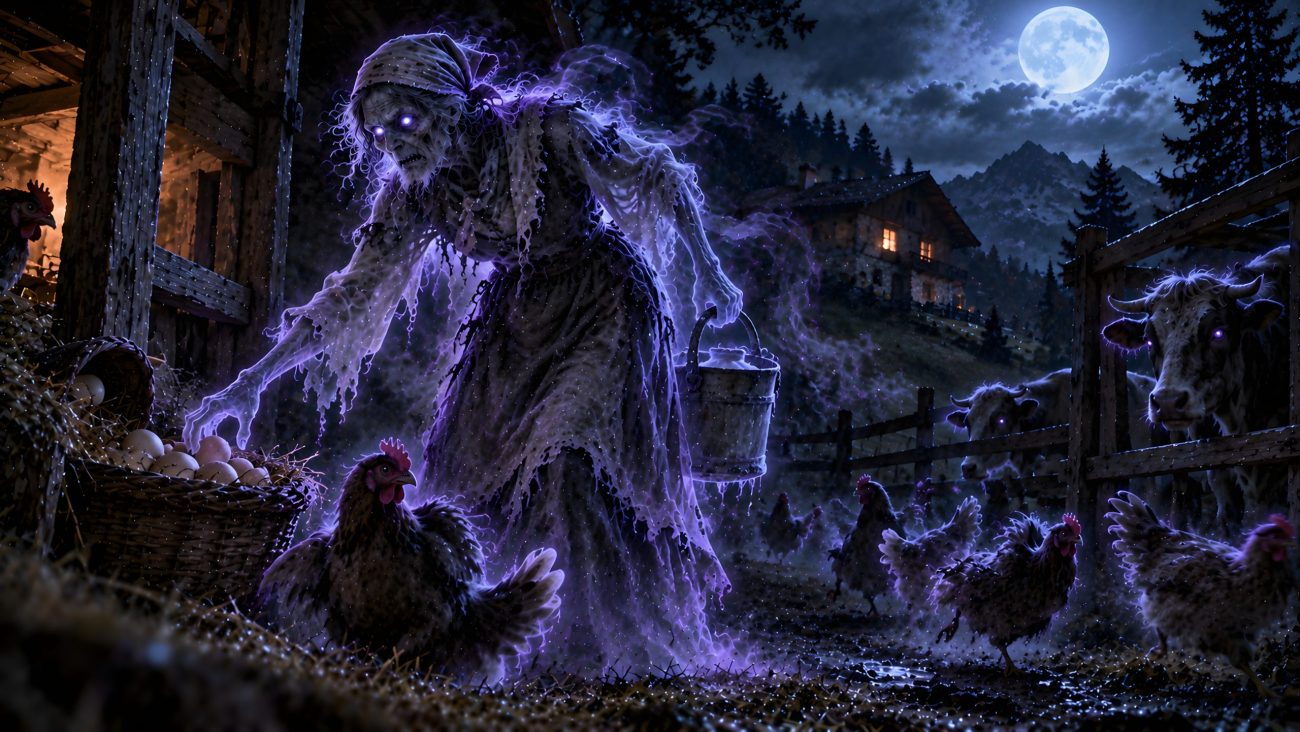
The farmer’s wife also committed a religious transgression by churning butter on Saturday nights, which were considered especially sacred. After her death, her spirit refused to rest. As her body was carried to the cemetery, she watched her own burial from an attic window. Her ghost then haunted the house for a long time, counting eggs during the night, crawling among the sleeping hens in the chicken coop, and milking the cows. Her restless activities disturbed both the livestock and the people who lived there.

Eventually, a priest cursed the spirit and banished her to Hötschenberg Mountain in Tyrol, where she was condemned to push clouds across the sky. Some people believed that the Wild Hunt had carried her away instead. Whatever her fate, her ghost was still said to wander distant places. Once, a feather merchant from the Osserland travelling through a haunted gorge in Tyrol encountered a figure as gray and thin as a spiderweb. The ghost brushed past him, repeatedly sighing that she was merely the Dumpling Farmer’s Wife from Wischowitz, still burdened by her restless existence after death.


Sources

“Die Knödelbäurin.” In Hans Watzlik, Böhmerwald-Sagen. Budweis: Böhmerwalder Dorfbücher, 1921, Heft 5. Reproduced by SAGEN.at. https://www.sagen.at/texte/sagen/tschechien/watzlik/knoedelbaeurin.html
Redeemed Hand

Tradition: Czech Mythology
Alternative Names: The Hand in the Cellar
Category: Ghost


The Myth

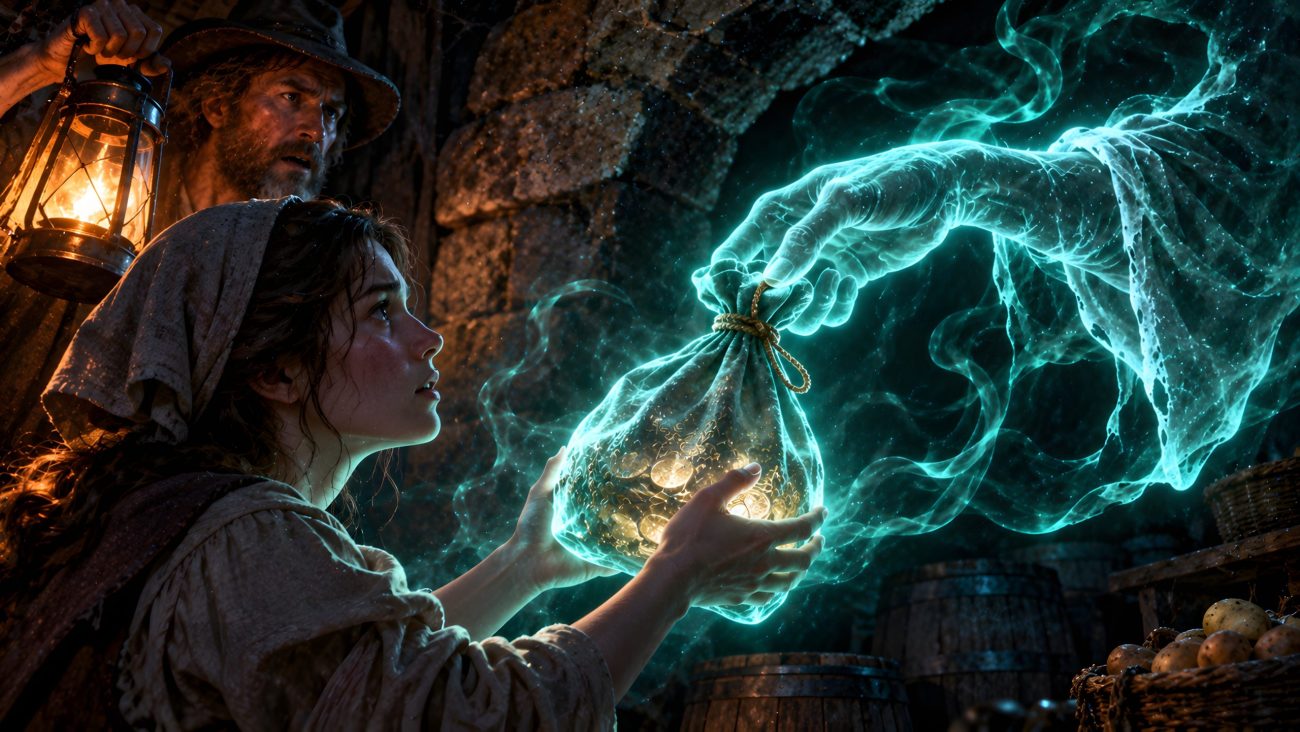
The Redeemed Hand is a mysterious supernatural apparition said to haunt the cellar of an inn on Saueben Hill, above the ruins of Bayreck Castle in the Bohemian Forest. Long ago, the innkeepers employed a maid who was once sent down into the cellar to fetch potatoes. There, she encountered a terrifying sight: a disembodied hand hanging in the darkness, holding a bag. A strange voice repeatedly whispered, “Take it, take it!” Frightened, the maid fled from the cellar, trembling with fear.

The maid told her father, who lived in a dilapidated cottage in the village of Dörrstein. He accompanied her back to the cellar, carrying a torch to illuminate the darkness. The mysterious hand and the bag appeared again before the maid, and the pleading voice once more urged her to take it. Her father, however, could see nothing unusual, even as he waved his torch around the cellar. Finally, the maid overcame her fear and took the bag from the hand.

As soon as she seized it, the voice sighed, “God bless you!” The disembodied hand immediately vanished, and the cellar became quiet. Inside the bag was a fortune in Swedish gold. The maid and her father used the treasure to purchase a beautiful farm in Austria. By accepting the mysterious bag, the maid had apparently fulfilled the spirit’s wish and released the hand from its supernatural burden, allowing it to disappear at last.


Sources

“Die erlöste Hand.” In Hans Watzlik, Böhmerwald-Sagen. Budweis: Böhmerwalder Dorfbücher, 1921, Heft 5. Reproduced by SAGEN.at. https://www.sagen.at/texte/sagen/tschechien/watzlik/erloestehand.html


Stilzel

Tradition: Czech Mythology
Alternative Names:
Category: Ghost


The Myth

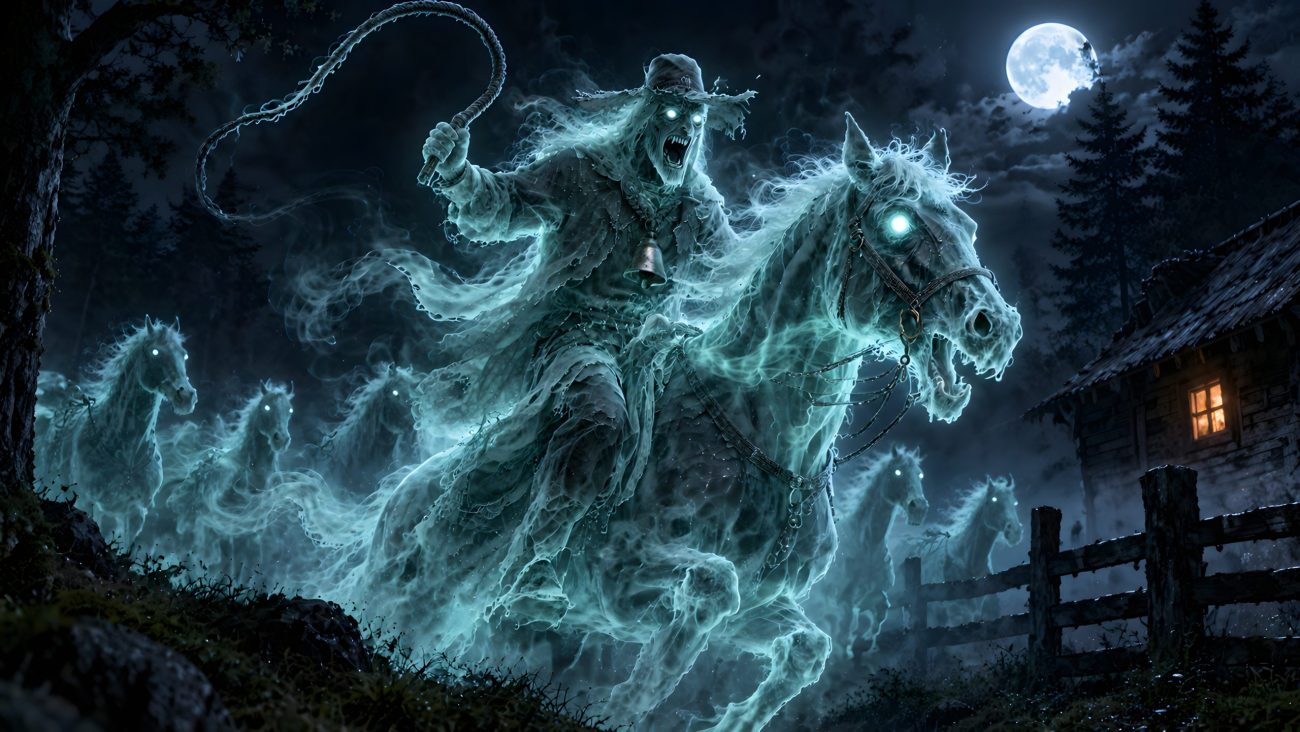
Stilzel was once a horse herder who worked for the farmers of Heuhof, near the Bavarian border. His difficult task was to drive a hundred horses into the forest pastures. One day, before returning home, he counted the herd to make sure none had wandered off into the vast woods. However, no matter how many times he counted, he could only account for ninety-nine horses because he kept forgetting which horse he was riding. Enraged by his failure, Stilzel cursed and swore so blasphemously that the stones seemed to fly toward the sky and the forest trees trembled. Finally, he stood upon his horse and hanged himself from a pine branch using his own whip.

After his death, Stilzel became a mischievous and terrifying spirit who haunts the forest at night. He cracks his whip and bellows like an entire herd of cattle, frightening border guards into believing that smugglers are driving livestock across the border into Bavaria. The guards rush out, hoping to catch the smugglers, only to become trapped in deep mud up to their forks. From somewhere nearby, Stilzel laughs like the devil at their misfortune. Wanderers who hear the forest roar are warned never to look behind them, for Stilzel may leap onto their backs and force them to carry him until they are exhausted, their chests heaving and their knees buckling.

Despite his frightening nature, Stilzel sometimes helps people who recognize his presence. Once, a farmer from Bärnlohe found that his wagon would not move, even though it carried no logs and his oxen could not pull it forward. Realizing that Stilzel was secretly pressing his fist against the wagon, the farmer shouted at the spirit to get off and help push. Immediately, the wagon became light and rolled forward as if moving by itself.

Stilzel is also associated with the Saumühle, an old mill between Flöß and Heuhof where he once herded horses. According to the legend, the supernatural herdsman carried the entire mill there himself on his back. His stories portray him as a powerful, unpredictable spirit who delights in frightening travellers and tricking those who enter his forest, but who can also be persuaded to lend a helping hand.


Sources

“Stilzel.” In Hans Watzlik, Böhmerwald-Sagen. Budweis: Böhmerwalder Dorfbücher, 1921, Heft 5. Reproduced by SAGEN.at. https://www.sagen.at/texte/sagen/tschechien/watzlik/stilzel.html


Weihizer

Tradition: Czech Mythology
Alternative Names: The Weihizer
Category: Ghost


The Myth

The Weihizer is the ghost of a wealthy but dishonest innkeeper who once lived in Neukirchen in the Bohemian Forest. He cheated his customers by pouring only as much drink as he could fit his unusually long thumb into the jug. Through this trick, he accumulated an enormous fortune. One day, he challenged his servant Girgel to cut as much straw from dawn until dusk as the innkeeper possessed money. If Girgel succeeded, he would receive ten guilders; if he failed, he would have to pay the innkeeper the same amount. Girgel worked tirelessly and produced a huge pile of straw, but the innkeeper’s mountain of money was even larger. The poor servant lost his ten guilders, which the wealthy man simply tossed onto his enormous pile of silver.

The innkeeper was said to possess supernatural abilities, including the power to be in two places at once. When the hay was being brought in, he could be seen in the meadow and inside the barn simultaneously. As he grew old, he tried to ease his conscience for the harm he had inflicted on the poor. He ordered a gigantic bell to be cast, so wide that eight couples could dance beneath it. Yet the bell could not save him, because not a single honest penny had been used to pay for it.

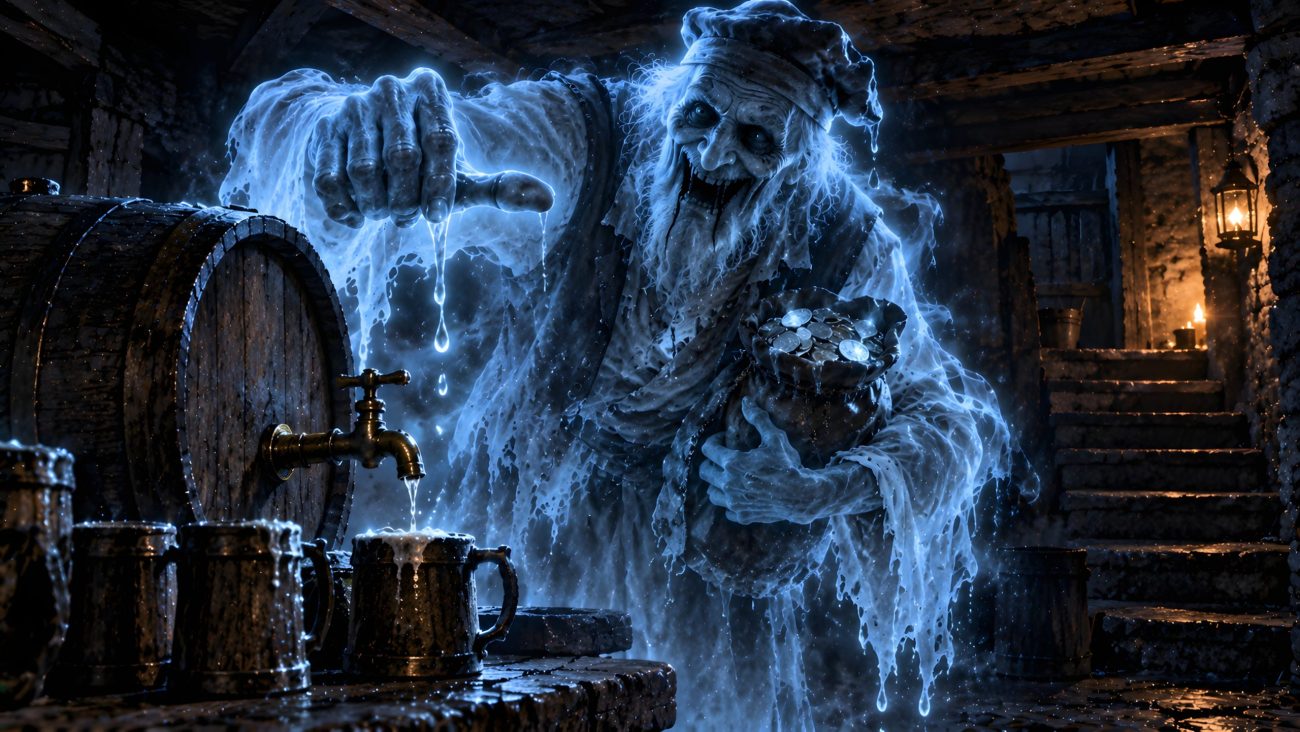
After his death, the innkeeper could not rest in his grave. As punishment for his dishonesty, he was condemned to raise mysterious fires and sit on the cellar stairs. Before the Angelus bell rang, he was forbidden to harm anyone. Afterward, however, his ghost tormented those who came to fetch beer. The beer would not flow from the barrel because the innkeeper sat upon it, holding his purse. At night, cattle often cried out in terror, and farmhands who rushed outside discovered the stable doors standing open while the cows trembled and staggered around the yard.

One night, a travelling priest stopped at the inn, but nobody dared fetch him beer from the cellar. The priest descended himself to banish the ghost, making the sign of the cross three times. The ritual failed, and the Weihizer leapt from the barrel and struck the priest on the head with his purse, knocking him down. Desperate to rid themselves of the troublesome spirit, the people summoned the Bishop of Regensburg. The bishop finally took the ghost away to the wilderness of Switzerland, ending its haunting of the inn.


Sources

“Der Weihizer.” In Hans Watzlik, Böhmerwald-Sagen. Budweis: Böhmerwalder Dorfbücher, 1921, Heft 5. Reproduced by SAGEN.at. https://www.sagen.at/texte/sagen/tschechien/watzlik/weihizer.html


Rofner Berg Ghost

Tradition: Liechtenstein Mythology
Alternative Names: The White-Cloaked Knight of Rofner Berg
Category: Ghost


The Myth

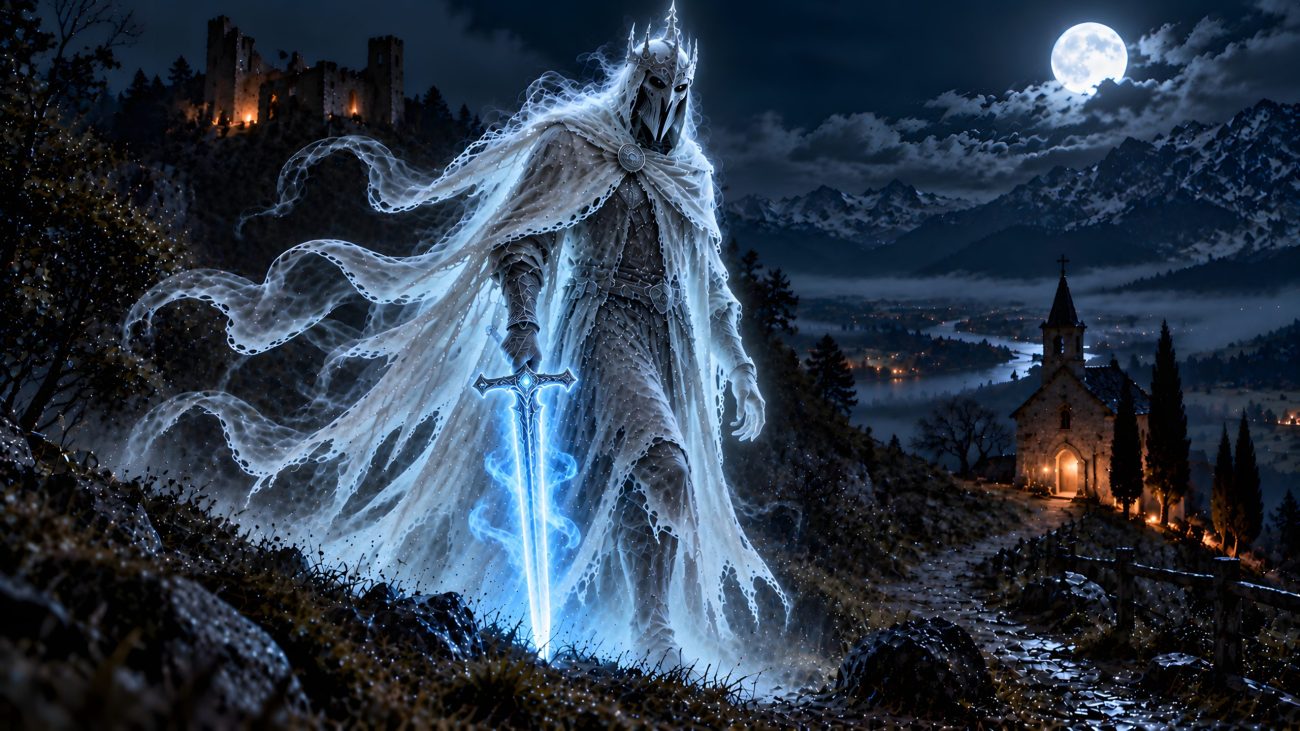
The Ghost on Rofner Berg is a mysterious apparition said to appear at night on the southern slope of the Schellenberg in Liechtenstein. The ghost takes the form of a man wearing a white cloak and wanders between the Rofner Chapel and the wooded hill known as the Schneller, where Eschnerburg Castle once stood. From this lonely hillside, the surrounding Rhine plain stretches toward the towering mountains, but after nightfall, the area is haunted by the figure of a restless knight.

According to the legend, the apparition is a knight who killed his own brother in a fit of rage. Because his sudden and violent deed went unjudged during his lifetime, he could never find peace after death. His spirit remains condemned to wander the hillside, passing between the former castle and the chapel century after century. The white-cloaked knight continues his endless journey, unable to rest in his grave because the crime he committed was never brought before a judge.


Sources

“Der Geist.” SAGEN.at – Liechtensteiner Sagen. Reproduced by SAGEN.at. https://www.sagen.at/texte/sagen/liechtenstein/geist.htm


White Horse from Malans

Tradition: Liechtenstein Mythology
Alternative Names: The White Horse of Malanser
Category: Ghost


The Myth

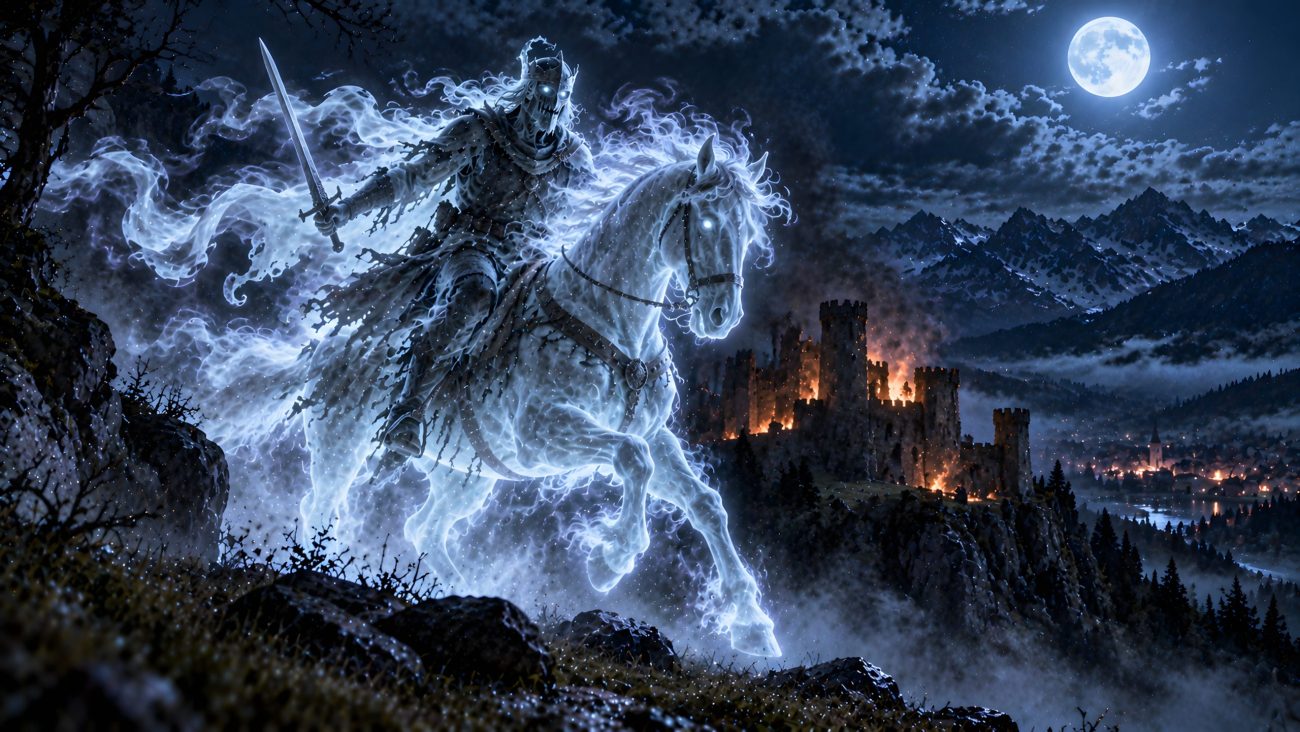
The White Horse from Malans is a ghostly apparition said to haunt the Malanser hill above Eschen, where the ruins of a once-great castle still stand. Long ago, a robber knight lived in the castle with a band of armed followers. They terrorized the surrounding region, threatening the people of Eschen and Mauren with their raids and robberies.

Eventually, the farmers of Eschen and Mauren formed an alliance to put an end to the knight’s rule. They planned to attack the castle on a Sunday evening and set it on fire while its defenders were unaware. When the day arrived, the farmers marched up to the heights and ignited the castle at nine o’clock. The knight and his men-at-arms were heavily drunk and failed to notice the flames until the fire had spread too far. All the armed men perished in the burning castle, but the knight managed to escape on his white horse.

The farmers pursued the fleeing knight as he raced across the heights. In his desperation, he rode too close to a cliff and plunged over the edge with his horse. Yet the knight’s story did not end with his death. According to the legend, his restless spirit must continue to haunt the Malanser hill, riding his white horse through the area until he has made amends for all the harm he caused during his life.


Sources

“Die Malanser.” SAGEN.at – Liechtensteiner Sagen. Reproduced by SAGEN.at. https://www.sagen.at/texte/sagen/liechtenstein/malanser.htm


Robber Knights of Schalun Castle

Tradition: Liechtenstein Mythology
Alternative Names: The Two Haunting Knights of Schalun
Category: Ghost


The Myth

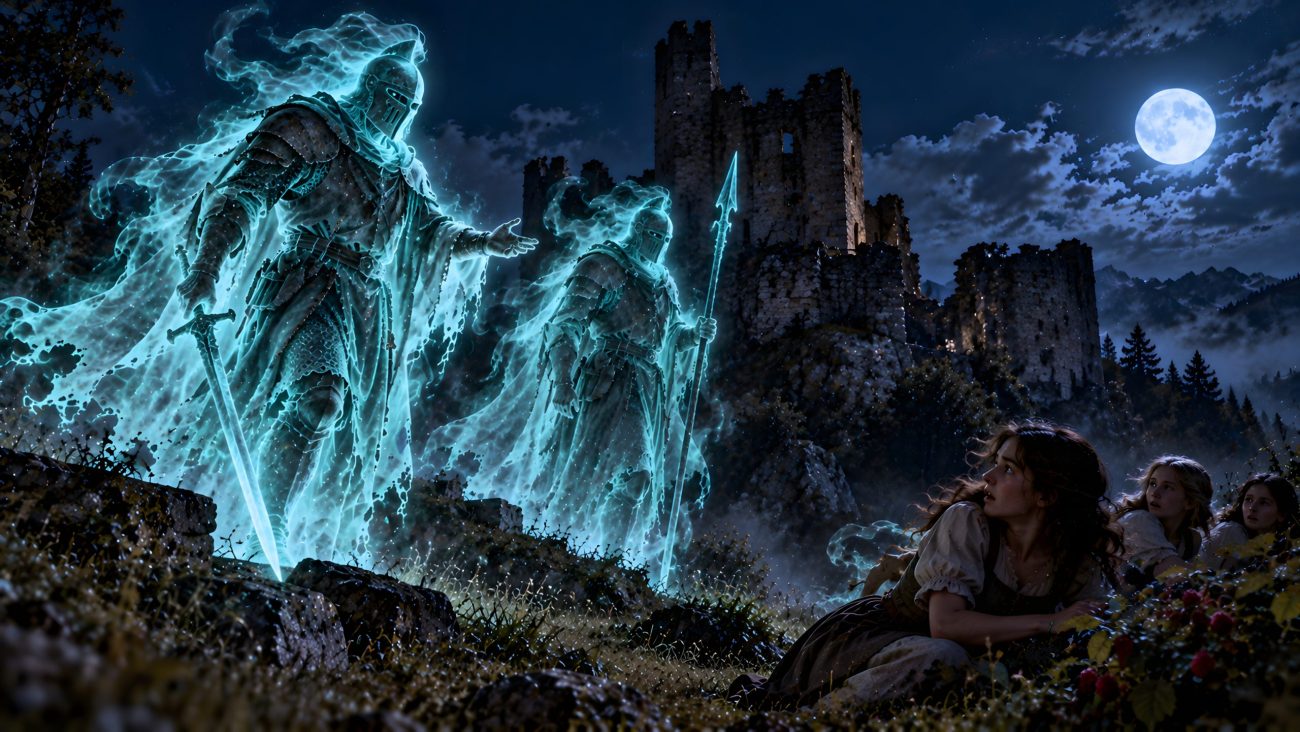
The Robber Knights of Schalun Castle are said to haunt the ruins of the castle on the Feast of the Assumption. Many hundreds of years ago, on this holy day, a group of girls climbed up to Schalun Castle to pick raspberries. While gathering fruit, they suddenly noticed two knights pacing nearby. One of the knights called out to them, inviting them to come closer. Frightened by the mysterious men, the girls immediately fled.

When the girls looked back, the two knights had vanished without a trace. They hurried home and told their families what they had seen and heard. Their strange encounter gave rise to a local legend about the former robber knights of Schalun Castle.

According to the tale, the robber knights met their destruction around the Feast of the Assumption. Since that time, two of them have been said to return as ghosts every year on the same feast day, appearing near the old castle and haunting the surrounding area. Their mysterious appearances continue to connect the ruins of Schalun with the memory of the knights who once lived there.


Sources

“Die Raubritter.” SAGEN.at – Liechtensteiner Sagen. Reproduced by SAGEN.at. https://www.sagen.at/texte/sagen/liechtenstein/raubritter.htm


Mauren Ghost

Tradition: Liechtenstein Mythology
Alternative Names: The Pledge Well
Category: Ghost


The Myth

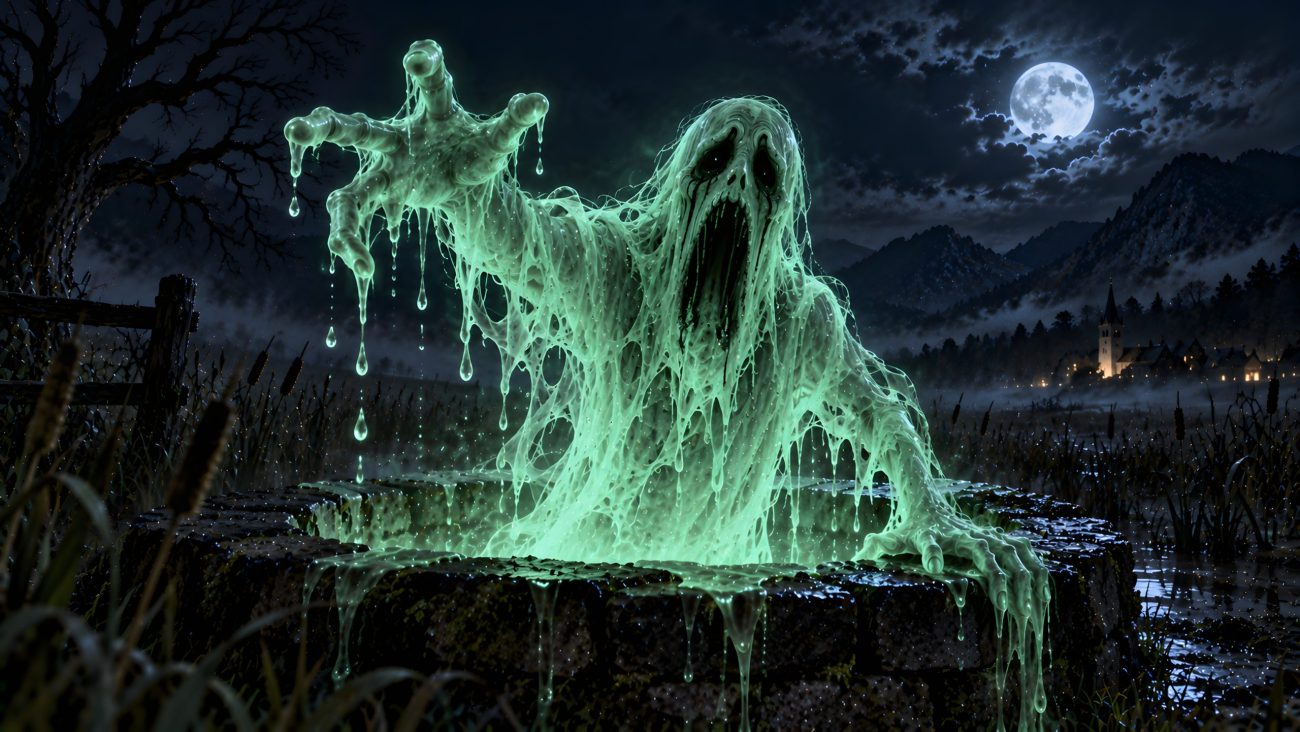
The Payment Fountain is a haunted well in the rushes of Mauren, Liechtenstein. In ancient times, a godless usurer and swindler lived nearby. He exploited the desperation of his poor fellow citizens by lending them money under unfair conditions. For every hundred he promised to lend, he would provide only fifty or, at most, eighty, keeping the difference for himself. Through these dishonest dealings, he grew wealthy at the expense of those who were already struggling.

After his death, the usurer’s ghost began haunting the well, where it has reportedly been seen repeatedly. The apparition serves as a warning against greed, usury, and the exploitation of the poor. Sometimes, strange murmuring sounds rise from the water, believed to be the ghost repeating the words of his dishonest trade: “Eighty for one hundred.”

Another version tells that the usurer met a terrible end while returning home. He strayed from the road and sank into the marshy ground that once surrounded the area. The mire slowly swallowed him, dragging him deeper and deeper until escape became impossible. At last, only one outstretched hand remained visible above the ground before he disappeared entirely. His ghost is said to haunt the well as a reminder that dishonest dealings and greed can bring a person to a dreadful end.


Sources

“Der Pfandbrunnen.” SAGEN.at – Liechtensteiner Sagen, collected by Otto Seger. Reproduced by SAGEN.at. https://www.sagen.at/texte/sagen/liechtenstein/seger/pfandbrunnen.html


Ghost in the Riethütte

Tradition: Liechtenstein Mythology
Alternative Names: The Haunting of the Riet Hut
Category: Ghost


The Myth

The Ghost in the Riethütte is said to haunt an old shepherd’s hut near Ziegerberg in Liechtenstein. In earlier times, farmers from Balzers kept large flocks of sheep and drove them up the mountain for summer grazing. Two boys were usually employed to watch the sheep, and each was given one or two goats so they could have milk while staying in the mountains.

One evening, two young shepherds went out to search for their missing goats. As they searched, they heard a strange voice nearby, groaning and sighing, but they could see no one. Terrified, they rushed back into the hut. The eerie voice grew closer and closer until, suddenly, it fell completely silent. Then the hut door began banging open and shut with tremendous force, making such a noise that the beams shook and crashed.

According to the legend, a herdsman who once lived in the Riethütte had committed a terrible crime. In a fit of anger, he killed a boy because the child had repeatedly licked his cream. To conceal the murder, the herdsman carried the boy’s body away from the hut. But the crime did not go unpunished. The herdsman was condemned to haunt the place, and the groaning voice and violent disturbances were believed to be signs of his restless spirit.


Sources

“Geisterspuk.” SAGEN.at – Liechtensteiner Sagen, collected by Otto Seger. Reproduced by SAGEN.at. https://www.sagen.at/texte/sagen/liechtenstein/seger/geisterspuk.html


Spirit on Gapfahl

Tradition: Liechtenstein Mythology
Alternative Names: The Headless Spirit of Gapfahl
Category: Ghost


The Myth

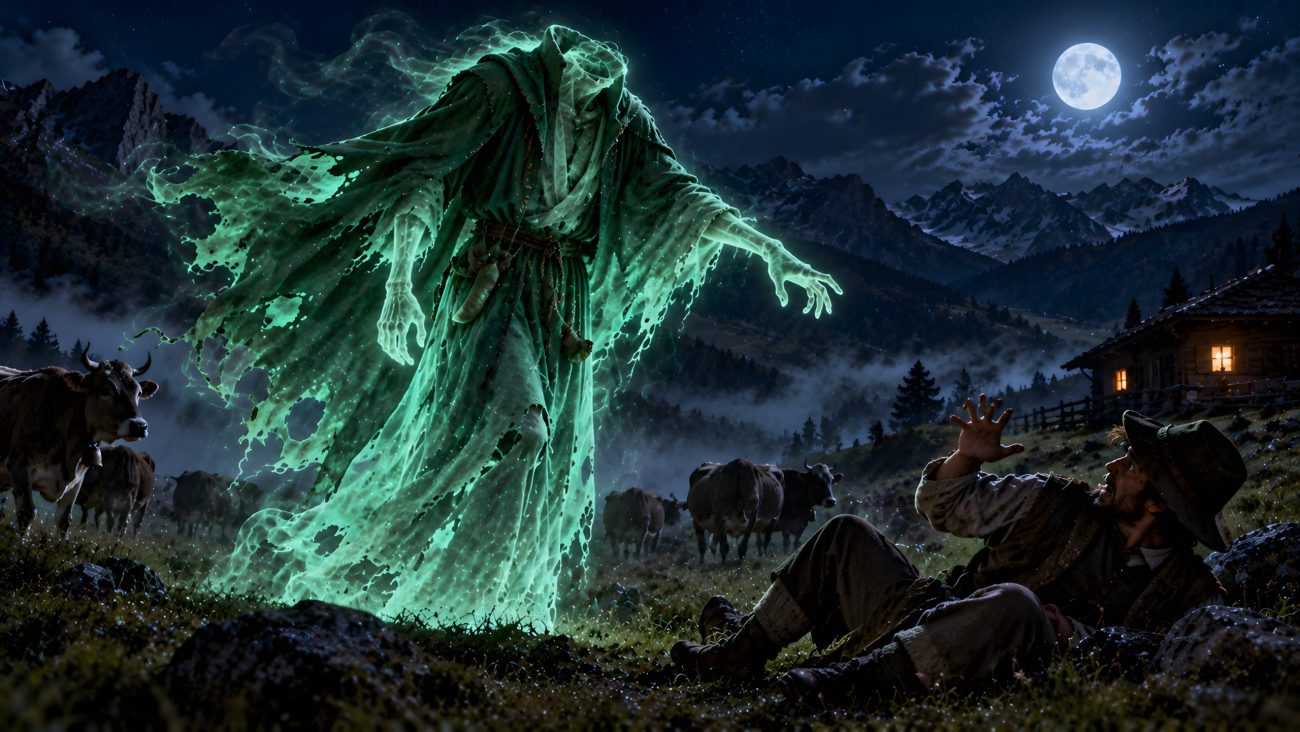
The Spirit on Gapfahl is a headless ghost said to haunt the alpine pastures of Liechtenstein. It appears as a slender figure wearing a green cloak, but without a head. Those who encounter the apparition are overcome with terror. One cowherd experienced this while tending his cattle on the pasture. As he rested on a stone before returning to the alpine hut, he suddenly saw the headless figure standing before him. His face turned as white as chalk, and he stumbled back to the hut in such a state of shock that everyone who saw him was horrified. It took him an hour before he could speak and describe what had happened.

The ghost’s origin lies in a terrible act of violence committed long ago. A hot-tempered herdsman once killed a boy by beheading him with a forest axe. The boy’s unfortunate soul could find no peace after his violent death. Condemned to wander the land without a head, his ghost continues to haunt Gapfahl, appearing to those who venture across its lonely alpine pastures.


Sources

“Der Geist auf Gapfahl.” SAGEN.at – Liechtensteiner Sagen, collected by Otto Seger. Reproduced by SAGEN.at. https://www.sagen.at/texte/sagen/liechtenstein/seger/gapfahl.html