Krummau Monk

Tradition: Czech Mythology
Alternative Names: The Head That Sought Confession
Category: Ghost


The Myth

A monk from the monastery in Krummau once set out on a pilgrimage to the Virgin Mary at Gojau. He intended to arrive at the Church of Our Lady and confess something that troubled his conscience. Before nightfall, however, he had to pass through a dangerous forest known for its robbers. As he made his way along the path, a band of robbers suddenly sprang from the thicket and attacked him. One of them struck him so fiercely with a sword that his head was severed from his neck.

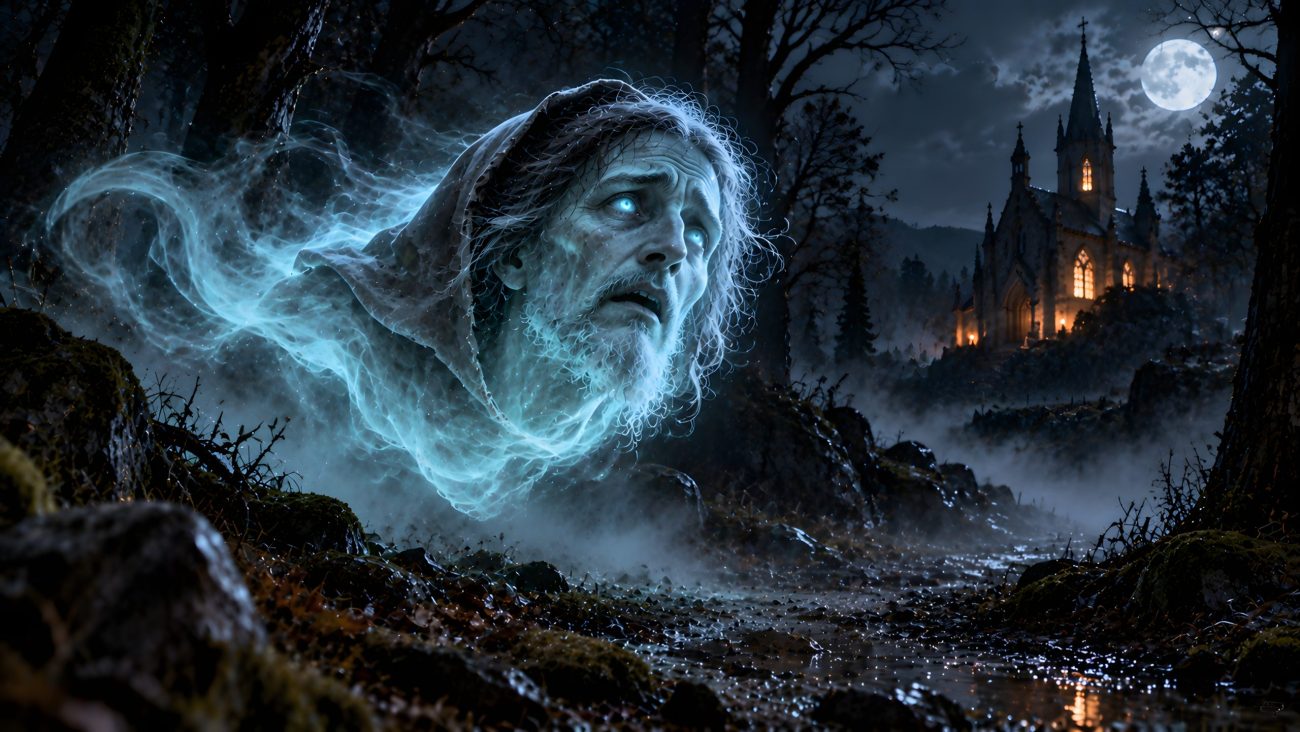
Although the monk’s body lay dead, his bloody head continued to live. It rolled along the forest paths, tumbling both uphill and downhill, and even floated through streams. Wherever it went, it uttered the same desperate plea: “Confess! Confess!” Unable to find peace, the severed head continued its strange pilgrimage toward the holy church.

At last, the head reached the Church of Our Lady in Gojau. There, a priest heard its confession and granted absolution. Only after the monk’s sins had been forgiven did the bloody head finally die, ending its terrible journey. The legend tells of a soul so burdened by its conscience that even death could not prevent it from seeking forgiveness.


Sources

Watzlik, Hans. “Die wilde Wallfahrt.” In Böhmerwald-Sagen. Budweis: Böhmerwalder Dorfbücher, 1921, Heft 5. Reproduced by SAGEN.at. https://www.sagen.at/texte/sagen/tschechien/watzlik/wildewallfahrt.html
Lake Rachel Ghost

Tradition: Czech Mythology
Alternative Names: The Penitents of Lake Rachel
Category: Ghost


The Myth

Lake Rachel lies in a dreadful basin on the slopes of Mount Rachel, a place feared and avoided by shepherds and hunters alike. Deep beneath its dark waters, Pontius Pilate is condemned to atone eternally for the suffering inflicted upon Jesus Christ under his rule. His punishment continues unseen at the bottom of the lake, far from the world of the living.

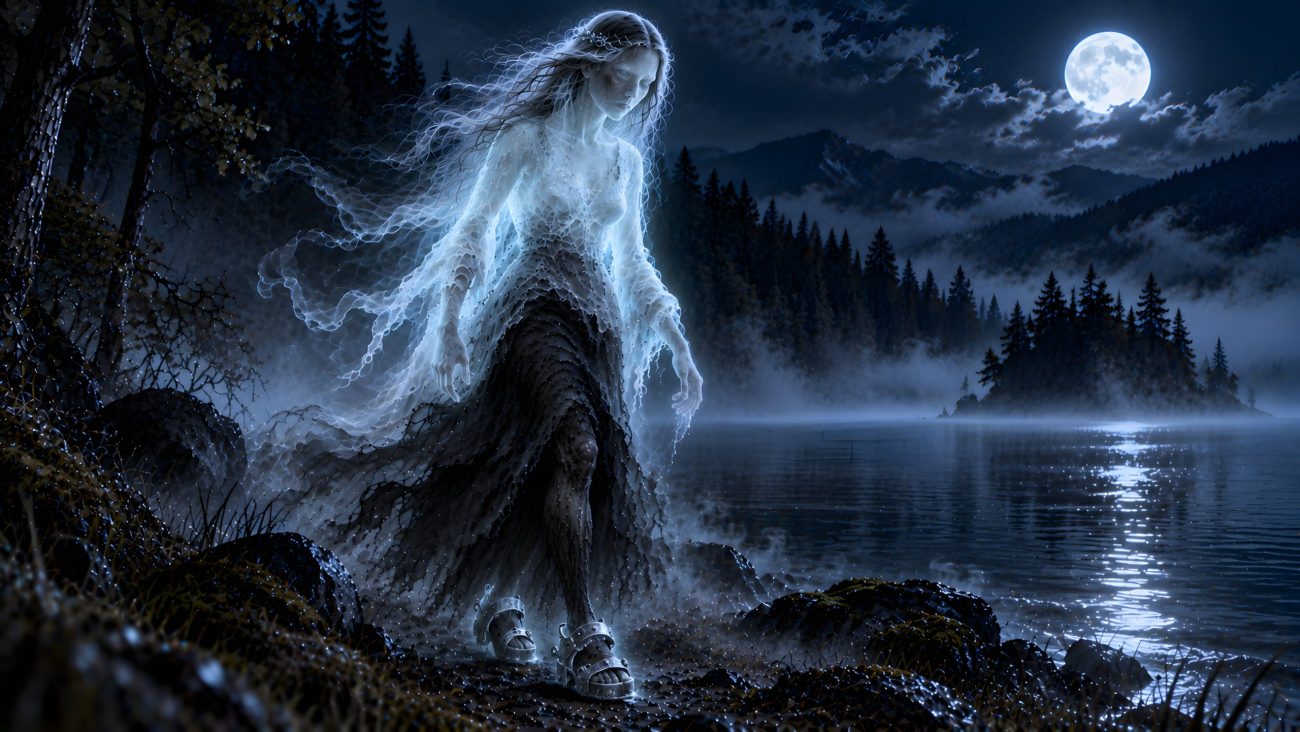
Three maidens are also enchanted within Lake Rachel, condemned to suffer for their sins. One of them murdered her maidservant with a slipper while she was alive. For this terrible crime, she must wear iron slippers as punishment. On Midsummer’s Eve, she is permitted to swim ashore and remove them, leaving the heavy footwear upon a stone.

Under the moonlight, the maiden wanders barefoot through the forest. Her body bears the marks of her punishment: her lower half remains black, while her face and breasts have become white again. This change reveals that she has already partially atoned for her terrible sin, though her penance is not yet complete.

The lake remains a place of sorrow, where condemned souls endure their punishments in the hope of redemption. The legend ends with a prayer that God may grant rest to all lost souls.


Sources

Watzlik, Hans. “Die Büßer.” In Böhmerwald-Sagen. Budweis: Böhmerwalder Dorfbücher, 1921, Heft 5. Reproduced by SAGEN.at. https://www.sagen.at/texte/sagen/tschechien/watzlik/buesser.html


Holmberg forest Ghost

Tradition: Czech Mythology
Alternative Names: The Stranger of Holmberg
Category: Ghost


The Myth

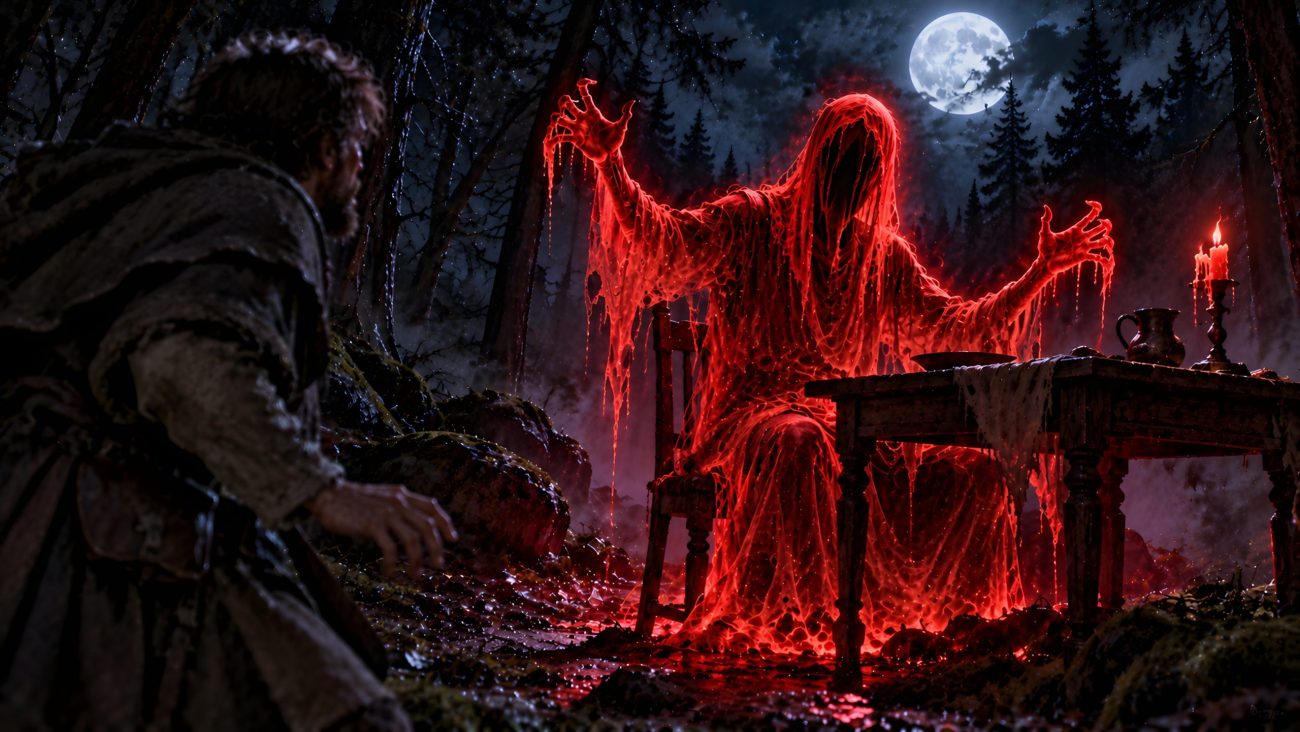
The Threat is a sinister apparition that appears in the forests of Holmberg in the middle of the night. It takes the form of a strange man with an unrecognizable face, sitting alone at a table beneath the moonlight. Its presence is eerie and threatening, and those who encounter it may be marked for death.

One night, a messenger had to cross Holmberg after midnight. Deep in the forest, he discovered a table standing in the moonlight, with the mysterious stranger seated behind it. As the messenger attempted to pass, the figure suddenly raised both arms and threatened him. Overcome with dread, the messenger hurried past with his eyes lowered, too frightened to look at the apparition.

Three days later, the messenger was dead. The encounter with the stranger had seemingly foretold his death, leaving the mysterious figure as a terrifying omen lurking in the moonlit forest.


Sources

Watzlik, Hans. “Die Drohung.” In Böhmerwald-Sagen. Budweis: Böhmerwalder Dorfbücher, 1921, Heft 5. Reproduced by SAGEN.at. https://www.sagen.at/texte/sagen/tschechien/watzlik/drohung.html


Father Michael

Tradition: Czech Mythology
Alternative Names: The Ghost of the Princely Room
Category: Ghost


The Myth

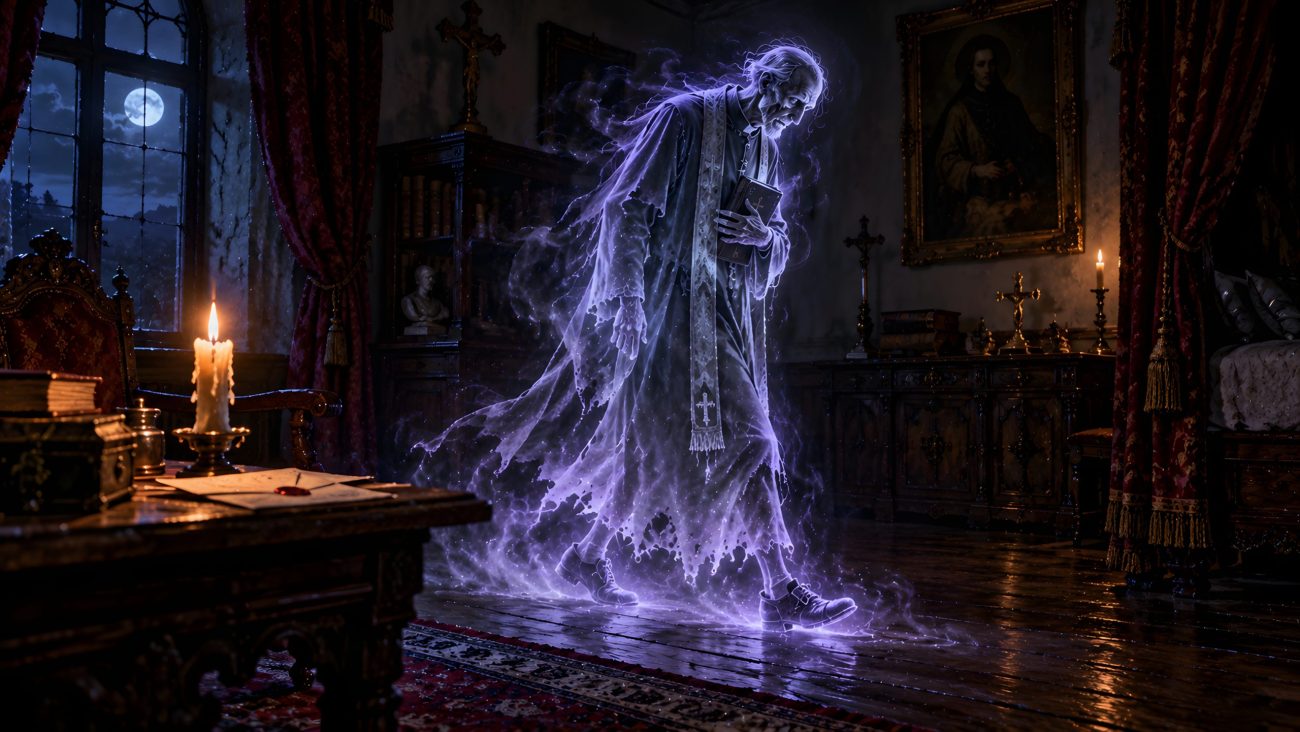
In Andreasberg, the ghost of a deceased priest haunted the princely room of the local parsonage. He was believed to have died in a grave sin, for even after death he could find no peace. At night, his spirit paced back and forth across the room, his shoes creaking against the floor as though he were endlessly rehearsing a sermon from memory.

Father Michael, who had known the dead priest well, decided to discover what troubled the restless spirit. He wrote two letters and placed them in the haunted room. In the first, he asked the ghost to reveal its desires and explain how its soul might be redeemed. In the second, he declared that if the priest’s soul could not be saved, he would have the apparition removed from the world. That evening, Father Michael locked the room and kept the key himself.

When he returned the following morning, the second letter had mysteriously disappeared. From that day onward, the ghost was never heard or seen in the princely room again. The silence deeply affected Father Michael, who became withdrawn and renounced the pleasures of worldly life. He devoted himself to a more austere existence, and when he eventually died, people regarded him as a saint. Even a hundred years after his burial, his body was said to remain undecayed, a sign of his exceptional holiness.


Sources

Watzlik, Hans. “Pater Michael.” In Böhmerwald-Sagen. Budweis: Böhmerwalder Dorfbücher, 1921, Heft 5. Reproduced by SAGEN.at. https://www.sagen.at/texte/sagen/tschechien/watzlik/patermichael.html


Night Monk

Tradition: Czech Mythology
Alternative Names: The Twelve Night Monks
Category: Ghost


The Myth

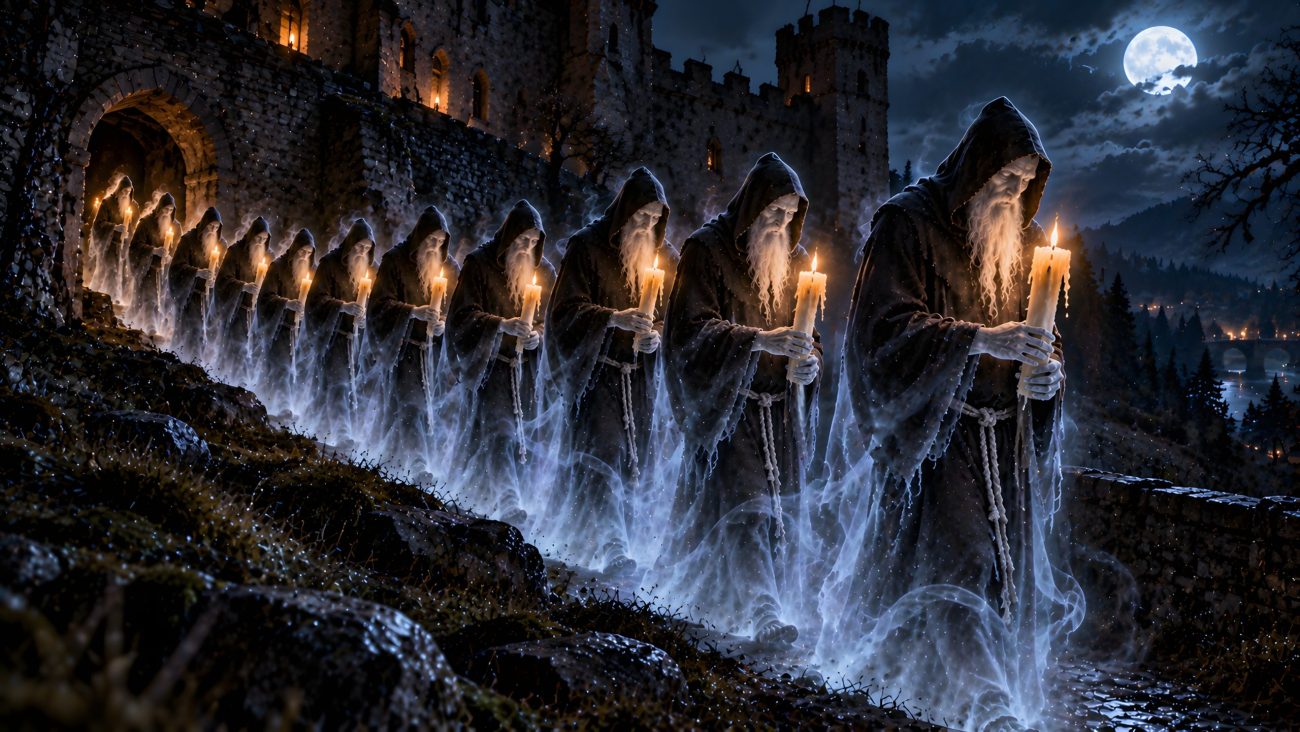
The Night Monks are mysterious apparitions that appear around Gratzen Castle, emerging from beneath its walls under the light of the moon. They are twelve in number, dressed in dark robes tied with ropes around their waists. Their beards are long and ice-gray, their faces snow-white, and their eyes are always cast toward the ground. Each carries a tall, burning candle in his hands.

One night, in the castle’s red tower, a woman who had recently given birth slept beside her newborn child while the midwife kept watch. Looking out of the window, the woman saw the moonlight shining brilliantly across the castle wall. Suddenly, the wall below opened, revealing subterranean steps from which the twelve monks slowly ascended.

Without speaking or making a sound, the monks marched past the ancient castle. They passed straight through its solid walls as effortlessly as if they were moving through cobwebs, then vanished into the darkness. Their ghostly appearance filled the castle’s warden with dread, and he feared that the mysterious procession was a warning of some terrible misfortune to come.


Sources

Watzlik, Hans. “Die Nachtmönche.” In Böhmerwald-Sagen. Budweis: Böhmerwalder Dorfbücher, 1921, Heft 5. Reproduced by SAGEN.at. https://www.sagen.at/texte/sagen/tschechien/watzlik/nachtmoenche.html


Poor Soul

Tradition: Czech Mythology
Alternative Names: Restless Lights
Category: Ghost


The Myth

The Poor Souls are mysterious spirits that appear as blue lights wandering across the mossy forest floor in the Bohemian Forest. One night, children from Seewies were roaming through the woods when they encountered these strange lights sweeping back and forth in the darkness. Frightened by the sight, they fled until they reached a hermitage, where an ice-gray hermit knelt in prayer.

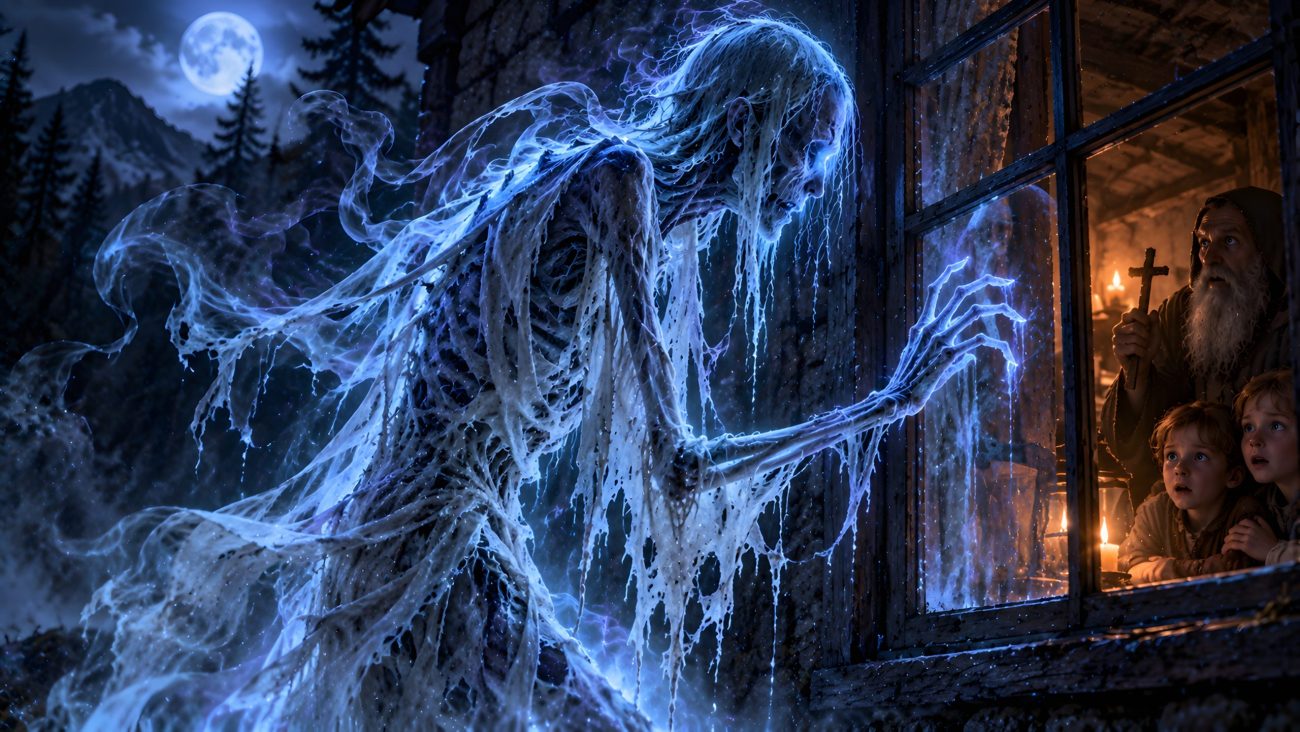
Inside the hermitage, the children gradually regained their courage. They began pointing at the restless lights and calling them all sorts of names. But their mockery angered the spirits. Suddenly, the blue lights appeared directly outside the window and began pounding against it so violently that the entire building rattled. The children’s courage vanished, and they crawled beneath the hermit’s long beard, desperately begging him to protect them.

The hermit told the children to gather all the breadcrumbs they could find and scatter them in front of the door. They eagerly followed his instructions, offering the crumbs to the wandering lights. Once the spirits had been fed, they calmed down and soon disappeared, returning to their distant wanderings across the moss.

The legend teaches that even a humble offering can soothe restless spirits, while mocking or provoking them may bring fear and trouble upon those who encounter them.


Sources

“Arme Seelen.” In Hans Watzlik, Böhmerwald-Sagen. Budweis: Böhmerwalder Dorfbücher, 1921, Heft 5. Reproduced by SAGEN.at. https://www.sagen.at/texte/sagen/tschechien/watzlik/armeseelen.html


Simandlin

Tradition: Czech Mythology
Alternative Names: The Ghost of Simandel’s Wife
Category: Ghost


The Myth

Beneath an old oak tree in the Seewieser court lies the grave of the farmer’s wife known as Simandlin. She was a wicked and quarrelsome woman who gave neither her husband nor her neighbours any peace. Her sharp tongue was said to sting worse than thistles and thorns, making life miserable for everyone around her.

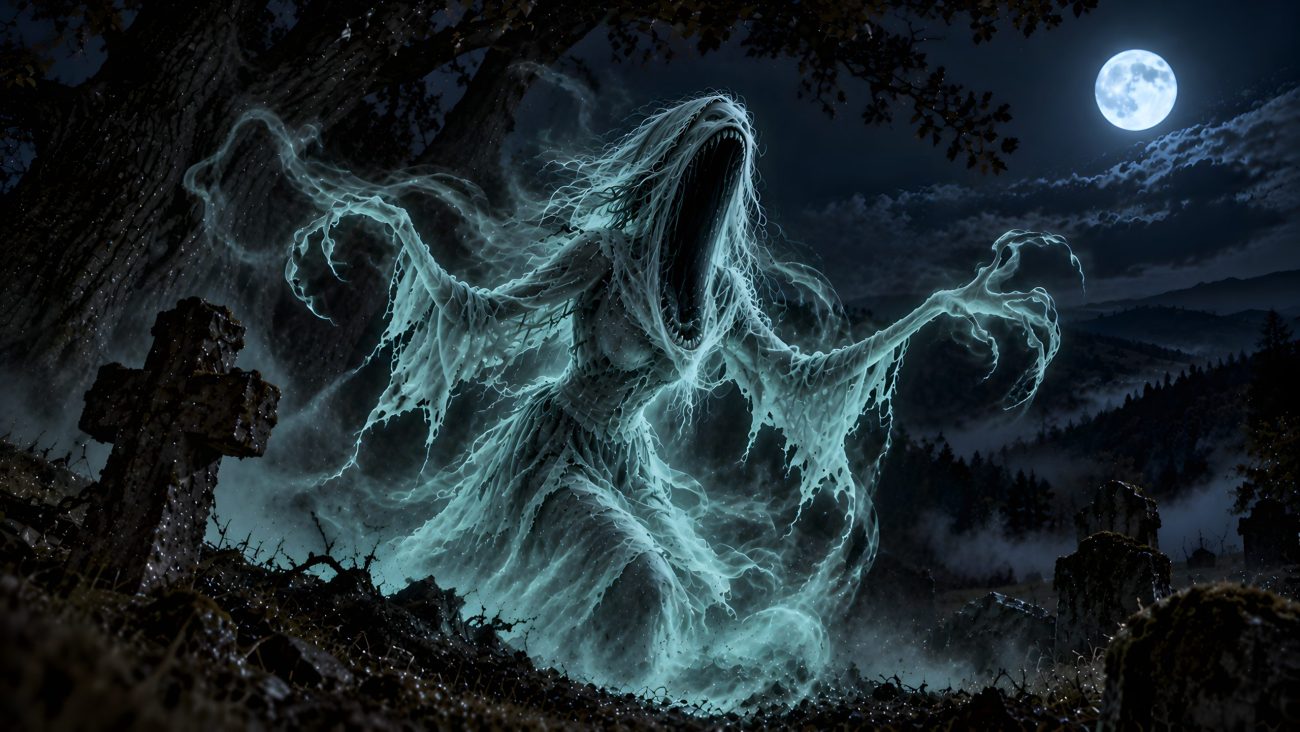
When Simandlin died, she refused to remain quietly in her grave and attempted to haunt the living. Her restless spirit proved so troublesome that a single clergyman could not banish her. It took a bishop and eight priests working together to finally force her into the grave and bring her peace underground.

Yet the haunting was not believed to be over forever. According to the legend, after a hundred years had passed, Simandlin’s spirit would return to trouble the living once more. The century was said to be drawing to a close, and people feared that the wicked farmer’s wife would soon rise again. Her tale survives alongside the warning that a wicked woman can be worse than bad weather in the sky.


Sources

“Das Fegefeuer.” In Hans Watzlik, Böhmerwald-Sagen. Budweis: Böhmerwalder Dorfbücher, 1921, Heft 5. Reproduced by SAGEN.at. https://www.sagen.at/texte/sagen/tschechien/watzlik/fegfeuer.html


Panzer Man

Tradition: Czech Mythology
Alternative Names: The Penitent of Panzer Mountain
Category: Ghost


The Myth

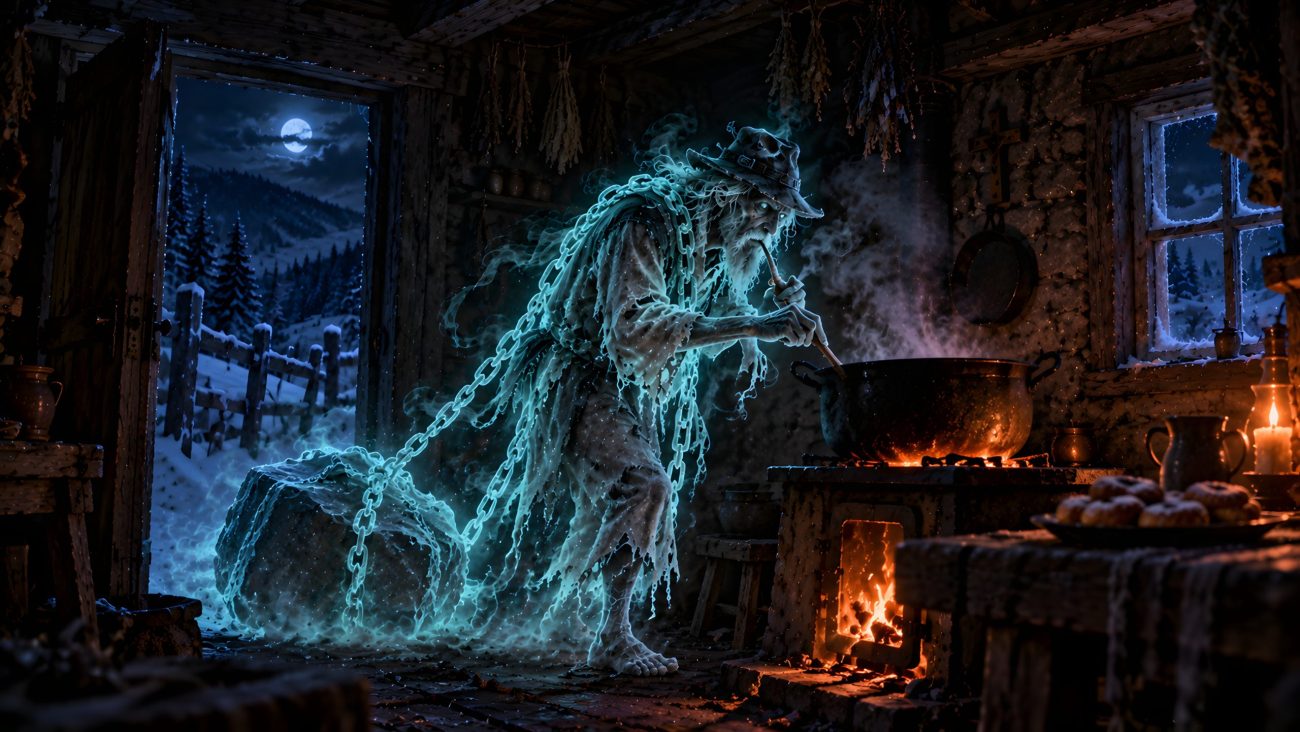
The Panzer Man is the restless spirit of a small farmer who once lived high on Panzer Mountain in the Bohemian Forest. After his death, he was condemned to atone for his sins for many years. His ghost remained in a lonely hut on the mountain, where he could be seen moving about beside the stove, cooking food and smoking his pipe.

One Christmas Eve, a farmer from Rueperlhof challenged his family to fetch a milk-carton lid from the Panzer Man. He promised that whoever dared to visit the spirit would receive the finest cow in his barn. A young woman accepted the challenge, hoping to win the beautiful animal. Despite the deep snow, bitter cold, night, and fog, she climbed the mountain until she reached the penitent’s hut. A light shone through the window, and inside she found the deceased farmer moving about the stove. She greeted him politely, and he seemed to have been expecting her. Before she had even finished explaining why she had come, he handed her the milk-carton lid.

The little man then invited the young woman to eat with him. Everything cooking on the stove appeared black and burnt, so she hesitated. The spirit reassured her, telling her to make the sign of the cross over the food before eating. She obeyed, and together they made many delicious doughnuts. Afterward, she returned exhausted to the farm and showed the milk-carton lid to the farmer, who had just returned from church.

Instead of rewarding her, the farmer became angry and claimed that the promised cow had only been a joke. He refused to give her anything for her dangerous journey. The following morning, however, his finest cow was found dead on the straw. The farmer’s broken promise had brought him misfortune, while the Panzer Man remained a mysterious penitent whose supernatural presence could not be dismissed as a mere joke.


Sources

“Das Panzermännlein.” In Hans Watzlik, Böhmerwald-Sagen. Budweis: Böhmerwalder Dorfbücher, 1921, Heft 5. Reproduced by SAGEN.at. https://www.sagen.at/texte/sagen/tschechien/watzlik/panzermaennlein.html


Ghost Church

Tradition: Czech Mythology
Alternative Names: The Midnight Mass of the Dead
Category: Ghost


The Myth

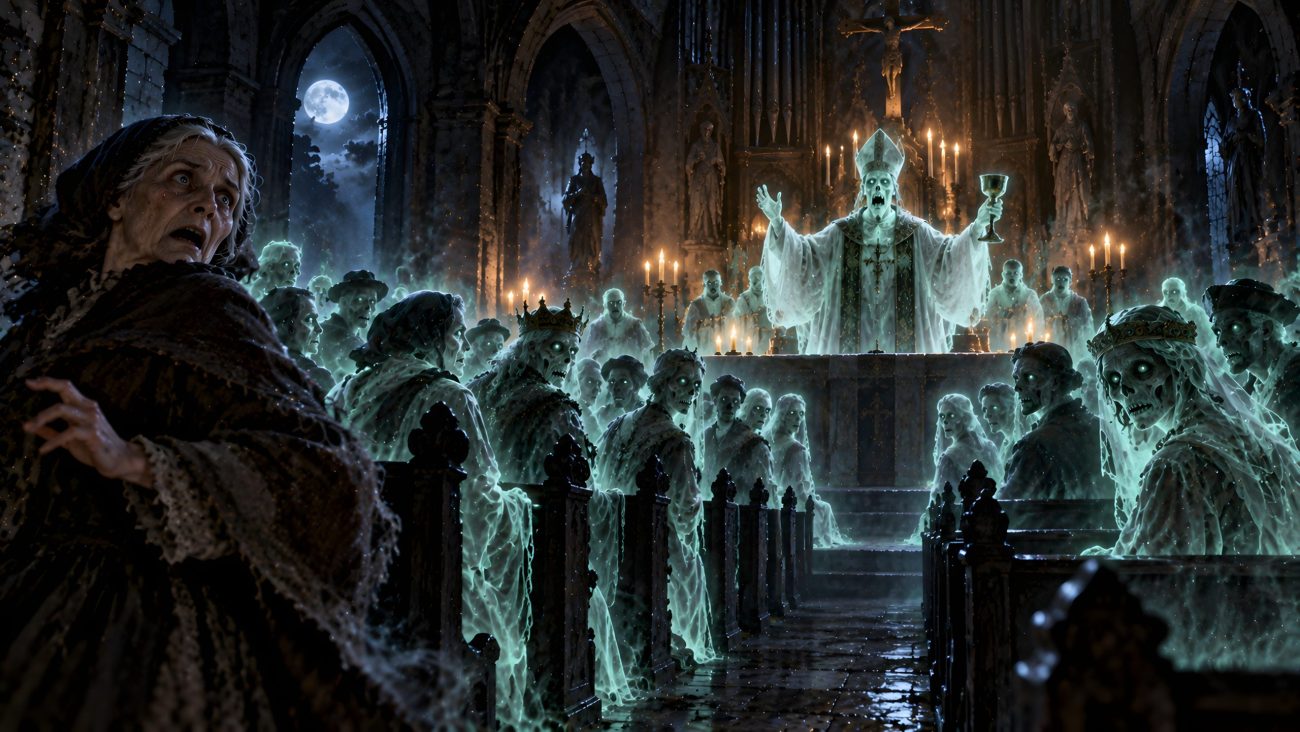
Waberl was a devout old woman who lived in Bergreichenstein. One Advent night, moonlight woke her, and she saw that her kitchen was illuminated. Believing she had overslept and that it was already time for early Mass, she quickly put on her coat and hurried to St. Nicholas Church. The streets were completely deserted, but she assumed everyone had already gone to church.

Inside, the church was brightly lit, the organ played, and the congregation sang fervently. Waberl took her place in a pew, but soon noticed something strange. An unfamiliar priest stood at the altar, while the congregation consisted of people dressed in old-fashioned clothing. Some were strangers, while others were people she had known in life. Among them sat her own deceased parents, who paid no attention to her. Everyone stared at Waberl with sharp, hostile eyes.

Her dead godmother approached and whispered a warning. Waberl had to leave the church walking backwards and abandon her cloak at the gate. Terrified, she followed these instructions. As she reached the entrance, the wild dead rushed towards her. She threw off her cloak, leapt out of the church, and fled home as fast as she could.

At that very moment, the clock struck one. The following morning, a piece of Waberl’s cloak was found on every grave in the churchyard, as though the dead had torn it apart and distributed the fragments among themselves. The terror of that night proved too much for the old woman, and she did not live much longer. The Ghost Church remained a terrifying warning of what might happen to the living who accidentally entered a gathering of the dead.


Sources

. Watzlik, Hans. “Die Gespensterkirche.” In Böhmerwald-Sagen. Budweis: Böhmerwalder Dorfbücher, 1921, Heft 5. Reproduced by SAGEN.at. https://www.sagen.at/texte/sagen/tschechien/watzlik/gespensterkirche.html


Dumpling Farmer

Tradition: Czech Mythology
Alternative Names: The Dumpling Farmer’s Wife
Category: Ghost


The Myth

The Dumpling Farmer was a miserly woman from Wischowitz who cared little for the hunger of those who worked for her. She was so stingy with food that her shepherd boy once nailed a noodle from the midday meal to the stable door and wrote beneath it: “Noodle, swear, have you ever seen lard?” The joke mocked the woman’s refusal to provide her servants with proper food.

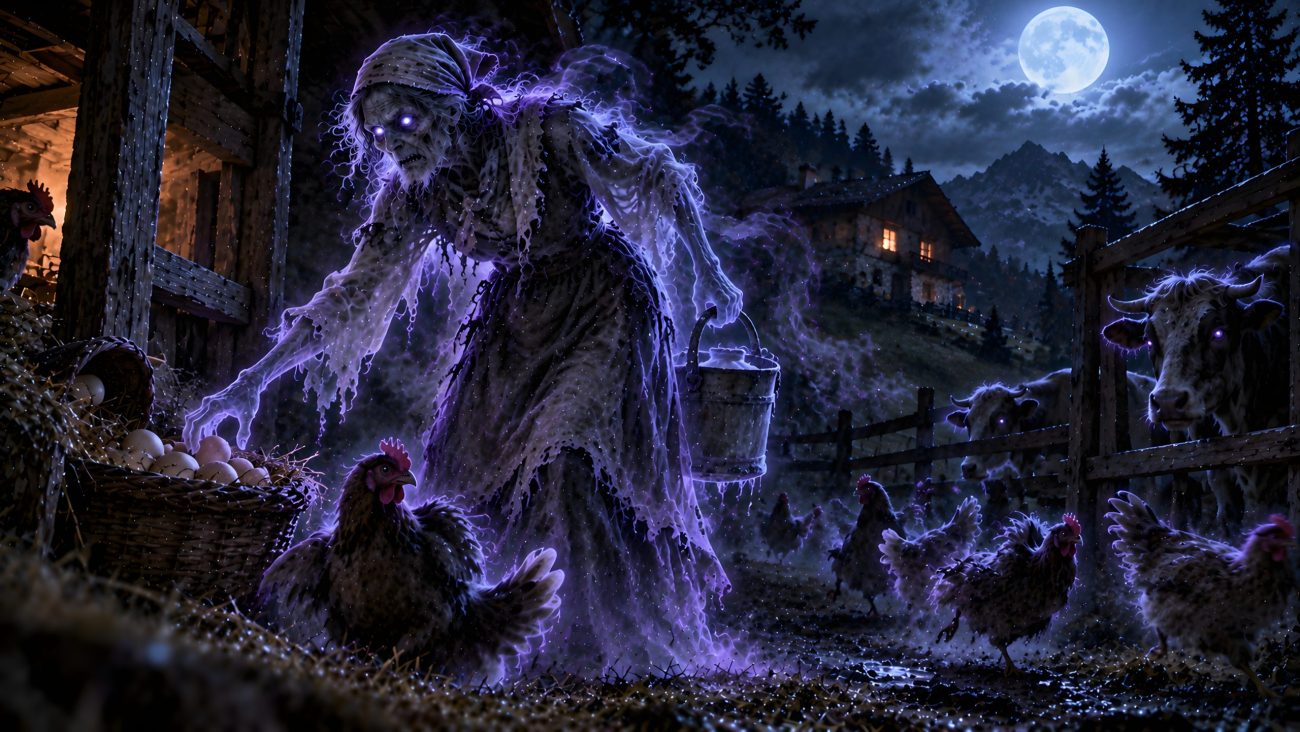
The farmer’s wife also committed a religious transgression by churning butter on Saturday nights, which were considered especially sacred. After her death, her spirit refused to rest. As her body was carried to the cemetery, she watched her own burial from an attic window. Her ghost then haunted the house for a long time, counting eggs during the night, crawling among the sleeping hens in the chicken coop, and milking the cows. Her restless activities disturbed both the livestock and the people who lived there.

Eventually, a priest cursed the spirit and banished her to Hötschenberg Mountain in Tyrol, where she was condemned to push clouds across the sky. Some people believed that the Wild Hunt had carried her away instead. Whatever her fate, her ghost was still said to wander distant places. Once, a feather merchant from the Osserland travelling through a haunted gorge in Tyrol encountered a figure as gray and thin as a spiderweb. The ghost brushed past him, repeatedly sighing that she was merely the Dumpling Farmer’s Wife from Wischowitz, still burdened by her restless existence after death.


Sources

“Die Knödelbäurin.” In Hans Watzlik, Böhmerwald-Sagen. Budweis: Böhmerwalder Dorfbücher, 1921, Heft 5. Reproduced by SAGEN.at. https://www.sagen.at/texte/sagen/tschechien/watzlik/knoedelbaeurin.html