Fu Zhu

Tradition: Chinese Mythology
Alternative Names: 夫诸
Category: Deer


The Myth

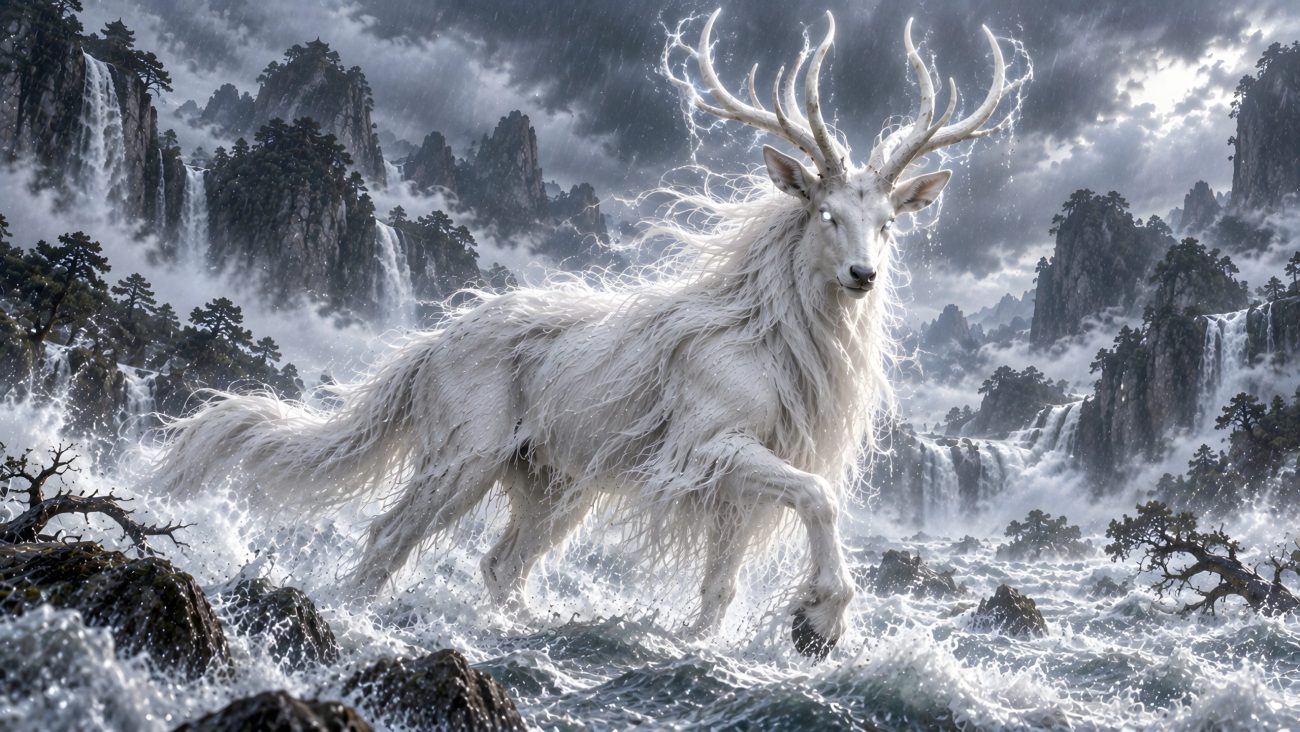
Fu Zhu is a strange white deer with four horns. It is described as resembling an ordinary white deer, except for its four antlers. The creature is associated with water and is regarded as an omen of great floods.

The earliest records of Fu Zhu appear in the Classic of Mountains and Seas. In the Central Mountains Classic, a strange beast is described as having the appearance of a white deer with four horns. It is associated with water and is called Fu Zhu.

The Classic of Mountains and Seas records that Fu Zhu appeared on a mountain in the Central Mountains region. When the creature appeared, it was regarded as a warning that a great flood would soon occur.

According to the tradition, the appearance of a Fu Zhu was therefore not a favorable sign. When one was seen, the settlement in its vicinity could expect a great inundation.


Sources

“夫諸 (Fūzhū).” Chinese Wikipedia. Wikimedia Foundation. Accessed September 5, 2026. https://zh.wikipedia.org/wiki/%E5%A4%AB%E8%AB%B8


Umishika

Tradition: Japanese Mythology
Alternative Names: Umishika
Category: Deer


The Myth

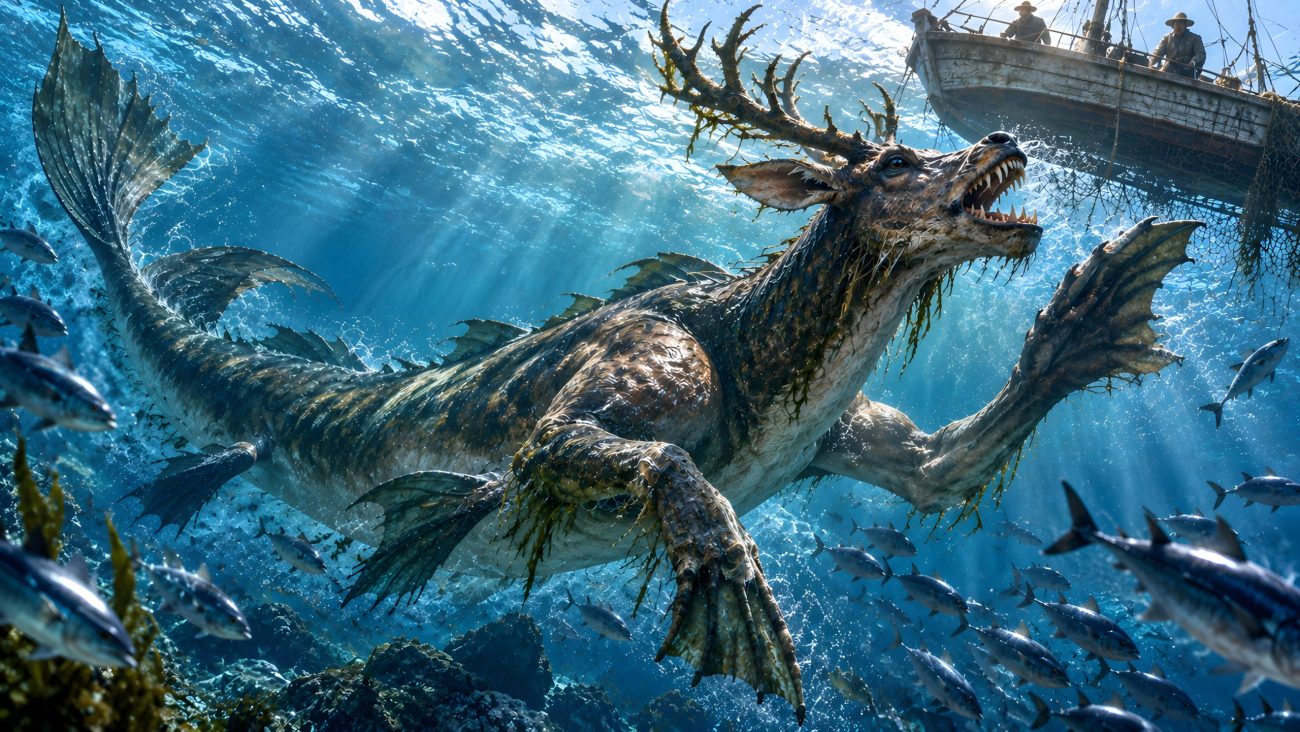
Umishika, meaning “sea deer,” are dangerous sea monsters said to inhabit the open waters south of Japan, particularly around the island of Yakushima and off the southern coast of Kyūshū. Because they live deep beneath the sea, little is known about their appearance. Fishermen who encounter them describe seeing dark, shadowy forms lurking beneath the waves. They are greatly feared by the island’s fishermen.

Umishika are carnivorous and prey on medium-sized fish such as skipjack tuna. They are also aggressive toward humans and will attack fishing boats that enter their feeding grounds.

According to a legend from Yakushima, the umishika are responsible for the taboo against fishing on the sixteenth day of the fifth month of the old lunar calendar.

Long ago, the sixteenth day of the fifth month was considered a holy day belonging to the mountain gods. On that day, all the gods and spirits of the mountains gathered together for a great banquet, and villagers were forbidden from entering the mountains.

One year, however, a fishing boat from the village of Issō went out onto the open sea northwest of Yakushima to catch skipjack tuna. A huge number of fish were swimming close to the surface, and the fishermen were certain that a large shoal was nearby.

When they reached the spot, the fishermen were delighted by how easily they could catch fish. They pulled one tuna after another from the water.

Suddenly, a huge dark shape appeared beneath the surface. One of the elder fishermen recognized the danger and cried out, “It’s an umishika!”

The fishermen immediately pulled in their lines, raised the sails, and prepared to flee toward shore. But the umishika had already noticed them.

The monster pursued the boat, diving beneath the waves and appearing again between the swells. The wind made it difficult for the fishermen to escape, while they rowed with all their strength. They attempted to slow the creature by throwing all of the tuna they had caught into the water behind the boat, hoping it would stop to feed on them.

The tactic failed. Before long, the umishika had caught up with them.

As the monster prepared to climb aboard the boat, one of the fishermen seized an oar and thrust it with all his strength into the creature’s open mouth. The umishika recoiled and fell back into the sea, abandoning its pursuit.

The fishermen rowed continuously toward shore, exhausted by their struggle but grateful to have survived.

Afterwards, the villagers decided that the prohibition on the sixteenth day of the fifth month should apply not only to the mountains but also to the sea. From then on, hunters and fishermen remained at home on that day, making offerings and holding festivals for the gods of the mountains and the sea.


Sources

“Umishika.” Yokai.com: The Japanese Yokai Encyclopedia. Accessed September 5, 2026. https://yokai.com/umishika/

Ayashos

Tradition: Indian Mythology
Alternative Names: Ayaxos
Category: Deer, Snake


The Myth

Ayashos is a chimera-like creature and one of the most powerful beings in the mythology of the Puget Sound Indians. Its body is divided between two animals: the front half resembles a deer, while the rest of its body is that of a snake.

Ayashos is said to be so powerful that anyone who attacks it risks being transformed into birds.


Sources

“Ay-yashos (Айяшос).” New Bestiary (Bestiary.us). Accessed September 5, 2026. https://www.bestiary.us/ajjashos


Cerynitian Hind

Tradition: Greek mythology
Alternative Names: Cerynitian Hind, Ceryneian Hind, Elaphos Khrysokeros, Elaphus Chrysocerus, Golden-Horned Deer
Category: Deer


The Myth

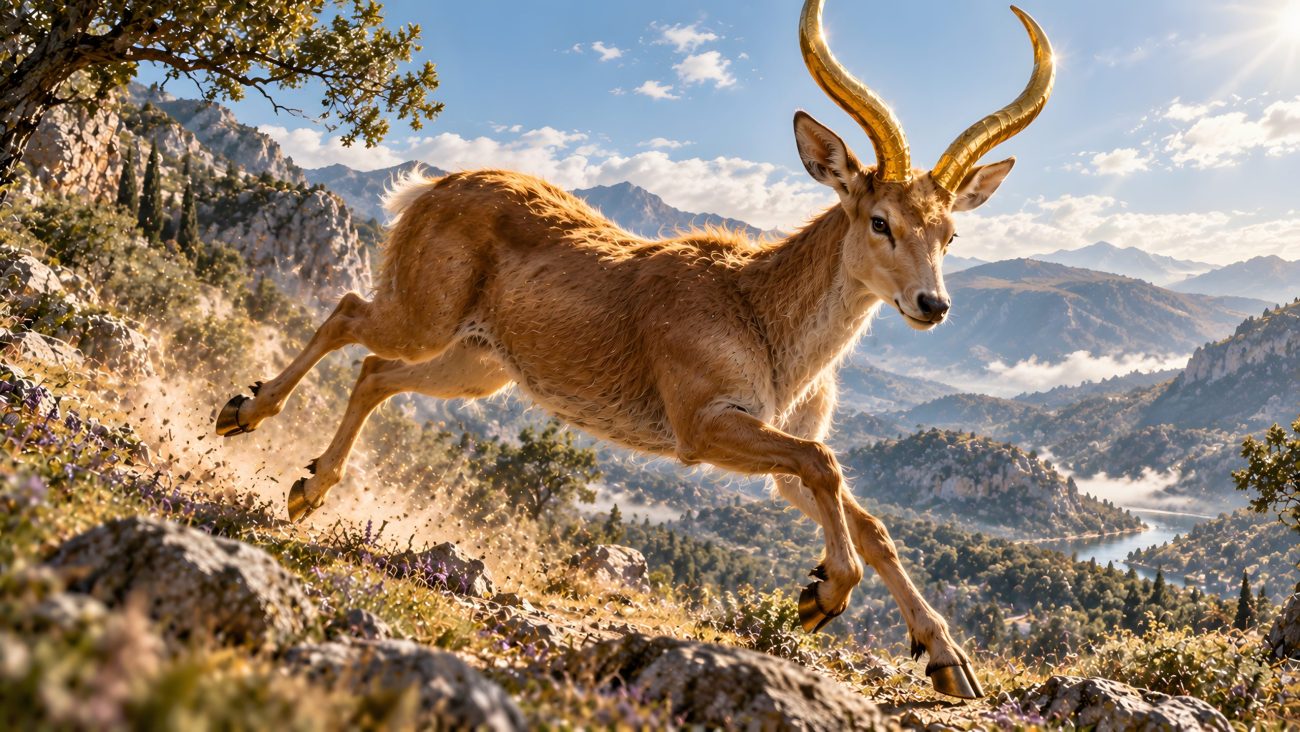
The Cerynitian Hind was a magnificent golden-horned deer sacred to the goddess Artemis. It was renowned for its extraordinary speed and possessed golden antlers and, according to some accounts, brazen feet. The deer lived in the region of Ceryneia in Arcadia and was considered a sacred animal of Artemis.

According to Callimachus, Artemis once discovered five enormous deer near the foot of the Parrhasian hill. They were larger than bulls, and gold shone from their horns. Artemis was amazed by them and wished to capture them for herself. She caught four of the deer through her extraordinary speed and harnessed them to her golden chariot. The fifth escaped, through the designs of Hera, and the Ceryneian hill became its refuge. This surviving deer was later destined to become one of the labours of Heracles.

Another tradition says that the five golden-horned deer had been given to Artemis by the nymph Taygete. Taygete had been saved by Artemis from the pursuit of Zeus and dedicated the deer to the goddess in gratitude. Four of them became the animals that drew Artemis’s chariot, while the fifth remained free.

Heracles was ordered by Eurystheus to capture the Cerynitian Hind alive and bring it back to Mycenae. Because the deer was sacred to Artemis, Heracles was determined not to kill or seriously wound it. He pursued it for an entire year as it fled across the wilderness.

The hind eventually fled from Oenoë toward Mount Artemision in Argolis and then continued toward the river Ladon in Arcadia. Heracles finally caught it while it was crossing the river, shooting it with an arrow in one account before capturing it. He then lifted the deer onto his shoulders and began carrying it toward Mycenae.

While Heracles was still in Arcadia, Artemis and Apollo encountered him. They were furious that he had seized an animal sacred to Artemis and accused him of attempting to kill it. Heracles explained that he had been ordered by Eurystheus to complete the labour and that Eurystheus was responsible for what had happened. He managed to calm the gods’ anger and continued his journey with the hind still alive.

Different ancient writers give different accounts of how Heracles captured the animal. Some say that he used nets, others that he found and mastered it while it was asleep, while another tradition says that he simply exhausted it through pursuit. Diodorus Siculus emphasizes that Heracles succeeded through intelligence rather than force, avoiding unnecessary danger and violence.

Some later traditions say that Heracles ultimately killed the deer, while others maintain that he successfully brought it alive to Mycenae as ordered.

The Cerynitian Hind remained closely associated with Artemis because of its golden horns and divine origin. Its extraordinary beauty, speed, and sacred status made its capture one of the most unusual of Heracles’ labours.


Sources

Atsma, Aaron J. “Elaphos Kerynitis (Cerynitian Hind).” Theoi Greek Mythology. Accessed September 5, 2026. https://www.theoi.com/Ther/ElaphosKerynitis.html


Konjiki-shika

Tradition: Japanese Mythology
Alternative Names: Golden Deer
Category: Deer


The Myth

The Golden Deer is a supernatural deer described in a tale from Kai Province, Japan. Its body shone with a brilliant golden light, illuminating the surrounding valley as brightly as daylight.

The story comes from Urami Kanwa, a collection of observations and experiences from Kai Province compiled by Noda Narikata, who served as a Kofu official from 1724 to 1753.

In Tsukahara Village in Yamanashi County, there lived a fisherman named Takebei. One night toward the end of the rainy season in May, Takebei climbed to the top of Hachioji Mountain and looked in every direction, searching for birds and animals to hunt. That night, however, he encountered nothing.

Then he happened to look down into the valley. To his surprise, the entire valley was filled with a golden light as bright as daytime.

Wondering what could be causing such a strange sight, Takebei looked more closely. Within the golden light he saw a deer quietly walking through the valley, attempting to climb the mountain. Its body appeared golden and was surrounded by the brilliant light.

Takebei rejoiced, believing that the extraordinary animal had been sent to him as a gift from Heaven. He raised his gun and took aim at the Golden Deer.

At that moment, however, someone suddenly seized Takebei by his topknot and pulled him violently to the ground onto his back. His gun went off, but the bullet merely cut through the air.

Takebei was left stunned by what had happened. It was thought that the mysterious force that stopped him from killing the Golden Deer may have been the work of the spirit of the mountain god.


Sources

Takahashi, Toshihiro. “金色の鹿 [こんじき‐しか] (Konjiki-shika).” 新版TYZ 妖怪図鑑 (New TYZ Yokai Encyclopedia). April 14, 2019.
https://tyz-yokai.blog.jp/archives/1074336998.html


Sanjiaoshou

Tradition: Chinese Mythology
Alternative Names: Three-Horned Beast
Category: Deer


The Myth

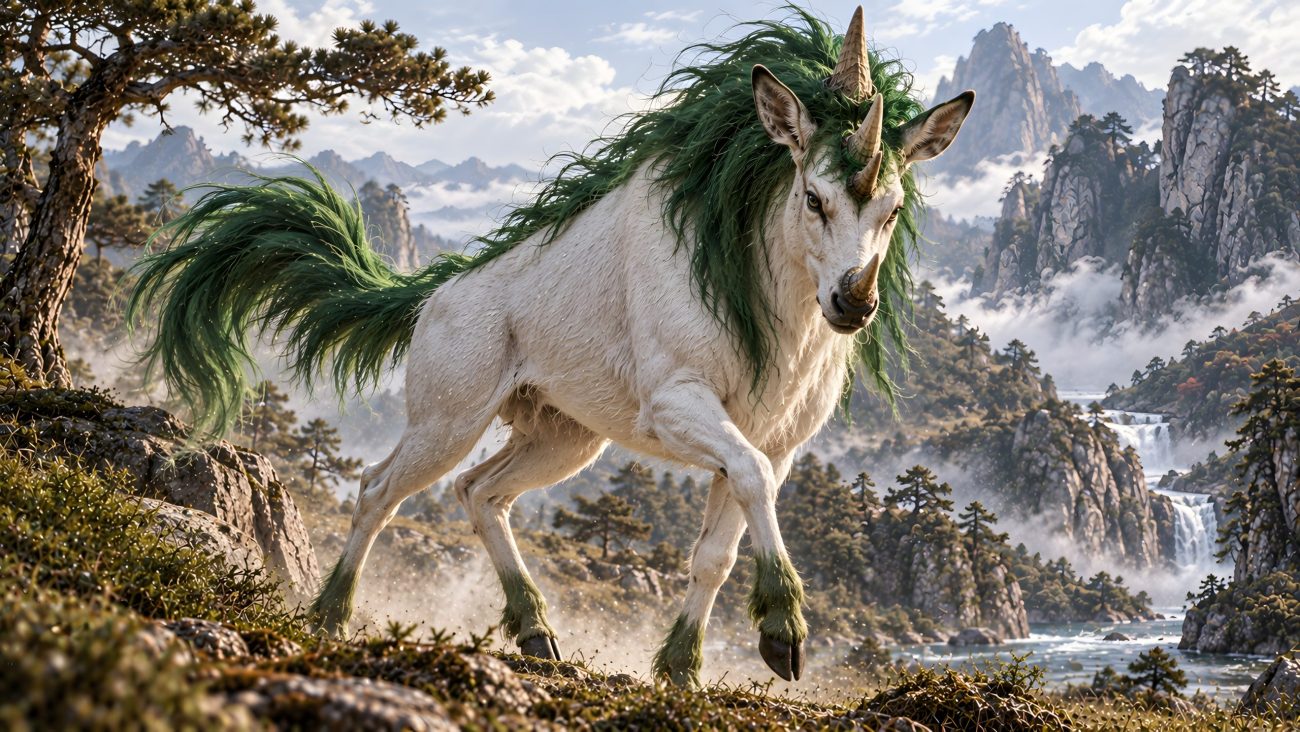
The Three-Horned Beast is a strange creature from Chinese legend with three horns: one on its head, one on its forehead, and one on its nose. It has a red body and red feet.

The creature is recorded in several ancient Chinese texts. In the Yuan Shi·Yupufu, the Three-Horned Beast is described as having a red body, red feet, a horn on its head, a horn on its forehead, and a horn on its nose, with a white belly and a green back. The Sancai Tuhui describes it as a deer with three horns.

According to the Sancai Tuhui, a Three-Horned Beast appeared on Mount Xishan. It was regarded as an auspicious creature, appearing during the reign of a virtuous ruler who had successfully cultivated the Way of the sages.

The Song Shi·Fuzhi Zhi likewise records the Three-Horned Beast as an auspicious sign associated with the successful cultivation of the teachings of the sages.

The Tianjian states that when a ruler inherited and successfully practiced the Way of the sages without losing it, the Three-Horned Beast would appear.


Sources

“三角兽 (Sānjiǎo shòu; Three-Horned Beast).” Chinese Wikipedia. Wikimedia Foundation. Accessed September 5, 2026.
https://zh.wikipedia.org/wiki/%E4%B8%89%E8%A7%92%E5%85%BD


Snawfus

Tradition: Ozark folklore, American Mythology
Alternative Names: Snawfus
Category: Deer


The Myth

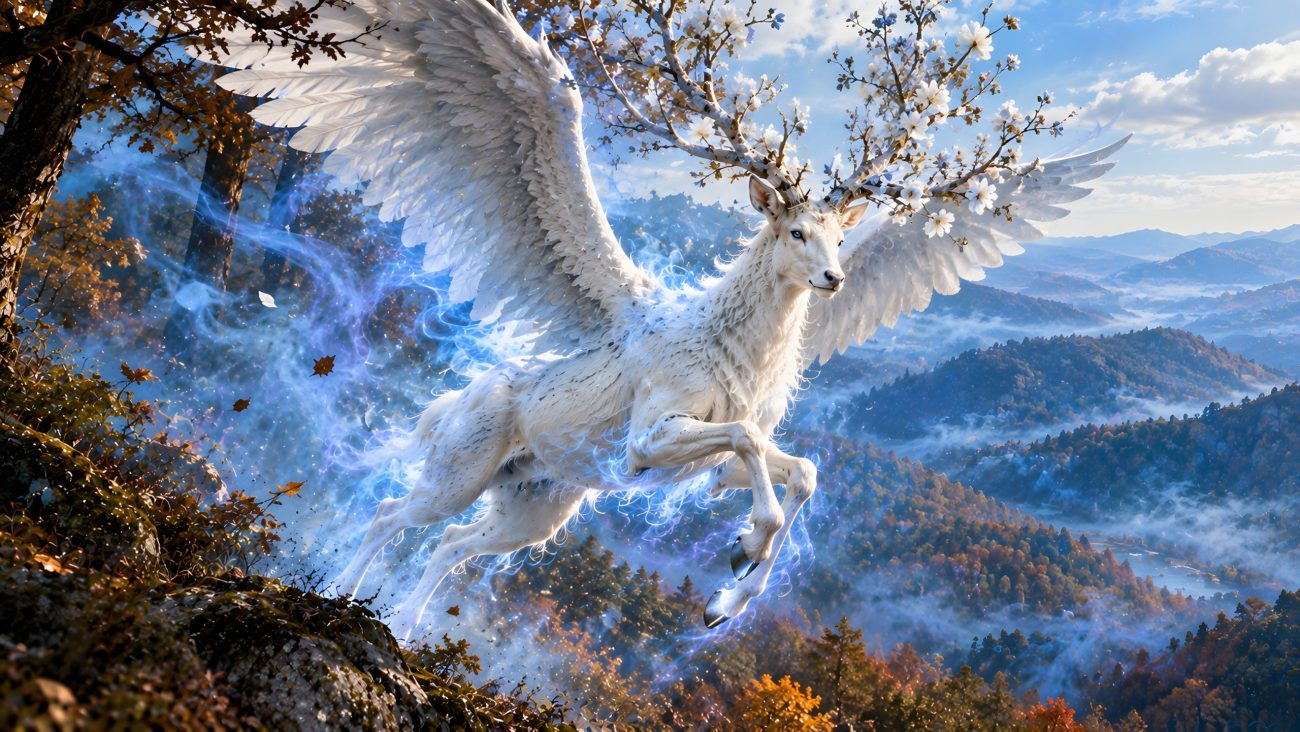
The Snawfus is a supernatural albino deer from the folklore of the Ozarks in Arkansas and Missouri. Although it possesses supernatural powers, it is not considered dangerous.

According to some accounts, the Snawfus can leap effortlessly into the treetops. Other accounts describe it as having feathery wings, allowing it to fly silently through the air like an owl. Some traditions also give the creature flowering branches instead of ordinary antlers.

Leila A. Wade of Republic, Missouri, extensively studied the Snawfus and reported that the creature emitted spirals of blue smoke. The smoke drifted away from the deer and spread across the Ozark hills, covering them in a magical blue haze.

According to the tradition, this blue haze can still be seen over the Ozarks during autumn.


Sources

“Snawfus.” A Book of Creatures. July 2, 2021. https://abookofcreatures.com/2021/07/02/snawfus/


Witch as a Roe

Tradition: Austrian Mythology
Alternative Names: Die Hexe als Reh
Category: Deer


The Myth

A hunter once encountered a roe deer on a forest clearing above the “broat’n Rief’n” near Axams. He immediately raised his weapon to shoot it. But the animal suddenly placed its front feet together pleadingly, while tears streamed from its eyes. The hunter noticed that there was something unusual about the creature and could not bring himself to shoot it.

Several months later, the hunter visited the market in Imst and stopped at an inn. To his great surprise, the waitress served him a rich meal and assured him that she herself would pay for everything.

As he prepared to leave, he thanked the waitress and asked whether she knew him. Since the hunter believed that he had never met her before, he was astonished when she told him that she had once been a roe deer in the forest near Axams and that he had been about to shoot her.

She explained that when he had raised his weapon, she had pleaded with him in the form of the deer. Had he shot her then, she said, it would have meant the loss of her soul. From that moment onward, however, she had changed her ways, improved herself, and renounced the Devil.


Sources

Dörler, Adolf Ferdinand, ed. “Die Hexe als Reh.” In Sagen aus Innsbruck’s Umgebung, mit besonderer Berücksichtigung des Zillerthales. Innsbruck, 1895, no. 106. Reproduced by SAGEN.at.
https://www.sagen.at/texte/sagen/oesterreich/tirol/doerler/hexe_reh.html


Calopus

Tradition: Greek Mythology, Italian Mythology, Roman Mythology
Alternative Names: Aeternae, Analopos, Antalope, Antholops, Aptaleon, Aptolos, Pantolops, Jachamur, Jachmur, Jamur, Yamur, Chatloup
Category: Deer


The Myth

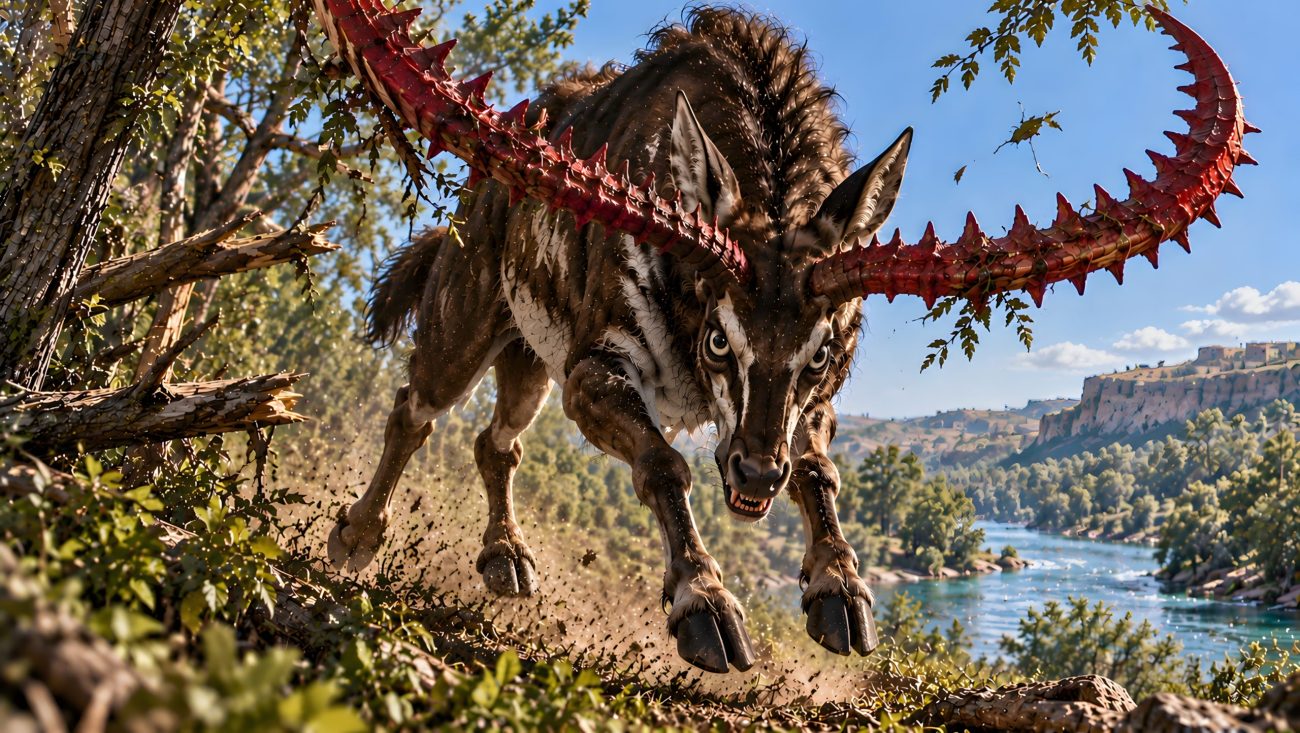
The Calopus is a strange antelope-like creature resembling a roe deer in both appearance and size. Its most remarkable feature is a pair of enormous saw-toothed horns growing from its head. These serrated horns are powerful enough to shred branches and even human limbs, but they also have a dangerous weakness: they can easily become entangled in dense thickets.

When a Calopus becomes trapped by its horns in the branches, it cries out. The sound alerts nearby hunters, who can then find the helpless creature and kill it.

The creature was believed to inhabit India, Syria, and the region around the Euphrates, where it was particularly fond of drinking the cool waters of the Euphrates. The Greeks knew the animal as Analopos and by several related names, while the Romans called it Calopus, meaning “pretty foot.” According to Bochart, these names ultimately derived from the Coptic Pantolops.

Alexander the Great was said to have encountered a number of these antelopes during his campaigns in India. One obscure account calls them “aeternae.” The creatures attacked the Macedonian soldiers and pierced their shields with their enormous horns.

Despite their formidable weapons, the Calopuses were overwhelmed by Alexander’s army. Accounts give wildly different numbers for the slaughter, ranging from 5,400 to 8,550 creatures. According to Topsell, this great slaughter was the reason that hardly any of these animals could be seen afterwards.

Several real animals have been proposed as possible inspirations for the Calopus. It may have been based on one of various antelopes, although the moose has also been suggested. The moose’s habit of stripping or shredding trees may have inspired the creature’s distinctive saw-like horns.

The name “Chatloup,” meaning “cat-wolf,” was later popularized by Barber and Rose, but this appears to be a corruption of the original name Calopus rather than an authentic alternative name for the creature.


Sources

Countess Sica. “Calopus.” A Book of Creatures. September 4, 2016. https://abookofcreatures.com/2016/09/04/calopus/


White Roe

Tradition: German Mythology
Alternative Names: Das weiße Reh
Category: Deer


The Myth

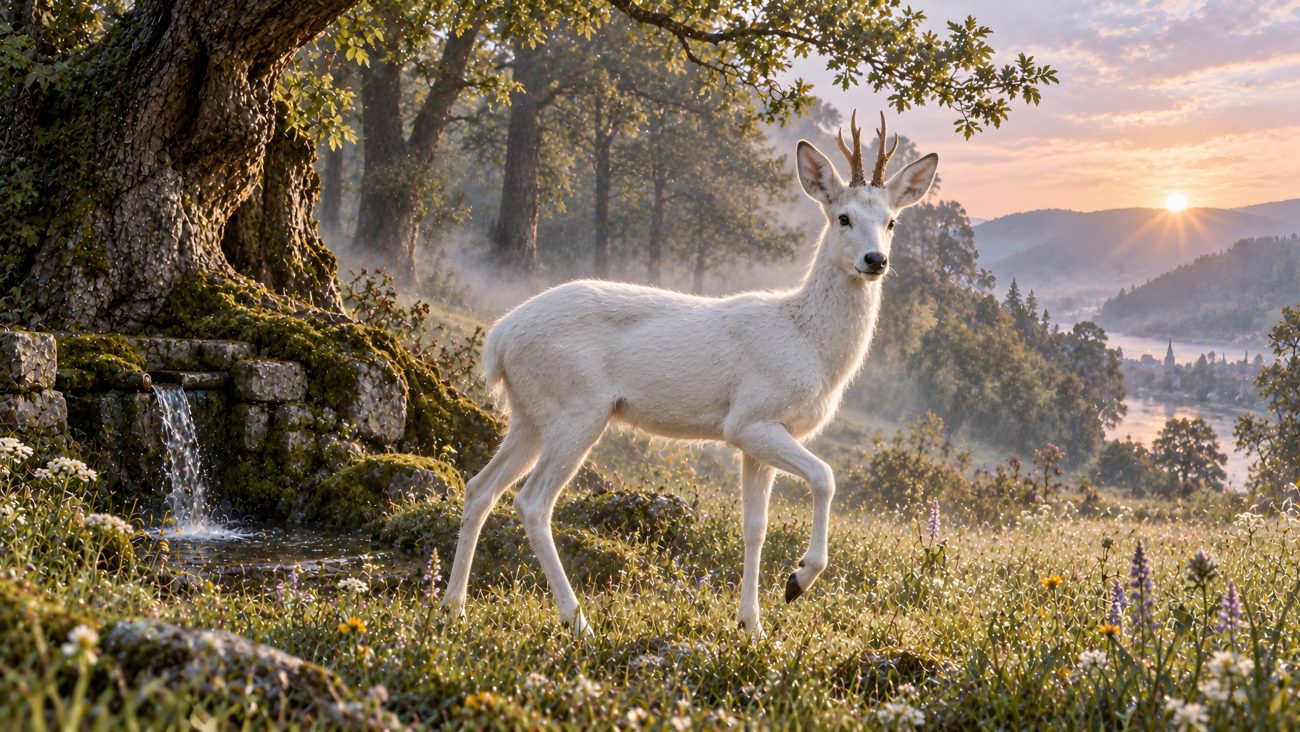
The White Roe is a milky-white deer that appears near a spring at the Hasensprung, a height near Baden in Baden. The spring emerges quietly from old masonry beneath an oak in a somewhat wild rocky woodland. It flows particularly strongly during the full moon and less strongly as the moon wanes.

One morning at first light, a young man came into the woodland and saw a milky-white roe grazing on a meadow filled with flowers. The strange animal greatly fascinated him.

“I must have it!” he thought. He quietly crept toward the White Roe and stretched out his trembling hand, overcome with desire to capture it. But the deer suddenly ran toward the spring. At the edge of the spring lay a maiden with extraordinarily beautiful features, resting her head beside the water.

The young man remained motionless, staring in astonishment at the lovely apparition. He did not know what to do. Fear urged him to flee, yet the beauty of the maiden held him spellbound.

“What am I doing?” he quietly asked himself.

The maiden then waved to him, turning backward as though looking around her. The young man looked again, but there was nothing there. When he turned around once more, both the milky-white roe and the beautiful maiden had disappeared.

Only the quiet spring remained to greet him.


Sources

Gottschalck, Friedrich. “Das weiße Reh.” In Die Sagen und Volksmährchen der Deutschen. Halle, 1814. Originally citing Schreiber, Beschreibung von Baden, Heidelberg, 1811, p. 188. Reproduced by SAGEN.at. https://www.sagen.at/texte/sagen/deutschland/allgemein/gottschalck/dasweissereh.html