Tianlu

Tradition: Chinese Mythology
Alternative Names: 天鹿
Category: Deer


The Myth

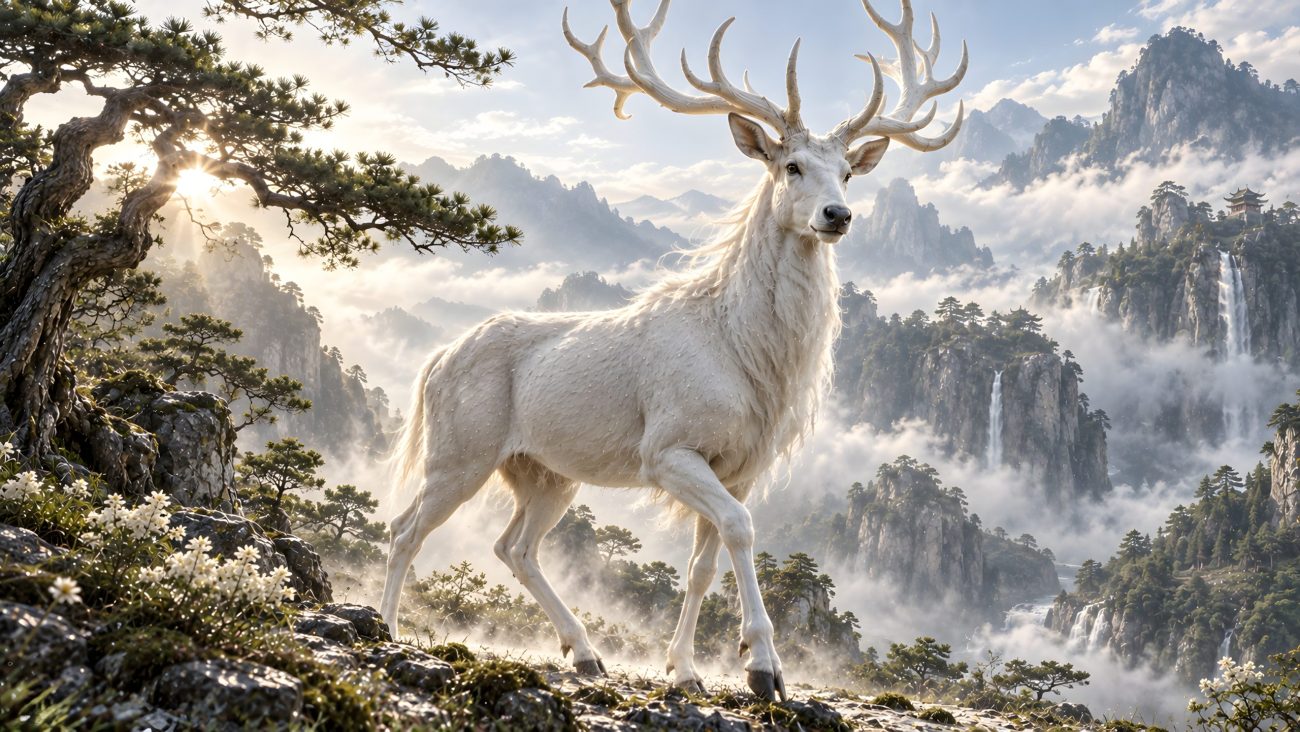
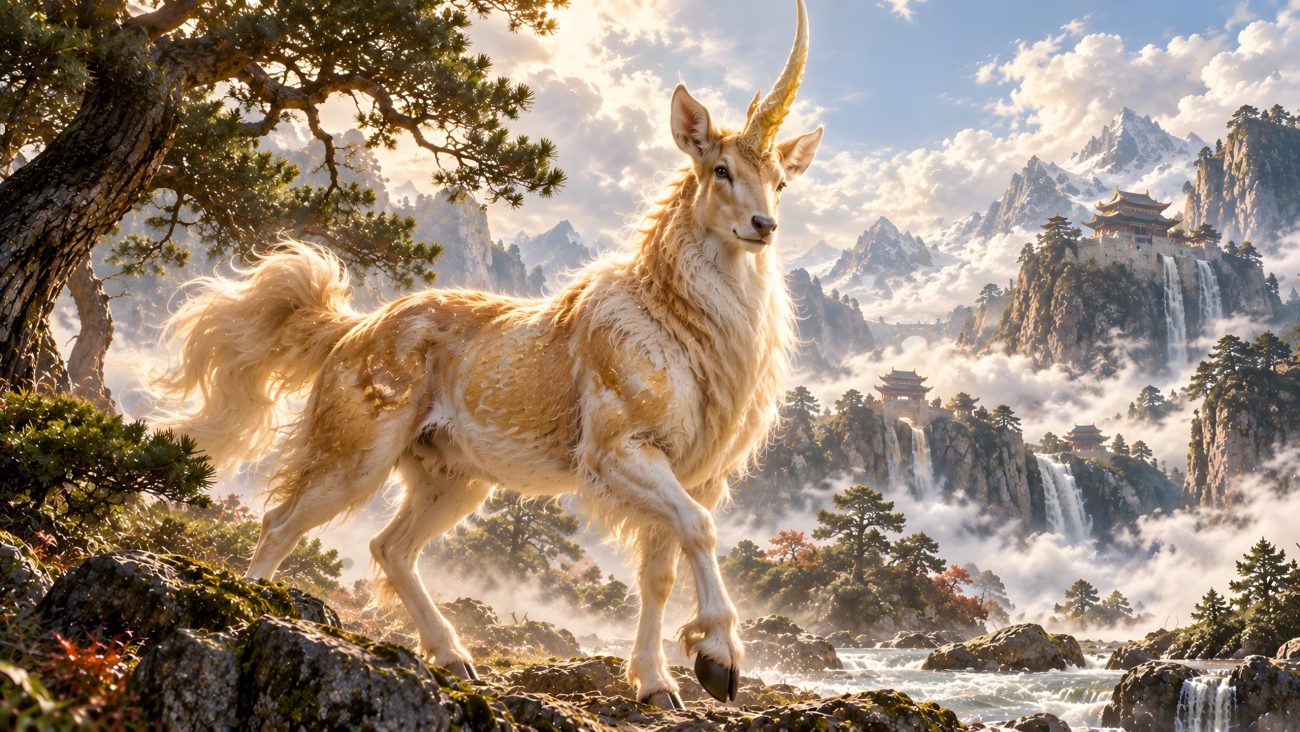
Tianlu is a legendary creature described as a deer with a single horn. In ancient China, it was regarded as an auspicious animal and a favorable omen.

The Book of Song records Tianlu among auspicious creatures, describing it as a beast of good omen whose appearance was associated with the virtue and prosperity of a ruler. Its body was said to possess a brilliant coloration, and its appearance before a king was considered a favorable sign.

The Yiwenzu Lei likewise records Tianlu in its discussion of auspicious phenomena, describing it as a pure and benevolent beast. Its appearance was connected with virtuous rule and the manifestation of heavenly approval.

Because of its extraordinary appearance and association with auspicious signs, Tianlu was regarded as one of the supernatural deer of ancient Chinese tradition. It represented a favorable omen appearing during the reign of a virtuous ruler.


Sources

“天鹿 (Tiānlù; Heavenly Deer).” Chinese Wikipedia. Wikimedia Foundation. Accessed September 5, 2026. https://zh.wikipedia.org/wiki/%E5%A4%A9%E9%B9%BF


White Hart

Tradition: English Mythology
Alternative Names: White Hart
Category: Deer


The Myth

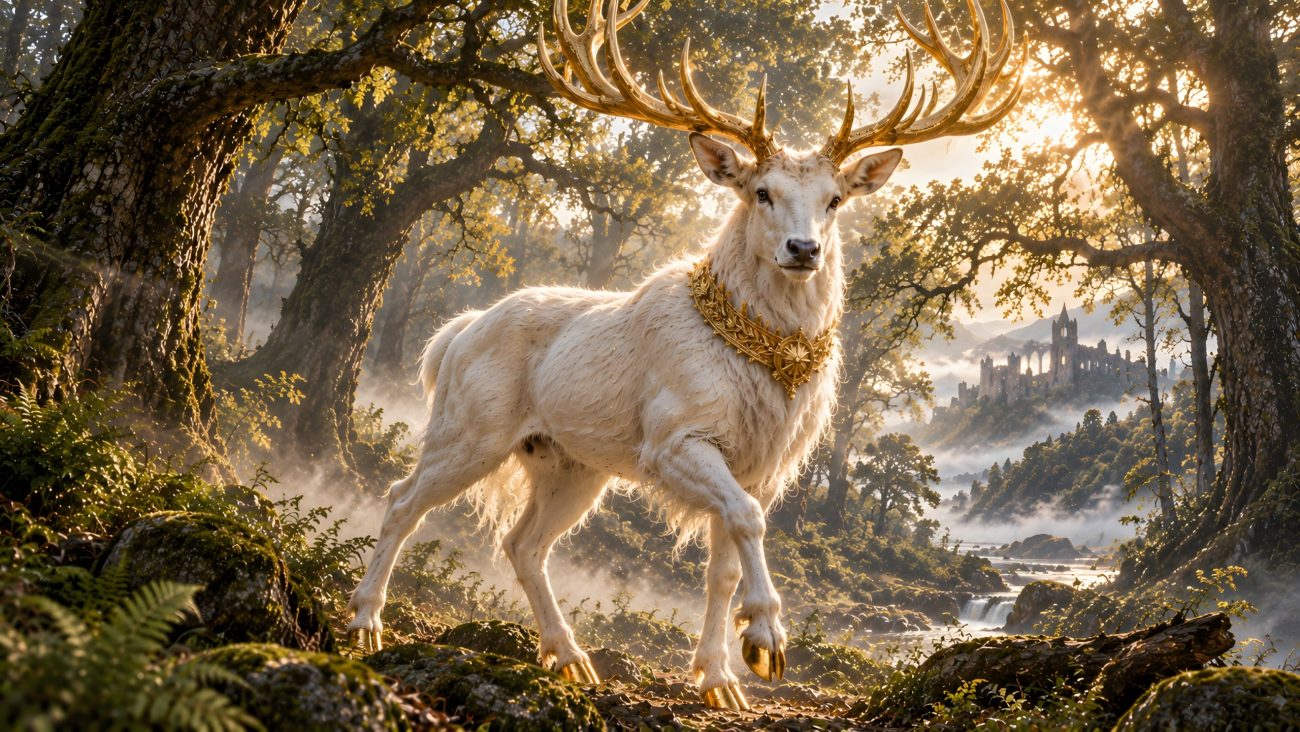
The White Hart is a magnificent white stag, with “hart” being the old English word for a mature male deer. In English tradition, the white hart became associated with royalty, particularly with Richard II, who adopted it as his personal badge.

Richard II probably derived the white hart from the arms of his mother, Joan, the Fair Maid of Kent, who was heiress of Edmund of Woodstock, Earl of Kent. The image may also have served as a pun on Richard’s name, with “Richard” being interpreted as “Rich-hart.”

The White Hart was prominently displayed by Richard II. In the Wilton Diptych, the earliest surviving authentic contemporary portrait of an English king, Richard wears a gold and enamelled white hart jewel. The angels surrounding the Virgin Mary also wear white hart badges, linking the creature closely with Richard’s royal identity.

The White Hart later became a familiar symbol in England. Numerous inns and pubs adopted the name and image of the white stag, making the creature one of the most recognizable traditional signs of English inns.

In English folklore, the White Hart is also associated with Herne the Hunter, a supernatural hunter traditionally connected with Windsor Forest. Through this association, the white stag became linked not only with royalty and heraldry but also with the mysterious supernatural world of the English forest.


Sources

“White Hart.” Wikipedia: The Free Encyclopedia. Wikimedia Foundation. Accessed September 5, 2026. https://en.wikipedia.org/wiki/White_Hart


Akhlis

Tradition: German Mythology
Alternative Names: Achlis, Alces, Ahlkis
Category: Elk, Deer


The Myth

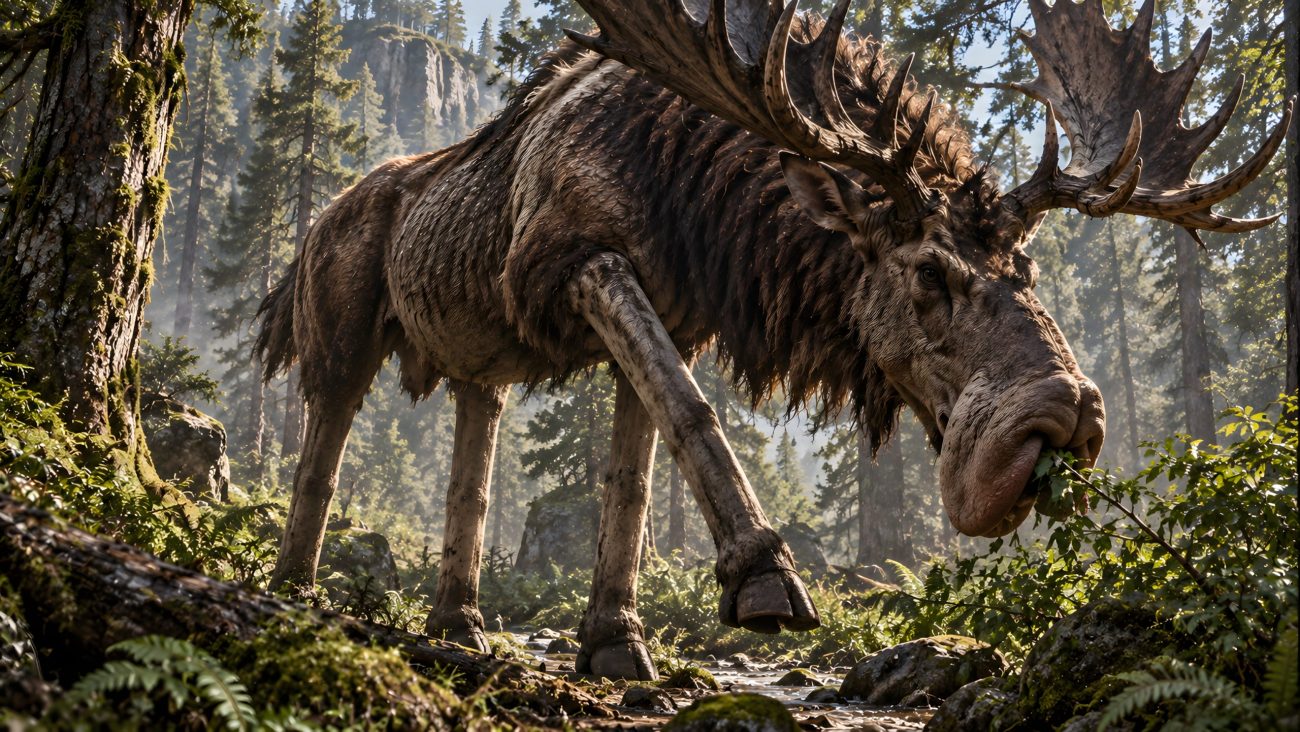
The Akhlis is a strange animal described as resembling an elk, but possessing several unusual features. It has stiff legs without joints or ligaments and a large upper lip that hangs down. Because of the construction of its legs, it is said to be unable to lie down and, if it falls, unable to rise again. Instead, it rests by leaning against trees.

According to Gaius Julius Caesar, the Akhlis was found in the great forests of the north, particularly the Hercynian Forest. He described animals called alces that resembled goats in their build and markings but were considerably larger. They had blunt antlers and legs without joints, preventing them from lying down. When they needed to sleep, they leaned against trees, and hunters could supposedly discover their usual resting places by following their tracks.

The Akhlis was also said to have an unusual way of feeding. According to Pliny the Elder, it resembled an elk and lived on the island of Scandinavia. Its upper lip was so large that it could only graze by walking backwards, preventing it from moving forward while feeding.

Later writers repeated and expanded these descriptions. Solinus described another elk-like animal with a hanging upper lip, saying that it could only graze while walking backwards and that its legs were so straight and stiff that it was difficult to stop once it began running. These accounts closely resemble Caesar’s earlier description of the alces.

The ancient descriptions are therefore unusual because they appear to combine a real northern animal—the elk—with fantastical characteristics. Caesar’s account is generally recognizable as a description of an elk, while the strange details concerning its stiff legs, inability to lie down, and backwards grazing became attached to the creature in later retellings.

The Akhlis was eventually forgotten, surviving mainly in ancient and medieval writings about the animals of the far north. Its name and description were later compared with other legendary elk-like creatures, although the original accounts present it primarily as a mysterious northern animal rather than a supernatural monster.


Sources

Sergey Ksaverov. “Ахлис (Achlis).” New Bestiary (Bestiary.us). Accessed September 5, 2026. https://www.bestiary.us/Akhlis


Bai Lu

Tradition: Chinese Mythology
Alternative Names: White Deer
Category: Deer


The Myth

The White Deer is a white-colored deer regarded in Chinese tradition as an auspicious and extraordinary animal. Since ancient times, it was associated with good omens and supernatural significance. Legends tell of immortals and recluses riding white deer, while white deer also appear as mounts and companions of supernatural beings. The White Deer is notably featured in Journey to the West, where a white deer spirit appears as a supernatural being, and in stories concerning the King of Bhikkhu Kingdom. It is also associated with the North Star, which is said to have the white deer as its mount.

Ancient Chinese writings record appearances of white deer as extraordinary omens. The Guoyu records the appearance of white deer, while the Records of the Grand Historian describes a white deer appearing before the Son of Heaven, with its white hide being treated as something of great value. The Book of Han likewise records a white deer among unusual and auspicious phenomena.

White deer continued to appear in later Chinese literature and historical records. Tang-era poetry also refers to white deer, while Ming-era writings record further sightings of them as remarkable creatures and auspicious signs. In one recorded incident during the Ming dynasty, a white deer was presented to the imperial court as an extraordinary omen.

Because of their rarity and their association with immortals, celestial beings, longevity, and favorable omens, white deer came to occupy a special place in Chinese imagination. They could appear as ordinary animals of unusual color, but in legends and religious stories they could also become supernatural beings, mounts of immortals, or spirits possessing extraordinary powers.


Sources

“白鹿 (Báilù; White Deer).” Chinese Wikipedia. Wikimedia Foundation. Accessed September 5, 2026. https://zh.wikipedia.org/wiki/%E7%99%BD%E9%B9%BF


Kushikiroku

Tradition: Japanese Mythology
Alternative Names: Nine-Colored Deer,
Category: Deer


The Myth

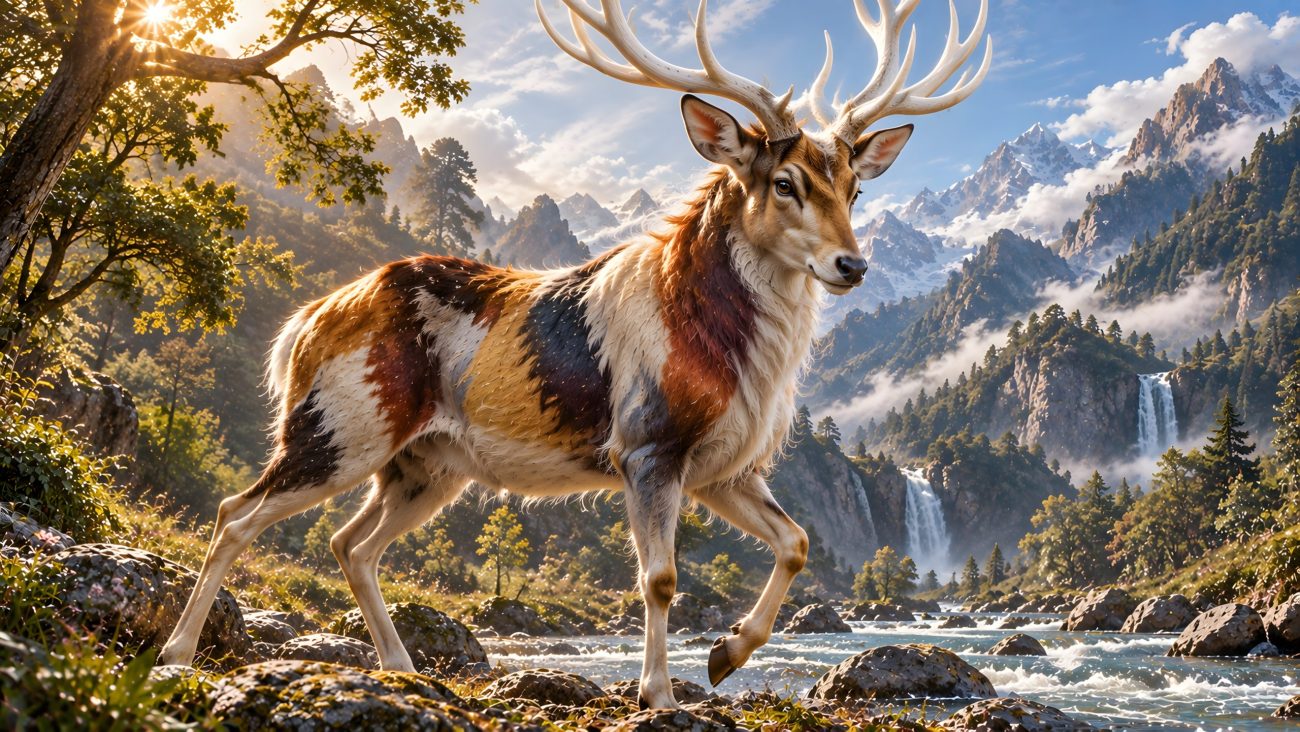
The Nine-Colored Deer is a remarkable deer with nine-colored fur and antlers as white as snow. It lived hidden from humans in a mountain in India, where it was rarely seen. A crow also lived near the river at the foot of the mountain and had a deep bond with the deer.

One day, a man was swept away by the river and was close to drowning. Clinging desperately to a branch, he cried out to the mountain god, tree god, heavenly beings, and dragon god, asking why none of them would save him.

Hearing his cries, the Nine-Colored Deer came to the riverbank. It told the man not to be afraid and instructed him to climb onto its back and hold onto its antlers. The deer then carried him safely to land.

The man wept with gratitude and asked how he could ever repay the deer. The deer asked for only one thing: that the man never reveal that it lived on the mountain.

The deer explained that its nine-colored body and snow-white antlers were unlike anything else in the world. If people discovered it, they would surely kill it for its beautiful fur and antlers. Because of this, it had hidden itself deep within the mountains. Yet when it heard the man’s cries, pity overcame its fear and it came to rescue him.

The man promised never to reveal the deer’s whereabouts and returned home.

Some time later, the queen of the country dreamed of a deer with nine-colored fur and snow-white antlers. She became captivated by the creature and developed such a strong desire to possess its fur and antlers that she fell ill and was confined to her bed. She begged the king to find the deer, convinced that such a creature truly existed.

The king announced a great reward of gold, silver, and other treasures for anyone who could capture the Nine-Colored Deer.

The man who had been rescued knew exactly where the deer lived. At first, he kept the secret. But when he heard of the king’s reward, greed overcame his gratitude. He revealed the deer’s hiding place to the king, forgetting that the creature had saved his life.

The king immediately gathered many soldiers and took the man with him as their guide. They surrounded the valley where the deer lived.

The crow saw what was happening and flew to the cave where the Nine-Colored Deer was sleeping. It cried out a warning, telling the deer that the king had come with an army seeking its rare fur and that the valley had been surrounded.

The deer awoke and came out of its cave, but by then the king and his soldiers were already directly before it. There was nowhere left to escape.

Rather than flee, the deer walked fearlessly toward the king’s palanquin. The soldiers prepared to shoot it with arrows, but the king was moved by the creature’s fearless approach and ordered them to stop.

The deer knelt before the king and asked how he had discovered its hiding place. The king answered that the man standing beside him had led him there.

The deer looked at the man. A bruise had appeared on his face, perhaps as punishment for breaking his promise.

The deer then reminded him of what had happened. It had risked its own life to rescue him from the river, and he had promised never to reveal its existence. Yet he had forgotten the kindness shown to him and had betrayed the deer in exchange for a reward.

The man was unable to answer.

Seeing this, the king understood the man’s ingratitude. He issued a decree forbidding the killing of deer anywhere in his kingdom. Anyone who violated the decree would be executed, and their family would also be destroyed. The king then withdrew his soldiers and returned to his palace.

The Nine-Colored Deer had escaped death. It returned joyfully to its mountain, and afterwards the country prospered. Moderate rains fell, there were no destructive winds or epidemics, the harvests were abundant, and nobody lived in poverty.

The story concludes by contrasting human ingratitude with the kindness of animals: forgetting kindness is found among humans, while helping humans is found among animals. Such things, the story says, have happened both in the past and in the present.

The Nine-Colored Deer is also identified with the Buddha in one of his previous lives. The crow is identified with Ananda, the queen with Sundari, and the ungrateful drowned man with Devadatta. The Nine-Colored Deer Sutra additionally tells that the king scolded the man after learning the truth, and that thousands of deer gathered around the departing Nine-Colored Deer and followed it.


Sources

Takahashi, Toshihiro. “九色鹿 [くしきろく] (Kushikiroku).” 新版TYZ 妖怪図鑑 (New TYZ Yokai Encyclopedia). December 31, 2019. https://tyz-yokai.blog.jp/archives/1076296180.html
Siéhnam

Tradition: Chorote mythology, Argentinian Mythology
Alternative Names: Siéhnam
Category: Deer


The Myth

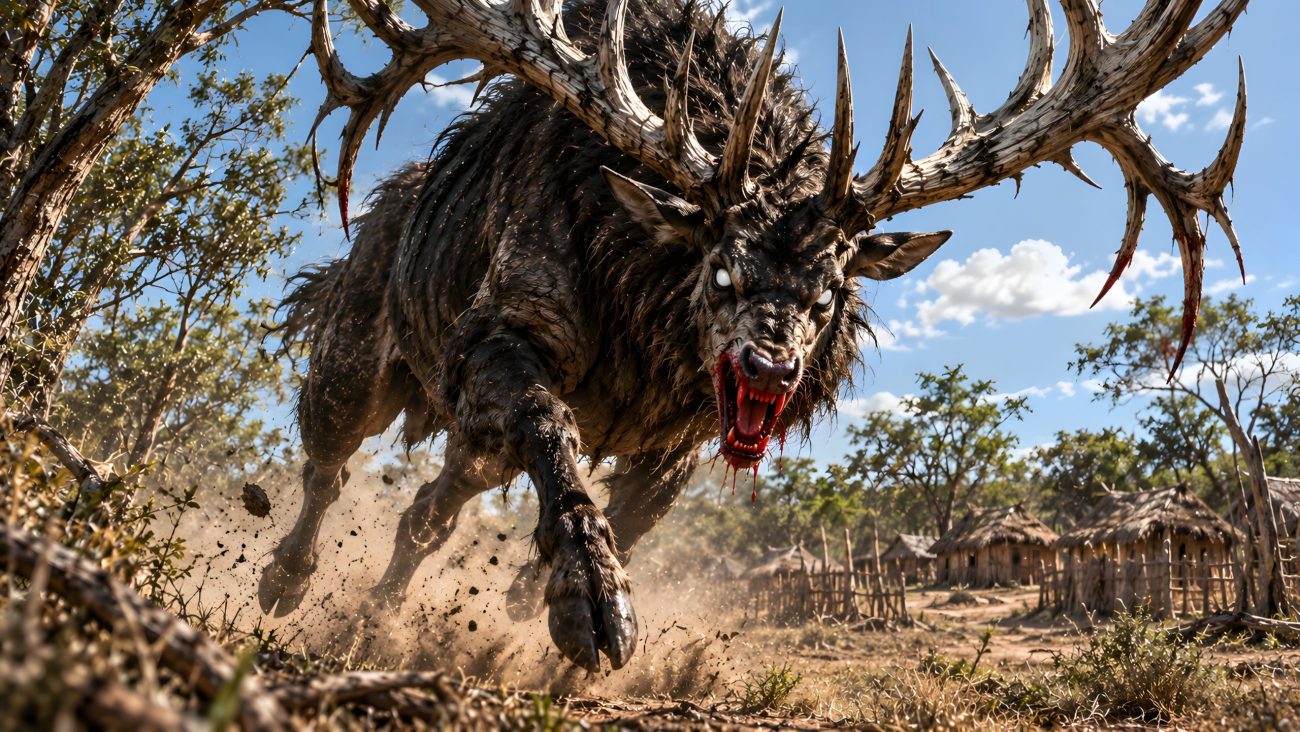
Siéhnam is a terrifying deer that once brought terror to the Chorote people of Argentina. He attacked villages at night, appearing after midnight to hunt people.

Siéhnam killed his victims with his large antlers, stabbing them when he found them. If he discovered someone sleeping on their back, he would bite their throat. He killed four people every night, causing the Chorote to suffer terrible losses.

Eventually, the people became desperate and asked their shaman for help. They asked him, “What is it that comes at night?”

The shaman stayed awake and woke just before midnight. As the hour approached, he heard Siéhnam coming. When the deer appeared, the shaman confronted him: “Now I have caught you! I thought it was someone else, but it was you. You and I will fight!”

The shaman and Siéhnam fought, until eventually the shaman threw the deer to the ground. After this defeat, Siéhnam never returned.

The following day, the shaman brought the good news to the village. He told the people that they could now sleep peacefully, believing that the creature that had been tormenting them would not come back.


Sources

Countess Sica. “Siéhnam.” A Book of Creatures. February 8, 2021. https://abookofcreatures.com/2021/02/08/siehnam/


Bulan

Tradition: Turkic Mythology, Kyrgyzstan Mythology
Alternative Names: Bulan
Category: Deer


The Myth

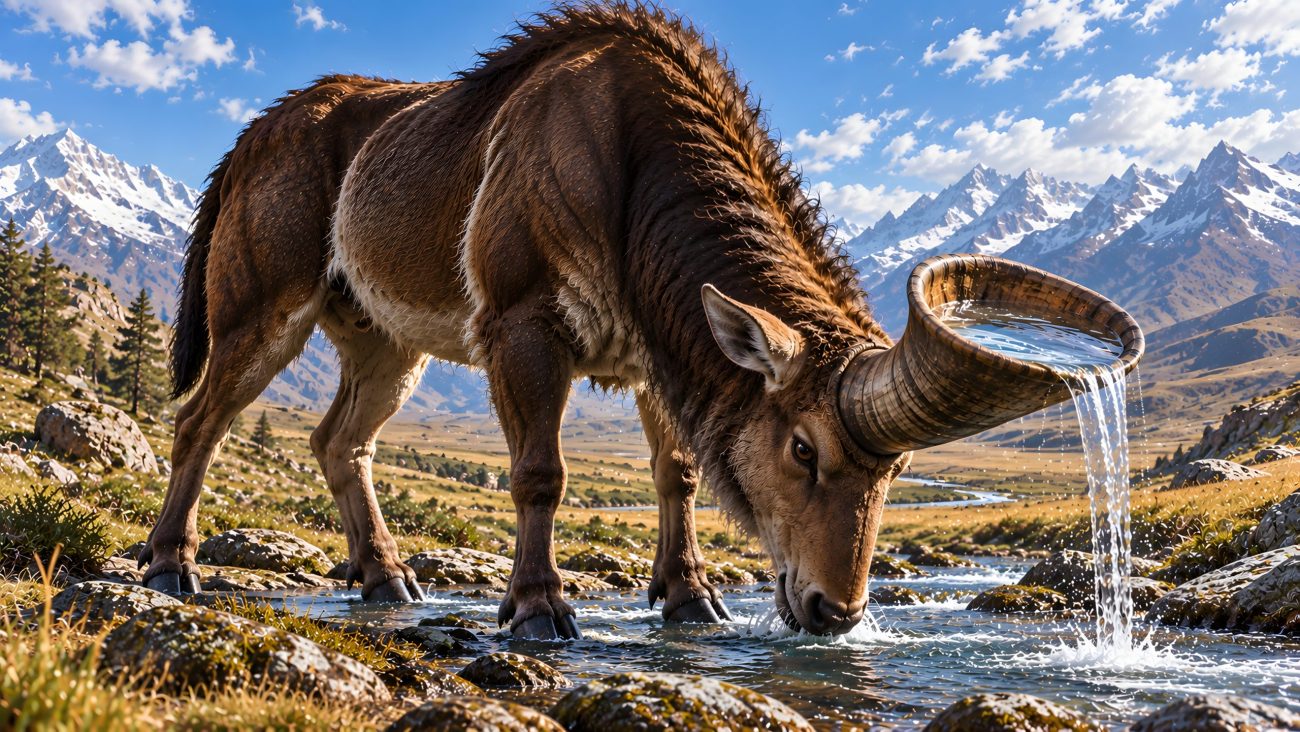
The Bulan is a strange animal described in Turkic folklore as a large creature hunted in the lands of the Kipchaks. It possesses a single horn shaped like a cup. The horn is carved and raised toward the sky, allowing the creature to collect snow and water in it.

The Bulan uses this unusual horn in connection with its partner. The female bends her horn toward the male, while the male bends down toward the water that the female carries in hers. In this way, the two animals are described as sharing the water collected in their extraordinary horns.

The exact identity of the animal described as the Bulan is uncertain. The word appears in the eleventh-century dictionary of Turkic dialects, where it is difficult to determine precisely which animal the name referred to. In Turkic languages, the word can refer to animals such as a moose, deer, onager, or wild horse. It has also been suggested that the word may have originated from the ancient Chinese bai, referring to a type of deer, and lin, associated with the unicorn.


Sources

“Bulan.” New Bestiary (Bestiary.us). Accessed September 5, 2026. https://www.bestiary.us/Bulan


Hippocervus

Tradition: Italian Mythology
Alternative Names: Hippocervus
Category: Horse, Deer


The Myth

The Hippocervus is a fantastical hybrid creature combining the nature of a horse and a deer. Its forepart is that of a horse, while its hind part is that of a stag.

A curious Hippocervus was reportedly presented in 1534 by Frederick, Duke of Mantua, to Francis the Great. The creature could be saddled and bridled, but it would always throw off its rider and trample him.

The Hippocervus is also described symbolically as representing a person who is extremely indecisive and absent-minded. It constantly struggles between its horse and deer natures, unable to settle upon one or the other.

The creature therefore serves as a symbol of a cowardly and hesitant person who rushes toward uncertain paths without thinking and soon loses his way. One description compares it to a man who throws himself without reflection into uncertain paths, only to despair after having lost himself in them.


Sources

“Gipocerv.” New Bestiary (Bestiary.us). Accessed September 5, 2026. https://www.bestiary.us/gipocerv

“Griffin, or Gryphon.” Encyclopædia Britannica, Ninth Edition. 1879. Reproduced by Wikisource. Accessed September 5, 2026. https://en.wikisource.org/wiki/Encyclop%C3%A6dia_Britannica%2C_Ninth_Edition/Griffin


Calygreyhound

Tradition / Region: English Mythology
Alternative names: None known
Category: Cat, Deer


The Myth

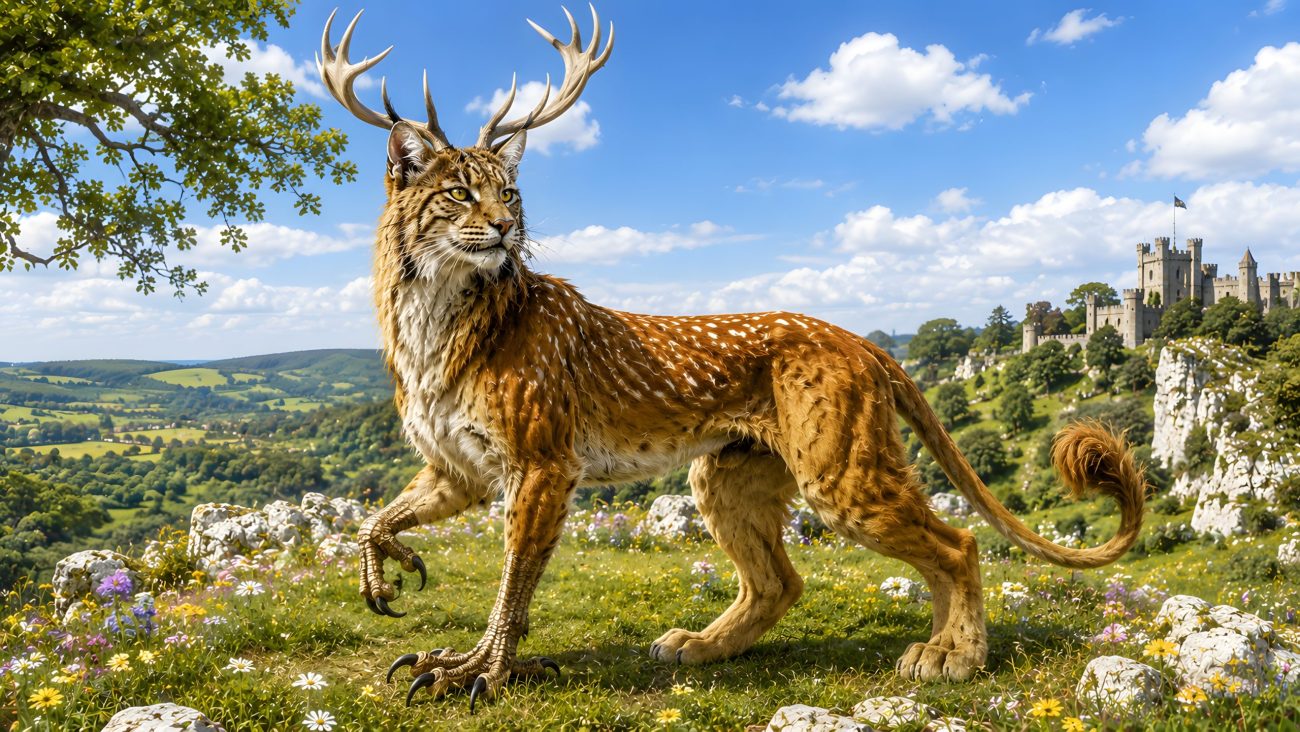
The Calygreyhound is a fantastical beast with the head of a wildcat, the body of a deer or antelope, the foreclaws of an eagle, ox hooves, antlers or horns, the hind legs of a lion or ox, and the tail of either a lion or a poodle. In rare depictions, it also possesses eagle’s wings.

Unlike many legendary creatures, the Calygreyhound has no surviving myths or folktales describing its deeds or adventures. It appears exclusively in medieval heraldry, most notably as a heraldic supporter of the de Vere family, Earls of Oxford, during the 15th and 16th centuries. It was traditionally associated with speed and swiftness, and its appearance varied considerably between artistic depictions, suggesting it was an entirely imaginative heraldic creation rather than a creature from popular legend.


Sources

“Calygreyhound.” Wikipedia: The Free Encyclopedia. Wikimedia Foundation. Accessed July 28, 2026. https://en.wikipedia.org/wiki/Calygreyhound


Elnias Devyniaragis

Tradition / Region: Lithuanian Mythology
Alternative name: Nine-Horned Deer
Category: Deer


The Myth

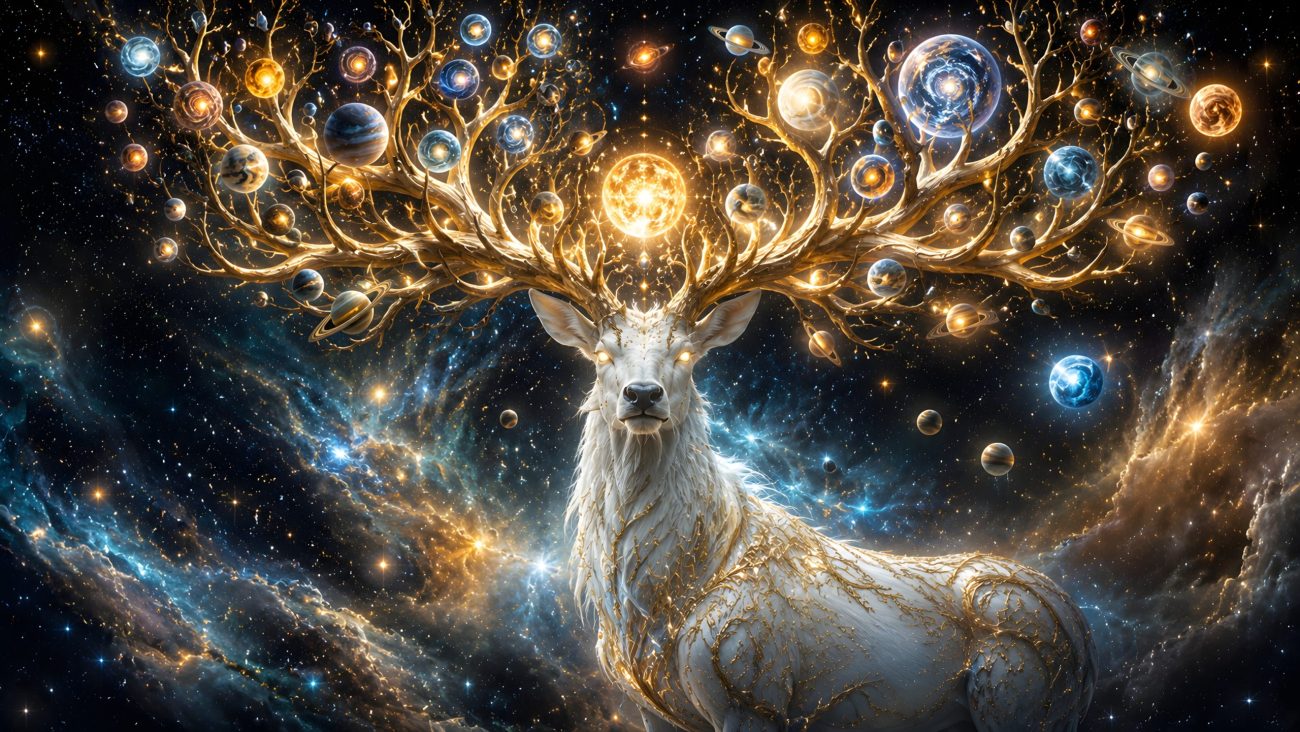
Elnias Devyniaragis, the Nine-Horned Deer, is an ancient Lithuanian mythological deer that carries the celestial bodies—most often the Moon, but sometimes the Sun—upon its antlers.

Its name refers to the nine days between the new moon and the full moon, and it frequently appears in archaic Lithuanian songs as a symbol of the movements of the heavens.

According to tradition, a white deer disappears at the winter solstice and returns at Christmas. The winter solstice festival itself was sometimes known as the Festival of the Nine-Horned Deer. In some songs, the deer carries the Sun upon its antlers, while in others it bears new antlers that are forged by divine blacksmiths.

The Nine-Horned Deer was likely revered as a sacred totem. Lithuanians believed deer were servants of God, capable of warding off disease and protecting people from floods, and that they were guarded in the mountains. In older Eurasian hunting mythology, the deer symbolized the Universe, the sky, and the Moon, making Elnias Devyniaragis a powerful embodiment of the cosmic order.


Sources

Wikipedia contributors. (n.d.). Elnias devyniaragis. In Vikipedija. Retrieved June 29, 2026, from https://lt.wikipedia.org/wiki/Elnias_devyniaragis