Tradition: English Mythology
Alternative Names: White Hart
Category: Deer
The Myth
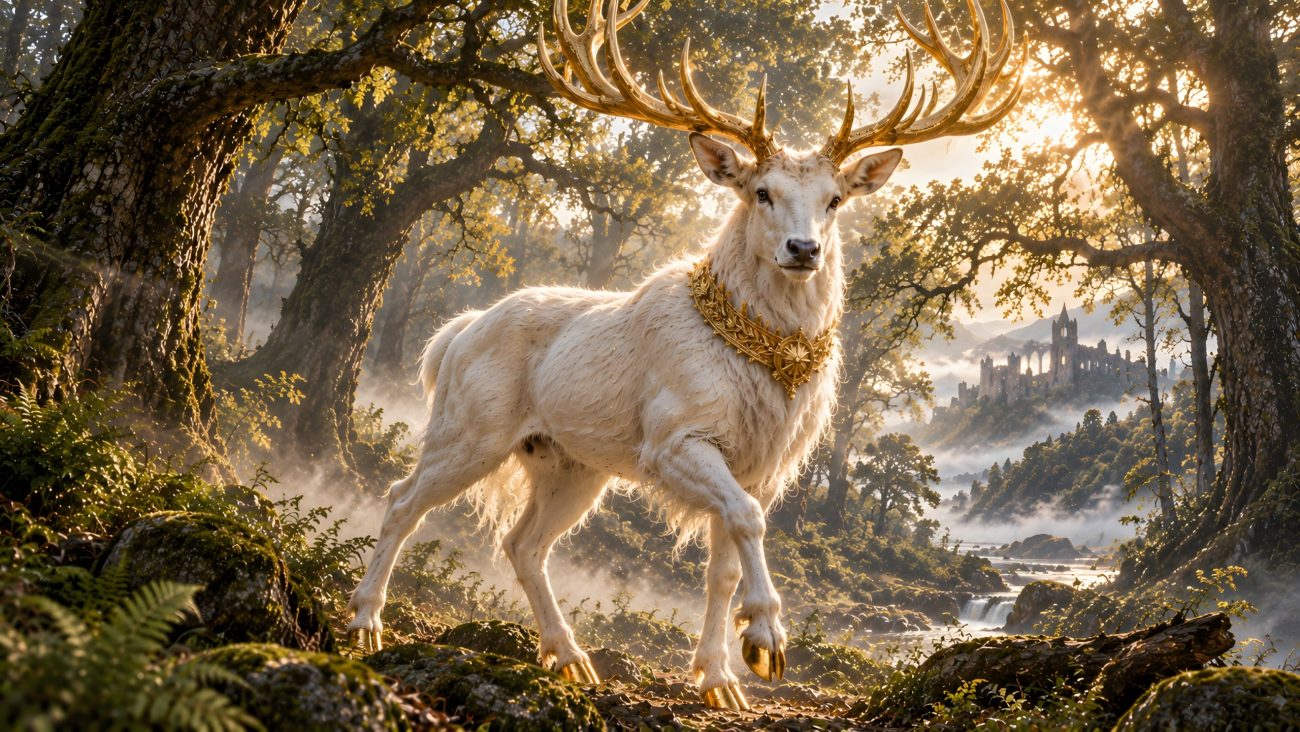
The White Hart is a magnificent white stag, with “hart” being the old English word for a mature male deer. In English tradition, the white hart became associated with royalty, particularly with Richard II, who adopted it as his personal badge.
Richard II probably derived the white hart from the arms of his mother, Joan, the Fair Maid of Kent, who was heiress of Edmund of Woodstock, Earl of Kent. The image may also have served as a pun on Richard’s name, with “Richard” being interpreted as “Rich-hart.”
The White Hart was prominently displayed by Richard II. In the Wilton Diptych, the earliest surviving authentic contemporary portrait of an English king, Richard wears a gold and enamelled white hart jewel. The angels surrounding the Virgin Mary also wear white hart badges, linking the creature closely with Richard’s royal identity.
The White Hart later became a familiar symbol in England. Numerous inns and pubs adopted the name and image of the white stag, making the creature one of the most recognizable traditional signs of English inns.
In English folklore, the White Hart is also associated with Herne the Hunter, a supernatural hunter traditionally connected with Windsor Forest. Through this association, the white stag became linked not only with royalty and heraldry but also with the mysterious supernatural world of the English forest.
Sources
“White Hart.” Wikipedia: The Free Encyclopedia. Wikimedia Foundation. Accessed September 5, 2026. https://en.wikipedia.org/wiki/White_Hart