Rampogusto

Tradition / Region: Croatian Mythology
Alternative names: King of the Forest Goblins
Category: Goblinoid


The Myth

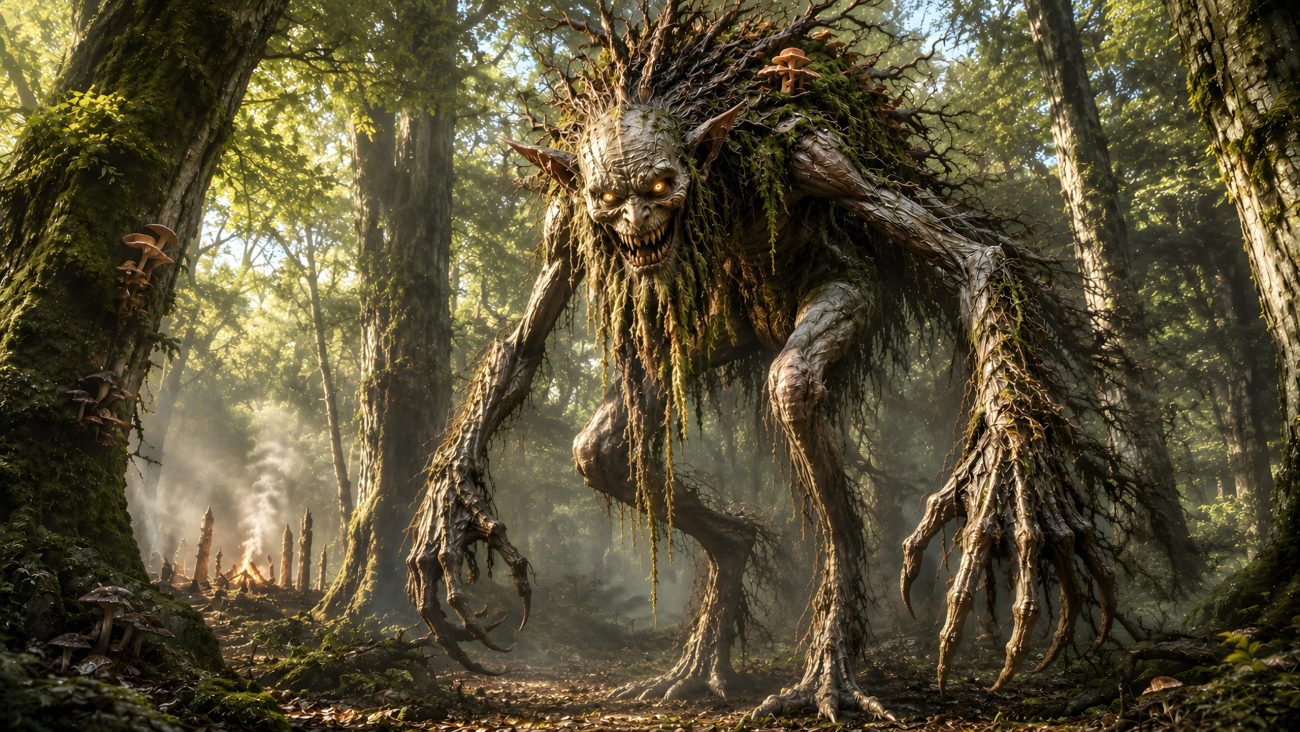
Rampogusto was a dark forest spirit from old Croatian folklore, described as the King of the Forest Goblins. He haunted deep ancient woods before sunrise, gliding silently from tree to tree through mist and darkness like a living shadow. Travelers feared the silent hour before dawn because it was believed to be the time when Rampogusto wandered most freely through the forest.

According to the tale, Rampogusto appeared in the great forest where the old man Witting lived with his three grandsons: Bluster, Careful, and Quest. The brothers were warned about the eerie silence of the woods at dawn because the goblin king loved to roam beneath the trees before the sun appeared.

Rampogusto was not simply a monster but a malicious supernatural being driven by hatred, envy, and deceit. He especially despised good and honorable people. In the story he hated the wise old Witting “as a mean scoundrel hates an upright man.” His hatred became even stronger because Witting kept a sacred eternal fire burning in the forest glade. The smoke from this holy fire tormented Rampogusto and forced him away, suggesting that sacred flame weakened evil spirits and protected humans from dark supernatural forces.

The goblin king moved almost invisibly through the woods. The tale describes him slipping from tree to tree “like a wraith of mist,” hiding high in the branches while secretly spying on humans. He listened unseen as the divine being All-Rosy revealed visions of the world and the future to Witting’s grandsons.

Unlike open monsters that attacked directly, Rampogusto preferred corruption and manipulation. After hearing All-Rosy instruct the brothers to remain loyal to their grandfather and avoid the temptations of the outside world, Rampogusto immediately began plotting to turn them against Witting. He wished to destroy the harmony of the family through deception rather than force.

In this way, Rampogusto resembles many older European forest spirits and goblin kings who represent temptation, chaos, envy, and the dangers hidden within wilderness. The dark forest itself was viewed as a place where supernatural beings moved unseen and where travelers could easily lose both their path and their judgment.

Rampogusto embodies this fear of corruption emerging from the unknown wilderness. He is a spirit of hostile nature — ancient, cunning, and hateful toward sacred order, family loyalty, and divine guidance. Unlike protective spirits connected to forests, he exists as a parasitic force that seeks to weaken human virtue and draw people away from wisdom and stability.

Though described as a goblin king, Rampogusto behaves more like a demonic forest intelligence: invisible, manipulative, difficult to confront directly, and most powerful during darkness and uncertainty before the coming of light.


Sources

Brlić-Mažuranić, I. (1924). Croatian tales of long ago (F. S. Copeland, Trans.). New York: Frederick A. Stokes Company.
Vodeni Demoni

Tradition / Region: Serbian Mythology
Alternative names: Vodeni Čovek, Vodenjak, Water Demons
Category: Demon, River Dweller


The Myth

In Serbian folk belief, water was not viewed as an ordinary natural element but as a living supernatural force inhabited by spirits and demons. Rivers, springs, lakes, mills, and deep waters were believed to possess consciousness, magical power, and dangerous invisible inhabitants known as vodeni demoni — water demons.

People spoke to water as if it were alive, greeting it respectfully and asking it for healing and protection. Certain waters were believed to cure illness, restore youth, grant fertility, or protect against evil spirits. Other waters, however, were feared as haunted places inhabited by deadly supernatural beings that dragged humans beneath the surface.

According to folklore, many rivers demanded sacrifices and regularly claimed human lives through drowning. Some rivers became infamous for frequent deaths and were believed to hunger for victims. Water demons especially haunted deep rivers, whirlpools, mills, bridges, springs, and isolated crossings.

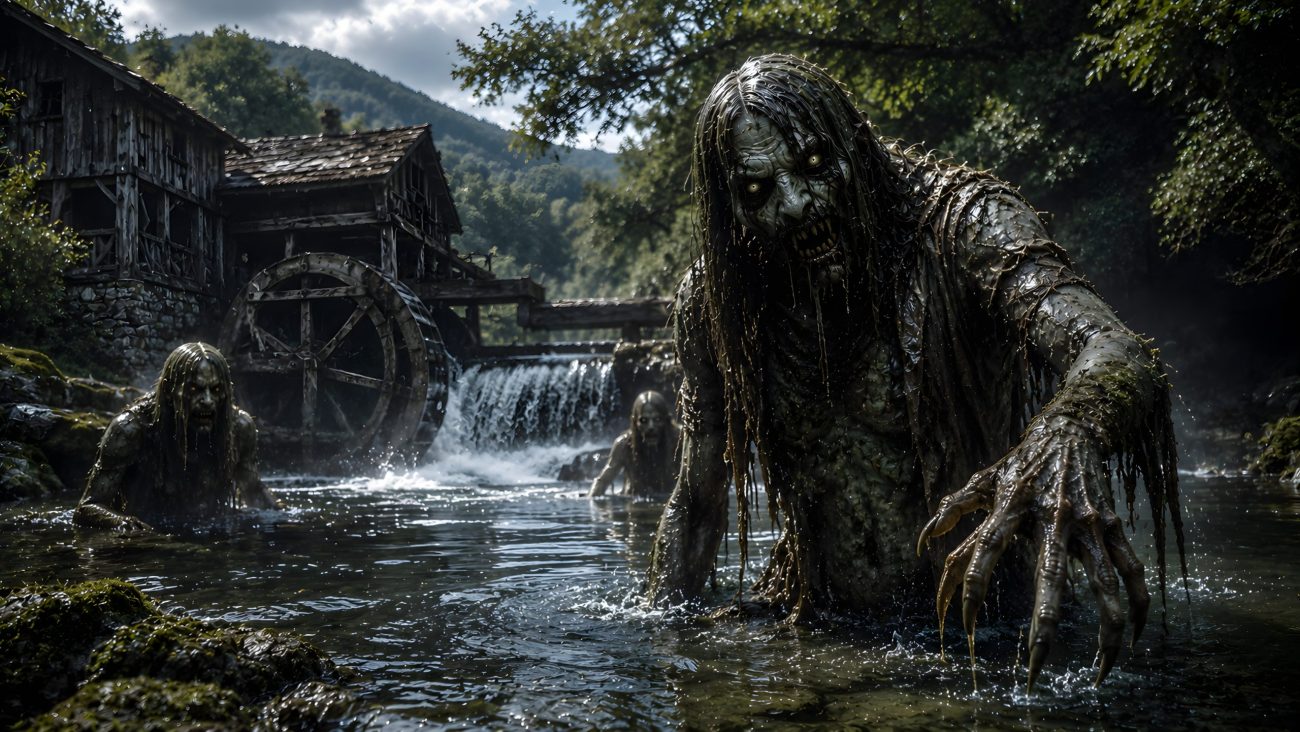
One of the most feared beings was the Vodeni Čovek — the Water Man — a spirit appearing in human form. He lured travelers crossing rivers or walking near dangerous waters, pulling them beneath the surface and drowning them. In Kosovo and other regions, adults frightened misbehaving children with warnings that the “Water Man” would carry them away.

Watermills were considered especially dangerous places because demons, vampires, and devils gathered there during the night. Serbian folklore claimed that every mill housed evil spirits, and many legends described vampires attacking travelers or millers inside lonely mills beside rivers. The famous vampire Sava Savanović was said to haunt a watermill where he murdered those who entered after dark.

Flowing water itself possessed magical properties. “Living water” was pure running water flowing naturally through springs and rivers, while stagnant “dead water” was considered spiritually dangerous. Some waters were believed to become wine for a moment at midnight before Epiphany, while miraculous springs hidden in caves or mountains supposedly healed blindness, deafness, infertility, and disease.

Many rituals involving water were performed for protection against demons. Before thunderstorms, containers of water were covered so devils fleeing lightning could not hide inside them. People avoided drinking from rivers or springs at night for fear of swallowing evil spirits together with the water.

Water was also deeply connected to death and the afterlife. It was believed the souls of the dead suffered terrible thirst in the next world, so water was placed near corpses, poured onto graves, or carried in funeral rituals for the deceased. After someone died, water inside the house was often thrown away because people believed the soul of the dead had entered it.

Certain magical waters possessed special powers. “Untouched water” collected before sunrise retained supernatural strength and was used in rituals, healing, childbirth, and sacred bread-making. “Water of forgetting” supposedly caused those who drank it to forget their families, homeland, and even their faith.

Demons were believed to hide within polluted or spiritually corrupted waters. Rivers before St. George’s Day were feared because devils supposedly dwelled in them during that time. Some springs were avoided because fairies, witches, or dark spirits bathed there and contaminated the water with supernatural power.

Despite their danger, water spirits were not always purely evil. Some waters were guarded by benevolent supernatural beings who protected communities, healed the sick, and brought fertility, rain, and prosperity. Serbian folklore therefore treated water as both sacred and terrifying — a living gateway between the human world and the invisible realm of spirits and demons.


Sources

Кулишић, Ш., Петровић, П. Ж., & Пантелић, Н. (1970). Српски митолошки речник. Београд: Нолит.


Divokoza

Tradition / Region: Montenegro Mythology
Alternative names: Wild Mountain Goat, Chamois
Category: Sheep


The Myth

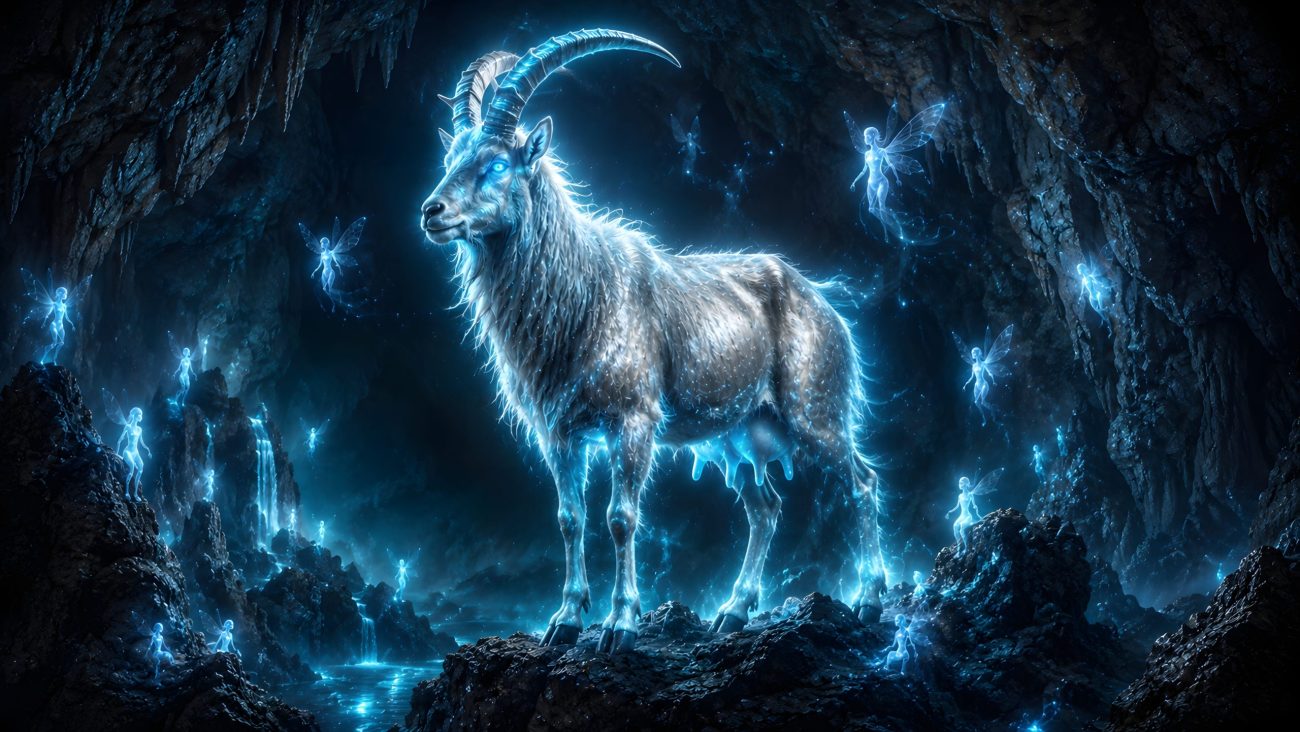
The Divokoza was a wild mountain goat or chamois deeply connected to the supernatural world of South Slavic folklore. In the high mountain regions of Montenegro, especially among the people of Kuči, it was believed that the vile — mysterious fairy women of the mountains — secretly kept and milked divokoze inside hidden caves.

According to legend, the fairies drank the milk of the divokoze and guarded the animals as part of their supernatural herds. Because of this connection, the creatures were viewed as belonging partly to the human world and partly to the hidden realm of the vile.

One famous story tells of a hunter from Kuči who was hunting divokoze in the Komovi mountains when he suddenly heard a vila calling from inside a cave. She shouted for a shepherd to bring the divokoze for milking. The shepherd replied:

“Tomica Micanov will not allow me.”

— referring to the hunter nearby.

The story revealed that the mountain fairies maintained secret herds hidden deep within isolated cliffs and caves, far from ordinary human settlements.

The divokoza became associated with dangerous mountain wilderness, rocky peaks, storms, caves, and remote alpine regions where supernatural beings were believed to dwell. Hunters who pursued the animals too aggressively risked offending the vile themselves.

Because they were considered fairy-owned creatures, killing a divokoza could bring misfortune or supernatural punishment in some traditions. The animals were therefore treated with caution and reverence by mountain communities.

Unlike many monstrous beings of Balkan folklore, however, the divokoza was not considered evil. Instead, it symbolized the untamed spirit of the mountains and the mysterious boundary between nature and the supernatural world.


Sources

Кулишић, Ш., Петровић, П. Ж., & Пантелић, Н. (1970). Српски митолошки речник. Београд: Нолит.


Zduhač

Tradition / Region: Serbian Mythology, Montenegro Mythology, Bosnian Mythology
Alternative names: Zduha, Zduvac, Stuhać, Vjedogonja, Jedogonja
Category: Spirit


The Myth

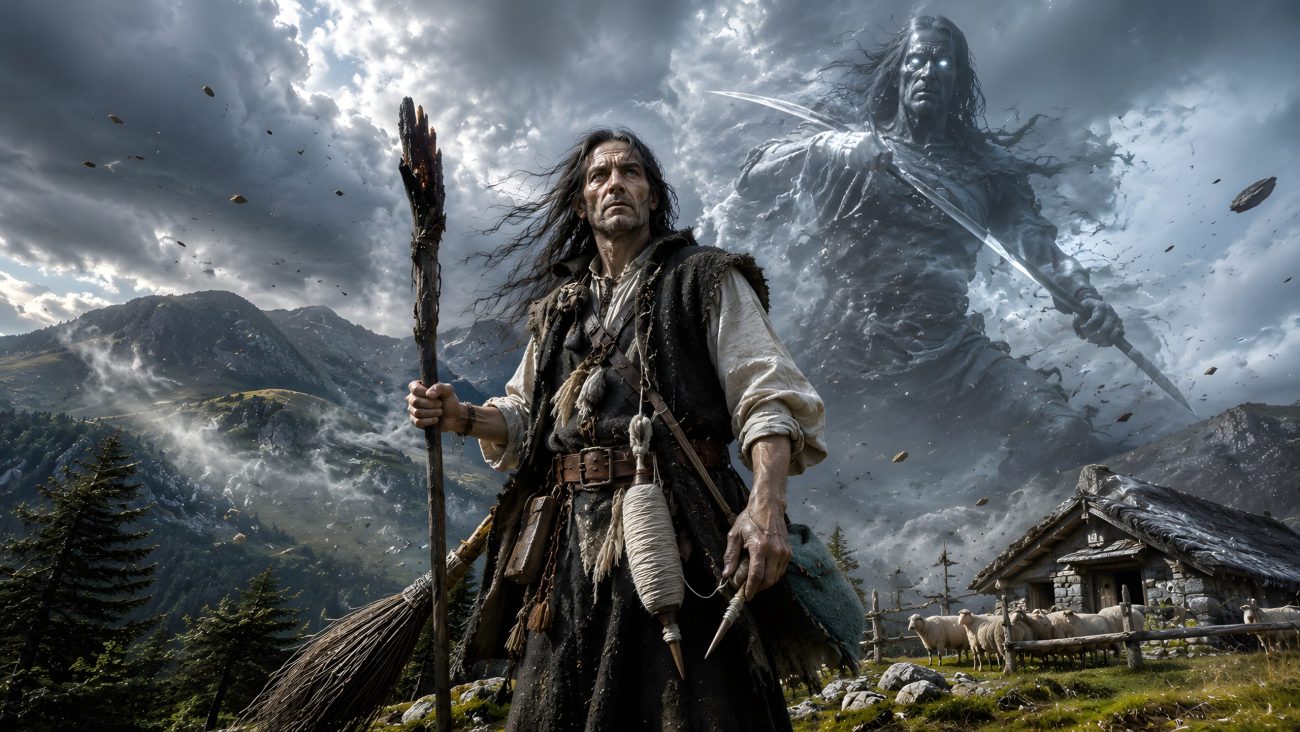
The Zduhač was a supernatural being from South Slavic folklore believed to protect its homeland from storms, hail, and destructive weather. Unlike ordinary spirits or monsters, a Zduhač was usually an ordinary human by day, but during sleep its spirit left the body and traveled through the skies to battle enemy forces.

People believed every region, tribe, or village possessed its own Zduhači who defended the land against rival Zduhači from neighboring territories. Their battles took place high in the mountains, above the clouds, or across storm-filled skies during violent winds and dark nights.

While sleeping, the spirit of the Zduhač was said to leave the body and lead winds, chase storm clouds, and fight supernatural enemies trying to bring hail and destruction. These battles explained storms, whirlwinds, thunder, and violent weather.

The Zduhači fought using bizarre magical weapons. Some wielded giant uprooted trees, enormous stones, burning branches, or sharpened sticks and spindles. Burnt wood was especially feared as a powerful weapon. They also carried symbolic farming objects such as shovels, grain brooms, and milk pails because victory in battle was believed to determine fertility, prosperity, and the success of crops and livestock.

The fighting was dangerous even for the Zduhači themselves. A spirit wounded during battle would return to its sleeping body weakened, sick, or dying. Sudden unexplained deaths were sometimes believed to happen because a Zduhač had been killed in one of these supernatural wars.

A person destined to become a Zduhač was often believed to be born under unusual signs, especially inside a caul or “shirt” covering the body at birth. This birth-cloth was considered magical and had to be carefully hidden and preserved throughout life because the Zduhač supposedly used it during spiritual battles.

Zduhači were usually men, though women, children, and even animals could possess the same power. Certain dogs, oxen, goats, horses, and rams were believed capable of fighting as Zduhači to protect their herds.

In everyday life, a Zduhač looked mostly normal, though folklore described them as quiet, thoughtful, serious people who slept unusually deeply and were difficult to awaken. They were also considered lucky individuals who brought protection and prosperity to their household and community.

Some traditions described the Zduhač not only as a spirit-warrior but also as a strange mountain being similar to a vampire or wandering supernatural creature. In darker beliefs, a Zduhač who turned toward evil or served demonic powers could become a vampire after death.

Unlike many creatures in Slavic folklore, however, the Zduhač was generally viewed as a protective figure — a supernatural defender who fought for the safety of its people, land, crops, and animals against destructive forces carried by storms and enemy spirits.


Sources

Кулишић, Ш., Петровић, П. Ж., & Пантелић, Н. (1970). Српски митолошки речник. Београд: Нолит.


Ebibi

Tradition / Region: Gabon Mythology
Alternative names: Ebibi Ogres
Category: Giant


The Myth

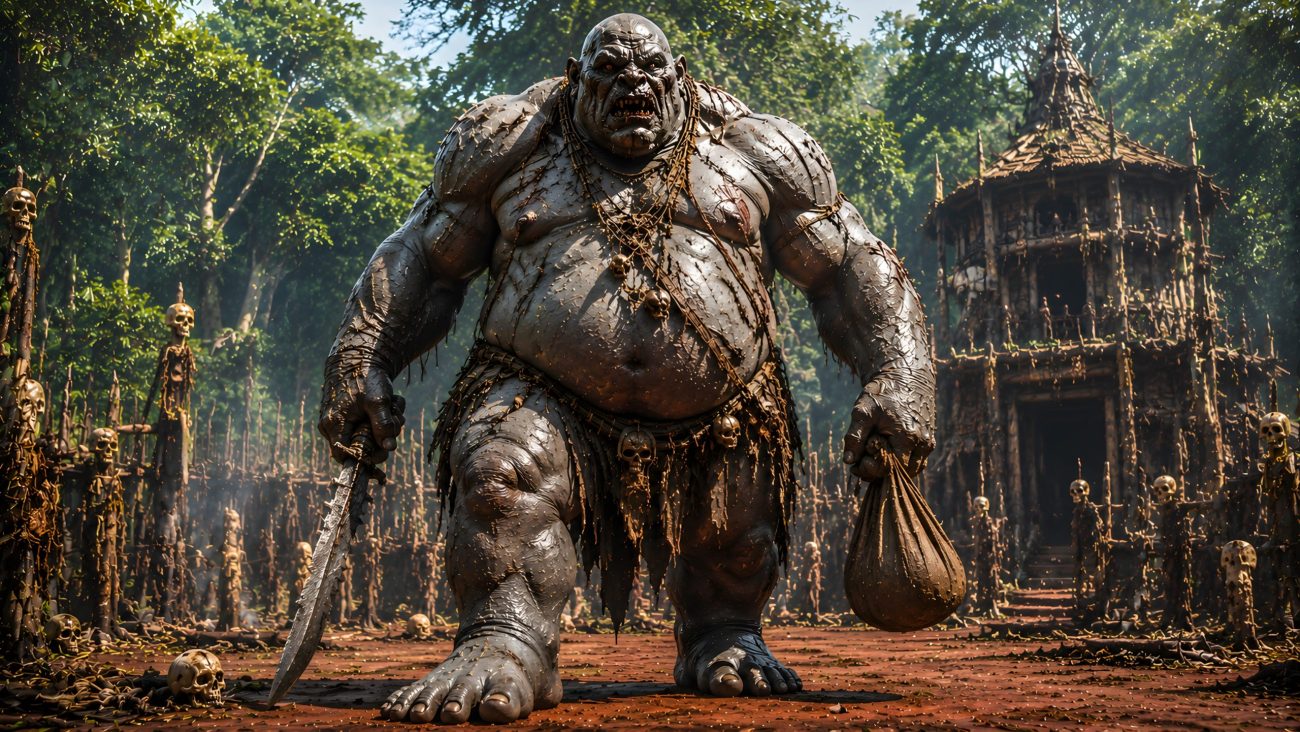
The Ebibi were monstrous ogres in Fang mythology feared even more than ordinary man-eating creatures. They were described as powerful supernatural beings who ruled through terror, magic, and cannibalism.

According to the legends, the Ebibi lived together in a distant village where they enslaved surrounding tribes. In the center of their settlement stood a massive house filled with prisoners — men, women, and children captured from many different peoples. Every day the Ebibi devoured human victims in enormous numbers.

Unlike ordinary monsters, the Ebibi used dark magical powers and fetishes. One of their most feared weapons was the ozolikwé powder, a supernatural substance capable of forcing people into an unnatural sleep so deep that they could not be awakened.

The Ebibi entered the story after hearing about the legendary strength of the three brothers Etarane, Mendore, and Bisonge, hunters famous for slaying giant beasts and monsters. Fearing the brothers’ growing power, the Ebibi decided to destroy them.

One of the ogres visited the brothers’ home pretending to seek hospitality. While inside, he secretly threw enchanted ozolikwé powder into the fire. A strange smoke filled the house, and all three brothers immediately fell into a magical sleep.

Their mother Ada desperately tried to wake them, shaking them, burning their skin with fire, and calling their names, but nothing could break the spell.

The Ebibi then attacked the sleeping brothers. Etarane and Mendore were killed while their house was burned to the ground. Only the youngest brother, Bisonge, survived because Ada carried him away into the forest before the ogres arrived.

When Bisonge awoke and learned what had happened, he swore revenge.

Armed with his great knife and magical hunting net, Bisonge traveled to the village of the Ebibi. There he discovered countless prisoners locked inside the ogres’ great house waiting to be eaten. He secretly freed them, then trapped the returning Ebibi inside their own home using his enchanted net, whose threads were said to be as hard as iron.

The trapped ogres tried to escape but failed. One by one, Bisonge dragged them out, beheaded them, and cut open their stomachs. According to the legend, the people the Ebibi had recently devoured escaped alive from inside the monsters’ bodies and fled back into the forest.

After defeating the Ebibi, Bisonge became a great chief and protector of the people. His victory symbolized the triumph of wisdom, spiritual strength, and true maturity over monstrous violence, greed, and chaos.

In Fang mythology, the Ebibi often represent destructive supernatural forces tied to death, domination, fear, and spiritual corruption.


Sources

Mvé Ondo, B. (2011). Wisdom and initiation in Gabon: A philosophical analysis of Fang tales, myths, and legends (J. F. Barnes, Trans.). Lanham, MD: Lexington Books.


Dzun

Tradition / Region: Gabon Mythology
Alternative names: Dzoun
Category: River Dweller


The Myth

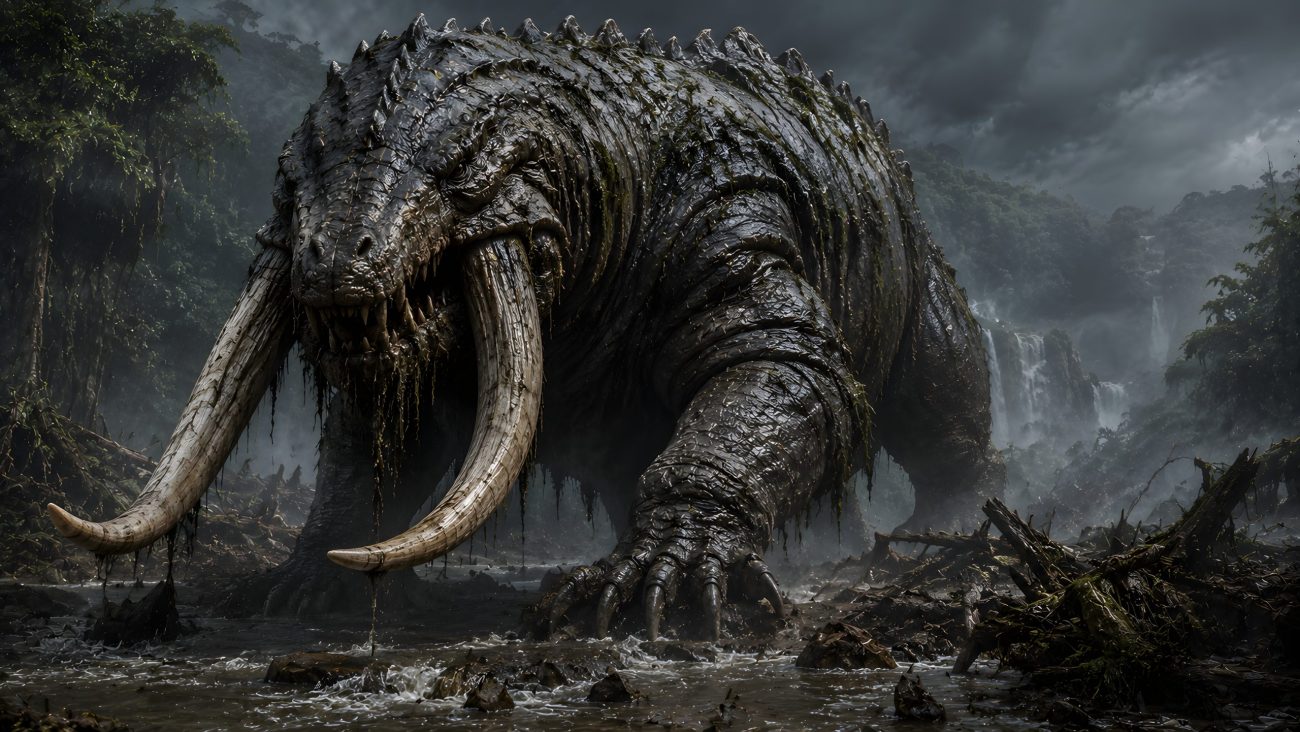
Dzun was a terrifying monster from Fang mythology, remembered as one of the deadliest creatures ever faced by the legendary brothers Etarane, Mendore, and Bisonge. The creature lived near the rivers and forests and was described as a gigantic beast of overwhelming strength and fury.

According to the stories, the Dzun was so massive that every step it took shook the earth and left holes deep enough for a man to hide inside. Trees snapped beneath its body like grass, while its enormous tusks were said to be as long as a human body. The monster could hurl giant rocks through the air as if they were small stones and charged with the force of a storm.

Only the bravest hunters dared approach such a creature.

The legend begins with Ada and her three extraordinary sons: Etarane, Mendore, and Bisonge. After eating the magical fruit of the angonlongo tree, the brothers grew into gigantic hunters with superhuman strength. Etarane became a master fisherman who could dam entire rivers, Mendore became a mighty elephant hunter, and Bisonge became a master trapper whose nets could imprison even the largest beasts.

One day, while fishing at the river, Etarane suddenly encountered the Dzun.

Terrified but determined, he rushed back to warn his brothers and called them to battle the monster. The three hunters armed themselves and hurried toward the riverbank where the creature waited.

When the Dzun saw them, it charged immediately.

The beast thundered across the earth, uprooting trees and shaking the ground beneath its enormous paws. But the brothers stood their ground. As the monster attacked, Etarane struck it with a harpoon, Mendore blinded one of its eyes with his spear, and Bisonge cast his giant net around the creature’s massive body.

The enraged beast fought violently, but the three brothers overwhelmed it together. Mendore destroyed its second eye, Etarane pierced its heart, and finally Bisonge cut off its head with his machete.

Victorious, the brothers carried the gigantic corpse back to their home.

Nothing from the Dzun was wasted. Its skull became a chair, its bones were transformed into magical whistles used against evil spirits, its skin became shields, its ears were turned into enormous drums, and its tusks became ritual instruments and hunting tools.

The defeat of the Dzun spread the fame of the brothers across the land. They became feared as unmatched hunters capable of killing monsters, elephants, and even supernatural beasts that ordinary men could never face.

In Fang tradition, the Dzun represented more than a giant animal. It symbolized terrifying chaos, destructive power, and the dangerous trials a person must overcome before becoming a complete and powerful adult.


Sources

Mvé Ondo, B. (2011). Wisdom and initiation in Gabon: A philosophical analysis of Fang tales, myths, and legends (J. F. Barnes, Trans.). Lanham, MD: Lexington Books.


Ngi Nzame

Tradition / Region: Gabon Mythology
Alternative names: Ngi
Category: Monkey


The Myth

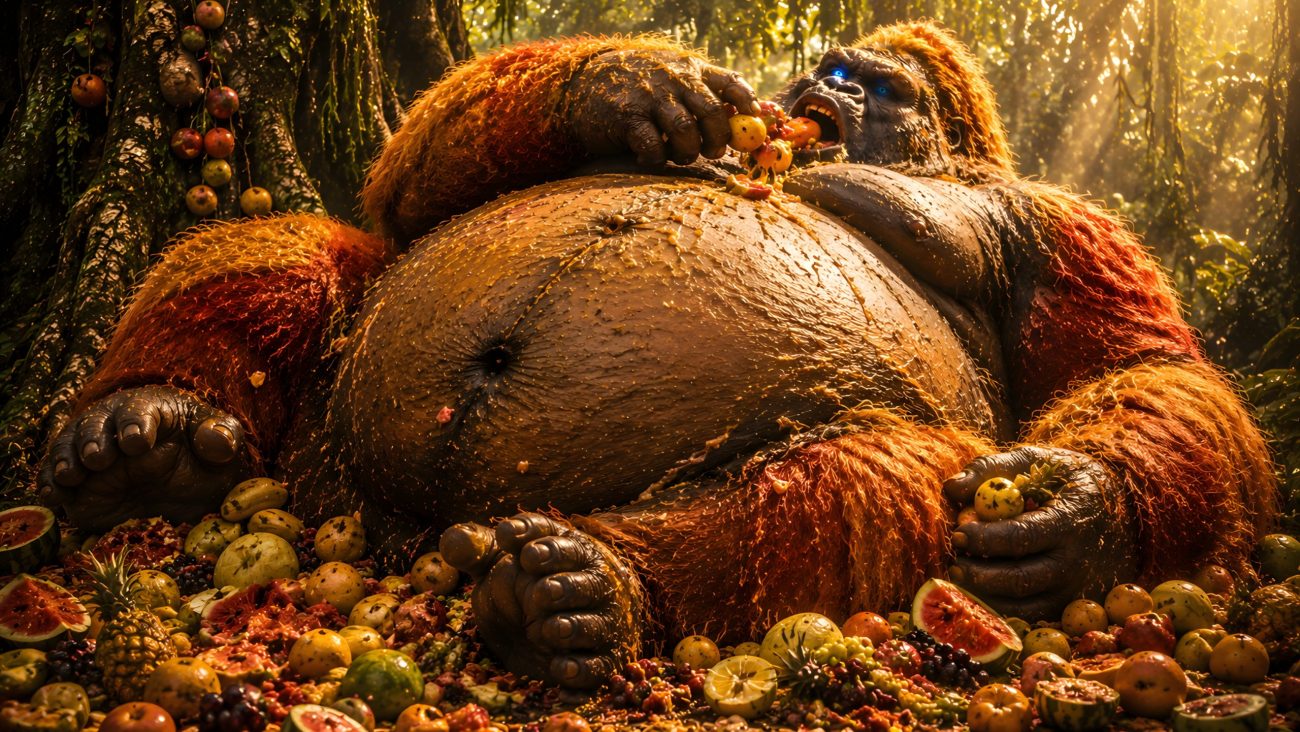
Ngi Nzame was one of the seven sons of Essamnyambogë in Fang mythology. His name meant “Gorilla, Child of God,” and he represented the powerful but instinctive side of human nature. Like his brothers Woa the chimpanzee and Zoak the elephant, Ngi was connected to the wilderness, hunger, and the untamed forces of the forest.

Long ago, the creator Nzame left his seven sons alone in their village. Without him they had no fire, no food, and no guidance. Worried and desperate, the eldest brother Mot a Nzame ordered his brothers one by one to journey into the great forest and search for their divine father.

After Woa disappeared into the wilderness and never returned, Mot sent Ngi Nzame to continue the search.

Ngi entered the forest determined to find Nzame, but the deeper he traveled, the stronger the temptations of the wilderness became. Soon hunger overtook him. Seeing fruit hanging from the trees, he stopped and devoured it greedily, forgetting the purpose of his journey.

Continuing deeper into the forest, Ngi eventually reached a riverbank surrounded by thick vegetation and shade. There, instead of searching further for his father, he abandoned the path entirely and disappeared into the bush.

Like his brothers before him, Ngi became lost to instinct and desire.

He never returned home.

The Fang viewed this story as more than a tale about a gorilla-like being wandering into the forest. Ngi symbolized the dangerous pull of appetite, distraction, and animal instinct inside human beings themselves. His failure showed how easily one could lose sight of wisdom, purpose, and spiritual truth when consumed by hunger and earthly desires.

Unlike Mot a Nzame — who resisted temptation and ultimately found the creator — Ngi remained trapped in the wilderness, becoming part of the untamed forest forever.


Sources

Mvé Ondo, B. (2011). Wisdom and initiation in Gabon: A philosophical analysis of Fang tales, myths, and legends (J. F. Barnes, Trans.). Lanham, MD: Lexington Books.


Evus

Tradition / Region: Gabon Mythology
Alternative names: Evu
Category: Forest Dweller


The Myth

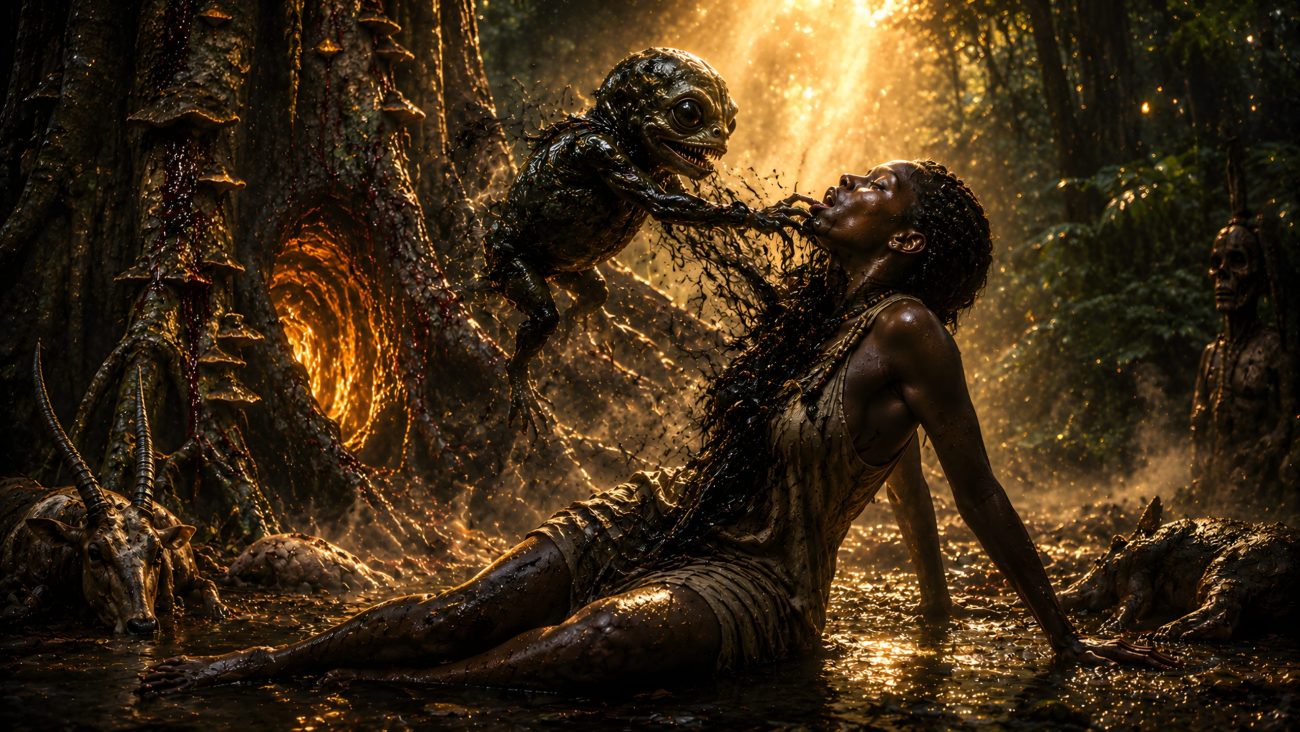
Evus was a feared being in Fang mythology, associated with witchcraft, death, hunger, corruption, and destructive desire. Stories described him as a strange creature living deep inside swamps and forests, sometimes appearing as a giant toad, a frog-like beast, or a mysterious child hidden inside hollow trees. He fed on raw meat and lived far from human villages in dark wilderness untouched by civilization.

Long ago, during the first age of humanity, the creator Zamba lived among humans and protected them. At that time people did not know true death, sickness, or suffering. Zamba warned his wife never to enter a forbidden part of the forest where Evus lived hidden among the swamps.

But curiosity overcame her.

After Zamba left on a journey, the woman secretly entered the forbidden forest. There she found piles of freshly killed animals and heard a voice calling from the swamp. Soon Evus revealed himself — an ugly, unnatural creature who promised endless meat and prosperity if she brought him back to the village.

Because Evus could not openly travel among humans, he instructed the woman to squat down. The creature then entered her body through her vagina and lodged himself inside her stomach.

From that moment onward, disaster entered the world.

Once inside the village, Evus constantly demanded food. First he devoured goats and sheep. Then chickens. Soon all the domestic animals were gone, but his hunger never stopped growing.

Finally, Evus demanded human flesh.

The woman’s daughter became his first human victim, and through this act death entered human existence forever. Bodies began to decay, suffering appeared among mankind, and the peaceful world created by Zamba collapsed.

When Zamba returned and saw what had happened, he became furious. Seeing that Evus now lived inside humanity itself, he abandoned mankind and left humans alone with death, evil, and suffering.

From then onward, the Fang believed Evus remained hidden within certain people, feeding dark desires such as greed, jealousy, violence, sorcery, and destruction. He became a symbol of the dangerous force hidden inside the human heart — a hunger that can never truly be satisfied.


Sources

Mvé Ondo, B. (2011). Wisdom and initiation in Gabon: A philosophical analysis of Fang tales, myths, and legends (J. F. Barnes, Trans.). Lanham, MD: Lexington Books.


Apophis

Tradition / Region: Egyptian Mythology
Alternative names: Apep, Aphoph
Category: Snake


The Myth

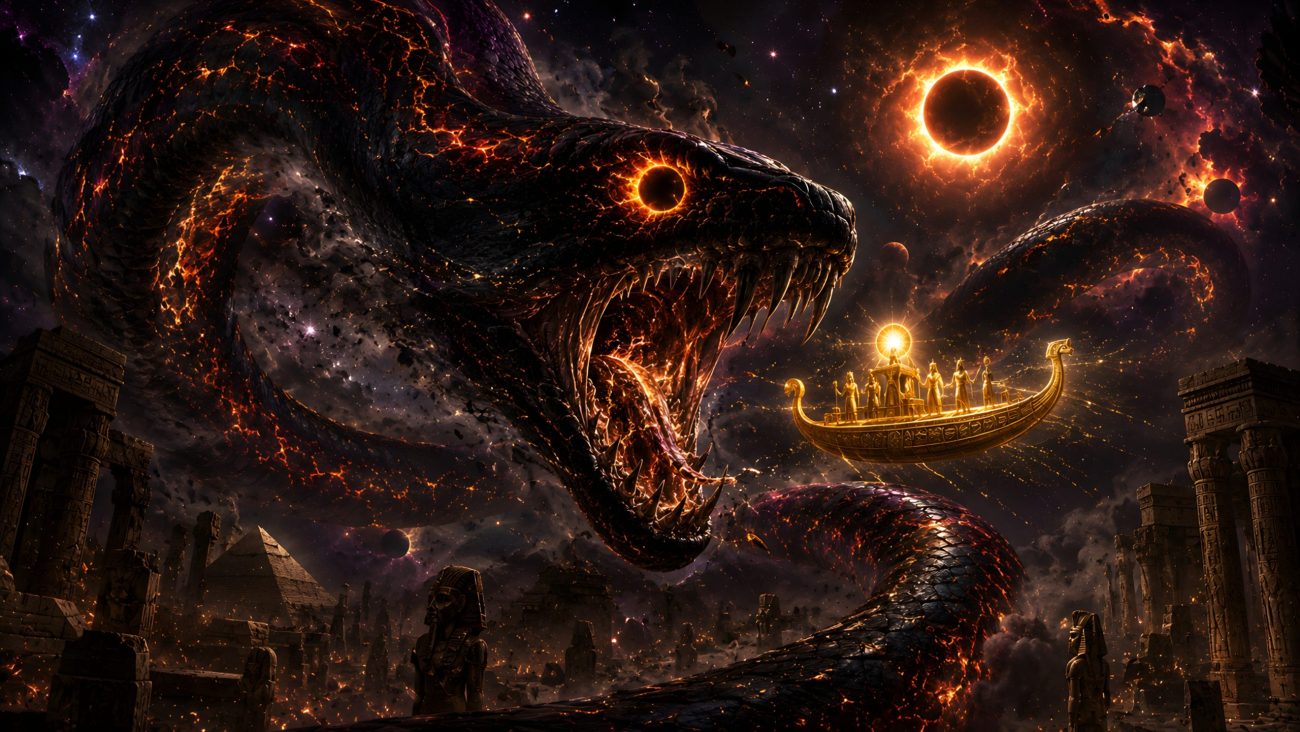
Apophis was the great serpent of chaos in ancient Egyptian mythology and the eternal enemy of the sun god Ra. Usually depicted as a gigantic snake or dragon-like serpent, Apophis represented darkness, destruction, disorder, and everything opposed to divine order and truth.

Egyptians believed that every night, as Ra traveled through the underworld in his solar boat, Apophis attempted to stop him and plunge the world into eternal darkness. The giant serpent attacked the sun boat with coils, hypnotic gazes, storms, and monstrous strength.

Some traditions described Apophis as enormous beyond imagination, stretching dozens of yards in length with a terrifying flint-like head. His movements were believed to cause earthquakes and thunder, while his roar shook the underworld itself.

Ra did not fight alone. Other gods traveled with the solar barque and helped defend the sun against the chaos serpent. The god Set was especially associated with spearing Apophis during these nightly battles, while in other stories Ra himself slew the monster in the form of a giant cat.

Although Apophis was repeatedly defeated, he could never be fully destroyed. Each night he returned again from the primordial waters of chaos to renew the struggle against the sun.

Because the serpent symbolized cosmic evil and disorder, Egyptian priests performed rituals specifically meant to weaken him. In ceremonies known as the Overthrowing of Apophis, priests created wax figures or drawings of the serpent which were spat upon, stabbed, burned, mutilated, and destroyed while protective spells were recited.

Apophis was also feared in funerary beliefs. Some traditions described him as an eater of souls lurking in the underworld, and protective spells were buried with the dead to defend them against his attacks.

Among all Egyptian monsters and hostile beings, Apophis became the ultimate symbol of chaos battling against light, life, and cosmic order.


Sources

Wikipedia contributors. (n.d.). Apophis. In Wikipedia. Retrieved May 15, 2026, from https://en.wikipedia.org/wiki/Apophis


Apshait

Tradition / Region: Egypt Mythology
Alternative names: Apshait Beetle
Category: Insect


The Myth

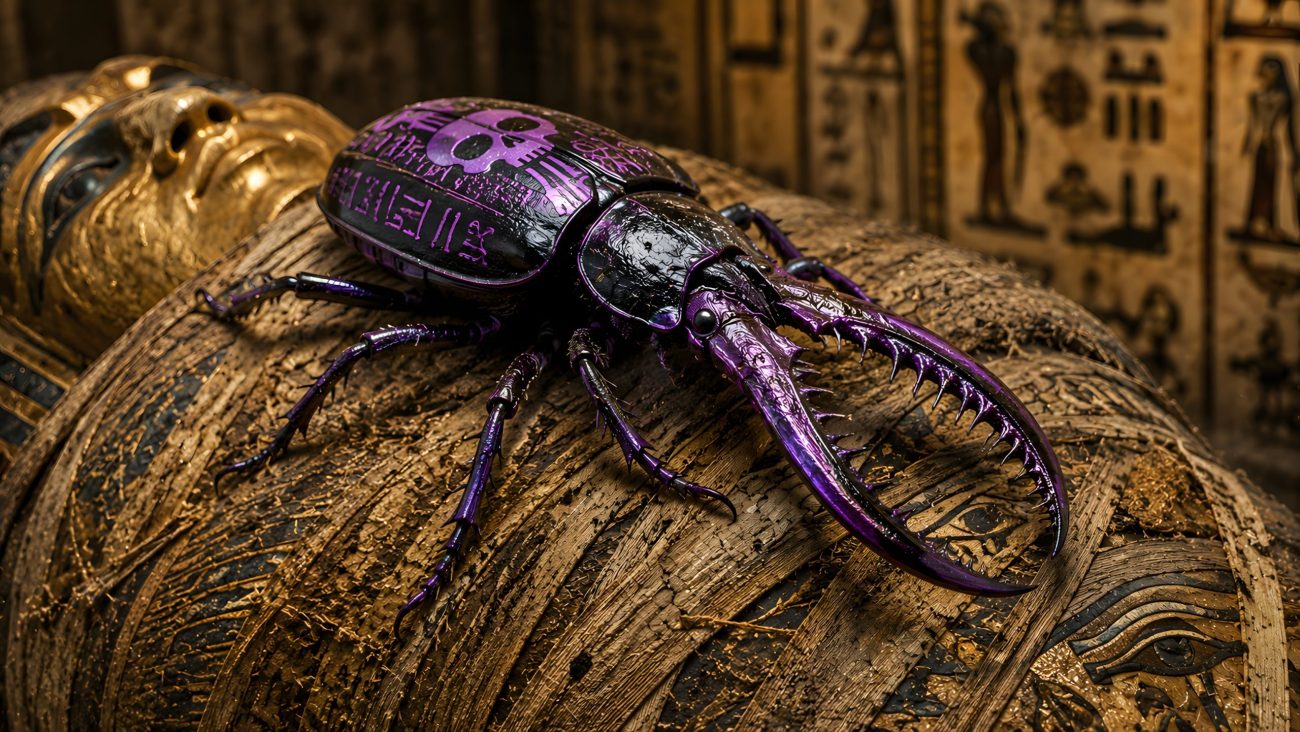
The Apshait was a monstrous flesh-eating beetle from ancient Egyptian mythology and funerary tradition. It appears in the Book of the Dead, particularly in Chapter 36, where it is described as a corpse-devouring creature feared by the dead.

The creature was believed to gnaw upon bodies and consume corpses, making it a symbol of decay and destruction within the tomb. Egyptian funerary spells were designed to protect the deceased from beings like the Apshait during the journey through the afterlife.

In protective rituals, the soul of the dead threatens the Apshait with weapons such as knives and spears, magically driving the monster away before it can damage the body.

Some scholars believe the myth may have originated from real carrion beetles found inside damaged or poorly preserved mummies, where insects fed upon the wrappings and flesh of the dead.

Later Egyptian texts sometimes confused the Apshait with the tortoise, another creature occasionally associated with darkness and enemies of the sun god Ra.


Sources

A Book of Creatures. (2017, May 22). Apshait. Retrieved May 15, 2026, from https://abookofcreatures.com/2017/05/22/apshait/

Wikipedia contributors. (n.d.). Apshait. In Wikipedia. Retrieved May 15, 2026, from https://en.wikipedia.org/wiki/Apshait