Aluel

Tradition / Region: Sudanese Mythology
Alternative names: Lioness-Girl Aluel
Category: Lion


The Myth

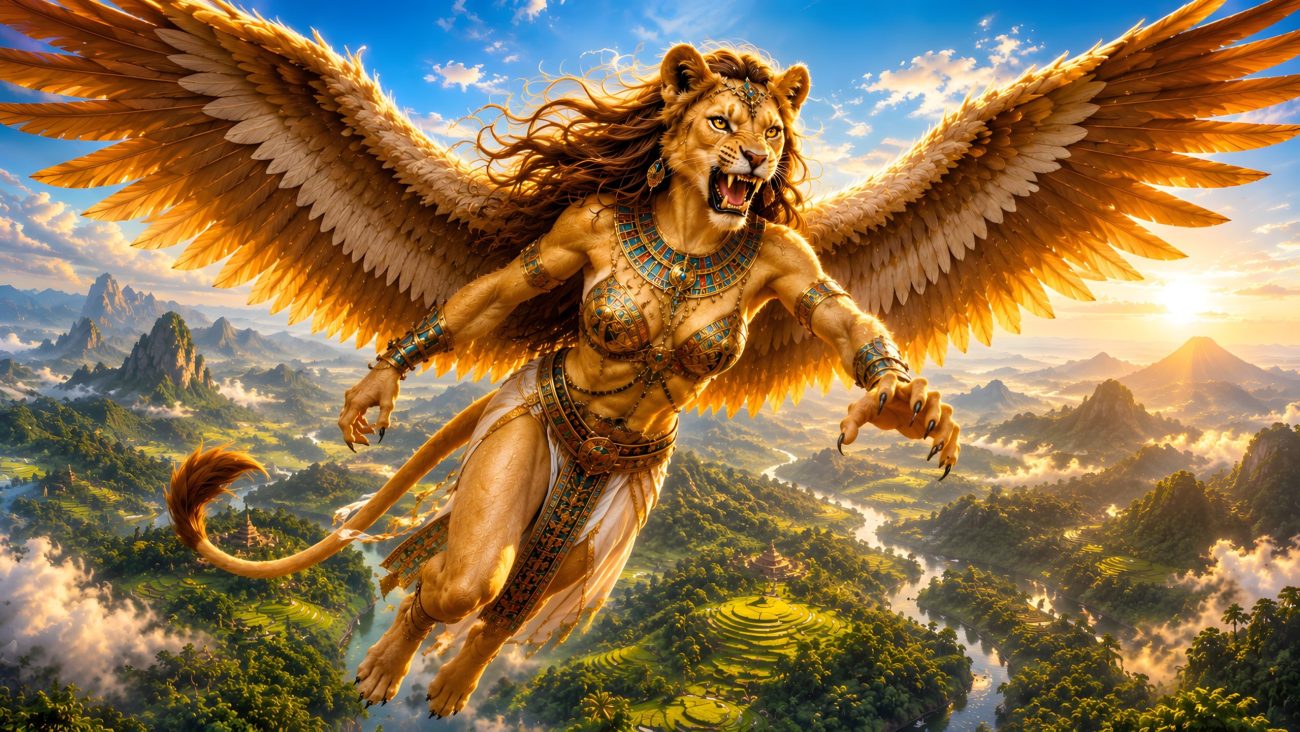
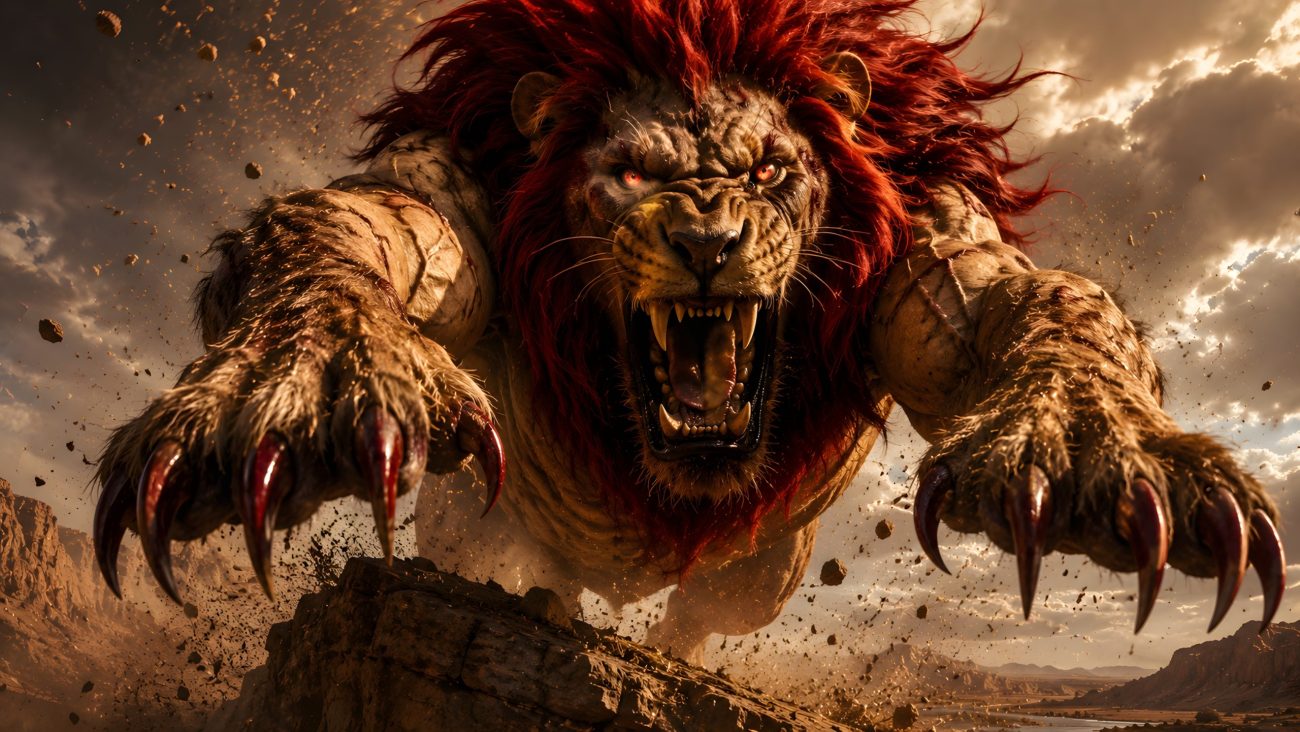
Aluel was a terrifying lioness-woman from Dinka mythology who lived between the human world and the wilderness. She appeared as a supernatural young woman but possessed the nature and strength of a monstrous lioness. Wild, powerful, and feared, she hunted human beings and moved through the bush with unnatural speed and ferocity. Some stories describe her almost like a spirit of the untamed land itself.

Aluel became obsessed with a girl named Atholong, whose beauty had spread across the cattle camps. Atholong had been raised from birth by a man named Chol, who loved her from the moment she was born and later intended to marry her. When Aluel heard of the girl’s beauty, she secretly came to the cattle-camp and hid nearby, waiting for a chance to seize her.

One night Atholong wandered near the edge of the camp, and Aluel attacked. The lioness seized her and carried her away deep into the wilderness. Aluel was so powerful and wild that she could fly through the air while carrying her victim. Yet after taking Atholong, she found herself unable to kill her. Each time she prepared to devour the girl, she became overwhelmed by her beauty and delayed the act again. Instead, she brought her meat, cared for her, and kept her hidden in the forest.

The two lived together for a long time in the bush. Atholong would sing mournful songs about her disappearance and about Chol, while Aluel answered her from the darkness of the forest. Eventually warriors from the cattle-camp tried to rescue the girl, but all fled in terror when they encountered the lioness. Even Atholong’s former suitor failed to face her. Only Chol continued onward alone, carrying many sharpened spears.

When Chol finally reached the place where Atholong was held, Aluel was preparing a special platform covered with grass so the girl’s skin would not touch dirt when she ate her. Before fighting, the lioness repeatedly transformed herself into a more savage and monstrous form. Her tongue changed color from red to green to nearly black as she became fully wild and supernatural. Only then did Chol attack her with his spear.

Mortally wounded, Aluel accepted death calmly. Before dying, she blessed Atholong’s future marriage and children. She ordered Chol and Atholong to dedicate a calf to her spirit once their first daughter married, promising fertility, health, and prosperity in return. Chol later fulfilled the command, and Atholong gave birth to many children, becoming the ancestor of a vast family.


Sources

Deng, F. M. (1974). Dinka folktales: African stories from the Sudan. New York: Africana Publishing Company.
Agany

Tradition / Region: Sudanese Mythology
Alternative names: None recorded
Category: Hero, Human Creature


The Myth

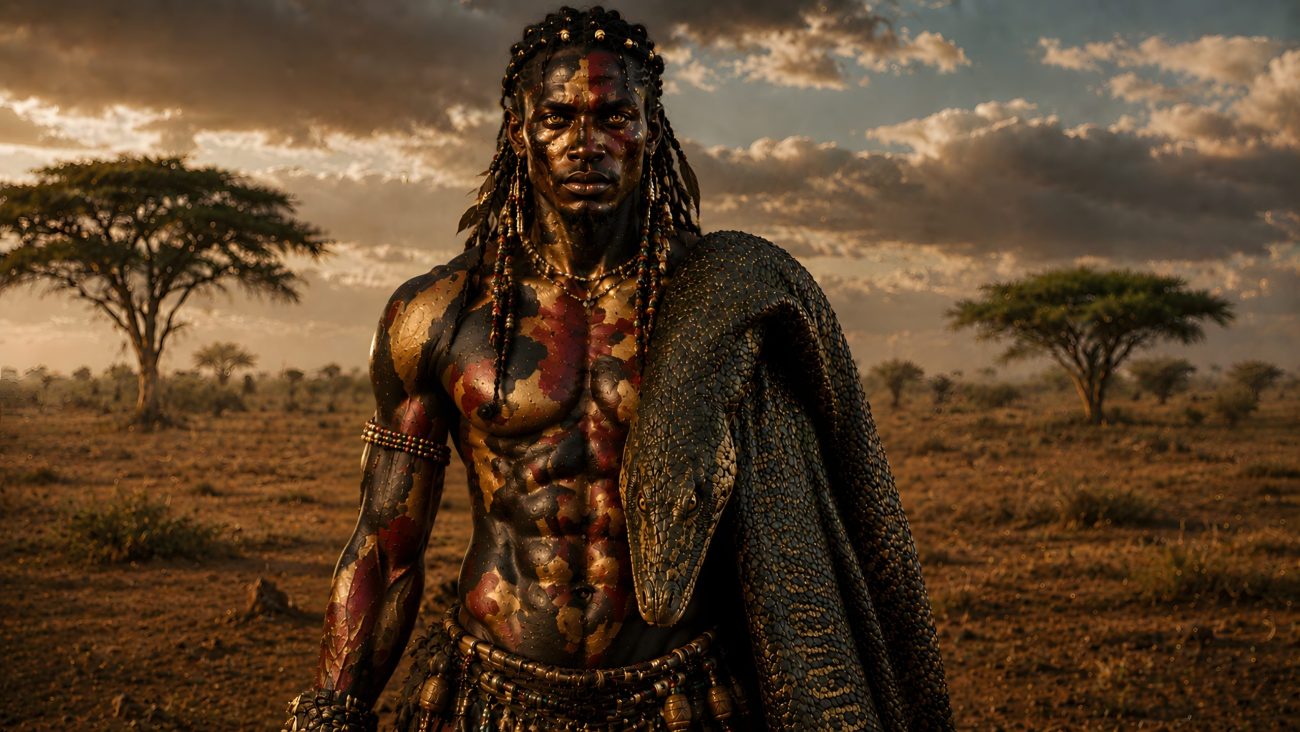
Agany was a supernatural man from Dinka folklore whose true appearance was hidden beneath the skin of a monstrous reptile. Outwardly he appeared terrifying — tall, scaled, awkward, and almost inhuman — because he wore a full suit made from the stitched hides of giant monitor lizards. His body was covered in rough green-black scales, with clawed hands, stiff reptilian limbs, and an elongated lizard-like face. People feared him and treated him like a strange creature rather than a man.

Beneath the disguise, however, Agany possessed extraordinary beauty. When his lizard skin was removed, he appeared as an impossibly handsome young cattle-warrior with glowing skin marked by shifting patterns of black, bronze, pale gold, and deep red like living ritual paint. His body seemed almost radiant beside the fires of the cattle-camp. He was tall and lean yet strongly built, with calm amber-gold eyes, thick dark braided hair decorated with beads and feathers, and graceful movements that fascinated everyone who saw him.

Agany matured unnaturally quickly, growing from infancy into adulthood in a short time. As he grew older, he became famous for his dancing during the goor ceremonies held in the great Dinka cattle-camps beneath the open savannah sky. At dusk, while cattle moved through dust and smoke drifted from the fires, Agany danced among singers and spear-warriors with hypnotic elegance. His presence overwhelmed people despite his quiet voice and calm behavior.

The story describes Agany as a hidden supernatural being whose frightening outer form concealed an almost divine nature. Those who judged only the monstrous reptilian disguise failed to recognize the powerful and beautiful figure hidden beneath it.


Sources

Deng, F. M. (1974). Dinka folktales: African stories from the Sudan. New York: Africana Publishing Company.

Miyar

Tradition / Region: Sudanese Mythology
Alternative names: Muyar
Category: Lion


The Myth

Miyar was a powerful lion-chief from Dinka folklore who ruled over a hidden settlement of lions living like human cattle-herders deep in the wilderness. He was the son of Yor, a lion warrior, and the nephew of a lioness who had once raised two human brothers named Deng.

After the lioness was killed by her own son for attacking his human foster-brother, Yor came seeking revenge but was himself slain. Before dying, Yor warned that his son Miyar would someday avenge him.

Miyar later became chief among the lion people. His cattle-camp was feared and well known, and both lions and strange hornless cattle lived under his rule. These hornless cattle were believed to belong to the lions and could themselves become lions and lionesses.

The two brothers eventually traveled into the land of the lions to confront Miyar before he could attack them first. Carrying only axes and a club, they searched through lion settlements while singing a song announcing themselves and the deaths of Miyar’s relatives.

When Miyar finally heard the song, he recognized Deng immediately and came out to meet him. Instead of attacking like a wild beast, Miyar chose to wrestle as though he were human. The two fought for a long time before Deng threw Miyar to the ground. Deng’s brother then struck Miyar in the head with an axe and killed him.

After Miyar’s death, panic spread through the lion camp. The lions fled into the wilderness, and the hornless cattle transformed into lions and disappeared with them into the forest. Only ordinary horned cattle remained behind for the brothers to take home.


Sources

Deng, F. M. (1974). Dinka folktales: African stories from the Sudan. New York: Africana Publishing Company.

Hornless Lion Cattle

Tradition / Region: Sudanese Mythology
Alternative names: Lion Cattle, Hornless Cattle of the Lions
Category: Lion, Cow


The Myth

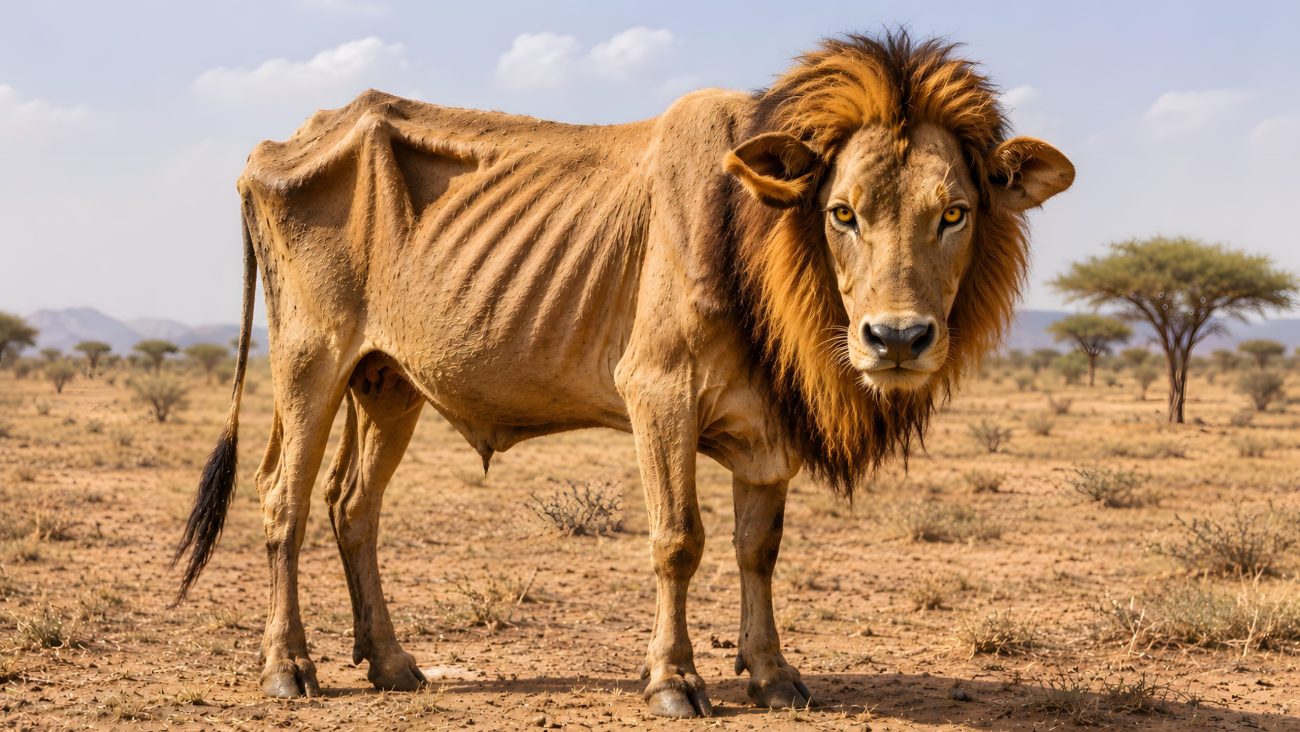
Among the Dinka, hornless cattle were believed to be dangerous and unnatural animals closely connected to lions and wilderness spirits. Unlike ordinary cattle with horns, hornless cattle were feared for their aggression and strange behavior. Folktales claimed they did not truly belong to human beings at all, but to lions.

One famous story tells of two brothers both named Deng. One was born to a human mother, while the other was the son of a lioness who had raised both boys together as brothers. Although the lioness cared for them for many years, she eventually turned against the human Deng and attacked him out of jealousy and beastly hunger. After many struggles, the lioness was killed by her own son to protect his brother.

Later, the lioness’s relatives sought revenge. The two brothers traveled into the land of the lions to confront Miyar, the lion-chief and cousin of Deng of the lioness. After reaching the lion settlement, Deng challenged Miyar and killed him in combat.

The death of the lion chief caused panic throughout the camp. The lions fled into the wilderness, and with them fled the strange hornless cattle that belonged to them. According to the tale, these hornless cows transformed into lions and lionesses and disappeared into the forest alongside their masters.

Only the ordinary horned cattle remained behind for the human brothers to take home.

The story explains an old Dinka belief that hornless cattle possessed something wild and dangerous within them. They were thought to follow lions naturally, behave more fiercely than ordinary cattle, and even share a spiritual connection with predatory beasts. In folklore, hornless cattle were not fully separated from the world of lions, but stood somewhere between domesticated animal and supernatural creature.


Sources

Deng, F. M. (1974). Dinka folktales: African stories from the Sudan. New York: Africana Publishing Company.

Kotoko and the Magical Hoe

Tradition / Region: Ghana Mythology
Alternative names: Kotoko the Porcupine
Category: Object


The Myth

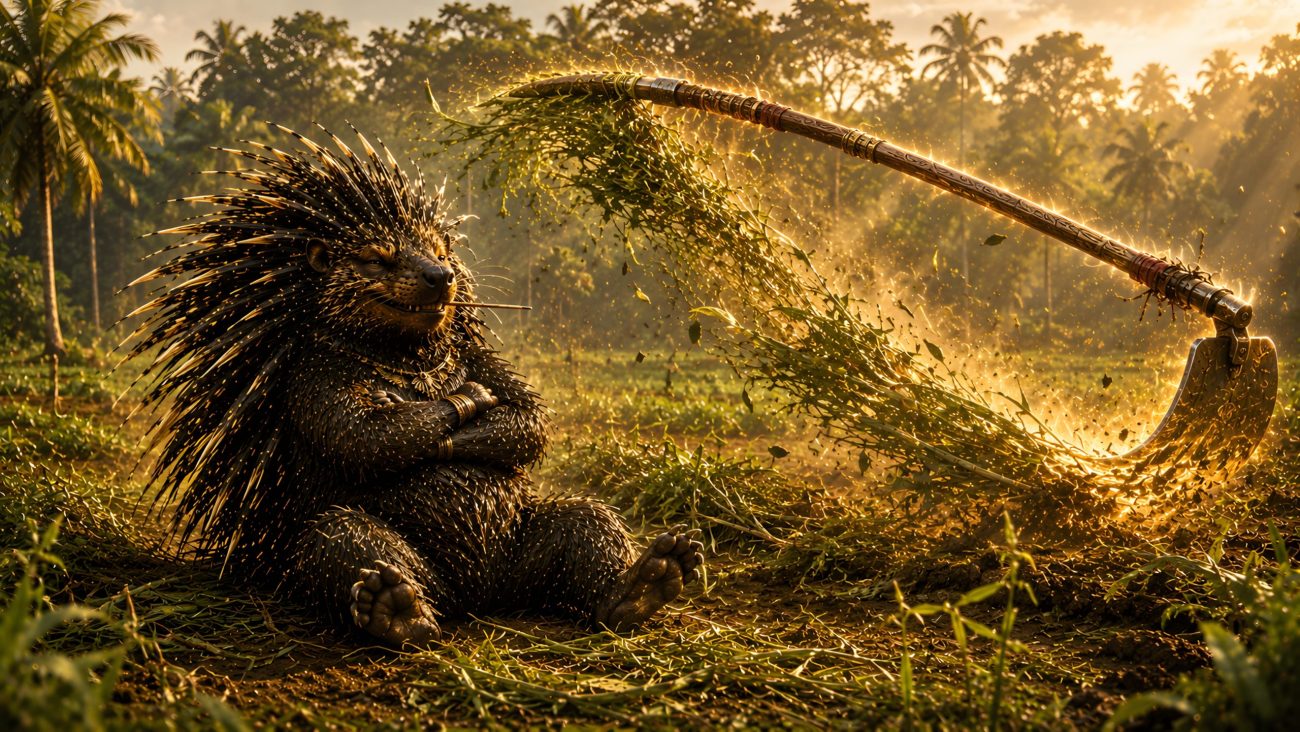
Kotoko, the Porcupine, was believed to possess a magical hoe unlike any ordinary farming tool. The enchanted hoe could clear enormous stretches of land by itself whenever the correct song was spoken.

One story tells that Kwaku Ananse the Spider lived together with his strange children — Tikononkono, Afudotwedotwe, and Nyiwankonfwea — alongside Kotoko the Porcupine. When Kotoko began clearing a new farm, Ananse begged him for a small piece of land to cultivate for himself, and Kotoko agreed.

While Ananse and his children struggled to dig the earth by hand, Kotoko returned home to eat. When he came back, he lifted his magical hoe and sang:

“Gyensaworowa, Kotoko saworowa…”

At once the hoe sprang to life and rapidly turned over huge stretches of land by itself. When the work was finished, Kotoko carefully hid the magical tool. But Ananse secretly watched where it had been hidden and decided to steal it the next morning.

Very early the next day, Ananse took the hoe and carried it to his own farm. He repeated the magical song exactly as Kotoko had done. The hoe immediately began clearing the land at tremendous speed.

But Ananse did not know how to stop it.

The magical hoe continued digging endlessly, racing farther and farther away. It crossed the lands of the Sea God and eventually reached the country of distant white men. There the foreigners discovered the strange tool, examined it, and began making many more hoes modeled after it.

According to the story, this is how hoes first spread among the Ashanti people. Before that time, only Kotoko the Porcupine possessed such a tool.


Sources

Rattray, R. S. (1930). Akan-Ashanti folk-tales. Oxford: Clarendon Press.


Sango the Eagle

Tradition / Region: Ghana Mythology
Alternative names: Sango, Sango the Bird
Category: Bird


The Myth

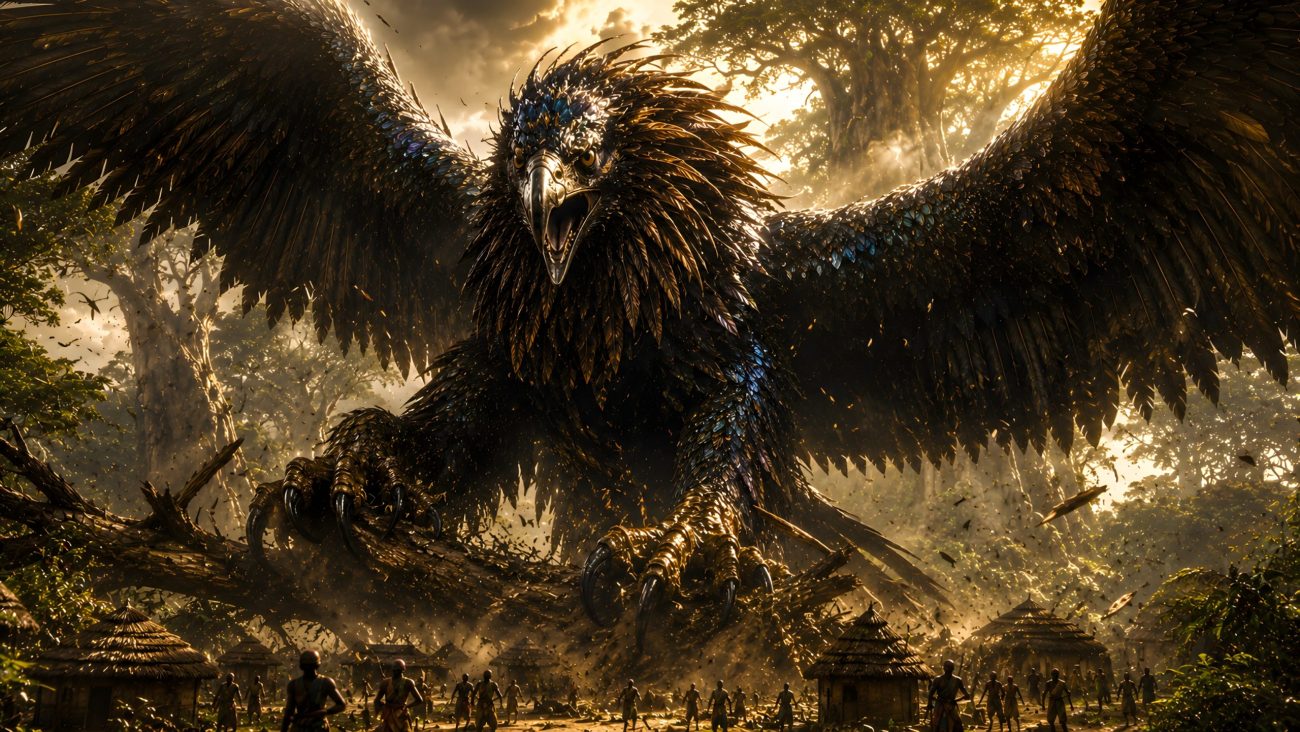
Sango was a powerful magical eagle known for supernatural abilities and terrifying vengeance. She could heal wounds, transform the land itself, restore forests, destroy entire villages, and command reality with spoken words.

One story tells of Sango meeting an old woman suffering from a terrible sore on her leg. The eagle healed the wound instantly with magic. She then transformed the empty land around the woman into farms, houses, and finally an enormous town. In return for all this, Sango asked only for a silk-cotton tree where she could build her nest.

The old woman agreed, and Sango settled there, laying two eggs in the great tree. After hatching her children, she left to search for food. While she was gone, the old woman’s grandchild demanded to eat the eagle’s young. The child cried and screamed until the old woman ordered the villagers to cut down the silk-cotton tree and seize the eaglets.

As the axes struck the tree, one of the young eagles climbed to the edge of the nest and cried out desperately for its mother:

“Sango, the bird!
Sango, come back!”

Sango heard the cries and rushed back through the sky. Using her magic word “Sanguri,” she restored the nearly-fallen tree and swallowed the attackers within it. After feeding her children, she warned them and left once more.

But the villagers returned again. This time Sango was too far away to hear the cries. The silk-cotton tree crashed down, and the villagers captured the eaglets. One escaped, but the other was roasted and eaten by the old woman’s grandchild.

When Sango returned and learned what had happened, she flew to the village in fury. She spoke her magic again:

“Sanguri.”

At once the people vanished. Again she spoke, and every house collapsed. Again the village became wilderness. Finally, the old woman’s terrible sore returned to her leg exactly as before.

Sango then declared that kindness must be repaid with kindness, not betrayal and cruelty.


Sources

Rattray, R. S. (1930). Akan-Ashanti folk-tales. Oxford: Clarendon Press.


Obonto Ya

Tradition / Region: Ghana Mythology
Alternative names: Obonto Ta, Obonto Ya
Category: Fish


The Myth

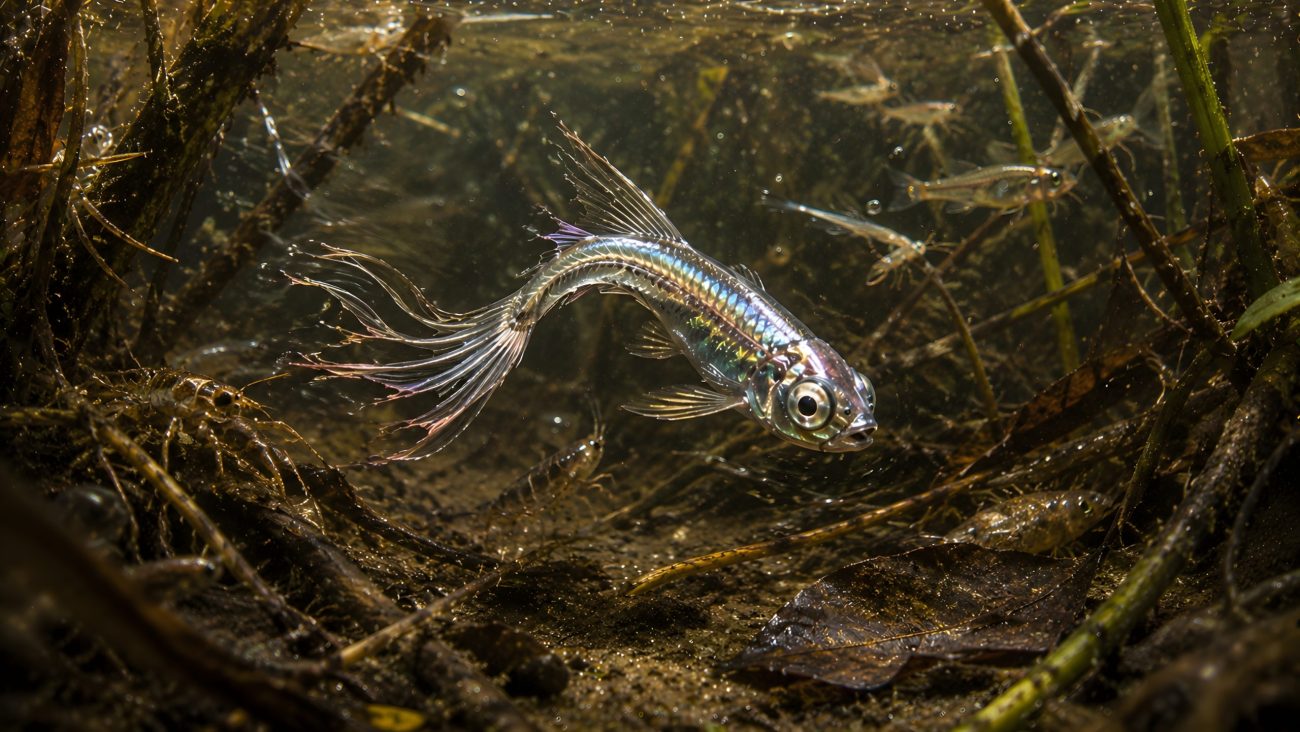
Obonto Ya was a tiny water creature, usually described as a minnow or very small fish. In Akan folklore she became known for deceit, shame, and restless wandering through rivers and streams.

The story tells of an old grandmother whose property mysteriously disappeared. She believed one of the water creatures had stolen it, so all the creatures of the water gathered together to discover the thief. A crab proposed a test: a brass pan would be brought forward, and every creature would cry into it. Whoever could not produce tears would be revealed as the guilty one.

One after another the creatures came forward. The crab cried and filled the pan with tears. The eel cried. The shrimp cried. Every water creature managed to fill the brass pan with tears from their eyes.

At last Obonto Ya stepped forward. But no tears came from her eyes at all. Immediately the other creatures realized she was the thief who had stolen the grandmother’s belongings.

The water creatures became furious because Obonto Ya had disgraced them all. They beat her severely for bringing shame upon the creatures of the water. Afterward, the old grandmother spared her life, but she cursed her forever, declaring that Obonto Ya would endlessly wander through the water and that nobody would ever truly wish to associate with her again.

Because of this curse, people said the tiny fish could always be seen darting nervously and aimlessly through streams and rivers, wandering from place to place without rest.


Sources

Rattray, R. S. (1930). Akan-Ashanti folk-tales. Oxford: Clarendon Press.


Anansi

Tradition / Region: Ghana Mythology
Alternative names: Ananse, Kwaku Anansi, Anancy, Nanzi, Aunt Nancy
Category: Spider


The Myth

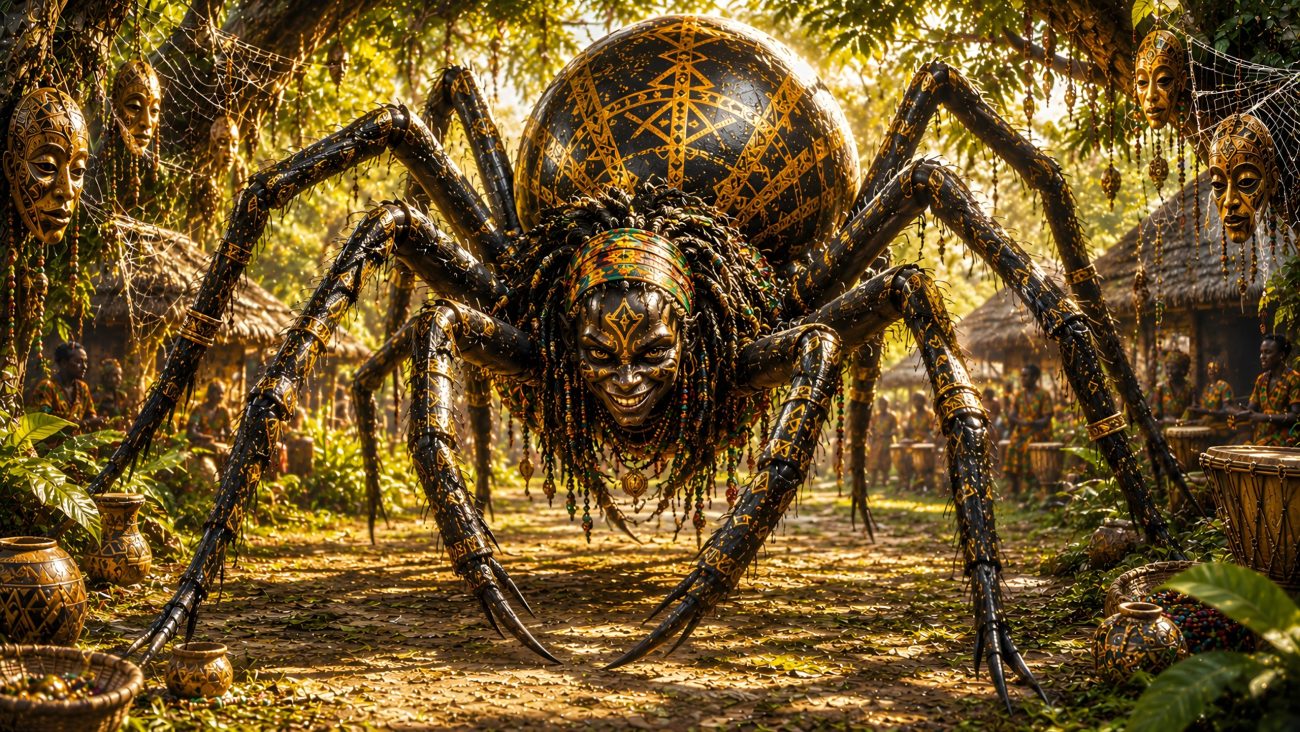
Anansi was a supernatural spider-being famous for his intelligence, cunning, deception, and ability to outwit stronger enemies. He was usually portrayed as a spider, though many stories described him as partly human or as a man with spider-like features.

He was one of the most important figures in Akan folklore and later became widely known throughout the Caribbean and the Americas after enslaved Africans carried his stories across the Atlantic.

Anansi was associated with wisdom, speech, trickery, storytelling, and survival. Many traditions treated him as the owner of all stories, and spider tales themselves became known as Anansesem — “Spider Stories.”

Although often selfish, greedy, and mischievous, Anansi constantly defeated stronger beings through cleverness rather than force. He tricked spirits, animals, humans, and even gods. In some traditions he interacted directly with the Sky God Nyame and other divine beings, sometimes receiving temporary supernatural powers or sacred duties.

Some Akan traditions described Anansi as connected to the divine world and occasionally treated him as a lesser spiritual being associated with wisdom. Certain stories even claimed he created the first human body. In Caribbean religions such as Haitian Vodou, Anansi was sometimes linked to the Guede spirits connected with death and the world of the dead.

One of the most famous stories tells how Anansi became the owner of all stories in the world. The Sky God Nyame possessed every story and demanded impossible tasks in exchange for them. Anansi succeeded by trapping dangerous creatures including the python Onini, hornets, a leopard, and a magical dwarf through tricks and deception. Impressed, Nyame declared that all stories would belong to Anansi forever and would be known as Spider Stories.

Another famous tale tells how Anansi tried to gather all wisdom in the world inside a pot so nobody else could possess it. He attempted to hide the pot high in a tree, but his son Ntikuma pointed out a simpler way to climb. Furious that another person still possessed wisdom, Anansi smashed the pot, scattering wisdom across the earth for everyone to share.

Many stories portrayed Anansi causing trouble through greed and manipulation. He brought diseases into the world after tricking Nyame and releasing sickness from a magical gourd. In another tale he tricked a jealous husband and stole his wife Aso, who later became Anansi’s permanent wife in many stories.

Anansi was also connected with survival and resistance. Enslaved Africans in the Americas saw him as a symbol of intelligence overcoming power because he repeatedly escaped danger and humiliated stronger enemies using wit alone. His stories became both entertainment and lessons about survival, selfishness, cleverness, and human weakness.


Sources

Wikipedia contributors. (n.d.). Anansi. In Wikipedia. Retrieved May 16, 2026, from https://en.wikipedia.org/wiki/Anansi#Anansi_as_a_spiritual_and_mythological_figure


Golden Bee

Tradition / Region: Croatian Mythology
Alternative names: Mother of Lightning
Category: Insect


The Myth

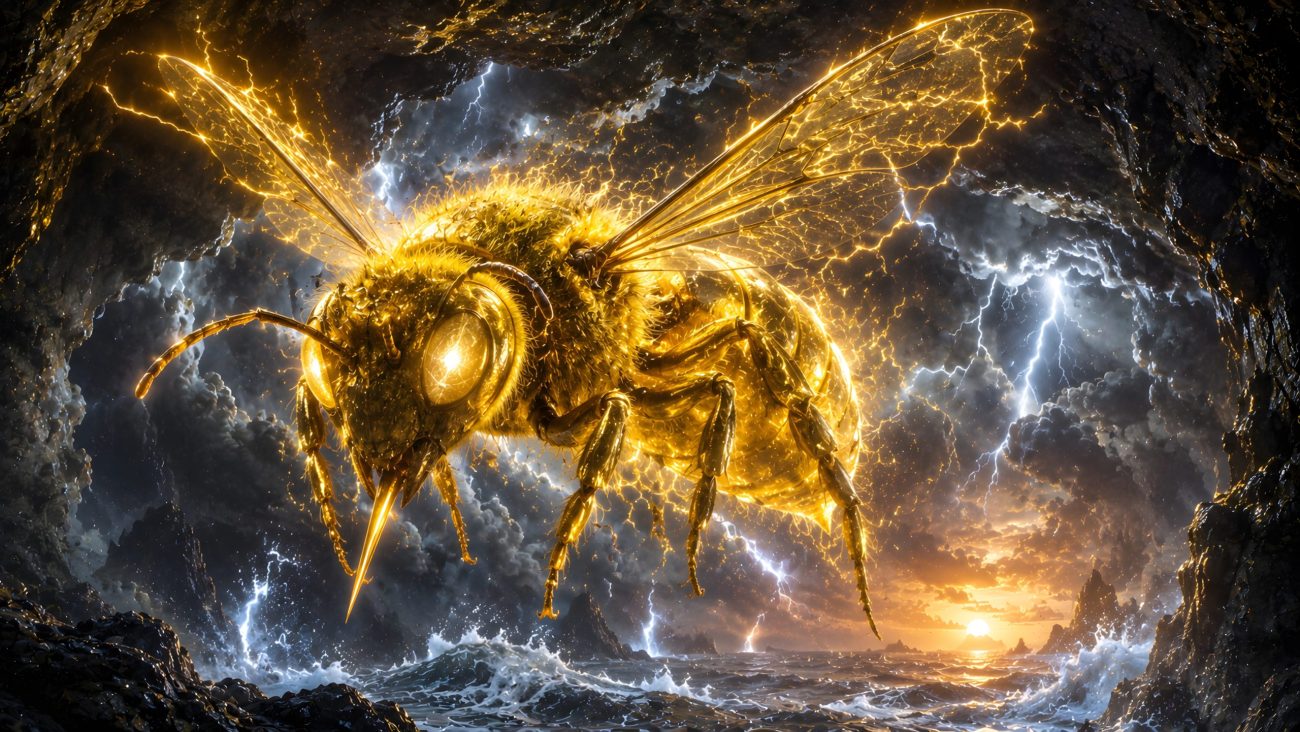
The Golden Bee was a supernatural storm-being that lived inside a cavern of clouds above the Unknown Sea. She controlled thunder and lightning, filling the sky with flashing fire and roaring storms whenever she moved. Her cavern was the third and most dangerous of the great cloud caverns.

The Golden Bee appeared during the journey of Plunk’s wife as she crossed the sea searching for the magical Bass with the golden fin. To reach the Unknown Sea, she first passed the cavern of the Mother of All Snakes, who stirred the sea and raised the waves, and then the cavern of the Mother of All Birds, who created storms by beating her enormous wings. Beyond them waited the Golden Bee.

Inside the third cavern, thunder rolled endlessly and lightning burst through the clouds as the Golden Bee flew before the entrance. Terrified but determined, the woman ripped off her loose white sleeve and threw it over the Bee, trapping her. The moment the Golden Bee was captured, the thunder stopped and the lightning vanished.

While trapped, the Golden Bee pleaded to be released and offered the woman a reward. Looking across the sea, the woman saw the silver boat of the Dawn-Maiden gliding over crimson waters with her lost child seated beside her holding a golden apple. The Golden Bee promised to reveal how the woman could reach her child and live happily with him again if she would set her free.

The woman refused because she still needed to continue through the cavern toward the Unknown Sea to save her husband. Keeping the Golden Bee trapped, she safely passed through the storm cavern and continued her journey across the dark waters.


Sources

Brlić-Mažuranić, I. (1924). Croatian tales of long ago (F. S. Copeland, Trans.). New York: Frederick A. Stokes Company.


Dawn-Maiden

Tradition / Region: Croatian Mythology
Alternative names: Pale Dawn-Maiden, Dawn Fairy
Category: Spirit, Nymph


The Myth

The Dawn-Maiden was a radiant supernatural being from Croatian folklore associated with dawn, mercy, destiny, and the boundary between the human world and the magical realms beneath the sea. She appeared at sunrise rising directly from the ocean in a shining silver boat with golden oars.

According to the tale of Fisherman Plunk, the Dawn-Maiden emerged after the fisherman spent three days fasting upon the sea without catching fish. By sparing the lives of the fish during those days, he unknowingly earned the favor of the spirit of dawn itself. On the third morning, as daylight began to appear, the silver vessel rose from the water carrying the Dawn-Maiden “fair as a king’s daughter.”

The Dawn-Maiden was neither cruel nor deceptive. Unlike many dangerous fairy beings in Slavic folklore, she behaved with calm patience and kindness, offering humans opportunities rather than direct riches. When Plunk complained about his miserable life, she simply told him to return home, where fate would provide what he truly needed.

Throughout the story, the Dawn-Maiden acts almost like a supernatural force of wisdom or destiny. She repeatedly gives Plunk chances to choose love, gratitude, and family over greed and selfish ambition. Yet Plunk constantly misunderstands her gifts, believing that wealth and magical treasure are more important than the humble happiness already given to him.

The Dawn-Maiden later guides Plunk toward the hidden domain of the Sea King. She reveals the path to the mysterious Isle Bountiful, a magical island overflowing with fertility and abundance. At the center of the island stood the glowing white stone called Gold-a-Fire, which illuminated both the island and the sea beneath it with an eerie pale light. There the Dawn-Maiden waited beside the blazing stone to guide travelers deeper into the supernatural world.

She also warned Plunk about the dangers of the undersea kingdom. According to the tale, three terrible powers guarded the return to the human world: one that controlled the waves, another that commanded storms, and a third that wielded lightning itself. These warnings reveal the Dawn-Maiden as a being who understands cosmic forces beyond ordinary human comprehension.

The Dawn-Maiden is deeply connected to transitional spaces — dawn instead of full day, sea horizons instead of land, and fate instead of direct intervention. She never forces events. Instead, she reveals paths while humans choose how to walk them. In this sense she resembles many ancient fairy or dawn goddess figures associated with revelation, renewal, and spiritual testing.

Her appearance reflects this liminal nature. She arrives in silence at sunrise, surrounded by silver light and gold, emerging directly from the sea as though born from the meeting of darkness and morning. The imagery connects her to hope, awakening, and the mysterious beauty of first light.

Unlike darker water spirits or dangerous fairies, the Dawn-Maiden represents benevolent supernatural wisdom. Yet her gifts contain hidden lessons. Humans who fail to understand those lessons — like Plunk — often discover too late that love, family, and peace were greater treasures than the magical wealth they desired.


Sources

Brlić-Mažuranić, I. (1924). Croatian tales of long ago (F. S. Copeland, Trans.). New York: Frederick A. Stokes Company.