Di Sma

Tradition / Region: Swedish Mythology
Alternative names: Di Sma Undar Jordi, The Little Ones Underground
Category: Cave dweller


The Myth

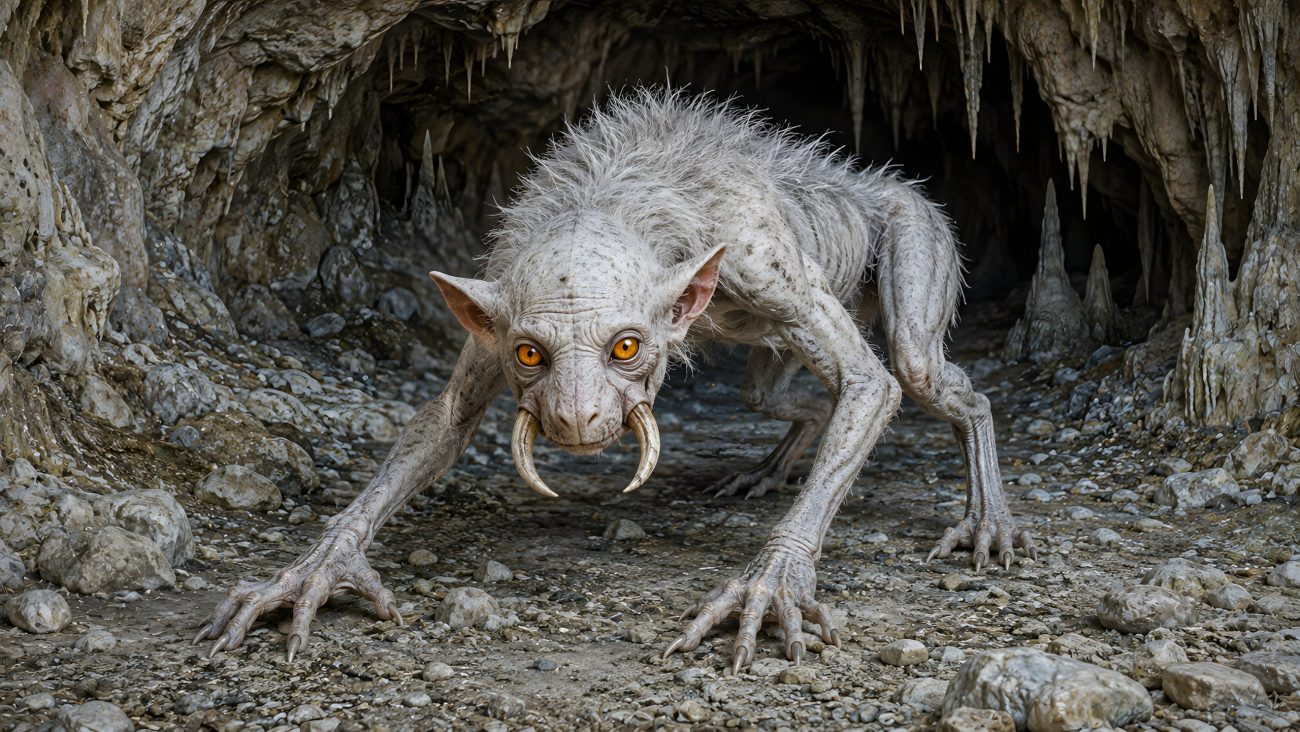
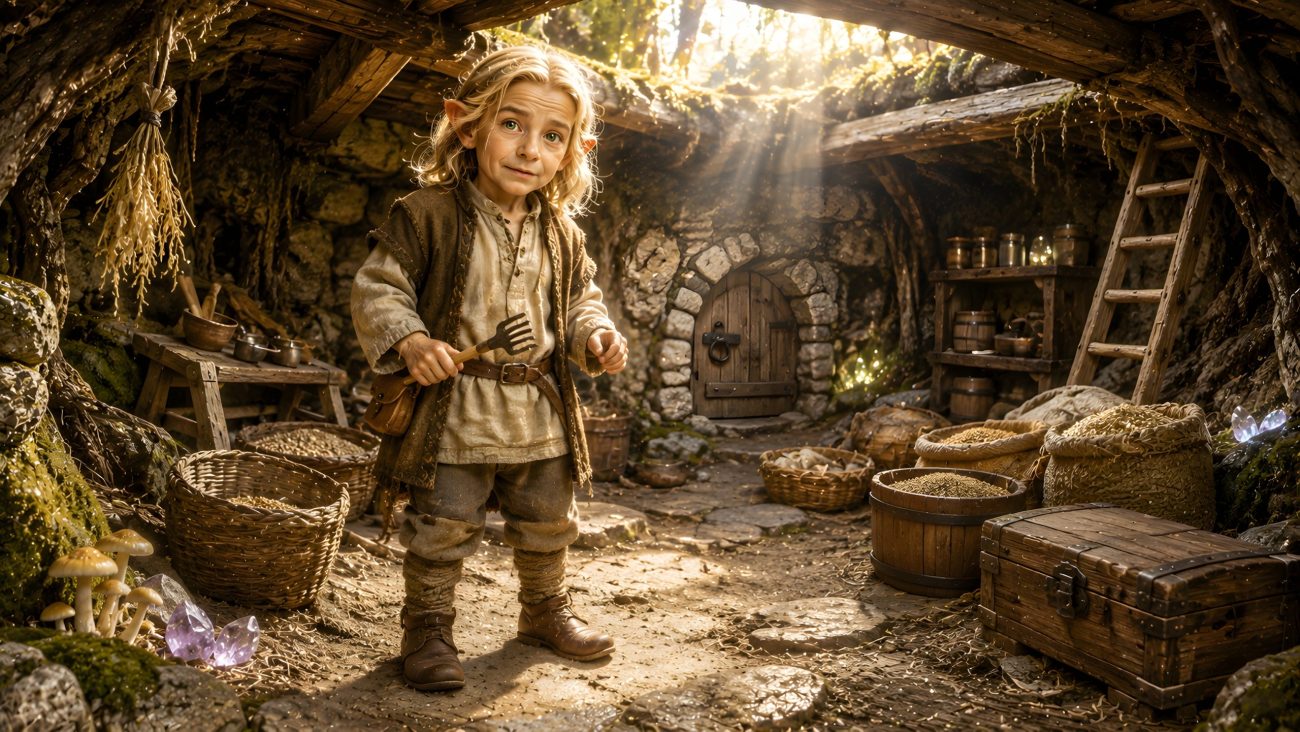
The Di Sma are small human-like beings said to live beneath the ground on the Swedish island of Gotland. They are usually invisible to humans and, according to tradition, can only be seen by looking through a hole in a sheet of paper.

According to Gotlandic folklore, the Di Sma live beneath farms, where they watch over the people, animals, and land. As long as they are treated with respect, they quietly care for the farm and its inhabitants.

One of the best-known warnings concerns throwing out boiling water. People believed that carelessly emptying hot water outdoors could scald the hidden beings living beneath the ground. Angering the Di Sma in this way could cause them to withdraw their protection from the farm.


Sources

“Di sma undar jordi.” Wikipedia: The Free Encyclopedia. Wikimedia Foundation. Accessed July 28, 2026. https://en.wikipedia.org/wiki/Di_sma_undar_jordi


Laminyaki

Tradition / Region: Basque Mythology, Spanish Mythology
Alternative names: Lamiñaku, Lamiñak, Lamiak
Category: Cave dweller


The Myth

The Laminyaki are mysterious guardian spirits of springs, rivers, and caves that often appear as beautiful women with the legs or feet of a duck or chicken. In some regional traditions, however, they can also take the form of large supernatural cats that dwell in caves and lonely places. These feline forms are associated with hidden treasures, ancient magic, and encounters with travelers who unknowingly cross into their territory.

According to Basque legend, the Laminyaki inhabited remote caves, riverbanks, and mountain springs, where they guarded hidden riches and lived apart from humankind. Although they usually avoided people, they occasionally appeared to travelers, sometimes offering help and other times leading them into danger.

Many stories describe the Laminyaki demanding the return of stolen objects. One famous tale tells of a woman who borrowed a golden comb from one of these beings. When she failed to return it, the Laminyaki repeatedly appeared to her, warning that terrible consequences would follow if the comb was not given back. Fearing the creature’s growing anger, the woman eventually returned the treasure.

Other legends tell of Laminyaki visiting isolated farms during the night. If treated with kindness and offered bread, milk, or flour, they rewarded the household by secretly completing unfinished work before dawn, repairing bridges, cultivating fields, or helping with difficult tasks. Those who insulted or cheated them, however, could expect curses or misfortune.

One of the best-known tales concerns a young man who fell in love with a beautiful woman, unaware that she was one of the Laminyaki. She agreed to marry him, but his family suspected she was not entirely human. They instructed him to look at her feet, where he discovered that she possessed the webbed feet of a duck. Horrified, he abandoned the marriage. Heartbroken, the Laminyaki disappeared forever, later returning only to mourn at the young man’s funeral.

Whether appearing as beautiful maidens or as uncanny supernatural cats lurking near caves and springs, the Laminyaki remain among the most mysterious beings of Basque folklore, dwelling on the boundary between the human world and the hidden realm of ancient spirits.


Sources

“Ламиньяки (Lamiñaki).” New Bestiary (Bestiary.us). Accessed July 28, 2026. https://www.bestiary.us/laminyaki

Shōjō Kozō

Tradition / Region: Japanese Mythology
Alternative names: Shōjō Boy, Shōjō Child
Category: Cave dweller


The Myth

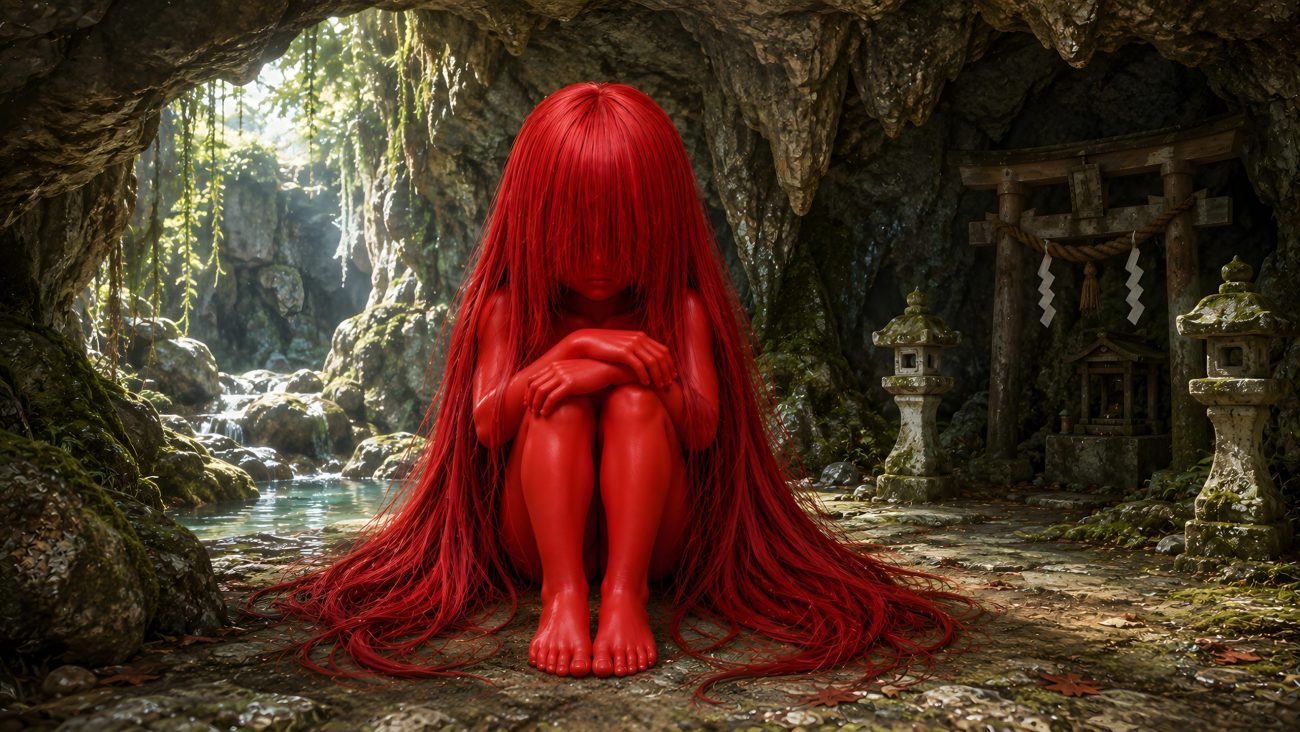
The Shōjō Kozō is a small yokai depicted as a child with long hair and a completely red body resembling that of a Shōjō. Aside from its unusual appearance, little is recorded about the creature.

Unlike many other yokai, no legends or stories describing the Shōjō Kozō are known. It survives only through its depiction in the Monster Scroll, an illustrated collection of supernatural creatures painted by Miyagawa Harumizu during the mid-Edo period.

Because no accompanying tale was recorded, the Shōjō Kozō remains one of the more mysterious yokai in Japanese folklore, known almost entirely from its illustration.


Sources

Takahashi, Toshihiro. “猩々小僧 (Shōjō Kozō).” 新版TYZ 妖怪図鑑 (New TYZ Yokai Encyclopedia). Accessed July 28, 2026. https://tyz-yokai.blog.jp/archives/1051082152.html


Bukanai

Tradition / Region: Russian Mythology
Alternative names: None known
Category: Cave dweller


The Myth

The Bukanai is described as a bogeyman-like creature from Russian children’s folklore. It is considered one of many frightening stories told to children and is described as a fantastic creature similar to a brownie.

According to the tradition, the Bukanai lives in places such as stables, haylofts, or underground shelters in the Middle Urals. Beyond its role as a frightening creature used in children’s tales, no further description or legend is provided in the source.


Sources

“Буканай (Bukanay).” New Bestiary (Bestiary.us). Accessed July 28, 2026. https://www.bestiary.us/bukanaj


Alux

Tradition / Region: Maya mythology, Belize Mythology, Guatemala Mythology
Alternative names: Aluxo’ob, Chanekeh, Chaneque, Duende
Category: Cave dweller


The Myth

The Alux is a small spirit about knee-high that resembles a miniature Maya person dressed in traditional clothing. Although usually invisible, it can take physical form to communicate with or frighten humans. Aluxo’ob are associated with forests, caves, stones, and cultivated fields, and according to Maya tradition were created by the ancient gods from mud, leaves, and divine breath.

Farmers traditionally build a small house in their maize fields to summon an Alux. For seven years the spirit protects the crops by helping the corn grow, bringing rain, and guarding the fields at night, whistling to scare away animals and thieves. After the seven years have passed, the farmer must seal the little house by closing its doors and windows. If this is not done, the Alux escapes and begins playing mischievous tricks on people.

Aluxo’ob sometimes stop travelers or farmers to ask for offerings. Those who refuse may suffer misfortune, illness, or other disturbances, while those who show respect are rewarded with protection, good fortune, and help against thieves. Despite their helpful nature, they are also known for mischievous acts such as extinguishing fires or throwing household objects into yards.

Many people believe it is unwise to speak an Alux’s name aloud, as doing so may summon one. Even today, some construction companies in the Yucatán perform ceremonies before beginning work to avoid offending these spirits. Contemporary Maya also regard many small shrines found throughout the countryside as the houses of the Alux.


Sources

“Alux.” Wikipedia: The Free Encyclopedia. Wikimedia Foundation. Accessed July 28, 2026. https://en.wikipedia.org/wiki/Alux


Gold Coal Burners of Echternach

Tradition / Region: Luxembourgish Mythology
Alternative names: None known
Category: Cave dweller


The Myth

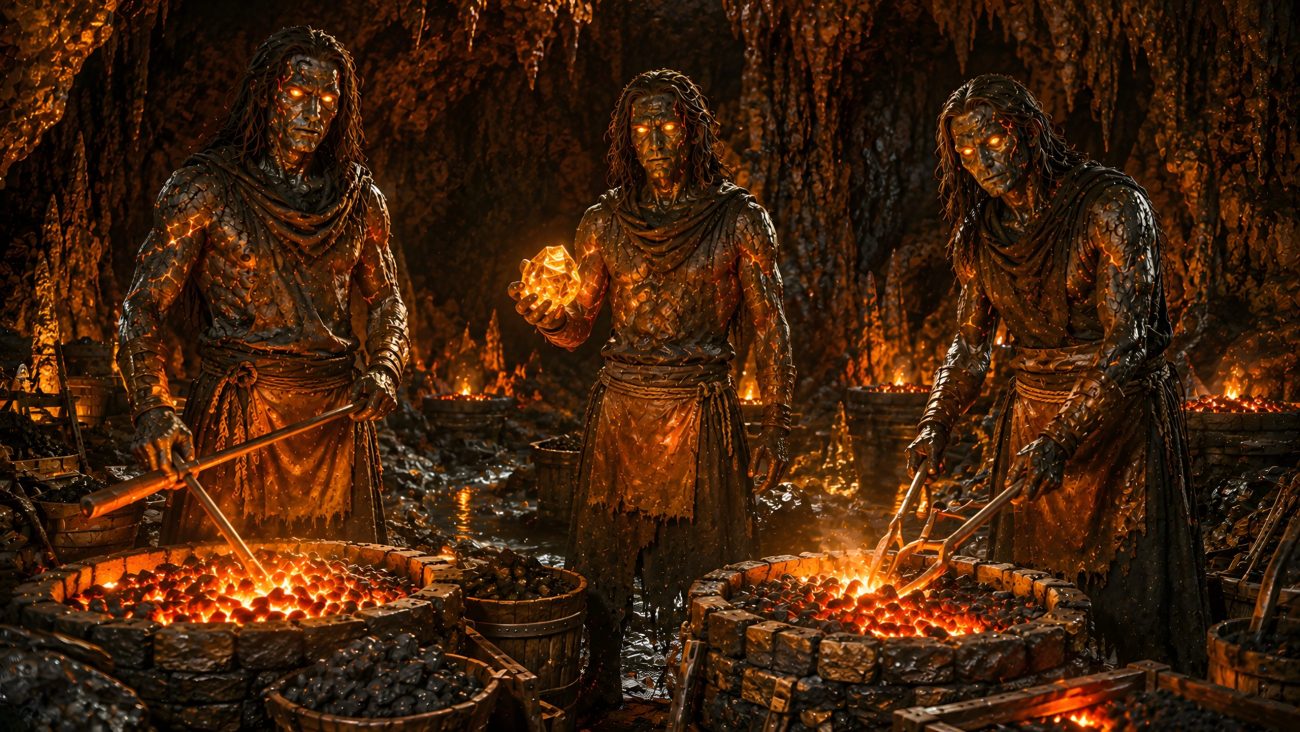
The Gold Coal Burners appear as three silent black figures who burn charcoal on the Großwiese beneath the Speltzbusch near Echternach. They are said to appear only once every hundred years and carry out their work in complete silence.

According to the legend, anyone brave enough to approach the mysterious charcoal burners and touch one of their burning coals will see it instantly transform into gold. The fortunate person is then allowed to keep the golden coal.


Sources

De la Fontaine, Edmond. Luxemburger Sagen und Legenden. Luxembourg: Jos. Beffort, 1882.


Didki

Tradition / Region: Polish Mythology
Alternative names: Didko, Forest Didki
Category: Forest Dweller, Cave dweller


The Myth

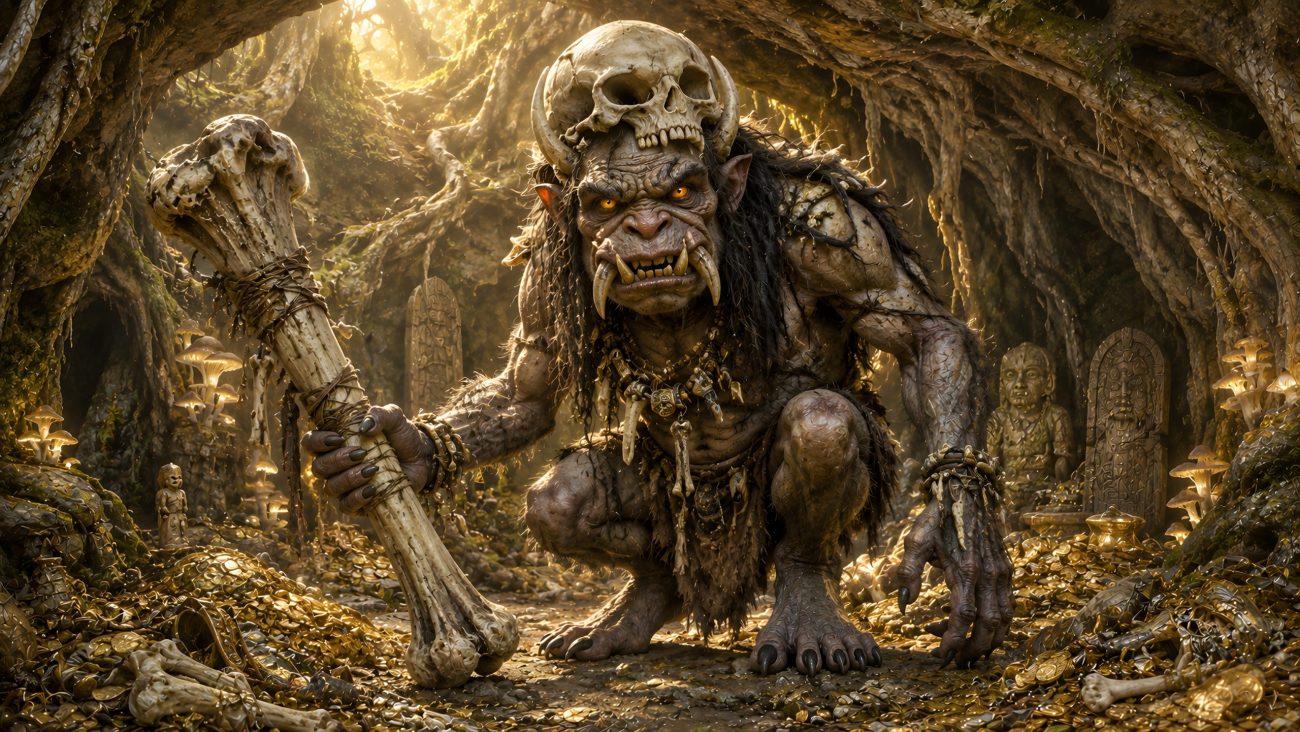
The Didki are small supernatural beings with enormous heads that dwell beneath ancient forests. They build hidden villages among the roots of colossal trees, where they keep great stores of gold, silver, and other treasures. Although they usually remain hidden underground, they are also said to appear as red dogs or red cats.

According to the legend, the Didki inhabited the forests from the earliest times. The ancient Slavs brought them offerings, and in return the spirits allowed people to clear woodland, cultivate fields, and graze their livestock without interference.

As the old customs faded and people stopped honoring them, the Didki grew hostile toward humankind. They began bringing misfortune to those who entered their forests and reserved their kindness only for murderers, thieves, and other criminals, whom they regarded as their allies.

From time to time, the Didki emerged from their underground homes and wandered among human settlements in the form of red cats or red dogs. Their appearance was believed to foretell disaster and death, while those who encountered them were often driven toward violence or other evil deeds.

With the coming of Christianity, the Didki came to be regarded as infernal beings. As the ancient forests were cleared, their hidden villages disappeared along with the great trees beneath which they had once lived.


Sources

Zych, Paweł, and Witold Vargas. Bestiariusz słowiański. Część pierwsza i druga. Warsaw: Bosz, 2017.


Plague Kätzlein

Tradition / Region: Swiss Mythology
Alternative names: The Little Cat
Category: Cat


The Myth

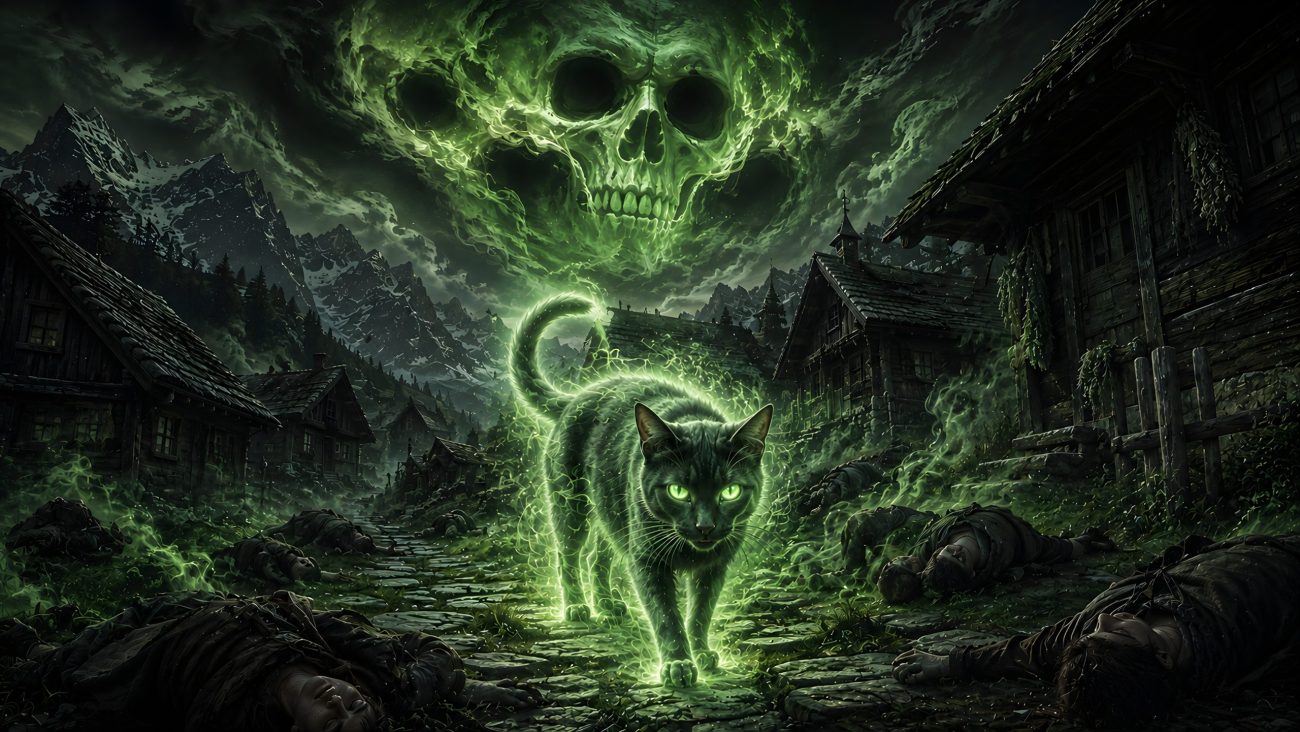
The Kätzlein appears as an ordinary little cat that can speak with a human voice. It serves as the manifestation or messenger of the Great Death, the invisible force responsible for the plague.

According to the legend, many centuries ago the plague was brought into the mountains of Valais by mysterious Pest People. The Great Death wandered invisibly through the land, killing countless people in villages such as Richelsmatt and Lauinen. Entire families perished overnight, and so many people died that cattle could wander from farm to farm without finding anyone alive.

When the plague reached the village of Ernen, the district governor Michel Tschampen fled deep into the isolated Rappental valley, believing he could escape the invisible destroyer. The plague worsened in Ernen, and during a council meeting the Great Death cried out from the nearby forest that it would not leave Ernen until the little man hiding in Rippbei had come out.

Villagers were immediately sent to bring Michel Tschampen back, but he escaped once more and hid in an abandoned mountain hut at Grindbiel, convinced that no one would ever find him there. Relieved, he settled into his refuge, believing he had finally escaped the plague.

The following morning, as he stood at the window enjoying the peaceful mountain landscape, a little cat appeared outside, meowing pitifully and asking to be let in. Feeling glad to have another living creature nearby, Michel opened the window. The cat leapt onto the windowsill, climbed onto his shoulder, rubbed affectionately against his face, and suddenly spoke the words, Rippbei little man, now it is time.

The cat immediately disappeared through the window without leaving a trace. Michel instantly understood that the Great Death itself had visited him. A deadly chill spread through his body, and he realized he had been infected. Already gravely ill, he struggled back to the village of Ernen. As soon as he entered the village, he died. From that very moment, the plague began to subside, and within a few days the Great Death disappeared from Ernen forever.


Sources

“Das Kätzlein.” SAGEN.at – Schweizer Sagen und Heldengeschichten. Accessed July 28, 2026. https://www.sagen.at/texte/sagen/schweiz/allgemein/kaetzlein.html


Heksenkat van Kessel

Tradition / Region: Belgian Mythology
Alternative names: Witch Cat of Kessel
Category: Cat


The Myth

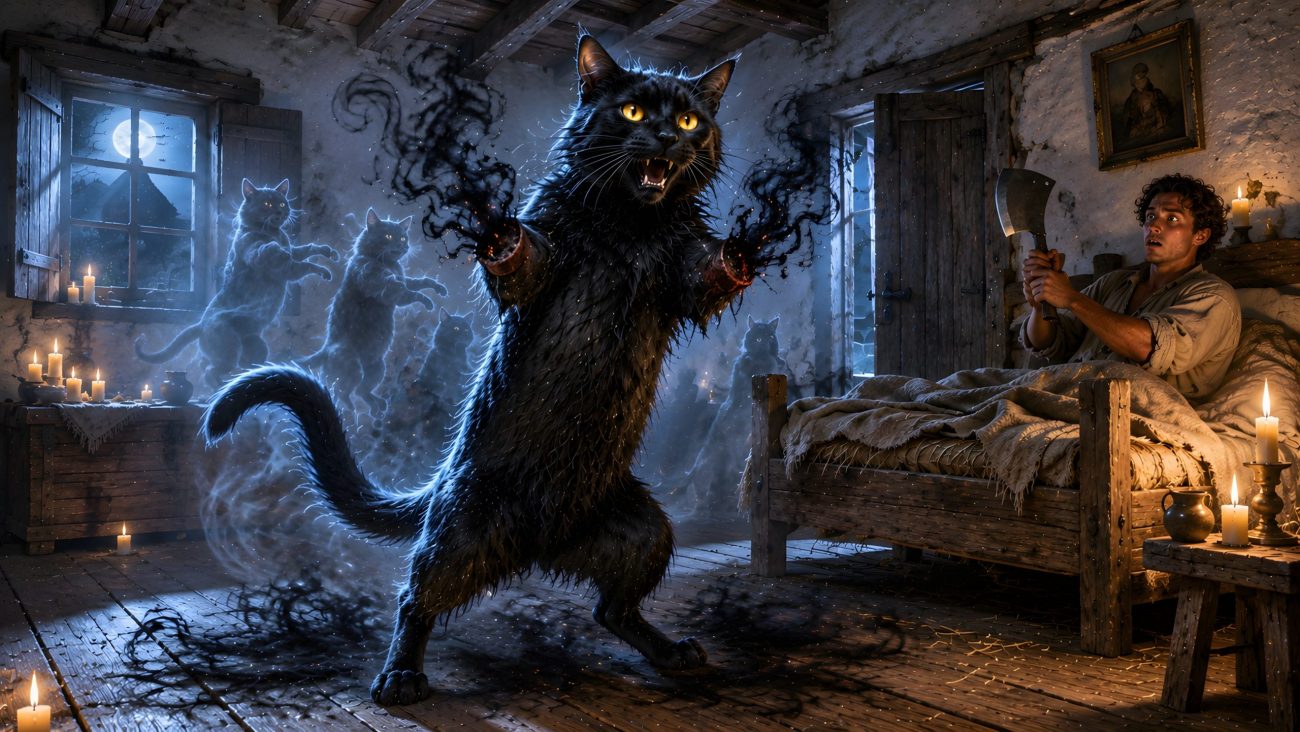
The Heksenkat appears as one of a group of ordinary-looking cats that secretly gather at night to perform eerie round dances. In reality, these cats are witches in animal form, and injuries inflicted upon them carry over to their human bodies.

According to the legend, a farmer in Kessel could never keep a farmhand for more than a day or two. Every servant abruptly left without explaining why. Eventually, the farmer decided to hire no one else, but one day a respectable young man insisted so strongly on working for him that the farmer reluctantly agreed.

On his first night, the servant was awakened by the sight of numerous cats dancing in a circle inside his room. Terrified, he remained still and said nothing to the farmer the following morning. Instead, he secretly armed himself with a large chopping knife before going to bed the next evening.

When the dancing cats returned, the servant calmly called out, Here, kitty. One of the cats approached him, and he hurled the blade, severing both of its front legs.

The next morning the farmer was horrified to discover his wife lying in bed covered in blood, both of her arms horribly cut off. The servant immediately gathered his belongings and fled.

Only then did the farmer realize the truth. His wife had been a witch who transformed herself into a cat each night to frighten away every servant, explaining why none of them had ever remained on the farm for long.


Sources

De Cock, Alfons. Vlaamsche sagen uit den volksmond. Amsterdam: Maatschappij voor Goede en Goedkoope Lectuur, 1921, p. 36.


Sibylle’s Giant Cats

Tradition / Region: German Mythology
Alternative names: Giant Cats of the Sibylle of Teck
Category: Cat


The Myth

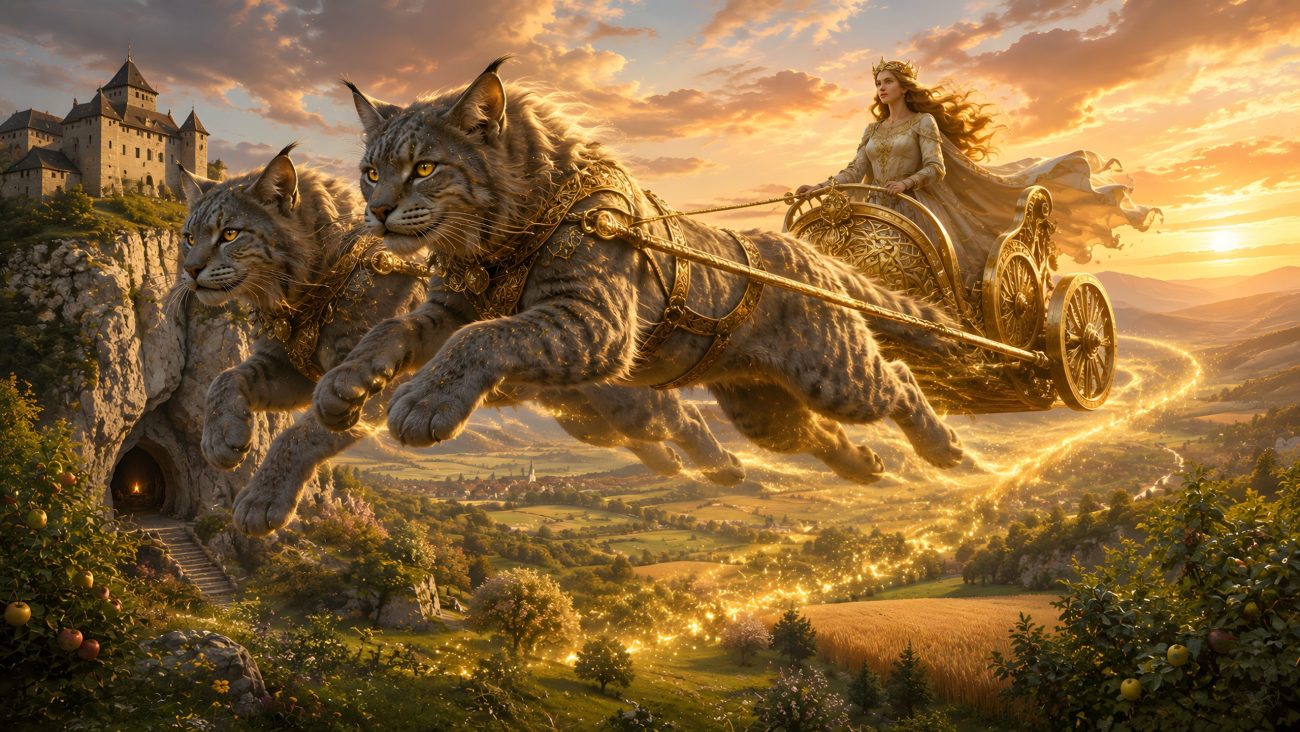
The giant cats of Sibylle are two enormous felines strong enough to pull a golden chariot through the air. They serve the mysterious Sibylle, a wise woman who lived in an underground palace beneath the Teck cliffs.

According to the legend, Sibylle dwelled deep within the Sibylle Cave at the foot of the Teck mountain. She was renowned for her wisdom and kindness, and anyone who climbed the steep path to her hidden palace seeking help was never turned away.

Her three sons, however, were nothing like their mother. Known as Unhold, Raufbold, and Saufbold, they became cruel robbers who built their own castles on nearby hills. From these strongholds they terrorized farmers and plundered merchants traveling through the valley.

Heartbroken by the wickedness of her sons, Sibylle decided to abandon both her underground palace and the land forever. One evening she departed in a magnificent golden chariot drawn through the sky by two gigantic cats. She was never seen again.

The people believed that the route taken by the flying chariot could still be seen each year when the crops began to ripen. Along its path, the meadows remained greener, the grain produced larger ears, and the apples, pears, and cherries grew sweeter and more abundant than elsewhere. This fertile strip became known as the Sibylle Trail.

Later investigations revealed that the legendary trail followed the remains of the ancient Roman Limes. The filled defensive ditches created unusually fertile soil, giving rise to the enduring belief that the giant cats of Sibylle had blessed the land as they carried their mistress away forever.


Sources

“Die Sage von der Sibylle von der Teck.” SAGEN.at – Traditionelle Sagen aus Deutschland (Baden-Württemberg). Accessed July 28, 2026. https://www.sagen.at/texte/sagen/deutschland/baden_wuerttemberg/sibyllevonderteck.html