Plague Kätzlein

Tradition / Region: Swiss Mythology
Alternative names: The Little Cat
Category: Cat


The Myth

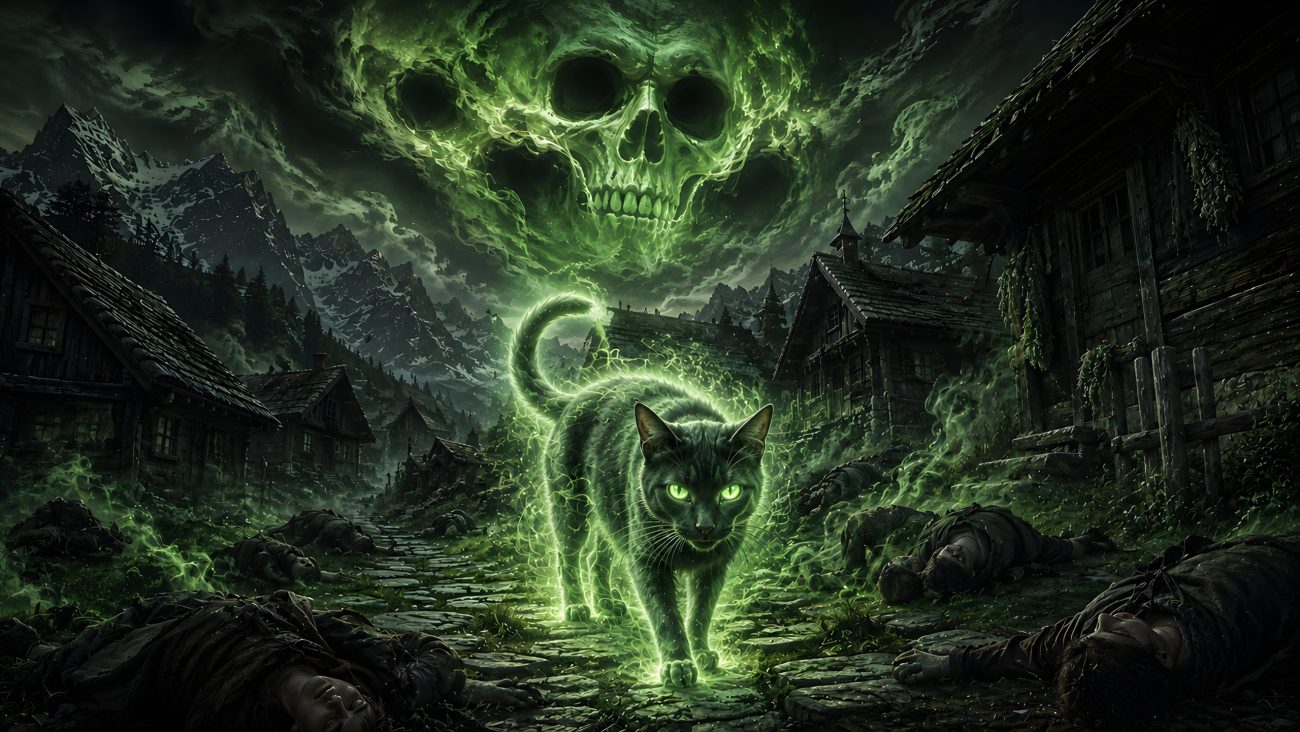
The Kätzlein appears as an ordinary little cat that can speak with a human voice. It serves as the manifestation or messenger of the Great Death, the invisible force responsible for the plague.

According to the legend, many centuries ago the plague was brought into the mountains of Valais by mysterious Pest People. The Great Death wandered invisibly through the land, killing countless people in villages such as Richelsmatt and Lauinen. Entire families perished overnight, and so many people died that cattle could wander from farm to farm without finding anyone alive.

When the plague reached the village of Ernen, the district governor Michel Tschampen fled deep into the isolated Rappental valley, believing he could escape the invisible destroyer. The plague worsened in Ernen, and during a council meeting the Great Death cried out from the nearby forest that it would not leave Ernen until the little man hiding in Rippbei had come out.

Villagers were immediately sent to bring Michel Tschampen back, but he escaped once more and hid in an abandoned mountain hut at Grindbiel, convinced that no one would ever find him there. Relieved, he settled into his refuge, believing he had finally escaped the plague.

The following morning, as he stood at the window enjoying the peaceful mountain landscape, a little cat appeared outside, meowing pitifully and asking to be let in. Feeling glad to have another living creature nearby, Michel opened the window. The cat leapt onto the windowsill, climbed onto his shoulder, rubbed affectionately against his face, and suddenly spoke the words, Rippbei little man, now it is time.

The cat immediately disappeared through the window without leaving a trace. Michel instantly understood that the Great Death itself had visited him. A deadly chill spread through his body, and he realized he had been infected. Already gravely ill, he struggled back to the village of Ernen. As soon as he entered the village, he died. From that very moment, the plague began to subside, and within a few days the Great Death disappeared from Ernen forever.


Sources

“Das Kätzlein.” SAGEN.at – Schweizer Sagen und Heldengeschichten. Accessed July 28, 2026. https://www.sagen.at/texte/sagen/schweiz/allgemein/kaetzlein.html
Tanzende Katzen

Tradition / Region: Swiss Mythology
Alternative names: Dancing Cats, Witches’ Cats
Category: Cat


The Myth

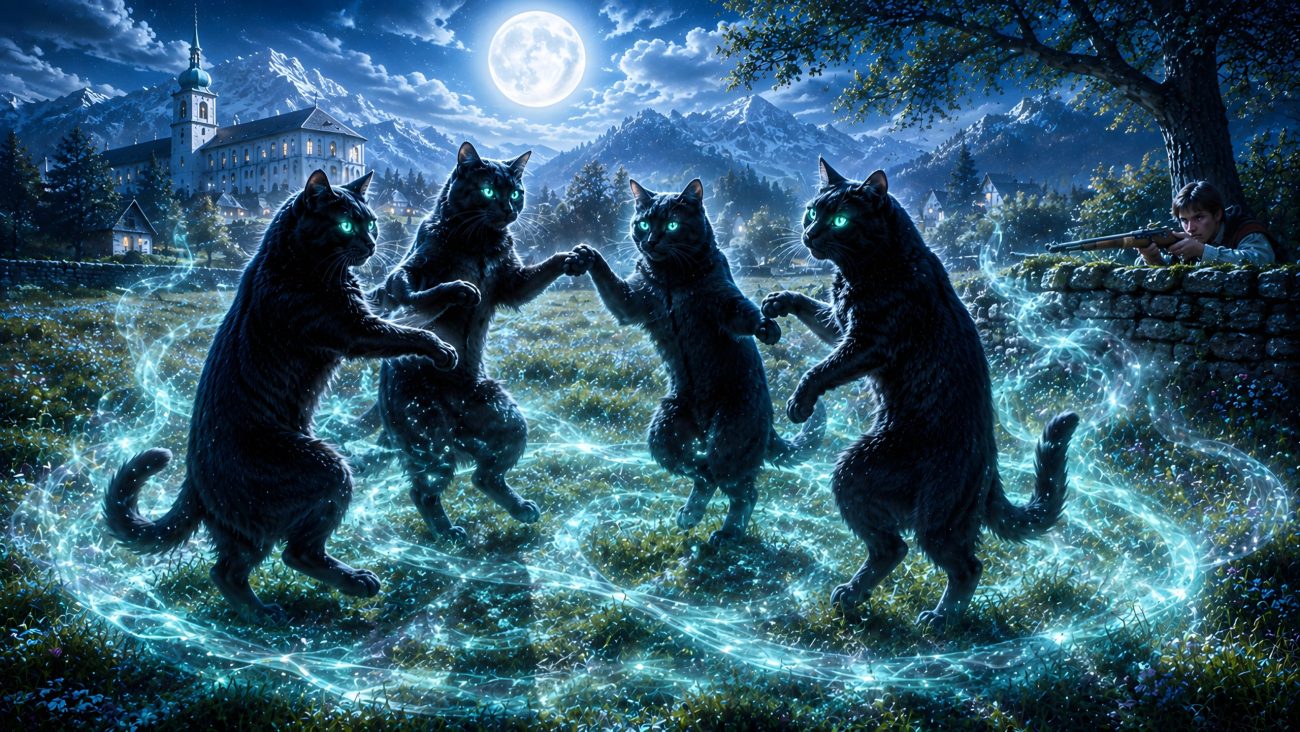
The Tanzende Katzen appear as four dark-colored cats that gather at night to dance in circles. They are not ordinary felines but witches who have transformed themselves into cats to conceal their true identities.

According to the legend, the people of Zug believed that witches could assume the forms of various animals in order to move about unnoticed and trouble their neighbors. On the Geißweid, below what is now the Capuchin monastery, four dark cats were said to assemble on many moonless nights. There they performed noisy ring dances across the meadow, disturbing everyone living nearby.

Eventually the nightly gatherings became too much for the townspeople. A brave young man hid behind a wall with a musket and waited for the mysterious dancers to appear. When the four cats began their strange dance once again, he fired into the group and struck one of the cats in its hind foot.

The following morning, the wife of the town’s ruling magistrate was suddenly found limping. According to the legend, she had been one of the witch cats dancing on the Geißweid, and the wound she suffered in her feline form had carried over to her human body, revealing her secret identity.


Sources

“Tanzende Katzen.” SAGEN.at – Traditionelle Sagen aus der Schweiz (Kanton Zug). Accessed July 28, 2026. https://www.sagen.at/texte/sagen/schweiz/zug/katzen.html


Alraune

Tradition / Region: Swiss Mythology
Alternative names: Mandrake
Category: Cat


The Myth

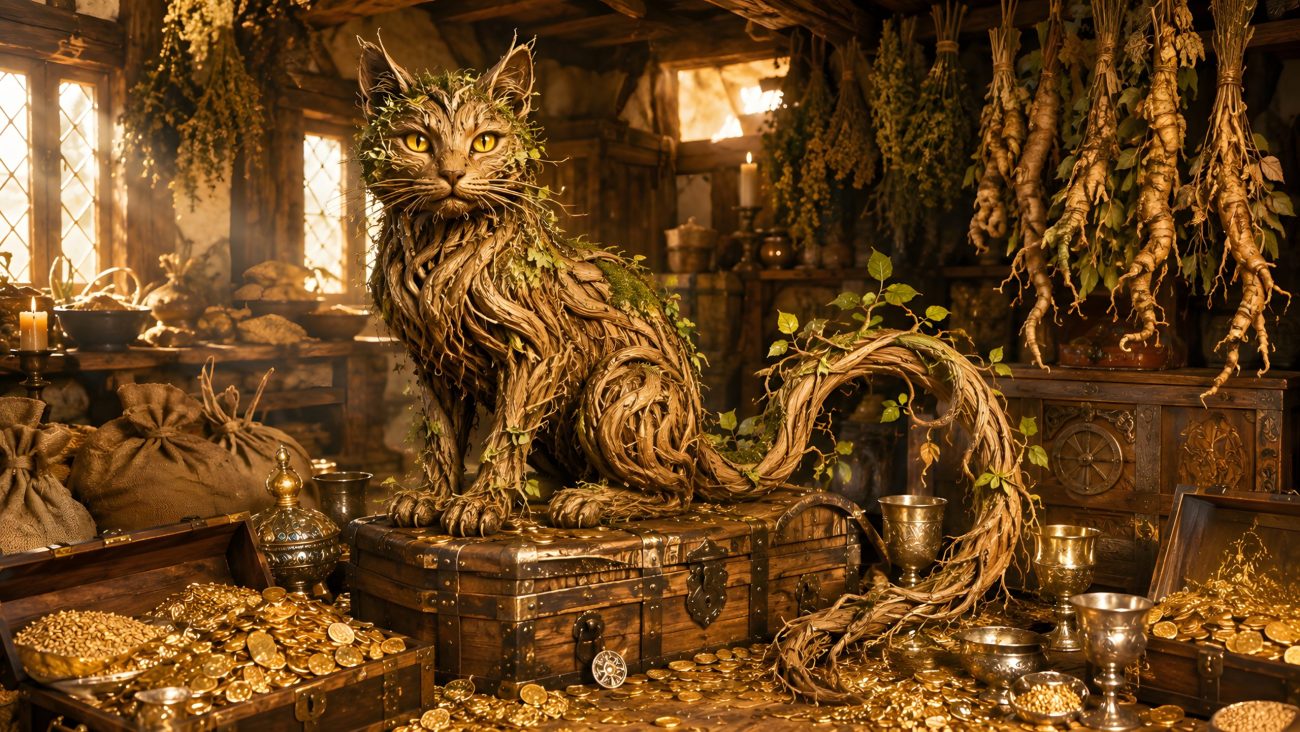
The Alraune was believed in the Werdenberg region to be a real cat-like creature that brought good fortune and great wealth to the household in which it lived.

According to local tradition, although the mandrake root was widely used for magic and carved into human-shaped figures believed to possess supernatural powers, people in Werdenberg also believed that the Alraune existed as a living, cat-like animal. Rather than being feared, it was regarded as a bringer of prosperity, blessing the home with luck and great riches. The source records no further description or legends about the creature.


Sources

“118. Mandrake / Alraune.” St. Gallen Myths. June 23, 2024. Accessed July 28, 2026. https://stgallenmyths.com/2024/06/23/118-mandrake/.

“Alraune.” Sagen.at – Sagen aus Österreich. Accessed July 28, 2026. https://www.sagen.at/texte/sagen/schweiz/st_gallen/alraune.html.