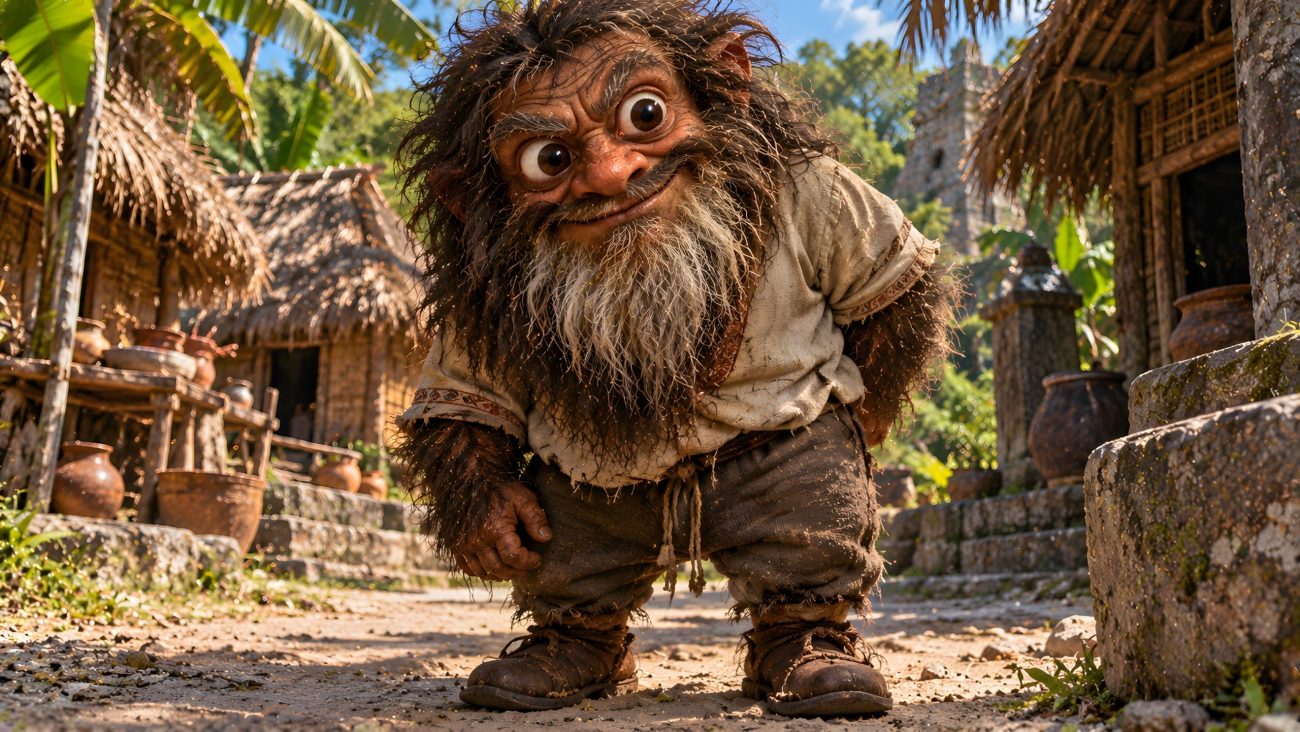
Antivitamin

Tradition: Maya Mythology, Mexican Mythology
Alternative Names: Antivites, Alush
Category: Dwarf


The Myth

The Antivitamins are a race of tiny people said to live among human communities in Chontal Maya villages. They are described as small, mischievous beings and are considered a local variety of the Alush, the trickster dwarves known throughout Mexico and Central America.

The Antivitamins are believed to possess ancient knowledge and are associated with the supernatural world. Although they resemble little people, their behavior can be troublesome and unpredictable, and in later legends they are sometimes transformed into ordinary demons, forest spirits, or mischievous brownies.

They are said to have hair and large eyes, with their bodies covered in hair. Their appearance is that of small, hairy beings rather than ordinary humans, marking them as creatures of the supernatural world.

One story tells how a group of Antivitamins climbed the bell tower of a church and began ringing the bell. The unexpected noise frightened the bell-ringer, who became so startled that he fell and broke his leg. The tale presents the Antivitamins in their familiar role as troublesome little creatures whose mischief can have very real consequences for those who encounter them.


Sources

“Antivity.” New Bestiary (Bestiary.us). Accessed October 4, 2026.
https://www.bestiary.us/antivity


Alux

Tradition / Region: Maya mythology, Belize Mythology, Guatemala Mythology
Alternative names: Aluxo’ob, Chanekeh, Chaneque, Duende
Category: Cave dweller


The Myth

The Alux is a small spirit about knee-high that resembles a miniature Maya person dressed in traditional clothing. Although usually invisible, it can take physical form to communicate with or frighten humans. Aluxo’ob are associated with forests, caves, stones, and cultivated fields, and according to Maya tradition were created by the ancient gods from mud, leaves, and divine breath.

Farmers traditionally build a small house in their maize fields to summon an Alux. For seven years the spirit protects the crops by helping the corn grow, bringing rain, and guarding the fields at night, whistling to scare away animals and thieves. After the seven years have passed, the farmer must seal the little house by closing its doors and windows. If this is not done, the Alux escapes and begins playing mischievous tricks on people.

Aluxo’ob sometimes stop travelers or farmers to ask for offerings. Those who refuse may suffer misfortune, illness, or other disturbances, while those who show respect are rewarded with protection, good fortune, and help against thieves. Despite their helpful nature, they are also known for mischievous acts such as extinguishing fires or throwing household objects into yards.

Many people believe it is unwise to speak an Alux’s name aloud, as doing so may summon one. Even today, some construction companies in the Yucatán perform ceremonies before beginning work to avoid offending these spirits. Contemporary Maya also regard many small shrines found throughout the countryside as the houses of the Alux.


Sources

“Alux.” Wikipedia: The Free Encyclopedia. Wikimedia Foundation. Accessed July 28, 2026. https://en.wikipedia.org/wiki/Alux