Antsje mei it Tsjil

Tradition / Region: Dutch Mythology
Alternate Names: Antje met het Wiel
Category: Ghost


The Myth

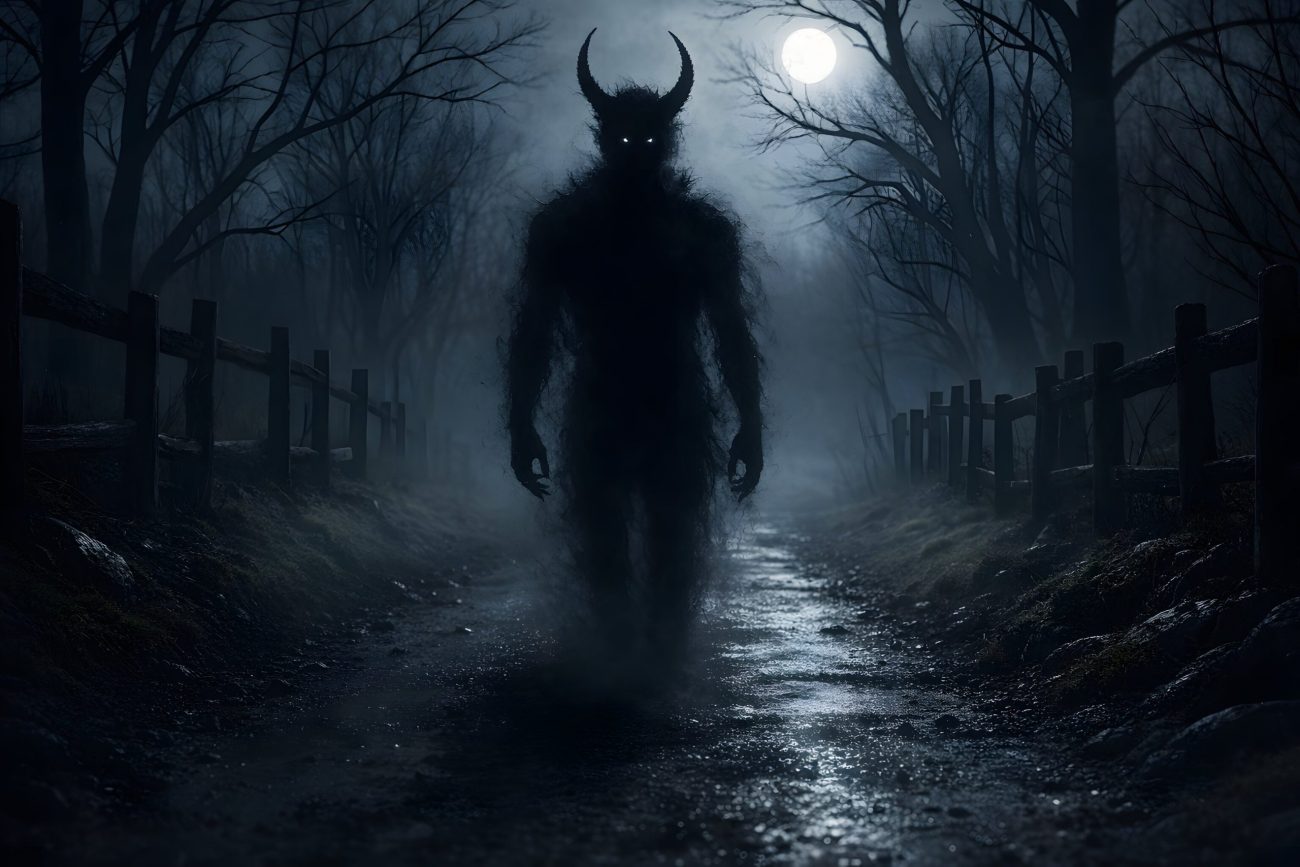
Antsje mei it Tsjil is a spirit of the rye fields, feared as a child-snatching presence that lurks among tall grain. She is said to dwell within the fields themselves, unseen but never silent, bound to the growing rye and the dangers it hides.

Children were warned never to wander through ripe rye fields, for Antsje waits there. Those who stray too far are seized, crushed, and devoured, ground down as though by a mill. No trace is left behind, only flattened stalks and silence.

Antsje moves upon a wheel, rolling endlessly through the fields. Though she cannot be seen, her approach is always announced. Before she arrives, a soft rustling passes through the rye—not the sound of wind, but something heavier, deliberate, circling closer and closer.

Those who hear the sound know to flee at once. To remain is to risk being caught in her turning path, drawn into the grain and destroyed. Adults say the fields themselves seem to close behind her, hiding her passage and concealing her victims.

Antsje mei it Tsjil stands as a warning spirit, embodying the dangers of the harvest fields and the boundary between safety and wilderness. She reminds all who hear the rye whisper that not every rustle belongs to the wind, and that some fields are alive with hunger.


Gallery


Sources

Abe de Verteller. (2014). Van aardmannetje tot zwarte juffer: Een lijst van Nederlandse en Vlaamse elfen en geesten. In AbeDeVerteller.nl, from https://abedeverteller.nl/van-aardmannetje-tot-zwarte-juffer-een-lijst-van-nederlandse-en-vlaamse-elfen-en-geesten/


Interpretive Lenses

Religious Readings
  • Christian Ascetic Deep Dive
Philosophical Readings
  • Nietzschean Deep Dive
Psychological Readings
  • Jungian Deep Dive
Esoteric Deep Dive
  • Hermetic Deep Dive
Political / Social Readings
  • Marxist Deep Dive
Other
  • How to Invite The Antsje mei it Tsjil

Acheri

Tradition / Region: Indian Mythology
Alternate Names: Hill Fairy; Bhūt; Hill Godling
Category: Ghost / Child


The Myth

The Acheri is the restless spirit of a young girl, or sometimes a woman, who died a violent or untimely death. After death, her soul did not depart the world but lingered among the mountains, becoming a dangerous presence feared by the villages below.

By day, Acheri dwell on mountain peaks and high hilltops, unseen and silent. As dusk falls, they descend from the heights to hold revels in remote places. These gatherings are perilous. Anyone who stumbles upon an Acheri revel risks death or grave harm, and even visiting the site afterward is considered unsafe, as the land itself is believed to retain their influence.

Acheri are especially feared for their connection to disease. They are said to cast their shadow—known as chāyā—over children, afflicting them with sudden and incurable illnesses. The touch of their shadow alone is enough to weaken the body, and once marked, a child may never recover. Because of this, parents were warned to keep children away from lonely hillsides and twilight paths.

Though feared, the Acheri are not without boundaries. It is said that wearing a scarlet thread around the throat offers protection against certain illnesses associated with them, particularly colds and goitre. However, bright red clothing is dangerous, as the Acheri are believed to hate the color red and may be drawn to it in anger rather than repelled.

In some regions, strange sights on the mountains are attributed to the Acheri. Travelers speak of enormous moving shadows cast against the slopes—phantom processions of elephants, horses, and figures marching in silence. These illusions are said to appear without sound or substance, vanishing as suddenly as they arise.

The Acheri are remembered as spirits bound to the hills by unresolved death. Neither fully divine nor merely ghostly, they stand between village deities and wandering dead. Their presence turns mountains into places of beauty and danger alike, reminding those below that the heights are not empty, and that the spirits of the violently lost still walk at dusk.


Gallery


Sources

Bestiary.us contributors. (n.d.). Acheri. In Bestiary.us — Mythical Creatures of the World, from https://www.bestiary.us/acheri

Wikipedia contributors. (n.d.). Acheri. In Wikipedia, The Free Encyclopedia, from https://en.wikipedia.org/wiki/Acheri


Interpretive Lenses

Religious Readings
  • Christian Ascetic Deep Dive
Philosophical Readings
  • Nietzschean Deep Dive
Psychological Readings
  • Jungian Deep Dive
Esoteric Deep Dive
  • Hermetic Deep Dive
Political / Social Readings
  • Marxist Deep Dive
Other
  • How to Invite The Acheri

Abja

Tradition / Region: Albanian Mythology
Alternate Names:
Category: Ghost


The Myth

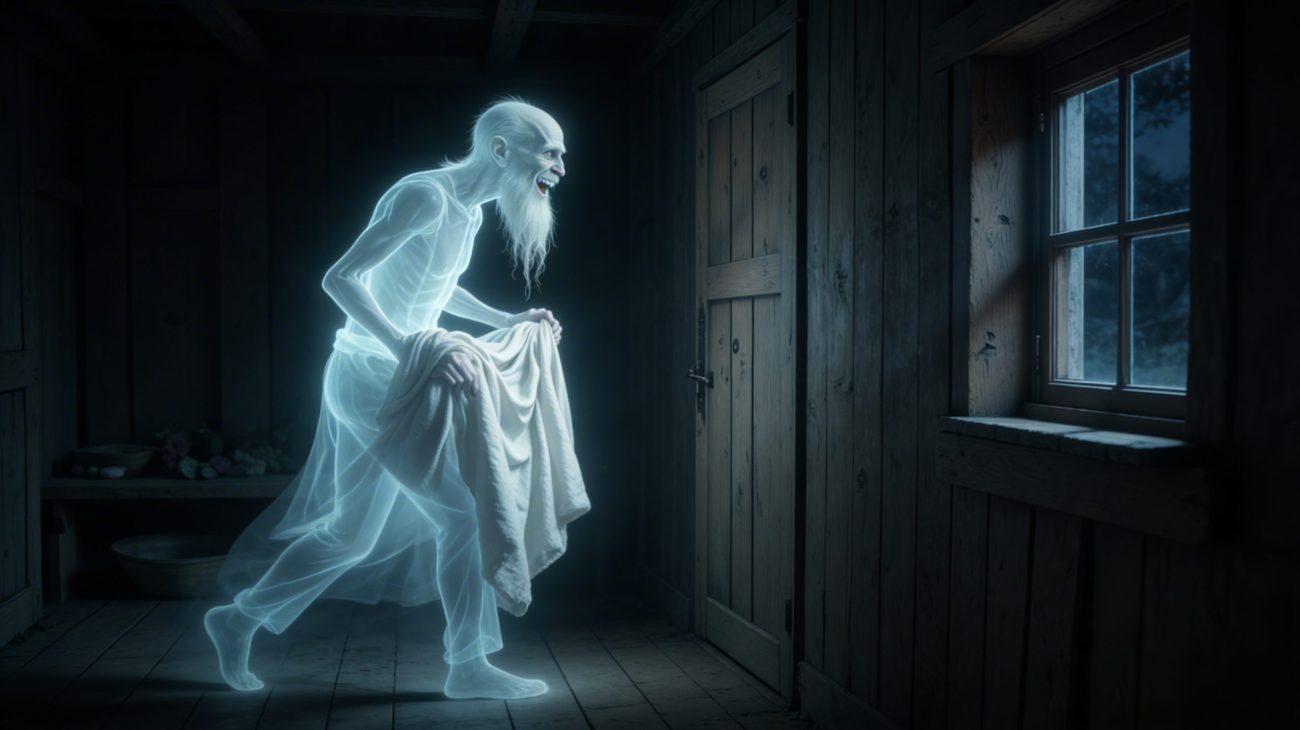
Abja is a ghostly figure in Albanian folklore, appearing in the form of a woman wrapped in a rough shroud or a thick cloak made of coarse woolen fabric. The name Abja derives from abá or abája, referring to such a garment.

She is described simply as a female apparition distinguished by this heavy, coarse covering, which conceals her body and form. No further actions, speech, or narrative events are consistently recorded; her defining characteristic is her appearance as a shrouded female ghost.


Gallery


Sources

Elsie, R. (2001). A Dictionary of Albanian Religion, Mythology, and Folk Culture. p. 4.


Interpretive Lenses

Religious Readings
  • Christian Ascetic Deep Dive
Philosophical Readings
  • Nietzschean Deep Dive
Psychological Readings
  • Jungian Deep Dive
Esoteric Deep Dive
  • Hermetic Deep Dive
Political / Social Readings
  • Marxist Deep Dive
Other
  • How to Invite The Abja

Oto Akuka

Tradition / Region: Japanese Mythology
Alternate Names:
Category: Demon, Cow, Pig


The Myth

Oto Akuka is a demon recorded only once, in a single old Japanese scroll. Beyond this appearance, nothing more is known. There are no surviving stories, no extended legends, and no later mentions of the creature.

In the scroll, Oto Akuka is shown with blue skin and a beast-like face. Its head is bald and crowned with two horns, and its nose appears crushed, giving it the resemblance of a cow or a pig. The demon is depicted kneeling on the ground. One hand is pressed firmly against the floor, while the other supports its body as it vomits.

The image presents Oto Akuka not as a being that attacks others, but as one overcome by what rises within itself. The demon is shown in the moment of release, brought low and humiliated by its own condition. Its punishment is not delivered by an external force, but unfolds openly through its own body, in full view.

Oto Akuka remains an isolated figure in Japanese folklore—a single, unsettling image preserved in a scroll, offering no tale of origin or aftermath, only the enduring vision of a demon brought to shame.


Gallery


Sources


Youkai Gazou Database. (2007).
鬼;オニ,嘔吐;オウトInternational Research Center for Japanese Studies (Nichibunken). Retrieved from https://www.nichibun.ac.jp/cgi-bin/YoukaiGazou/card.cgi?identifier=U426_nichibunken_0080_0008_0005

Also mentioned in my book Legendary and Mythical Cows

Interpretive Lenses

Religious Readings
  • Christian Ascetic Deep Dive
Philosophical Readings
  • Nietzschean Deep Dive
Psychological Readings
  • Jungian Deep Dive
Esoteric Deep Dive
  • Hermetic Deep Dive
Political / Social Readings
  • Marxist Deep Dive
Other
  • How to Invite The Oto Akuka

Blauw Vuurtje

Tradition / Region: Dutch Mythology
Alternate Names:
Category: Flame


The Myth

In the quiet places of Limburg and the Veluwe, small blue flames are said to appear at night. These are the Blauw Vuurtje, fire-elves that drift silently above the earth.

They hover only where treasures lie hidden beneath the ground. Their light is soft but unwavering, marking the spot for those who know how to read the signs. Yet the treasure is not meant for everyone.

Only a person of pure heart may dig where the blue flame floats. He must also know how to keep silent, for a single spoken word will cause the Blauw Vuurtje to vanish at once. If the flame disappears, the earth closes its secret again, and the treasure is lost forever.

Thus the blue fire waits patiently, glowing in the darkness, revealing riches only to the worthy and the wordless.


Gallery


Sources

Abe de Verteller. (2014). Van aardmannetje tot zwarte juffer: Een lijst van Nederlandse en Vlaamse elfen en geesten. In AbeDeVerteller.nl, from https://abedeverteller.nl/van-aardmannetje-tot-zwarte-juffer-een-lijst-van-nederlandse-en-vlaamse-elfen-en-geesten/


Interpretive Lenses

Religious Readings
  • Christian Ascetic Deep Dive
Philosophical Readings
  • Nietzschean Deep Dive
Psychological Readings
  • Jungian Deep Dive
Esoteric Deep Dive
  • Hermetic Deep Dive
Political / Social Readings
  • Marxist Deep Dive
Other
  • How to Invite The Blauw Vuurtje

Peri

Tradition / Region: Azerbaijani
Alternate Names:
Category: Nymph, Pigeon, Deer, Lake Dweller


The Myth

The Peri is a beautiful supernatural maiden, gentle by nature and radiant in form. She often appears as a pigeon or a deer, coming to ponds or rivers where she removes her animal skin and bathes as a human woman.

If someone steals this skin, the Peri is trapped and can be forced to obey, performing magic or granting favors. Yet such acts are dangerous, for Peris are not evil beings. They are kind-hearted, capable of fighting demons, and may even marry humans.

A Peri must be treated with respect. When offended or humiliated, her sorrow can turn into power, bringing misfortune or supernatural disaster. Thus she is remembered as a being of beauty and kindness, but one whose dignity must never be violated.


Gallery


Sources

JAMnews.net. (2017). The magical creatures of Azerbaijani mythology. Retrieved from https://jam-news.net/azerbaijani-demons/


Interpretive Lenses

Religious Readings
  • Christian Ascetic Deep Dive
Philosophical Readings
  • Nietzschean Deep Dive
Psychological Readings
  • Jungian Deep Dive
Esoteric Deep Dive
  • Hermetic Deep Dive
Political / Social Readings
  • Marxist Deep Dive
Other
  • How to Invite The Peri

Tepegöz

Tradition / Region: Azerbaijani and Turkic mythology
Alternate Names:
Category: Giant


The Myth

Tepegöz is a huge one-eyed giant who dwells in a cave and feeds on humans. When angered, he forces people inside his lair, where none escape alive. His sense of smell is keen, and he can track victims even in darkness.

There is only one way to survive him. A person must hide beneath a sheep’s skin so the giant cannot detect their scent. When the moment comes, Tepegöz can be slain only by driving a sharp sword into his single eye.

Though powerful and terrifying, Tepegöz is slow-witted. Those who rely on cunning rather than strength alone may overcome him, proving that brute force without intelligence is doomed to fall.


Source

jam-news.net/azerbaijani-demons/

Qulyabani

Tradition / Region: Azerbaijani mythology
Alternate Names:
Category: Sorcerer, Steppe dweller


The Myth

Qulyabani wanders the steppes and cemeteries, waiting for travelers who walk too late into the night. He looks like a man covered in dark hair, but his feet are turned backward, marking him as something unnatural. He speaks with a human voice and often challenges those he meets, delighting in fear and confusion.

Though dangerous, Qulyabani can be bound. If someone is clever enough to stick a needle into the collar of his clothing, he becomes their servant. Yet his obedience is twisted. Every command is fulfilled in reverse or in the most harmful way possible.

Thus, Qulyabani is both threat and temptation—a being whose power can be used, but never trusted, and whose tricks often punish those who believe they can control him.


Source

jam-news.net/azerbaijani-demons/

Aghach Kishi

Tradition / Region: Azerbaijani mythology
Alternate Names: Mesha Adam
Category: Monkey, Forest dweller, Mountain dweller, Ghost


The Myth

In the mountainous forests there lives Aghach Kishi, the Woodman. He is a wild, ghostlike being, his body covered in hair, moving through the trees with a will of his own. Some say he resembles a man, others a beast, but he belongs fully to the forest.

Aghach Kishi wanders near villages and gardens, where he sometimes appears without warning. He has a strong, unpleasant smell, and he is known to take clothing left behind by humans. In older times, people would leave garments for him on purpose, hoping to avoid angering him.

Though he does not always attack, encounters with Aghach Kishi are uneasy and unsettling. He is a reminder that the forests are not empty, and that something older and untamed still walks among the trees.


Gallery


Sources

JAMnews.net. (2017). The magical creatures of Azerbaijani mythology. Retrieved from https://jam-news.net/azerbaijani-demons/


Interpretive Lenses

Religious Readings
  • Christian Ascetic Deep Dive
Philosophical Readings
  • Nietzschean Deep Dive
Psychological Readings
  • Jungian Deep Dive
Esoteric Deep Dive
  • Hermetic Deep Dive
Political / Social Readings
  • Marxist Deep Dive
Other
  • How to Invite The Peri

Sirānis

Tradition / Region: Afghanistan (Kabul, Zabulistan)
Alternate Names: Siranis
Category: Forest dweller


The Myth

In the forests and undergrowth of Kabul and Zabulistan dwells the Sirānis, a strange carnivorous creature whose breath is music. Its snout is pierced by many openings, and when it exhales, a flute-like melody flows from them, sweet and irresistible.

Animals that hear this sound are drawn toward it, gathering peacefully as if enchanted. They stand transfixed, overwhelmed by the beauty of the music, until the Sirānis calmly chooses its prey and devours it. If none please it, the creature releases a terrible shriek that shatters the spell and sends all fleeing in terror.

It is said the Sirānis inspired the creation of musical instruments, for its sound was unlike anything else in the natural world. Thus it remains a being of deadly beauty—one whose song brings wonder, stillness, and sudden death to those who listen too closely.


Sources

abookofcreatures.com– Sirānis entry

Contadini, A. Musical Beasts: The Swan-Phoenix in the Ibn Bakhtishu’ Bestiaries. In O, Kane, B. (2005) The Iconography of Islamic Art. Edinburgh University Press.

Contadini, A. (2012) A World of Beasts: A Thirteenth-Century Illustrated Arabic Book on Animals (the Kitab Na’t al-Hayawan) in the Ibn Bakhtishu’ Tradition. Brill, Leiden.

Ettinghausen, R. (1950) The Unicorn. Studies in Muslim Iconography, Freer Gallery of Art Occasional Papers Vol. 1, No. 3, Washington.

al-Qazwini, Z. (1849) Zakariya ben Muhammed ben Mahmud el-Cazwini’s Kosmographie. Erster Theil: Die Wunder der Schöpfung. Ed. F. Wüstenfeld. Dieterichsche Buchhandlung, Göttingen.