Lau

Tradition / Region: Indian Mythology, Myanmar Mythology
Alternative names: Chauga (South Andaman languages), Inene (among the Onge)
Category: Ghost


The Myth

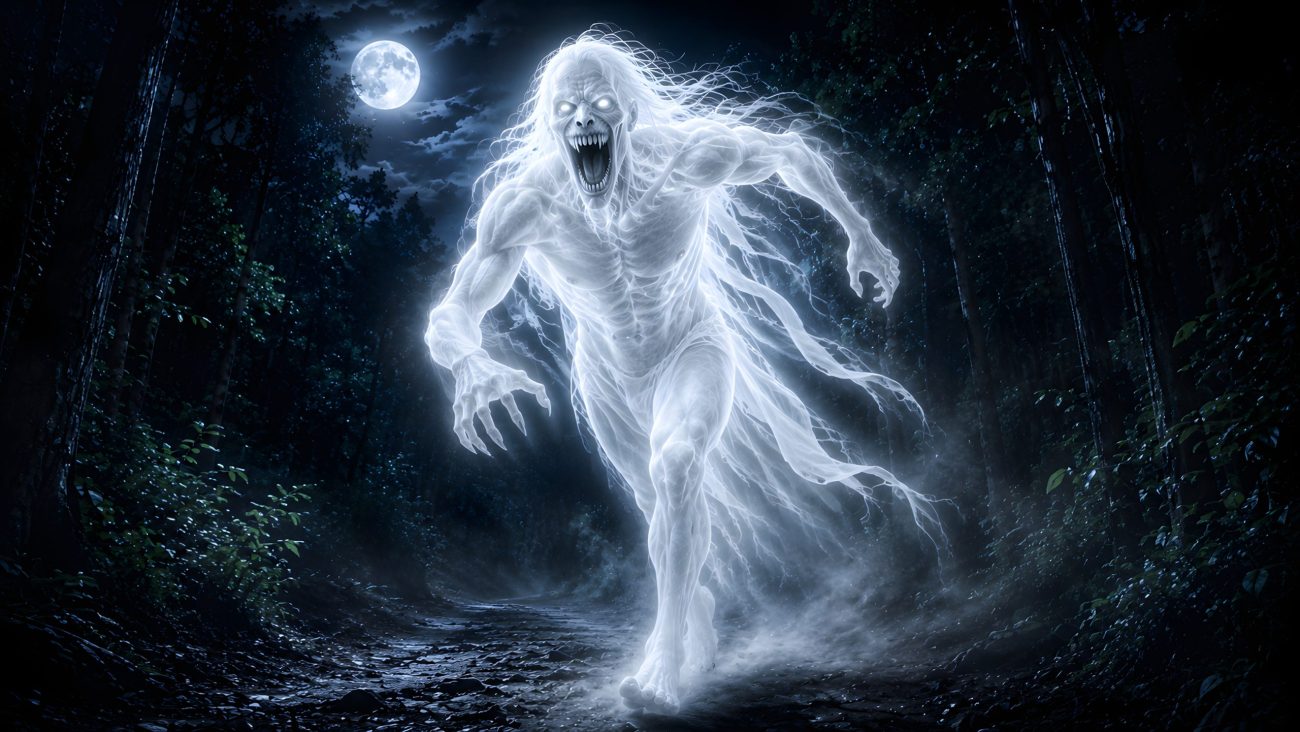
The Lau are the spirits of the dead in the traditions of the indigenous peoples of the Andaman Islands. They are regarded as invisible beings or as pale, white-skinned figures with frightening appearances. Rather than referring to a single creature, the name Lau serves as a general term for the ghosts of the deceased.

Among the peoples of South Andaman, these spirits were also known as Chauga. They were believed to be uncanny beings whose appearance differed greatly from that of ordinary humans. Their strange pale complexion and frightening nature made them objects of fear and caution.

The terms Lau and Chauga were also used to describe foreigners such as mainland Indians, Europeans, and other outsiders. Because these strangers possessed lighter skin than the islanders, they were sometimes viewed as resembling the ghostly dead. Black Africans, however, were considered entirely human in appearance and were not included in this category.

Similarly, among the Onge people, the word Inene referred to pale-skinned people and was also used for the spirits of warriors who had died natural deaths.

Thus, the Lau are remembered as the ghostly dead of the Andaman Islands—terrible pale spirits whose appearance was so distinctive that even unfamiliar foreigners were sometimes associated with them.


Sources

Bestiary.us. (n.d.). Lau. In New Bestiary: Encyclopedia of Imaginary Beings. Retrieved June 20, 2026, from https://www.bestiary.us/lau


Acheri

Tradition / Region: Indian Mythology
Alternate Names: Hill Fairy; Bhūt; Hill Godling
Category: Ghost


The Myth

The Acheri is the restless spirit of a young girl, or sometimes a woman, who died a violent or untimely death. After death, her soul did not depart the world but lingered among the mountains, becoming a dangerous presence feared by the villages below.

By day, Acheri dwell on mountain peaks and high hilltops, unseen and silent. As dusk falls, they descend from the heights to hold revels in remote places. These gatherings are perilous. Anyone who stumbles upon an Acheri revel risks death or grave harm, and even visiting the site afterward is considered unsafe, as the land itself is believed to retain their influence.

Acheri are especially feared for their connection to disease. They are said to cast their shadow—known as chāyā—over children, afflicting them with sudden and incurable illnesses. The touch of their shadow alone is enough to weaken the body, and once marked, a child may never recover. Because of this, parents were warned to keep children away from lonely hillsides and twilight paths.

Though feared, the Acheri are not without boundaries. It is said that wearing a scarlet thread around the throat offers protection against certain illnesses associated with them, particularly colds and goitre. However, bright red clothing is dangerous, as the Acheri are believed to hate the color red and may be drawn to it in anger rather than repelled.

In some regions, strange sights on the mountains are attributed to the Acheri. Travelers speak of enormous moving shadows cast against the slopes—phantom processions of elephants, horses, and figures marching in silence. These illusions are said to appear without sound or substance, vanishing as suddenly as they arise.

The Acheri are remembered as spirits bound to the hills by unresolved death. Neither fully divine nor merely ghostly, they stand between village deities and wandering dead. Their presence turns mountains into places of beauty and danger alike, reminding those below that the heights are not empty, and that the spirits of the violently lost still walk at dusk.


Sources

Bestiary.us contributors. (n.d.). Acheri. In Bestiary.us — Mythical Creatures of the World, from https://www.bestiary.us/acheri

Wikipedia contributors. (n.d.). Acheri. In Wikipedia, The Free Encyclopedia, from https://en.wikipedia.org/wiki/Acheri