Devil Boruta

Tradition / Region: Polish mythology
Alternate Names: Boruta, Błotnik, Borowiec
Category: Demon, Swamp dweller, Shapeshifter


The Myth

In the forests, swamps, and muddy roads of Poland, people long spoke of Devil Boruta, a spirit who delighted in confusing travelers and leading them astray at night. When carts became stuck in the mud or paths vanished in the dark, it was Boruta who was blamed—lurking unseen, laughing as people wandered in circles through marsh and woodland.

Boruta was not always imagined as a horned demon. In older folk belief, he was closer note a wild forest spirit, a remnant of pre-Christian beings who ruled untamed places. After Christianization, this spirit was reshaped into a devil, though he retained his connection to bogs, dams, forests, and muddy crossings. He could appear suddenly as a black dog, slip through reeds as a shadow, or remain unseen while his presence was felt through fear and confusion.

Later stories—especially those popularized in books—portrayed Boruta as a devil dressed like a nobleman, tempting the upper classes with pride, corruption, and excess. Yet among common folk, Boruta was far less refined. He was a błotnik, a swamp devil, called upon when wagons sank into mud or when travelers lost their way. Peasants did not fear him as a tempter of souls so much as a malicious spirit of difficult terrain, a force of nature that punished arrogance and carelessness.

Boruta did not rule hell, nor did he demand worship. He belonged to the borderlands—between forest and field, road and swamp, safety and danger. To meet him was not always fatal, but it was humiliating, exhausting, and frightening. Those who mocked him or wandered carelessly risked being lost until dawn.

In this way, Devil Boruta stands as a shadow of older pagan spirits: no grand lord of evil, but a sly, muddy trickster who reminds humans that the wild places do not belong to them.


Gallery


Sources

Wikipedia contributors. (n.d.). Devil Boruta. In Wikipedia, The Free Encyclopedia, from https://en.wikipedia.org/wiki/Devil_Boruta


Interpretive Lenses

Religious Readings
  • Christian Ascetic Deep Dive
Philosophical Readings
  • Nietzschean Deep Dive
Psychological Readings
  • Jungian Deep Dive
Esoteric Deep Dive
  • Hermetic Deep Dive
Political / Social Readings
  • Marxist Deep Dive
Other
  • How to Invite The Devil Boruta

Henggongyu

Tradition / Region: Chinese Mythology
Category: Fish, Shapeshifter


The Myth

In the far northern wilderness there lies a frozen lake called Shihu. For most of the year the lake is locked in ice, thawing only for fifty or sixty days around the time of the summer solstice. Within this lake lives a strange and dangerous being known as Henggongyu.

Henggongyu is said to be seven or eight feet long, shaped like a carp, and entirely red in color. During the daytime it remains hidden in the water beneath the ice. When night falls, however, it leaves the lake and transforms into a human, wandering the frozen land in human form before returning to the water by dawn.

The creature cannot be harmed by ordinary means. Needles cannot pierce it, and even boiling water cannot kill it. No matter how long it is cooked, Henggongyu survives—unless two dried plums are placed into the boiling water. Only then does the monster finally die.

Though fearsome, Henggongyu is also believed to possess powerful properties. Eating its flesh cures evil diseases, driving away illnesses caused by malignant forces. For this reason, it is both feared and sought after, a being that brings danger and healing alike.

Thus Henggongyu remains a creature of contradiction: living in a frozen lake, immune to harm, shifting between fish and human, and offering salvation only through great risk.


Gallery


Sources

Wikipedia contributors. (n.d.). 橫公魚. In Wikipedia, The Free Encyclopedia, from https://zh.wikipedia.org/wiki/%E6%A8%AA%E5%85%AC%E9%B1%BC


Interpretive Lenses

Religious Readings
  • Christian Ascetic Deep Dive
Philosophical Readings
  • Nietzschean Deep Dive
Psychological Readings
  • Jungian Deep Dive
Esoteric Deep Dive
  • Hermetic Deep Dive
Political / Social Readings
  • Marxist Deep Dive
Other
  • How to Invite The Henggongyu

Dema

Tradition / Region: Australian Mythology, Aborigine Mythology
Alternate Names: Dema, Demes
Category: Shapeshifter, Spirit


The Myth

In the age before the present world had settled into its familiar shape, the Dema walked the land. They were beings of mixed form, combining human features with those of animals and birds. Their bodies did not obey a single shape, and their nature was never fixed. To encounter a Dema was to face something both familiar and strange, human and non-human at once.

The Dema belonged to the time of first creations, when the world was still forming. This era is spoken of only vaguely as “long ago,” yet it does not feel distant. Stories of the Dema move freely between past and present, as if the boundary between then and now were thin. What happened in the age of the Dema can seem as near as yesterday.

The Dema were creators. They brought species, natural forces, and essential objects into existence. Often they did not merely create these things but were them. A Dema might be a man, a bird, a serpent, a tree, or all of these in turn. Transformation was natural to them, and stories tell of sudden and unexpected changes of form.

A Dema could appear as a youth and then slip back into an animal shape without warning. One might live as a serpent, be killed in that form, and yet continue to exist as a human, still bearing traces of the serpent, before eventually becoming a snake once more. Death did not always end a Dema’s story; it often marked another change.

Many Dema were the ancestors of clans and tribes. As totemic founders, they gave rise to the first people, animals, or plants of a lineage. Their mixed appearance reflected the bond between a clan and its totem. Through them, humans and animals were revealed to share a common origin.

Some Dema became the very species they had embodied. A Dema-dog, for example, transformed fully into a dog and produced many intelligent, speaking offspring. From these came the ordinary dogs of the world. In this way, myth explains how the extraordinary became ordinary, and how the living world took its present form.

Though powerful, the Dema were not always benevolent. They often quarreled with humans, bringing danger, rivalry, and conflict. Like heroes and monsters at once, they shaped the world through both creation and destruction.

The Dema are remembered not as distant gods, but as unstable, shifting beings whose actions still echo in the land, in animals, and in human descent. They embody the idea that the world is born from transformation, and that nothing was ever meant to remain fixed forever.


Gallery


Sources

Bestiary.us contributors. (n.d.). Dema. In Bestiary.us, from https://www.bestiary.us/dema/


Interpretive Lenses

Religious Readings
  • Christian Ascetic Deep Dive
Philosophical Readings
  • Nietzschean Deep Dive
Psychological Readings
  • Jungian Deep Dive
Esoteric Deep Dive
  • Hermetic Deep Dive
Political / Social Readings
  • Marxist Deep Dive
Other
  • How to Invite The Dema

Hiwai-abere

Tradition / Region: Papua New Guinea Mythology
Alternate Names:
Category: Dwarf, Shapeshifter


The Myth

Hiwai-abere are wicked female beings who resemble women but are marked by grotesque and unsettling features. They are described as very fat, with large heads, swollen bellies, and unusually short legs. Their fingernails are long and sharp like spears, and with these they are able to hunt and kill wild pigs. Wherever they go, they constantly break wind, an action that is both comic and disturbing, and yet they possess extraordinarily sharp hearing, able to detect even a whisper from far away.

Despite their monstrous nature, hiwai-abere are masters of deception. They can disguise themselves perfectly, even taking on the appearance and features of specific human women. Through this ability, they approach men they desire and insert themselves into human society unnoticed. In many folk tales, a hiwai-abere replaces a bride at a wedding or abducts the rightful wife and takes her place in the household.

At first, the husband notices only that something is wrong. His wife seems changed in strange and troubling ways. The hiwai-abere cannot properly perform ordinary women’s work and instead demands to be served. She becomes possessive and jealous, preventing her husband from speaking to or approaching other women. The household falls into disorder, and the husband grows increasingly distressed by the inexplicable transformation of his wife.

Eventually, the deception is uncovered. The hiwai-abere is exposed for what she truly is, often through her inability to maintain human behavior or through the intervention of others. Once revealed, she is driven away, and the rightful wife is restored. The tales always end with the reuniting of the legitimate couple and the removal of the dangerous impostor.

Through these stories, the hiwai-abere stand as symbols of deception, disruption, and the fear of identity being stolen. They embody the danger of false appearances and the belief that what looks human may not always belong to the human world.


Gallery


Sources

Landtman, G. (1970). The Kiwai Papuans of British New Guinea: A nature-born instance of Rousseau’s ideal community.


Interpretive Lenses

Religious Readings
  • Christian Ascetic Deep Dive
Philosophical Readings
  • Nietzschean Deep Dive
Psychological Readings
  • Jungian Deep Dive
Esoteric Deep Dive
  • Hermetic Deep Dive
Political / Social Readings
  • Marxist Deep Dive
Other
  • How to Invite The Hiwai-abere

Wiobadara

Tradition / Region: Papua New Guinea Mythology
Alternate Names:
Category: Snake, Shapeshifter


The Myth

Beneath the ground of Abuara Island lives a being known as Wiobadara.

By day, Wiobadara is seen in the form of a snake, moving unseen beneath the sand. By night, he sometimes emerges in human shape, revealing that his nature is not bound to a single form. His presence is known not by his appearance alone, but by the changes he leaves upon the land.

Wiobadara pushes the sand upward into small hills and ridges. At times, he alters the ground so thoroughly that women searching for crabs can no longer find the holes where they usually dig. Paths become unfamiliar, signs are erased, and the shore no longer responds as it should.

When this happens, the women do not confront him with force. Instead, they place food upon the ground for Wiobadara and speak to him respectfully, asking that he restore the land and allow them to find crabs again.

If properly appeased, Wiobadara relents. The sand settles, the hidden signs return, and the crabs once more reveal themselves. In this way, Wiobadara is understood as a powerful being of the earth—capable of withholding sustenance, but also of granting it when approached with respect.


Gallery


Sources

Landtman, G. (1970). The Kiwai Papuans of British New Guinea: A nature-born instance of Rousseau’s ideal community.


Interpretive Lenses

Religious Readings
  • Christian Ascetic Deep Dive
Philosophical Readings
  • Nietzschean Deep Dive
Psychological Readings
  • Jungian Deep Dive
Esoteric Deep Dive
  • Hermetic Deep Dive
Political / Social Readings
  • Marxist Deep Dive
Other
  • How to Invite The Wiobadara

Tube

Tradition / Region: Papua New Guinea Mythology
Alternate Names:
Category: Lizard, Shapeshifter, Snake


The Myth

At Haemuba lives a being named Tube, one of the etengena—spirits connected to the land and its fertility.

Tube is closely bound to a particular man of the Mawata people. To him, Tube appears in dreams, teaching the knowledge of garden medicines and the proper ways to use them. The man, in turn, shares this knowledge with others, spreading what Tube has revealed.

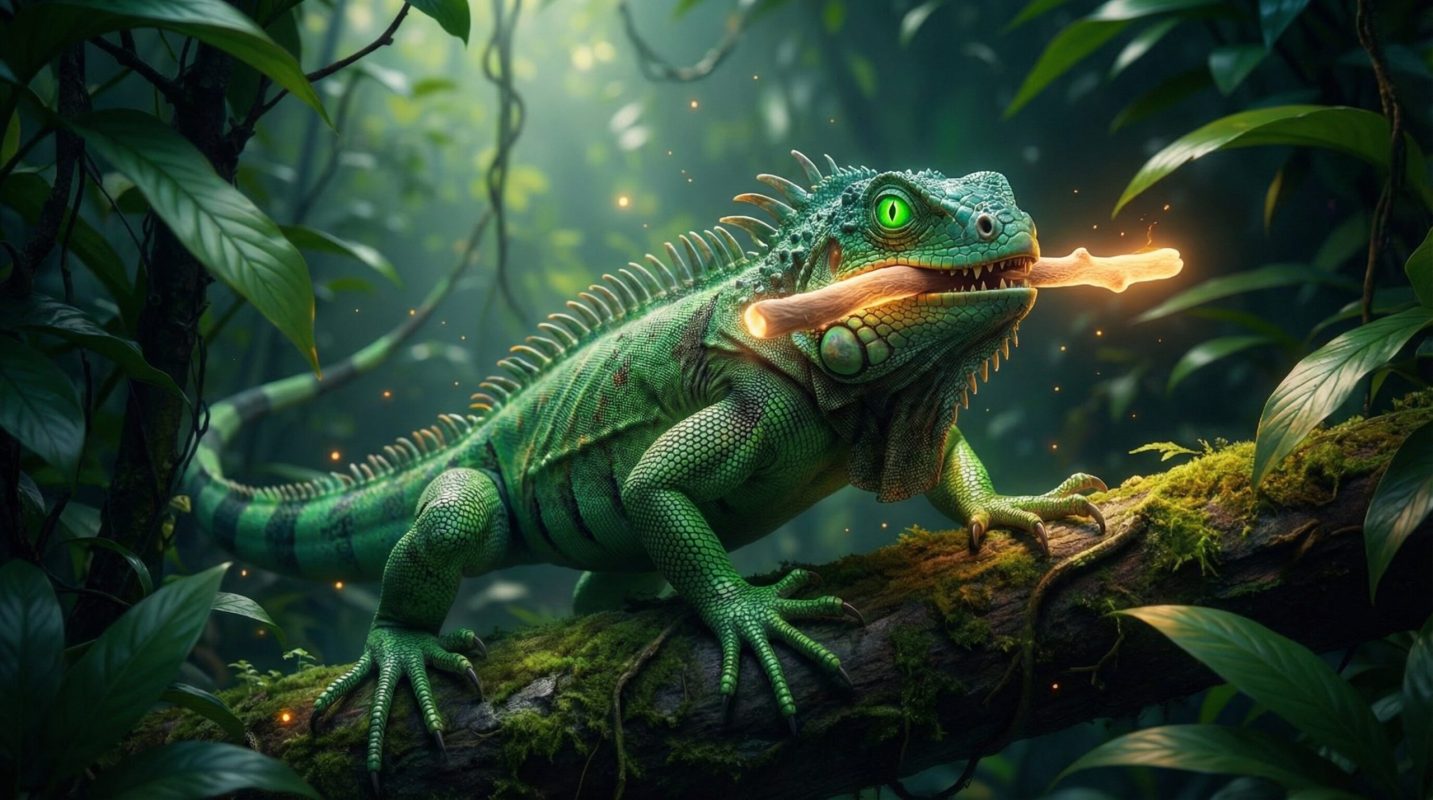
At times, Tube does not remain unseen. He may appear in the garden or the bush in the form of a snake or an iguana. Though his shape is that of an animal, the man recognizes him by signs made with the creature’s head, subtle movements that reveal its true identity.

Once, the man encountered Tube in the bush in the form of an iguana. The animal held a small branch in its mouth—a branch that was itself a medicine. The man gently patted the creature on the head, and by this act received the medicine from Tube.

The bond between them is sealed through sharing. When the first taro is pulled from the ground, it is divided between the man and Tube, acknowledging the spirit’s role in the growth of the garden and honoring the partnership between human and land-being.

Thus Tube remains a quiet teacher and guardian of cultivated ground, passing knowledge through dreams, signs, and shared harvest, and ensuring that the wisdom of the land continues among the people.


Gallery


Sources

Landtman, G. (1970). The Kiwai Papuans of British New Guinea: A nature-born instance of Rousseau’s ideal community.


Interpretive Lenses

Religious Readings
  • Christian Ascetic Deep Dive
Philosophical Readings
  • Nietzschean Deep Dive
Psychological Readings
  • Jungian Deep Dive
Esoteric Deep Dive
  • Hermetic Deep Dive
Political / Social Readings
  • Marxist Deep Dive
Other
  • How to Invite The Tube

Emobali

Tradition / Region: Papua New Guinea Mythology
Alternate Names:
Category: Crocodile, Fish, Shapeshifter


The Myth

Emobali was once a Djibu boy. One day, while hunting, he shot a woman without knowing who she was. When he discovered that he had killed his own mother, grief and terror seized him. Unable to live with what he had done, Emobali went to the Binatui River at Mude and threw himself into the water.

At the place where he entered the river, a deep hollow was formed close to the bank. This deep spot is said to exist because of Emobali’s leap, and it remains as a sign of his death.

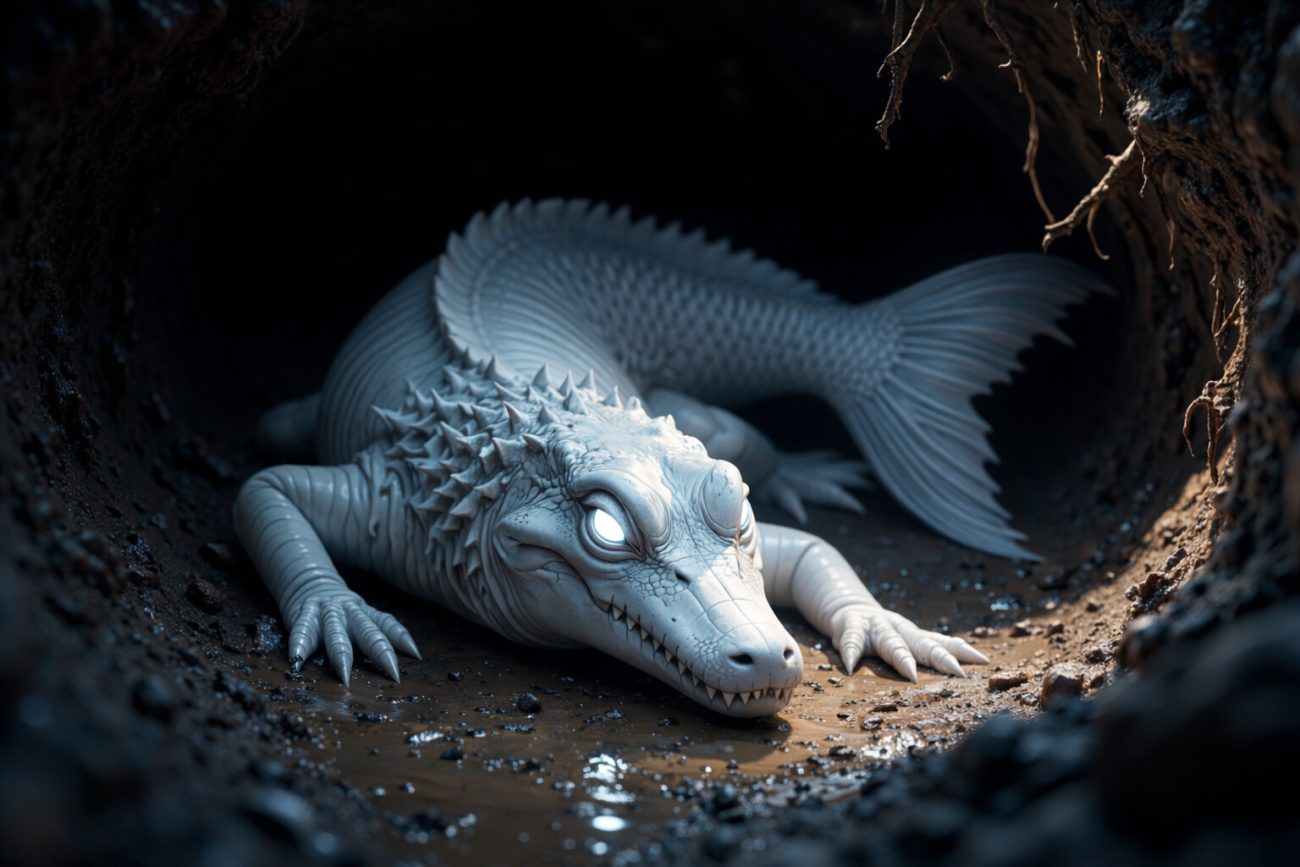
Afterward, Emobali became a spirit of the river. In the water, he appears in the form of a crocodile or a fish, moving silently beneath the surface. Yet Emobali does not only haunt the river. He also comes to people in dreams. When Djibu people sleep naked, Emobali may appear to them and instruct them, teaching medicines and giving knowledge useful for hunting and gardening.

In these dreams, he does not appear as an animal, but in his human form, as the boy he once was.

Thus Emobali lives on as a crocodile–fish spirit of the river, born from an act of tragic ignorance, dwelling in water and dreams alike, feared and respected as both a reminder of guilt and a giver of hidden knowledge.


Gallery


Sources

Landtman, G. (1970). The Kiwai Papuans of British New Guinea; a nature-born instance of Rousseau’s ideal community. New York: Johnson Reprint Corp., p. 302.


Interpretive Lenses

Religious Readings
  • Christian Ascetic Deep Dive
Philosophical Readings
  • Nietzschean Deep Dive
Psychological Readings
  • Jungian Deep Dive
Esoteric Deep Dive
  • Hermetic Deep Dive
Political / Social Readings
  • Marxist Deep Dive
Other
  • How to Invite The Emobali

Lidérc

Tradition / Region: Hungarian Mythology
Alternate Names: Ludvérc
Category: Bird, Chicken, Flame, Spirit, Shapeshifter


The Myth

In the villages and marshlands of Hungary, people speak of the Lidérc, a restless and many-formed spirit that moves between fire, flesh, and shadow.

On some nights it appears as a shooting star or a wandering flame, streaking low across the sky or flickering over bogs and fields. Wherever it passes, sparks leap and fires may break out, barns and pens igniting without cause. In other places it takes the shape of a fiery rod, a blazing figure, or a marsh light that lures the unwary.

But the Lidérc is most feared for the form it takes among humans.

It seeks the lonely: widows, widowers, abandoned lovers, those whose beloveds are far away or dead. Slipping through the night, it enters their homes and assumes the exact appearance of the person they long for most. It speaks gently, knows their memories, and offers comfort, affection, and desire. Night after night it returns, lying beside its victim, feeding not on blood but on life itself. The victim grows pale and weak, dizzy and thin, until at last they waste away and die, loved to death. When its prey is spent, the Lidérc abandons the body and rises again into the sky as a star, seeking another heart to consume.

Yet the Lidérc is never perfect in its disguise. One of its legs always betrays it: a scaly goose foot, a chicken’s claw, or sometimes a horse’s iron-shod hoof. Those who scatter ashes at their threshold may see the tracks—one human footstep, one monstrous—and know what has crossed their door. Garlic, cords, and household charms can bar its entry, if the danger is recognized in time.

There is another kind of Lidérc as well, one born not from fire but from human greed. If the first egg laid by a black hen is hidden beneath a person’s armpit and warmed there, a strange, featherless creature will hatch. This Lidérc binds itself to its keeper, speaking with intelligence and obeying commands. It brings wealth, steals treasure, and works tirelessly, living on butter and favors. But it is never satisfied. If its master fails to give it constant tasks, it becomes restless and cruel, pestering day and night until it finally destroys the one who raised it.

The only escape is to give the Lidérc an impossible command: to carry water in a sieve, to squeeze through solid wood, to complete a task that cannot be done. Unable to endure failure, the creature will rage, weaken, and finally vanish.

Thus the Lidérc remains a warning whispered in Hungarian folklore: that desire, loneliness, and greed can summon something that looks like love or fortune—but feeds only on ruin.


Gallery


Sources

A Book of Creatures contributors. (2021). Lidérc. In ABookOfCreatures.com, from https://abookofcreatures.com/2021/03/22/liderc/

Wikipedia contributors. (n.d.). Lidérc. In Wikipedia, The Free Encyclopedia, from https://en.wikipedia.org/wiki/Lid%C3%A9rc


Interpretive Lenses

Religious Readings
  • Christian Ascetic Deep Dive
Philosophical Readings
  • Nietzschean Deep Dive
Psychological Readings
  • Jungian Deep Dive
Esoteric Deep Dive
  • Hermetic Deep Dive
Political / Social Readings
  • Marxist Deep Dive
Other
  • How to Invite The Lidérc

Jarjacha

Tradition / Region: Andean Folklore (Southern Peru; Ayacucho, Junín)
Alternate Names:
Category: Llama / Shapeshifter / Mountain dweller


The Myth

In the mountain regions of southern Peru, especially around Ayacucho, people speak of a nocturnal creature known as the Jarjacha. It is said to appear after nightfall, wandering the hills and remote paths near villages. Its presence is announced by a piercing call—“Jar-jar-jar” or “Qar-qar-qar”—a sound that echoes through the mountains and strikes fear into those who hear it.

According to tradition, the cry of the Jarjacha signals that a grave transgression has occurred within the community, most often incest. The creature is believed to be the transformed result of such an act, condemned to roam the night and reveal the hidden wrongdoing through its voice. When the call is heard, villagers know that someone nearby carries a secret that has violated the deepest social and moral boundaries.

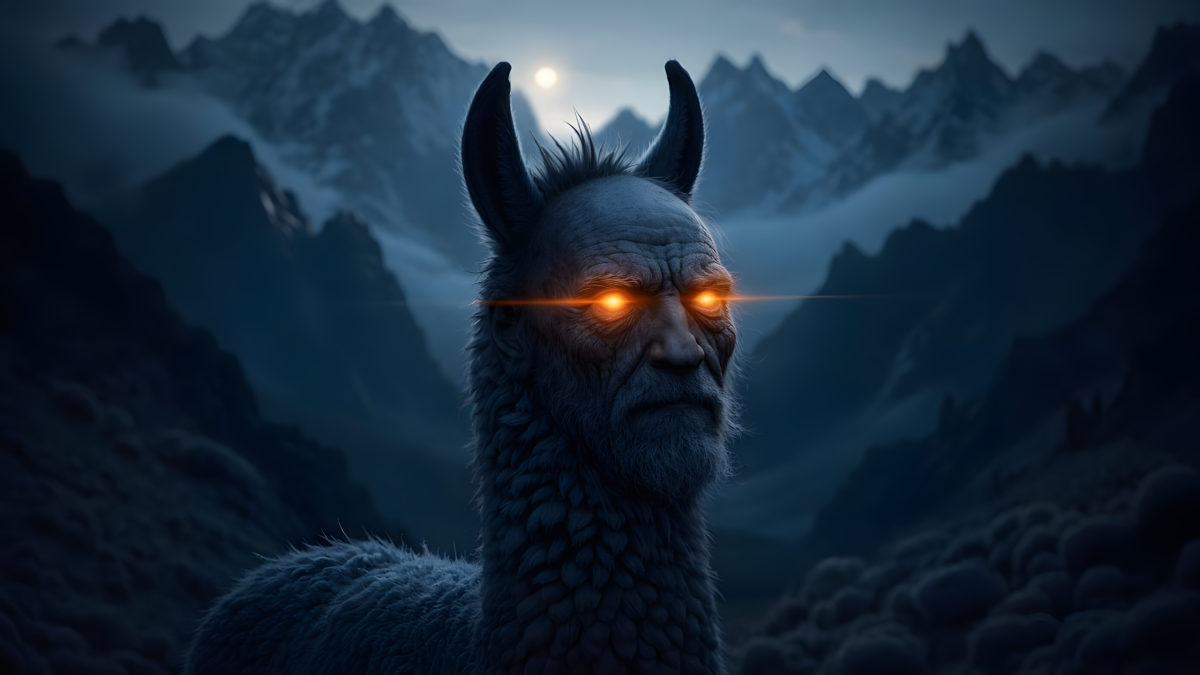
Descriptions of the Jarjacha vary by region. Most accounts connect it to llamas or alpacas. Some say it appears as a llama with a human head; others describe it as a two-legged creature resembling a llama or alpaca, sometimes with two or even three heads. In certain stories, its glowing eyes shine unnaturally in the darkness, making it unmistakable even from a distance.

The Jarjacha is not bound to a single form. Some tales claim it can briefly disguise itself as a dog or even as a human, allowing it to move unnoticed among people before returning to its true shape at night. Though rarely said to attack directly, its appearance brings fear, shame, and unrest to the community.

When dawn comes, the Jarjacha disappears, retreating into the mountains until night falls again. Its cries linger in memory, a reminder that hidden acts cannot remain concealed forever, and that the night itself will give them voice.


Interpretive Lenses

Religious Readings
  • Christian Ascetic Deep Dive
Philosophical Readings
  • Nietzschean Deep Dive
Psychological Readings
Esoteric Deep Dive
  • Hermetic Deep Dive
Political / Social Readings
  • Marxist Deep Dive
Other