Abaia

Tradition / Region: Papua New Guinea Mythology
Alternate Names:
Category: Eel, Fish, Lake Dweller


The Myth

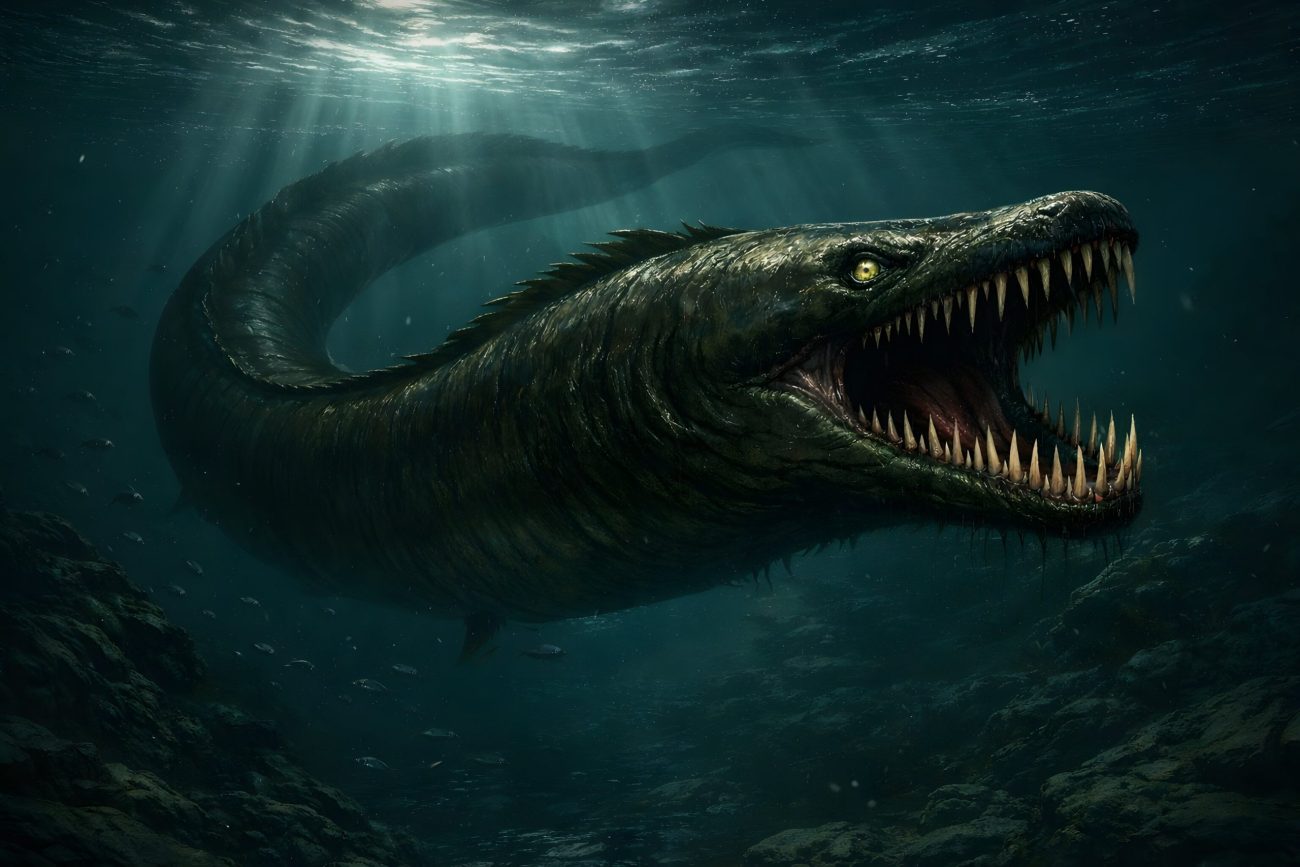
There is a deep lake in British New Guinea, rich with fish, and at its bottom dwells Abaia, a powerful and magical eel. Abaia is ancient and territorial, and like many great serpents and eels of Melanesian belief, it is bound to the forces of weather, storms, and floods. It does not tolerate disturbance.

One day, a man discovered Abaia’s lake and found that the fish within it were plentiful beyond measure. He caught many and returned to his village, telling the others of the endless bounty. Soon the people came together to the lake, casting their nets and hauling out fish in great numbers. In their greed, they took without restraint.

Among them, one woman caught Abaia himself in her net. The great eel struggled and escaped, slipping back into the depths of the lake.

That night, Abaia took revenge. Rain fell without pause. The lake swelled and overflowed its banks, and the floodwaters rose until the entire village was drowned. Men, women, and children were swept away by the storm.

Only one old woman survived. She had refused to eat the fish taken from the lake and climbed into a tree as the waters rose. When the flood receded, she alone remained, spared because she had not partaken in what belonged to Abaia.

Thus the people learned that the gifts of the water are not without guardians, and that greed awakens the wrath of those who dwell beneath the surface.


Sources

Dixon, R. B. (1916) The Mythology of All Races v. IX: Oceanic. Marshall Jones Company, Boston.

A Book of Creatures contributors. (n.d.). Abaia. In A Book of Creatures, from https://abookofcreatures.com/2019/01/04/abaia/
Gabora

Tradition / Region: Papua New Guinea Mythology
Alternate Names: The Saw-Fish of Madiri
Category: Fish, Sawfish


The Myth

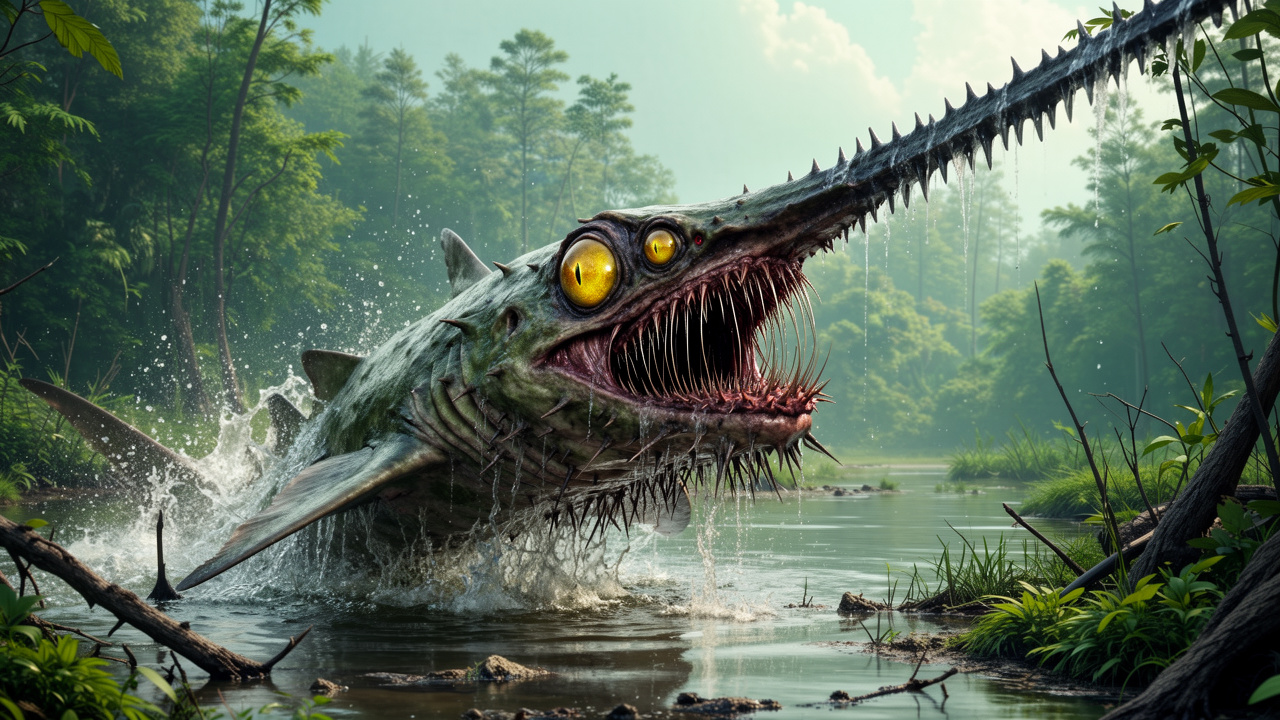
Long ago, in the bushland along the coast of Kiwai, between Iasa and Kubira, there was an open stretch of land that had been cleared in a terrible way. This clearing was made by Gabora, a gigantic saw-fish that lived in a nearby swamp.

One day, a woman was fishing in the swamp using sádi, a poisonous substance placed in the water to stun fish. The poison disturbed Gabora. Driven from the swamp, the monstrous saw-fish surged out onto dry land. As it moved toward the sea, it swept its enormous saw from side to side, cutting down the bush in a single, devastating passage. Trees fell as if sliced by a blade, and the land was left bare. From that day onward, no trees ever grew there again.

Later, the people returned to fish in the same place, again using sádi. Once more, Gabora rose from the water. This time, it swung its terrible weapon across the fishing grounds, killing nearly all the people present. The destruction was so complete that the event was remembered as a warning never to disturb certain waters again.

Gabora is spoken of not only as a fish, but as an obisare, a dangerous and uncanny being whose presence marks places of death and desolation. The empty land it created remains as proof of its passage, and the story endures as a reminder that some waters are guarded by powers that do not forgive intrusion.


Gallery


Sources

Landtman, G. (1970). The Kiwai Papuans of British New Guinea: A nature-born instance of Rousseau’s ideal community.


Interpretive Lenses

Religious Readings
  • Christian Ascetic Deep Dive
Philosophical Readings
  • Nietzschean Deep Dive
Psychological Readings
  • Jungian Deep Dive
Esoteric Deep Dive
  • Hermetic Deep Dive
Political / Social Readings
  • Marxist Deep Dive
Other
  • How to Invite The Gabora

Pairio

Tradition / Region: Papua New Guinea Mythology
Alternate Names:
Category: Fish, Catfish


The Myth

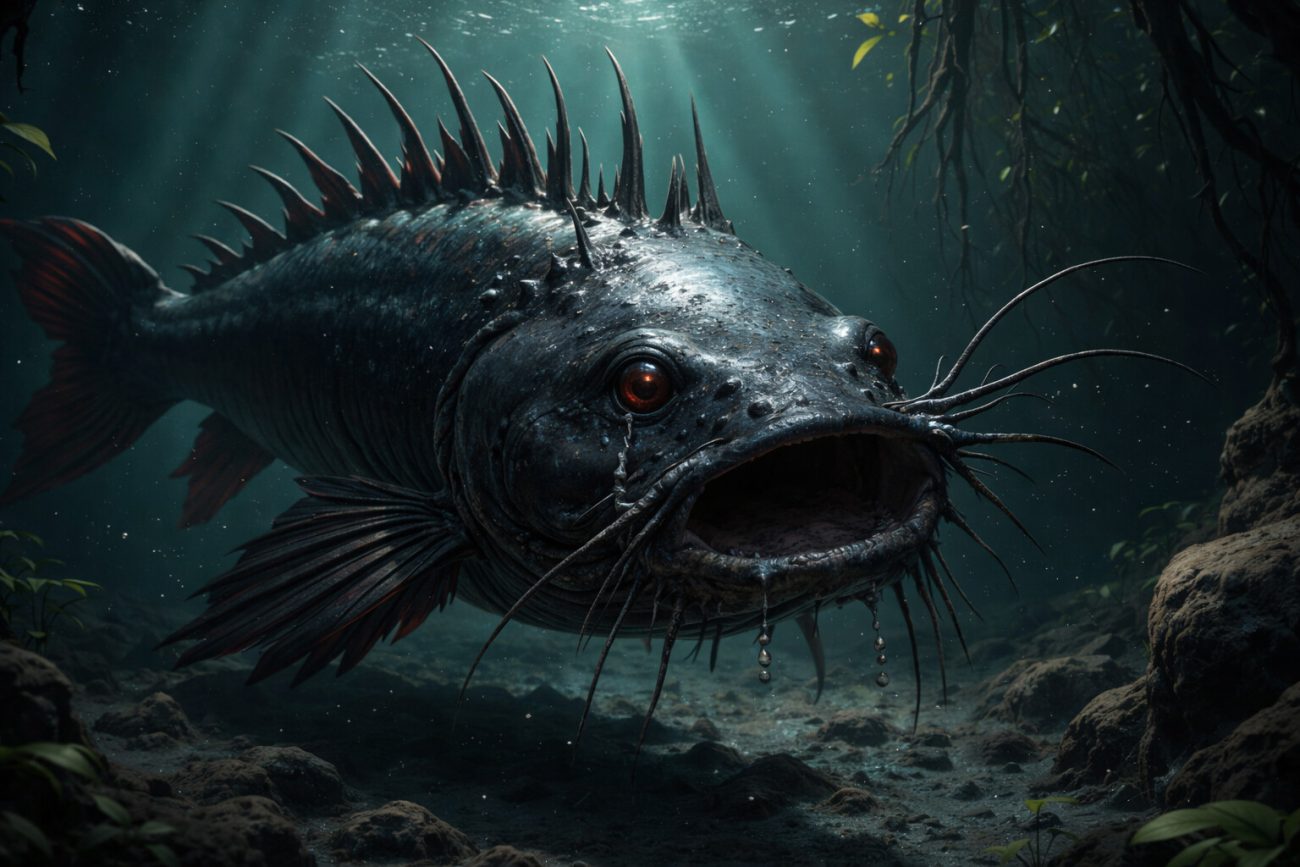
On the reef of Kubani-kikava there lives a cat-fish called Pairio, feared by all who travel those waters. No canoe dares to pass close to her home, for Pairio destroys vessels by thrusting up her back, which is lined with sharp spines. At times a single spine is seen breaking the surface of the sea ahead of a canoe, a warning that forces the crew to turn away at once. At other times she swims behind a vessel, one spine aimed like a weapon, and the paddlers must flee with all their strength to escape destruction.

Pairio was not always a fish. In the beginning she was a malignant female being, akin to other dangerous spirits of the land. One day she was pursued by a great cloud of butterflies. They swarmed over her and settled upon her body until she was completely covered, their wings beating and clinging so tightly that she could not free herself.

To escape them, Pairio fled into the sea. The butterflies followed and were soaked by the water. Their wings hardened, their bodies changed, and spines rose along their backs. In that moment they were transformed into stone-fish and cat-fish, bright and richly colored, just as the butterflies had been.

Pairio herself remained in the reef, now fully a creature of the sea, armed with spines and power. From that time on, the waters of Kubani-kikava became dangerous to all who ventured too near, and the presence of strange, spined fish in the reef was remembered as the legacy of butterflies that once chased a spirit into the ocean.


Gallery


Sources

Landtman, G. (1970). The Kiwai Papuans of British New Guinea: A nature-born instance of Rousseau’s ideal community.


Interpretive Lenses

Religious Readings
  • Christian Ascetic Deep Dive
Philosophical Readings
  • Nietzschean Deep Dive
Psychological Readings
  • Jungian Deep Dive
Esoteric Deep Dive
  • Hermetic Deep Dive
Political / Social Readings
  • Marxist Deep Dive
Other
  • How to Invite The Pairio

Emobali

Tradition / Region: Papua New Guinea Mythology
Alternate Names:
Category: Crocodile, Fish, Shapeshifter


The Myth

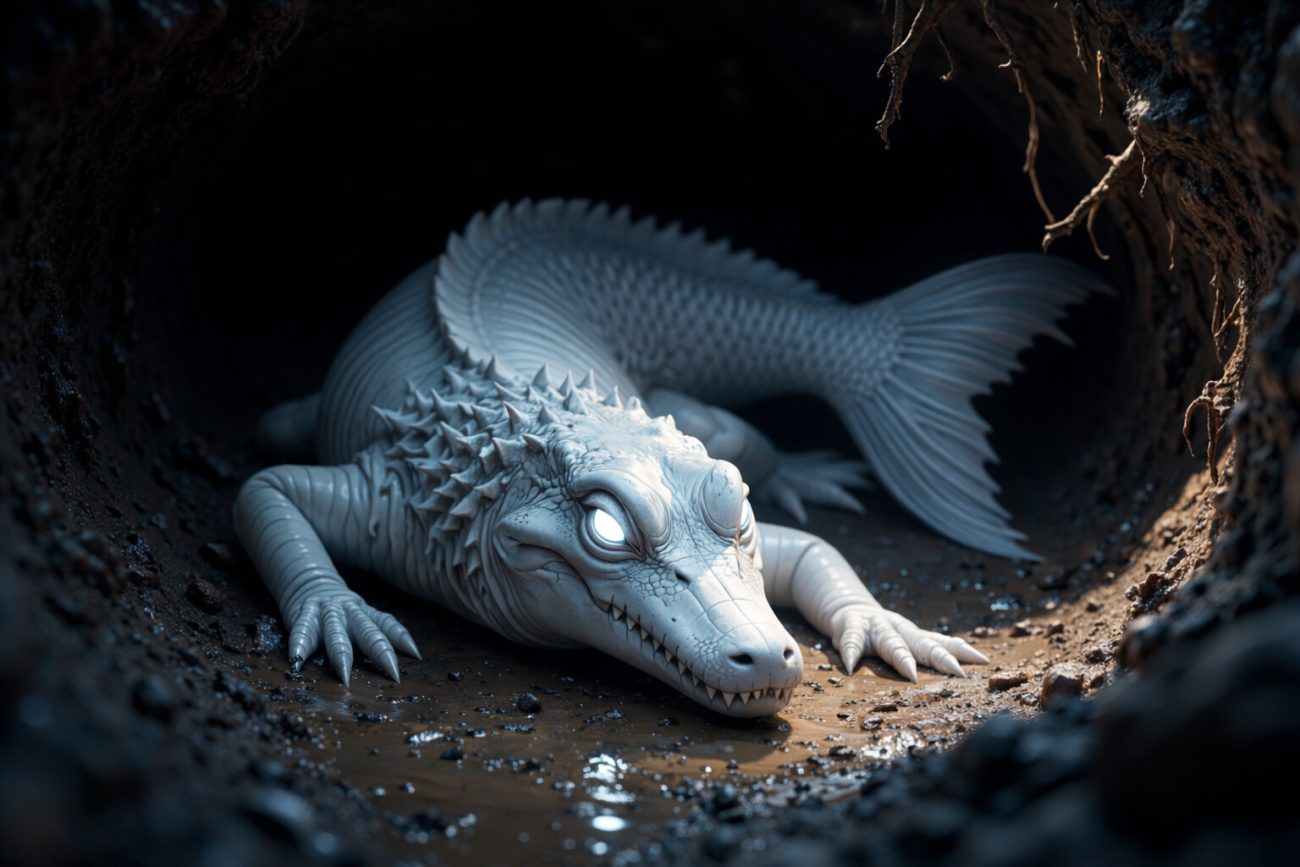
Emobali was once a Djibu boy. One day, while hunting, he shot a woman without knowing who she was. When he discovered that he had killed his own mother, grief and terror seized him. Unable to live with what he had done, Emobali went to the Binatui River at Mude and threw himself into the water.

At the place where he entered the river, a deep hollow was formed close to the bank. This deep spot is said to exist because of Emobali’s leap, and it remains as a sign of his death.

Afterward, Emobali became a spirit of the river. In the water, he appears in the form of a crocodile or a fish, moving silently beneath the surface. Yet Emobali does not only haunt the river. He also comes to people in dreams. When Djibu people sleep naked, Emobali may appear to them and instruct them, teaching medicines and giving knowledge useful for hunting and gardening.

In these dreams, he does not appear as an animal, but in his human form, as the boy he once was.

Thus Emobali lives on as a crocodile–fish spirit of the river, born from an act of tragic ignorance, dwelling in water and dreams alike, feared and respected as both a reminder of guilt and a giver of hidden knowledge.


Gallery


Sources

Landtman, G. (1970). The Kiwai Papuans of British New Guinea; a nature-born instance of Rousseau’s ideal community. New York: Johnson Reprint Corp., p. 302.


Interpretive Lenses

Religious Readings
  • Christian Ascetic Deep Dive
Philosophical Readings
  • Nietzschean Deep Dive
Psychological Readings
  • Jungian Deep Dive
Esoteric Deep Dive
  • Hermetic Deep Dive
Political / Social Readings
  • Marxist Deep Dive
Other
  • How to Invite The Emobali