Bies

Tradition: Bosnian mythology, Croatian Mythology, Russian Mythology, Ukranian Mythology, Polish Mythology
Alternative Names: Bies, Bes, Bijes, Bisy, Chort, Czort
Category: Demon


The Myth

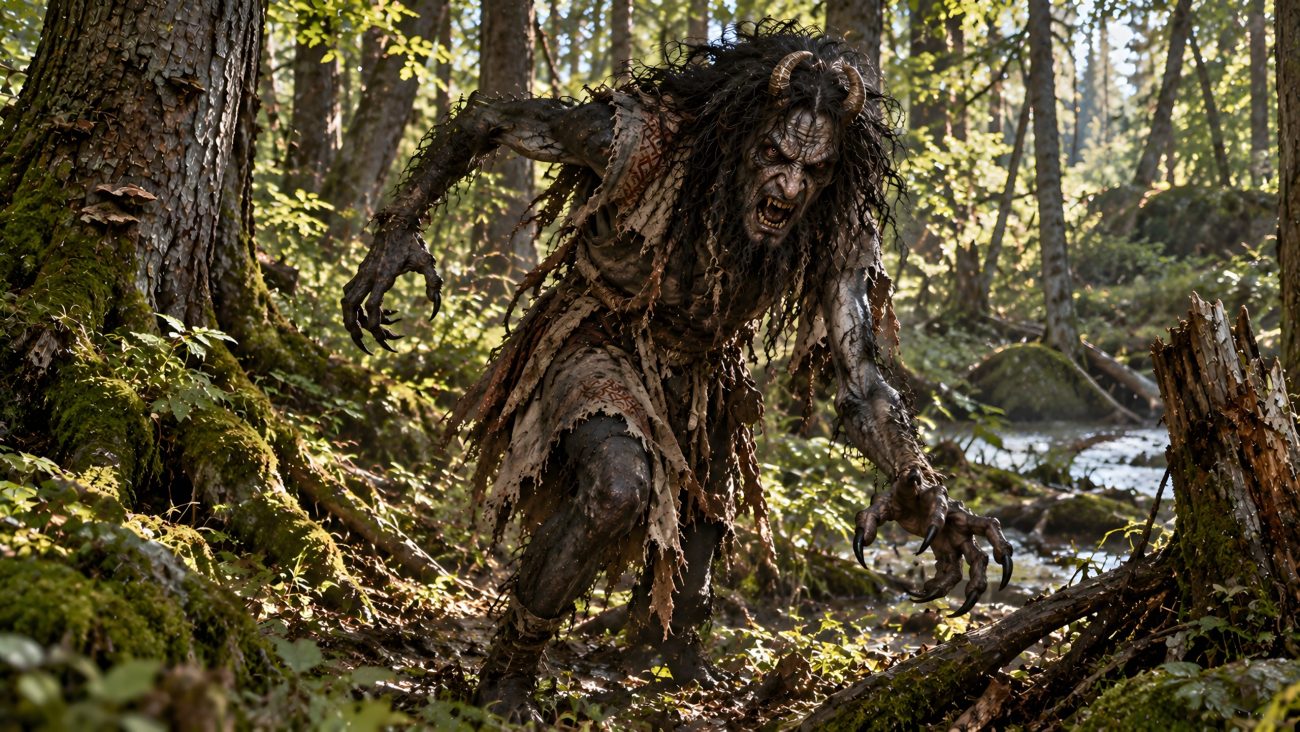
Bies is an evil spirit or demon in Slavic mythology. The word bies is associated with an evil supernatural being and, following the Christianization of Slavic peoples, became closely identified with the Devil and with the demon known as Chort or Czort.

In Christian-influenced tradition, Bies came to represent the Devil or other demonic beings. The plural biesy was used in Russian translations of the New Testament for the devils that possessed the swine in the Gospel of Mark. Related Slavic words also developed meanings associated with madness and uncontrolled behavior. In Slovenian, Croatian, and Serbian, the related forms bes and bijes mean “rage” or “fury.”

A separate being called bès is found among the Jah Hut people of Malaysia. These bès are dangerous spirits inhabiting the jungle. They can attack people and cause illness through spirit possession.

The Jah Hut can attempt to tame and contain a bès by carving a small wooden figure called a sepili, representing the particular spirit causing trouble. If the spirit approves of the figure, it may enter it, allowing the people to trap the spirit inside through a special ritual. The sepili must then be taken far away from the village because the bès may become angry when it eventually escapes. Traditionally, the figures were buried deep in the jungle.


Sources

“Bies.” Wikipedia: The Free Encyclopedia. Wikimedia Foundation. Accessed September 10, 2026. https://en.wikipedia.org/wiki/Bies

Bieda

Tradition: Polish Mythology
Alternative Names: Bieda
Category: Demon


The Myth

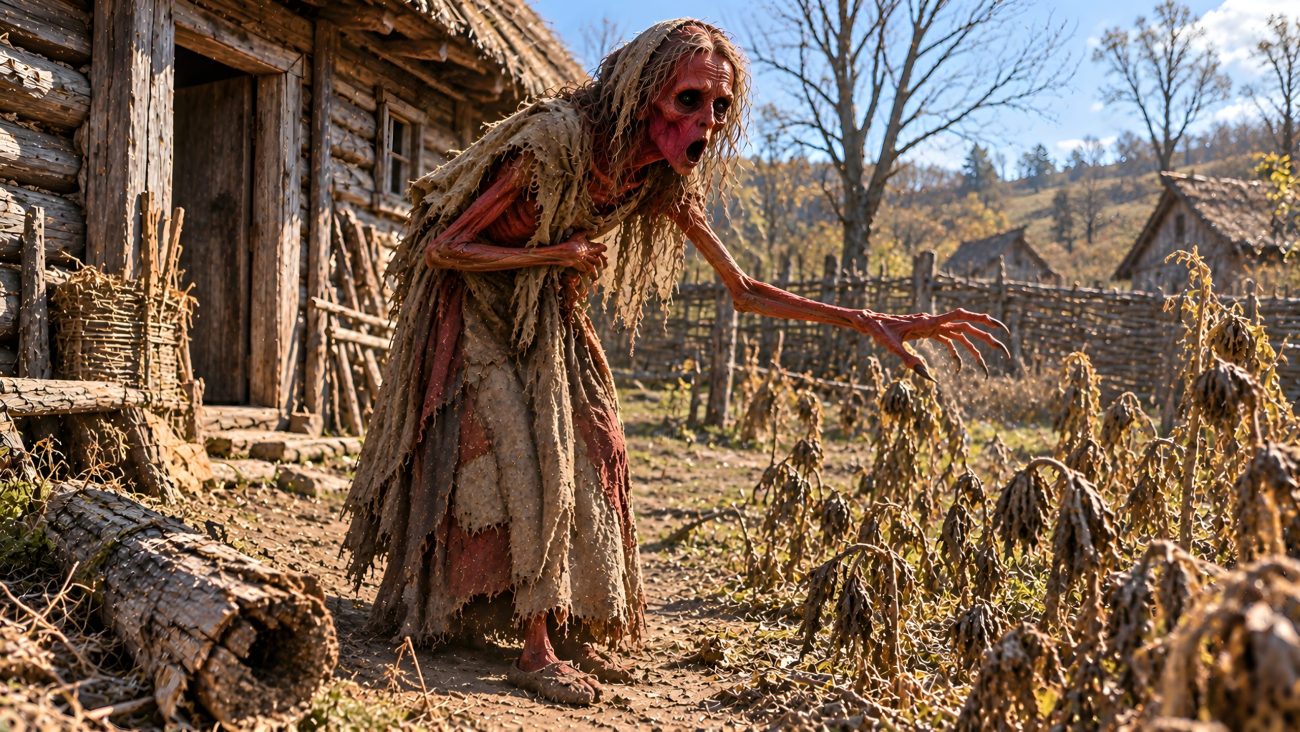
Bieda is an immortal demon who brings poverty, hardship, worries, and misfortune upon people. She appears as a thin, emaciated woman who drains the vital strength from those she afflicts.

Bieda can also enter and become an ordinary object, such as a piece of wood. Once misfortune has taken this form, the best way to get rid of it is to pass the object on to an enemy.


Sources

“Bieda (demon).” Wikipedia, wolna encyklopedia (Polish Wikipedia). Wikimedia Foundation. Accessed September 9, 2026. https://pl.wikipedia.org/wiki/Bieda_(demon)


Rokita

Tradition: Polish Mythology
Alternative Names: Rokita
Category: Demon


The Myth

Rokita is a demon said to inhabit the gateways to the underworld.

He is associated with wild and isolated places, particularly wetlands and forests. Rokita is also said to dwell inside old willow trees, making these trees another place where the demon may be encountered.

His domains therefore lie between the human world and the underworld: the wetlands, forests, and ancient willows that conceal the entrances to the realm of the dead.


Sources

“Rokita (folklore).” Wikipedia: The Free Encyclopedia. Wikimedia Foundation. Accessed September 9, 2026. https://en.wikipedia.org/wiki/Rokita_(folklore)


Poroniec

Tradition: Polish Mythology
Alternative Names: Poroniec
Category: Demon


The Myth

Poroniec is a malicious and hostile demon believed to arise from the soul of a miscarried child or aborted fetus. The same fate could befall a child who was stillborn, died, or was killed by its mother shortly after birth and was not buried according to traditional customs.

Poroniec was considered an especially powerful demon because it possessed the potential of a life that had never been fulfilled.

Beliefs about Poroniec were connected with numerous taboos surrounding pregnant women, mothers, and newborn children. Pregnant women were forbidden from looking into wells or drawing water from them. Women with newborns were forbidden from leaving the house with the child, particularly going out into the fields, and sexual intercourse was also prohibited.

Newborn children were subjected to protective magical practices. One such practice involved wiping the baby with a bunch of straw. The mother was traditionally kept inside for the first six weeks after childbirth. Only after this period was she taken outside, while the child was considered fully human and given a name.

There was also a belief that a miscarried child buried beneath the threshold of a house as a foundation offering could instead become a favorable Kłobuk. In this way, it would not become a Poroniec.


Sources

“Poroniec (demon).” Wikipedia, wolna encyklopedia (Polish Wikipedia). Wikimedia Foundation. Accessed September 9, 2026. https://pl.wikipedia.org/wiki/Poroniec_(demon)


Habernitsa

Tradition: Russian Mythology, Polish Mythology
Alternative Names: Chabernica, Habernitsa, Cornflower Wraith, Lady Cornflower, Cornflower Witch
Category: Demon


The Myth

Habernitsa is a noon demon who appears as a young, slender woman dressed in azure, with cornflowers woven into her hair. She wanders along the boundaries of fields at midday.

She becomes angry with people who trample the grain or work with sharp tools in the fields at noon. Those she considers deserving of punishment are put to sleep by her whisper.

Once they have fallen asleep, Habernitsa causes them terrible pain and injuries. She can inflict headaches, paralysis, and severe pain in the lower back. In some cases, she attacks more violently, breaking the victim’s arms, legs, or neck.

To avoid Habernitsa’s wrath, field workers must stop working and take a break at midday, at the time of the Angelus.


Sources

“Cornflower Wraith (Habernitsa).” Wikipedia: The Free Encyclopedia. Wikimedia Foundation. Accessed September 9, 2026. https://en.wikipedia.org/wiki/Cornflower_Wraith


Zubro

Tradition: Czech Mythology, Polish Mythology
Alternative Names: Zubro
Category: Cow


The Myth

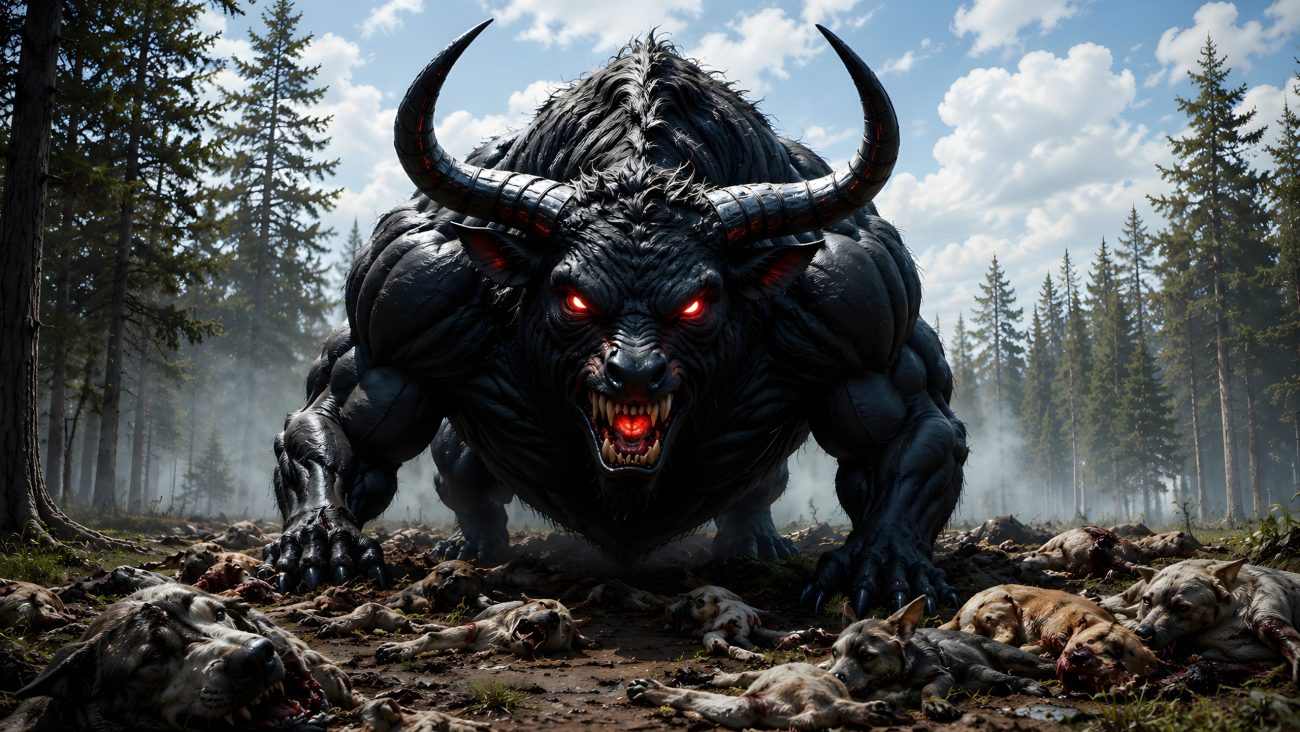
Most Zubros are said to live in Bohemia, though they are also found in Poland, where they are believed to be smaller and less powerful. Wherever it appears, the Zubro is known as a terrifying kind of wild bull.

The Zubro is described as an enormous beast, reaching up to fifteen meters in length. Its hide is marked with dark brown and black coloring, and its horns can grow to a length of one and a half meters. The animal is swift and aggressive, and it can easily be driven into a state of uncontrollable fury.

When people attempt to hunt the Zubro, it does not flee helplessly. Instead, it defends itself with frightening intelligence. It blinds pursuing dogs by throwing its own dung at them. If it manages to seize a dog or a human, it hurls the victim into the air with its horns and catches them again as they fall, repeating this until the victim is dead.

Yet even such a creature can be defeated by cunning rather than strength. A skilled hunter first wears the Zubro down by driving it relentlessly with dogs. Once the animal is exhausted, the hunter positions himself beneath a tree with his spear. The enraged Zubro charges straight toward him, but the hunter hides behind the trunk. The beast thrusts its horns past the tree on both sides, and in that moment the hunter steps forward and kills it with a single thrust.


Sources

Van Maerlant, J. (2024). Der Naturen Bloeme (I. Biesheuvel, Trans.), p.74.


Turosik

Tradition: Polish Mythology
Alternative Names: –
Category: Cow


The Myth

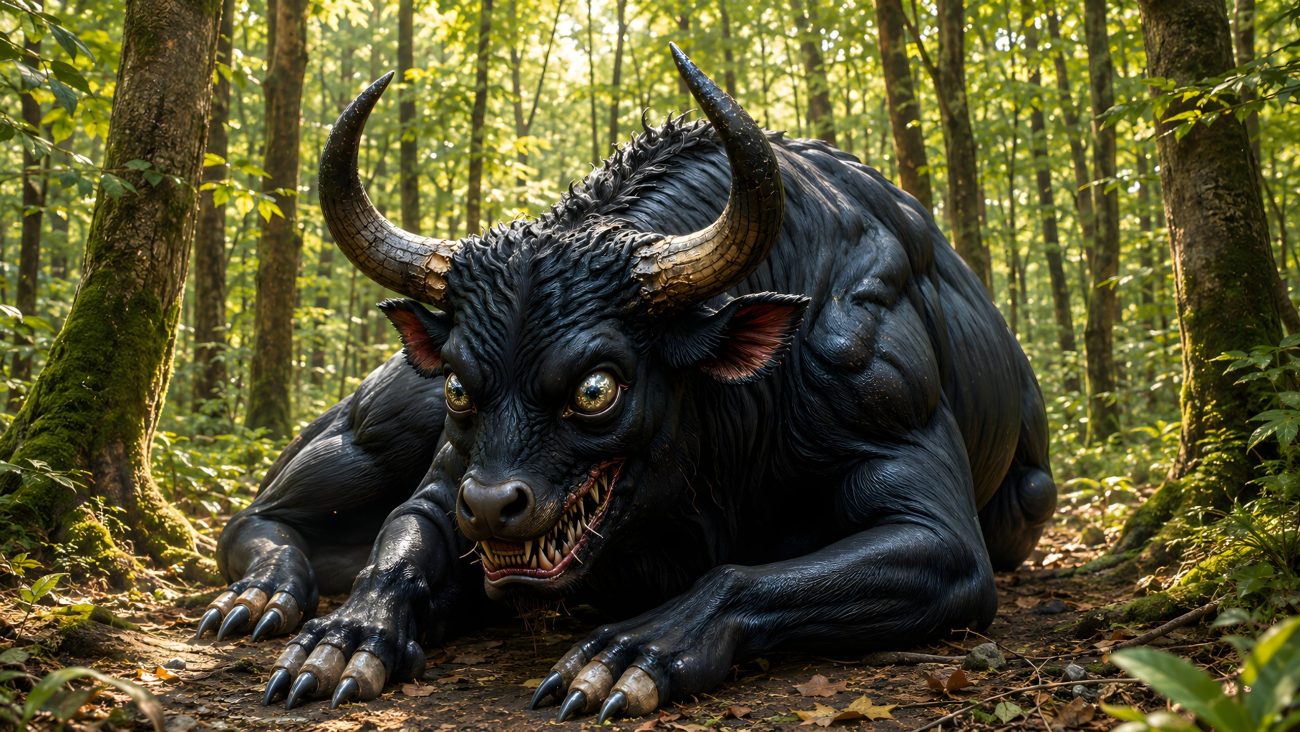
Turosik is an ancient forest demon born from the primeval wilderness. It takes the form of a colossal aurochs and is regarded as the king of the woods, ruling over the deepest parts of the forest where there are no paths and where fear itself becomes a weapon.

Turosik appears as an enormous, powerful wild bull resembling an aurochs. Its immense size and thunderous movements make it a terrifying presence within the forest.

When travelers stray into Turosik’s territory, the demon suddenly charges from between the trees. The sound and force of its approach sends them fleeing in blind panic, causing them to run deeper into the forest rather than back toward safety. Those who flee from it rarely manage to find the road again.

Hunters encounter a more deceptive form of the demon. Turosik appears to them as a grievously wounded animal, staggering through the forest and apparently too weak to escape. The hunters believe they have been presented with an easy and glorious kill and pursue the wounded beast farther and farther into the wilderness.

The deception is driven by their pride and greed. Once Turosik has lured the hunters beyond any possibility of finding their way home, it abandons its appearance of weakness and leaves them lost in the forest.

None of those deceived by Turosik ever find their way back. Long afterward, their bones are discovered scattered among the undergrowth, stripped clean by ants, serving as silent evidence of the demon’s dominion over the forest.


Sources

Zych, P., & Vargas, W. (2021). Bestiariusz słowiański: Rzecz o biziach, kadukach i samojadkach, p. 392.


Didki

Tradition / Region: Polish Mythology
Alternative names: Didko, Forest Didki
Category: Forest Dweller, Cave dweller


The Myth

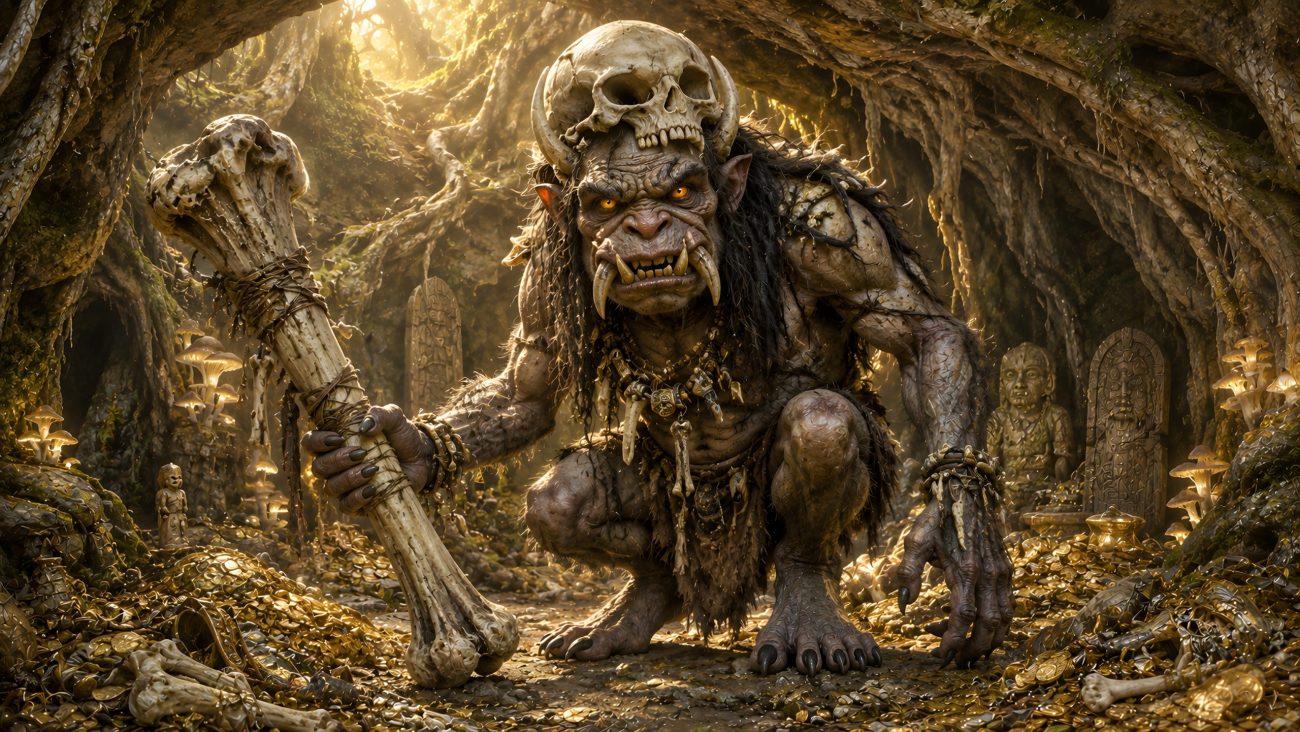
The Didki are small supernatural beings with enormous heads that dwell beneath ancient forests. They build hidden villages among the roots of colossal trees, where they keep great stores of gold, silver, and other treasures. Although they usually remain hidden underground, they are also said to appear as red dogs or red cats.

According to the legend, the Didki inhabited the forests from the earliest times. The ancient Slavs brought them offerings, and in return the spirits allowed people to clear woodland, cultivate fields, and graze their livestock without interference.

As the old customs faded and people stopped honoring them, the Didki grew hostile toward humankind. They began bringing misfortune to those who entered their forests and reserved their kindness only for murderers, thieves, and other criminals, whom they regarded as their allies.

From time to time, the Didki emerged from their underground homes and wandered among human settlements in the form of red cats or red dogs. Their appearance was believed to foretell disaster and death, while those who encountered them were often driven toward violence or other evil deeds.

With the coming of Christianity, the Didki came to be regarded as infernal beings. As the ancient forests were cleared, their hidden villages disappeared along with the great trees beneath which they had once lived.


Sources

Zych, Paweł, and Witold Vargas. Bestiariusz słowiański. Część pierwsza i druga. Warsaw: Bosz, 2017.


Koszki

Tradition / Region: Polish Mythology
Alternative names: —
Category: Cat


The Myth

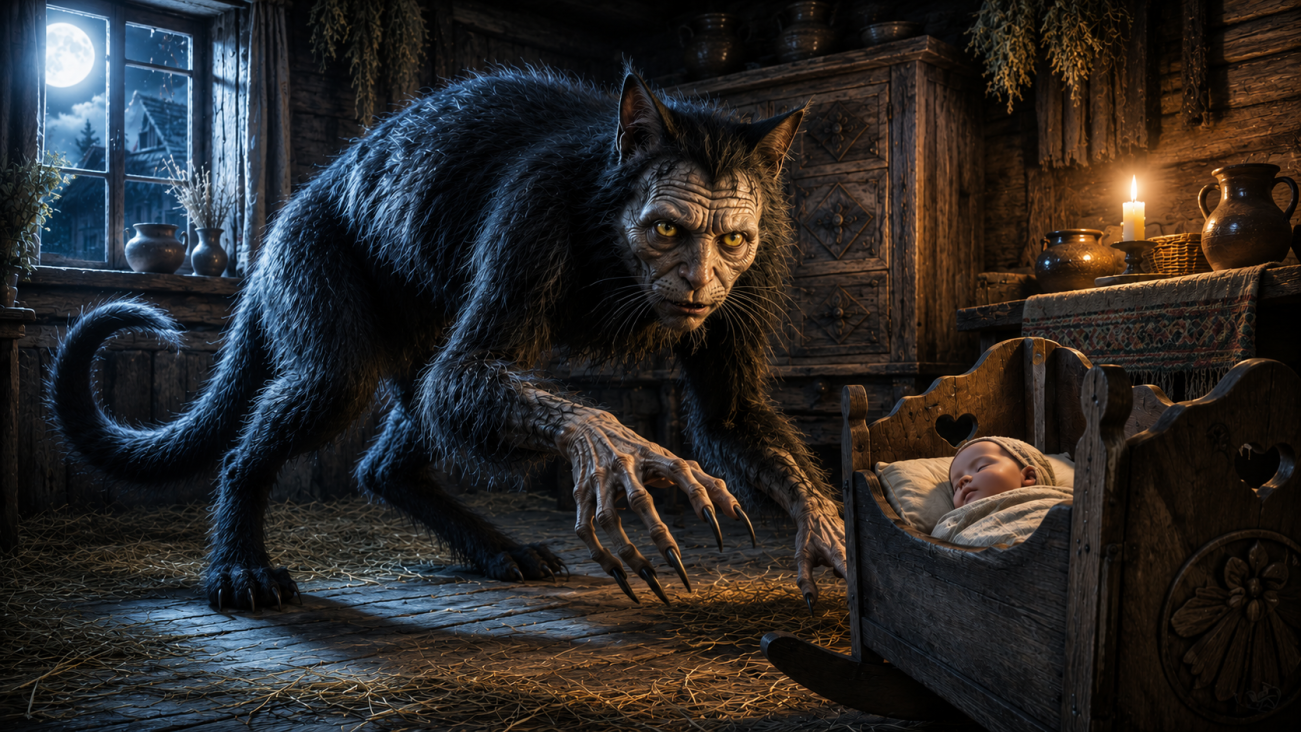
Koszki are malicious creatures that resemble ordinary cats at first glance. Their bodies are covered in thick, dark fur, with pointed ears, long tails, and loud meows.

Anyone who unknowingly allows one into the house is said to suffer a terrible fate. The monsters steal healthy infants from their cradles and leave behind their own hideous, emaciated offspring in their place, as if mocking the family.

For this reason, people were warned to watch every cat that entered the home, especially black cats. If a cat’s face appeared old and disturbingly human instead of feline, and if its paws looked like grasping, bony human hands rather than claws, it was no ordinary animal but a Koszek.

The proper response was to seize a sturdy wooden club and beat the demonic creature until it fled or was destroyed.


Sources

Zych, Paweł, and Witold Vargas. Bestiariusz słowiański. Część pierwsza i druga. Warsaw: Bosz, 2017.


Chochlik

Tradition / Region: Polish Mythology, Lithuanian Mythology
Alternative names: None known
Category: Cat


The Myth

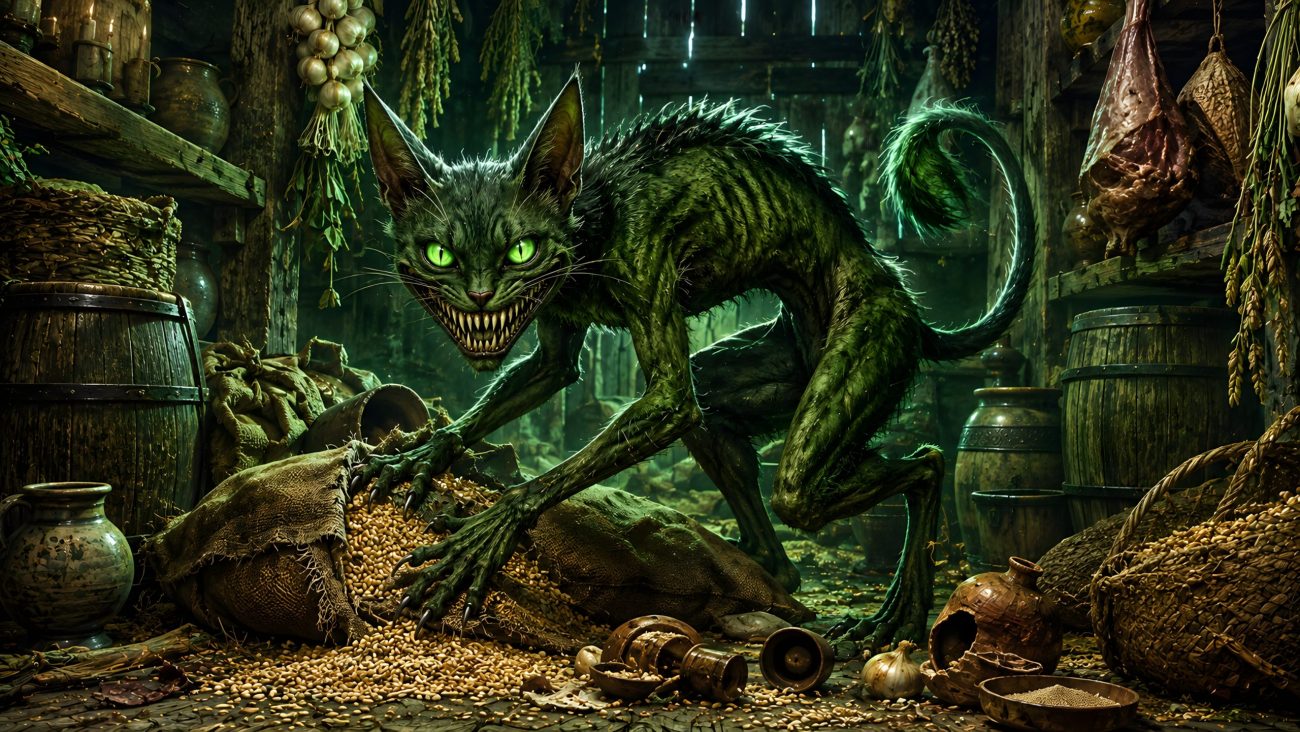
The Chochlik is a malicious or mischievous household spirit that takes the form of a cat. It dwells in the pantry, where it serves as its guardian.

According to the tradition recorded by Bronisław Trentowski and Joachim Szyc, the Chochlik watches over the household stores. However, it is quick to anger. When offended, it becomes destructive, overturning furniture, breaking household objects, and ravaging the family’s food supplies.


Sources

“Chochlik (istota).” Wikipedia, wolna encyklopedia (Polish Wikipedia). Wikimedia Foundation. Accessed July 28, 2026. https://pl.wikipedia.org/wiki/Chochlik_(istota)