Zubro

Tradition: Czech Mythology, Polish Mythology
Alternative Names: Zubro
Category: Cow


The Myth

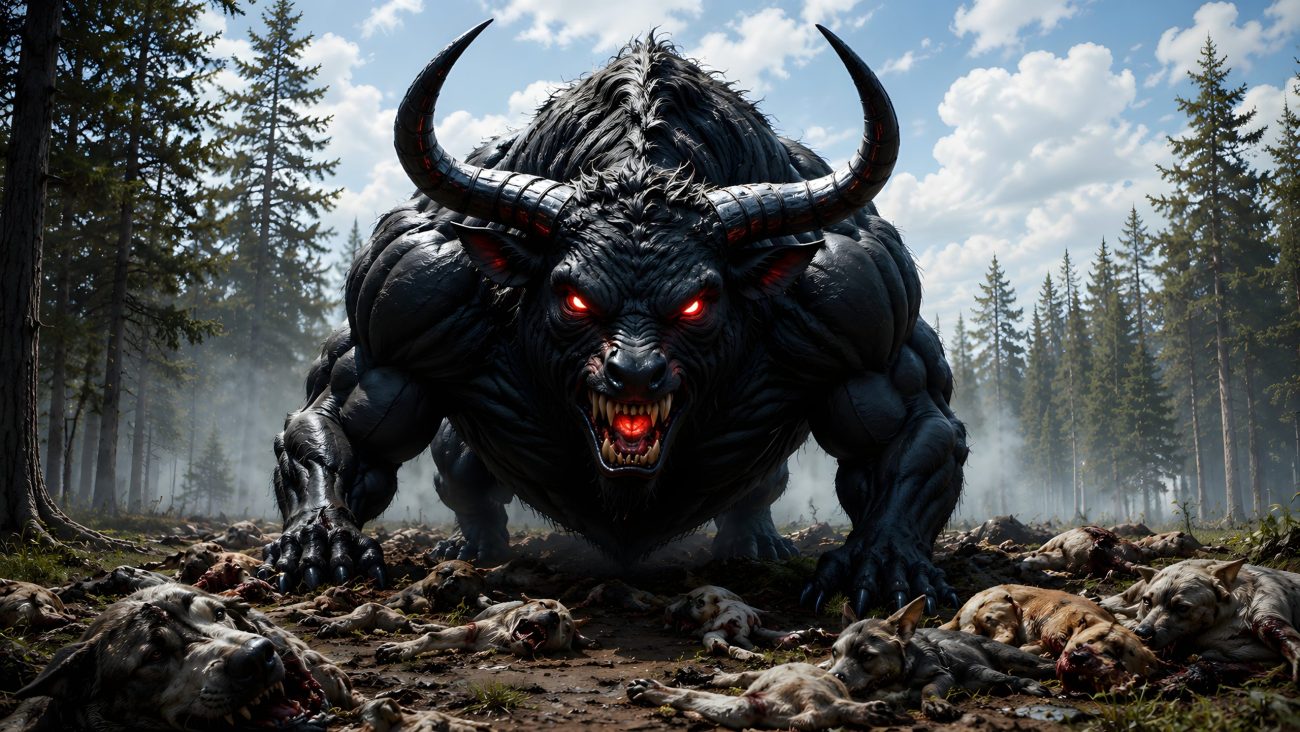
Most Zubros are said to live in Bohemia, though they are also found in Poland, where they are believed to be smaller and less powerful. Wherever it appears, the Zubro is known as a terrifying kind of wild bull.

The Zubro is described as an enormous beast, reaching up to fifteen meters in length. Its hide is marked with dark brown and black coloring, and its horns can grow to a length of one and a half meters. The animal is swift and aggressive, and it can easily be driven into a state of uncontrollable fury.

When people attempt to hunt the Zubro, it does not flee helplessly. Instead, it defends itself with frightening intelligence. It blinds pursuing dogs by throwing its own dung at them. If it manages to seize a dog or a human, it hurls the victim into the air with its horns and catches them again as they fall, repeating this until the victim is dead.

Yet even such a creature can be defeated by cunning rather than strength. A skilled hunter first wears the Zubro down by driving it relentlessly with dogs. Once the animal is exhausted, the hunter positions himself beneath a tree with his spear. The enraged Zubro charges straight toward him, but the hunter hides behind the trunk. The beast thrusts its horns past the tree on both sides, and in that moment the hunter steps forward and kills it with a single thrust.


Sources

Van Maerlant, J. (2024). Der Naturen Bloeme (I. Biesheuvel, Trans.), p.74.

Turosik

Tradition: Polish Mythology
Alternative Names:
Category: Cow


The Myth

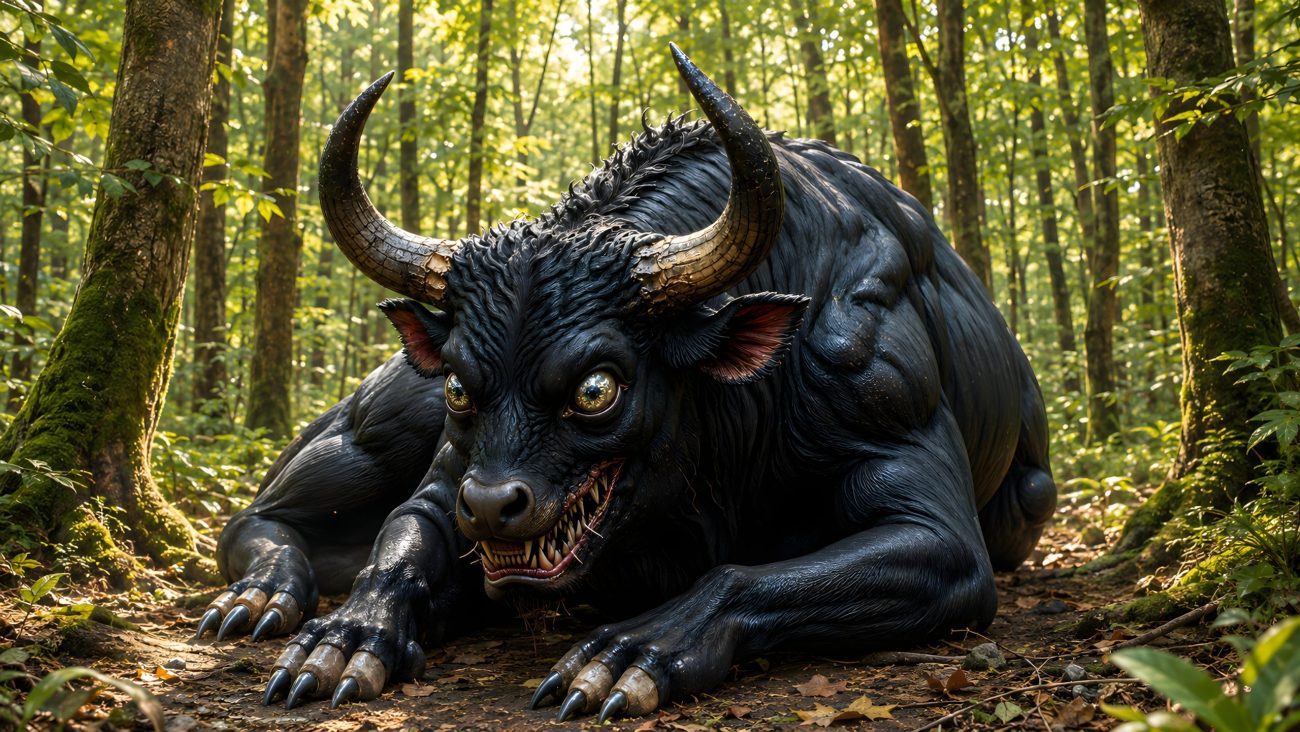
Turosik is an ancient forest demon born from the primeval wilderness. It takes the form of a colossal aurochs and is regarded as the king of the woods, ruling over the deepest parts of the forest where there are no paths and where fear itself becomes a weapon.

Turosik appears as an enormous, powerful wild bull resembling an aurochs. Its immense size and thunderous movements make it a terrifying presence within the forest.

When travelers stray into Turosik’s territory, the demon suddenly charges from between the trees. The sound and force of its approach sends them fleeing in blind panic, causing them to run deeper into the forest rather than back toward safety. Those who flee from it rarely manage to find the road again.

Hunters encounter a more deceptive form of the demon. Turosik appears to them as a grievously wounded animal, staggering through the forest and apparently too weak to escape. The hunters believe they have been presented with an easy and glorious kill and pursue the wounded beast farther and farther into the wilderness.

The deception is driven by their pride and greed. Once Turosik has lured the hunters beyond any possibility of finding their way home, it abandons its appearance of weakness and leaves them lost in the forest.

None of those deceived by Turosik ever find their way back. Long afterward, their bones are discovered scattered among the undergrowth, stripped clean by ants, serving as silent evidence of the demon’s dominion over the forest.


Sources

Zych, P., & Vargas, W. (2021). Bestiariusz słowiański: Rzecz o biziach, kadukach i samojadkach, p. 392.