Tuyamin

Tradition: Chinese Mythology
Alternative Names: 土狗龟, Hard Frog
Category: Frog


The Myth

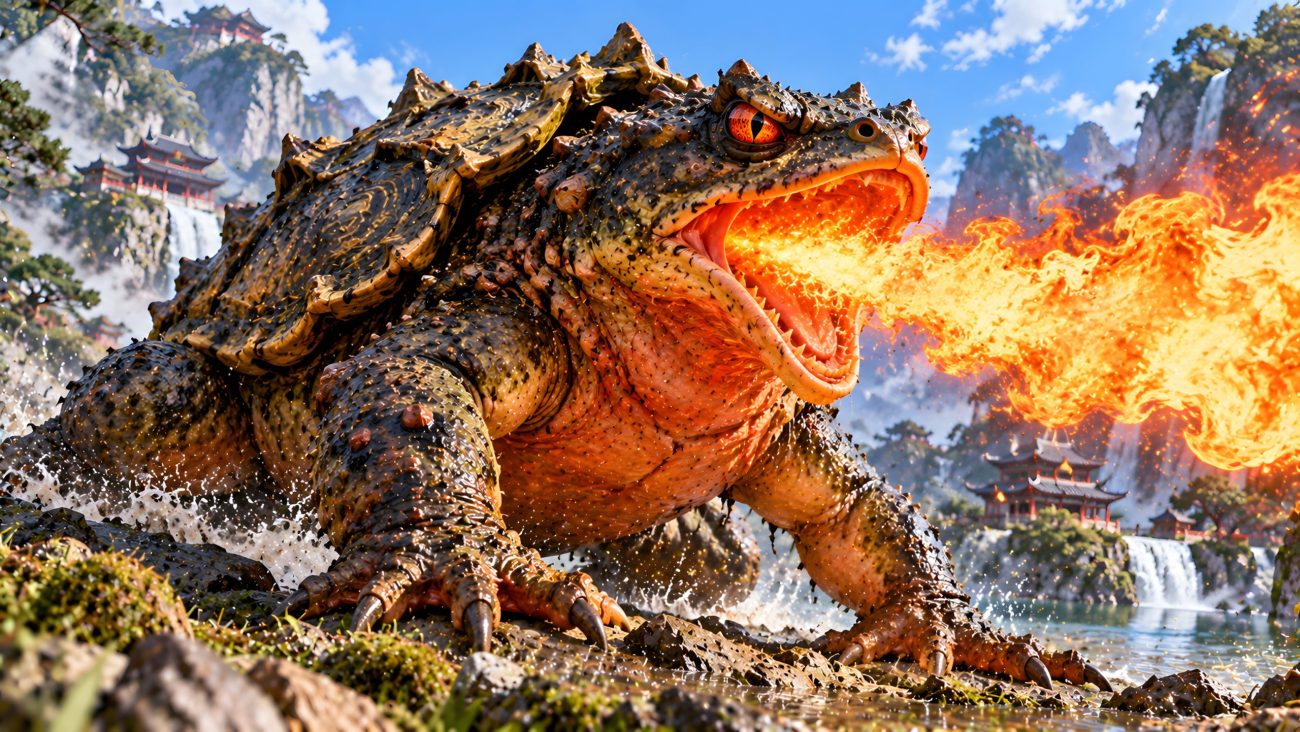
Tuyamin is a fantastical amphibian in Chinese mythology. It has a dark-colored body resembling a frog and a hard, tortoiseshell-like shield covering its back. This unusual combination gives it the appearance of an armored toad.

The Tuyamin possesses the extraordinary ability to breathe fire, making it a fearsome creature despite its frog-like shape. Its hard shell serves as a distinctive feature, setting it apart from ordinary amphibians. It is known as the “hard frog,” a name that reflects its tough, turtle-like armor.


Sources

“Туяминь (Tuyamin).” New Bestiary (Bestiary.us). https://www.bestiary.us/tuyamin


Shulmusy

Tradition: Mongolian Mythology, Russian Mythology
Alternative Names: Shulmus, Shulmas, Shumnasy, Chulbusy, Chulgusy, Chulme, Chulmysy, Shimnus, Sholmosy, Shulmy, Shulbus, Shulbys
Category: Frog


The Myth

Shulmusy are evil spirits of the underworld who enter the world of the living to spread harm and misfortune. They serve Erlik, the ruler of the underworld, and act as his messengers, bringing illness, stealing human souls, and carrying them down into the realm of the dead. They are often described as appearing in the form of a black whirlwind, resembling their dark master in both appearance and destructive nature.

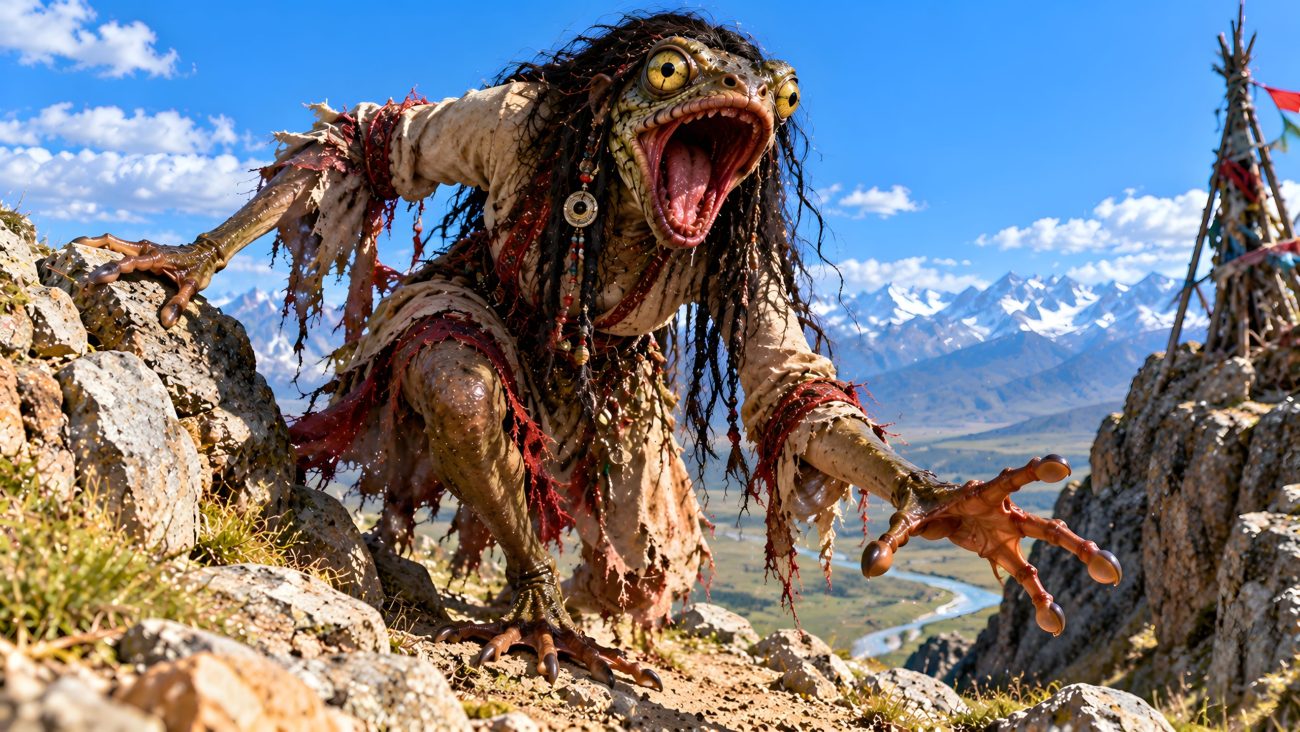
Despite their terrifying nature, Shulmusy can also take the form of beautiful young women. In this guise, they deceive unsuspecting people and lure travellers into danger. Among the Kalmyks, these spirits may possess strange animal features, such as goat legs, a beard, a camel’s tail in place of a braid, or even the head of a frog. They can disguise themselves as attractive girls who offer travellers poisoned drinks, concealing their deadly intentions beneath a pleasing appearance.

Shulmusy gather in groups known as turgak, meeting at crossroads, mountain passes, and near gorges. These gatherings make such places dangerous to pass through, as the spirits may ambush travellers, spread sickness, or steal their souls. People therefore regard these locations with fear and caution, especially when crossing them near the spirits’ gathering places.


Sources

“Шулмусы (Shulmusy).” New Bestiary (Bestiary.us). https://www.bestiary.us/shulmusy


Lizun

Tradition: Belarusian Mythology
Alternative Names: Lickun, Slime
Category: Frog


The Myth

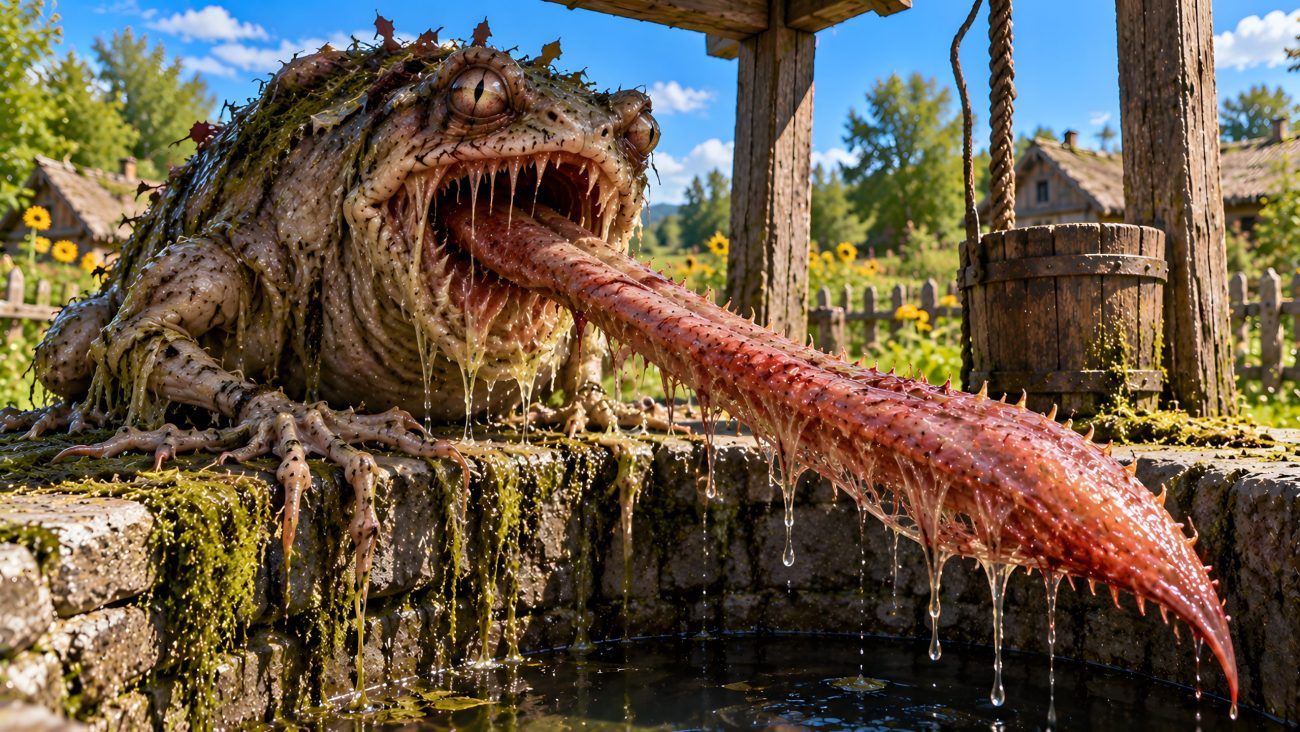
Lizun is a frightening supernatural creature said to live in wells and gardens in the northeastern Vitebsk region of Belarus and the neighbouring areas of Russia’s Pskov region. It is described as a long-tongued, slime-covered being that lurks in dark wells, waiting for unsuspecting children. Some accounts describe it as a pale, slippery mass resembling a finger, while others imagine a terrifying creature with an enormous tongue. Its tongue is said to be capable of licking children until they bleed, leaving them helpless and terrified.

Lizun is especially associated with warnings used to frighten naughty children and keep them away from dangerous wells and water sources. Adults would threaten that the creature was waiting in the well and would drag children into the water if they approached too closely. In some stories, Lizun sits beside a well with a tongue resembling a grater, ready to seize anyone who comes within reach. Other versions describe it simply as a slime that waits in hidden places, threatening to lick anyone who ventures too near.

The creature’s long, deadly tongue is central to its terrifying reputation. Children were warned that once Lizun had licked them until their skin bled, no doctor could cure them. These frightening tales made the creature an effective guardian of forbidden places, ensuring that children stayed away from wells, gardens, and other locations where they might get into danger.


Sources

“Лизун (Lizun).” New Bestiary (Bestiary.us). https://www.bestiary.us/lizun


Cursed Toads of Lasarraz

Tradition: Swiss Mythology
Alternative Names: The Knight of Lasarraz’s Toads
Category: Frog


The Myth

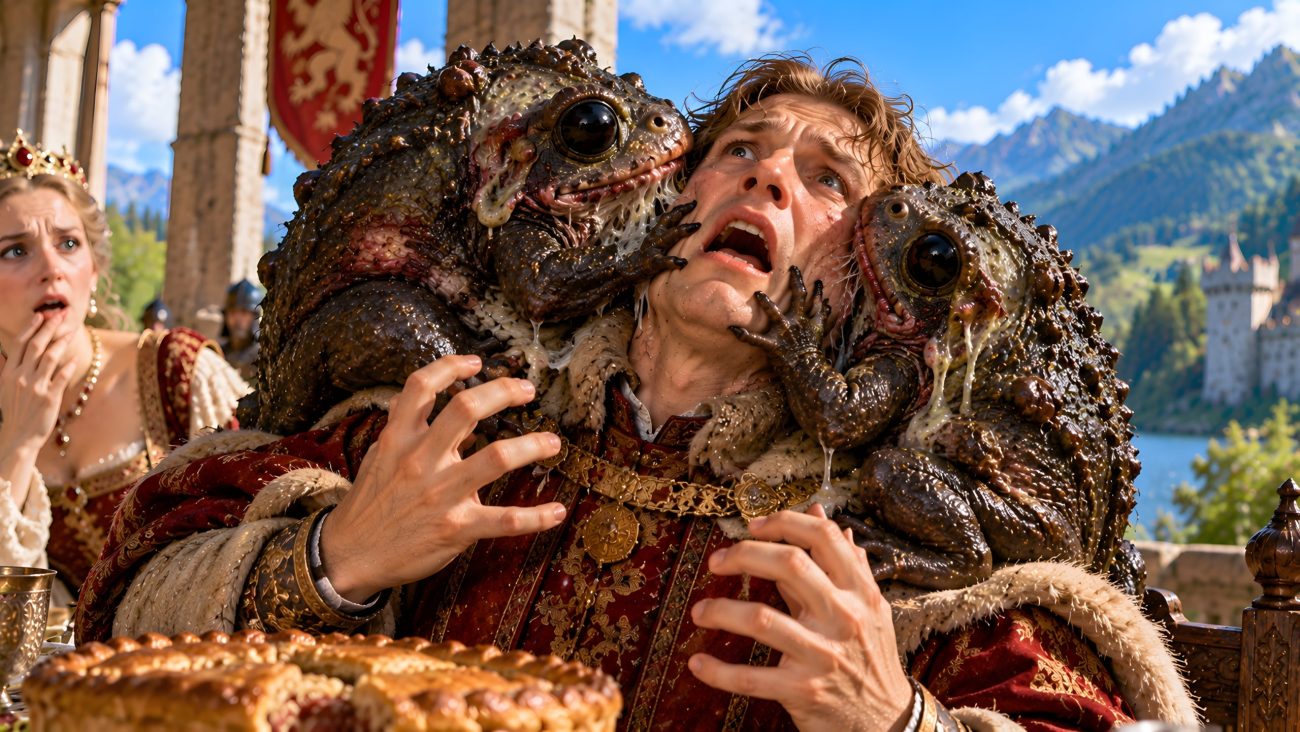
The Cursed Toads of Lasarraz are two hideous supernatural toads that cling to the face and back of a knight who commits a terrible crime against his elderly parents. The creatures possess gruesome, poisonous eyes and grip their victim so tightly that neither servants nor household attendants can tear them away. They first appear when the knight opens a magnificent venison pie beside his wife. Instead of the expected meal, two revolting toads leap from the pie and attach themselves firmly to his cheeks, drawing ever closer to his eyes as though intending to devour them.

The curse begins with the Knight of Lasarraz, a wealthy and courageous young nobleman who falls in love with the daughter of his overlord, the count. To win her hand, he promises to provide a castle and three hundred fine cows. His elderly parents willingly surrender their entire fortune to fulfil his wish, leaving themselves destitute. After the marriage, however, the knight’s wife treats the old couple cruelly, and the knight allows their suffering to continue. When winter brings bitter cold and hunger, his parents seek shelter at his magnificent palace. At his wife’s urging, he eventually casts them out into the freezing night, leaving them to wander without food or warmth.

The toads appear that very evening, as the knight enjoys a feast beside his wife. Horrified by the creatures clinging to his face, he summons servants and maids, but nobody can remove them. Realizing that his cruelty toward his parents has brought divine punishment upon him, he confesses his crime to the castle chaplain. The chaplain sends him to the bishop, who in turn directs him to the Pope in Rome. The Pope orders him to return home, find his parents, and seek their forgiveness, declaring that the shameful mark will disappear if they forgive him.

The knight searches for his parents day and night, but eventually discovers their bodies in a lonely hermitage in a snow-covered forest. They have already died from hunger and cold. Weeping, he throws himself upon them and begs for forgiveness. At once, the two toads leave his cheeks, but crawl onto his back and fasten themselves there instead. Since he found his parents too late to receive their living forgiveness, his guilt is only partially atoned for. For the next twenty years, he must carry the toads hidden beneath his clothing. His punishment continues through further family tragedy: his wife is killed by a snake, and his only son murders him out of greed for his inheritance. After the knight’s death, the son is torn apart by a bear, bringing the family line to a miserable end. In remembrance of the terrible events, a statue is erected in the castle chapel depicting the knight with two monstrous toads attached to his cheeks and back.


Sources

“Ritter Lasarraz.” SAGEN.at – Traditionelle Sagen aus der Schweiz. https://www.sagen.at/texte/sagen/schweiz/allgemein/ritter_lasarraz.html
Alan-Melekey

Tradition: Tuvan and Altai Mythology, Russian Mythology
Alternative Names: Alan-Melekey
Category: Frog


The Myth

Alan-Melekey is a gigantic frog that carries the earth on its back. According to Tuvan mythology, the entire world rests upon this enormous amphibian, whose slightest movements can disturb the natural order. When Alan-Melekey moves even a little, the sea becomes violently agitated, as though it were boiling, and its waters overflow their banks.

One day, an old man foresaw that the earth would be overwhelmed by a great flood. Preparing for the disaster, he built an iron-bound raft and boarded it with a few people and supplies. When the flood came, the waters rose and swept away the other people and animals, but the old man and his companions survived. The raft eventually came to rest in the taiga, on a hill where it remained stranded.

A similar legend is told among the Altai people. In this version, the location of the stranded raft is identified south of the village of Ulala, near Mount Adygan on the right bank of the Katyn River. The story connects Alan-Melekey, the giant frog bearing the earth, with a great flood that destroys the world and leaves only a small number of survivors.


Sources

Алан-мелекей (Alan-Melekej).” New Bestiary (Bestiary.us). https://www.bestiary.us/alan-melekej/ru


Kek

Tradition: Egyptian Mythology
Alternative Names: Kekui, Kekuy, Kekuit
Category: Frog, Deity


The Myth

Kek is the ancient Egyptian deification of primordial darkness, one of the fundamental forces that existed before the creation of the world. He belongs to the Ogdoad of Hermopolis, a group of eight primordial deities arranged in four male-female pairs. Together, these divine beings represented the original conditions of existence from which creation emerged. Kek’s female counterpart is Kauket, who shares his association with darkness and the primordial world.

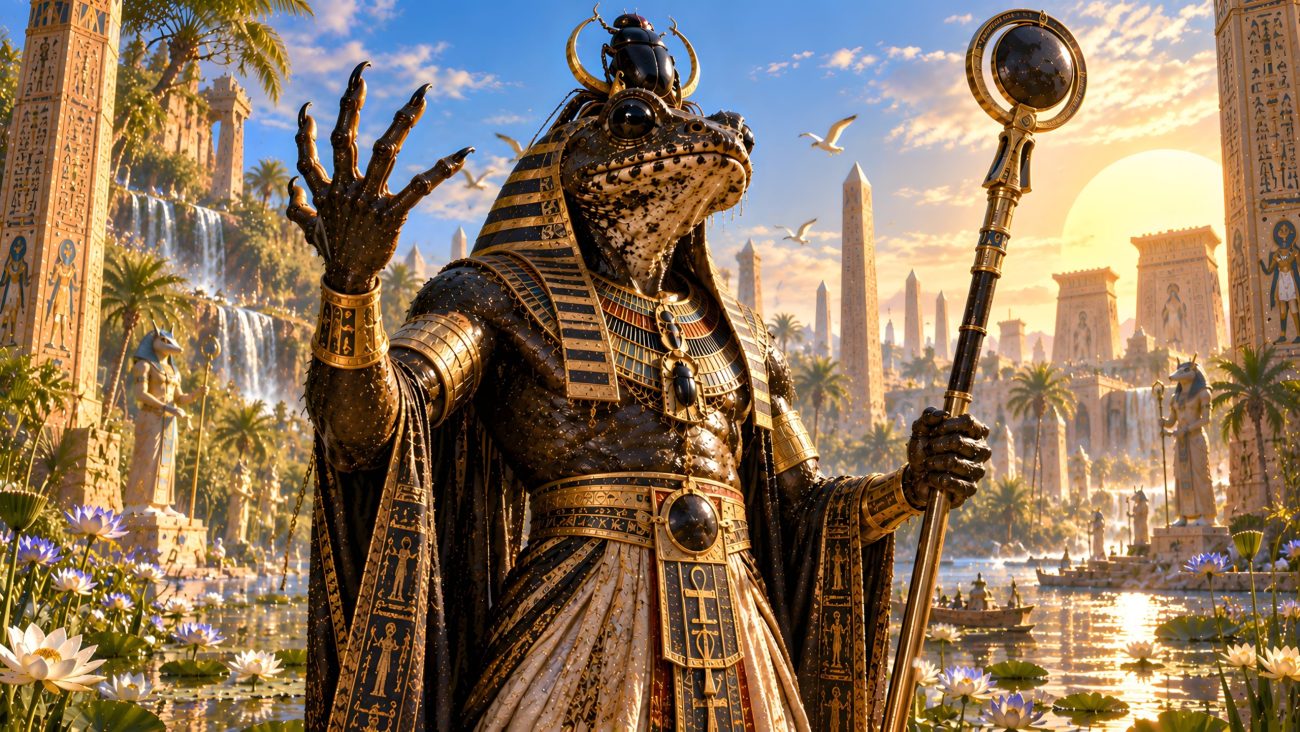
Kek is traditionally depicted as a man with the head of a frog, while Kauket appears as a woman with the head of a serpent. In some representations, Kek’s frog head is surmounted by a beetle, while Kauket’s serpent head bears a disk. These animal features distinguish the pair among the primordial gods and connect them with the mysterious forces that existed before the ordered world.

Kek and Kauket are also associated with night and day. Their complementary roles express the movement between darkness and the arrival of light, with Kek connected to the rising of the day and Kauket to the coming of night in certain traditions. As members of the Ogdoad, they embody the primordial darkness from which the ordered universe would eventually emerge.


Sources

“Kek (mythology).” Wikipedia: The Free Encyclopedia. Wikimedia Foundation. Accessed October 14, 2026. https://en.wikipedia.org/wiki/Kek_%28mythology%29


Llamhigyn y Dŵr

Tradition: Welsh Mythology
Alternative Names: Water Leaper
Category: Frog


The Myth

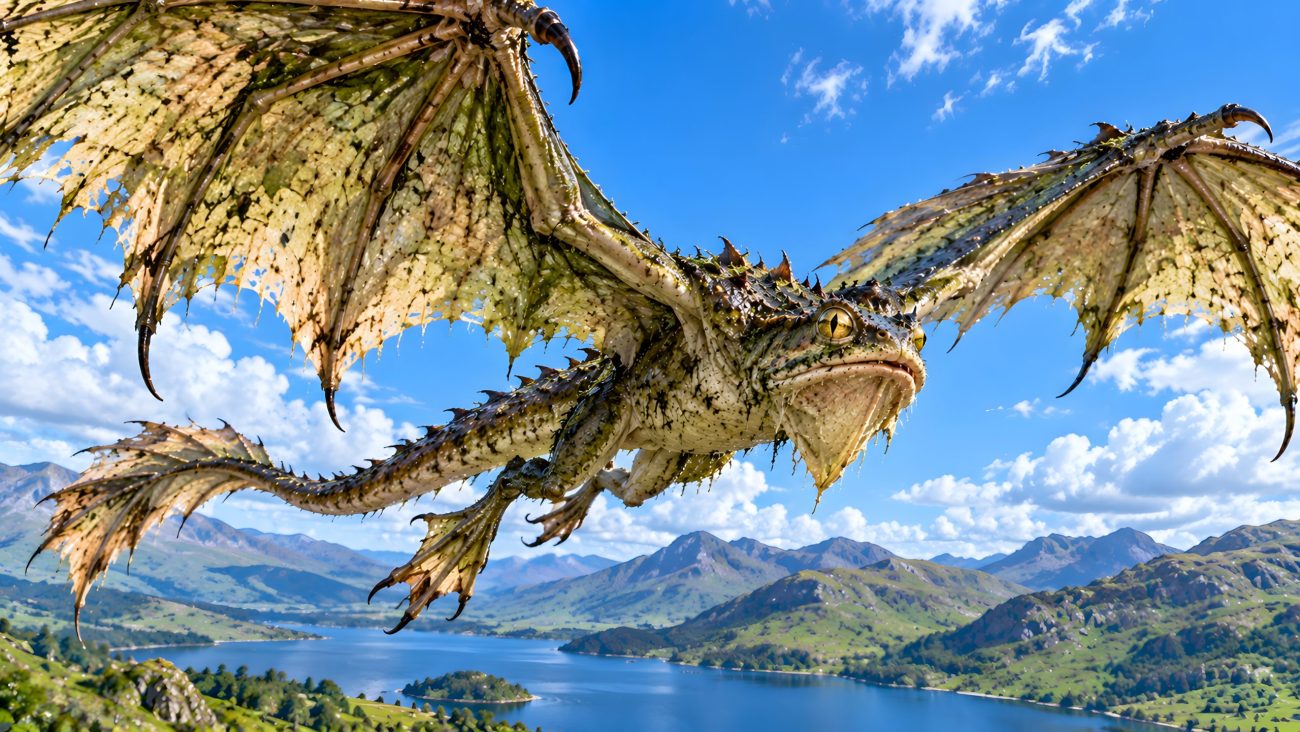
The Llamhigyn y Dŵr is a monstrous water spirit that inhabits lakes and other bodies of water in Wales, particularly around Llyn Gwynan and Llyn Glas. It resembles an enormous, grotesque toad, but instead of ordinary legs it has wings, and a long tail extends behind its body. It is a powerful swimmer and a dangerous predator that lurks beneath the water, waiting for unsuspecting prey to approach the shore.

The creature preys on sheep, dogs, and other animals that venture too close to the water’s edge. Shepherds know to keep their flocks away from the lakes, for the Water Leaper may suddenly spring from the water, seize an animal, and drag it beneath the surface. Its presence also torments fishermen, stealing their catches and taking bait directly from their hooks. Sometimes it seizes the entire fishing line, rod, and angler, pulling its victim into the lake with tremendous strength.

The Llamhigyn y Dŵr is known for its extraordinary speed and its terrifying shriek. One fisherman reportedly hooked the creature, only for it to emit an ear-splitting scream and nearly pull him from his boat. He escaped only because a companion was there to help him. Welsh fishermen regard the Water Leaper as a troublesome and dangerous inhabitant of their lakes, blaming it for lost fish, broken fishing lines, and unexplained disappearances near the water.


Sources

“Llamhigyn Y Dwr.” A Book of Creatures. July 1, 2015. https://abookofcreatures.com/2015/07/01/llamhigyn-y-dwr/


Aglebemu

Tradition: Wabanaki Mythology, American Mythology
Alternative Names: Aglabemu, Akwulabemu, Aglebemoo, Hahk-lee-be-mo, Ablegemoo, Ablegemu, Mitche-hant, Kci Cekolhs, Kci-Coqols, Giant Frog, Monster Frog
Category: Frog


The Myth

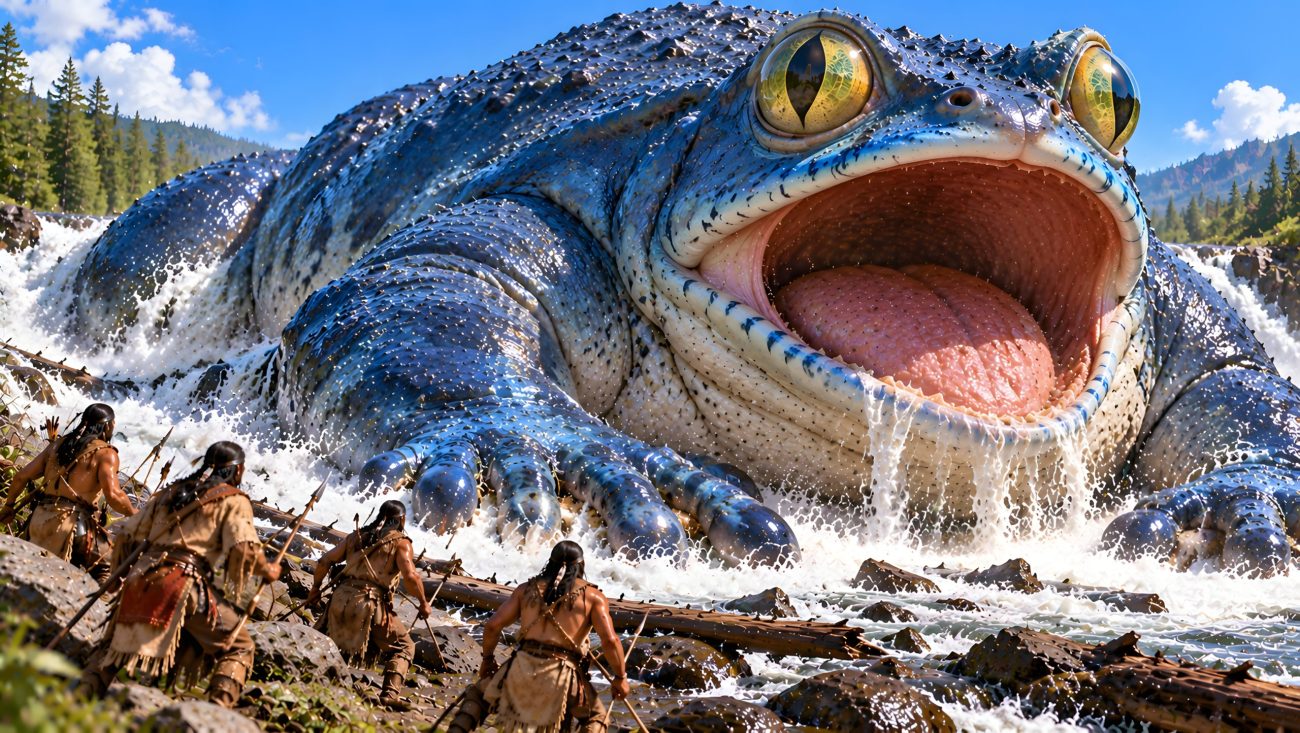
Aglebemu is a gigantic frog-like monster from the traditions of the Penobscot, Maliseet, and Passamaquoddy peoples. Known as the Giant Frog or Monster Frog, it is associated with great lakes and rivers. Its immense size and supernatural power allow it to obstruct entire waterways, making it a dangerous creature capable of bringing disaster to the surrounding lands.

In one of the creature’s most notorious deeds, Aglebemu dammed a great river, often identified as either the St. John River or the Penobscot River. By blocking the flow of water, the monster caused the river to run dry and brought a devastating drought upon the land. The people suffered as the water disappeared, and the creature’s power threatened their survival.

The culture hero Glooskap eventually confronted and defeated Aglebemu, ending the threat it posed to the river and the surrounding people. After its defeat, the enormous monster was transformed into an ordinary bullfrog. Some traditions call the creature Kci Cekolhs or Kci-Coqols, meaning Giant Frog, while Mitche-hant is a broader name meaning evil creature that can refer to various monsters.


Sources

“Aglebemu: The Giant Frog.” Native Languages of the Americas. https://www.native-languages.org/aglebemu.htm


Toad of Grafenberg

Tradition: Liechtenstein Mythology
Alternative Names: The Treasure Toad of the Old Castle
Category: Frog


The Myth

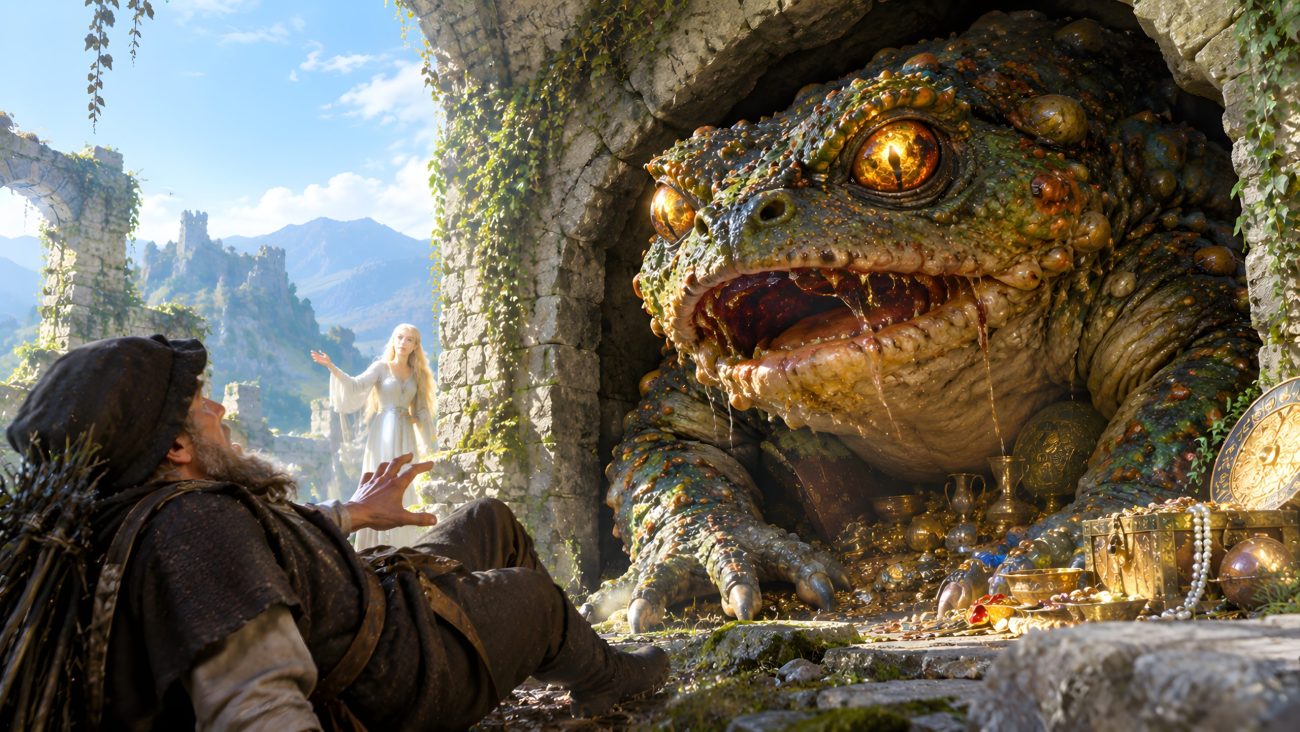
The Toad of Grafenberg is a mysterious supernatural creature that guards a hidden treasure within a vault beneath the ruins of the old castle Grafenberg in Liechtenstein. It appears as a wild, monstrous toad concealed in a niche in the wall. When disturbed, it grows larger and larger, while its eyes sparkle and spit fire. The creature’s terrifying appearance makes it a formidable obstacle for anyone seeking the treasure.

One day, an old chimney sweep from Balzers was gathering brushwood for making brooms in the undergrowth near a place known as the Old Schlüssle. Tired from his work, he sat down to rest upon an old wall. Suddenly, a maiden appeared before him and silently beckoned him to follow her. She led him into a great underground vault, where she revealed that he could become wealthy and free her from her enchantment if he knocked down the wild toad hidden in a niche in the wall.

The chimney sweep approached the creature and attempted to touch it, but the toad began to grow enormously. Its eyes glittered and spewed fire, filling him with terror. Unable to overcome his fear, the man leapt away and fled. In an instant, he found himself back at the very spot where he had originally sat down to rest. The treasure remained undiscovered, and the maiden’s enchantment remained unbroken.


Sources

“Grafenberg.” SAGEN.at – Liechtensteiner Sagen, collected by Otto Seger. https://www.sagen.at/texte/sagen/liechtenstein/seger/grafenberg.html


Ōgama

Tradition: Japanese Mythology
Alternative Names: Bakegama, Giant Toad
Category: Frog


The Myth

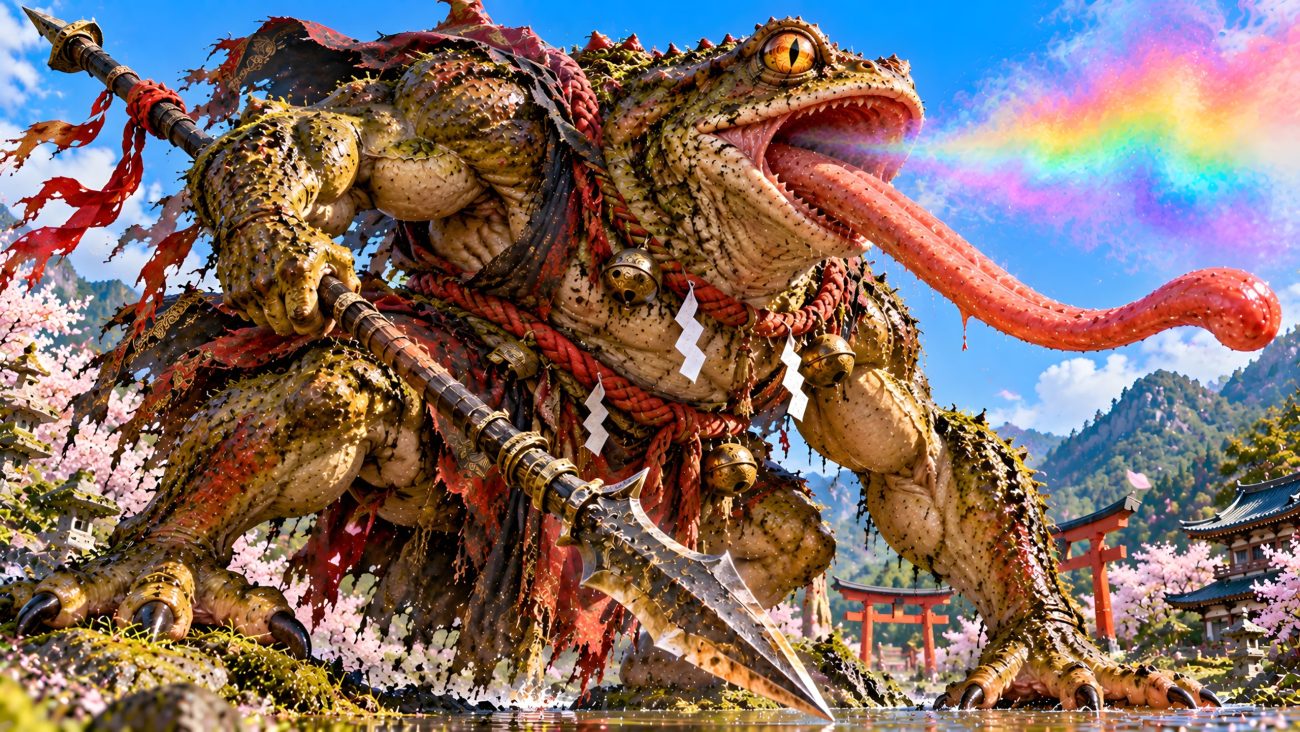
Ōgama are enormous supernatural toads that inhabit remote mountains and rivers. They can grow to incredible sizes, becoming more dangerous as they age. Their bodies may be so large that they resemble boulders or other natural features, allowing them to remain unnoticed beside ponds and streams. Their long, powerful tongues are both agile and sticky, capable of snatching creatures and dragging them into their enormous mouths. When they exhale, their breath appears in rainbow colours. Some Ōgama can also wield spears to attack humans and transform themselves into human shapes to deceive unsuspecting travellers.

According to Japanese tradition, an ordinary Japanese toad becomes an Ōgama after living for a thousand years. These creatures retain many of the habits of ordinary toads, hunting insects, birds, and snakes in the wilderness. They breathe their strange rainbow-coloured vapour upon their prey before catching it with their powerful tongues. Although they usually avoid human settlements, the largest Ōgama may regard humans as food once they grow beyond three metres in length. Even smaller individuals can be dangerous when provoked, using their intelligence and weapons to pursue people.

In Miyagi Prefecture, a famous marksman heard stories of an old woman who appeared at a dilapidated house beside a bridge every night to spin thread. Her neighbours feared that she was a demon. When the marksman first confronted her, her disturbing smile and cackle frightened him so much that he fired at her heart. The lantern beside her immediately went out, plunging the surroundings into darkness. The next morning, the woman had disappeared without a trace. Several nights later, he returned and fired directly at her lantern instead. This time, he heard a terrible shriek and a clattering sound as the light vanished. At dawn, he discovered the corpse of an enormous, hideous toad where the old woman had stood. The mysterious woman had been an Ōgama in disguise.

Another encounter occurred in the mountains of Niigata Prefecture, where a man went fishing beside a secluded pond. He settled comfortably upon a large boulder at the water’s edge and cast his line. A fisherman on the opposite bank suddenly noticed something horrifying and hurriedly gathered his equipment before fleeing. He motioned for the other man to follow, and once they had escaped into the woods, he explained what he had witnessed: the supposed boulder had opened an enormous eye, red as fire, and yawned. When the two men returned to investigate, the boulder had vanished completely. The object on which the fisherman had been sitting was actually a gigantic Ōgama, resting motionless beside the pond until its true nature was revealed.


Sources

“Ōgama (大蝦蟇).” Yokai.com: The Database of Japanese Folklore. https://yokai.com/oogama/