Zhabalaka

Tradition: Belarusian Mythology
Alternative Names: Zhabataka, Koštalačen’
Category: Frog


The Myth

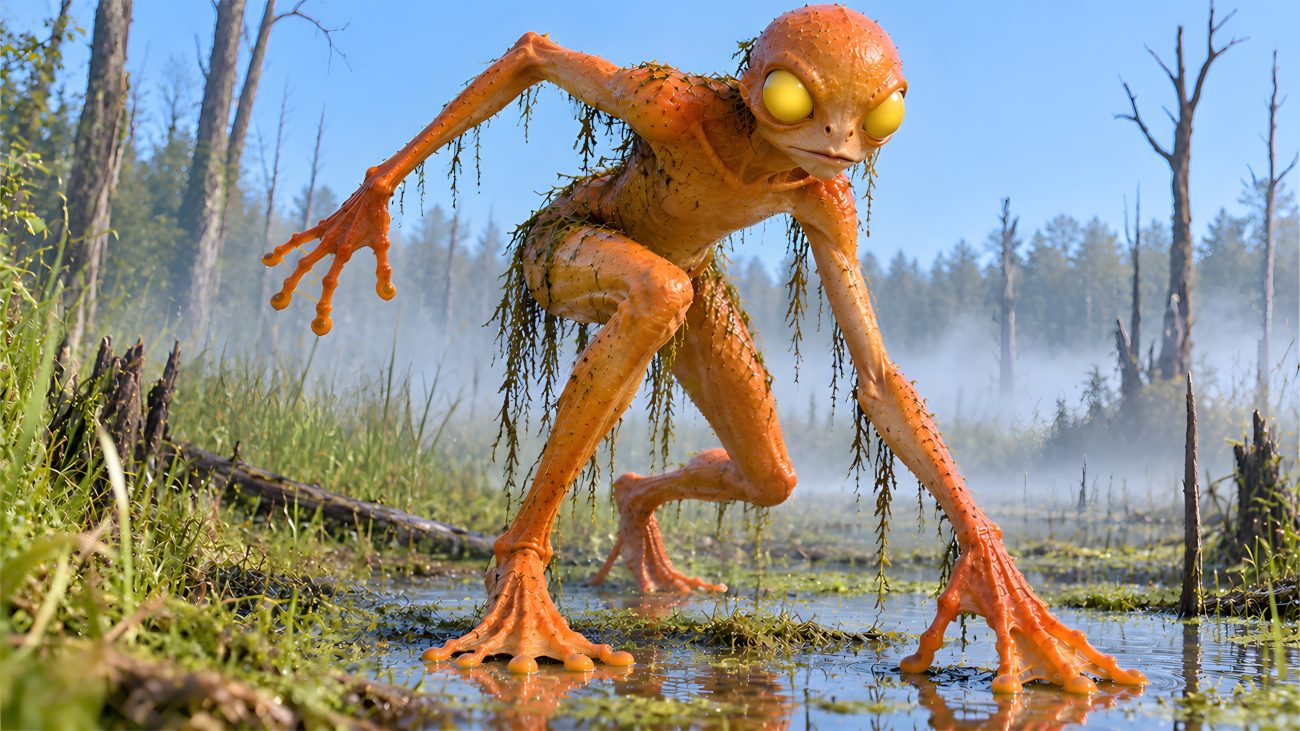
Zhabalaka is a shapeshifting being in Belarusian mythology that can take the form of a toad or frog. Despite its amphibian appearance, it is a werewolf-like creature capable of changing its shape. It belongs to a group of supernatural beings that may also appear as cats, blurring the boundary between animal and human forms.

Zhabalaka is associated with the Frog Princess of Slavic fairy tales. In these stories, a princess or other enchanted figure may be trapped in the form of a frog until a spell is broken. The frog’s skin acts as a magical covering, concealing the beautiful woman beneath it. Burning the skin can release her from the enchantment, although doing so may have unexpected consequences for the transformation.

In one tale, the hero Koschei encounters an enormous toad with bulging, heavily made-up eyes. The toad offers to carry him wherever he wishes, promising to help him escape his troubles. Koschei reluctantly accepts, preferring the strange creature to the other dangerous beings lurking nearby. The encounter presents Zhabalaka as an uncanny shapeshifter whose grotesque animal form conceals a supernatural nature.


Sources

“Zhabalaka.” New Bestiary (Bestiary.us). https://www.bestiary.us/Zhabalaka


Heqet

Tradition: Egyptian Mythology
Alternative Names: Heket, Heqtit, Ḥqtyt
Category: Frog


The Myth

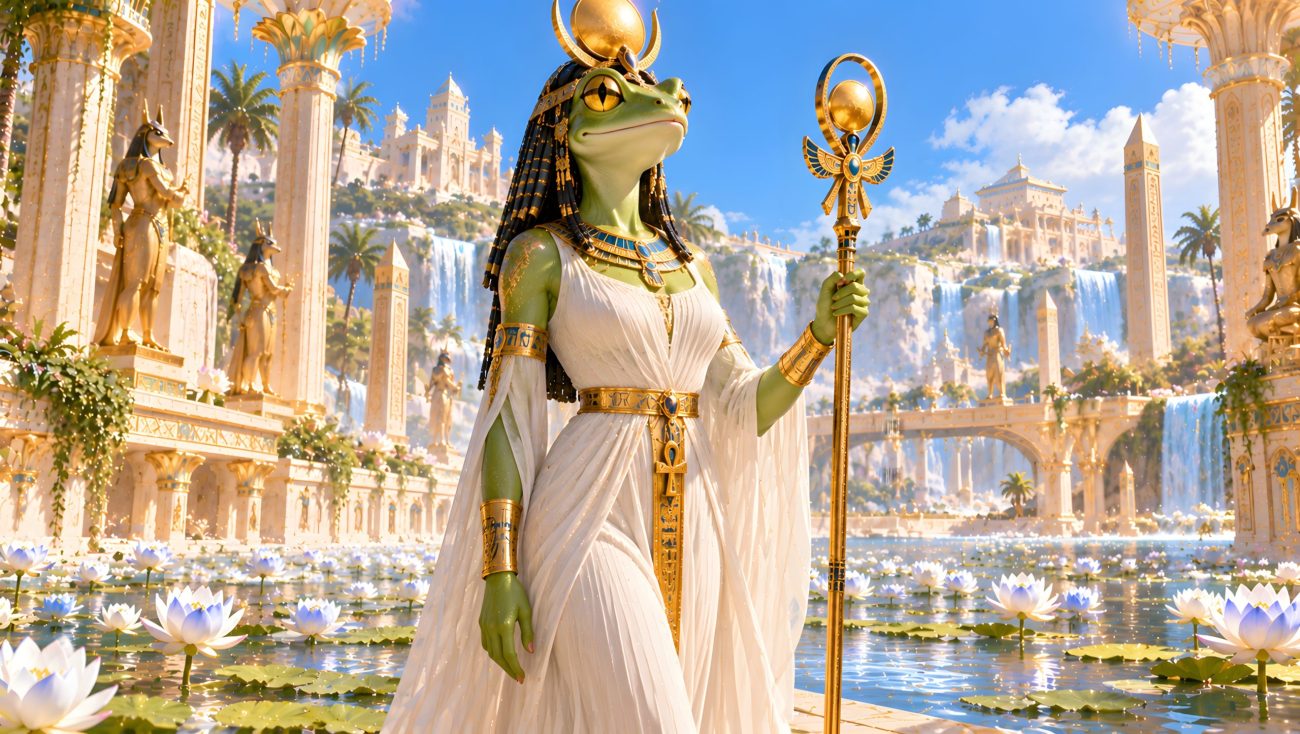
Heqet is an Egyptian goddess of fertility, childbirth, and resurrection, represented as a frog or a woman with the head of a frog. The frog was a symbol of fertility and new life, associated with the annual flooding of the Nile and the growth of crops. Heqet was believed to bring life and renewal, and she was closely connected to the final stages of childbirth. She was known as the one who hastens birth, helping children enter the world safely.

Heqet was the wife of Khnum, the ram-headed god who shaped human bodies on his potter’s wheel. While Khnum formed the bodies of unborn children, Heqet helped bring them to life. She was also associated with the birth of Horus. In the myth of Osiris, Heqet breathed life into the newborn Horus, giving her an important role in the divine cycle of birth, death, and resurrection.

Her power extended beyond childbirth to the renewal of life itself. As the myths of Osiris and Horus became connected with resurrection, Heqet also came to represent the return of life after death. Frog-shaped amulets bearing her image were worn by women seeking protection during childbirth and an easier delivery. Through her association with fertility, birth, and resurrection, Heqet embodied the power that allows life to emerge, flourish, and begin again.


Sources

“Heqet.” Wikipedia: The Free Encyclopedia. Wikimedia Foundation. Accessed October 14, 2026. https://en.wikipedia.org/wiki/Heqet


Whowie

Tradition: Australian Mythology
Alternative Names: Whowie
Category: Frog


The Myth

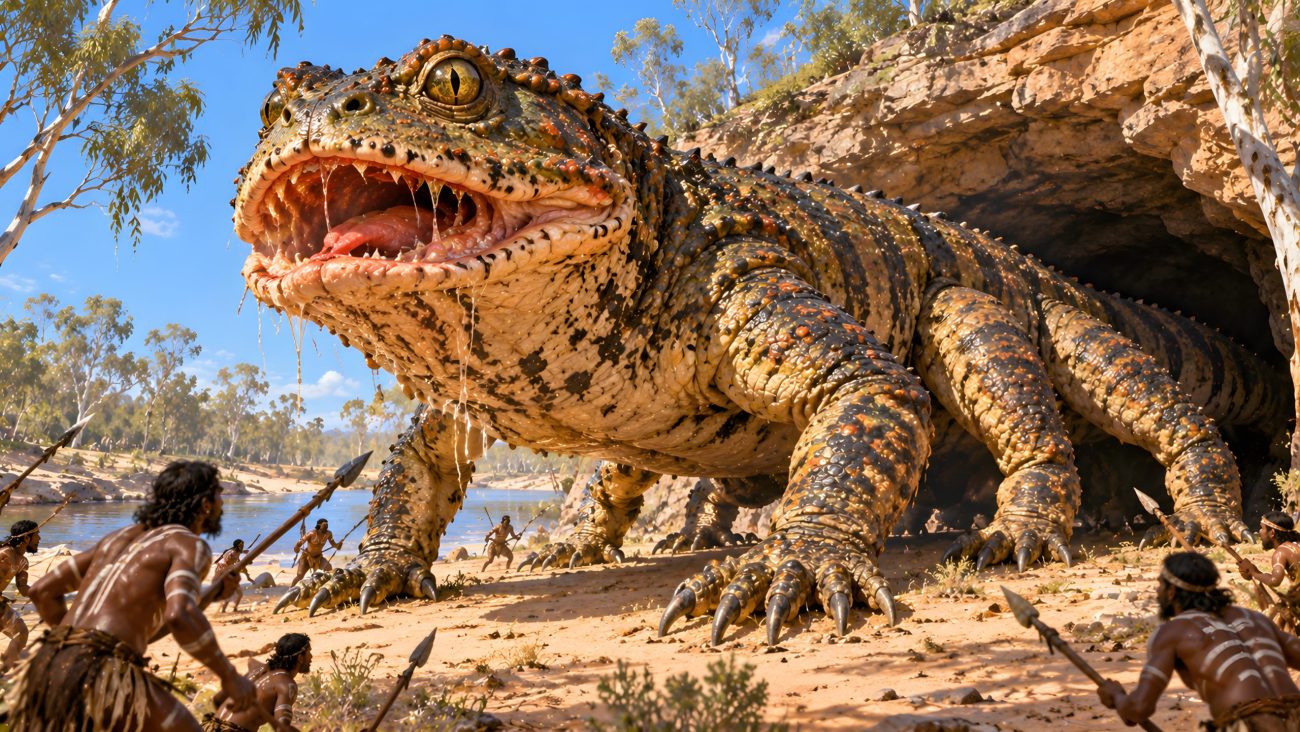
The Whowie is a gigantic and terrifying monster from southeastern Australian Aboriginal mythology. It resembles an enormous goanna, around seven metres long, with a huge frog-shaped head and six powerful legs. It lives in a vast cave on the banks of the Murray River, whose passages extend deep beneath the ground. The creature’s heavy trampling along the riverbanks is said to have formed the sandhills of the Riverina district.

Despite its enormous size, the Whowie moves slowly and is exceptionally stealthy, making it a deadly predator. It can kill and devour an entire tribe in a single meal, and its attacks brought misery and terror to the people living in the surrounding lands. For a long time, the tribes suffered under the monster’s constant threat.

Eventually, the water rat tribe decided that the Whowie had to be destroyed. They instructed the surrounding tribes to gather spears, stone axes, waddies, and great bundles of sticks. When the Whowie was deep inside its cave, the people piled the sticks at the entrance and set them on fire, filling the cave with smoke. After seven days, the blinded and disoriented monster finally emerged. The assembled tribes attacked it with their weapons and killed it, freeing the land from its terrible menace.


Sources

“Whowie.” Wikipedia: The Free Encyclopedia. Wikimedia Foundation. Accessed October 14, 2026. https://en.wikipedia.org/wiki/Whowie


Toad Demon

Tradition: Chinese Mythology
Alternative Names: Toad Spirit, Frog Spirit
Category: Frog


The Myth

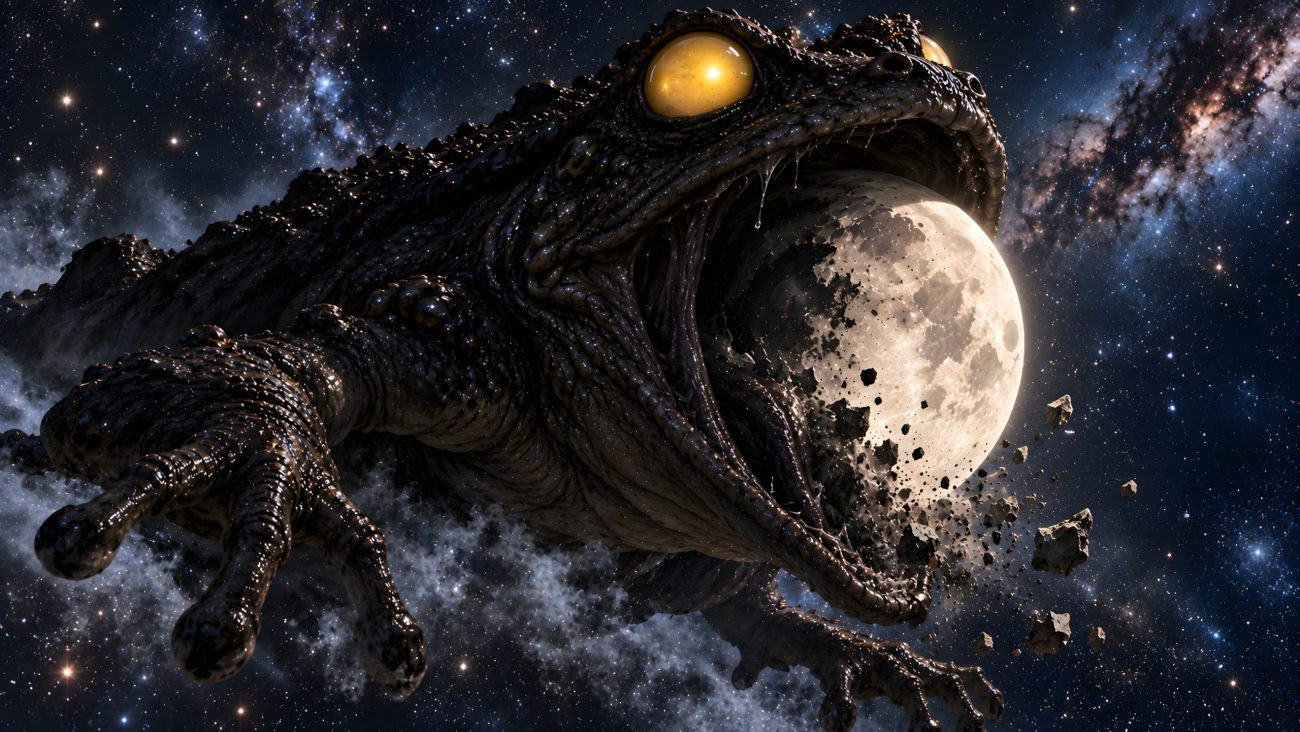
The Toad Demon is a supernatural toad spirit associated with eclipses and the mysterious shadows on the Moon. According to one belief, a lunar eclipse occurs when a giant toad devours the Moon. The dark shape visible on the lunar surface was understood as the toad itself, as though the creature were swallowing the heavenly body. The Toad Demon was therefore feared as a being capable of disturbing the natural order of the heavens.

Whenever a solar or lunar eclipse occurred, people would beat gongs and drums and bang pots and pans to create a tremendous noise. These rituals were intended to save the Sun or Moon by frightening away the celestial dog or the toad believed to be devouring it. In another Chinese tale, a toad travelled to the Moon and brought great chaos to the world.

The name Toad Demon also refers more broadly to the spirits that frogs and toads can become in Chinese legends. These creatures are not described in detail in every account, but they belong to a wider tradition in which ordinary amphibians may transform into supernatural beings.


Sources

“蛤蟆精 (Hámájīng).” Chinese Wikipedia. Wikimedia Foundation. Accessed October 14, 2026. https://zh.wikipedia.org/wiki/%E8%9B%A4%E蟆%E7%B2%BE


Tiddalik

Tradition: Australian Mythology
Alternative Names: Molok
Category: Frog


The Myth

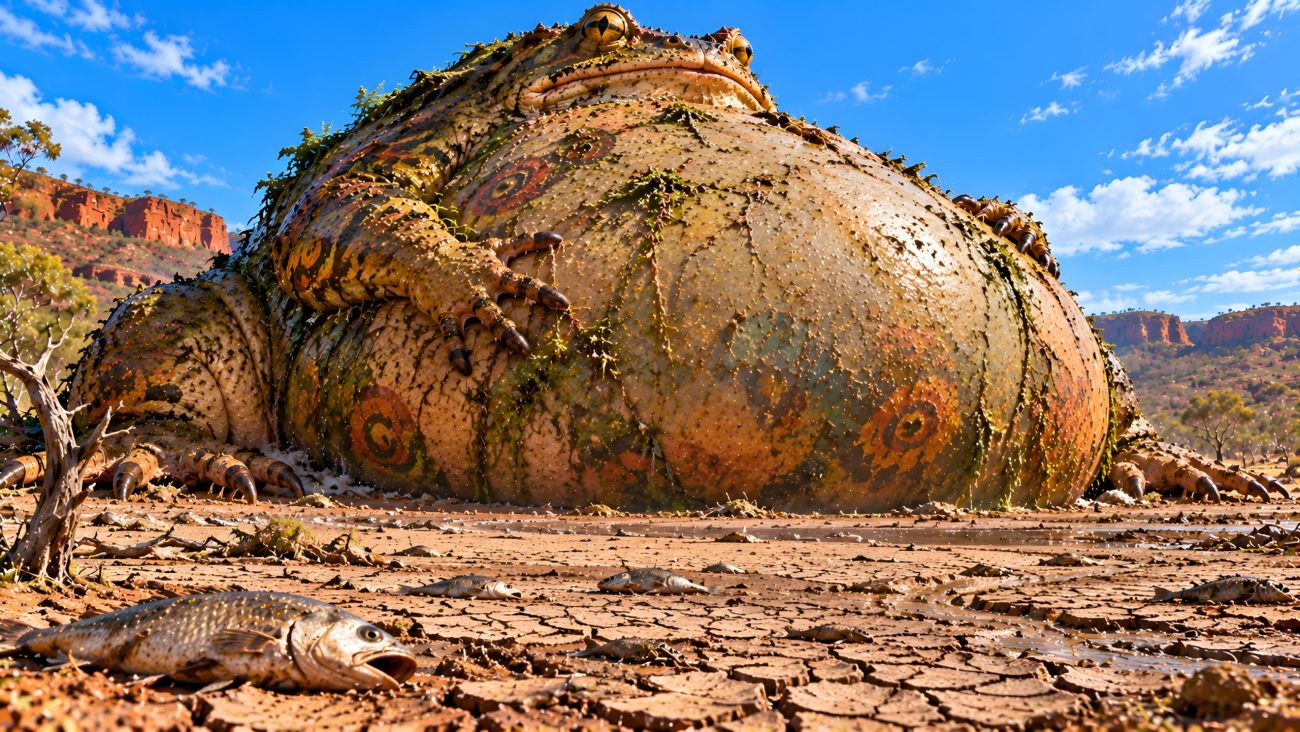
Tiddalik is a gigantic frog from Australian Aboriginal creation mythology, remembered for drinking all the fresh water in the world. One morning, he awoke in Wollombi Valley with an unbearable thirst and began gulping down every available source of fresh water. He drank from rivers, lakes, and swamps until they were completely emptied, leaving the land parched. Plants began to wither, animals suffered from thirst, and life across the land faced destruction.

The animals gathered together to find a way to make Tiddalik release the water trapped inside him. A wise old owl helped devise a plan, and Nabunum the eel took on the task of making the enormous frog laugh. The eel twisted and contorted his body into increasingly ridiculous shapes until Tiddalik could no longer contain himself. When the frog finally burst into laughter, the water poured out of his mouth and body, rushing across the land and refilling the rivers, lakes, and swamps.

In an older version of the story, however, the release of the water caused a devastating flood. The waters formed bays, estuaries, inlets, and islands, while many creatures drowned and others became stranded on isolated pieces of land. Borun the pelican rescued those who had been trapped, and his feathers changed from entirely black to a mixture of black and white. Through Tiddalik’s actions, the story explains both the return of water to the world and the dramatic transformation of the surrounding landscape.


Sources

“Tiddalik.” Wikipedia: The Free Encyclopedia. Wikimedia Foundation. Accessed October 14, 2026. https://en.wikipedia.org/wiki/Tiddalik


Khodumodumo

Tradition: South African Mythology, Lesotho Mythology
Alternative Names: Kholomodumo, Modumo o Moholo, Khamapa, Kammapa, Khanyapa
Category: Frog


The Myth

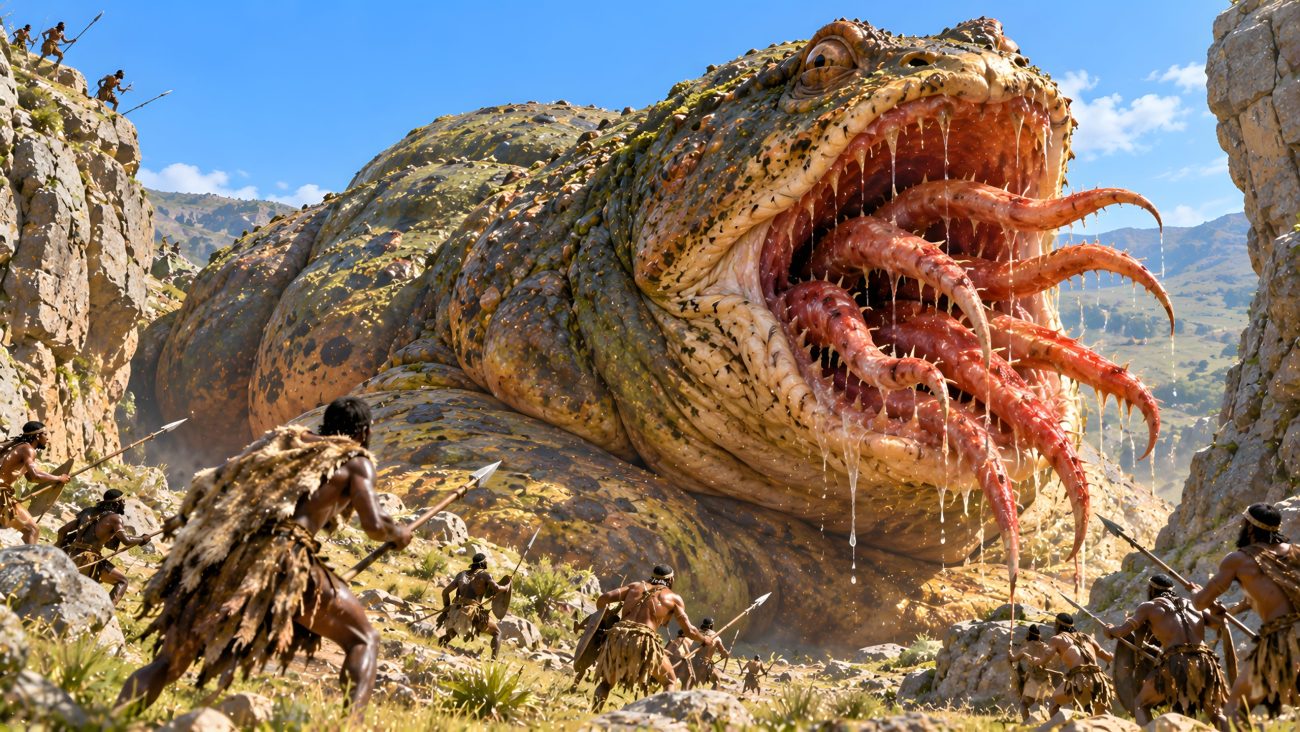
Khodumodumo is a gigantic swallowing monster from Basotho mythology of South Africa and Lesotho. Its enormous body has no clearly defined shape, and it is so vast that it can resemble a hill when lying across a mountain pass. The monster possesses multiple sharp tongues, which it thrusts at its victims like spears. It moves through towns and villages, swallowing every living thing in its path, including people, cattle, dogs, and poultry.

One day, Khodumodumo went on a rampage, devouring entire villages and leaving almost no survivors. Only one pregnant woman escaped by hiding on a manure heap, where the ashes concealed her appearance and scent. After consuming everything around it, the bloated monster dragged itself away and became wedged in a mountain pass. The surviving woman later gave birth to a son. When she went to fetch manure powder, as tradition required, she returned to discover that her baby had already grown into a fully developed warrior. He wore animal skins, carried divining beads around his neck, and was armed with assagais. He introduced himself as Senkatana and demanded to know what had happened to his village, its people, and its animals. His mother explained that Khodumodumo had swallowed them all.

Senkatana insisted on confronting the monster, despite his mother’s warnings. When Khodumodumo opened its enormous mouth and attacked him with its sharp tongues, he chopped them off one by one. The creature was too bloated to turn around quickly, allowing Senkatana to circle it and stab its body repeatedly with his assagais until it died. He then cut open the monster to free its swallowed victims, carefully avoiding the people and animals trapped inside. Although he accidentally injured one man during the rescue, Senkatana successfully released the survivors and eventually became a great chief. However, the injured man and others who envied the hero repeatedly plotted to kill him. Exhausted by their hatred and ingratitude, Senkatana eventually allowed himself to be killed.


Sources

“Khodumodumo.” A Book of Creatures. December 18, 2015. https://abookofcreatures.com/2015/12/18/khodumodumo/


Church Toad

Tradition: Swiss Mythology
Alternative Names: The Giant Toad Beneath the Church
Category: Frog


The Myth

A gigantic toad lies beneath a church in the canton of St. Gallen, Switzerland. It rests upon an unfathomably deep body of water hidden beneath the building. The creature remains concealed underground, its enormous body supporting a mysterious and fragile balance beneath the church.

According to the legend, the church will collapse if the giant toad ever turns over. As long as it remains still, the building stands above it, but a single movement could bring the entire structure crashing down. The tale connects the hidden creature’s movements with the sudden destruction of the church and offers a mythical explanation for the trembling of the earth.


Sources

“Die Kröte (Sargans).” SAGEN.at – Traditionelle Sagen aus der Schweiz (St. Gallen). https://www.sagen.at/texte/sagen/schweiz/st_gallen/kroete_sargans.html


Baidoku Daiō

Tradition: Japanese Mythology
Alternative Names: King of Venereal Disease, Bai Doku Daiō, Golden-Haired Nine-Tailed White-Faced Fox
Category: Fox


The Myth

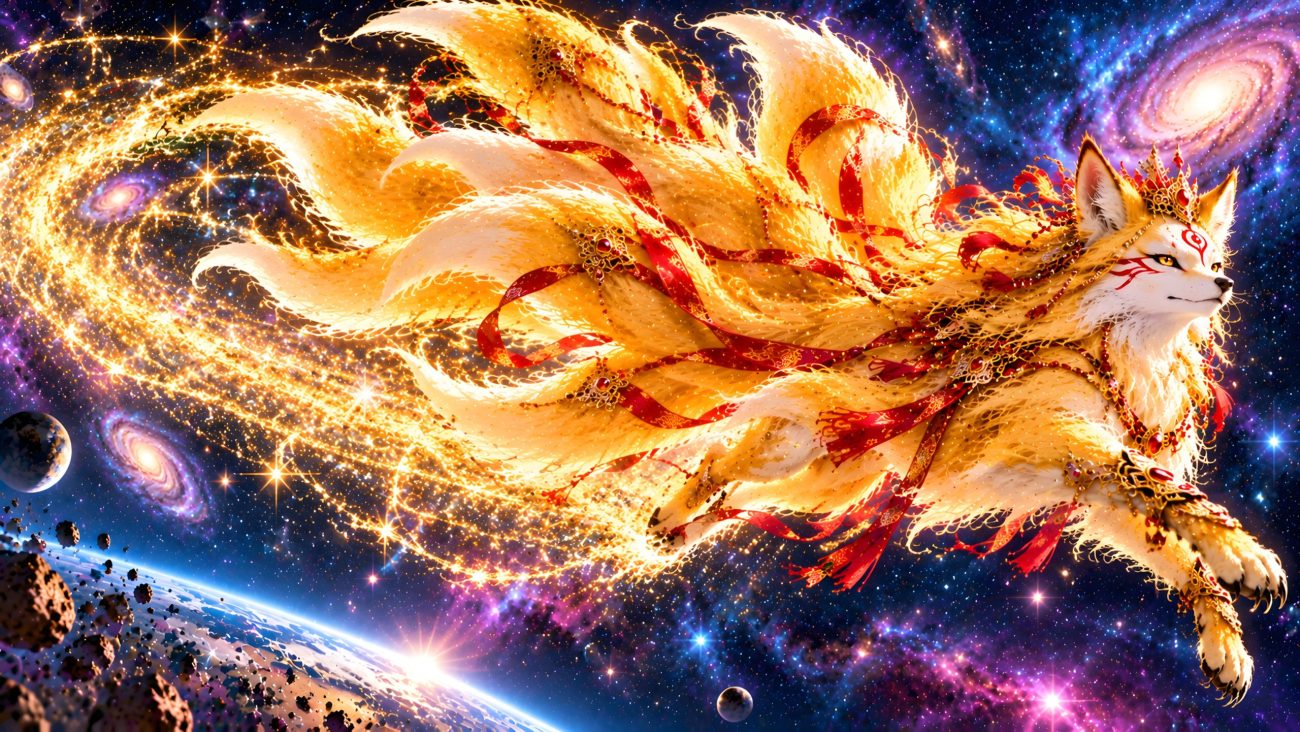
Baidoku Daiō, the King of Venereal Disease, is a terrifying supernatural being born from the accumulated yin energy of the world since the beginning of creation. In his original form, he is a golden-haired, nine-tailed, white-faced fox capable of flying freely through the cosmos and transforming into different shapes. His ultimate ambition is to exterminate humanity and turn every land into a realm of demons. Throughout the ages, he has repeatedly assumed the identities of infamous women to spread destruction. He first appeared as Daji, the consort of King Zhou of Shang, encouraging the tyrant’s cruelty and plunging his kingdom into disorder. He later became the wife of King Ban足 in India, disguised as a peasant’s daughter near Mount Huayang, where he once again committed atrocities, attacked Buddhism, and sought to slaughter the population. Finally, he travelled to Japan and became Tamamo-no-Mae, the beloved courtesan of Emperor Toba. His true nature was exposed once more, and he was hunted down and killed in the plains of Nasu. Although his immense lifespan finally appeared to end, his spirit continued to haunt the world by possessing a stone that harmed both people and animals. The monk Genno eventually shattered the stone with his staff, apparently destroying the fox’s remaining spirit.

However, the fox’s scattered spiritual remnants gathered again in the Lingnan region of China, where they took human form and acquired new supernatural powers. The resurrected demon transformed into Baidoku, a terrible and difficult-to-cure disease, and gathered eighty-four thousand followers to launch another campaign of slaughter against humanity. As Baidoku Daiō, he appears as an imposing ruler dressed in mould-coloured robes and ceremonial headwear. His army consists of horrifying disease generals, including Fistula, Poisonous Infection, Residual Poison, and Wax-Candle Chancre, whose monstrous bodies reflect the diseases they represent. Together, the King and his vast army seek to spread sickness throughout the human body, imagined as a kingdom under siege.

Baidoku Daiō eventually appears before Junjoku, a physician devoted to treating venereal disease, disguised as a woman. He warns the physician to abandon his medical research, but when Junjoku recognizes his true identity, the demon reveals his fox form and attacks him with foul-smelling poisonous vapours. The physician is saved by Raishin, a divine general who is the son of King Wen’s descendant Jichang and now guards the heavenly imperial palace. Raishin drives the fox away, beginning a great supernatural war between the forces of disease and the defenders of the human body. Junjoku and Raishin are aided by medicinal generals, including Enjumaru, Chisōmaru, and Baikōsan, whose powers represent the healing effects of different remedies. In the final battle, Enjumaru defeats the disease general Rōreki, after which Baidoku Daiō himself is beheaded. With their leader destroyed, the army of disease collapses. Junjoku then awakens in his study, realizing that the entire battle was a dream. Inspired by the vision, he prepares a medicine to treat venereal disease and rejoices that his long-standing ambition to develop an effective remedy has finally been fulfilled.


Sources

“黴毒大王 [ばいどくだいおう] (Baidoku Daiō).” 新版TYZ 妖怪図鑑 (New TYZ Yokai Encyclopedia). https://tyz-yokai.blog.jp/archives/1010655118.html
Yumian

Tradition: Chinese Mythology
Alternative Names: Jade Face, Yumian Fox, Yumian Princess, Hu Xiaojie
Category: Fox


The Myth

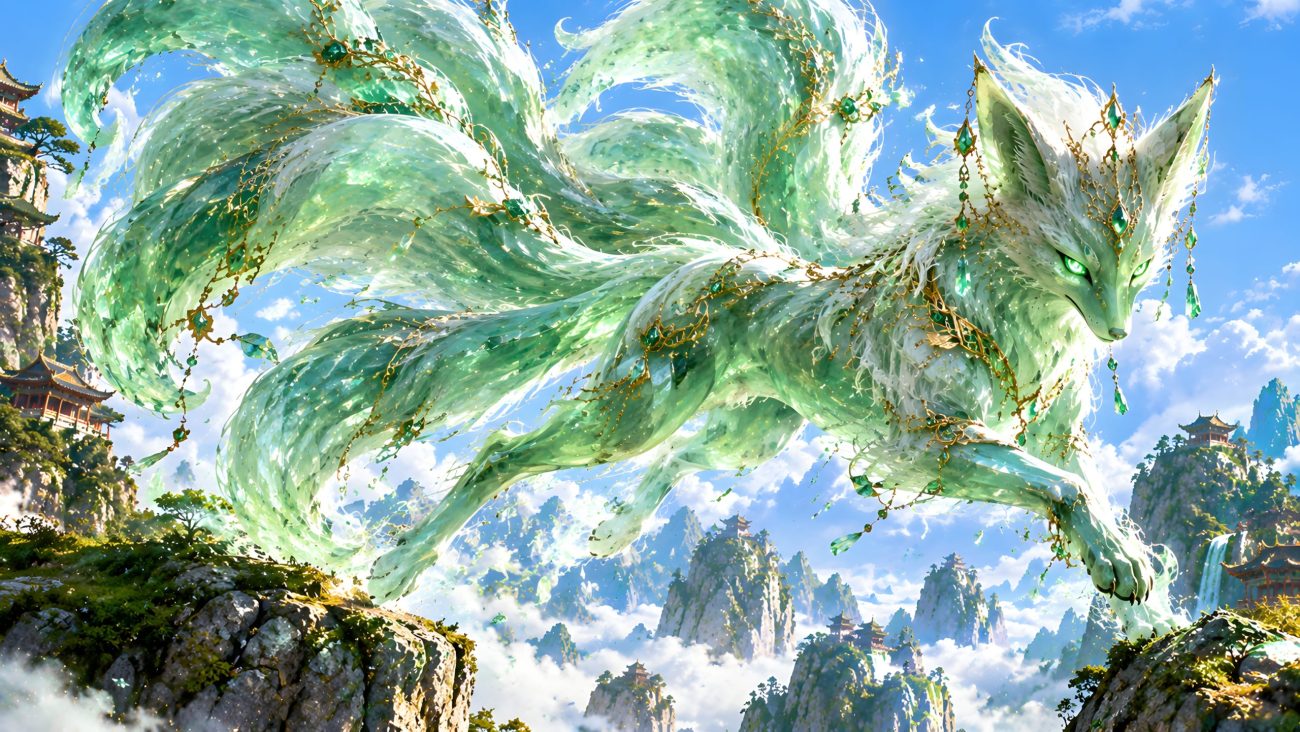
Yumian is a powerful fox demon known for her beautiful, jade-like face and extraordinary powers of transformation. In the tale The Complete Story of the Fox’s Karmic Affinity, Yumian is described as a nine-tailed fox who has cultivated her supernatural abilities for nine thousand years, gaining an additional tail for every thousand years of practice. Despite her immense age and magical power, she remains fascinated by the pleasures of the human world and frequently disguises herself as a beautiful woman to interact with mortals.

Taking the identity of Miss Hu, Yumian visits the study of a young scholar named Zhou at night. She becomes involved with him and secretly absorbs his yang essence to strengthen her own cultivation. As their encounters continue, Zhou neglects his studies and eventually falls ill, weakened by the fox demon’s supernatural influence. His declining health draws attention to the danger concealed behind Yumian’s alluring human appearance.

Eventually, the immortal Lü Dongbin descends into the mortal world to subdue the fox demon. The two engage in a supernatural battle, but neither can gain the upper hand, and their confrontation ends in a draw. Yumian also appears in other Chinese literary tales. In The Complete Biography of Ji Gong, the Jade-Faced Fox visits the monk Ji Gong to seek his teachings. In Journey to the West, the Jade-Faced Princess is a fox spirit and the daughter of the Ten-Thousand-Year Fox King. She lives in Cloud-Gathering Cave on Mount Jilei and becomes the concubine of the Bull Demon King.


Sources

“玉面 (Yùmiàn).” Chinese Wikipedia. Wikimedia Foundation. Accessed October 12, 2026. https://zh.wikipedia.org/wiki/%E7%8E%89%E9%9D%A2


Longzhi

Tradition: Chinese Mythology
Alternative Names: 蠪蛭 (Lóngzhì)
Category: Fox


The Myth

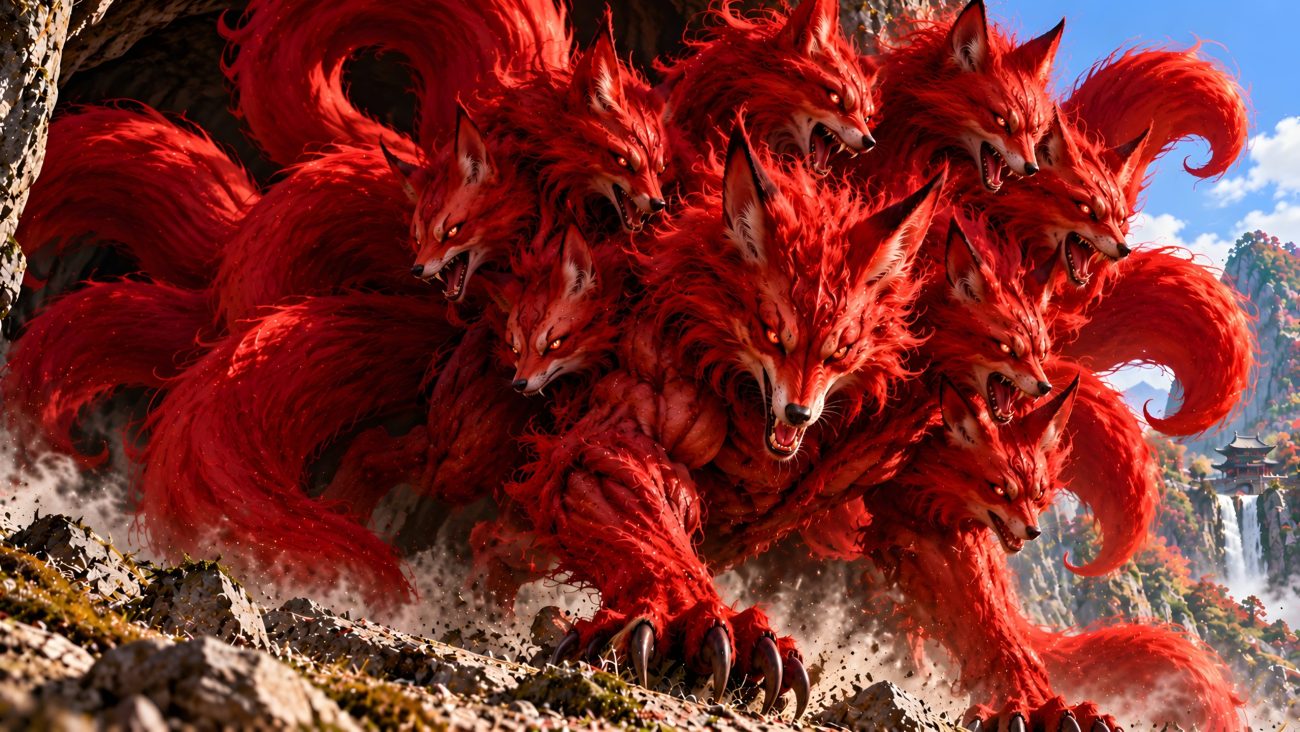
Longzhi is a monstrous fox-like creature with nine heads and nine tails. Its paws resemble those of a tiger, giving it the claws and appearance of a formidable predator. Despite its foxlike body, the creature has a terrifying voice that sounds like the cries of a human baby, making its presence especially unsettling.

Longzhi is a dangerous man-eating beast that attacks and devours humans. Its nine heads and nine tails distinguish it from ordinary foxes and other supernatural animals, while its tiger-like claws make it a fearsome hunter. The creature combines the cunning appearance of a fox with the strength and ferocity of a predator, making it a particularly monstrous being in Chinese mythology.


Sources

“蠪姪 (Lóngzhí).” Chinese Wikipedia. Wikimedia Foundation. Accessed October 12, 2026. https://zh.wikipedia.org/wiki/%E8%A0%AA%E5%A7%AA