Yara-ma-yha-who

Tradition: Australian Mythology
Alternative Names: Yara-ma-yha-who
Category: Frog


The Myth

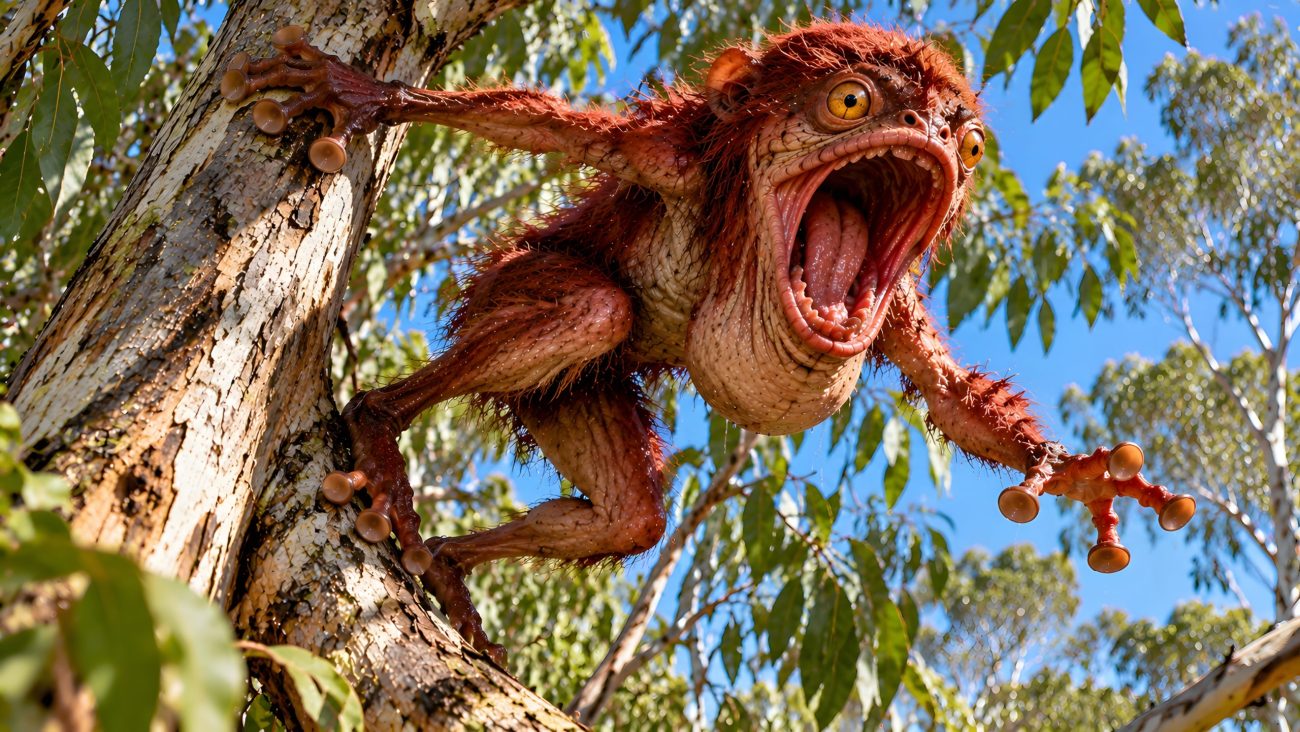
The Yara-ma-yha-who is a grotesque, blood-draining creature that inhabits the forests along Australia’s Pacific coast. It is a small, red, furry being standing no more than four feet tall, with a disproportionately large head and a wide, toothless mouth that can stretch open like a snake’s. Its throat and belly are extraordinarily expandable, allowing it to swallow an adult human whole. Its fingers and toes are equipped with suction cups that it uses to attach itself to its victims and drain their blood. Although it is an excellent climber, it moves awkwardly on the ground, waddling like a cockatoo. Thick-leaved fig trees are its favourite haunts, where it can wait for days among the branches for an unsuspecting traveller to rest beneath them. Lone children are its preferred prey, and stories of the creature serve as warnings against wandering into dangerous places.

When a Yara-ma-yha-who attacks, it clings to its victim with its suction-cup fingers and toes, draining enough blood to make the person faint without killing them outright. It then leaves the victim for a time before returning to swallow them whole, head first. A little dance helps the food slide down its throat, after which it drinks water and settles down for a nap. When it awakens, the creature regurgitates its prey. The victim is usually still alive and must remain still, pretending to be dead, because fighting back against the monster is futile. The Yara-ma-yha-who then walks five paces away before returning to poke the victim’s sides with a stick. It retreats ten paces and comes back to tickle the person beneath the arm or neck. After walking fifty yards, it returns for another round of tickling before finally going behind a bush to sleep.

This strange ritual must be completed, for the Yara-ma-yha-wha fears the spirit of the fig tree, which will whisper in its ears if it fails to perform the required actions. The punishment is a transformation into glowing mushrooms that grow on trees. Once the creature has gone to sleep, a victim can finally escape. If the Yara-ma-yha-who hears the fleeing person, it may call out in confusion and attempt to give chase, but its clumsy gait makes it relatively easy to outrun. A frustrated creature may retaliate by drinking all the water from nearby wells and waterholes, forcing people to seek moisture from tree sap and exposing themselves to further attacks.

Surviving an encounter does not guarantee that a person will remain human. Each time a Yara-ma-yha-who swallows and regurgitates its victim, the person’s body changes. After the second swallowing, the victim becomes shorter and completely hairless. After the third, the person shrinks further and grows a thick covering of hair. If the process continues, the victim gradually becomes a Yara-ma-yha-who themselves, joining the ranks of the creatures that haunt the fig trees.


Sources

“Yara-ma-yha-who.” Wikipedia: The Free Encyclopedia. Wikimedia Foundation. Accessed October 14, 2026. https://en.wikipedia.org/wiki/Yara-ma-yha-who
Whowie

Tradition: Australian Mythology
Alternative Names: Whowie
Category: Frog


The Myth

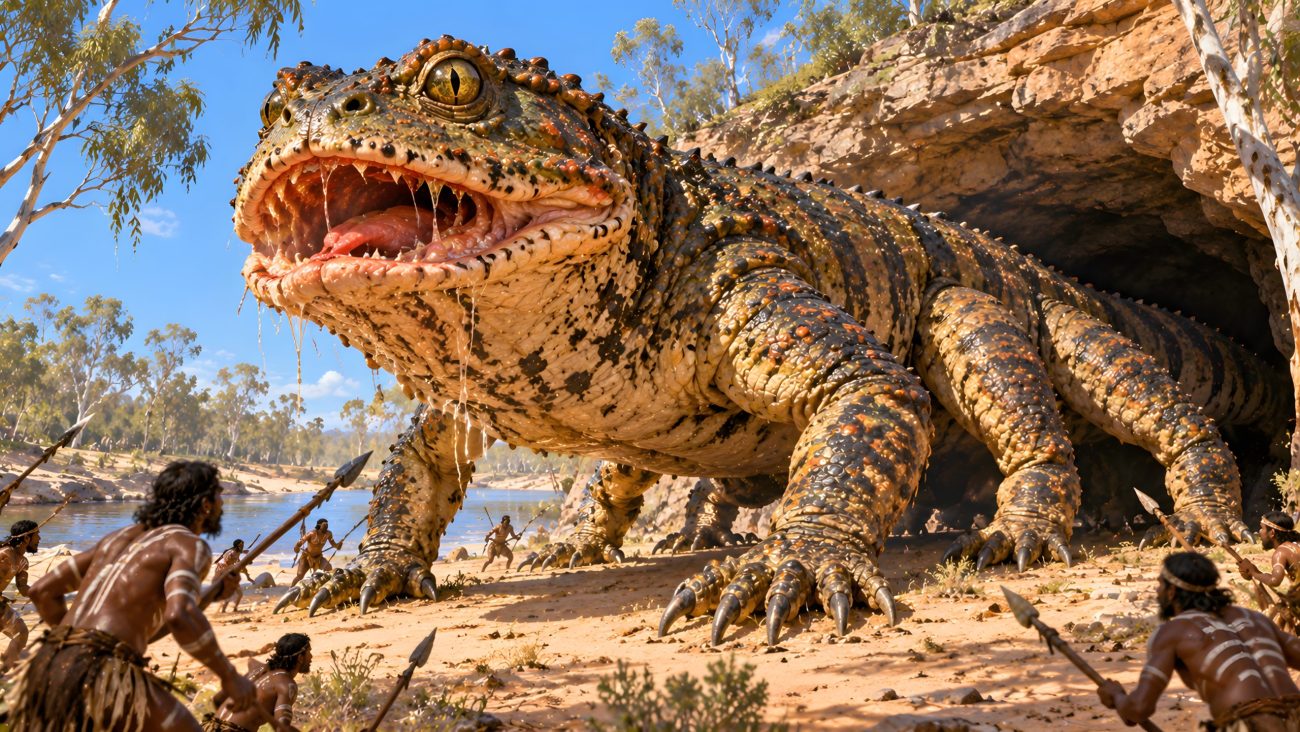
The Whowie is a gigantic and terrifying monster from southeastern Australian Aboriginal mythology. It resembles an enormous goanna, around seven metres long, with a huge frog-shaped head and six powerful legs. It lives in a vast cave on the banks of the Murray River, whose passages extend deep beneath the ground. The creature’s heavy trampling along the riverbanks is said to have formed the sandhills of the Riverina district.

Despite its enormous size, the Whowie moves slowly and is exceptionally stealthy, making it a deadly predator. It can kill and devour an entire tribe in a single meal, and its attacks brought misery and terror to the people living in the surrounding lands. For a long time, the tribes suffered under the monster’s constant threat.

Eventually, the water rat tribe decided that the Whowie had to be destroyed. They instructed the surrounding tribes to gather spears, stone axes, waddies, and great bundles of sticks. When the Whowie was deep inside its cave, the people piled the sticks at the entrance and set them on fire, filling the cave with smoke. After seven days, the blinded and disoriented monster finally emerged. The assembled tribes attacked it with their weapons and killed it, freeing the land from its terrible menace.


Sources

“Whowie.” Wikipedia: The Free Encyclopedia. Wikimedia Foundation. Accessed October 14, 2026. https://en.wikipedia.org/wiki/Whowie


Tiddalik

Tradition: Australian Mythology
Alternative Names: Molok
Category: Frog


The Myth

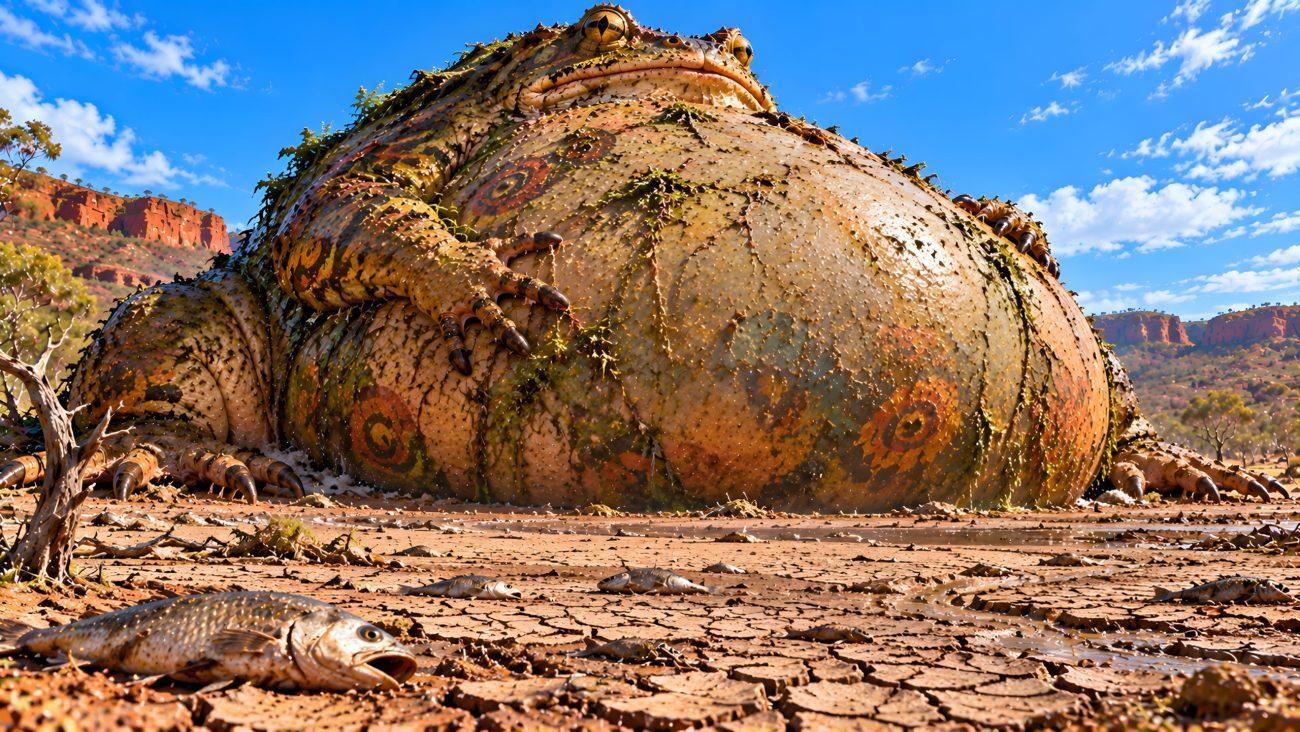
Tiddalik is a gigantic frog from Australian Aboriginal creation mythology, remembered for drinking all the fresh water in the world. One morning, he awoke in Wollombi Valley with an unbearable thirst and began gulping down every available source of fresh water. He drank from rivers, lakes, and swamps until they were completely emptied, leaving the land parched. Plants began to wither, animals suffered from thirst, and life across the land faced destruction.

The animals gathered together to find a way to make Tiddalik release the water trapped inside him. A wise old owl helped devise a plan, and Nabunum the eel took on the task of making the enormous frog laugh. The eel twisted and contorted his body into increasingly ridiculous shapes until Tiddalik could no longer contain himself. When the frog finally burst into laughter, the water poured out of his mouth and body, rushing across the land and refilling the rivers, lakes, and swamps.

In an older version of the story, however, the release of the water caused a devastating flood. The waters formed bays, estuaries, inlets, and islands, while many creatures drowned and others became stranded on isolated pieces of land. Borun the pelican rescued those who had been trapped, and his feathers changed from entirely black to a mixture of black and white. Through Tiddalik’s actions, the story explains both the return of water to the world and the dramatic transformation of the surrounding landscape.


Sources

“Tiddalik.” Wikipedia: The Free Encyclopedia. Wikimedia Foundation. Accessed October 14, 2026. https://en.wikipedia.org/wiki/Tiddalik