Mashurdaly

Tradition: Romanian Mythology, Hungarian Mythology
Alternative Names: Mashurdalo, Mashurdalov, Mashurdals, Mashurdalo (Latin spelling)
Category: Giant


The Myth

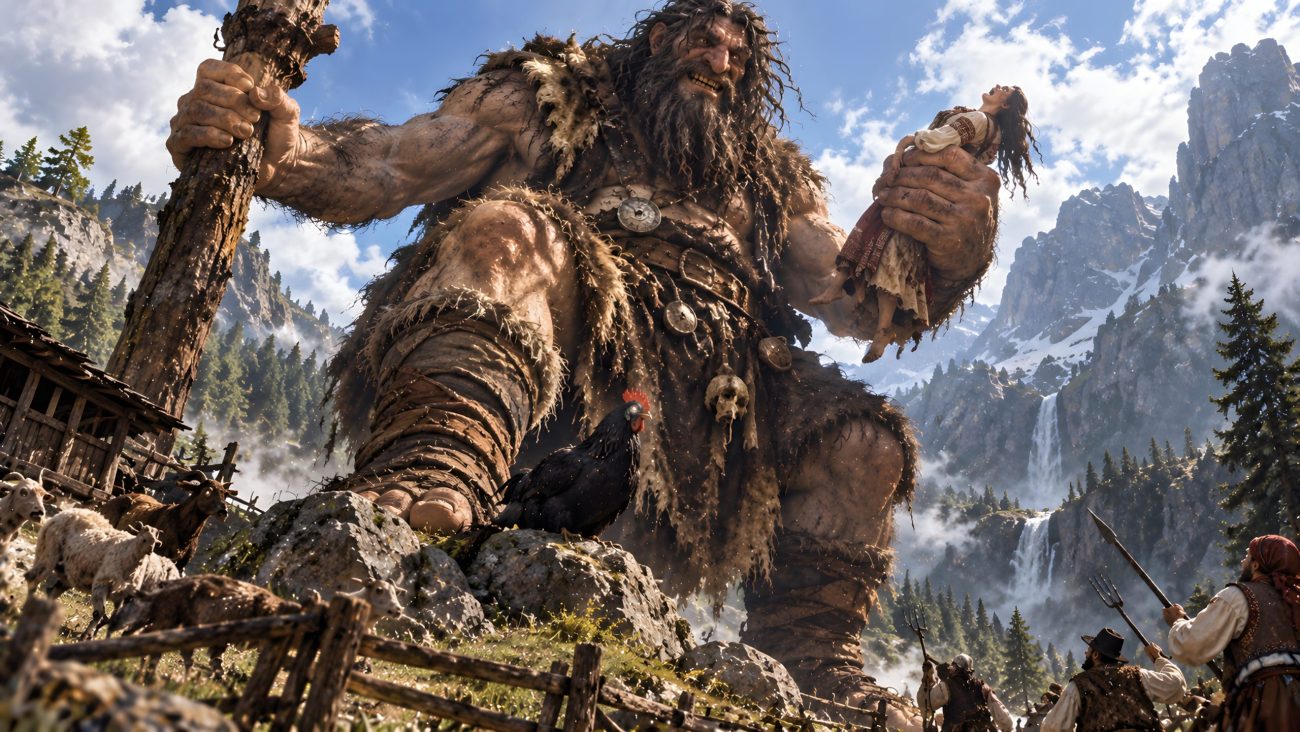
Mashurdaly are foolish mountain giants in Romani folklore, particularly in traditions associated with Hungarian, Romanian, and Balkan Romani’s. They inhabit mountains, forests, and wastelands, where they wait for animals or people to pass by. They are described as stupid and easily deceived, often kidnapping women and children or stealing livestock. Their lack of intelligence makes them vulnerable to cunning humans, who can trick them, rob them, or even kill them.

Each Mashurdal has a giant wife and several children, and every member of the family possesses a magical black chicken. Each chicken holds the life and health of its owner within its own body. If a Mashurdal is injured or killed, its chicken swallows an egg laid by a black hen, restoring the giant to health. To defeat one permanently, a person must first find and destroy its black chicken. Although this weakness makes the giants vulnerable, discovering it requires considerable cunning, since the Mashurdaly are dangerous despite their stupidity.

Mashurdaly are also associated with strange magical transformations. A Mashurdal’s wife can transform into a thin, swift horse if a magical bridle is placed around her neck. Anyone who drinks the blood of a Mashurdal gains immense strength. In one tale, a Mashurdal gives his helpful guest a heroic horse with a bridle made from a magical vine, whose growth is guarded by nine black dogs and a dragon called the Ushap. The Mashurdal’s family also owns the egg of a thousand-year-old owl, which contains a worm of happiness.

Stories about these giants sometimes portray them as both dangerous and strangely vulnerable to ordinary tricks. One account describes a family of Mashurdaly whose father has hair that shines like the Sun. When questioned about it, he explains that it burns day and night and takes away his sight. In another story, a Mashurdal lives in a dark forest with a magical iron cave, sleeps on a sheepskin rug, and speaks only in grunting sounds. Some traditions say that Mashurdaly visit villages at night to inspect people’s homes, although dogs can sense their presence and cause them to flee.


Sources

“Mashurdaly.” New Bestiary (Bestiary.us). https://www.bestiary.us/mashurdaly

Ahès

Tradition: French Mythology
Alternative Names: Ahez, Ahès-la-fée, Gwrac’h Ahes
Category: Fairy, Giant


The Myth

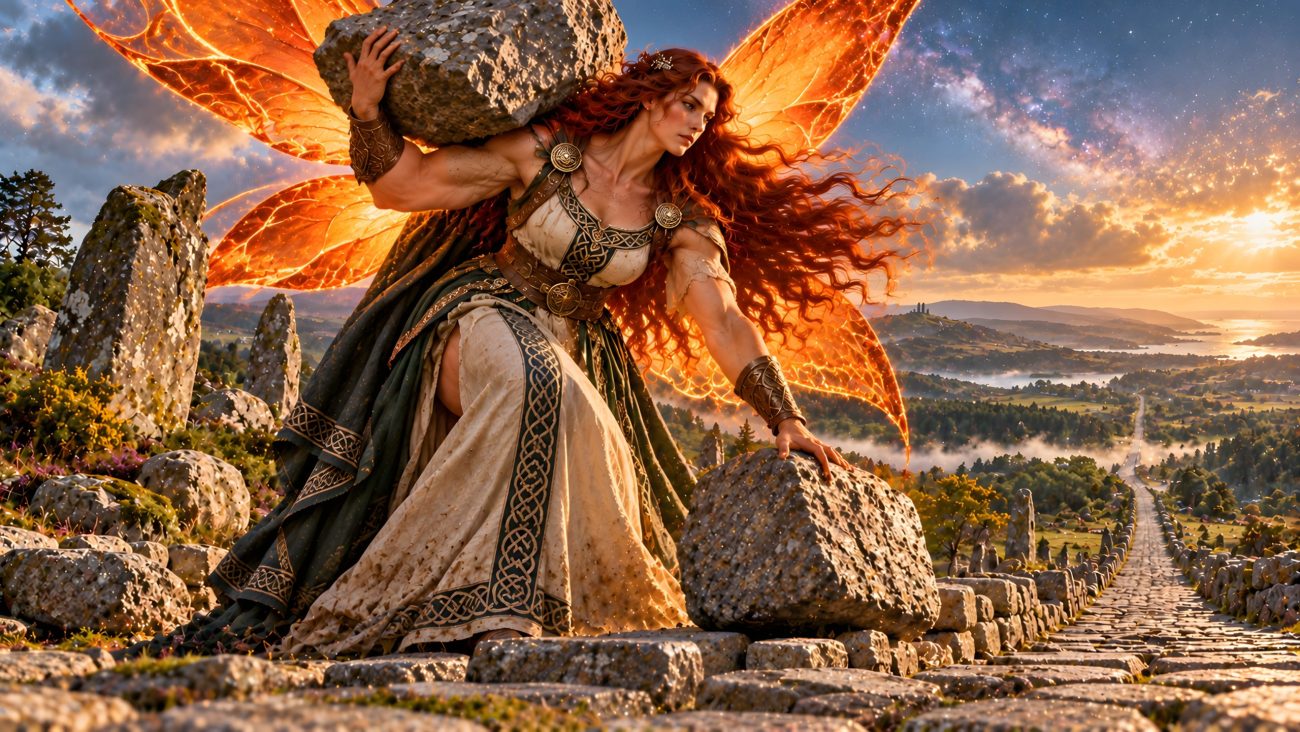
Ahès was a mysterious female figure of Breton legend who could appear as a princess, a fairy, or a giantess. She was especially associated with the construction of roads across Brittany and was said to have carried the enormous stones needed to build them. Many ancient roads were consequently known as the “Paths of Ahès” (Hent Ahès), while other routes bore related names such as Fossé-Ahès. Her supernatural reputation was so strong that her name also became attached to the Milky Way, known as the “Path of Ahès,” and the constellation of the Little Bear, called the “Chariot of Ahès.” A giantess named Ahès was also said to lie buried beneath a dolmen at Prat in Trégor.

Ahès became particularly associated with Carhaix, whose name was traditionally interpreted as Ker-Ahès, the city or village of Ahès. In this tradition she was regarded as the founder of the settlement and the builder of the great roads leading toward it. The legendary builder Ahès was compared with the fairy Mélusine, another supernatural woman associated with monumental construction. Breton traditions preserve numerous roads attributed to her, including routes near Quimper, Carhaix, Vannes, Corseul, and the Bay of the Dead. A related tale from La Chanson d’Aiquin speaks of a giant named Ohès who constructed a great road as far as Carhaix.

Ahès was sometimes confused with Dahut, the daughter of King Gradlon in the legend of Ys. Later traditions even identified Ahès as Gradlon’s daughter and portrayed her as a sinful princess who founded Ker-Ahès. However, Ahès and Dahut appear as distinct figures in other traditions, and Ahès’s older legendary identity is primarily that of the supernatural woman associated with roads, stonework, and the Breton landscape. She therefore survives in folklore not only as a fairy or giantess, but through the many ancient paths, bridges, and places that bear her name.


Sources

“Ahès.” Wikipédia, l’encyclopédie libre (French Wikipedia). Wikimedia Foundation. Accessed October 5, 2026.
https://fr.wikipedia.org/wiki/Ah%C3%A8s


Starkhans

Tradition: Luxembourg Mythology
Alternative Names: –
Category: Giant


The Myth

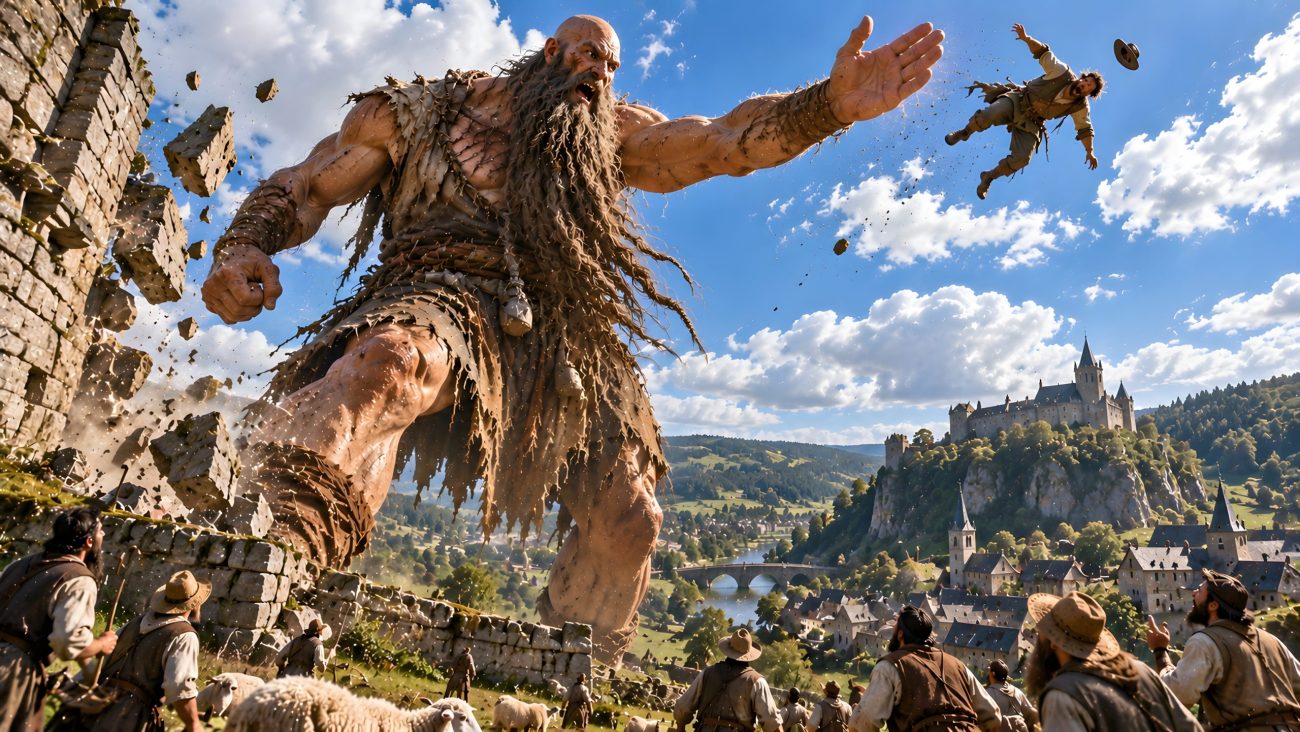
Starkhans was a giant-like figure whose enormous strength was said to represent the giants of old. His extraordinary power was already apparent in childhood. He continued drinking at his mother’s breast until the age of seven, and this was said to have made him so strong that, scarcely grown beyond his mother’s care, he could uproot young oak trees as thick as a man’s arm merely for amusement.

One of the most famous tales of his strength tells of a mischievous shepherd who boasted that he could outdo Starkhans in a contest. They agreed that each would throw a stone against a wall with such force that it would remain stuck to it.

Starkhans picked up a boundary stone and hurled it against the wall with tremendous force. Instead of sticking, the stone shattered into pieces like sand, and the wall itself shook from the impact.

The clever shepherd had no intention of competing honestly. He picked up a piece of cheese instead, threw it against the wall, and watched as it stuck firmly to the surface. Starkhans believed that he had been defeated.

Overcome with furious rage at losing the contest, Starkhans struck the unfortunate shepherd such a tremendous slap across the face that the poor man was hurled all the way up to the clouds. He did not fall back to earth for seven days.

When he finally came down, he landed in a meadow where his fellow shepherds were working in the hay. They were astonished to see their companion suddenly fall from the sky, alive after his extraordinary journey.


Sources

La Fontaine, Edmond de. Luxemburger Sagen und Legenden. Luxemburg: Jos. Beffort, 1882.


Manangilaw

Tradition / Region: Philippines Mythology
Alternative names: Manang Hilaw, Manangilaw
Category: Giant, Cave dweller


The Myth

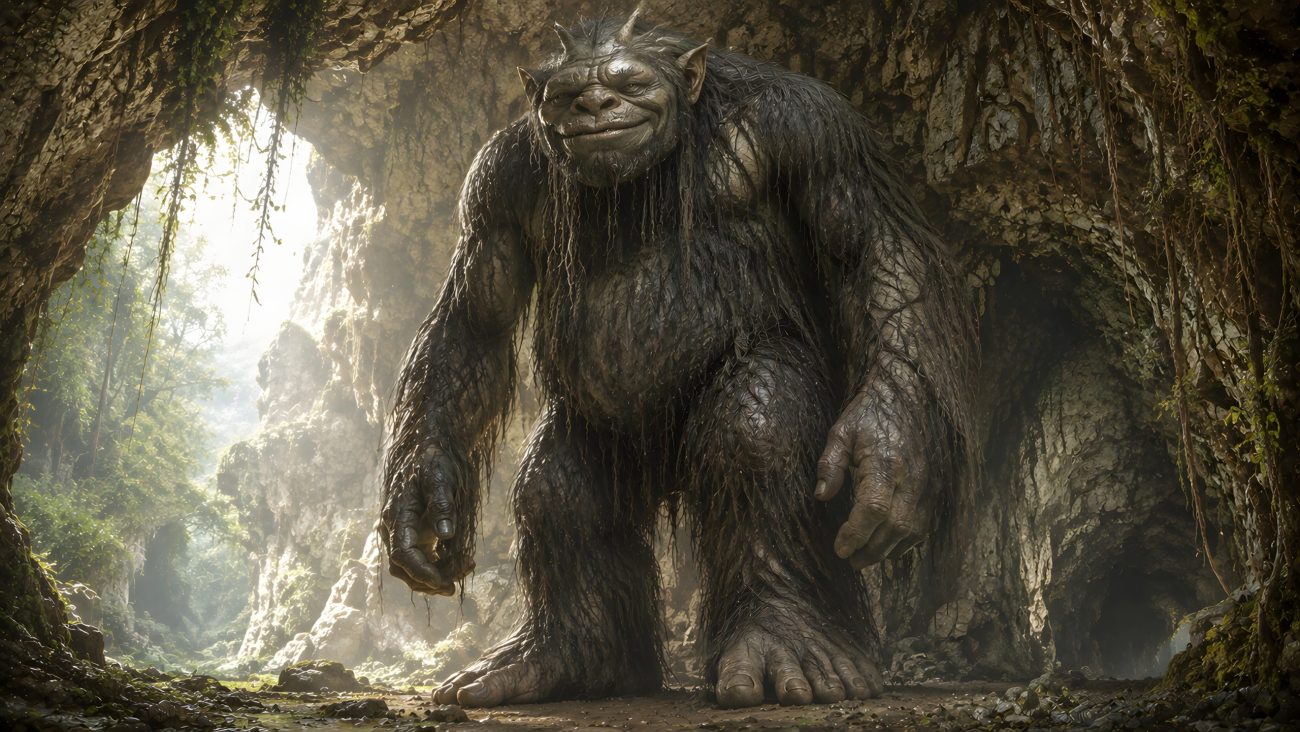
The Manangilaw are hairy humanoid giants said to live in the mountains and caves of the Bicol region in the southern part of Luzon. They are described as having large feet, bodies covered in black hair, deep voices, and fierce-looking faces. Despite their frightening appearance, they are generally shy and harmless creatures.

The Manangilaw live among the caves and forests of the mountains, where they gather vines and other plants. They are sometimes seen wrapping vines around their waists like traditional loincloths. They also catch fish and shrimp from rivers and streams and are said to eat other small animals.

During the 1980s, two Manangilaw, a mother and her child, were reportedly captured by soldiers near Mount Isarog. The creatures were chained to army wagons and taken away over a journey lasting fifteen days.

During their captivity, the Manangilaw were fed chickens and cow’s blood. The soldiers kept the two creatures under guard throughout the journey, but what happened to them afterward was never discovered.


Sources

“Манангилав (Manangilav).” New Bestiary (Bestiary.us). Accessed August 15, 2026. https://www.bestiary.us/manangilav/en


Vanatühi

Tradition / Region: Estonian Mythology
Alternative names: Vanapagan, Old Devil, Old Empty One
Category: Cave dweller, Giant


The Myth

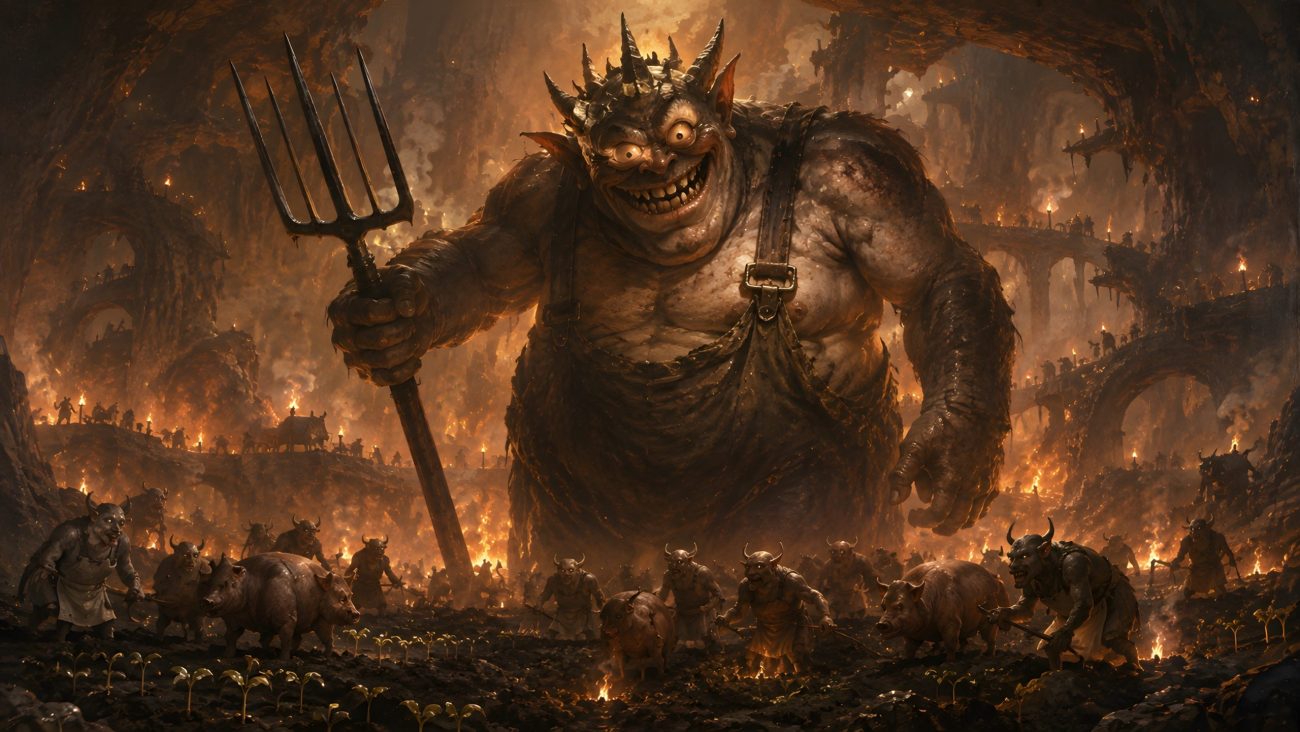
Vanatühi is a gigantic supernatural being who lives in the underworld and is described as a great farmer. He is more foolish than malicious and often becomes the victim of tricks played by humans and other supernatural beings. He is sometimes depicted wearing a hat made from fingernails that gives him the power to become invisible.

In Estonian folktales, Vanatühi appears as the great ogre who is repeatedly outwitted by his clever servant Kaval Ants, or Crafty Hans. Although Vanatühi possesses enormous strength and supernatural powers, his stupidity allows Kaval Ants to deceive him and escape from difficult situations.

In one tale, Vanatühi steals the musical instrument belonging to Pikne, the god of lightning. Pikne’s instrument is an object of supernatural power, and Vanatühi attempts to keep it for himself. The story follows the wider European tradition of tales in which an ogre steals the musical instrument of a thunder god.

Vanatühi is also the greatest enemy of the giant Suur Tõll of the island of Saaremaa. Their forces fight against one another in a great conflict, and during one of their battles Vanatühi’s forces manage to decapitate Tõll.

In some stories, Vanatühi possesses a remarkable hat made from fingernails. When he places the küüntest kübar upon his head, he becomes invisible, allowing the giant to move unseen despite his enormous size.


Sources

“Vanapagan.” Wikipedia: The Free Encyclopedia. Wikimedia Foundation. Accessed August 15, 2026. https://en.wikipedia.org/wiki/Vanapagan


Hantu Tinggi

Tradition / Region: Malaysian Mythology
Alternative names: Tall Ghost, Bajang Tinggi, Tinggi Puaka, Bapak Hantu, Bapak Jin
Category: Ghost, Giant


The Myth

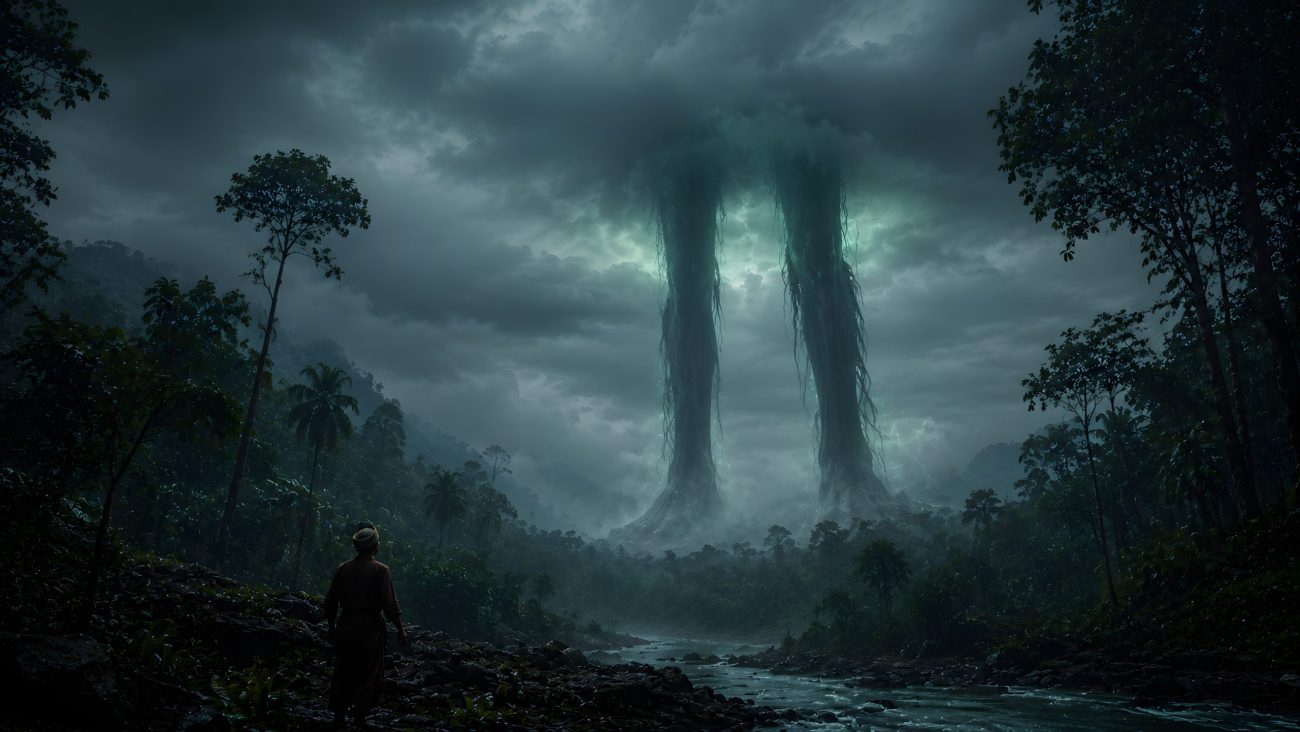
The Hantu Tinggi is a colossal supernatural being whose enormous body towers so high that its upper half disappears into the clouds. Resembling the fearsome Hantu Raya or the Indonesian Genderuwo, it is said to be thousands of times larger than any ordinary spirit. A single strand of hair from its leg is believed to be as thick as a muscular man’s arm.

According to Malaysian folklore, the Hantu Tinggi dwells in remote forests, mountains, and isolated wilderness. It is considered an immensely ancient being, existing since before the arrival of humanity and, in some traditions, even before the creation of Iblis. Because of its unimaginable size, a person may unknowingly walk between its legs or beneath its towering form without immediately realizing what they have encountered.

Looking directly at the Hantu Tinggi is said to bring terrible consequences. Those who meet its gaze may be struck blind, while others suffer broken necks, damaged spines, or become hopelessly lost after being drawn into the Ghaib Realm, the hidden supernatural world inhabited by spirits. For this reason, parents traditionally warned children to avoid lonely forests, hills, and mountains, especially after dark.

Protection against the Hantu Tinggi is believed to come through the recitation of verses from the Qur’an and sincere prayers. Those thought to have been cursed by the giant spirit often seek help from a bomoh, pawang, dukun, imam, or other Islamic spiritual healer to remove its influence.

Although often confused with the Hantu Galah, a bamboo-like forest spirit, the Hantu Tinggi is regarded as a completely different entity. Rather than resembling a living bamboo, it is an unimaginably massive giant whose presence alone inspires awe and terror.

Thus the Hantu Tinggi is remembered as one of Malaysia’s largest and most mysterious supernatural beings—a towering primordial spirit whose head vanishes into the heavens and whose mere gaze can bring ruin to those unfortunate enough to encounter it.


Sources

Wikipedia contributors. (n.d.). Hantu Tinggi. In Wikipedia. Retrieved June 27, 2026, from https://en.wikipedia.org/wiki/Hantu_Tinggi


Taotao Mo’na

Tradition / Region: Guam Mythology
Alternative names: Taotaomona, Taotaomo’na
Category: Ghost


The Myth

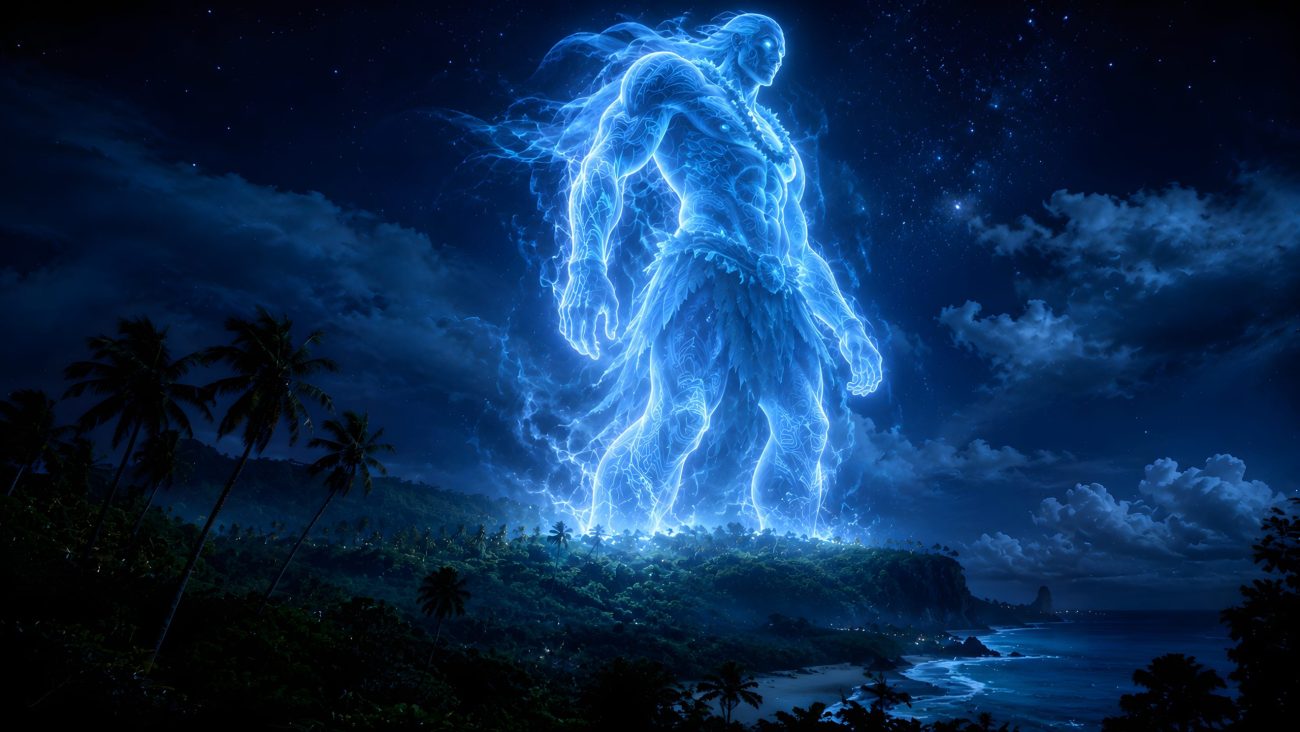
The Taotao Mo’na are the ancient spirits of the Mariana Islands, believed to be the souls of the people who lived before recorded history. Said to have once been giants, they dwell in the mountains, forests, and secluded places of the islands, protecting the land that belonged to their ancestors.

They are especially associated with banyan trees, whose twisting roots are believed to shift and change direction during the night. Hidden among these trees and wild places, the Taotao Mo’na are rarely seen, but their presence is still respected throughout the islands.

Though invisible most of the time, they can reveal themselves in many forms. Some are described as ordinary people, while others are said to be headless spirits. Certain Taotao Mo’na are kind and aid traditional healers known as suruhanas and suruhanus, but others are mischievous or dangerous when offended.

Anyone entering the jungle or taking wood, fruit, or other resources from the land is expected to ask permission from the Taotao Mo’na. Those who fail to show respect may suffer mysterious illnesses, bruises, pinches, or hear strange voices calling their names. Children are sometimes said to be briefly kidnapped, only to be returned unharmed later. Some spirits become attached to people they favor, causing unexplained sickness that only a suruhana can cure.

Pregnant women are believed to be especially vulnerable to the Taotao Mo’na. To avoid attracting their attention, they traditionally wear their husband’s clothing, use perfume to disguise their scent, and avoid going outside after dark.

Feared and respected in equal measure, the Taotao Mo’na are remembered as the ancient guardians of the Mariana Islands—spirits of the people who came before, still dwelling among the banyan trees and watching over the wild places of their homeland.


Sources

Wikipedia contributors. (n.d.). Taotao Mona. In Wikipedia. Retrieved June 20, 2026, from https://en.wikipedia.org/wiki/Taotao_Mona


Argus Panoptes

Tradition / Region: Greek Mythology
Alternative names: Argos Panoptes / The All-Seeing Giant
Category: Giant


The Myth

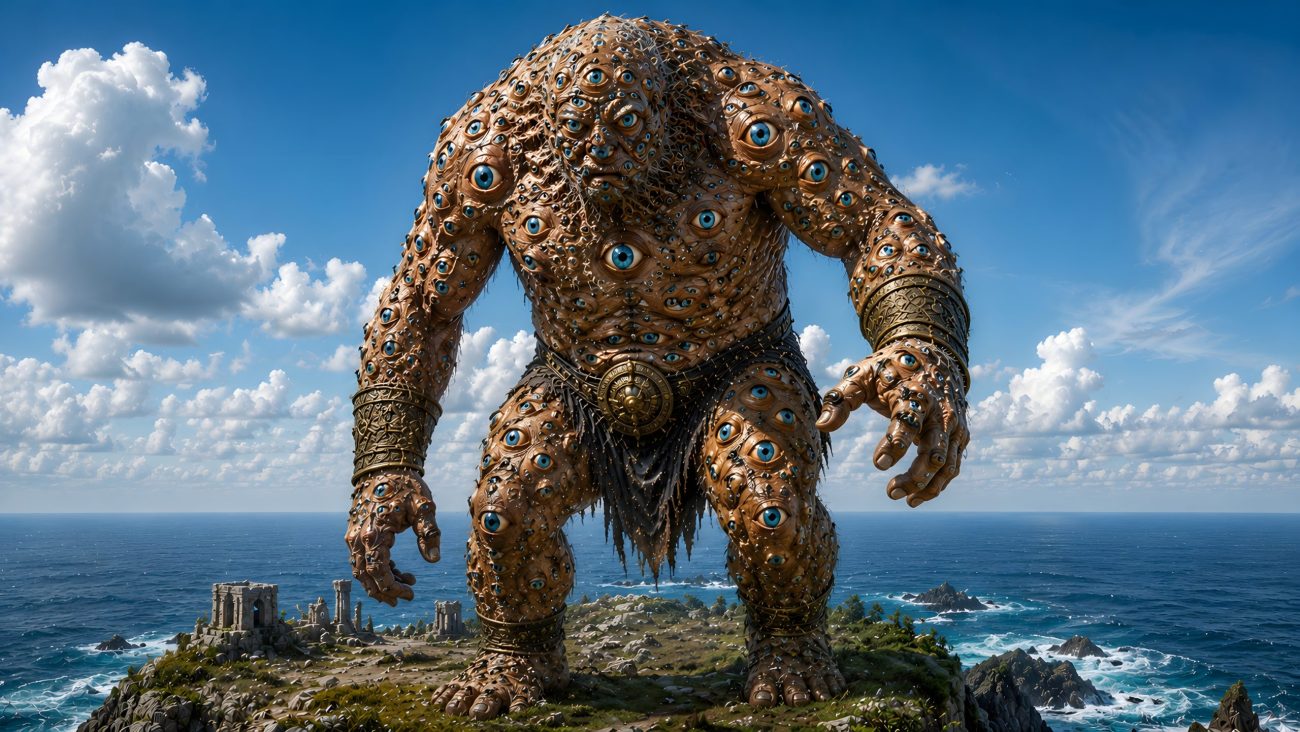
Argus Panoptes was a gigantic many-eyed being from Greek mythology, famous for his endless vigilance and supernatural sight. His name meant “All-Seeing,” and he served the goddess Hera as her perfect guardian and watchman.

Argus was often described as a massive primordial giant born from Gaia, the Earth itself. Ancient traditions gave him countless eyes spread across his body, sometimes a hundred in number. Even while he slept, only some of the eyes closed, while the others remained awake and alert. Because of this, nothing could escape his gaze.

He was immensely strong as well as watchful. One legend says he killed the monstrous serpent-woman Echidna while she slept in her cave. Another says he slew a savage bull that devastated Arcadia and afterward wore its hide as armor.

Argus became most famous for guarding Io, a priestess loved by Zeus. To hide Io from Hera’s jealousy, Zeus transformed her into a white heifer, but Hera saw through the deception and ordered Argus to watch her constantly. The giant chained Io near a sacred olive tree and guarded her day and night with his countless eyes.

To rescue Io, Zeus sent Hermes. Disguised as a shepherd, Hermes approached Argus and slowly lulled him to sleep with stories, music, and magical charms until every eye finally closed. Once the giant slept completely, Hermes killed him, becoming known afterward as Argeiphontes — the Slayer of Argus.

Hera mourned her faithful servant and honored him by placing his many eyes upon the tail of the peacock, where they remained forever as shining watchful patterns. In some versions of the myth, Argus himself was transformed into the first peacock.

Argus Panoptes remained one of the great watchful beings of Greek mythology — an immortal symbol of vigilance, guardianship, and the unblinking gaze that never truly sleeps.


Sources

Wikipedia contributors. (n.d.). Argus Panoptes. In Wikipedia. Retrieved May 18, 2026, from https://en.wikipedia.org/wiki/Argus_Panoptes


Gyrgalica

Tradition / Region: Slovakia Mythology, Polish Mythology
Alternative names: Grgolica, Gorgolica
Category: Giant


The Myth

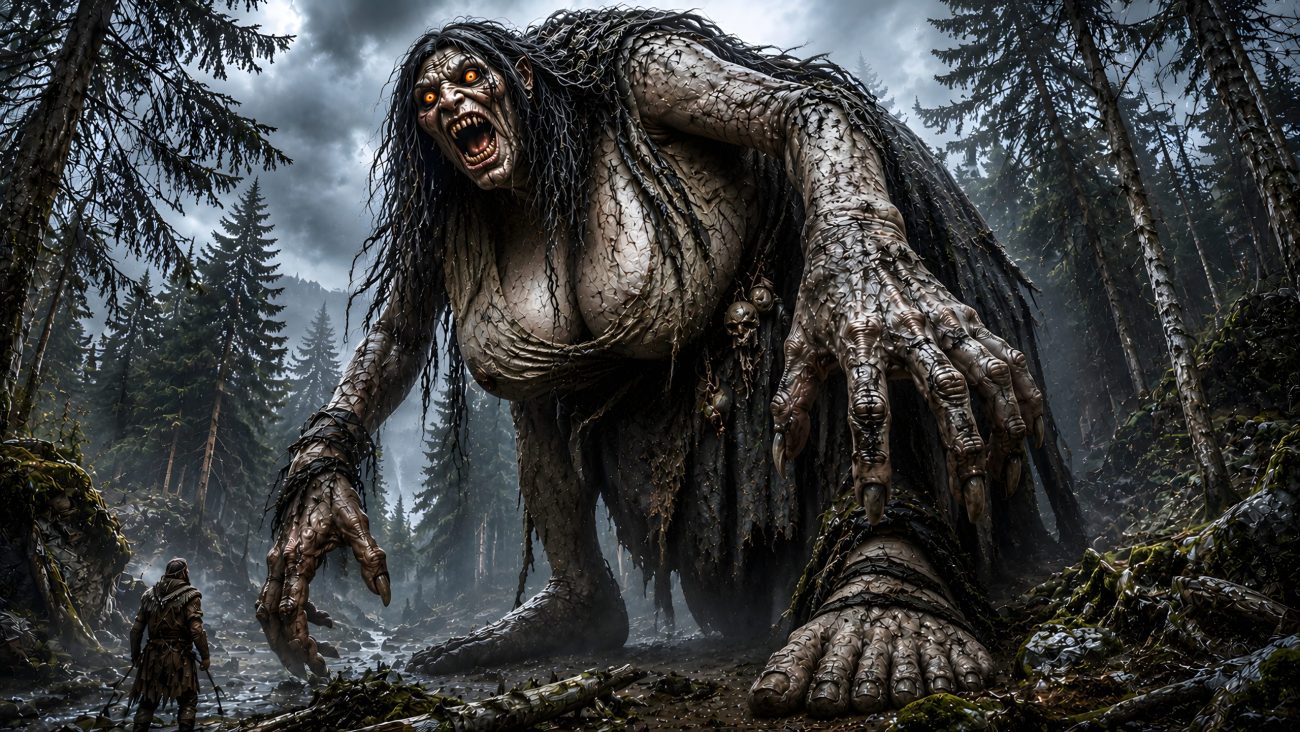
The Gyrgalica is a monstrous giant woman said to wander the forests of Slovakia and Poland. She is described as enormous and terrifying, with black feet, huge shovel-like hands, wild tangled hair, and eyes as large as saucers. Her breasts are so long and heavy that she throws them over her shoulders or across her back while moving through the woods.

Gyrgalicas hide deep in forests and prey upon wandering men. If one catches a victim, she kills him in a horrifying way: she forces one of her massive breasts into his mouth and suffocates him. Because of this, they became feared as deadly forest spirits associated with isolation, wilderness, and sudden disappearances.

In the Banská Bystrica region of Slovakia, people believed the creature could rarely be seen directly. Instead, travelers heard terrible howls and cries echoing through the forest at night. These sounds were believed to announce the presence of a nearby Gyrgalica hiding among the trees.

In some Slovak traditions, the Gyrgalica overlaps with the figure of the Runa and resembles other female wilderness spirits of the Carpathian region such as the Boginka and Mamuna. Like them, she is linked to remote forests, danger, and supernatural female beings that attack humans.

The name Gyrgalica or Gorgolica is believed to come from old Slavic words connected with shrieking, wailing, screaming, or harsh bird cries, reflecting the terrifying sounds said to echo through the woods when the giantess was near.


Sources

Bestiary.us. (n.d.). Grgalica. Retrieved May 18, 2026, from https://www.bestiary.us/grgalica/


Sugur-Mugur

Tradition / Region: Moldova Mythology
Alternative names: Sugur Mugur
Category: Giant, Hero


The Myth

Sugur-Mugur was a legendary supernatural warrior from Moldovan folklore, feared for his immense strength and remembered as one of the greatest heroes imprisoned beneath the earth. Even after years of captivity, blacksmiths and travelers still spoke his name with awe.

He had once been so powerful that only horses wearing enormous magical horseshoes could carry him. Smiths said that no man besides Sugur-Mugur had ever ridden with iron, steel, or diamond horseshoes weighing twenty-five pounds each.

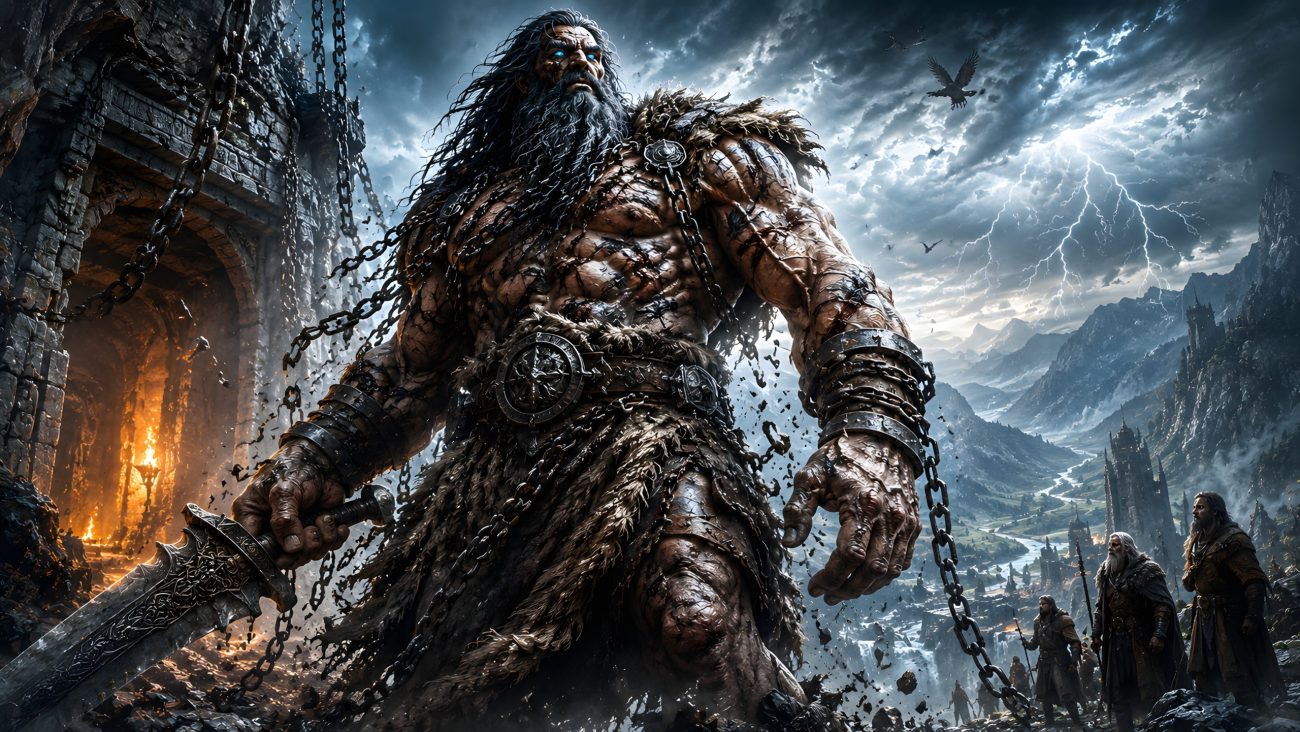
For twenty years the Black King kept him imprisoned deep underground in a dungeon sealed with gigantic chains. He survived there on only a crust of bread and a glass of water each day until a young hero named Peter finally freed him. When Sugur-Mugur emerged from the prison, he looked like a living skeleton, weak from starvation and age.

Yet his strength returned rapidly. After days of eating and drinking from magical supplies, Sugur-Mugur released terrifying cries that shook mountains, darkened rivers, toppled forests, and made the earth itself tremble. By the third great shout, hills collapsed and the world seemed to tilt beneath him.

Sugur-Mugur rode a monstrous black horse named Black-Devil, fed on burning coals until it became powerful enough to fly over impossible landscapes. Together with Peter, he crossed deadly stone and flint mountains that destroyed ordinary horseshoes, forcing blacksmiths to forge gigantic shoes of iron, steel, and finally diamond.

Despite his fearsome power, Sugur-Mugur became Peter’s loyal protector. He guided him to the radiant maiden Ilyana Kosinzyana, helped him infiltrate her magical castle, and defended the young couple during their long journey home. Each night while they slept, Sugur-Mugur remained awake watching for danger.

Three prophetic birds warned him repeatedly about traps prepared by the Forest Witch: poisoned wine, cursed flowers hiding wolf fangs and bear teeth, and finally an attack by twelve dragons. Sugur-Mugur secretly prevented every disaster, but each time he revealed part of the prophecy he was slowly transformed into stone.

At last he fought the Forest Witch and her dragons alone during a storm of thunder and fire. His sword shattered while battling the witch, yet he killed her with the broken hilt after slaying all twelve dragons. Only afterward did he reveal the final prophecy and become completely petrified.

Peter and Ilyana later restored Sugur-Mugur to life using the blood of a magical red goat that had once given supernatural strength. When he awoke from stone, Sugur-Mugur simply said:

“What a long sleep I have had.”

He remained remembered as a giant protector and wandering hero whose strength could shake the earth itself, yet who used that power to defend others from witches, dragons, and death.


Sources

Botezatu, G. (1986). Moldavian folk-tales (2nd rev. & enl. ed.). Kishinev: Literatura Artistikă.