Almajonas

Tradition / Region: Portuguese Mythology
Alternative names: Armajonas, Almazonas
Category: Giant


The Myth

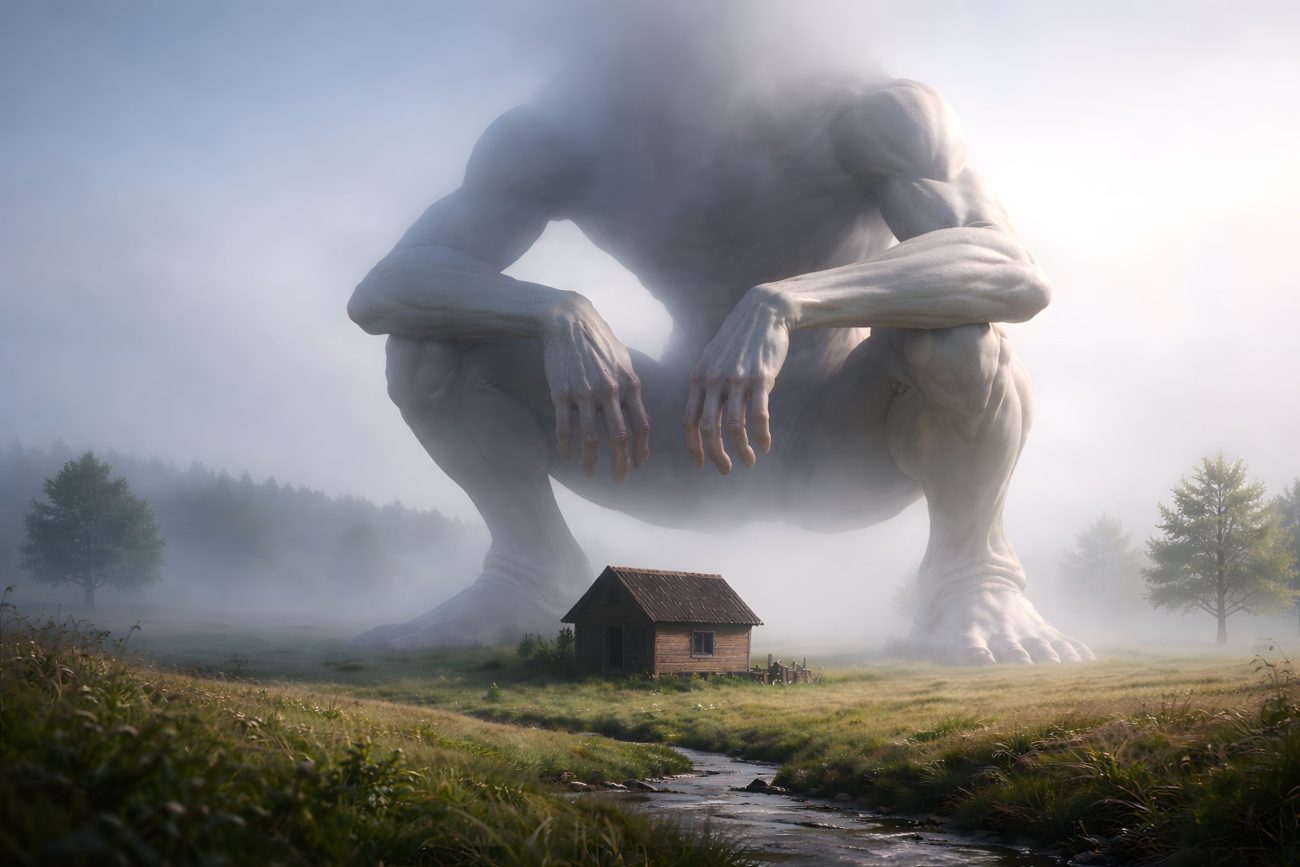
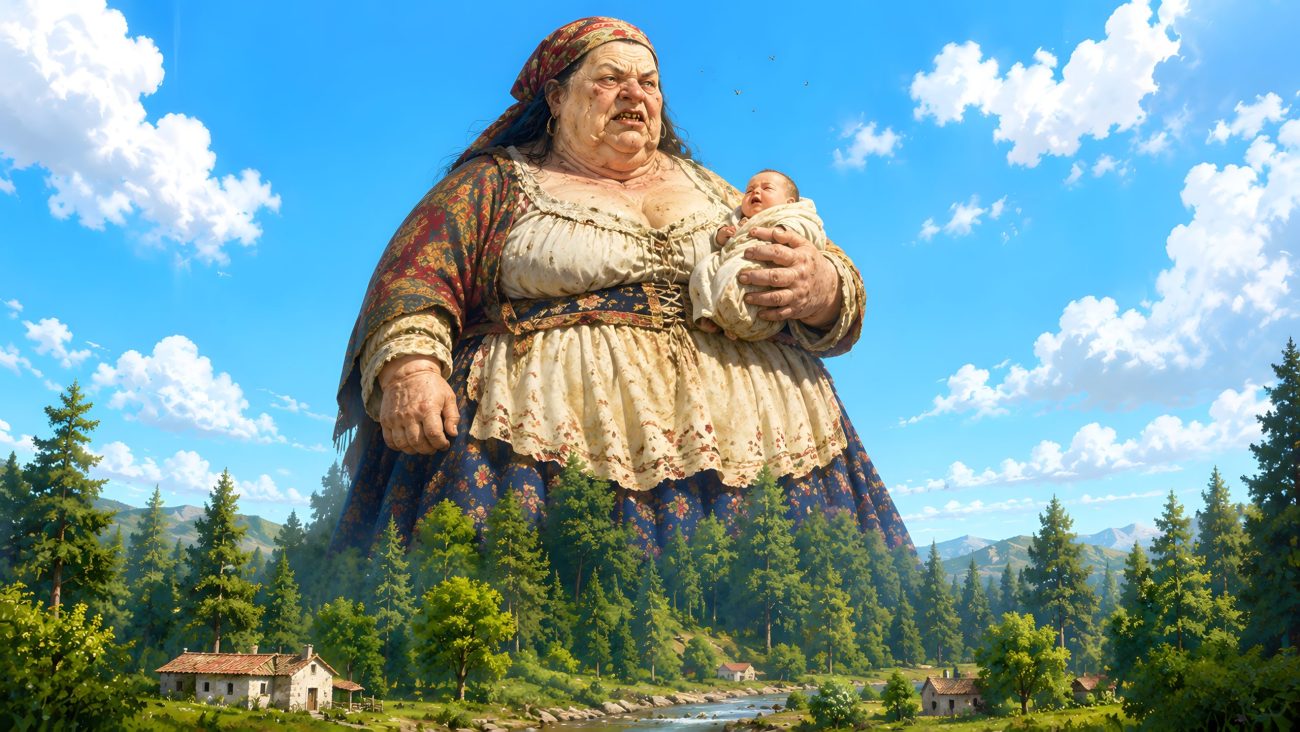
The Almajonas are enormous supernatural women from Portuguese folklore believed to be wandering souls of the dead. They appear as gigantic human-like females who roam through remote places carrying children on their backs. According to popular belief, they are almas penadas — restless spirits unable to find peace.

The Almajonas are described as unnaturally tall and powerful, towering over ordinary people. Some traditions portray them almost like female giants wandering silently across hills, forests, and lonely roads. Their appearance was both frightening and strange because despite their monstrous height they still resembled ordinary women.

Folklore says they carried babies or children strapped to their backs while traveling. Some accounts describe them with extremely long breasts which they pulled over their shoulders in order to nurse the children they carried.

In older Portuguese traditions, the word “amazon” was sometimes used as another name for “wild woman,” and the Almajonas seem connected to that idea. Their husbands were sometimes called Alamões, who were also described as very tall supernatural beings.

The Almajonas were not always portrayed as openly violent creatures, but they were feared because they belonged to the world of wandering dead souls and appeared in isolated places far from villages and settlements.


Sources

The Narrator. (2020). Corrilários. In portuguesecreaturesandlegendsgalore.wordpress.com, from https://portuguesecreaturesandlegendsgalore.wordpress.com/2020/01/17/corrilarios/
Ebibi

Tradition / Region: Gabon Mythology
Alternative names: Ebibi Ogres
Category: Giant


The Myth

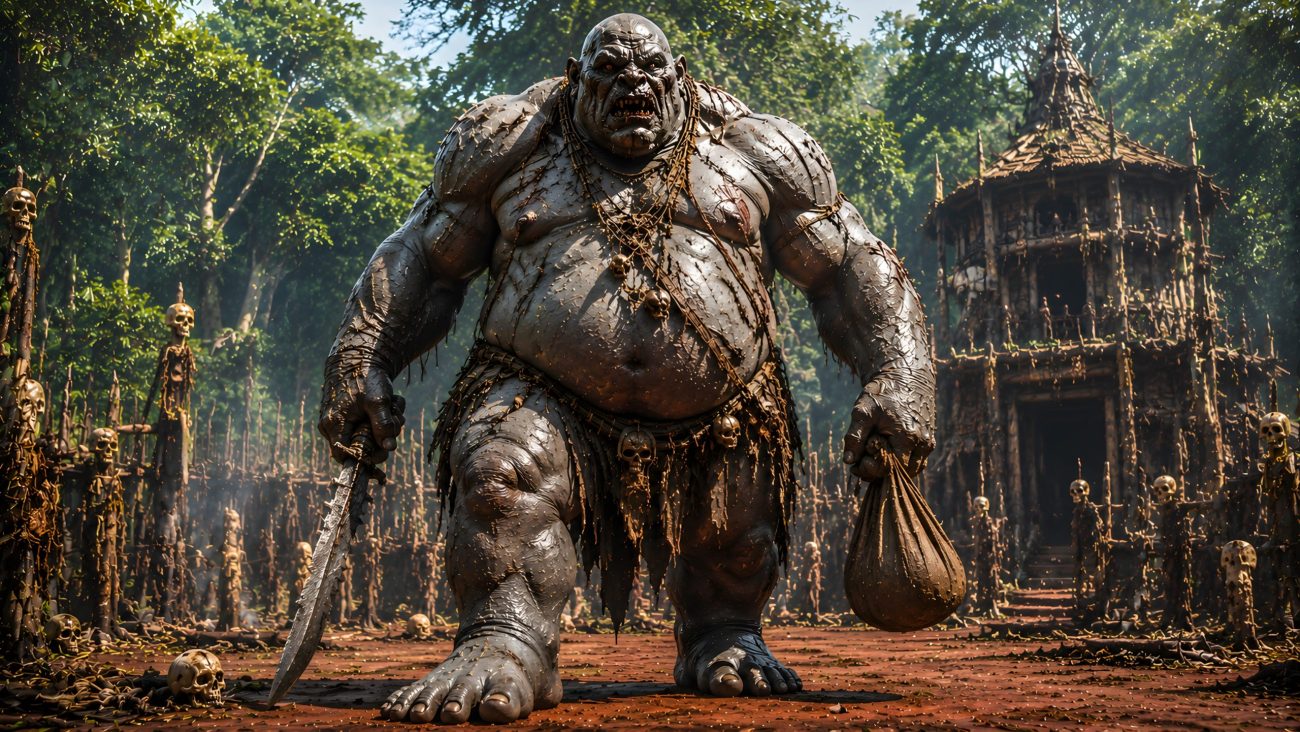
The Ebibi were monstrous ogres in Fang mythology feared even more than ordinary man-eating creatures. They were described as powerful supernatural beings who ruled through terror, magic, and cannibalism.

According to the legends, the Ebibi lived together in a distant village where they enslaved surrounding tribes. In the center of their settlement stood a massive house filled with prisoners — men, women, and children captured from many different peoples. Every day the Ebibi devoured human victims in enormous numbers.

Unlike ordinary monsters, the Ebibi used dark magical powers and fetishes. One of their most feared weapons was the ozolikwé powder, a supernatural substance capable of forcing people into an unnatural sleep so deep that they could not be awakened.

The Ebibi entered the story after hearing about the legendary strength of the three brothers Etarane, Mendore, and Bisonge, hunters famous for slaying giant beasts and monsters. Fearing the brothers’ growing power, the Ebibi decided to destroy them.

One of the ogres visited the brothers’ home pretending to seek hospitality. While inside, he secretly threw enchanted ozolikwé powder into the fire. A strange smoke filled the house, and all three brothers immediately fell into a magical sleep.

Their mother Ada desperately tried to wake them, shaking them, burning their skin with fire, and calling their names, but nothing could break the spell.

The Ebibi then attacked the sleeping brothers. Etarane and Mendore were killed while their house was burned to the ground. Only the youngest brother, Bisonge, survived because Ada carried him away into the forest before the ogres arrived.

When Bisonge awoke and learned what had happened, he swore revenge.

Armed with his great knife and magical hunting net, Bisonge traveled to the village of the Ebibi. There he discovered countless prisoners locked inside the ogres’ great house waiting to be eaten. He secretly freed them, then trapped the returning Ebibi inside their own home using his enchanted net, whose threads were said to be as hard as iron.

The trapped ogres tried to escape but failed. One by one, Bisonge dragged them out, beheaded them, and cut open their stomachs. According to the legend, the people the Ebibi had recently devoured escaped alive from inside the monsters’ bodies and fled back into the forest.

After defeating the Ebibi, Bisonge became a great chief and protector of the people. His victory symbolized the triumph of wisdom, spiritual strength, and true maturity over monstrous violence, greed, and chaos.

In Fang mythology, the Ebibi often represent destructive supernatural forces tied to death, domination, fear, and spiritual corruption.


Sources

Mvé Ondo, B. (2011). Wisdom and initiation in Gabon: A philosophical analysis of Fang tales, myths, and legends (J. F. Barnes, Trans.). Lanham, MD: Lexington Books.


Giant Fisherman of Lake Chad

Tradition / Region: Chad Mythology
Alternative names: The Giant Boatman, The Sao Fisherman
Category: Giant


The Myth

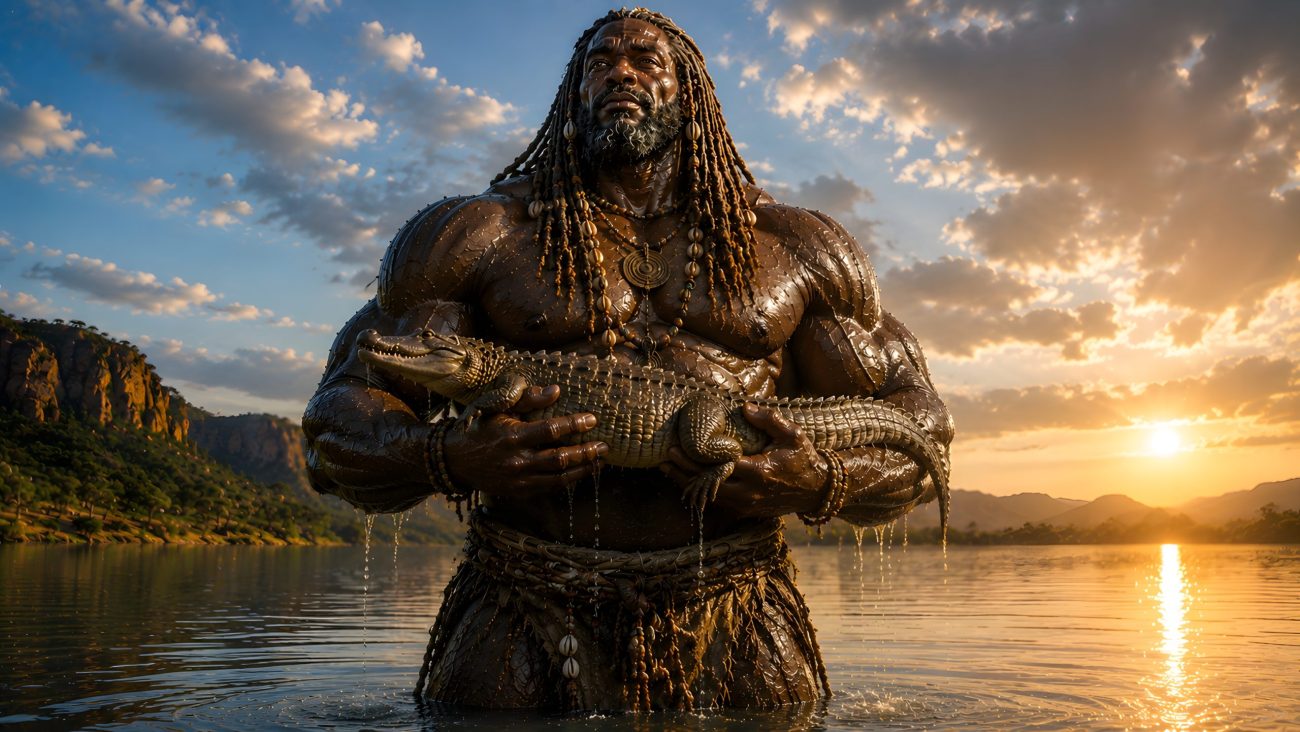
In ancient Chadian mythology, the Giant Fisherman is a colossal supernatural being who appears after a divine cataclysm destroys the corrupt world. He is described as an enormous giant moving across the waters of a vast sacred lake in a gigantic pirogue, fishing not with nets or spears, but with his bare hands.

His size is beyond ordinary human comprehension. He effortlessly lifts enormous fish from the water and even seizes hippopotamuses by the ears as though they were harmless toys before tossing them gently back into the lake. Despite his immense strength, the giant is not violent or monstrous. He radiates calm authority, divine generosity, and almost sacred serenity.

The myth begins after God sends fire from the heavens to punish a world consumed by evil and violence. Entire lands collapse into abysses while only the tribe of Alifa survives under divine protection. Guided by faith, the tribe wanders through destruction while singing praises to the Eternal until they finally arrive at the shores of a mysterious great lake glowing with floating balls of fire.

There, at dawn, they witness the Giant Fisherman upon the waters.

Without speaking, the giant notices the starving refugees praying on the shore. He catches an enormous fish and throws it effortlessly onto the bank for them to eat. Later he returns with huge jars of honey, then fresh milk, feeding the exhausted survivors with almost godlike abundance.

Eventually the giant invites Alifa himself into the enormous pirogue.

Using only his gigantic hands as oars, he rows across the immense lake with supernatural speed until they reach a hidden land inhabited entirely by giants.

This strange paradise is described as a utopian world untouched by evil. Giant children as tall as palm trees play peacefully beside lions, rhinoceroses, panthers, and glowing-eyed serpents. Nature and civilization exist in perfect harmony. The giants use their strength and intelligence not for conquest, but for creation — redirecting rivers, illuminating cities, clearing forests, and cultivating fertile lands in honor of God.

The giant fisherman acts as both guardian and guide into this sacred civilization.

The giants welcome Alifa and his tribe, eventually allowing them to settle among them permanently. Over time the two peoples unite through marriage. From the union between a giant prince and a woman of Alifa’s people is born Sao, legendary ancestor of the Kotoko peoples.

In the story, the Giant Fisherman represents more than a mere giant. He embodies divine hospitality, primordial harmony, and the bridge between humanity and a lost sacred age. Unlike destructive giants found in many myths, the giants of Lake Chad symbolize wisdom, abundance, peace, and coexistence between mankind, nature, and the divine.


Sources

Seid, J. B. (2007). Told by starlight in Chad (K. H. Hoenig, Trans.). Trenton, NJ: Africa World Press.


Aruan of Udo

Tradition / Region: Benin Mythology
Also Known As: Arhuanran, Aruanran
Category: Giant, Hero


The Myth

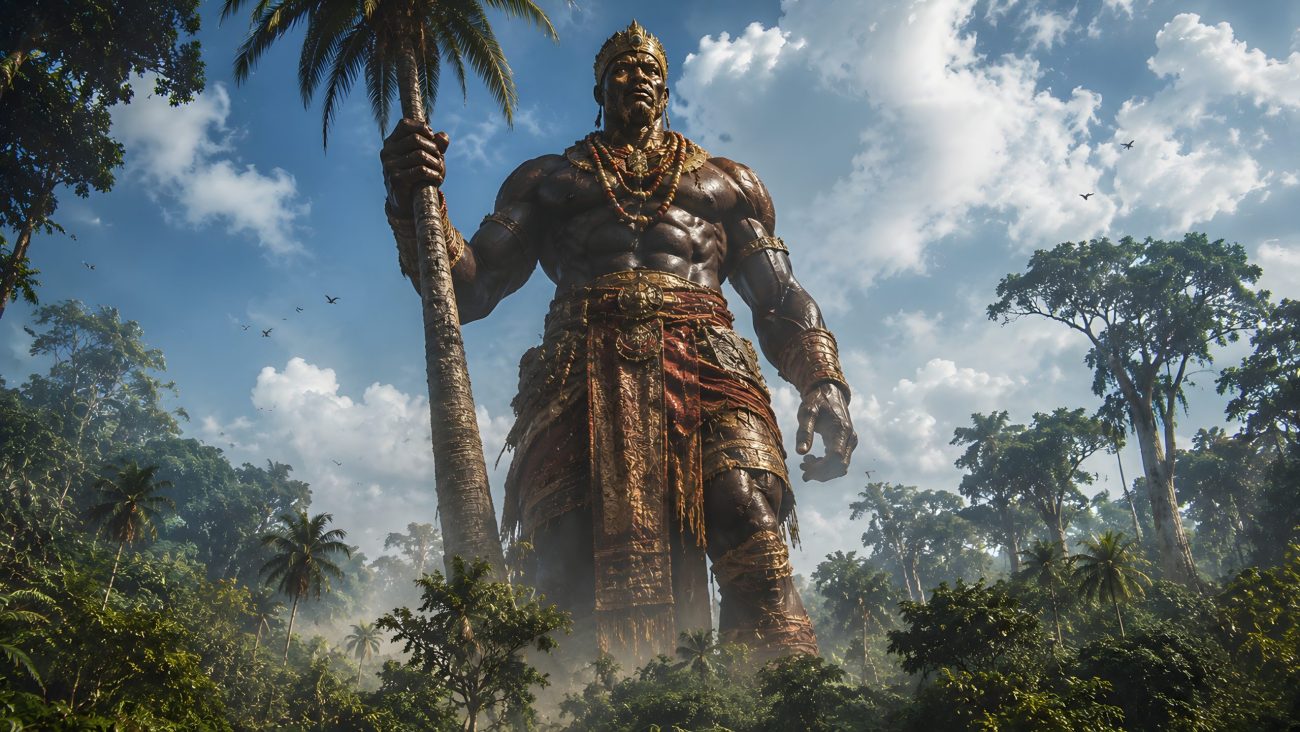
Aruan of Udo is a legendary prince from the ancient Kingdom of Benin, remembered in oral tradition as a giant of enormous strength and size. According to the stories, he was so powerful that he could sweep the entire city of Benin using palm trees.

Born in the 16th century to Oba Ozolua and Queen Ohonmi, the prince was originally named Idubor. Tradition says that he and his younger brother were born on the same day. Although Idubor was born first, he did not cry at birth. His younger brother Osawe, born later to Queen Idia, cried immediately after being born. Because of this, Osawe was considered the rightful heir and later became the famous Oba Esigie.

Having lost the throne despite being the elder brother, Idubor was compensated by his father and granted rule over the town of Udo near Benin City. From that point onward he became known as Aruan of Udo.

Benin oral traditions remember Aruan as a gigantic and powerful figure connected to strength, nobility, and the royal history of the Benin Kingdom.


Sources

Wikipedia contributors. (n.d.). Aruan of Udo. In Wikipedia. Retrieved May 10, 2026, from https://en.wikipedia.org/wiki/Aruan_of_Udo


Cyclops

Tradition / Region: Greek Mythology, Italian Mythology
Alternate Names: –
Category: Giant


The Myth

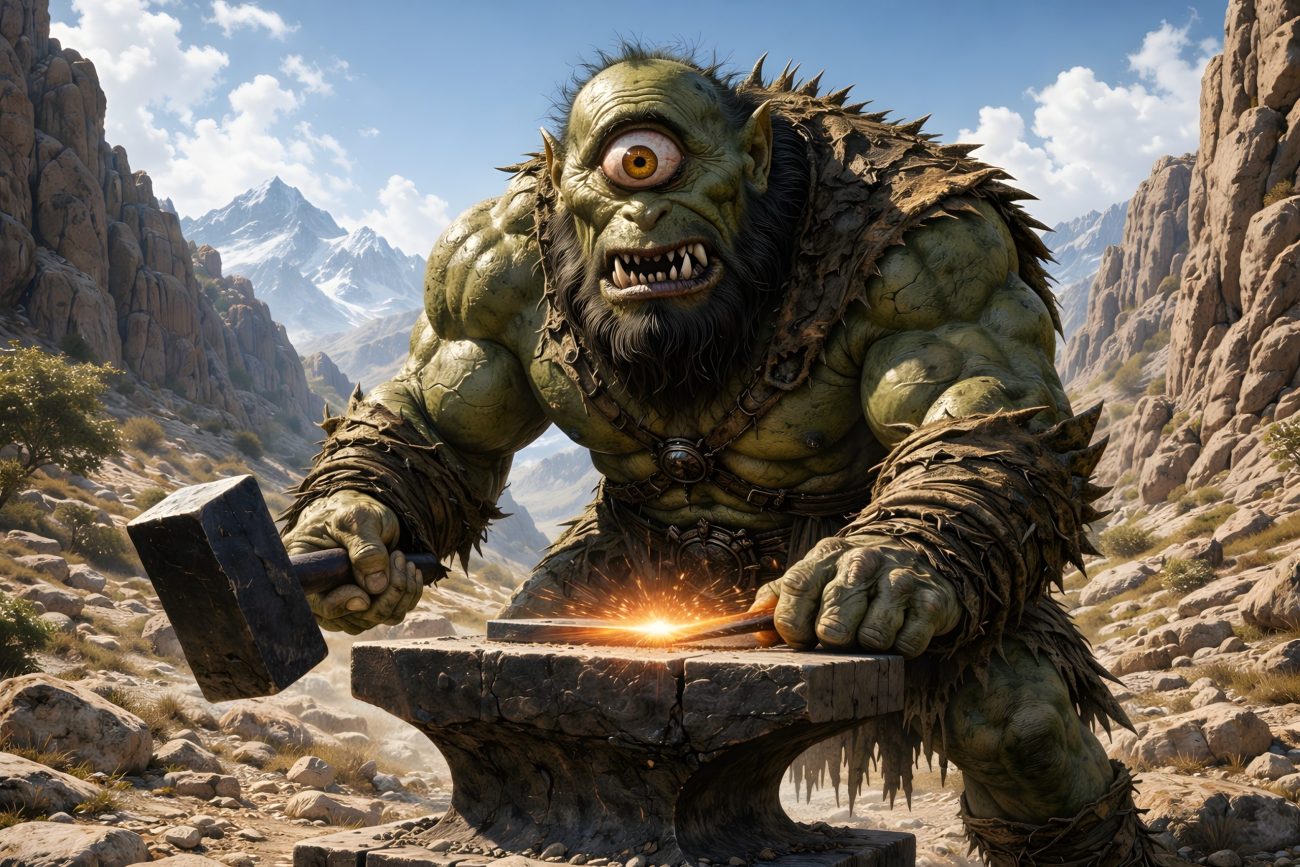
The Cyclopes are giant one-eyed beings from Greek mythology, later adopted into Roman mythology. Ancient traditions describe several different kinds of Cyclopes, ranging from divine blacksmiths to savage man-eating giants.

In Hesiod’s Theogony, the first Cyclopes were three powerful brothers named Brontes, Steropes, and Arges. They were the sons of Uranus, the sky, and Gaia, the earth. Each possessed a single eye in the center of the forehead and enormous strength. Their names were associated with thunder and lightning, reflecting their connection to storms and divine weapons.

Their father Uranus feared his monstrous children and imprisoned them deep within Tartarus. Later, after Zeus rebelled against the Titans, he freed the Cyclopes from their prison. In gratitude, the Cyclopes forged the thunderbolt of Zeus, the trident of Poseidon, and the helm of invisibility used by Hades. With these weapons, the Olympian gods defeated the Titans and established their rule over the cosmos.

Later myths describe the Cyclopes as master smiths working beside Hephaestus, the god of fire and metalworking. Ancient poets placed their forge beneath volcanic mountains such as Mount Etna in Sicily and the Aeolian Islands. There the Cyclopes forged divine weapons and armor amid smoke, fire, and the roar of the earth. The sound of thunder and volcanic eruptions was sometimes imagined as the labor of the Cyclopes beneath the mountains.

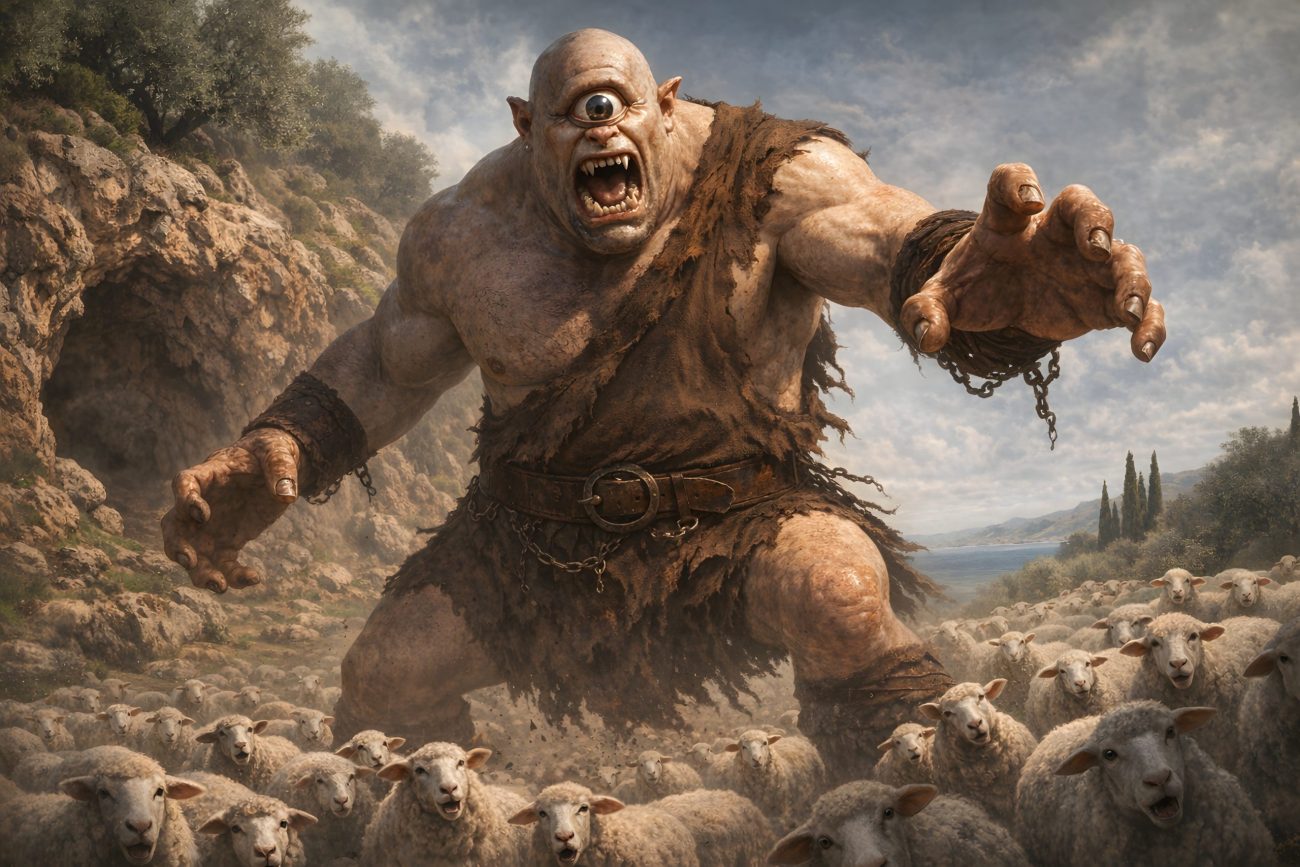
Another famous tradition appears in Homer’s Odyssey. These Cyclopes were no longer divine craftsmen but wild and uncivilized giants who lived apart from society. They dwelled in caves, kept flocks of sheep, and ignored laws, agriculture, and hospitality. The most famous among them was Polyphemus, the giant son of Poseidon.

During his journey home from the Trojan War, Odysseus and his companions entered the cave of Polyphemus searching for food and shelter. The Cyclops returned, sealed the entrance with a massive stone, and began devouring the trapped sailors. Odysseus devised a plan to escape. After offering the giant strong wine, he told Polyphemus that his name was “Nobody.” Once the Cyclops fell asleep, Odysseus and his men sharpened a wooden stake and drove it into his single eye, blinding him.

When the other Cyclopes heard Polyphemus screaming and asked who had harmed him, he answered that “Nobody” was attacking him, causing them to leave without helping. The next morning, Odysseus and his surviving men escaped by hiding beneath the bellies of the giant’s sheep as they left the cave to graze. As Odysseus sailed away, he revealed his true name in pride, provoking the enraged Polyphemus to call upon Poseidon to curse the hero’s voyage home.

A third tradition claimed that Cyclopes built the massive stone walls of ancient cities such as Mycenae, Tiryns, and Argos. The stones were so enormous that later Greeks believed only giants with supernatural strength could have moved them. These fortifications became known as Cyclopean walls.

Over time, the Cyclopes became some of the most famous monsters of Greek mythology. Different stories portrayed them as divine craftsmen, primordial giants, savage shepherds, or legendary builders, but nearly all traditions remembered them as enormous one-eyed beings connected with overwhelming strength, thunder, fire, and destruction.


Sources

Wikipedia contributors. (n.d.). Cyclopes. In Wikipedia, from https://en.wikipedia.org/wiki/Cyclopes


Iku-Turso

Tradition / Region: Finnish Mythology
Alternate Names: Iku-Tursas, Iki-Tursas, Meritursas, Tursas, Turisas
Category: Sea dweller, Giant


The Myth

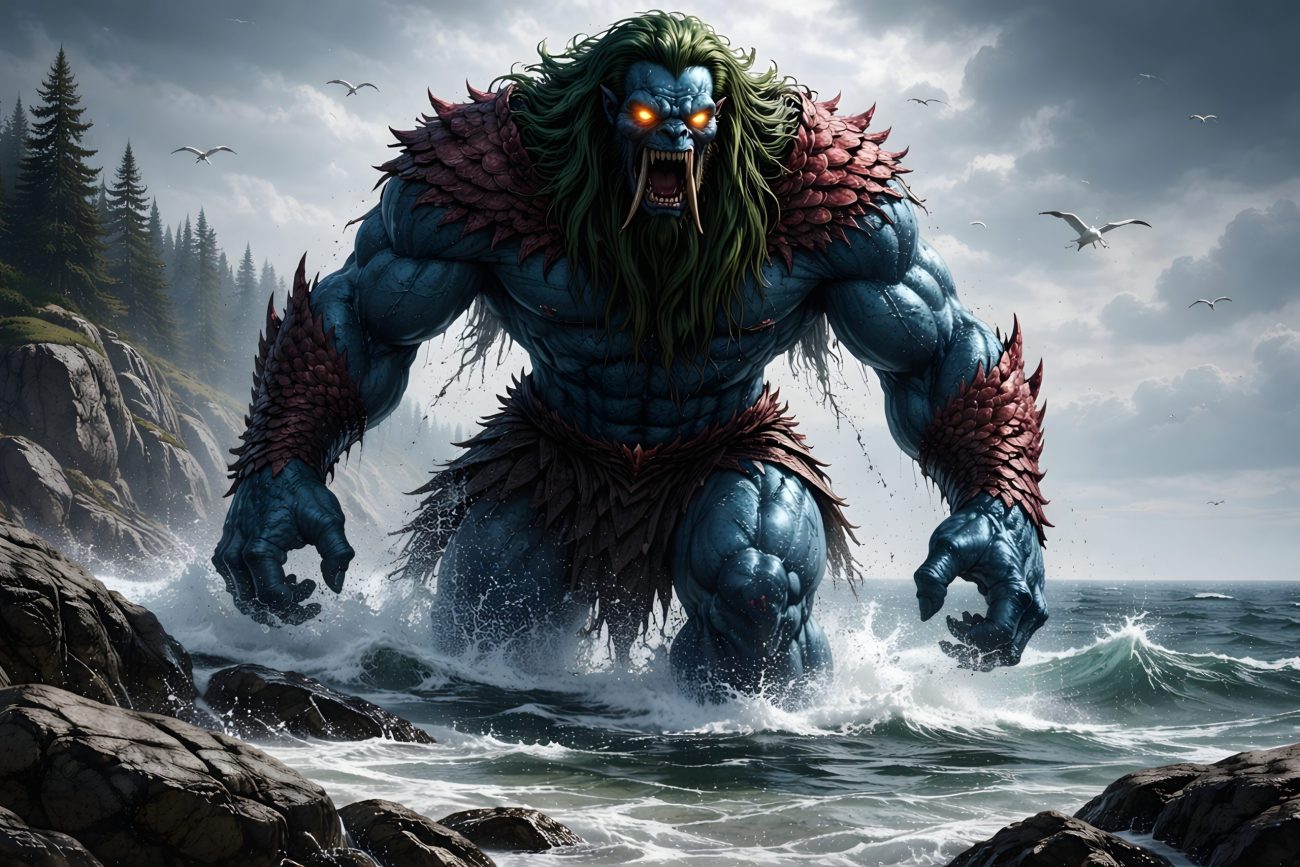
Iku-Turso is a fearsome and ancient being of Finnish mythology, most often portrayed as a monstrous creature of the sea. He is described as a malevolent force rising from the depths, associated with destruction, chaos, and primal power.

In mythic tradition, Iku-Turso is not always a single, clearly defined entity. Some stories treat him as one great being, while others suggest multiple related giants or spirits sharing the name. Despite this ambiguity, he is consistently tied to immense strength and dangerous supernatural influence.

In epic tradition, especially in the Kalevala, Iku-Turso emerges from the ocean as a destructive force. At one point, he burns gathered hay, and from the ashes grows a colossal oak tree. This tree becomes so vast that it blocks out the sun and the moon, plunging the world into darkness until it is finally cut down.

He is also depicted as a threat to heroes. When summoned from the sea by Louhi, he rises with the intent to destroy the heroes of Kalevala and reclaim a powerful magical artifact. However, he is ultimately confronted by Väinämöinen, who overpowers him and forces him, through magical command, to swear never to rise from the sea again.

In other traditions, a sea form known as “Meri-Tursas” is connected to the origins of disease, linking the being not only to physical destruction but also to sickness and suffering in the world.

Iku-Turso represents
an ancient, chaotic power of the deep — a giant whose emergence brings fire, darkness, and ruin, and whose defeat restores balance to the world.


Sources

Wikipedia contributors. (n.d.). Iku-Turso (creature). In Wikipedia, from https://en.wikipedia.org/wiki/Iku-Turso_(creature)


Frischhof Giants

Tradition / Region: Czech Mythology
Alternate Names: Giants of the Frischhof
Category: Giant


The Myth

The Frischhof Giants belong to an ancient time when giants still roamed the land. They are portrayed as powerful and destructive beings who lived before the present human order was established.

One day, while the household of a farmer named Frisch was away at church, a group of giants descended upon his farm. They tore down fences and demanded his wealth. When he refused, some of the giants restrained him while others looted his home, breaking into chests and stealing everything they could.

As they prepared to leave, the farmer turned to a mysterious object kept in his house—a black book filled with powerful knowledge. Opening it, he recited a spell that instantly froze the giants in place, leaving them unable to move.

Trapped where they stood, the giants remained there forever. Over time, their bodies became part of the landscape itself, transforming into the mountains that surround the region.

The black book that enabled this act was later lost in a mundane but ironic way—mistaken for food and destroyed—ending the possibility of such power being used again.

The Frischhof Giants represent a mythic explanation for the landscape:
mountains as the remains of ancient beings, defeated not by strength, but by hidden knowledge and supernatural means.


Sources

sagen.at contributors. (n.d.). Das Schwarzbuch. In sagen.at, from https://www.sagen.at/texte/sagen/tschechien/watzlik/schwarzbuch.html


Reus te Hammen

Tradition / Region: Belgian Mythology
Alternate Names: Giant of Hamme
Category: Giant


The Myth

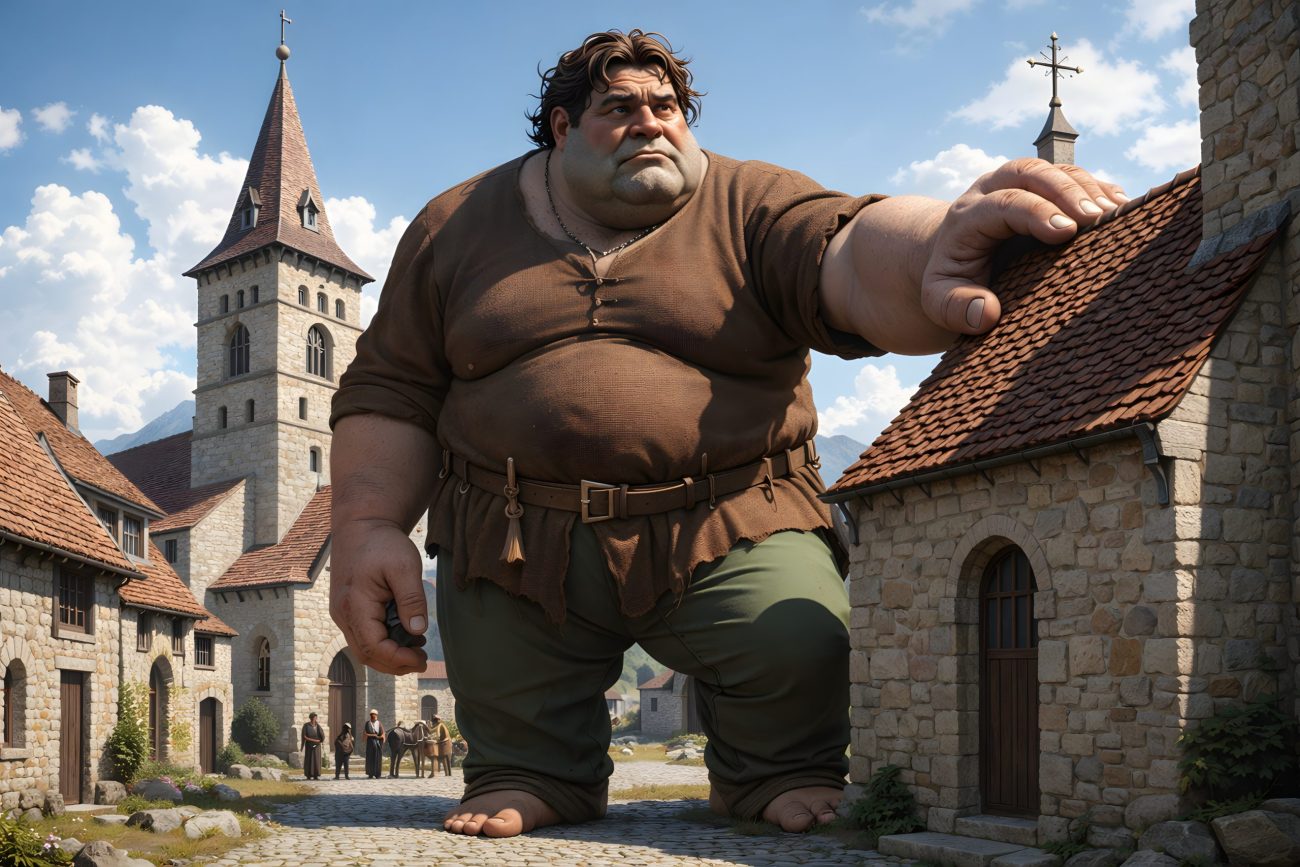
The Reus te Hammen refers to a legendary giant or giants associated with the town of Hamme in Flanders. The most tangible element of the legend is a massive bone kept in the local church, believed by the people to be the thigh bone of a giant.

According to tradition, this enormous bone was pulled from the river Durme long ago and preserved in the church, where it came to be treated almost like a sacred relic. Its unusual size reinforced the belief that giants once lived in the region.

Older accounts speak of two giants who lived on opposite sides of the river. They argued over who was taller and went to prove their size by reaching the roof of a church under construction, each able to place stones without the need for scaffolding.

In other versions, there were three giants who built a church in Hamme themselves, their height allowing them to work directly at roof level. One of them was said to cross the river simply by walking through it, unaffected by its depth.

Local traditions also preserve traces of their presence in the landscape. Certain paths and features, such as “giants’ roads,” were believed to mark where they once moved, and these places were treated with caution and respect.

The giant of Hamme was not just a distant myth but a figure tied to physical evidence, local geography, and enduring popular belief, linking the land, the people, and the memory of beings of immense size who once walked there.


Sources

de Cock, A. (1921). Vlaamsche sagen uit den volksmond. In Amsterdam: Maatschappij voor goede en goedkoope lectuur p. 154.


Torx

Tradition / Region: Armenian Mythology
Alternate Names: Torch
Category: Giant


The Myth

Torch is a powerful giant-like being in Armenian mythology, associated with a class of supernatural craftsmen similar to dwarfs and ancient smith-spirits. He is known for great strength as well as skill in crafting and working materials.

He was described as having a massive and rough body, an ugly face, a flat nose, and deep-set, harsh eyes. He belonged to a race connected to ancient beings of great physical power and was believed to dwell in the western regions of Armenia, near the Black Sea.

Torch was renowned not only for his strength but also for his ability as a craftsman. He could shape hard stone, smoothing it and carving figures into it with his fingernails, and was known as both an artisan and an artist.

In one account, he encountered his enemies on the shores of the Black Sea. At the sight of him, they fled by ship and put great distance between themselves and the giant. Torch responded by hurling enormous rocks toward them. The stones struck the sea with such force that some ships were swallowed by the waters, while others were driven far away by the waves caused by the impact.


Sources

Ananikian, M. H. (1925). Armenian Mythology. In The Mythology of All Races, Vol. 7. Published by the Archaeological Institute of America p. 85-86.


Adasbub

Tradition / Region: Austrian Mythology
Alternate Names: —
Category: Mountain dweller, Giant


The Myth

About sixty years ago, in the valley of the Ötz near Lengenfeld, there lived a man of enormous height and terrifying strength known as the Adasbub. He was a monster in spirit as much as in body—a thief, a drunkard, a fighter, and a blasphemer. He had served as a soldier in many wars and returned more savage than when he had left. From foreign lands he brought home great sums of money, stolen and extorted, and with this wealth he bought himself a farm.

Yet he lived not like a Christian farmer, but like a pagan. He never went to church. Instead, he sat in the village inn boasting of his velvet jacket adorned with buttons hammered from old silver coins. The young men of the village, dazzled by his swagger and riches, grew ashamed of their simple clothing and sought to imitate him.

The Adasbub’s strength was legendary. It was said he had once defeated fifty men who attacked him at the same time. Those who offended him feared more than his fists. People whispered that he could divert mountain torrents onto a rival’s fields or send huge snowballs—packed with hidden stones—crashing down upon a roof. Whether by cunning or brute force, he was a man to be feared.

His pleasure lay in drink, oaths, and cruelty. He gathered around him a band of like-minded ruffians. Together they committed outrageous acts. They tore doors from their neighbors’ houses and dragged them into the forests. They lifted carts onto rooftops. They broke into sacristies to steal and drink the priests’ wine. They shut goats into roadside chapels and uprooted cemetery crosses, thrusting them upside down into graves, laughing that they had made Christendom stand upon its head.

At last, the Adasbub planned a new villainy involving the daughter of a farmer whose home stood on the Burgstein above Lengenfeld. But word of the plot reached the farmer. Rather than flee, he sharpened his axe and waited.

When the Adasbub entered the house, the farmer struck with all his strength. The axe split the giant’s skull, and the terror of the valley fell dead at his feet. Seeing their leader slain, his companions fled in panic.

The alarm spread quickly. People climbed up to the Burgstein from every direction and thanked the farmer for freeing them from their tormentor. They cut off the Adasbub’s head and dragged his body to the edge of a precipice, casting it down onto the road below near the sulphur baths of Rumunschlung.

The head was thrown into the charnel-house of the cemetery at Lengenfeld. There it is said to remain.

The skull, nearly cleft in two, does not always lie quiet. On certain midnights it is said to glow red-hot, terrible to behold. Some claim that when it burns, it rolls from the charnel-house into the chapel, whirling in circles before leaping back to its place. By morning it has cooled, appearing once more like any other skull.

Thus the Adasbub endures—not as a man, but as a warning.


Sources

Günther, A. von. (1874). Tales and legends of the Tyrol. London: Chapman and Hall.