Black Book Giant

Tradition: Czech Mythology
Alternative Names: The Frischhof Giant Legend
Category: Giant


The Myth

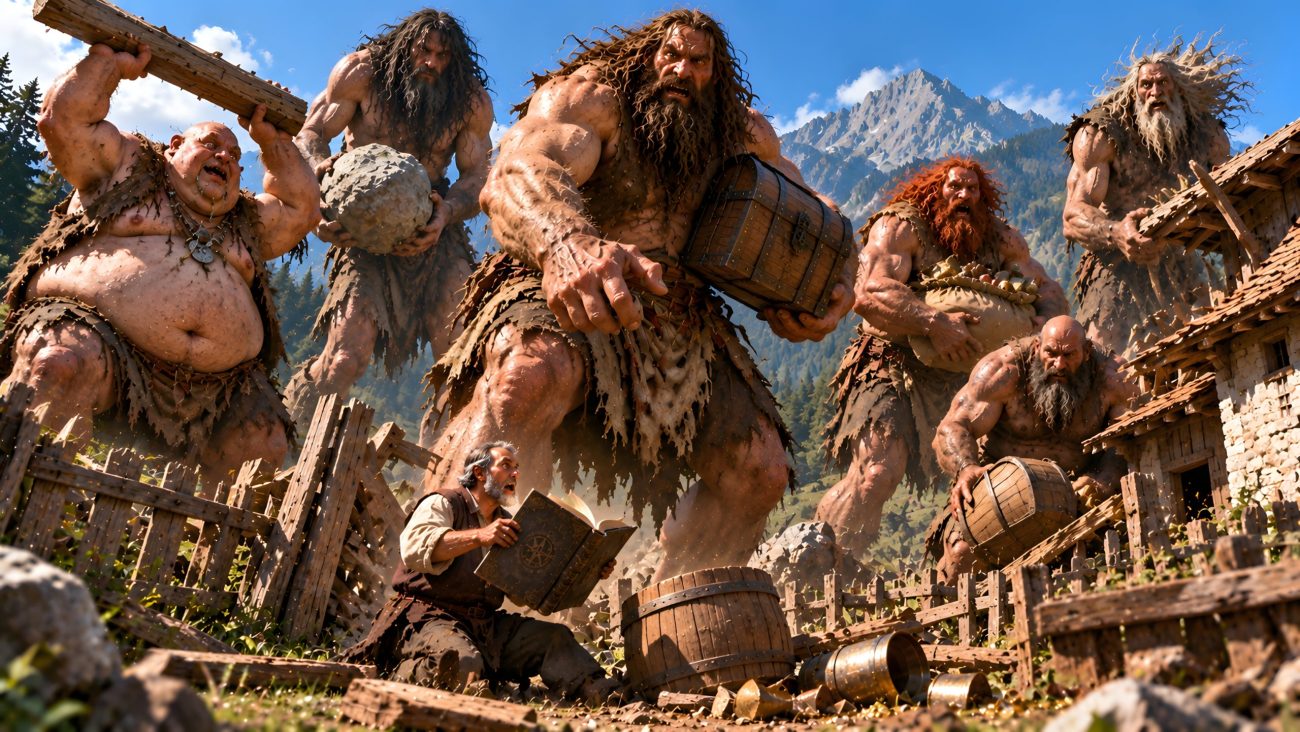
The legend of The Black Book is set at the Frischhof farm in the Bohemian Forest, where giants once roamed the countryside. One holiday, the farmer’s wife went to church with the farmhands, leaving the farmer alone at home. While he was praying, a group of giants arrived at the farmyard, tore down his fence, and demanded his money.

When the farmer, Frisch, refused to surrender his wealth, some of the giants seized him while the others ransacked his rooms and chests. After gathering their loot, the giants attempted to flee. Frisch then opened a mysterious book of curses kept in his house and read a spell from its pages. The magic immediately immobilized the robbers, freezing them in place so that they could neither escape nor move again.

According to the legend, the frozen giants eventually became the great mountains surrounding Frischwinkel. Their transformation explained the origin of the mountainous landscape around the farm and preserved the memory of the giants who had once terrorized its inhabitants.

The magical book itself eventually met an undignified end. Because its black, sooty appearance made it resemble a piece of bacon, a kitchen girl mistook it for food and threw it into a pot of boiling soup. The book cooked away completely, destroying the source of the farmer’s extraordinary power. Thus, the same legend that explains the origin of the surrounding mountains also recounts the accidental destruction of the book that had enabled Frisch to defeat the giants.


Sources

“Das Schwarzbuch.” SAGEN.at – Böhmerwald-Sagen. Reproduced by SAGEN.at. https://www.sagen.at/texte/sagen/tschechien/watzlik/schwarzbuch.html
Bayreck Giant

Tradition: Czech Mythology
Alternative Names: Bayreck Giant, Giant of Bayreck Castle
Category: Giant


The Myth

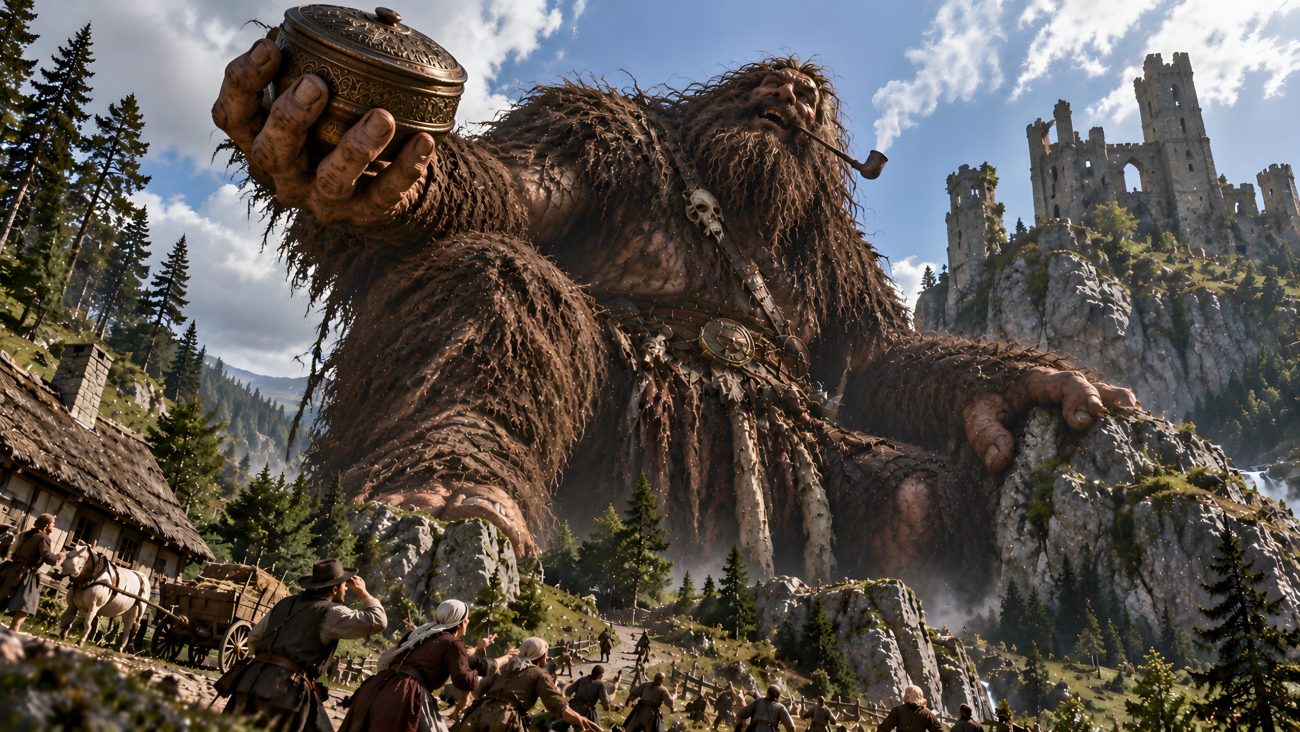
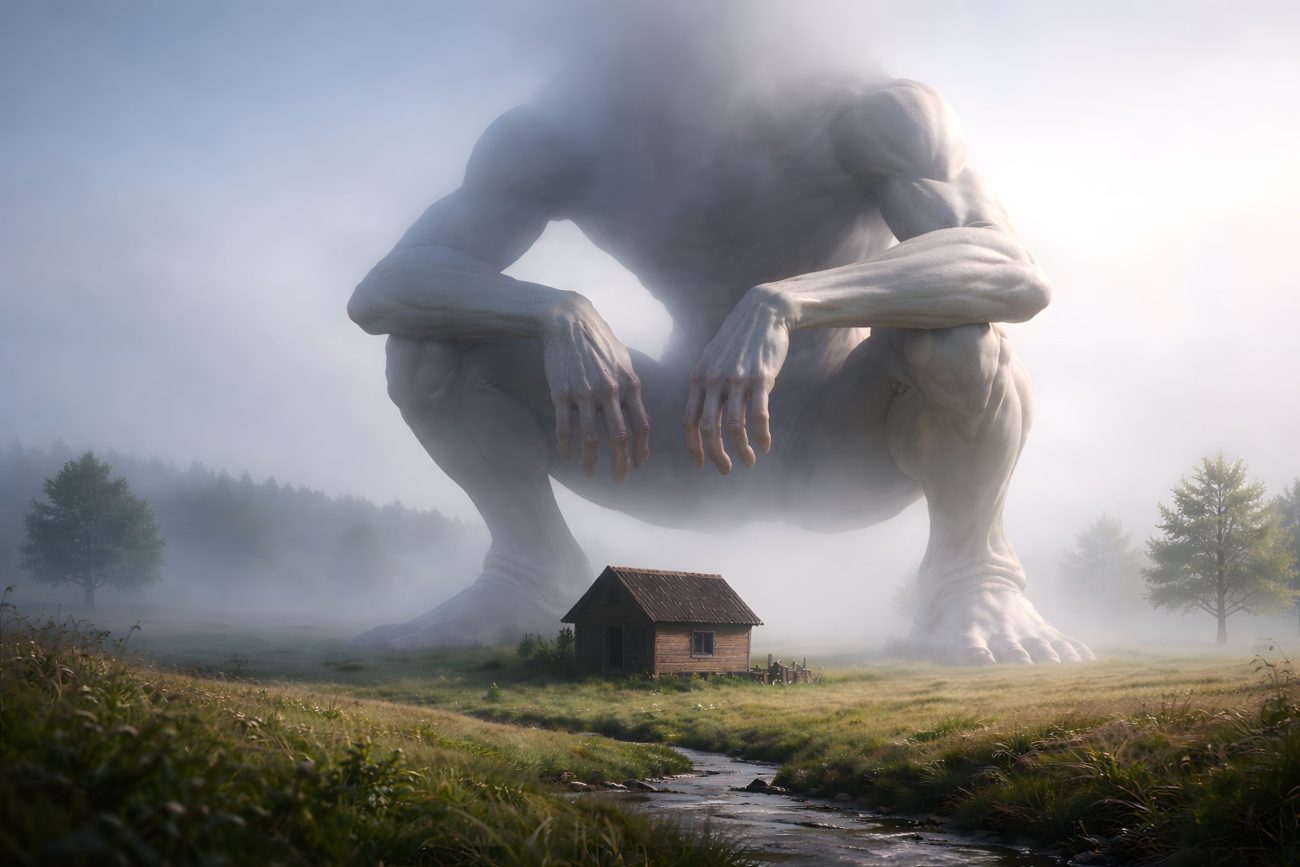
The Bayreck Giant was a giant who lived in Bayreck Castle, a ruined stronghold nestled in the mountain forests near Mount Osser in the Bohemian Forest. According to local legends, giants once inhabited the surrounding mountains and maintained friendly relations with their relatives living in neighboring strongholds. The Bayreck Giant regularly hurled his snuffbox across to the Giant’s Mountain near Kauth so that his cousin could use it. He also exchanged daily greetings with the giant who lived in the castle at Gewinzi, shaking hands across the hills and valleys. When the people of Neuern needed hammers, the Bayreck Giant would simply throw them down to the town.

The giant’s family occasionally descended into the human world. One day, the giantess went down into the countryside and scooped up a farmer, together with his plow and oxen, carrying them back to the castle. Her father was displeased by her actions and ordered her to return the little human to the place where she had found him. He warned that these small people would eventually bring about the giants’ destruction. The story portrays the giants as immensely powerful beings whose interactions with ordinary humans could have dangerous consequences, even when their actions were not necessarily intended to cause harm.

Bayreck Castle was also associated with an extensive network of underground tunnels. According to one tale, a goose chased into a passage beneath the castle emerged from the well at Klenau. On another occasion, someone lit a fire in the castle’s cellar, and the smoke reportedly travelled for miles before appearing at the Black Tower in Klatovy. These passages have since been filled in, but they remain part of the castle’s mysterious reputation.

An enchanted treasure is said to lie beneath Bayreck Castle. Every Palm Sunday, while High Mass is celebrated in Neuern, a chasm opens and reveals the way to the hidden wealth. Once, a priest, a sacristan, and a poor shepherd entered the opening in the hope of becoming rich. Inside, they discovered the devil sitting on an iron chest, with its key held between his teeth. They tried sprinkling him with holy water and pulling him away, but he refused to move. When they asked what he wanted in exchange for the treasure, he breathed fire and demanded a soul. The priest and sacristan offered him the shepherd’s soul, but the devil rejected it because the shepherd was an honest man. Finally, the devil agreed to surrender the chest if they carried him to Klenau in a nine-cornered sack. Unable to find such a sack, the three men abandoned their attempt, and the treasure remains hidden beneath Bayreck Castle to this day.


Sources

“Schloss Bayreck.” SAGEN.at – Böhmerwald-Sagen. Reproduced by SAGEN.at. https://www.sagen.at/texte/sagen/tschechien/watzlik/schlossbayreck.html


Frischhof Giants

Tradition / Region: Czech Mythology
Alternate Names: Giants of the Frischhof
Category: Giant


The Myth

The Frischhof Giants belong to an ancient time when giants still roamed the land. They are portrayed as powerful and destructive beings who lived before the present human order was established.

One day, while the household of a farmer named Frisch was away at church, a group of giants descended upon his farm. They tore down fences and demanded his wealth. When he refused, some of the giants restrained him while others looted his home, breaking into chests and stealing everything they could.

As they prepared to leave, the farmer turned to a mysterious object kept in his house—a black book filled with powerful knowledge. Opening it, he recited a spell that instantly froze the giants in place, leaving them unable to move.

Trapped where they stood, the giants remained there forever. Over time, their bodies became part of the landscape itself, transforming into the mountains that surround the region.

The black book that enabled this act was later lost in a mundane but ironic way—mistaken for food and destroyed—ending the possibility of such power being used again.

The Frischhof Giants represent a mythic explanation for the landscape:
mountains as the remains of ancient beings, defeated not by strength, but by hidden knowledge and supernatural means.


Sources

sagen.at contributors. (n.d.). Das Schwarzbuch. In sagen.at, from https://www.sagen.at/texte/sagen/tschechien/watzlik/schwarzbuch.html