Dando’s Dogs

Tradition / Region: English Mythology
Alternate Names: Devil’s Dandy Dogs
Category: Dog, Ghost


The Myth

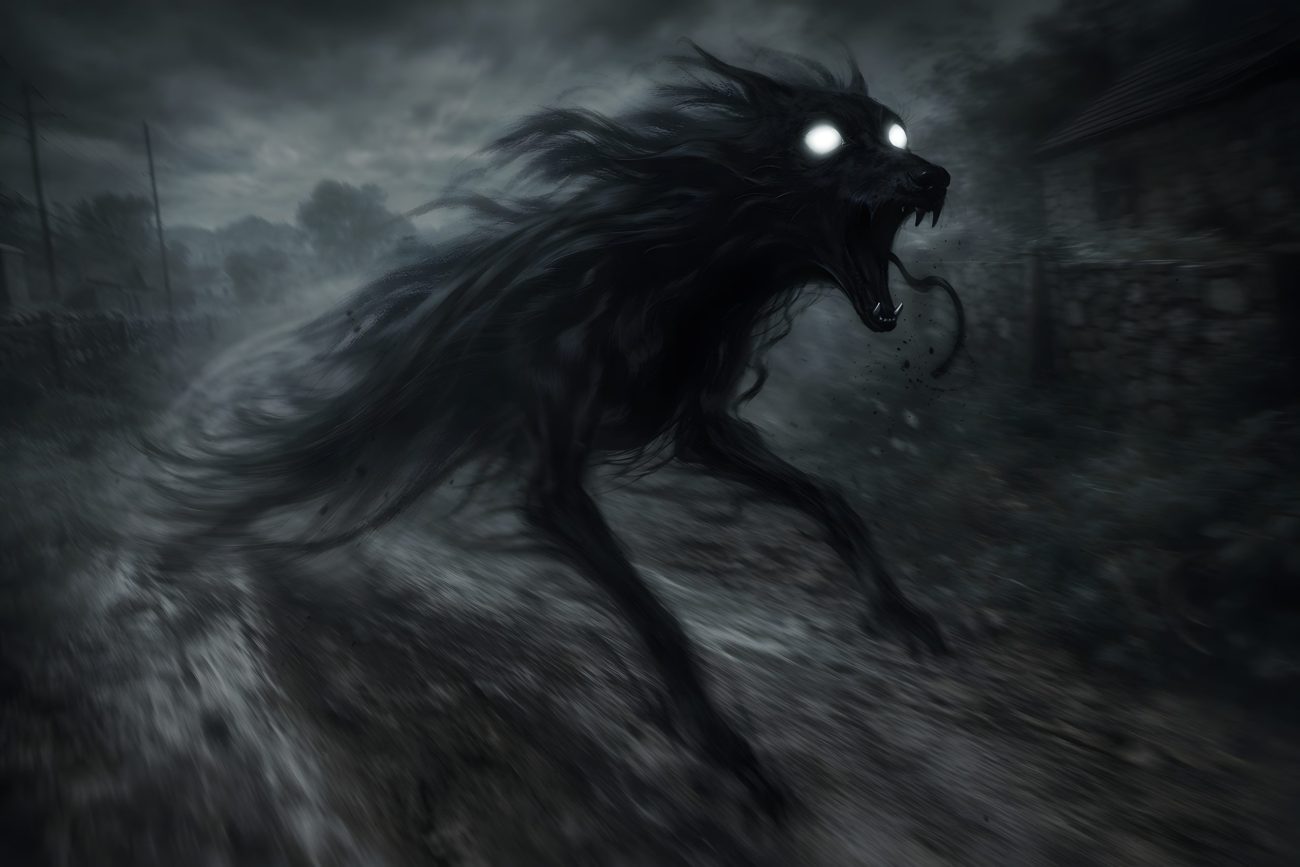
In English tradition there is a tale of Dando, a priest who loved hunting more than he loved the duties of his church.

One Sunday, after spending the day hunting instead of attending to sacred matters, he sat with his companions drinking. They gave him ale and wine, but he demanded more and more. At last he swore that if the drink he wanted could not be found on Earth, then it must be fetched from Hell itself.

At that moment a strange huntsman appeared among them. He offered Dando a flask and gave him drink, but then seized part of the priest’s game. Dando, drunk and furious, shouted that he would follow the huntsman even to Hell to recover it.

No sooner had he spoken than the huntsman carried him away, vanishing with him in an instant. Dando’s hounds gave chase, racing after their master, but they could not catch him.

From that time on, people said that Dando was lost, taken into the otherworld by the mysterious hunter. Yet his dogs never stopped searching. On certain mornings, especially early on Sundays, their howling is said to be heard in the distance, still hunting or still seeking their vanished master.

Thus Dando’s Dogs were remembered as ghostly hounds of the Wild Hunt — forever running across the unseen fields, chasing what they can never reach and echoing through the air as a warning against sin and excess.


Sources

Wikipedia contributors. (n.d.). Dando’s dogs. In Wikipedia, from https://en.wikipedia.org/wiki/Dando%27s_dogs

Moddey Dhoo

Tradition / Region: Manx Mythology
Alternate Names: Mauthe Doog
Category: Dog, Ghost


The Myth

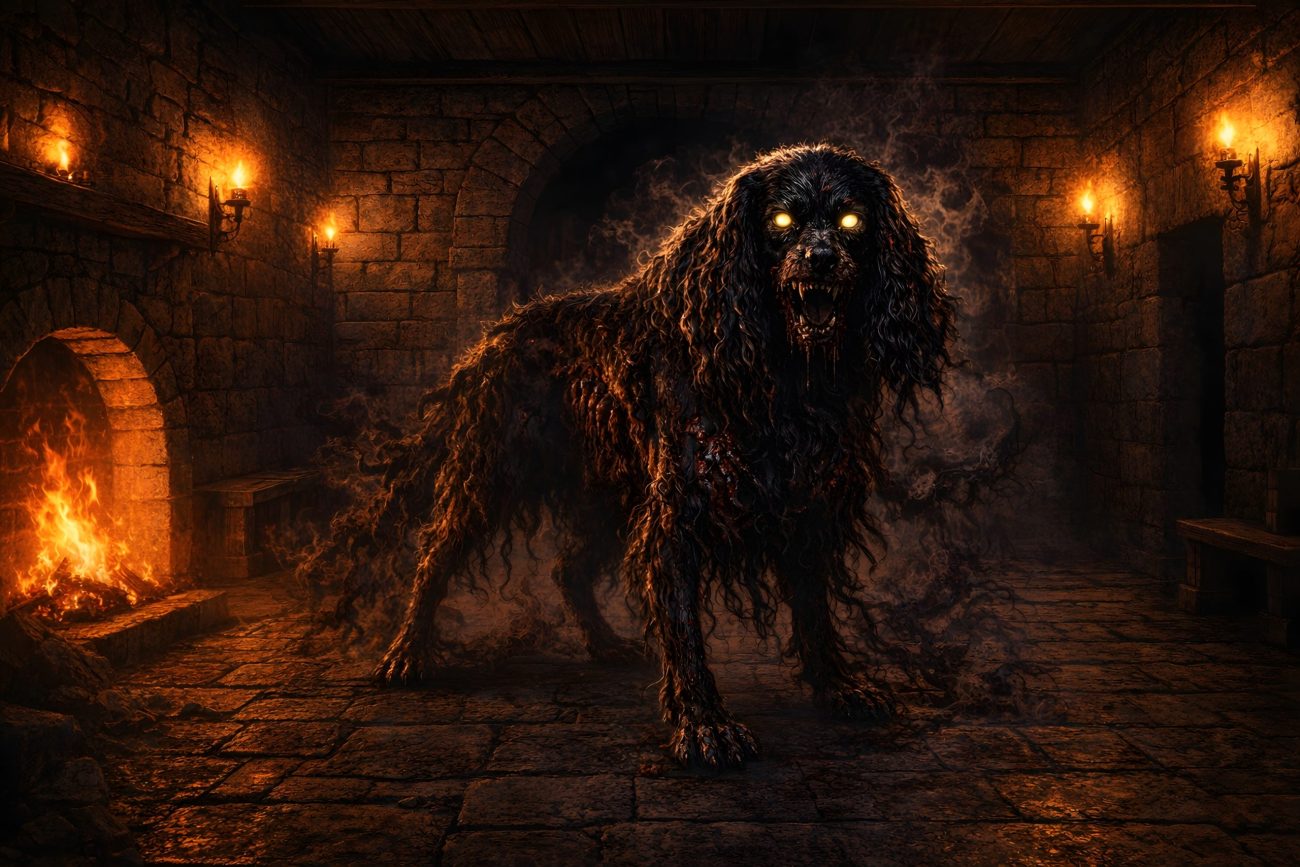
In the Isle of Man there was once said to haunt Peel Castle a great black spectral dog known as the Moddey Dhoo.

It appeared as a large shaggy hound, often described as resembling a black spaniel. The creature was seen moving through the rooms of the castle, but most often it lay in the guardroom beside the fire, visible to the soldiers stationed there. Over time, they grew accustomed to its presence, though it never ceased to disturb them.

The dog was said to enter and leave through a certain passage in the castle each evening and return to it again at dawn.

One night, a guard, emboldened by drink, ignored the custom that the castle gates should be locked by two men together. He took the keys alone and went down the haunted passage to deliver them. Soon afterward, he returned pale and shaken, unable or unwilling to say what he had seen.

Within a few days he died.

After this, the passage was sealed and never used again. From that time onward, the black dog was no longer seen.

Thus the Moddey Dhoo was remembered as the silent hound of Peel Castle — a spirit that walked the halls, appeared before soldiers, and vanished after leaving one final warning behind.


Sources

Wikipedia contributors. (n.d.). Moddey Dhoo. In Wikipedia, from https://en.wikipedia.org/wiki/Moddey_Dhoo


Black Dog of Newgate

Tradition / Region: English Mythology
Alternate Names: —
Category: Dog, Ghost


The Myth

At the old Newgate Prison in London, there was once said to haunt a terrible creature known as the Black Dog of Newgate.

The story tells that during a time of famine, when hunger and misery gripped the land, a scholar was imprisoned there. He had a reputation as a sorcerer, a man said to have practiced dark arts. The prison conditions were so dreadful that the inmates, driven mad with starvation, killed and ate him.

Not long after this deed, something began to move through the prison in the night.

Prisoners reported seeing a monstrous black dog pacing the corridors and the cells. It appeared suddenly and vanished just as quickly, but its presence filled the place with dread. Those who had taken part in the killing believed the creature was the spirit of the murdered man, returned in a new form to avenge himself.

One by one, the prisoners who had been involved were said to die horribly, as though hunted down by the spectral beast. Fear spread through the prison until the survivors, half-mad with terror, broke out and fled.

But the story says the black dog did not stop there. It followed the escapees wherever they tried to hide, pursuing them until each had paid for the crime.

The tale was later told as a warning about cruelty, sin, and the brutal life within the prison walls. Some even doubted whether the beast was real at all, claiming the only “black dog” in the prison was a dark stone in the dungeon where condemned prisoners sometimes dashed out their brains in despair.

Yet the legend endured, and the image remained of a great black hound stalking the halls of Newgate — a spirit born from murder, hunger, and guilt, returning to claim the lives of those who had done wrong.


Sources

Wikipedia contributors. (n.d.). The Black Dog of Newgate. In Wikipedia, from https://en.wikipedia.org/wiki/The_Black_Dog_of_Newgate


Tienuurshond

Tradition / Region: Dutch Mythology, Belgian Mythology
Alternate Names: Twaalfuurshond, Negenuurshond, Tienurenhond
Category: Dog, Ghost


The Myth

In parts of Utrecht and the region around Antwerp, people once spoke of a spectral animal known as the Tienuurshond.

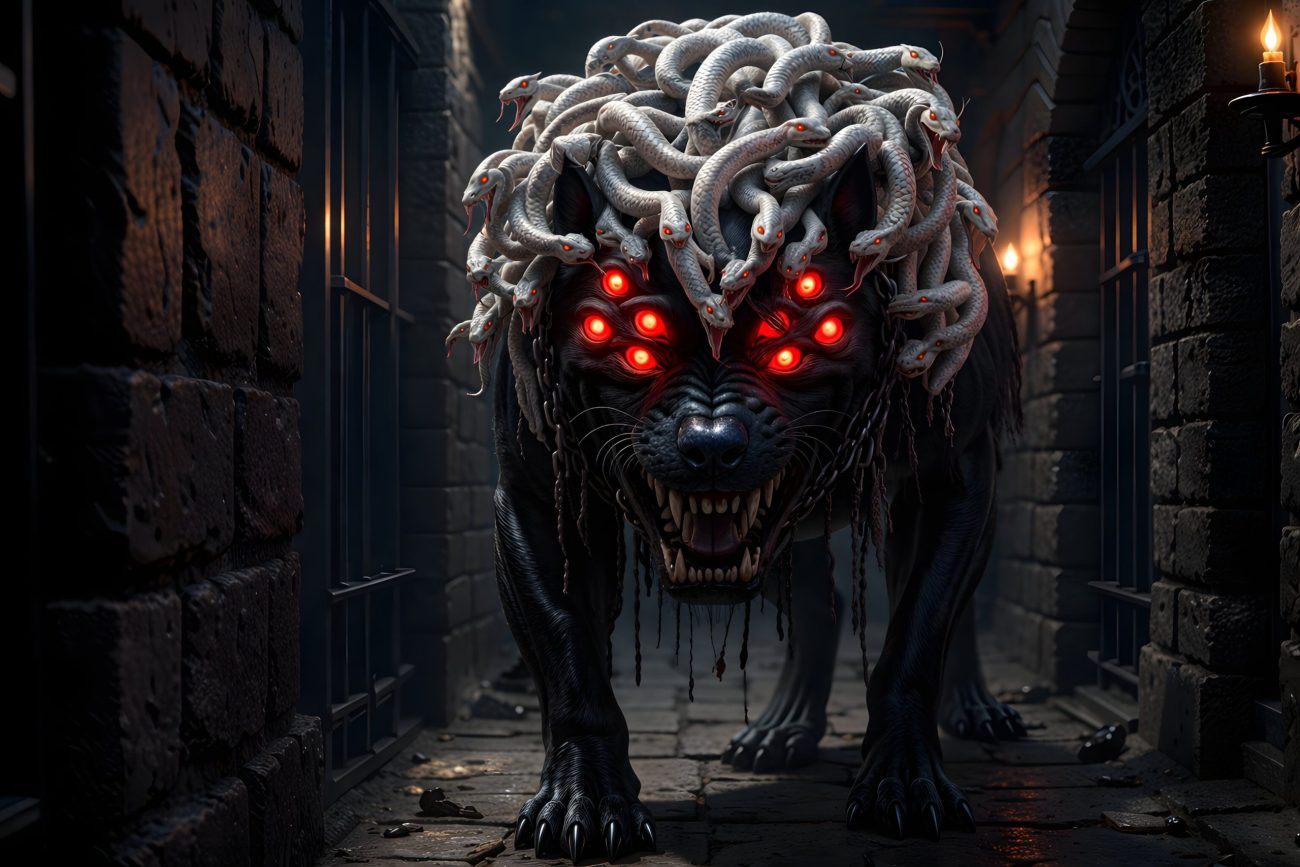
He was said to appear on lonely roads during winter evenings. At exactly the same hour each night — most often at ten o’clock — a large black dog would come into view ahead of a traveler. Around its body hung chains that rattled as it moved, their sound echoing through the cold darkness.

The creature did not usually attack. Instead, it walked in front of the traveler, leading the way along the road as though guiding them through the night. It remained just out of reach, always ahead, never allowing itself to be caught.

Because it appeared at a fixed hour, people gave it its name: the Ten-O’Clock Dog. In some places, where it was believed to appear at other times, it was known as the Nine-O’Clock Dog or the Twelve-O’Clock Dog instead.

Thus the Tienuurshond was remembered as a chained black hound of the winter roads, a ghostly figure that emerged at the appointed hour and walked before the lonely traveler until it vanished again into the night.


Sources

Abe de Verteller. (n.d.). Van aardmannetje tot zwarte juffer: Een lijst van Nederlandse en Vlaamse elfen en geesten. From https://abedeverteller.nl/van-aardmannetje-tot-zwarte-juffer-een-lijst-van-nederlandse-en-vlaamse-elfen-en-geesten/


Corrilário

Tradition / Region: Portuguese Mythology
Alternate Names: Coralário (plural: Coralários)
Category: Dog, Ghost


The Myth

In Portuguese tradition, the Corrilário is said to be the spirit of a restless dead person, appearing in the form of a dog.

These beings are believed to be the souls of those whose lives ended wrongly or whose fate remained unfinished. Some say they were people who died violently, who left promises unfulfilled, or who failed to complete the rites expected of them in life. Others say that a werewolf who dies before the time appointed for his curse must continue on after death as one of these wandering spirits.

As a Corrilário, the soul does not find rest. Instead it is bound to wander the roads and paths of the world. Unlike werewolves, which are said to follow only straight roads, the Corrilário moves along both straight ways and hidden shortcuts, passing through fields, tracks, and lonely routes where few people walk.

Because they are spirits tied to unfinished fate, they are thought to remain in this form only for as long as they would have lived had death not come early. Until that time has passed, they continue their wandering, like messengers moving between places, never settling.

Thus the Corrilário was remembered as a ghostly dog of the roads — not a beast of malice, but the shape taken by the unquiet dead, walking the paths of the living until their destined time was finally spent.


Sources

The Narrator. (2020). Corrilários. In portuguesecreaturesandlegendsgalore.wordpress.com, from https://portuguesecreaturesandlegendsgalore.wordpress.com/2020/01/17/corrilarios/


The Calf-Bleater of Sufferloh

Tradition / Region: German Mythology
Alternate Names: The Calf Spirit; The Bleating Steward; The Hoofprint Ghost
Category: Cow, Ghost


The Myth

In the free village of Sufferloh, the people once lived under the protection of Tegernsee Abbey. Each year, out of their own goodwill, they brought a calf to the prelate as a sign of respect. The offering was freely given and caused no resentment among the farmers.

But in time a new monastery steward was appointed. When another year passed, he declared that the gift would no longer be voluntary. From then on, he demanded the first-born calf from the farmers as a fixed obligation. The people obeyed, but bitterness settled in their hearts.

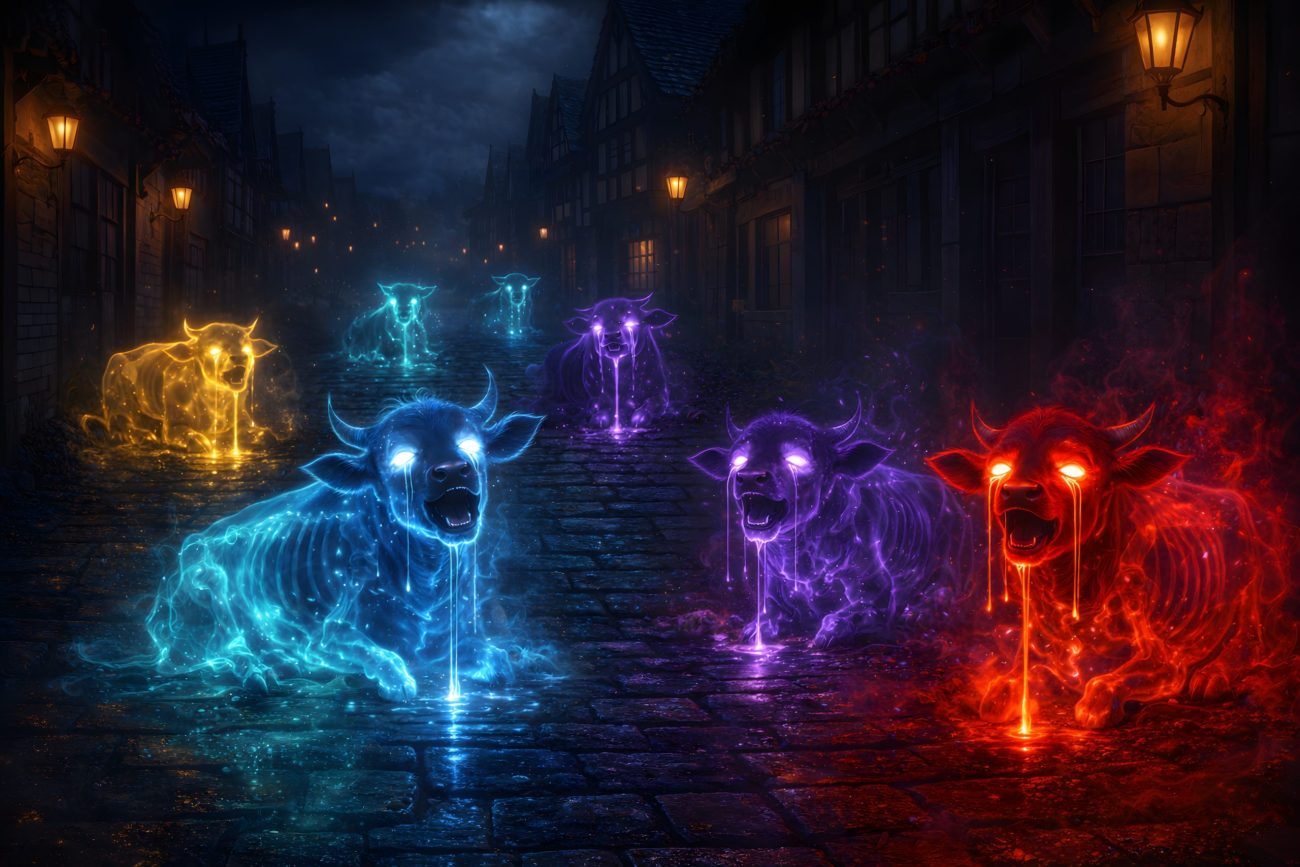
After the steward died, strange happenings began in the monastery passage. At night, a loud bleating echoed through the corridors — the unmistakable cry of a calf. The sound returned again and again, filling the monks with dread.

Not long after, a calf’s hoofprint appeared in the stone floor of the passage. No matter what was done, the mark would not vanish. Even when the tiles were removed, the imprint could still be seen beneath them.

The monks finally sealed the passage in hopes of ending the disturbance. Yet the bleating continued night after night, and peace did not return until the monastery itself was dissolved.

People later said the spirit of the unjust steward had been condemned to wander, crying forever like the calf he once demanded without mercy. Some claimed the ghost was driven first to the Ringspitze, and later, by order of the Pope, to roam the Unnütz mountain with other restless spirits, doomed to bleat through the darkness for all time.


Sources

SAGEN.at contributors. (n.d.). Kalbplärrer. In SAGEN.at – Traditionelle Sagen aus Deutschland: Bayern–Isarwinkel, from https://www.sagen.at/texte/sagen/deutschland/bayern/isarwinkel/kalbplaerrer.html


Blanket Ghost of Mühlbach

Tradition / Region: Romanian Mythology
Alternate Names: The Grey-Bearded Ghost; The Workshop Spirit of Mühlbach
Category: Ghost


The Myth

In the town of Mühlbach, a carpenter was plagued by a strange problem: none of his journeymen would remain with him for long. They were required to sleep in the workshop, and one bed stood in a corner opposite the door. Whoever slept there soon grew pale and thin. Each complained that during the night his blanket was pulled from him, and by morning it would always be found lying behind the door.

Since no one could endure this for long, the men soon left the carpenter’s service. At last a determined apprentice decided he would uncover the truth. The others laughed at his complaints each morning, and he suspected they were playing tricks on him.

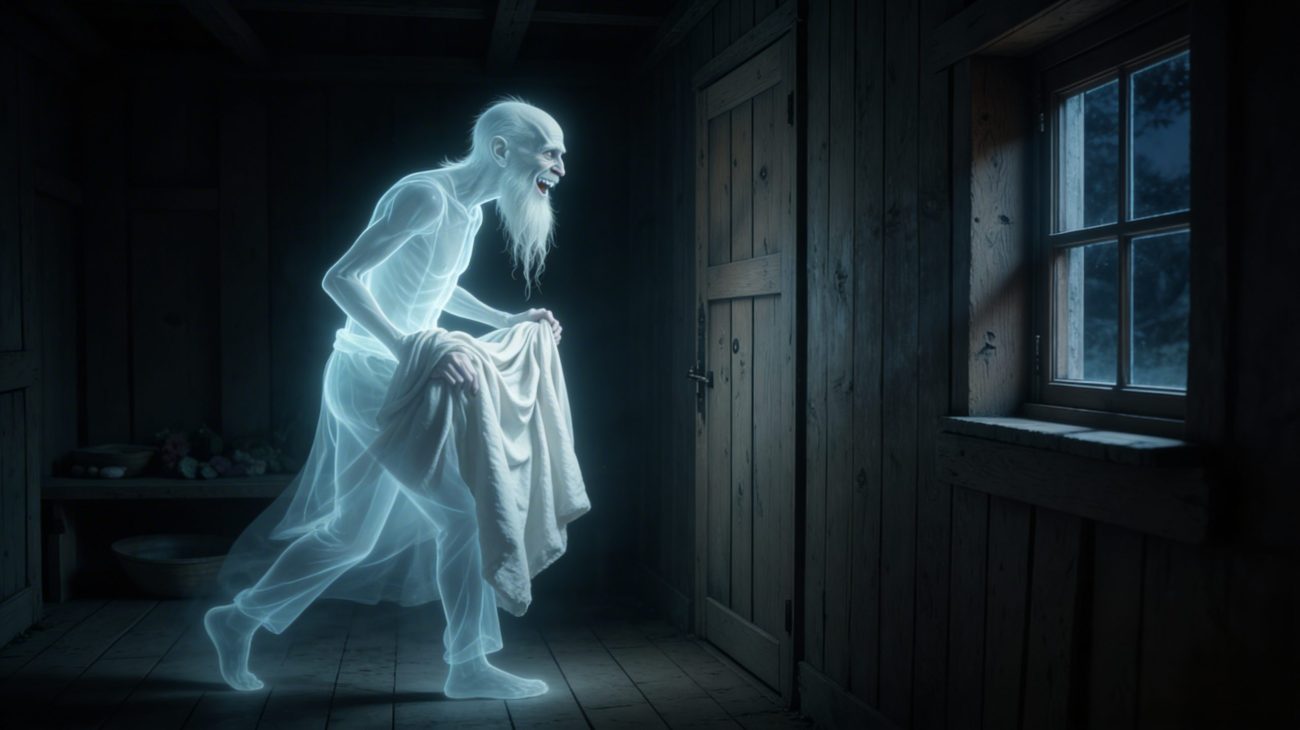
That night he lay down as usual but only pretended to sleep. Before midnight had passed, an old man with a long grey beard appeared from behind the door. Without a word, the figure walked to the bed and seized the blanket. The apprentice held on tightly, refusing to release it. But the old man pulled it away with a stubborn, unwilling look, wrapped himself in it, and shuffled back to the corner behind the door.

There the figure seemed to sink into the wall itself, and the blanket slipped from him onto the floor. The apprentice rose, picked it up, and, shaken though he was, managed to sleep.

In the morning, however, the blanket once again lay behind the door.

No one ever discovered why the spirit troubled the workshop in this way, and in the end the carpenter was forced to forbid his apprentices from sleeping there at all.


Sources

sagen.at contributors. (n.d.). Von einem Gespenst in Mühlbach. In sagen.at, from https://www.sagen.at/texte/sagen/rumaenien/siebenbuergen/muehlbach.html


Haunting at the Enerèweschter Weiher

Tradition / Region: Luxembourg Mythology
Alternate Names: Spirits of the Enerèweschter Pond
Category: Ghost, Lake dweller


The Myth

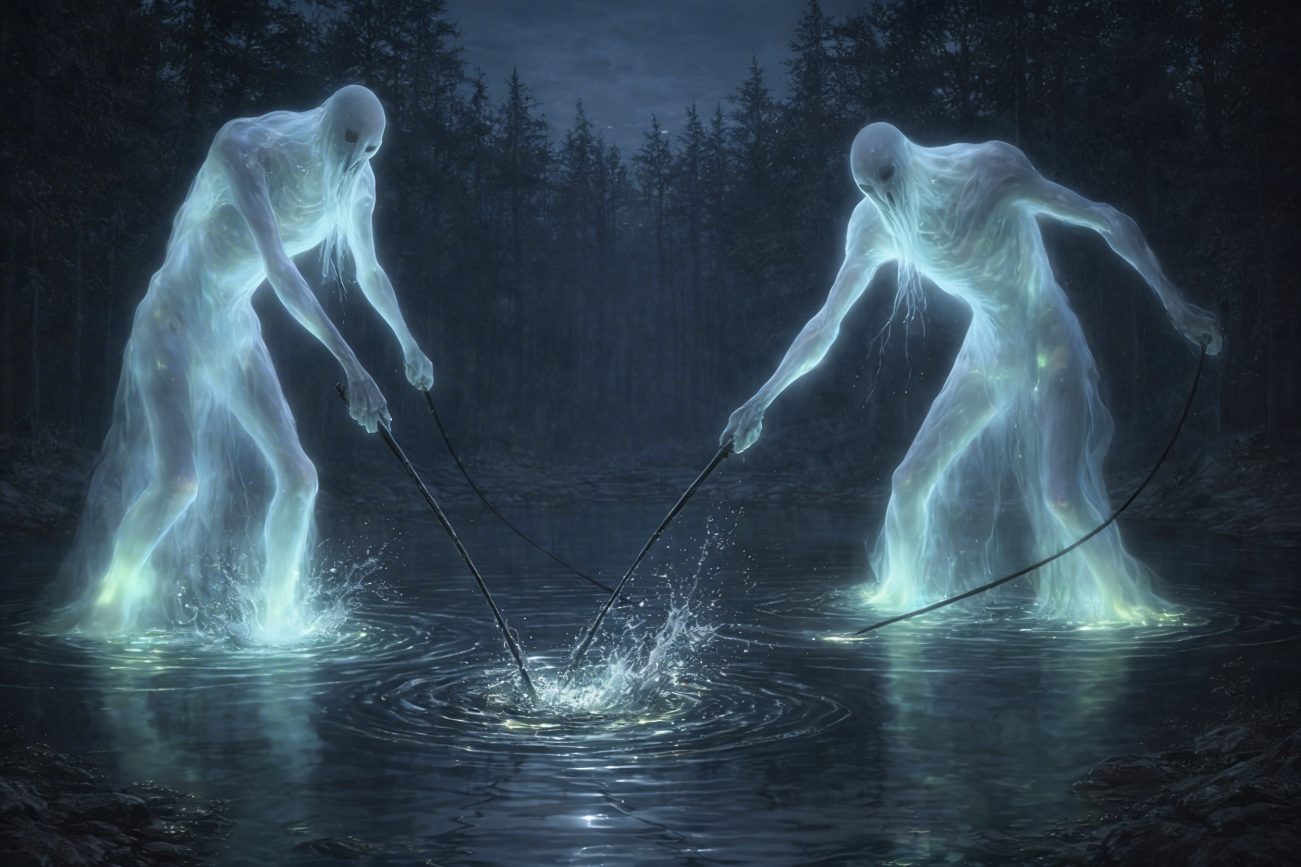
Many years ago, on Friday nights, two enormous human figures were said to appear at the pond called Enerèweschter Weiher in the forest near Lintgen. Each carried a long whip and lashed the water with such force that the noise echoed far and wide. At the same time, strange cries of “Hoo-hoo! Hoo-hoo!” rang through the night.

Afterward, the figures would perform a circle dance around the pond. Whenever anyone tried to approach them, they vanished at the slightest sound, leaving only a loud splash behind in the water.

One night, several daring young men from the village hid behind thick tree trunks, each armed with a club, determined to uncover the truth. As midnight drew near, they again heard the whipping and the eerie cries, and they saw the figures dancing. At a signal, they rushed forward and struck with all their strength. But their blows met nothing. They heard only a splash in the pond, and then all was still.

From that time on, the haunting ceased. Yet even today, some villagers believe that invisible spirits still play their tricks at the Enerèweschter Weiher.


Gallery


Sources

sagen.at contributors. (n.d.). Der Spuk am Enerèweschter Weiher zu Lintgen. In sagen.at, from https://www.sagen.at/texte/sagen/luxemburg/Spuk_Lintgen.html


Interpretive Lenses

Religious Readings
  • Christian Ascetic Deep Dive
Philosophical Readings
  • Nietzschean Deep Dive
Psychological Readings
  • Jungian Deep Dive
Esoteric Deep Dive
  • Hermetic Deep Dive
Political / Social Readings
  • Marxist Deep Dive

Washerwomen at the Kaselter Bach

Tradition / Region: Luxembourg Mythology
Alternate Names: Storm washerwomen of Kaselter Bach
Category: Ghost


The Myth

Near Lintgen, at the source of the Kaselter Bach, there once stood a tall beech tree. People said that shortly before a thunderstorm, musicians dressed in red would often appear there and play soft music.

At the same time, from the edge of the spring came the loud knocking and banging of washerwomen beating their laundry in rhythm with the music. According to the legend, these women caused rain and storms by splashing water upward with their washing sheets, sending it into the clouds.

No one dared to watch or disturb them. It was said that even the strongest man would have been crushed or killed by a single blow from these washerwomen.

One traveler, who dared to whistle when he heard the ghostly music, was immediately struck by lightning. And two shoemaker’s apprentices, returning drunk from the Lorenzweiler fair and cursing the apparition, were found the next day beside the Kaselter stream with torn clothes, battered faces, and fractured skulls.

Thus the people avoided the place whenever storms gathered.


Gallery


Sources

sagen.at contributors. (n.d.). Wäscherinnen am Kaselter Bach bei Lintgen. In sagen.at, from https://www.sagen.at/texte/sagen/luxemburg/Waescherinnen_Lintgen.html


Interpretive Lenses

Religious Readings
  • Christian Ascetic Deep Dive
Philosophical Readings
  • Nietzschean Deep Dive
Psychological Readings
  • Jungian Deep Dive
Esoteric Deep Dive
  • Hermetic Deep Dive
Political / Social Readings
  • Marxist Deep Dive

Washerwomen at the Pond Rahloch

Tradition / Region: Luxembourg Mythology
Alternate Names: Rahloch washerwomen
Category: Ghost, Lake dweller


The Myth

Between Sandweiler and Itzig lies a pond known as the Rahloch, a place once regarded as eerie and feared.

One night, a lone wanderer passed by the pond and heard the sharp echo of washerwomen’s sheets sounding through the still air. As he approached, he saw several old women standing at the water’s edge, silently beating laundry before them.

Seeing nothing strange in their work, he called out, “You are washing very late!” But the women gave no answer. Thinking to jest, he spoke again: “Ah, you wretched women, won’t you wash my clothes too?”

Hardly had he spoken when the women rushed upon him and beat him so severely that he fell senseless to the ground. When he later came to, he found his clothes completely soaked, and realized that the washerwomen had stripped him and washed them while he lay unconscious.

Filled with terror, he fled home as fast as he could. Only the next day did he notice that his hair had turned gray from the fright.


Sources

sagen.at contributors. (n.d.). Die Wäscherinnen am Weiher „Rahloch“. In sagen.at, from https://www.sagen.at/texte/sagen/luxemburg/Waescherinnen_Rahloch.html