Virgin of Gutenberg

Tradition: Liechtenstein Mythology
Alternative Names: The White Maiden of Gutenberg
Category: Ghost


The Myth

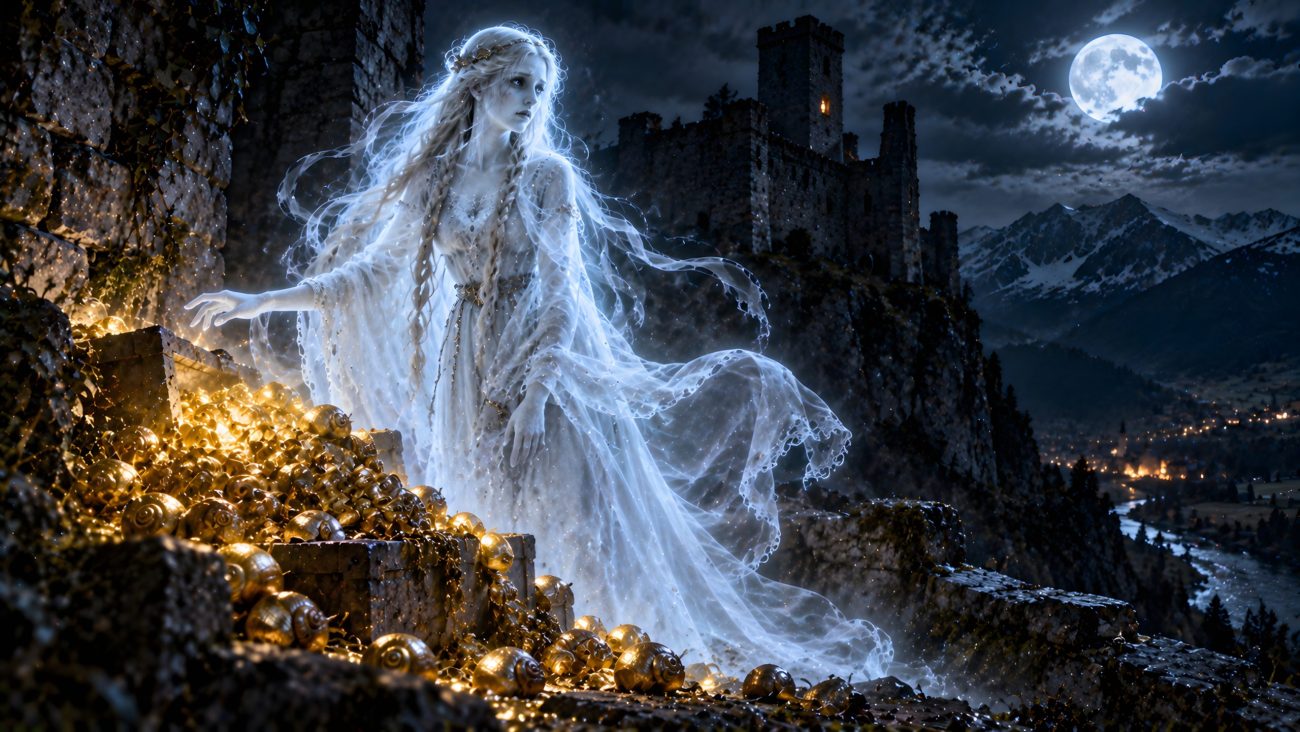
The Virgin of Gutenberg is a mysterious white maiden who haunts the old fortress of Gutenberg near Balzers, Liechtenstein. She guards an immense hidden treasure that once lay exposed to the sunlight, appearing as a great mound of snail shells made of pure gold. The treasure shines brilliantly in the sun, but anyone who wishes to claim it must first free the maiden from her supernatural burden. Until someone succeeds, she remains bound to the fortress, condemned to guard the treasure for another century.

One day, a boy from Balzers was picking berries near the old fortress walls when the white maiden appeared before him. She begged him to release her and explained that he must swing her around three times. He was forbidden to look at her braids or speak a single word during the task. Gathering all his courage and strength, the boy managed to swing her around twice without looking at her or speaking. But as he began the third turn, curiosity overcame him, and he glanced at her beautiful golden braids.

At that instant, the braids became two snakes in his hands. Startled by their coldness, the boy cried out, “Jesus, how cold!” His words broke the conditions of the enchantment, and the maiden vanished with a sorrowful lament. Her chance for release was lost, and she was condemned to haunt Gutenberg for another hundred years, continuing her lonely watch over the hidden treasure. The legend warns that even a moment of curiosity or a single careless word can undo an attempt to break a powerful supernatural curse.


Sources

“Die Jungfrau auf Gutenberg.” SAGEN.at – Liechtensteiner Sagen. Reproduced by SAGEN.at. https://www.sagen.at/texte/sagen/liechtenstein/jungfrauaufgutenberg.html
Grääggi

Tradition: Swiss Mythology
Alternative Names: Gräaggi, Bachgschrei, Bachgrääggi, Gwääggi, Borzi, Wüetihöö
Category: Ghost


The Myth

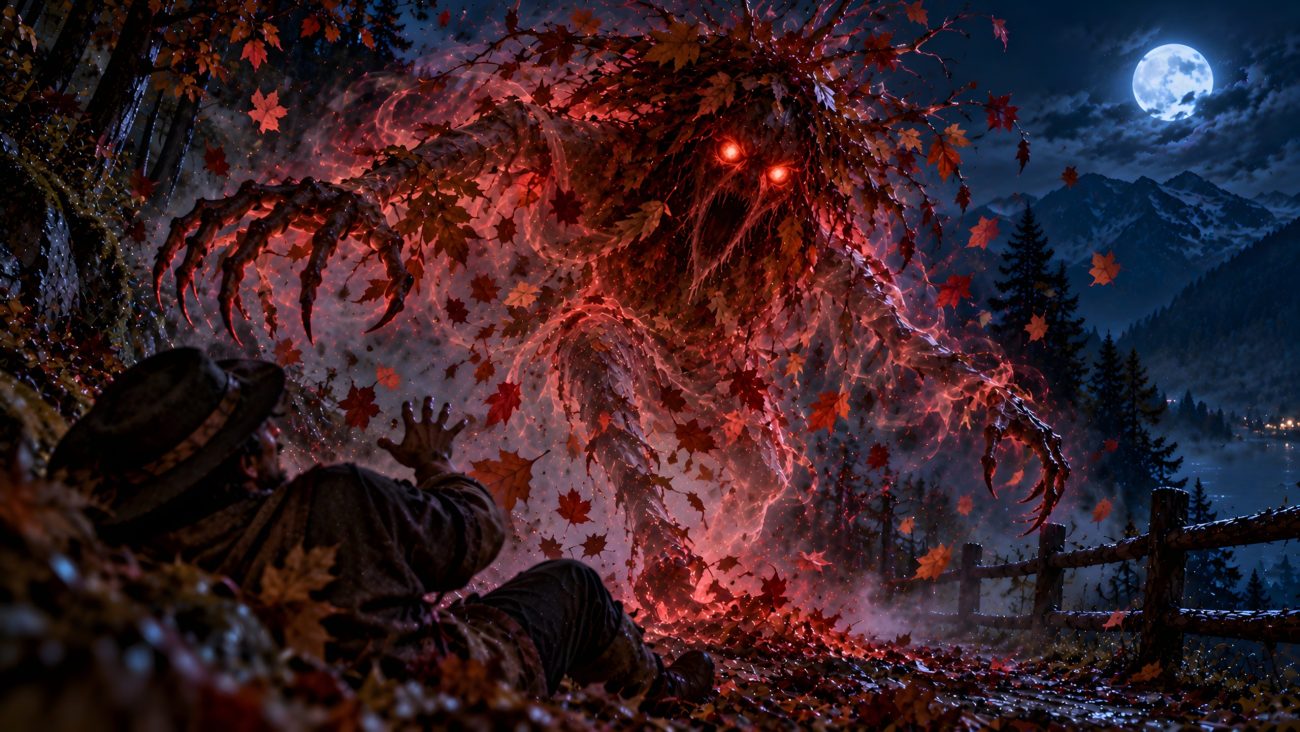
The Grääggi is a frightening nocturnal spirit that appears in many forms, including a stuffed sack of leaves, a crate, or an animal. It haunts lonely roads, wooded ravines, forest clearings, and remote mountain paths. Those who encounter it at night rarely see its shape clearly, sometimes glimpsing only two eyes glowing like burning embers in the darkness. If disturbed or teased, the Grääggi erupts into a terrifying racket of clattering, rattling, and shrieking that fills its surroundings with fear. In different parts of Switzerland, it is known by several names: Bachgschrei near Ragaz and Pfäfers, where it frequents the Fluppabach stream; Bachgrääggi in Vilters; Gwääggi or Borzi around Lake Walen; and Wüetihöö in the Rhine Valley.

One night, a shoemaker returning home from a gathering encountered what appeared to be a large cat blocking his path in the woods between Valmajus and the Rotzheldj Gorge. Curious, he approached and nudged the animal with his foot. The supposed cat suddenly tumbled down through the forest with a tremendous roar and crash, as though the bushes and trees were being torn from the ground. As it moved, it alternated between crying like a child, squealing like a sow, and bursting into mocking laughter. The shoemaker was so terrified that his hair stood on end, and he remained in bed for several days afterward.

Another encounter took place when a gamekeeper was waiting for foxes near the vineyards of Valmajus. From the wooded slope opposite him, he heard a noise like someone dragging and raking wood downhill. Each time the sound seemed to reach the meadow below, it began again higher up the slope. Believing that a gigantic figure was responsible, the gamekeeper eventually fired at it. An exceptionally large bird rose from the spot and flew away toward Plonserfeld, bringing the strange disturbance to an end. In another tale, a mountain dweller called out to a nearby Grääggi, insulting it as an unbaptized creature and ordering it to leave. The spirit answered that it was better baptized than the man himself and identified itself as Matlin, or Magdalena.

The Grääggi is sometimes compared to the Wild Huntsman and the Swiss Türst, other frightening figures associated with the night and wild places. Some people explain its appearances as the work of a great owl hunting smaller animals, but the Grääggi remains a mysterious presence in local tales. In the lonely mountains, strange noises and indistinct shapes can transform an ordinary encounter into something terrifying, and the spirit embodies the fear inspired by the darkness of remote forests and deserted paths.


Sources

“Gräaeggi.” SAGEN.at – Traditionelle Sagen aus der Schweiz (St. Gallen). Reproduced by SAGEN.at. https://www.sagen.at/texte/sagen/schweiz/st_gallen/graeaeggi.html


Headless Nun

Tradition: Canadian Mythology
Alternative Names: Sister Marie Inconnue, The Headless Ghost of French Fort Cove
Category: Ghost


The Myth

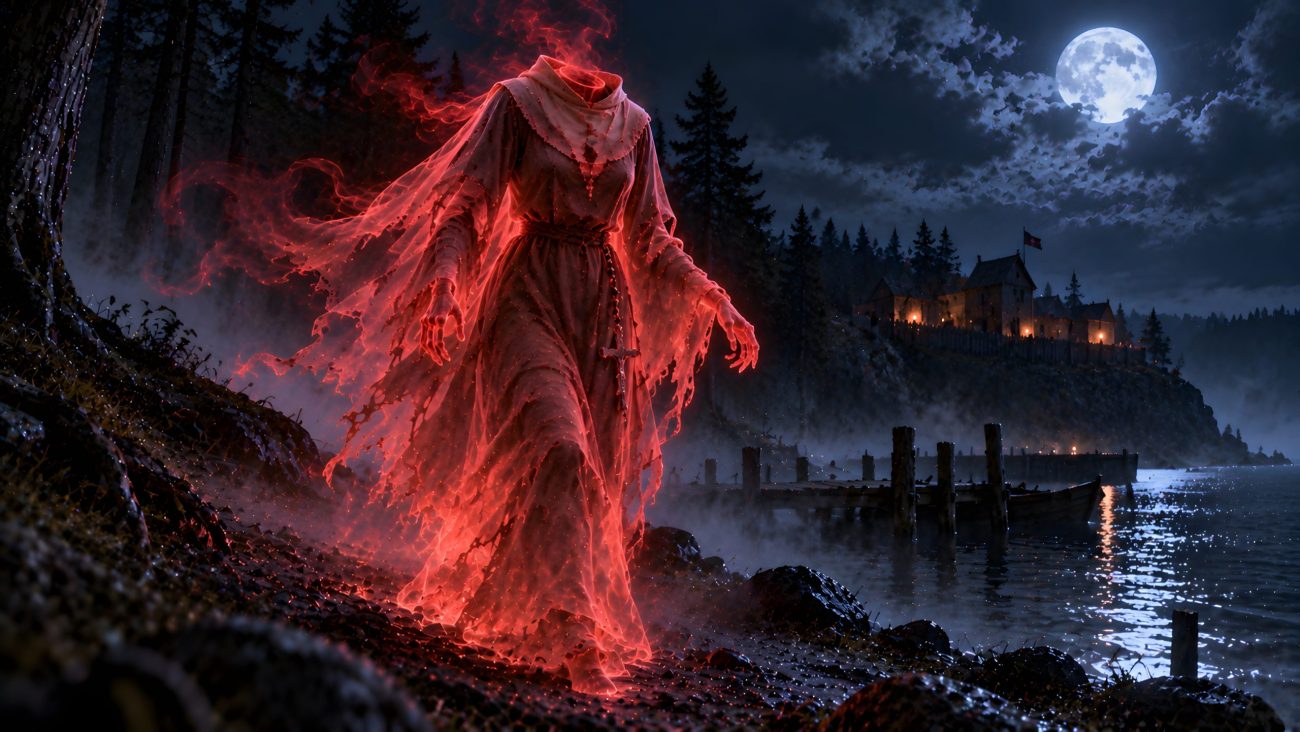
The Headless Nun is a restless female ghost said to haunt French Fort Cove in Miramichi, New Brunswick, Canada. She is identified as Sister Marie Inconnue, an eighteenth-century resident of the area whose life ended when she was beheaded. Her head was never recovered, and her spirit is believed to wander the surrounding woods and waterways, searching endlessly for the missing part of her body.

The circumstances of her death differ between versions of the legend. In one telling, a mad trapper attacked Sister Marie, severed her head, and fled into the forest carrying it away. In another version, two sailors murdered her after she refused to reveal the location of a hidden treasure. Regardless of the details, her violent death and the disappearance of her head left her unable to rest, condemning her to roam the area as a headless apparition.

The Headless Nun remains one of the best-known ghostly figures associated with French Fort Cove. Her legend gives the quiet cove and its surrounding woodland an eerie reputation, as the spirit is imagined wandering through the place where she met her fate, still searching for the head that was taken from her.


Sources

“Headless Nun.” Wikipedia: The Free Encyclopedia. Wikimedia Foundation. Accessed October 15, 2026. https://en.wikipedia.org/wiki/Headless_Nun


Kyöpelinvuori

Tradition: Finnish Mythology
Alternative Names: Ghost Mountain
Category: Ghost


The Myth

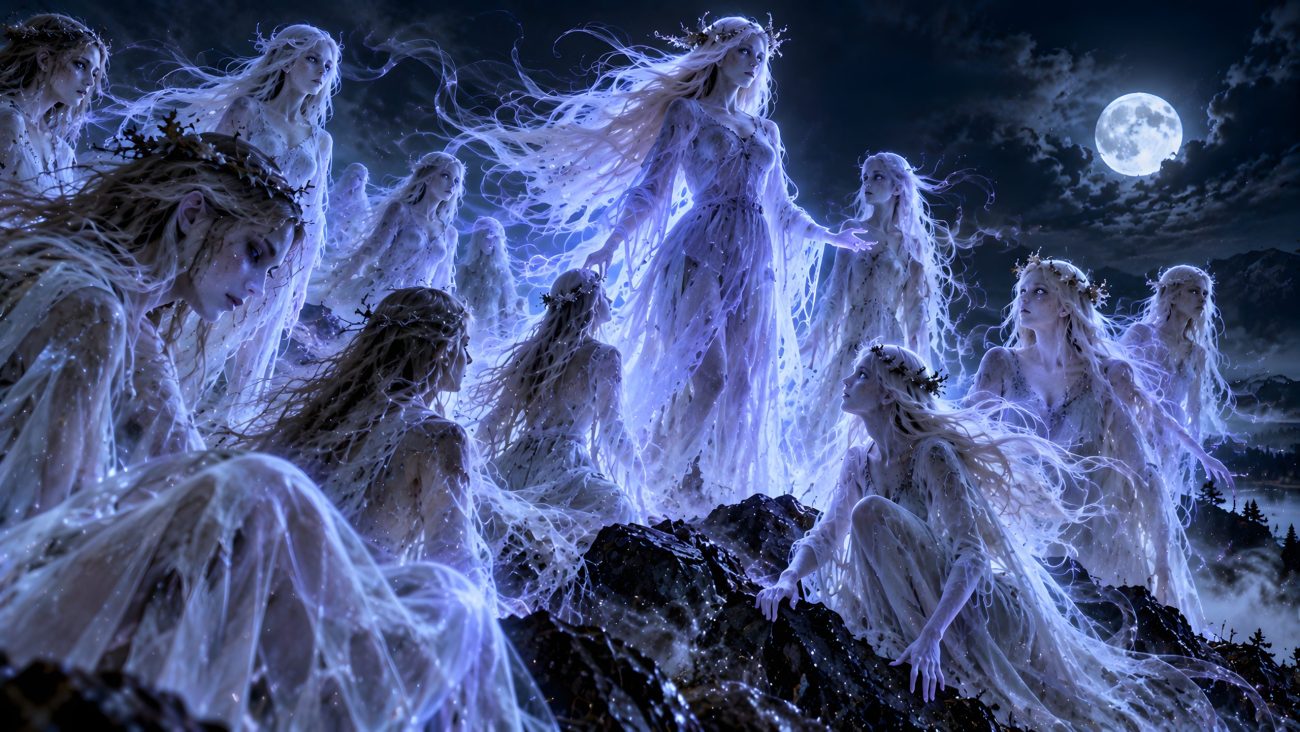
Kyöpelinvuori is a mysterious mountain in Finnish mythology where the spirits of dead women are believed to gather after death. According to tradition, women who died as virgins travel to this secluded place, where they remain among the souls of other women who shared their fate. The mountain is associated with the dead and serves as a supernatural destination beyond the world of the living.

Kyöpelinvuori is also connected with beliefs about witches and their gatherings. Under Christian influence, the mountain became associated with the witch’s sabbath, transforming its image from a place of departed women into a mysterious location where supernatural beings might assemble. Its connection with the dead and the uncanny gives the mountain an eerie reputation, standing at the boundary between the ordinary world and the realm of spirits.


Sources

“Kyöpelinvuori.” Wikipedia: The Free Encyclopedia. Wikimedia Foundation. Accessed October 15, 2026. https://en.wikipedia.org/wiki/Ky%C3%B6pelinvuori


Djákninn á Myrká

Tradition: Icelandic Mythology
Alternative Names: The Deacon of Myrká, The Deacon of Dark River
Category: Ghost


The Myth

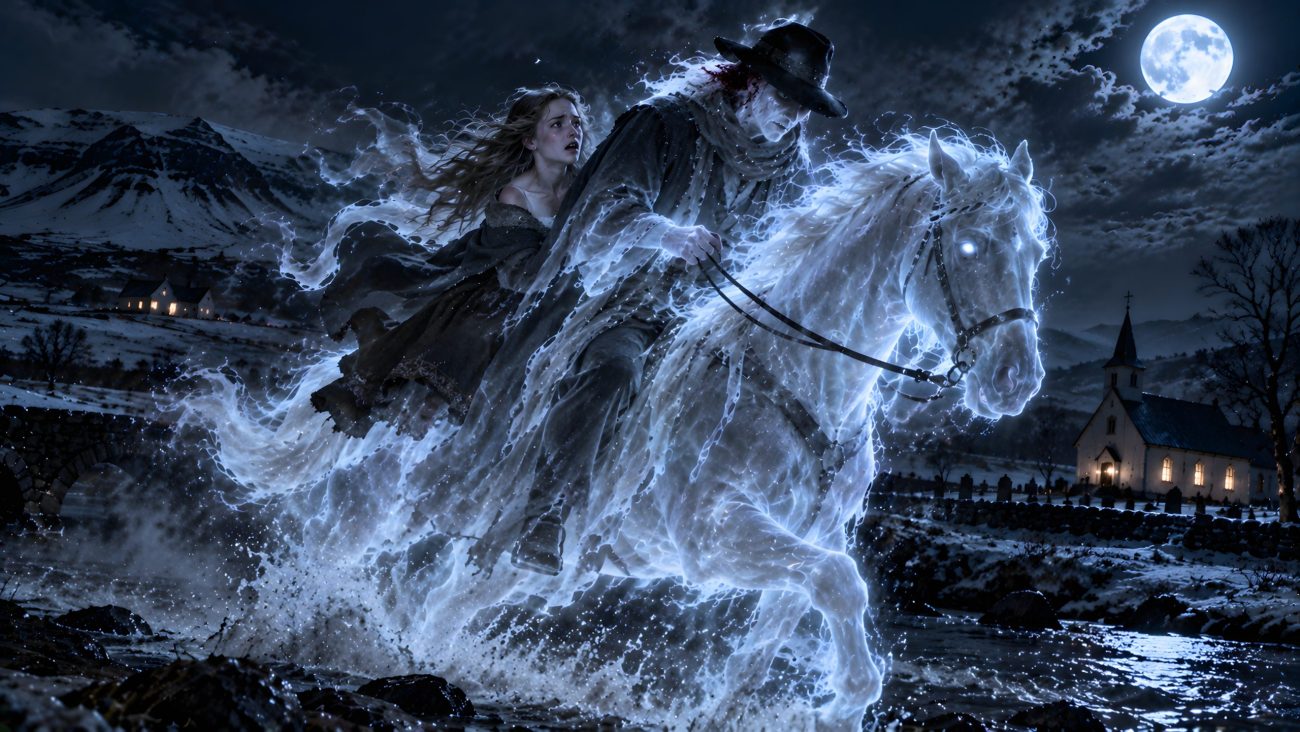
The Deacon of Dark River is the ghostly figure at the center of an Icelandic legend set around Myrká farm in Eyjafjörður. In life, the deacon was a man who lived at Myrká and loved a woman named Guðrún, who lived across the Hörgá River at Bægisá farm. Before Christmas, he visited her on his horse, Faxi, and promised to return on Christmas Eve to bring her home to celebrate the holiday together. On his journey back, however, a violent storm swept over the area. He fell into the icy river, suffered a terrible head injury, and drowned. His body was discovered the following day and buried, but Guðrún never received the news of his death.

On Christmas Eve, the deacon appeared at Bægisá as promised, riding Faxi to collect Guðrún. His face was concealed beneath a hat and scarf, and she mounted the horse with him, wearing a coat that she had only partly put on. As they crossed the dark landscape, the deacon spoke in strange, rhythmic phrases, repeating the final word of each line. When they reached the Hörgá River, the horse stumbled, causing his hat to slip forward. In the moonlight, Guðrún saw the dreadful white wound at the back of his head and realized that something was terribly wrong. The deacon uttered the ominous words, “The moon fades, death rides,” revealing the truth of his unnatural journey.

When they arrived at Myrká, the deacon told Guðrún to wait while he led Faxi over a fence. Nearby, she noticed an open grave in the churchyard. The dead man suddenly tried to drag her into it, but because she wore only one sleeve of her coat, he seized the empty sleeve instead. Guðrún grabbed the church bell’s rope and rang it desperately until people came to investigate. Her coat tore in two, leaving half in the ghost’s grasp as he disappeared into his grave. Now certain that her beloved was dead, Guðrún endured a night of haunting and disturbance as his restless spirit continued to trouble the farm. Eventually, an exorcist was summoned and succeeded in laying the deacon’s ghost to rest.


Sources

“Dj ákninn á Myrká.” Wikipedia: The Free Encyclopedia. Wikimedia Foundation. Accessed October 15, 2026. https://en.wikipedia.org/wiki/Dj%C3%A1kninn_%C3%A1_Myrk%C3%A1


Kormos

Tradition: Turkic Mythology, Russian Mythology
Alternative Names: Kormoz, Körmöz, Körmös, Alban, Chahik, Ozor
Category: Ghost


The Myth

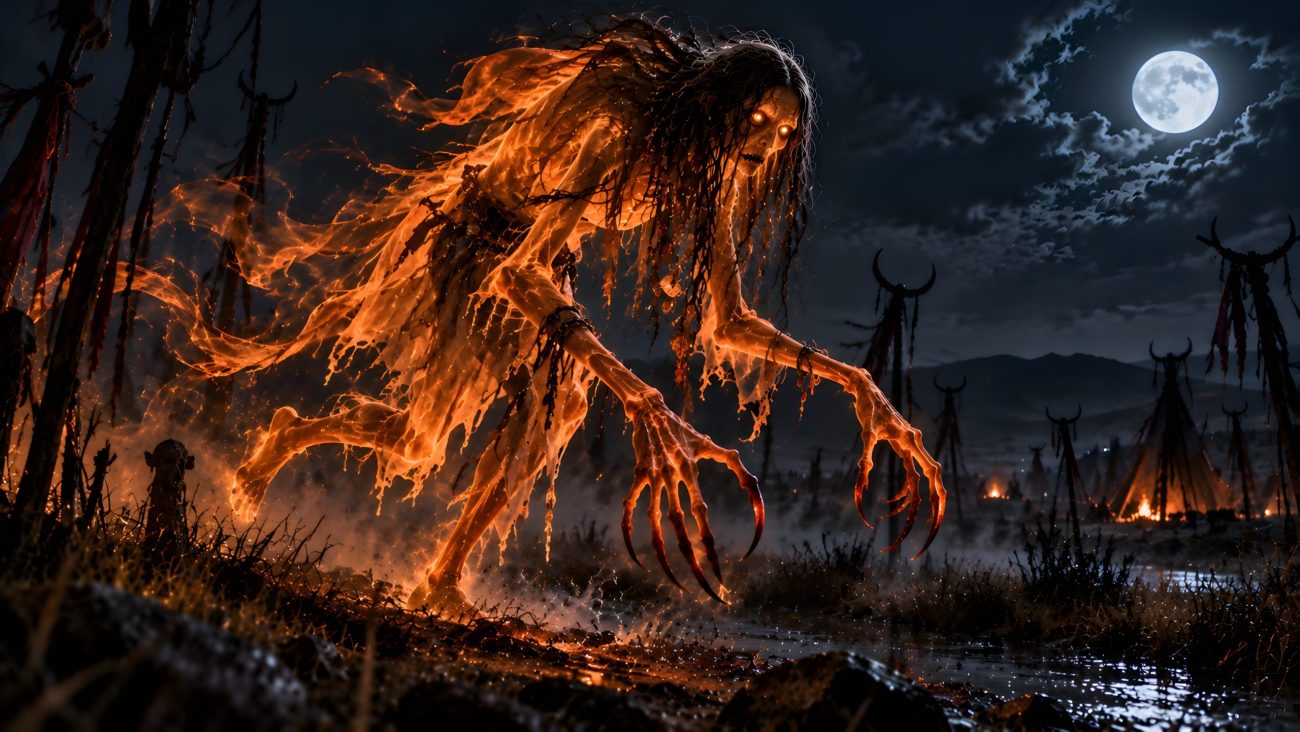
Kormos are supernatural spirits associated with the dead and the underworld in Turkic mythology. They may appear in a humanlike form, but some have disturbing features, including extremely long hair, elongated claws, and inverted eyes and feet. The souls of people who committed suicide are known as Alban, while other Kormos are associated with those who died through accidents or with the spirits of ancestors. After death, a person’s soul may become a Kormos and continue to exist as a spirit.

Kormos are divided according to their nature and the realm in which they dwell. Some are benevolent spirits who help and protect humanity under the command of Ülgen, while others are demonic beings controlled by Erlik, the ruler associated with the underworld of Tamag. These hostile spirits may harm the living or attempt to capture their souls. Other Kormos are neither entirely good nor evil and wander the earth in a miserable, restless state. Their chief is known as Körmös Khan or Kürmez Han.

The spirits are associated with three realms: the earth, the underground world of Tamag, and the heavenly realm of Uçmag. Even a demonic Kormos may have the possibility of escaping its torment and ascending to Uçmag if the good within its soul outweighs its evil. Kormos are especially associated with sunrise and sunset, times believed to be dangerous because the spirits may capture human souls. People are therefore warned against remaining awake during these periods. Through their different forms and destinies, Kormos represent the uncertain fate of the dead, whose souls may become protectors, malevolent demons, or restless wanderers.


Sources

“Kormos.” Wikipedia: The Free Encyclopedia. Wikimedia Foundation. Accessed October 15, 2026. https://en.wikipedia.org/wiki/Kormos


Nang Ta-khian

Tradition: Thai Mythology
Alternative Names: Lady of Ta-khian, Nang Mai
Category: Ghost


The Myth

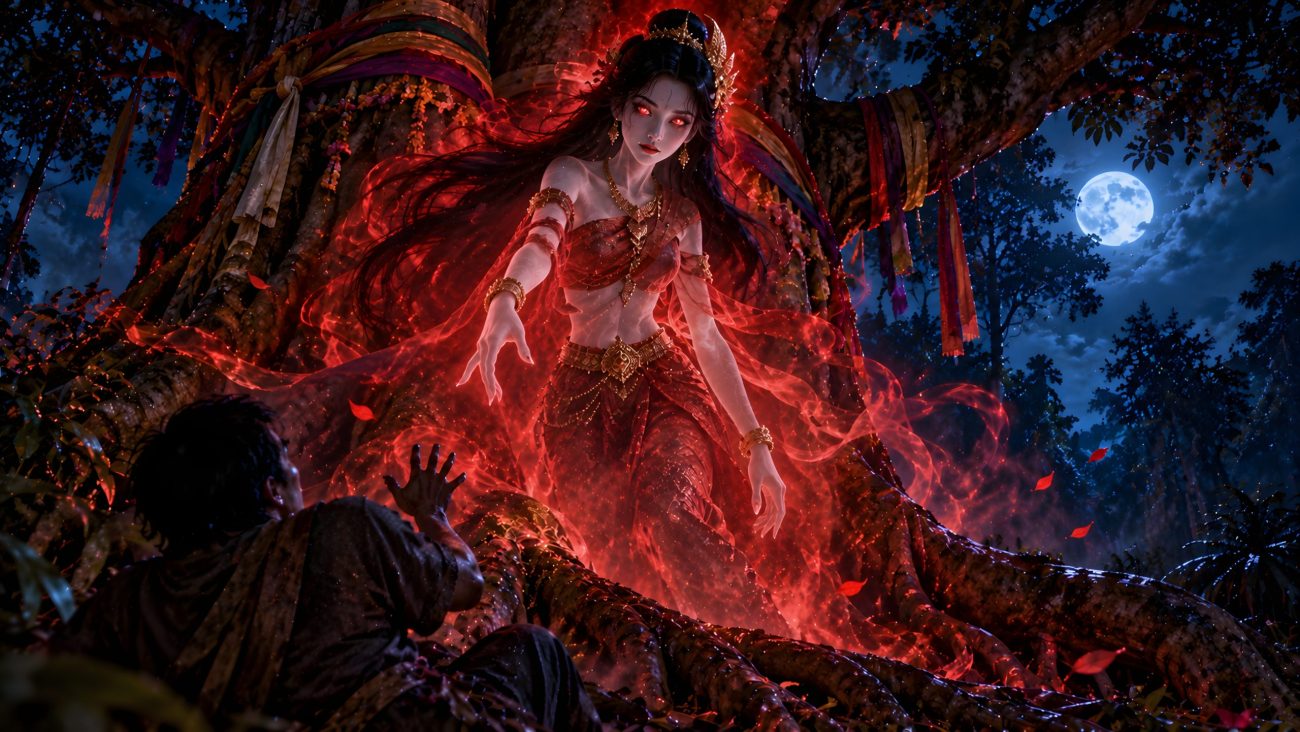
Nang Ta-khian is a female spirit who inhabits the enormous Ta-khian trees of Thailand. She often manifests as a beautiful young woman wearing traditional Thai clothing in reddish or brownish colours. These ancient trees have massive trunks and wide-spreading roots, and the spirit dwells in their immediate surroundings, deep within forests and away from inhabited places. She may also haunt houses whose beams, stilts, or pillars have been made from Ta-khian wood, remaining attached to the timber taken from her tree.

Nang Ta-khian is a powerful guardian of her home and its surrounding forest. She may harm wicked or immoral people who approach her dwelling, while those who behave righteously have little to fear from her. Her presence makes the felling of a Ta-khian tree a dangerous undertaking, for she is believed to become furious if her tree is cut down and may follow the timber wherever it is taken. Traditionally, people avoid cutting down trees inhabited by the spirit, fearing her anger and supernatural vengeance.

Ta-khian trees are sometimes marked by lengths of colourful satin wrapped around their trunks. These offerings and coverings are associated with respect for the spirit and help protect ancient trees from being felled. If a tree must be cut down, a special ceremony is traditionally performed to ask the spirit’s permission. Ta-khian wood is considered suitable for use in Buddhist monasteries, where the spiritual merit of the monks is believed to be sufficient to render the spirit harmless. Nang Ta-khian thus embodies the sacred and dangerous power of ancient trees, protecting her woodland home and punishing those who disturb it without proper respect.


Sources

“Nang Ta-khian.” Wikipedia: The Free Encyclopedia. Wikimedia Foundation. Accessed October 15, 2026. https://en.wikipedia.org/wiki/Nang_Ta-khian


Red Ghosts

Tradition: Liechtenstein Mythology
Alternative Names: The Two Redheads
Category: Ghost


The Myth

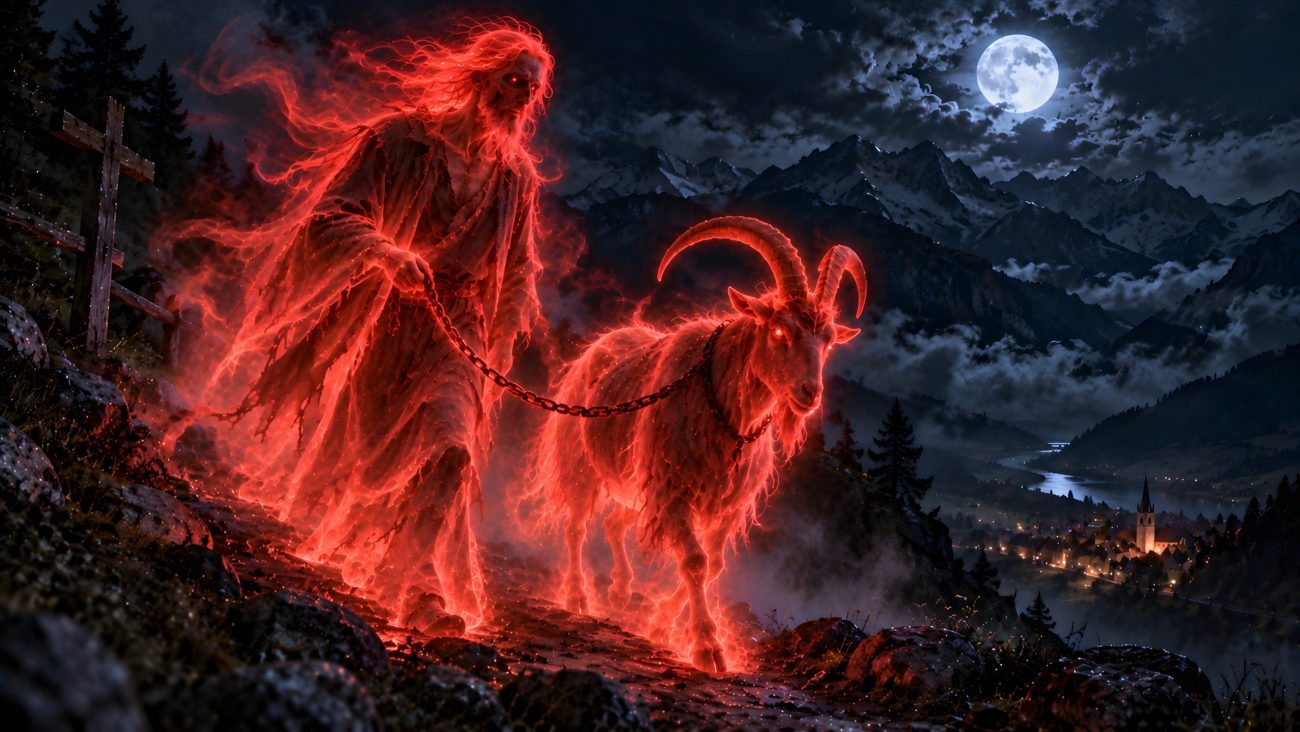
The Red Ghosts appear at night on Kulm Mountain near Steg. One is a red-haired man, accompanied by a fiery red billy goat. The man is condemned to travel almost around the world with the animal because he was once a swindler and must now atone for his wrongdoing. Burdened by this supernatural punishment, he asks a farmer who encounters him to kill the goat and free him from his fate.

The farmer takes out a knife and begins stabbing the billy goat, but he is unable to complete the task and eventually gives up. At first, the ghost is pleased by the farmer’s attempt, but when the effort fails, his expression becomes deeply sorrowful. His punishment remains unbroken, and he must continue his endless journey with the animal.

Suddenly, the two red-haired figures race down the mountain into the valley like devils, accompanied by thunderous sounds resembling a violent storm. Their terrifying departure leaves the impression of damned spirits rushing through the night, still bound to a punishment they cannot escape.


Sources

“Die Geister.” SAGEN.at – Liechtensteiner Sagen, collected by Otto Seger. Reproduced by SAGEN.at. https://www.sagen.at/texte/sagen/liechtenstein/seger/geister.html


Taraxippos

Tradition: Greek Mythology
Alternative Names: Taraxippus, Taraxippoi (plural)
Category: Ghost


The Myth

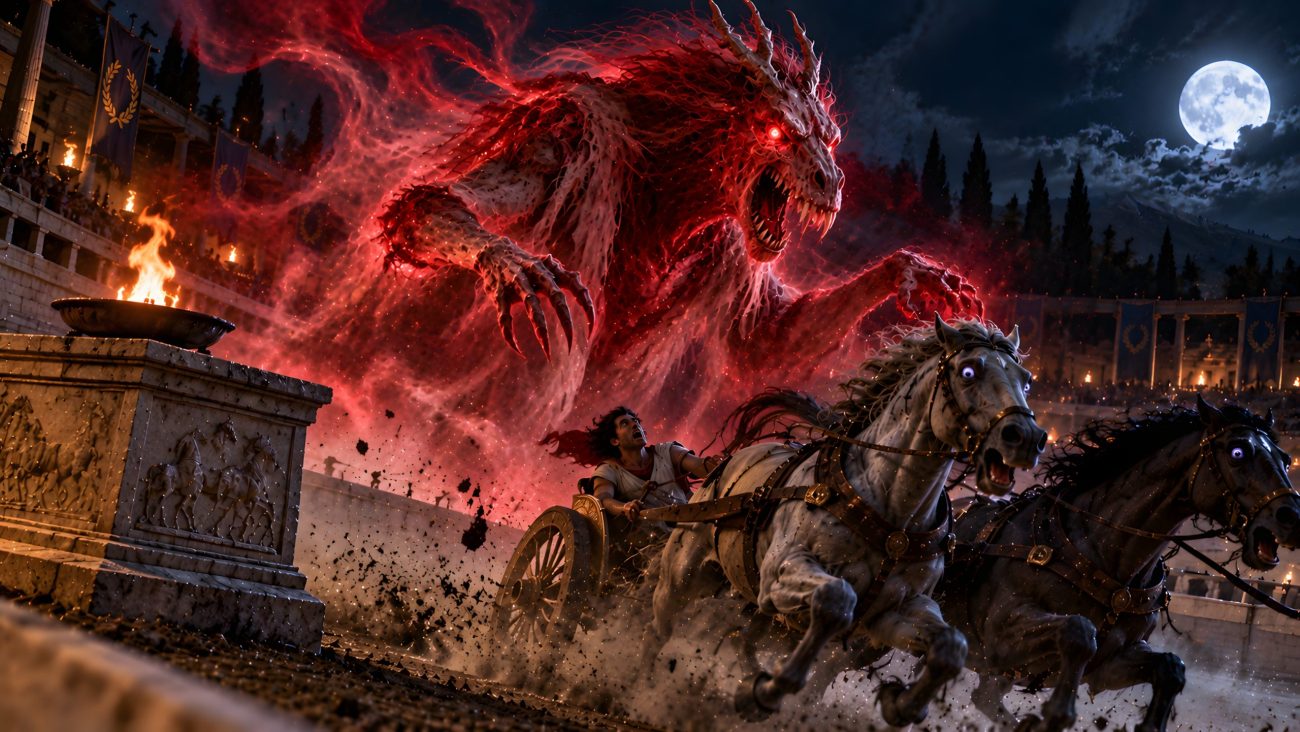
Taraxippos is a terrifying supernatural presence blamed for frightening horses during chariot races throughout ancient Greece. The name means “horse disturber,” and Taraxippoi were associated with places where horses suddenly became uncontrollably afraid, often causing chariots to crash and injuring their drivers. The most notorious was Taraxippos Olympios at Olympia, where a round altar stood beside the racetrack. As chariots passed this spot, horses were seized by a powerful and inexplicable terror. Charioteers offered sacrifices and prayers to appease the spirit and ensure their horses would pass safely.

The identity of Taraxippos varied between traditions. At Olympia, some believed it was the ghost of King Oenomaus, who had once killed the suitors of his daughter Hippodamia in chariot races. Others identified the presence with the tomb of Myrtilus, whose death was connected to Oenomaus, or with the grave of Ischenus, a giant born from the earth. These accounts connected the terrifying presence to the restless dead and the dangers surrounding ancient racing grounds.

At the Isthmian Games, Taraxippos Isthmios was identified as the ghost of Glaucus of Pontiae, who had been torn apart by his own horses. At the Nemean Games, Taraxippos Nemeios was associated not with a ghostly figure but with a red rock above the turning point of the racetrack. A flash from the rock supposedly terrified horses as though they had seen fire. Thus, Taraxippos was not always imagined as a single spirit with a fixed appearance, but as a supernatural force that caused horses to panic at particular places.


Sources

“Shade (mythology).” Wikipedia: The Free Encyclopedia. Wikimedia Foundation. Accessed October 15, 2026. https://en.wikipedia.org/wiki/Shade_%28mythology%29


Dalgyal Gwisin

Tradition: Korean Mythology
Alternative Names: Egg Ghost
Category: Ghost


The Myth

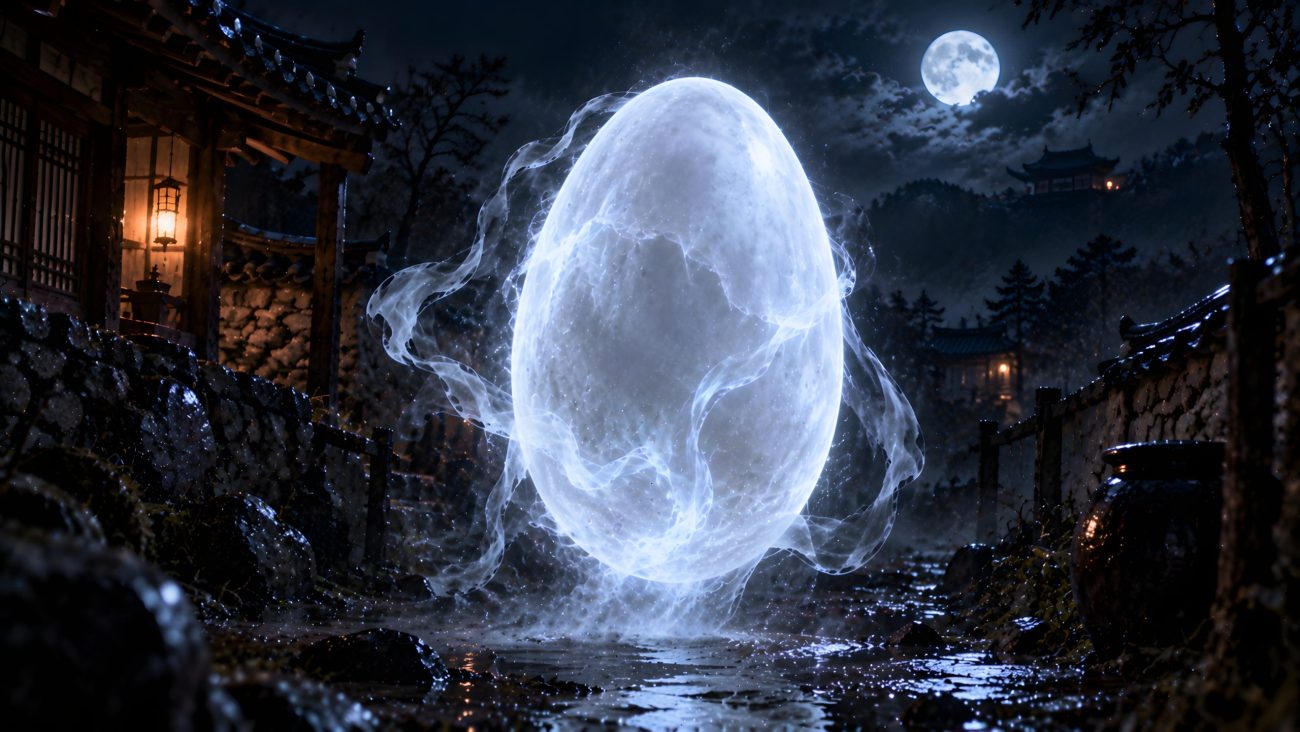
The dalgyal gwisin, or Egg Ghost, is a terrifying Korean spirit named for its resemblance to an egg. It has a smooth, featureless body without arms, legs, or a distinct head. It possesses no eyes, nose, or mouth, appearing as a completely blank, egg-shaped figure. Its origin and personality are considered unimportant in the traditional descriptions, making its strange and empty appearance its defining characteristic.

Encountering an Egg Ghost is believed to be a fatal omen. According to legend, anyone who sees one will die. Some accounts suggest that these spirits may change their nature over time, with their personalities becoming less incorruptible. Other rumours claim that an Egg Ghost can transform into an ordinary egg, conceal itself, and emerge again whenever it wishes.

Some interpretations connect the Egg Ghost to the mujagui, or childless ghost, a spirit without descendants or relatives to perform ancestral memorial rites on its behalf. Without anyone to remember or honour it, such a ghost may remain among the living. The Egg Ghost’s featureless form and association with death make it one of the most unsettling figures in Korean ghost traditions.


Sources

“Egg ghost.” Wikipedia: The Free Encyclopedia. Wikimedia Foundation. Accessed October 15, 2026. https://en.wikipedia.org/wiki/Egg_ghost