Lutin

Tradition / Region: French Mythology
Alternate Names: Lutine (female), Nain Rouge, Cheval Bayard (horse form)
Category: Gnome, House dweller


The Myth

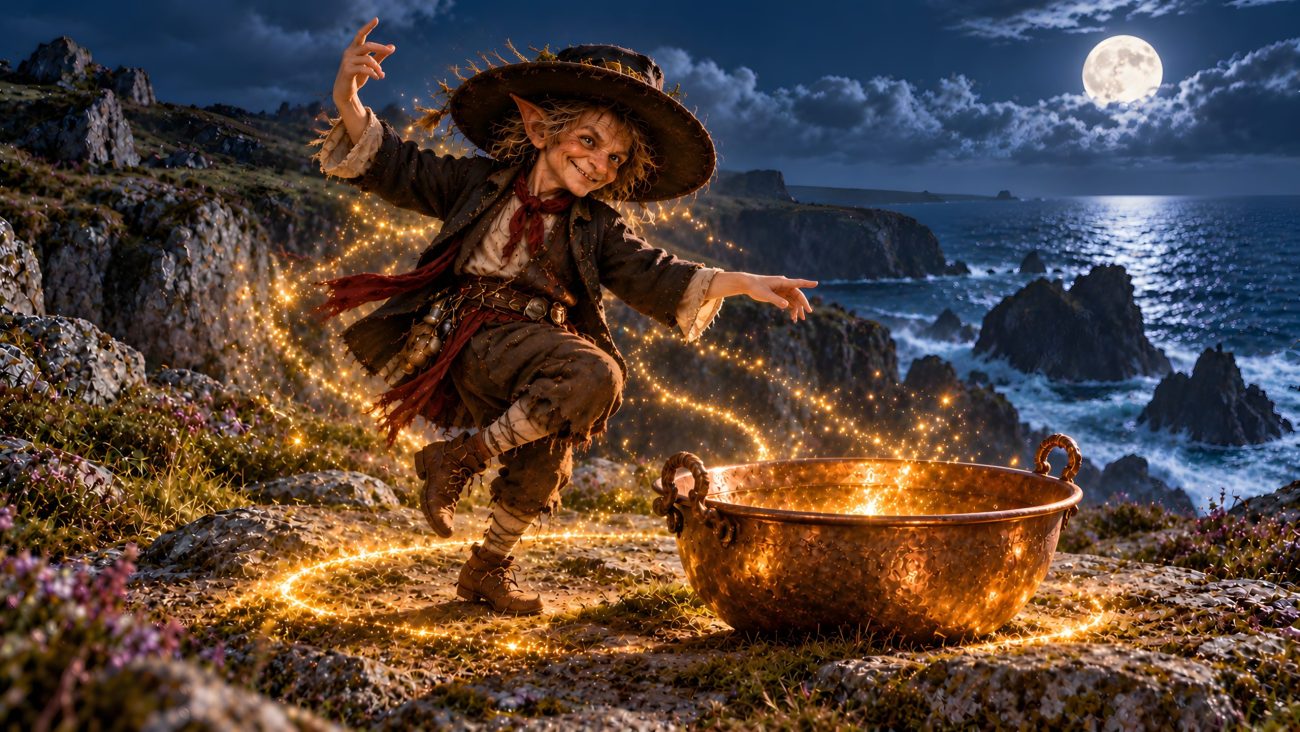
The lutin is one of the small hidden folk who live close to humans, slipping easily between the visible and invisible worlds. Mischievous by nature, clever rather than cruel, the lutin delights in tricks, surprises, and quiet interference in everyday life.

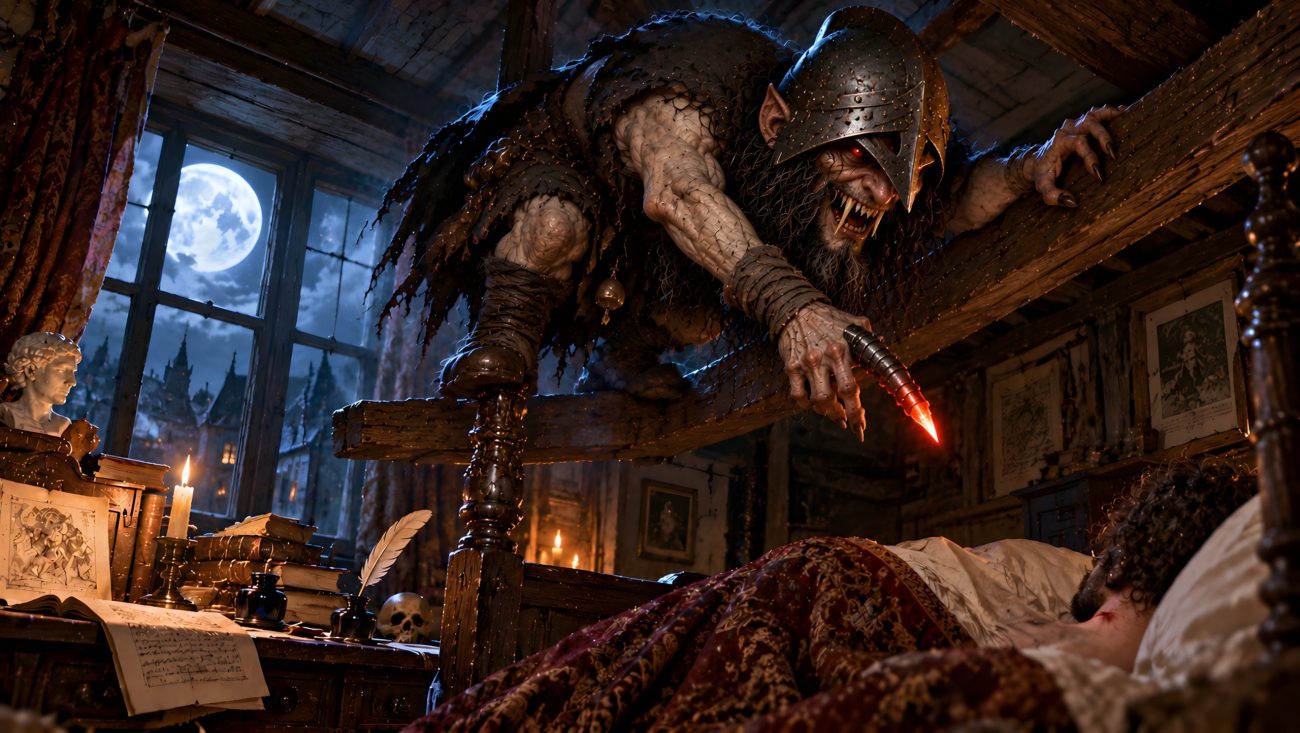
Often unseen, the lutin may suddenly make its presence known through tangled hair, twisted into stubborn elf-locks, or by the unexplained movement of objects in a home or stable. Horses are particular targets of its playfulness: their manes may be braided overnight, or they may be found lathered and exhausted, as though ridden hard while no rider was seen.

At times, the lutin takes on a striking form—a horse already saddled and waiting, known as Le Cheval Bayard. Those foolish enough to mount it may find themselves carried off at impossible speed, only to be dropped far from home, confused and shaken.

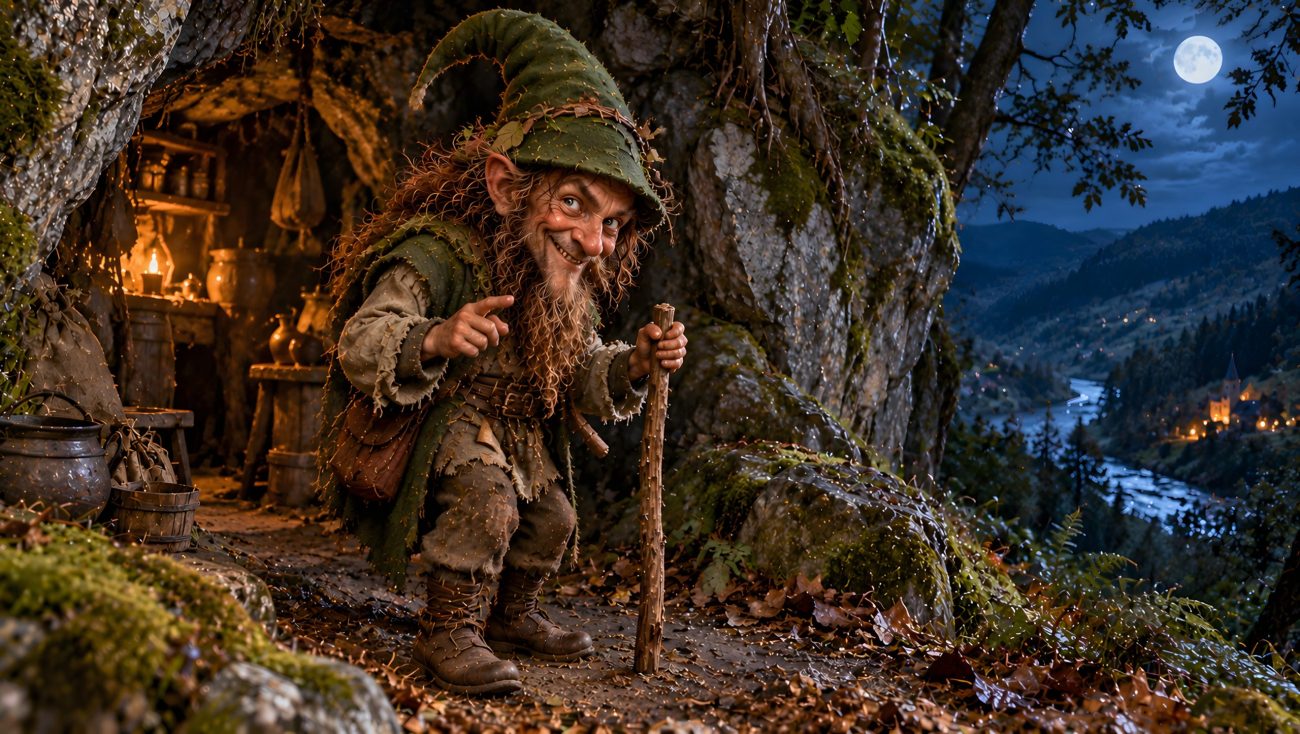
Lutins possess remarkable powers. They can become invisible at will, pass through walls, doors, and locked spaces, rise into the air without wings, dive into the sea without drowning, and cross vast distances in an instant. They are not bound by the limits of land, water, or sky. When they choose to be seen, they appear in a small, human-like form, often wearing a red cap, sometimes enchanted so that it grants invisibility.

Though playful and troublesome, lutins are not enemies of humankind. Like household spirits elsewhere in Europe, they may help or hinder depending on how they are treated. Kindness may earn quiet assistance; disrespect invites mockery and confusion.

In later tradition, the lutin’s role softened further. It is said that they now assist Père Noël, working unseen to help with his labors in the far north. Yet even then, they retain their old nature—quick, elusive, fond of tricks, and never entirely trustworthy.

To encounter a lutin is to brush against a world where rules bend, doors open without keys, and laughter may echo just beyond sight.


Sources

Wikipedia contributors. (n.d.). Lutin. In Wikipedia, The Free Encyclopedia, from https://en.wikipedia.org/wiki/Lutin


Aatxe

Tradition / Region: Basque mythology, Spanish Mythology, French Mythology
Alternate Names: Etsai, Aatxegorri
Category: Cow


The Myth

Aatxe is a spirit in Basque folklore whose name means “young bull.” He is a cave-dwelling shapeshifter most often appearing as a young red bull, but he may also take the form of a man, cow, or calf. He emerges at night, especially during storms, from caves or hollows where he lives. He attacks criminals and other malevolent people and protects others by making them stay home when danger is near. He is considered a representative or enforcer of Mari.

In the ancient Basque lands, justice was not written in books or spoken by judges. It lived in the land itself. It moved through mountains, valleys, and storms, watching quietly. One of its strongest forms was the Aatxe.

The Aatxe did not live among people. He dwelled deep within caves carved into the earth—dark places where the world opens inward. These caves were not empty hollows but living thresholds, places where the human world touched something far older. From there, the Aatxe kept watch, standing between humanity and the forces beneath the ground.

He did not emerge without reason.

The Aatxe came forth only when rain fell. When storms covered the land, villages grew quiet and honest people stayed inside by their fires. Only those with secrets, ill intent, or guilt walked abroad in such weather. Rain stripped the world of witnesses and noise, leaving only the sound of water and footsteps. It was then, in the blurred paths and empty roads, that the Aatxe appeared.

Those who encountered him knew why he had come.

The Aatxe did not need to question or accuse. He did not bargain, hesitate, or explain. His presence alone was judgment. The guilty felt it immediately—an inescapable certainty that no excuse could undo what had already been done. Fear came not from violence, but from inevitability.

He was not an independent being, but a form taken by Mari, the great power of earth and storm. Through wind and rain, she shaped the conditions of justice, and through the Aatxe she made it visible. The storm was not a warning—it was the space in which judgment could occur.

Thus the people believed that morality was part of nature itself. To act wrongly was not merely to break a rule, but to step out of harmony with the world. And when that happened, the land would answer—quietly, patiently, and without mercy—through the coming of rain and the silent watch of the Aatxe.


Sources

Bane, T. (2016). Encyclopedia of spirits and ghosts in world mythology (p. 13). McFarland.

Barandiaran Ayerbe, J. M. D. (n.d.). Aatxe. Auñamendi Eusko Entziklopedia. Retrieved, from https://aunamendi.eusko-ikaskuntza.eus/artikuluak/artikulua.php?id=eu&ar=5626

Julien, D. H. U. Y., and Jean-Loïc LE QUELLEC. “Les Ihizi: et si un mythe basque remontait à la préhistoire?.”

Rose, C. (1998). Spirits, Fairies, Leprechauns and Goblins. Norton.

Annequin

Tradition / Region: French Mythology, Belgian Mythology
Alternate Names: Hannequet; Hannequin; Harliquin
Category: Fairy, Goblin, Flame


The Myth

In the folklore of the Ardennes, the annequin is a malevolent fairy creature, often described as a kind of goblin or will-o’-the-wisp. It is known above all for luring humans to their deaths. Those who encounter an annequin are said to be drawn irresistibly toward marshes and wetlands, where they become lost and drown.

The annequins are closely associated with the mesnie Hellequin, the spectral procession that roams the night sky, and through it with the figure later known as Harlequin. Their nature is restless and predatory, bound to movement, noise, and disappearance.

According to tradition, annequins gather in a round dance every Saturday night. On certain nights, they are said to pass above houses, flying through the air while emitting shrill, piercing whistles. Anyone who is surprised by their passage is believed to vanish forever, leaving no trace behind.

The annequins are said to dwell especially in wooded areas, particularly in the forests of Puilly, where their presence is marked by strange sounds, sudden lights, and the dangerous pull toward bogs and swamps. Those who follow these signs are rarely seen again.

In the legends of the Ardennes, the annequin is remembered as a being of deception and disappearance, a nocturnal spirit whose call leads not to wonder, but to death.


Beast of the North

Tradition / Region: French mythology
Alternative Name: –
Category: Lion


The Myth

In the forests of Creuse, during the late autumn of 1982, a disturbing presence emerged from the woodland shadows. Livestock across the region—bulls, cows, and sheep—were found brutally killed and mutilated in ways that defied ordinary explanation. The precision of the wounds, the sheer force involved, and the absence of clear tracks convinced many villagers that this was no wolf, dog, or known predator.

A single explanation began to circulate with growing certainty: a lion.

Witnesses spoke of an immense, powerful creature moving silently through the forest, watching from the trees before striking under cover of darkness. One man reportedly came face-to-face with the beast during a hunt, yet could not identify it clearly—only its overwhelming presence, its unnatural size, and its unblinking, golden gaze. These details fed the belief that something foreign, regal, and terrifying had crossed into rural France.

The idea of a lion roaming the French countryside struck at something deeper than fear of an animal. It became a symbol of nature’s refusal to remain contained, of wild forces intruding upon human order. Fields and forests once seen as familiar were reimagined as domains of an unseen sovereign predator, demanding caution and respect.

Though the attacks eventually stopped and no definitive proof was ever found, the creature was never captured, named, or explained away. The Beast of the North remained unresolved—half incident, half legend. In local memory, it endures as a reminder that even in modern times, the wilderness can still give birth to myths, and that the spirit of the lion—silent, powerful, and untamed—can appear where no one expects it, testing the boundary between the known and the unknown.


Couzzietti

Tradition / Region: Belgian Mythology, French Mythology
Alternate Names:
Category: Dwarf


The Myth

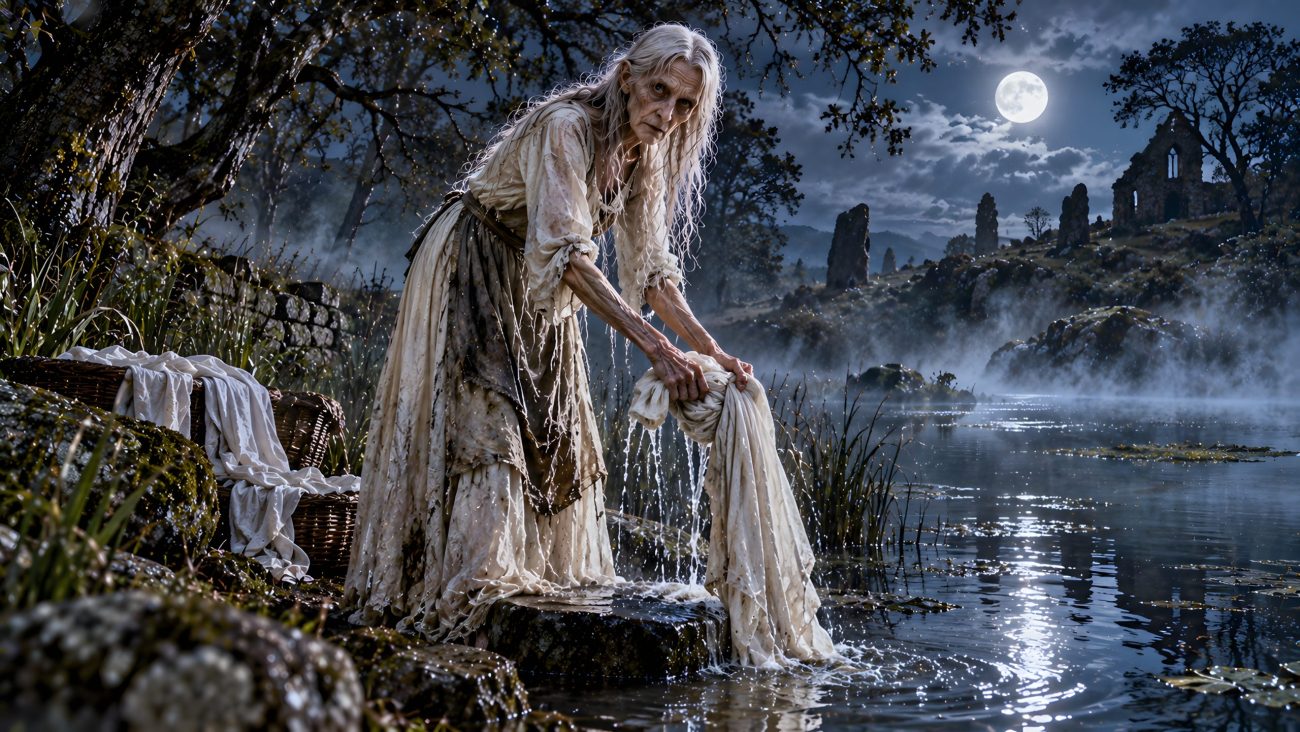
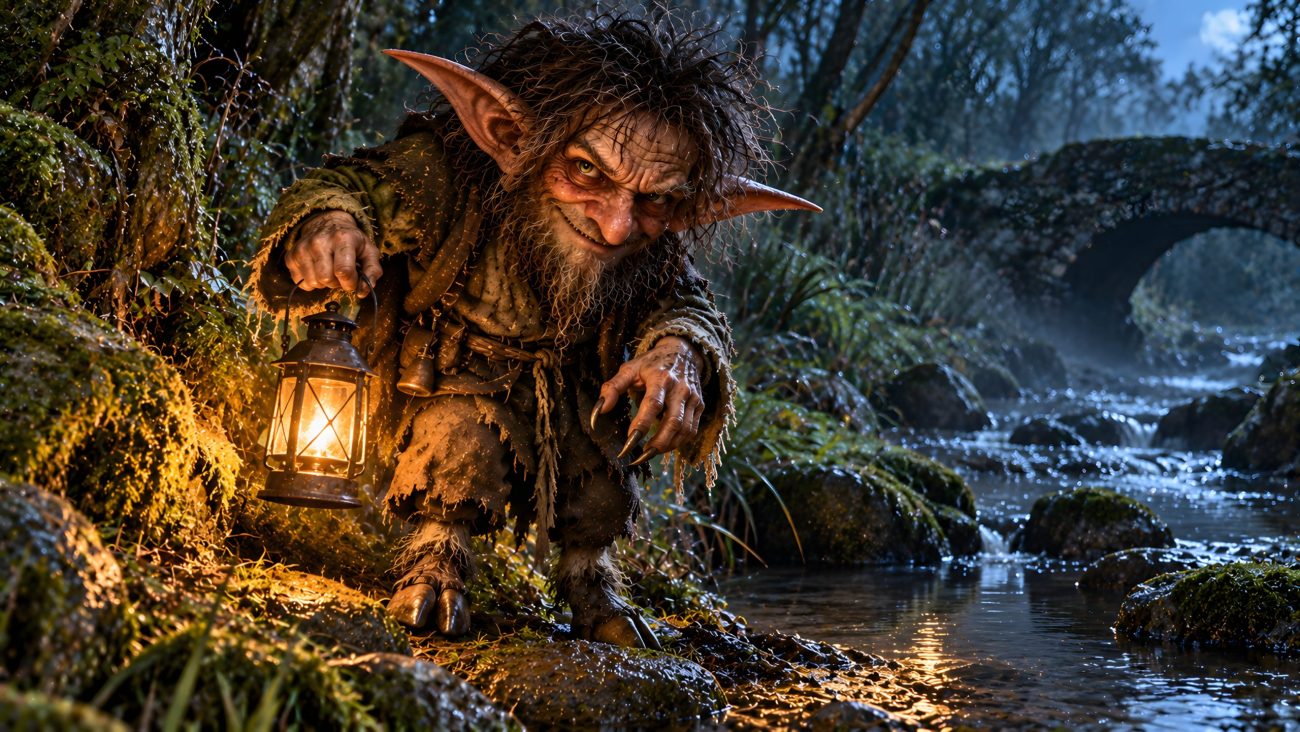
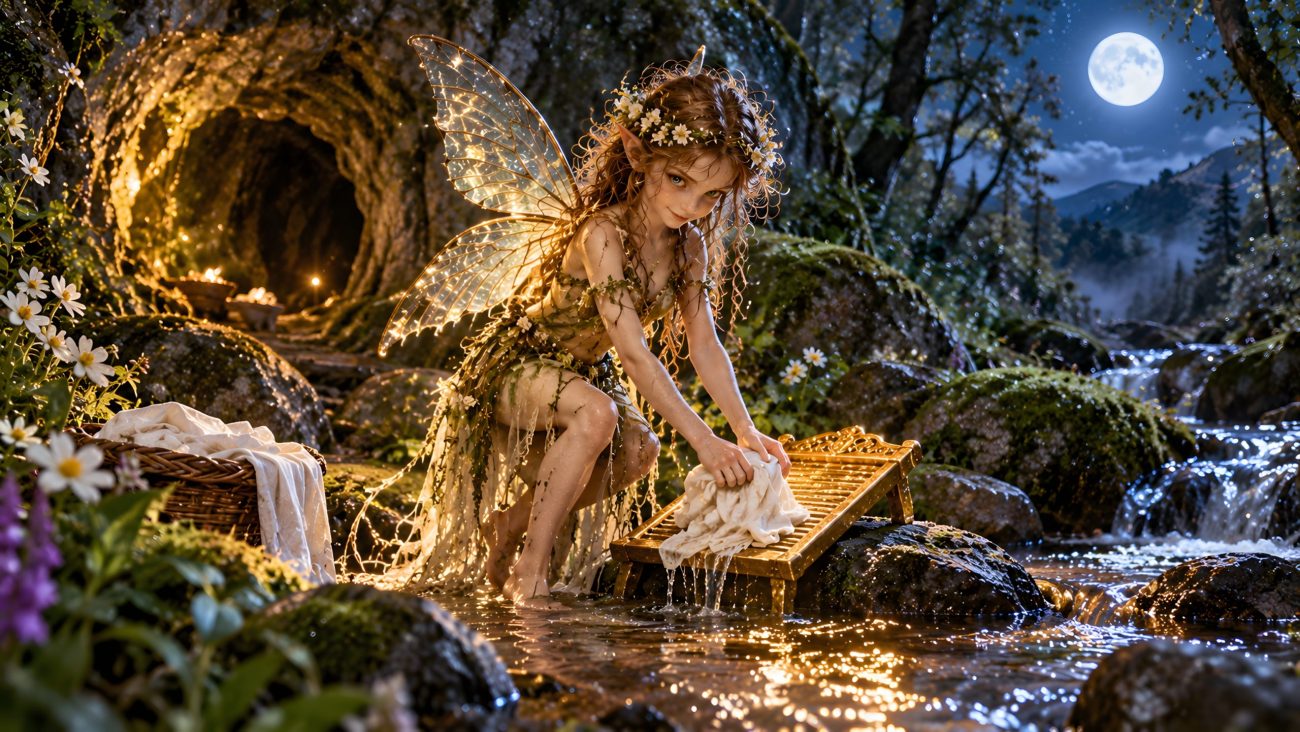
The Couzzietti is a forest-dwelling dwarf from the folklore of the Ardennes. He is said to haunt wooded areas near streams and washing places, where washerwomen come to clean their linen.

According to tradition, the Couzzietti sets traps to steal the freshly washed cloth. His presence is announced by loud cries echoing through the forest, shouting, “O Couzzietti, O Mould of Coutteni!” Those who hear the shouts know he is near.

The Couzzietti is remembered as a mischievous and thieving forest dwarf, whose tricks target washerwomen and whose voice betrays his hiding place among the trees.


Lou Carcolh

Tradition / Region: France (Gascony; Hastingues)
Alternate Names: Carcolh, Liu-Karkul
Category: Snail / dragon


The Myth

Lou Carcolh is a monstrous creature of Gascon folklore, whose name means “snail.” It is said to dwell in a deep cavern beneath the town of Hastingues in southwestern France. Half serpent and half mollusk, Lou Carcolh possesses a vast, elongated body crowned by an enormous shell as large as a house.

From its gaping mouth extend numerous long, hairy tentacles, slick with mucus. These appendages spread outward from the cave, lying flat against the ground and coated in thick slime. The tentacles can reach great distances, and anything that comes within their grasp is seized and dragged back toward the cave. Once pulled inside, the victim is swallowed whole.

People said that the creature’s slime could sometimes be seen long before Lou Carcolh itself appeared, glistening on the ground as a warning of its presence. Those who followed the trail too closely risked being taken without a sound, hauled away by the creature’s unseen reach.

Lou Carcolh became so closely associated with Hastingues that the creature’s name was used as a nickname for the town itself, which stands upon a rounded hill. In local tradition, the men of Hastingues were said to warn young women playfully, “The Carcolh will catch you,” invoking the lurking monster beneath the ground.

Through these stories, Lou Carcolh is remembered as a vast, slimy dragon-snail, hidden beneath the earth, whose silent tentacles stretched outward to claim the unwary and pull them into the darkness below.


Interpretive Lenses

Religious Readings
Philosophical Readings
Psychological Readings
Esoteric Deep Dive
Political / Social Readings
Other