Abonde

Tradition: French Mythology
Alternative Names: Dame Abonde, Fairy Abonde
Category: Fairy


The Myth

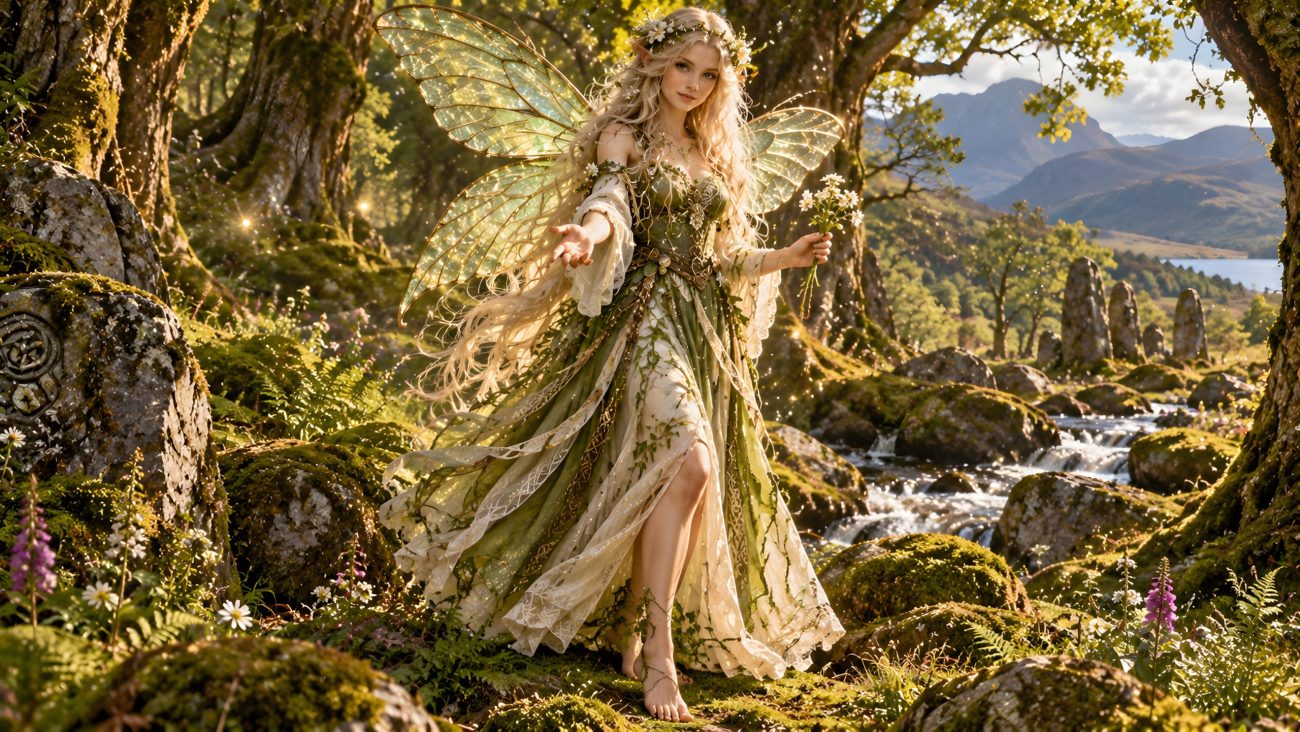
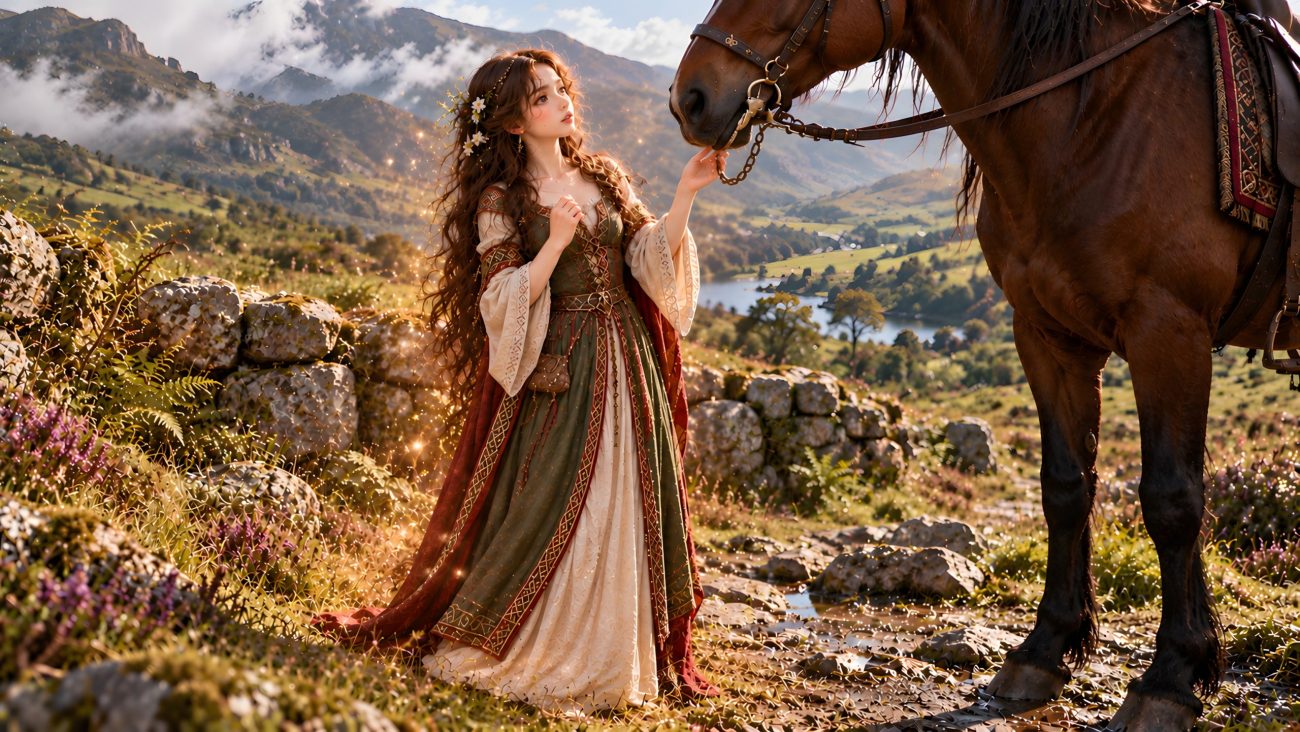
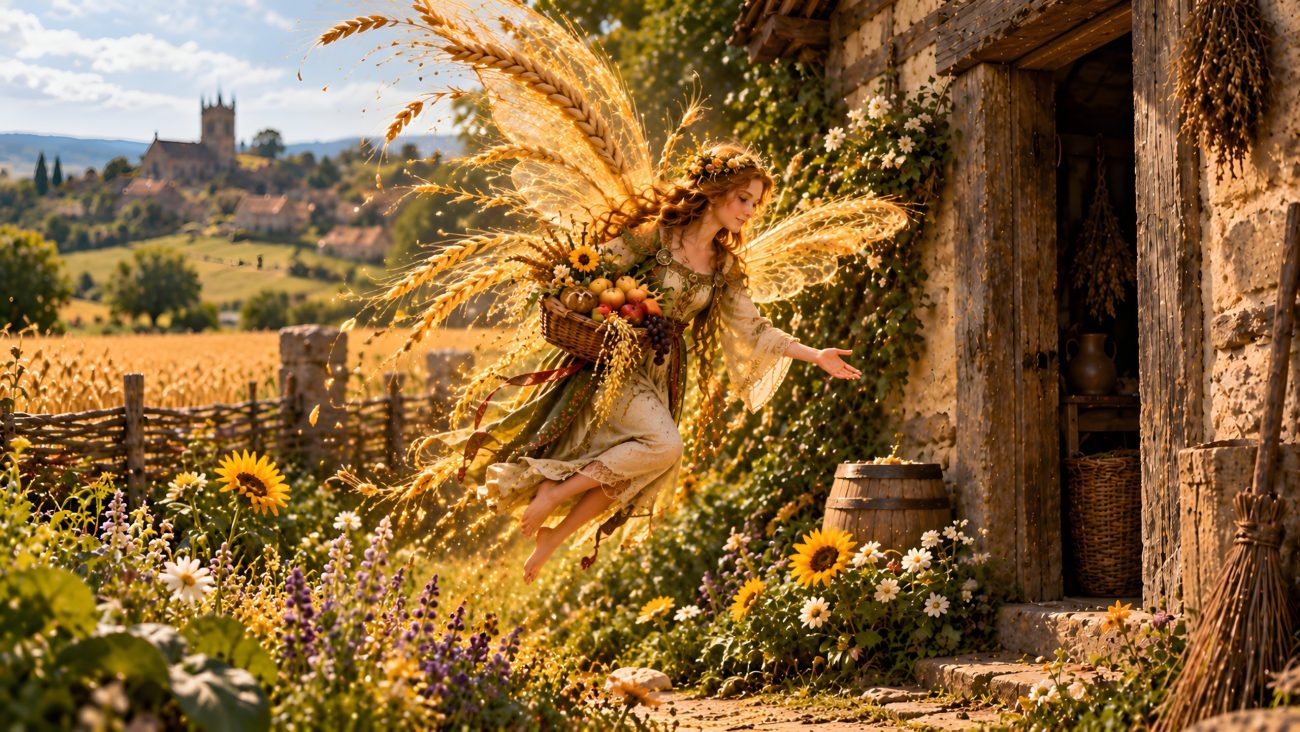
Abonde, also called Dame Abonde, is a benevolent female fairy or spirit associated with fertility and abundance. She was believed to visit human households, particularly those of ordinary and poor people, bringing prosperity and plenty to the homes she favored. People sought her goodwill by leaving offerings of food and drink, hoping that her presence would bring abundance to the household and ensure the continued fertility of the land.

Abonde was said to visit houses at night, and medieval accounts describe people who claimed to have flown through the night with her. The belief was criticized by medieval Christian writers, who regarded such nocturnal encounters as superstition. Her connection with abundance also appeared in ritual traditions surrounding marriage: one medieval account describes grains of wheat being scattered over newlyweds while people called out for abundance, although the source does not establish with certainty that this ceremony was directly dedicated to Abonde.

Her role was therefore that of a generous supernatural visitor whose favor could bring prosperity, fertility, and the renewal of agricultural abundance. She belonged to a wider world of rural beliefs in which supernatural beings were approached through offerings and rituals intended to secure good fortune for the household and its crops. Over time, medieval clerical authorities increasingly condemned and demonized such beliefs, but Abonde remained remembered as one of the great benevolent fairies associated with abundance.


Sources

“Abonde (fée).” Wikipédia, l’encyclopédie libre (French Wikipedia). Wikimedia Foundation. Accessed October 5, 2026. https://fr.wikipedia.org/wiki/Abonde_(f%C3%A9e)

Tréo-Fall

Tradition: French Mythology
Alternative Names: Danserien-Noz, Dañserion-Noz, Night Dancers
Category: Fairy


The Myth

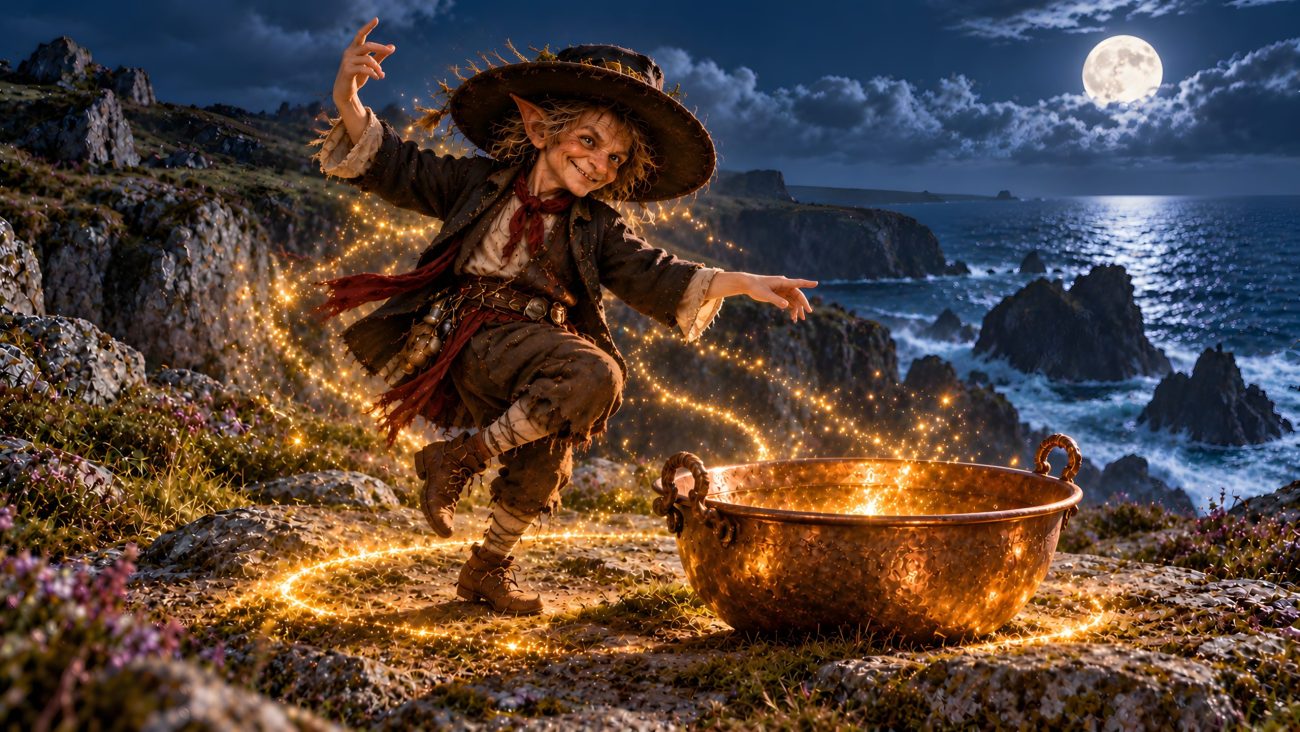
The Tréo-Fall are small goblin-like fairies said to gather at night on the cliffs of Ushant, where they dance beneath the moonlight. Their appearance is only vaguely described, but they are consistently portrayed as very small beings. In some accounts they wear large round hats and dance around a copper basin. They invite passing humans to join their mysterious dances, sometimes promising them great treasures in return. The invitation is dangerous, however, because those who become caught up in their dancing may suffer terrible injuries.

A person who encounters the Tréo-Fall must know how to escape their enchanted dance. The traditional protection is to stick a knife into the ground and touch it at every circle of the dance. If the dancer manages to complete the required circles while maintaining this ritual, the Tréo-Fall will grant whatever request is made of them. Those who fail to escape can be subjected to their cruel tricks, with some unfortunate dancers said to end up with broken kidneys. Their behavior therefore shifts between generosity and malice: they may reward someone who willingly joins their dance, while punishing or cursing those who insult them.

Stories of the Night Dancers were also told around Plouaret in the Côtes-d’Armor. One tale tells of two half-sisters, one beautiful, graceful and kind, the other ugly, mean and spiteful. The good girl was deliberately sent along a road where the Night Dancers gathered at the Croaz-ann-neud crossroads. She encountered a crowd of little men dancing in the moonlight and accepted their invitation. Pleased by her kindness, they showered her with gifts. Her jealous stepmother then sent the wicked girl along the same road, expecting her to receive the same rewards. When the little dancers invited her to join them, however, she insulted them, and they cursed her instead. Another version tells of seven dwarfs wearing large hats, six of whom danced with the good girl and kissed her in gratitude, while the seventh remained apart.


Sources

“Tréo-Fall.” Wikipedia: The Free Encyclopedia. Wikimedia Foundation. Accessed October 4, 2026. https://en.wikipedia.org/wiki/Tr%C3%A9o-Fall


Ọgbanje

Tradition: Nigerian Mythology
Alternative Names: Ogbanje
Category: Fairy


The Myth

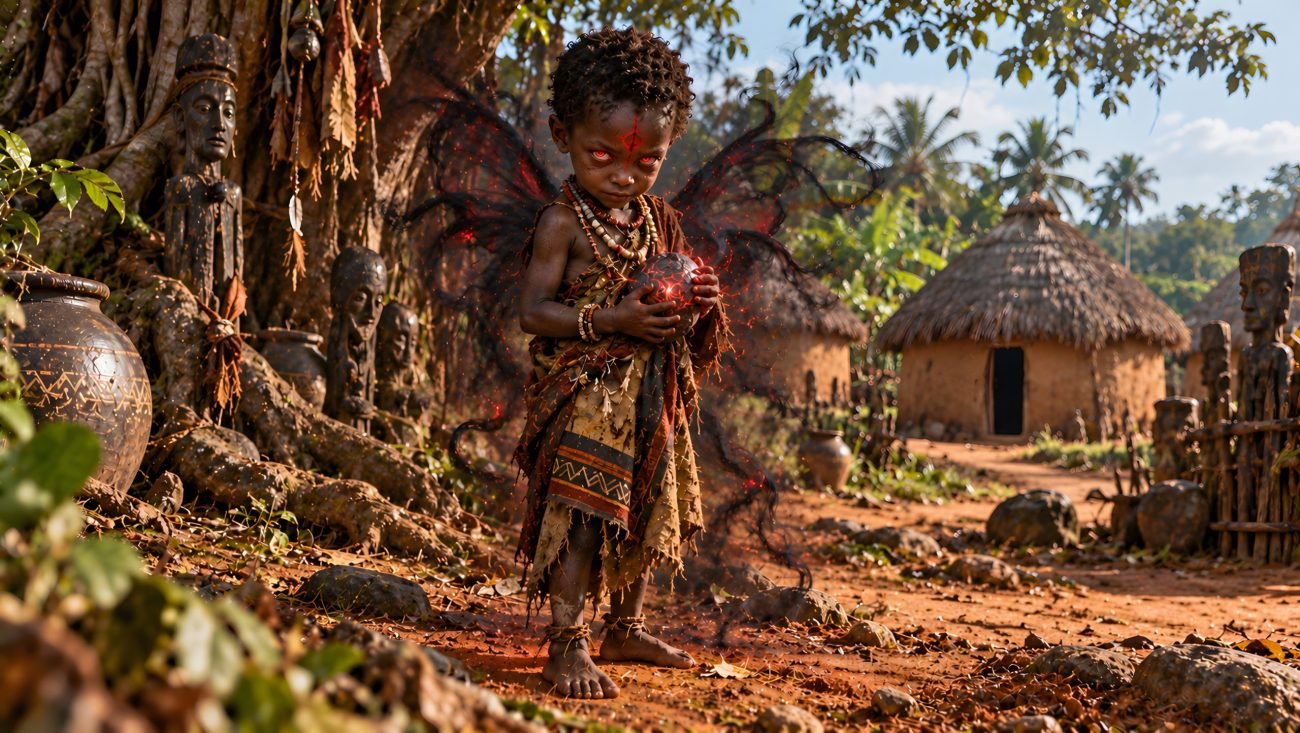
The ọgbanje was believed to be a malevolent spirit that could take the form of a child and deliberately bring suffering to a family. The name literally means “children who come and go,” reflecting the belief that the same spirit could repeatedly enter a family through different children. An ọgbanje might be born into a family and then die while still young, often before reaching puberty, only to return through another child and repeat the cycle. The spirit could also appear within an extended family rather than returning to the exact same household, and it was believed that an ọgbanje could enter the human world between conception and birth or be introduced into a group of such spirits.

The ọgbanje was believed to possess a secret stone called an iyi-uwa, which it buried somewhere hidden. This stone allowed the spirit to return to the human world and find the family it had chosen to torment. As long as the stone remained hidden, the cycle of death and return could continue. Families therefore sought the help of a priest to locate the iyi-uwa and bring it out of the ground. Once the stone was found and destroyed, the spirit was believed to lose its power to return and plague the family. A child might also be considered free from the spirit after the mother successfully gave birth to another child.

People looked for signs that a child was an ọgbanje, including distinctive birthmarks, recurring illnesses, unusual behaviour, similarities to a deceased child, or even the child’s first words. Oracles could be consulted to determine whether the spirit was believed to be present. After an ọgbanje died, some families attempted to prevent its return by cutting or mutilating the body, believing that the spirit would recognize the scars if it returned in another incarnation. Some stories even claimed that a returning child could bear the physical marks of this earlier mutilation. Through its repeated deaths and returns, the ọgbanje became a figure associated with the mysterious loss of children and the seemingly endless misfortune of a family.


Sources

“Awes-kon-wa.” Wikipedia: The Free Encyclopedia. Wikimedia Foundation. Accessed October 4, 2026. https://en.wikipedia.org/wiki/Awes-kon-wa


Awes-kon-wa

Tradition: Haudenosaunee mythology, American Mythology
Alternative Names: –
Category: Fairy


The Myth

Awes-kon-wa is a small, winged supernatural being in the mythology of the Mohawk people, one of the Haudenosaunee nations. It is described simply as a sprite with wings and a diminutive form.

Beyond its small size, wings, and supernatural nature, the surviving description provides no further story or specific legend concerning Awes-kon-wa.


Sources

“Awes-kon-wa.” Wikipedia: The Free Encyclopedia. Wikimedia Foundation. Accessed October 4, 2026. https://en.wikipedia.org/wiki/Awes-kon-wa


Seelie

Tradition: Scottish Mythology
Alternative Names: Seely, Seelie Wights, Seilie Wichts, Seelie Court
Category: Fairy


The Myth

The Seelie were a host of fairy beings in Scottish folklore, associated with good fortune, blessing, and happiness. They could appear as supernatural nature spirits or as groups of fairies gathering together in courts and troupes. Despite their favourable name, the Seelie were not entirely benevolent. They could help humans who treated them well, warn people who accidentally offended them, and repay kindness with supernatural favours, but they could also become mischievous or seek revenge when insulted. Their name itself could therefore serve as a protective expression, describing them as “blessed” or “good” in the hope of avoiding their anger.

The Seelie Court was regarded as the gathering of the more friendly and less malicious fairies. Its members might approach humans for assistance, reward those who helped them, or intervene on behalf of people they favoured. Their goodwill, however, was conditional. A person who offended a Seelie being could expect punishment or retaliation, even though the creature belonged to the supposedly benevolent court. The Seelie therefore occupied an uncertain position between kindness and danger: they were capable of generosity and friendship, but demanded that humans respect them and their customs.

The Seelie stood in contrast to the darker fairy beings associated with the Unseelie Court, whose members were described as more hostile and capable of attacking humans without provocation. Scottish ballads preserve both sides of the Seelie tradition. In “Allison Gross,” the Seelie Court appears as a benevolent supernatural power, while a fragmentary version of “Tam Lin” presents them in a more threatening light. Thus, the Seelie were not simply “good fairies,” but a supernatural community whose favour could bring help and fortune while whose displeasure could bring mischief and punishment.


Sources

“Yallery Brown.” Wikipedia: The Free Encyclopedia. Wikimedia Foundation. Accessed October 4, 2026. https://en.wikipedia.org/wiki/Yallery_Brown


Fenodyree

Tradition: Manx Mythology
Alternative Names: Phynodderee, Phynnodderee, Fynnoderee, Fenoderee
Category: Fairy


The Myth

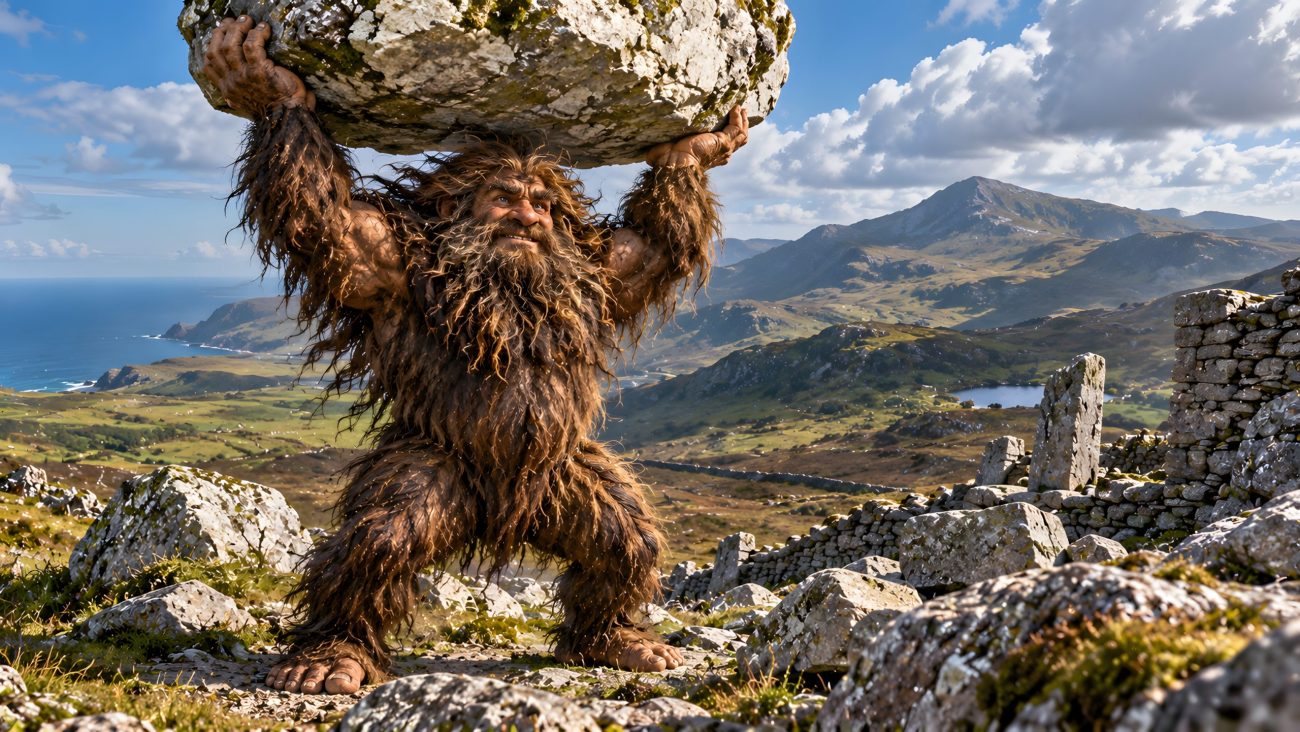
The Fenodyree was a hairy supernatural being of the Isle of Man, resembling a small, shaggy man covered almost entirely in thick body hair and usually appearing without clothing. He was considered one of the ferrishyn, the fairy folk of Manx tradition, and was renowned for his extraordinary strength and speed. Although some accounts describe him as a large and powerful creature, other traditions give him a height of only about two feet, making him enormous only by the standards of the tiny fairy people. His great strength allowed him to perform work far beyond human ability, while his astonishing speed earned him the name Yn Foldyr Gastey, “the Nimble Mower.” Geplakte markdown

The Fenodyree was generally helpful to farmers and fishermen, carrying out difficult work during the night while humans slept. He could reap and thresh fields, gather sheep before storms, herd animals through snow, repair fishing nets and boats, and perform other exhausting tasks with remarkable speed. He was particularly famous for cutting meadow grass, sometimes completing the work so quickly that people could scarcely believe it had been done by hand. In one tale, however, a farmer complained that the Fenodyree had not cut the grass close enough to the ground. Angered by the criticism, the hairy spirit abandoned the mowing and began tearing up the roots instead, pursuing the farmer so fiercely that the man barely escaped having his legs cut off. The meadow could no longer be properly mown until a knight discovered that the grass had to be cut beginning from the centre and worked outward in a circle. Geplakte markdown

Another famous tale tells how the Fenodyree gathered a farmer’s sheep from Snaefell and brought them safely into their pen, but accidentally mistook a large hare for one of the sheep and brought it along with the flock. He was also said to possess tremendous strength, once transporting enormous blocks of stone in a single night for a man building a house near Snaefell. Yet the Fenodyree had one peculiar weakness: he could not accept clothing. When the grateful builder left him a complete set of clothes as payment, the hairy creature lamented that the gift had taken away his freedom and departed sadly into the mountains, declaring that his voice would thereafter be heard in the whistling mountain winds. In this way, the Fenodyree remained a powerful but elusive helper, willing to labour for humans but unable to remain once they tried to reward him with human clothing. Geplakte markdown


Sources

“Yallery Brown.” Wikipedia: The Free Encyclopedia. Wikimedia Foundation. Accessed October 4, 2026. https://en.wikipedia.org/wiki/Yallery_Brown


Yallery Brown

Tradition: English Mythology
Alternative Names: Yallery-Brown
Category: Fairy


The Myth

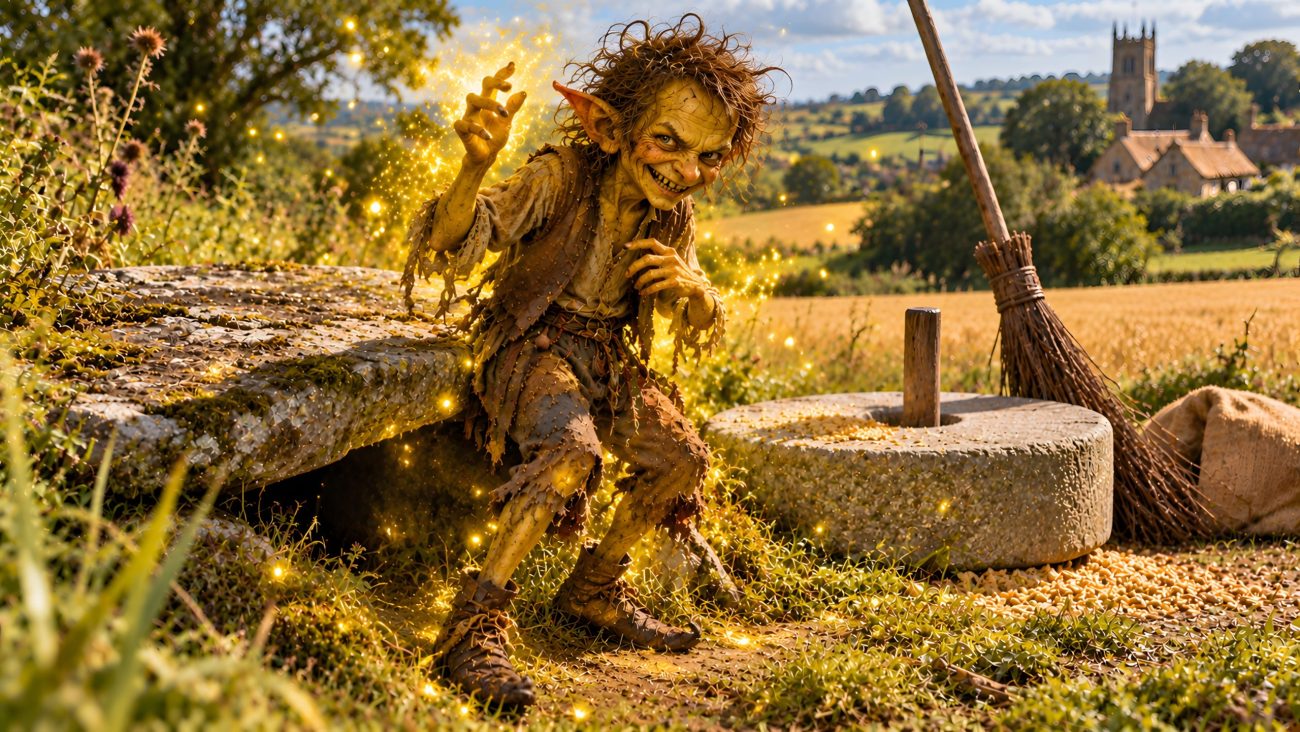
Yallery Brown was a small, ragged creature with yellow-brown skin, the colour of dark mustard, and the appearance of a little man. One day, a young labourer named Tom was resting in a field when he heard a faint whimpering, like a child crying in distress. Following the sound, he discovered the little creature trapped beneath a flat stone. Tom knew that he would have been better off leaving the strange being where it was, but the creature’s pitiful cries moved him. He lifted the stone and freed the little man, who immediately sprang up and introduced himself as Yallery Brown. In gratitude, Yallery Brown offered Tom a wish. Tom, unwilling to work harder than necessary, asked that the creature perform his daily chores for him. Yallery Brown clapped his hands and agreed.

From the following day onward, Tom’s work was mysteriously completed without him lifting a finger. His broom swept the floor by itself, while his quern ground the corn without anyone turning it. This continued day after day until the people around Tom began to suspect that he possessed supernatural powers and whispered that he was a witch or warlock. Frightened by the attention, Tom called for Yallery Brown and told him that he no longer needed his assistance. He thanked the little spirit for everything it had done. Yallery Brown immediately became furious. He had warned Tom never to thank him, for gratitude would bring misfortune, and now Tom had broken that rule. The creature withdrew his magical help and pronounced a curse upon him: no matter how hard Tom worked, he would never prosper or gain anything, and harm and mischance would follow him because he had freed Yallery Brown from beneath the stone.

Yallery Brown vanished after delivering his curse, and he kept his promise. Tom was plagued by bad luck and misfortune for the rest of his life. The gift that had once made his work effortless had become a curse, teaching him that accepting the favour of Yallery Brown came with a price.


Sources

“Yallery Brown.” Wikipedia: The Free Encyclopedia. Wikimedia Foundation. Accessed October 4, 2026. https://en.wikipedia.org/wiki/Yallery_Brown


Tiffenottes

Tradition: French Mythology
Alternative Names: Tiffenotes
Category: Fairy


The Myth

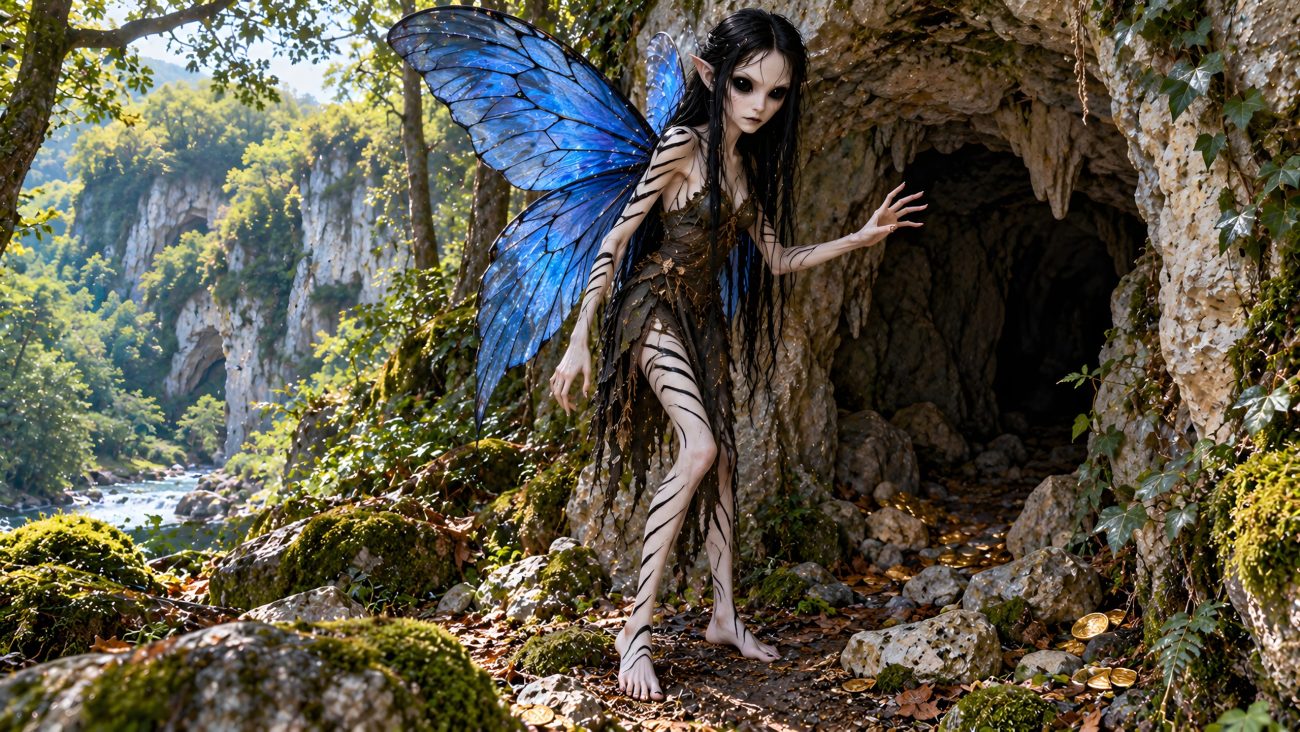
The Tiffenottes are small fairies of the Moselle who live secretly in forests, caves, and rocky places. They are often playful but can also be malicious, fiercely protective of their hidden existence. At Pré Aubry near the Côte de Drince, they are said to gather and dance among the rocks. A person who intrudes upon them may receive either a terrible curse or unexpected gifts and riches, depending on the legend.

One of the best-known stories comes from Rombas, where three Tiffenottes are said to live inside caves in the forest. A young herdsman once noticed a magnificent, unusually large cow emerging from the woods and joining his herd. He cared for the animal as though it belonged to him, but every evening it disappeared back into the forest. The next day it returned, this time carrying small tulle bags filled with gold, which it left for the young man. The strange arrangement continued for months, and the more kindly he treated the cow, the more gold it brought him.

Eventually, curiosity—or more likely greed—overcame the herdsman. He decided to follow the cow when it returned to the forest and discovered that it belonged to the three Tiffenottes. When the fairies saw that he had followed their secret and betrayed their trust, they became furious. In one telling they beat him with whips; in another, he managed to flee. Either way, when he emerged from the forest, his entire herd had disappeared. The beautiful cow never again came down from the woods, and the herdsman lost the mysterious source of his wealth.


Sources

“Tiffenotte.” Wikipédia, l’encyclopédie libre (French Wikipedia). Wikimedia Foundation. Accessed October 4, 2026. https://fr.wikipedia.org/wiki/Tiffenotte


Penloi

Tradition: Welsh Mythology
Alternative Names: Little Penloi, Penoi
Category: Fairy


The Myth

Penloi was a beautiful fairy maiden, remarkably handsome but short and slight in stature. Shon Rolant of Hafod y Dre was returning home from the market at Llanrwst when he encountered and captured her near Pentrevoelas. He brought her home, where her extraordinary beauty caused everyone to admire her. Shon quickly fell deeply in love with her and repeatedly asked her to marry him, but Penloi initially refused. Eventually she agreed, but only on the condition that he discover her name.

About a month later, Shon was again returning from the market when he heard voices near the place where he had first captured the fairy. Someone was calling repeatedly, asking where “little Penloi” had gone. Realising that this must be the name of the fairy he had brought home, Shon returned to his house and addressed her as Penloi. She accepted him as her husband, although she expressed her displeasure at marrying what fairies considered a “dead man” — a human being. She also gave him a strict warning: she must never be touched by iron, or she would immediately disappear.

Shon was careful to obey the warning, but eventually the condition was broken by accident. One day he was on horseback speaking with Penloi, who was standing near the horse’s head. The animal suddenly threw up its head, causing the iron curb of its bridle to strike Penloi. At that instant she vanished completely, leaving Shon without his fairy wife.


Sources

Owen, Elias. Welsh Folk-Lore: A Collection of the Folk-Tales and Legends of North Wales. London: Elliot Stock, 1896.


White-Haired Fairy of the Drina

Tradition: Bosnian Mythology
Alternative Names: Bjelogorka Vila, Višegrad Fairy
Category: Fairy


The Myth

The Bjelogorka Vila was a beautiful fairy who lived among the rocks near Višegrad and the Drina River. She had long, pale hair, which became entangled around the front legs of a powerful black horse. When the builder Mitar Neimare first came to the Drina to determine whether a bridge could be constructed there, his horse entered the river but suddenly refused to move. No amount of kicking or striking could make the animal advance. Mehmed-paša then gave Mitar a protective amulet and told him to place it around the horse’s neck. The amulet caused the horse to leap back onto dry land, carrying the fairy with it. The fairy had tried to drown both Mitar and his horse, but they escaped.

Mitar drew his sword and prepared to kill her, but the fairy begged him to spare her and called him her brother. She promised that if he allowed her to return to the rocks of Butkovo, she would help him construct the bridge. Mitar agreed and began the work. For seven years he laboured on the bridge, but whatever he managed to build during the day was mysteriously undone during the night. Eventually Mehmed-paša demanded to know where Mitar’s fairy helper was. When Mitar called to her, the fairy answered from the rocks, explaining that she could no longer help him because her sisters would not allow it. Instead, she told him to go into the green fields, seize Stoja and Ostoja, and build them into the bridge as a tower. Mitar followed her instructions, and the construction was finally completed after nine years.

When the Drina later became wild and muddy, a slender tree appeared in the river and struck one of the bridge’s towers, causing the entire structure to shake. Mehmed-paša feared that the bridge would collapse, but Mitar told him that the river had not yet been properly given its due. He instructed the pasha to place treasure upon the bridge, take a silver shovel, and offer the wealth to the turbulent Drina. Mehmed-paša did so, scattering the treasure toward the four sides of the river. Seeing that he was willing to sacrifice his wealth, Mitar told him to turn his axe upside down and lower him down on ropes so that he could cut the slender tree. When Mitar struck it, blood flowed from the tree and a voice emerged, declaring that the bridge would remain on the Drina that day and forever. The fairy herself does not appear again after giving Mitar her instructions, but her intervention makes her an important supernatural force behind the building of the Višegrad bridge.


Sources

Hormann, Kosta. Narodne pjesme muslimana u BiH, vol. 1. Sarajevo, 1888. Reprinted 1976.