Leannán Sí

Tradition: Irish Mythology
Alternative Names: Leannan Sìth, Lhiannan Shee, Fairy Lover, Fairy Mistress
Category: Fairy


The Myth

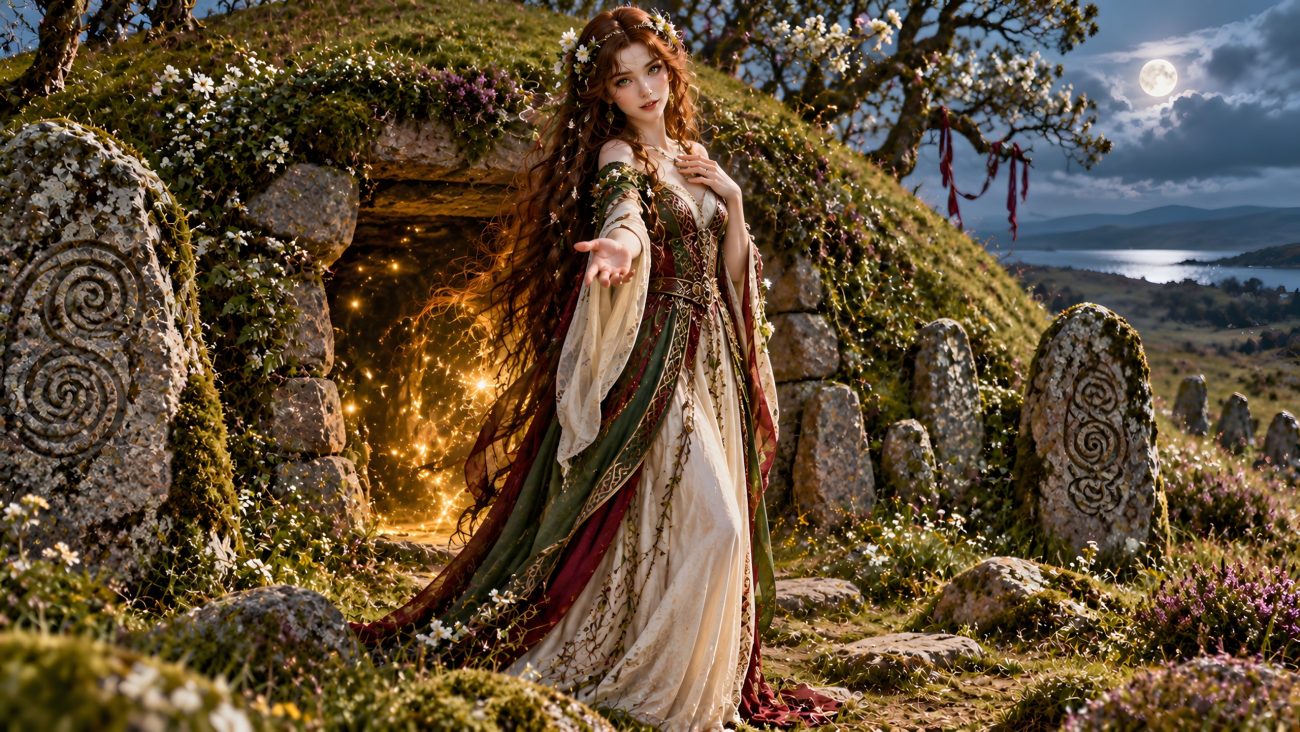
The Leannán Sí was a beautiful fairy woman of the Aos Sí who sought the love of human beings. She would take a mortal as her lover and bind him to the fairy world through their supernatural relationship. Although she could appear as a beautiful and inspiring companion, her love was dangerous. Human lovers of the Leannán Sí were said to live short lives, even when their time with her brought extraordinary inspiration and creativity. A male Leannán Sí was also known in tradition, with at least one account describing such a spirit troubling a mortal woman.

The Leannán Sí became particularly associated with artists and poets, appearing as a supernatural source of inspiration. In the later tradition surrounding her, the artist who accepted her love could produce remarkable works under her influence, but the relationship gradually consumed him. Her inspiration came at the price of his devotion, and the longer he remained under her influence, the more his life was diminished. She was therefore both muse and captor, giving artistic brilliance while drawing the vitality of her mortal lover away.

In the version popularized by W. B. Yeats, the Leannán Sí became an especially sinister fairy mistress. She sought the love of mortals, and once a person accepted her, he belonged to her and could escape only if another mortal took his place. She was said to live upon the life of her lover, causing him to waste away, while even death could not necessarily free him from her influence. As a supernatural muse, she gave inspiration to poets whom she claimed, but her restless nature allowed them little time in the human world. Thus the gifted poet became the price of the fairy’s inspiration, his creativity flourishing while his life slowly burned away.


Sources

“Leanan sídhe.” Wikipedia: The Free Encyclopedia. Wikimedia Foundation. Accessed October 4, 2026. https://en.wikipedia.org/wiki/Leanan_s%C3%ADdhe
Minairó

Tradition: Spanish Mythology, Catalan Mythology
Alternative Names: Minairons, Manairó, Menairó, Diablorí, Zaingorriak
Category: Fairy


The Myth

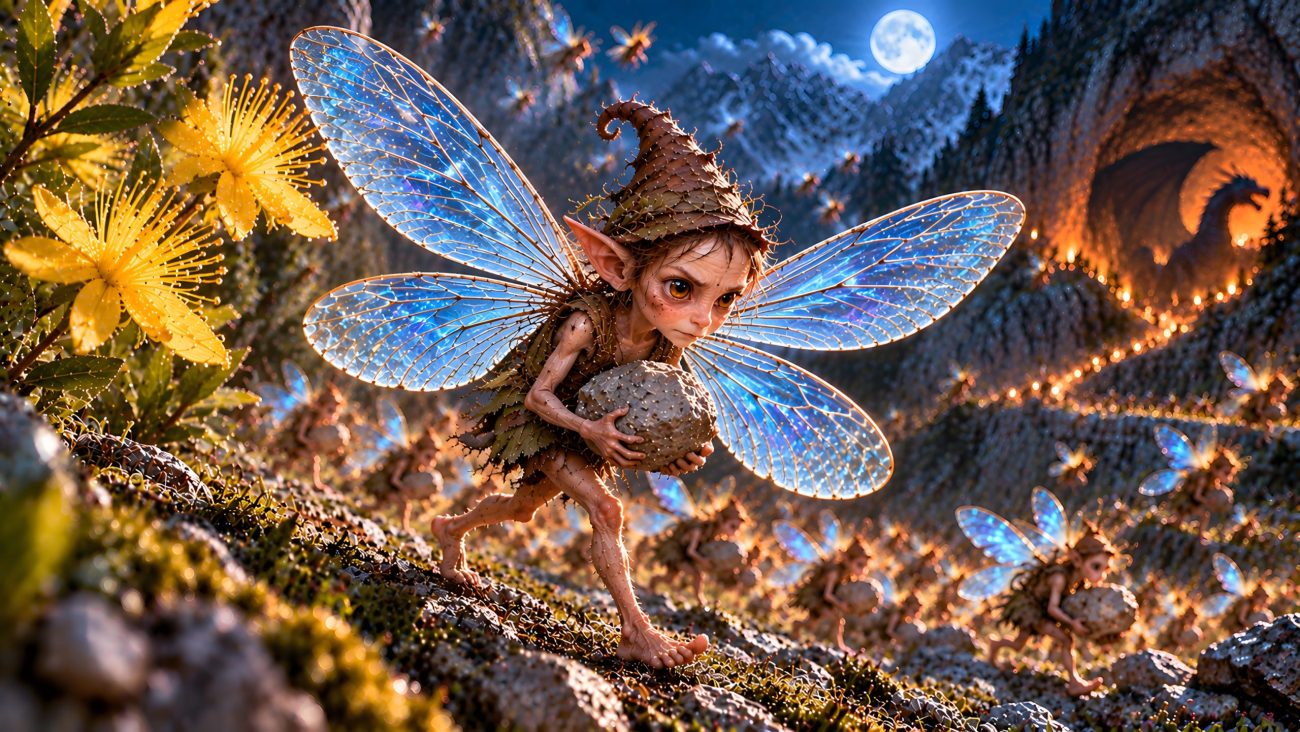
The Minairons are extraordinarily tiny supernatural beings said to be kept by their human masters inside a small needle tube or cane. They are so numerous and minute that thousands can supposedly fit inside a single container. Their exact appearance is uncertain: some people imagine them as almost invisible swarms resembling tiny mosquitoes, while others compare them to bees because of the constant buzzing they make when released. Their origin is connected with the perforate St John’s-wort, which blooms on the night of Saint John at the summer solstice. The magical plant is said to grow in deep caves guarded by giants and dragons, and it must be gathered precisely at midnight on Saint John’s Day. Some traditions instead identify the plant with the fern, while it remains uncertain whether the Minairons emerge from its seed or whether the seed itself is the Minairons.

Once released from their tube, the Minairons immediately demand work from their master, swarming around him and crying, “What will we do? What will we say?” They are tireless workers and must be given a task at once. A careless master who opens the tube accidentally can suddenly find himself surrounded by an uncontrollable multitude of tiny labourers. One famous type of story tells of a curious young man who releases them and commands them to pile rocks together. The Minairons obey so efficiently that they are said to have created many of the great screes scattered through the Pyrenees. Another tradition tells of a powerful labourer who possesses Minairons and commands them to perform agricultural work, allowing him to accomplish in a short time what would normally require several people.

Possession of a Minairon-filled cane was therefore believed to bring extraordinary prosperity to the household that controlled it. Stories remembered particular families from the Pyrenean valleys as owners of the mysterious containers, and their houses were said to have risen in wealth like mushrooms because the invisible labourers worked constantly and without payment. Yet the gift could belong to both respectable families and people who used their supernatural workforce selfishly. Other stories replace the mysterious owner with a single exceptionally strong labourer who seems capable of doing the work of several men. The Minairons thus became legendary as the ultimate source of effortless labour: tiny, restless beings who could move mountains of stone, harvest fields, and perform enormous amounts of work as long as their master kept them under control.


Sources

“Marushinyu.” New Bestiary (Bestiary.us). Accessed October 4, 2026. https://www.bestiary.us/marushinyu


Anjana

Tradition: Cantabrian mythology, Spanish Mythology
Alternative Names: Anjana
Category: Fairy


The Myth

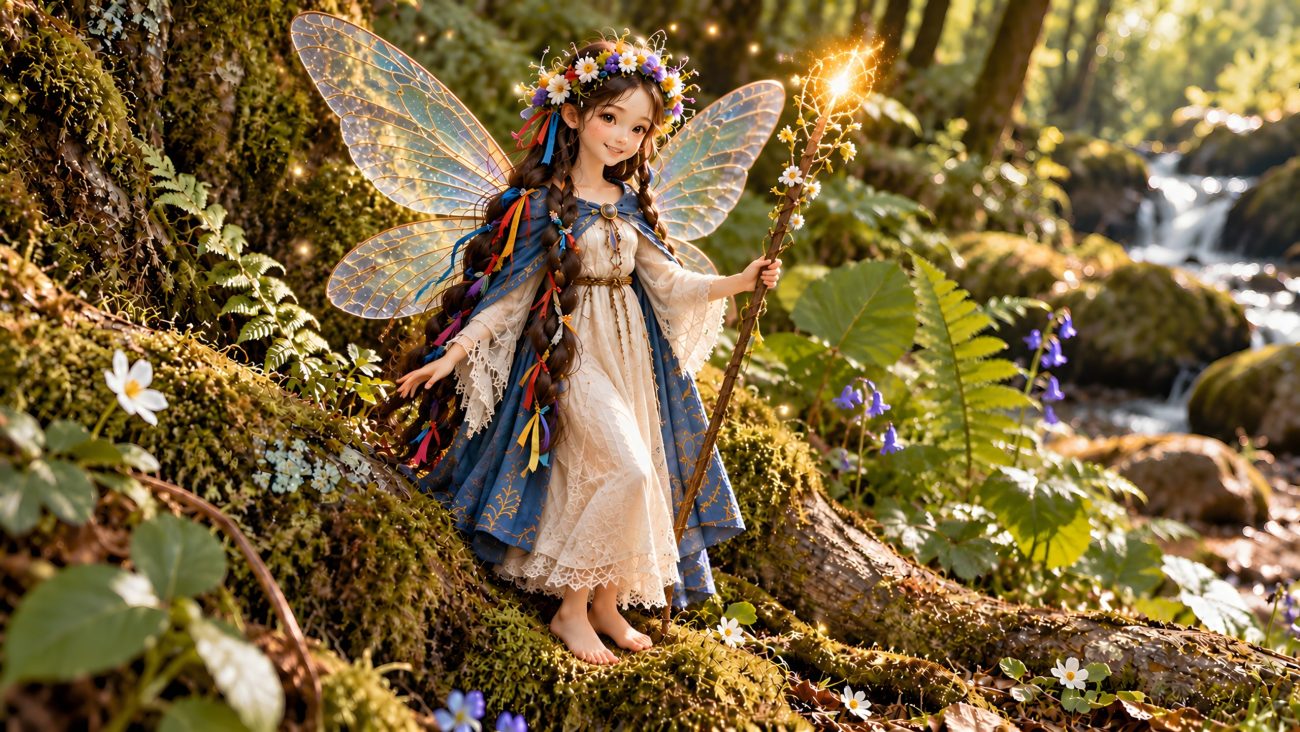
The Anjana are beautiful and delicate female fairies of Cantabrian folklore, standing only about six inches tall. They have pale skin, serene and loving eyes with black or blue pupils that shine like stars, and nearly transparent wings. Their long black or golden hair is worn in braids decorated with multicolored silk bows and ribbons, while a crown of wildflowers rests upon their heads. They wear a blue cape over a long, thin white tunic and carry a wicker or hawthorn wand that shines in a different color on each day of the week. Their voices are sweet, sometimes resembling the song of a nightingale when they are happy, while at other times they sound like a beetle moving through fallen autumn leaves.

The Anjana are regarded as the good fairies of Cantabria and are generous and protective toward human beings. Their principal enemies are the cruel Ojáncanu, whom they oppose and foil whenever he threatens people. Their nature is explained in different ways within Cantabrian tradition: some traditions describe them as heavenly beings sent by God to perform good deeds among humans, after which they return to heaven following four hundred years and never come back. Other traditions regard them as spirits of trees who watch over the forests and care for the natural world.

The Anjana belong to a wider family of benevolent female supernatural beings found throughout northern Iberian folklore. They are associated with forests, goodness, protection, and acts of kindness, standing in opposition to the destructive forces represented by beings such as the Ojáncanu. Their delicate appearance and connection with trees and heaven give them a distinctly gentle character, while their magical nature allows them to act as guardians and helpers of those in need.


Sources

“Anjana (Cantabrian mythology).” Wikipedia: The Free Encyclopedia. Wikimedia Foundation. Accessed October 4, 2026. https://en.wikipedia.org/wiki/Anjana_(Cantabrian_mythology)


Lunantishie

Tradition: English Mythology
Alternative Names: Lunantishie
Category: Fairy


The Myth

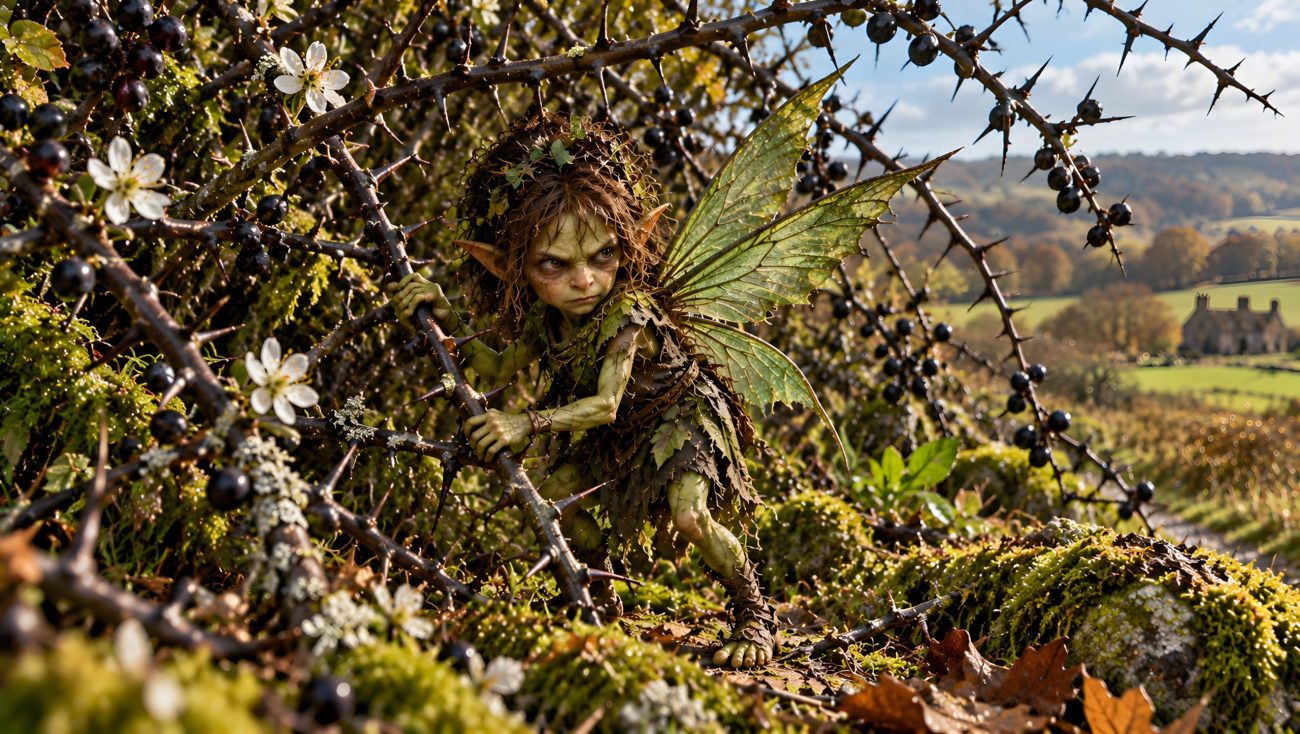
The Lunantishie are a tribe of British fairies who guard thorn bushes. They are especially associated with the blackthorn and are said to be protective of these trees and their branches.

The Lunantishie do not allow anyone to cut even the smallest twig from a thorn bush on November 11, the ancient celebration of All Saints’ Day, or on May 11, the former celebration of May Day. Anyone who cuts a branch from a thorn tree on these days risks angering the fairies, who protect their sacred bushes.

The Lunantishie are therefore guardians of the thorn bushes, defending even their smallest branches from human interference. In the traditional lore recorded for them, the thorn tree is under their protection on these particular days, making the cutting of its wood a dangerous act.


Sources

“Lunantishi.” New Bestiary (Bestiary.us). Accessed October 4, 2026. https://www.bestiary.us/lunantishi


Marushinho

Tradition: Portuguese Mythology
Alternative Names: Maruxinho
Category: Dwarf, Fairy


The Myth

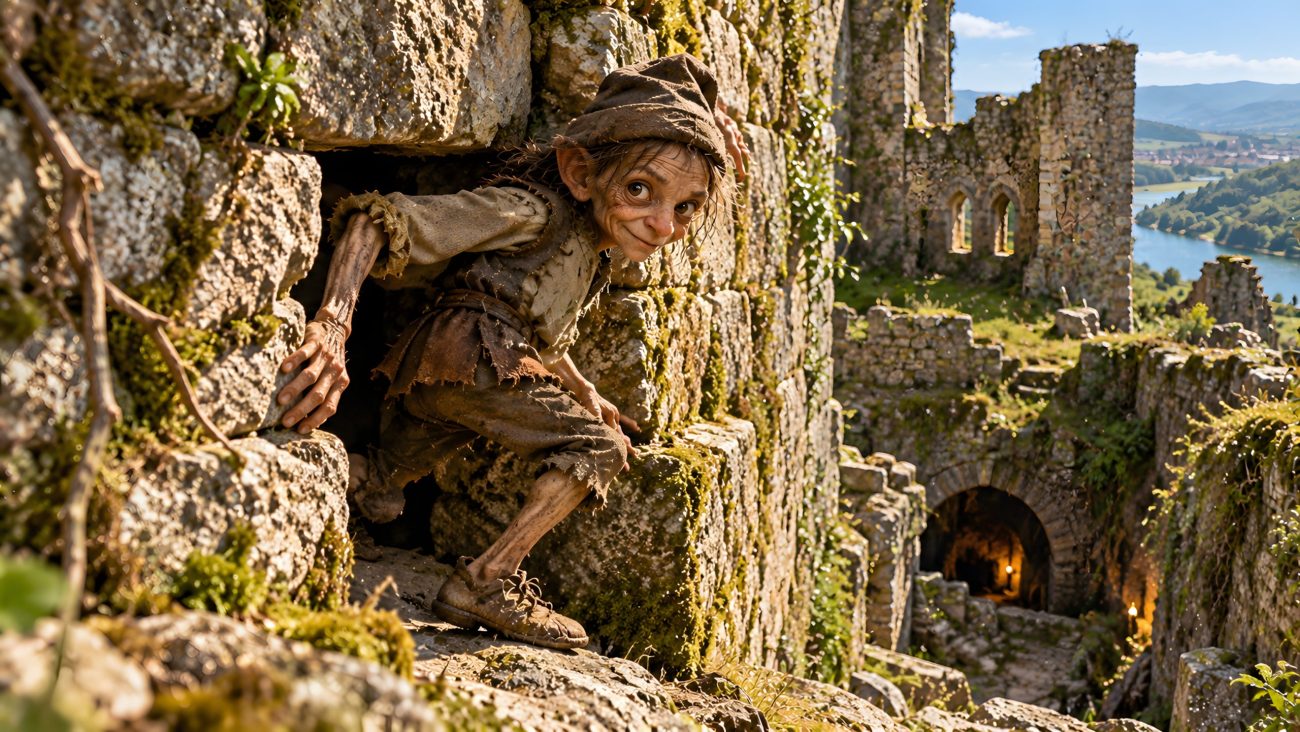
The Marushinhos are small, frail magical creatures said to live among the ruins of old castles and in underground tunnels beneath Northern Portugal, particularly around the municipality of Chaves in the district of Vila Real. They are short in stature, thin and delicate in build, with dark faces and large eyes. Their underground homes are hidden among ruined structures and within networks of tunnels, some of which are believed to extend beneath towns and cities.

Despite their fragile appearance, the Marushinhos are exceptionally cunning and elusive. They are able to conceal themselves in even the smallest spaces and can squeeze through practically any crack or opening. Their ability to disappear into narrow crevices makes them difficult to find and gives them their reputation as creatures of the hidden underground world.

Their remarkable ability to crawl through impossibly small spaces became part of everyday Portuguese expression. Someone who is extremely thin and capable of squeezing through almost anything may be compared to a Marushinho. In this way, the little underground beings became not only creatures of folklore but also a metaphor for someone exceptionally thin, agile, and capable of getting through narrow places.


Sources

“Marushinyu.” New Bestiary (Bestiary.us). Accessed October 4, 2026. https://www.bestiary.us/marushinyu


Snail Maiden

Tradition: Chinese mythology
Alternative Names: Conch Girl, Field Snail Girl, White Water Maiden, White Maiden of the Milky Way
Category: Fairy


The Myth

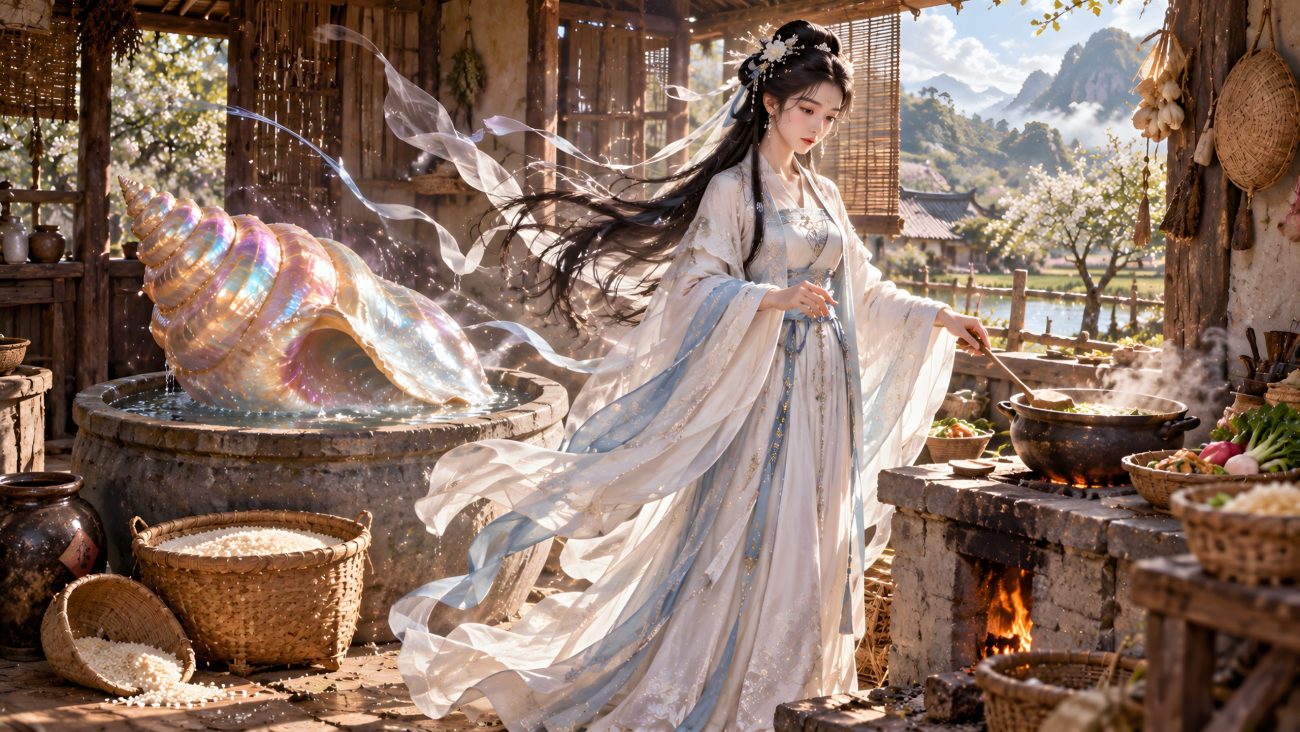
The Snail Maiden appears as a beautiful young woman who emerges from the shell of a large snail or seven-colored conch. Her true form is hidden within the shell, which can be kept in a water jar. In the legend of Xie Duan, a young orphan from Houguan in Fujian, the shell is unusually large, about the size of a bushel. Xie Duan is a hardworking and respectable man who lives alone and has never managed to find a wife. After bringing the strange shell home and placing it in a water vat, he begins returning from the fields to find his house filled with cooked food and a fire burning in the stove.

At first Xie Duan assumes that his neighbors have been helping him, but they deny preparing the meals and tell him that he must already have a wife secretly living in his house. Suspicious, he pretends to leave and then secretly returns to watch. He sees a beautiful young woman emerge from the jar, light the fire, prepare food, and clean the house. When he confronts her, she explains that she is the White Maiden of the Heavenly Realm, sent by the Heavenly Emperor because of Xie Duan’s orphanhood, diligence, and good conduct. She had been commanded to care for his household until he became prosperous and married, after which she would return to the heavenly realm. Since Xie Duan has discovered her true nature by spying on her, however, she must leave immediately. She tells him to continue working the fields and making his living through farming, fishing, and gathering, and leaves behind the shell as a vessel in which he can store his grain.

Xie Duan begs her to remain, but she refuses. A sudden storm rises, with wind and rain carrying the maiden away from him. Xie Duan then establishes a shrine to her and makes seasonal offerings in gratitude. His fortunes improve, he eventually marries, and he later becomes a county magistrate. The Snail Maiden’s legend became especially important among coastal communities of Fujian, where she came to be regarded as a protective deity for people who went to sea and was worshipped among the Fuzhou Tanka. Related versions spread along the coasts of Jiangsu, Zhejiang, Shanghai, and Guangdong, as well as to other places where similar snail-maiden legends were told.


Sources

“螺女 (Luó Nǚ; Snail Woman).” Chinese Wikipedia. Wikimedia Foundation. Accessed October 4, 2026.
https://zh.wikipedia.org/wiki/%E8%9E%BA%E5%A5%B3


Pixie

Tradition: English Mythology
Alternative Names: Pisky, Pixy, Pixi, Pizkie, Piskie, Pigsie
Category: Fairy


The Myth

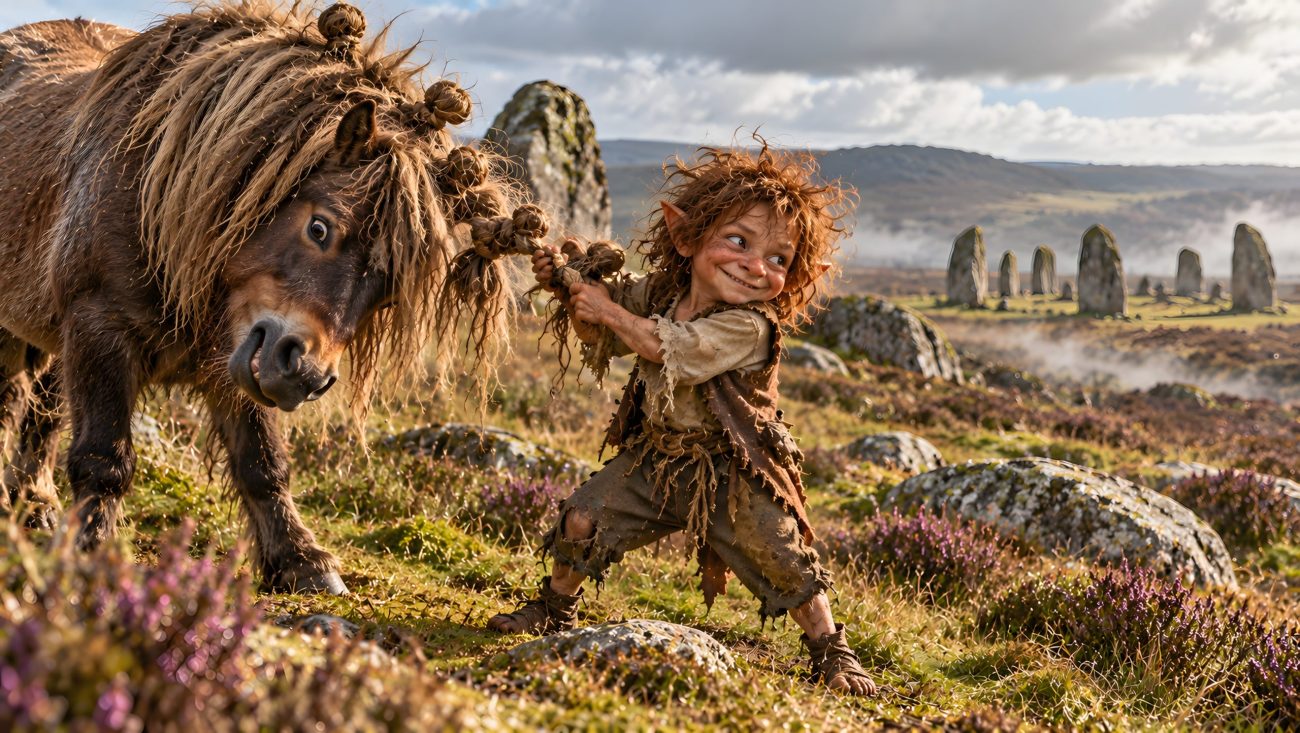
Pixies were small, mischievous supernatural beings of British folklore, particularly associated with the moorlands, hills, ancient stones and remote countryside of Cornwall and Devon. They were generally described as short, childlike creatures who enjoyed dancing, wrestling and playing outdoors through the night. They were also closely connected with ancient places such as stone circles, barrows, dolmens, ringforts and standing stones, where they were believed to dwell beneath the earth. Traditional pixies were often poorly dressed or wrapped in ragged clothing, quite different from the green clothes and pointed hats later given to them in popular imagery. They were usually friendly towards people who treated them well, but could also play tricks, mislead travellers and punish those who neglected or offended them.

The pixies of Dartmoor were particularly famous for their tricks and their relationship with horses. They could disguise themselves as bundles of rags to lure children, while at night they rode Dartmoor ponies for pleasure and sometimes tangled their manes into mysterious knots. They could also help humans, especially people in need, with household work and other tasks. Yet travellers who encountered them risked becoming “pixy-led,” wandering away from the path after being confused by the spirits. A traditional way of breaking this enchantment was to turn one’s coat inside out. Pixies could also reward kindness and consideration with good fortune, while neglecting them could bring trouble.

Many local legends preserve the playful and mysterious nature of the pixies. At Trevose Head in Cornwall, hundreds were said to gather in a circle to dance and laugh until one named Omfra lost his laugh. He searched through the ancient barrows of Cornwall and crossed the waters of Dozmary Pool before King Arthur, appearing in the form of a chough, restored it to him. Other traditions tell of pixies inhabiting caves and hidden places, fighting with fairies, helping widows, or occasionally leading people astray. They were sometimes believed to have a connection with human beings or to represent an ancient race of small people, while other traditions treated them as supernatural spirits. Whatever their origin, the pixies remained deeply tied to the wild landscapes of Cornwall and Devon, appearing as playful helpers one moment and troublesome spirits the next.


Sources

“Pixie.” Wikipedia: The Free Encyclopedia. Wikimedia Foundation. Accessed October 4, 2026. https://en.wikipedia.org/wiki/Pixie


Fairy Maiden of Pentrevoelas

Tradition: Welsh Mythology
Alternative Names: Fairy Maiden, Fairy Wife
Category: Fairy


The Myth

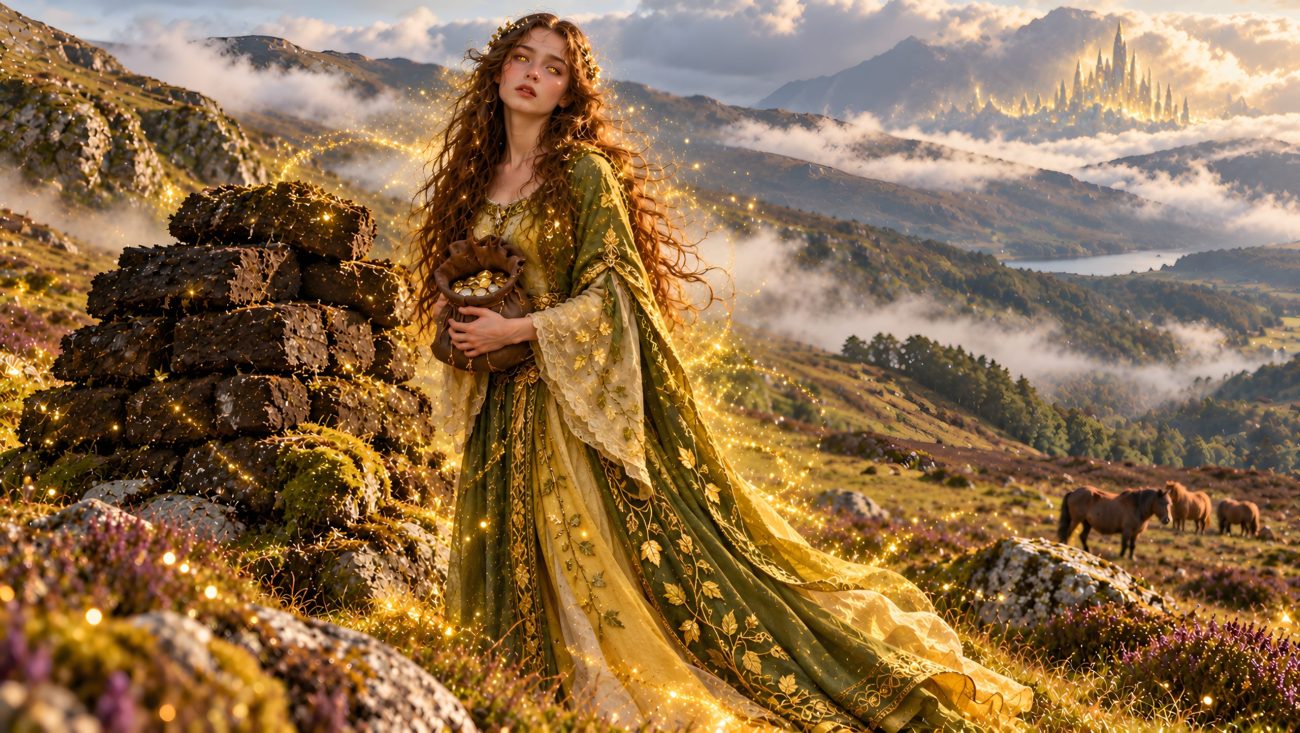
The Fairy Maiden of Pentrevoelas was a beautiful supernatural woman who appeared one misty morning to the son of Hafodgarreg while he was tending his father’s sheep on the hills. He found her sitting beside a peat-stack, weeping in great distress. The young shepherd approached her kindly and comforted her, and his sympathy soon turned into love. She returned his affection, but their conversation was interrupted when an old man appeared and called the maiden his daughter. She obeyed him and left with him, while the shepherd remained behind, hoping she would return. He came back to the same place day after day, but she did not appear. Eventually, however, the maiden herself returned from her enchanted land, having planned the visit because she loved the shepherd as deeply as he loved her.

Her father soon discovered the lovers together and confronted them. The shepherd boldly asked for permission to marry his daughter, and the old man asked the maiden whether she truly wished to marry a man of the human world. She said that she did. Her father therefore allowed the marriage, with one condition: she could remain with her husband only so long as he never struck her with iron. He also gave her a marriage portion consisting of a bag filled with bright money. The couple married and lived happily together for many years, having children and building a loving family. The promise seemed secure until one day they went onto the hills to catch two wild ponies that they intended to take to the festival of the saint of Capel Garmon.

The ponies repeatedly escaped, and the husband became increasingly frustrated as he chased them. At last, when they slipped away once more, he angrily threw his bridle after them. The iron bit struck his wife. The moment it touched her, both husband and wife understood that their marriage contract had been broken. Almost immediately, her aged father appeared with a host of fairies and took his daughter back to the enchanted land. She was not even given the chance to say farewell to her children. The money from her dowry and the children themselves remained with the shepherd, but his fairy wife was gone, leaving only these reminders of the woman he had loved and the family they had shared.


Sources

Owen, Elias. Welsh Folk-Lore: A Collection of the Folk-Tales and Legends of North Wales. London: Elliot Stock, 1896.


Kijimunā

Tradition: Japanese Mythology
Alternative Names: Kijimunā, Sēma, Bunagaya
Category: Fairy


The Myth

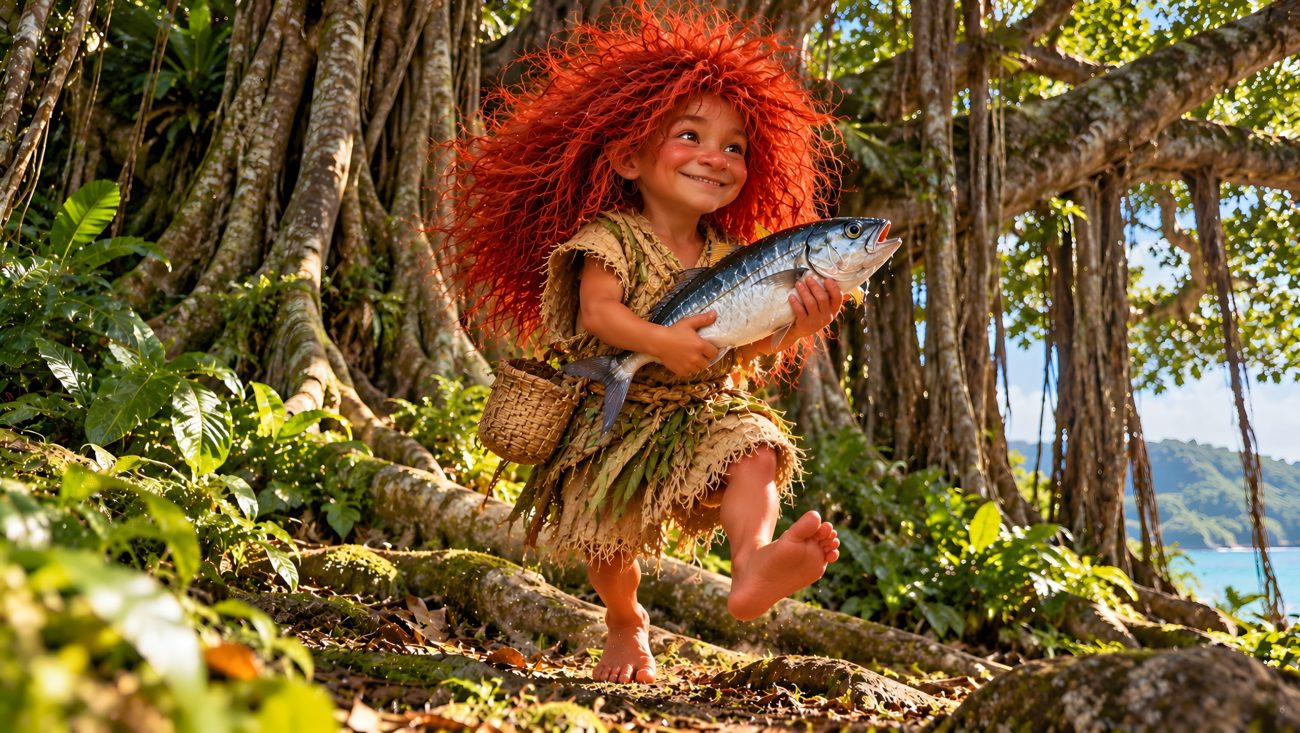
Kijimunā are small elfin beings that live among the banyan trees of the Okinawan and wider Ryukyu Islands. They are about the height of a human child and have wild, thick, bright red hair and reddish skin. They wear skirts made from grass and move by hopping rather than walking. Although they retain a youthful, childlike appearance throughout their lives, adult males are described as having notably large testicles. Kijimunā live in family groups much like humans, marry, raise children, and sometimes even marry into human families.

They are skilled fishermen who live almost entirely on seafood. Kijimunā fish along the shores and are particularly talented divers, using their abilities to catch their favorite food: fish heads, especially those of the double-lined fusilier. They have an unusual fondness for fish eyes, with a preference for the left eye over the right, and Okinawans traditionally attribute fish washed ashore without their eyes to hungry Kijimunā. They have several strange dislikes as well. They hate chickens and cooking pots, are disgusted by people passing gas, and above all fear and despise octopuses, avoiding them whenever possible.

Kijimunā can be helpful toward humans, especially fishermen. They may help people catch fish or perform other useful services in exchange for a cooked meal. A friendship with one can last for an entire lifetime, with the Kijimunā returning repeatedly to visit its human friend and even spending holidays with the family. But their kindness can quickly turn to hatred if they are mistreated. Cutting down a banyan tree inhabited by a Kijimunā is one of the surest ways to provoke it. An angered Kijimunā may kill livestock, sabotage a fishing boat so that it sinks far out at sea, trap people inside hollow trees, press down upon sleeping people’s chests, or extinguish lights during the night. Once a Kijimunā has been made an enemy, its hatred is said to be impossible to overcome.


Sources

“Kijimunaa.” Yokai.com: The Japanese Yokai Encyclopedia. Accessed October 4, 2026. https://yokai.com/kijimunaa/


Gaiter Spirit

Tradition: English Mythology
Alternative Names: Hyter-Spirits, Hayter-Spirits, Heather Sprites
Category: Fairy, Bird


The Myth

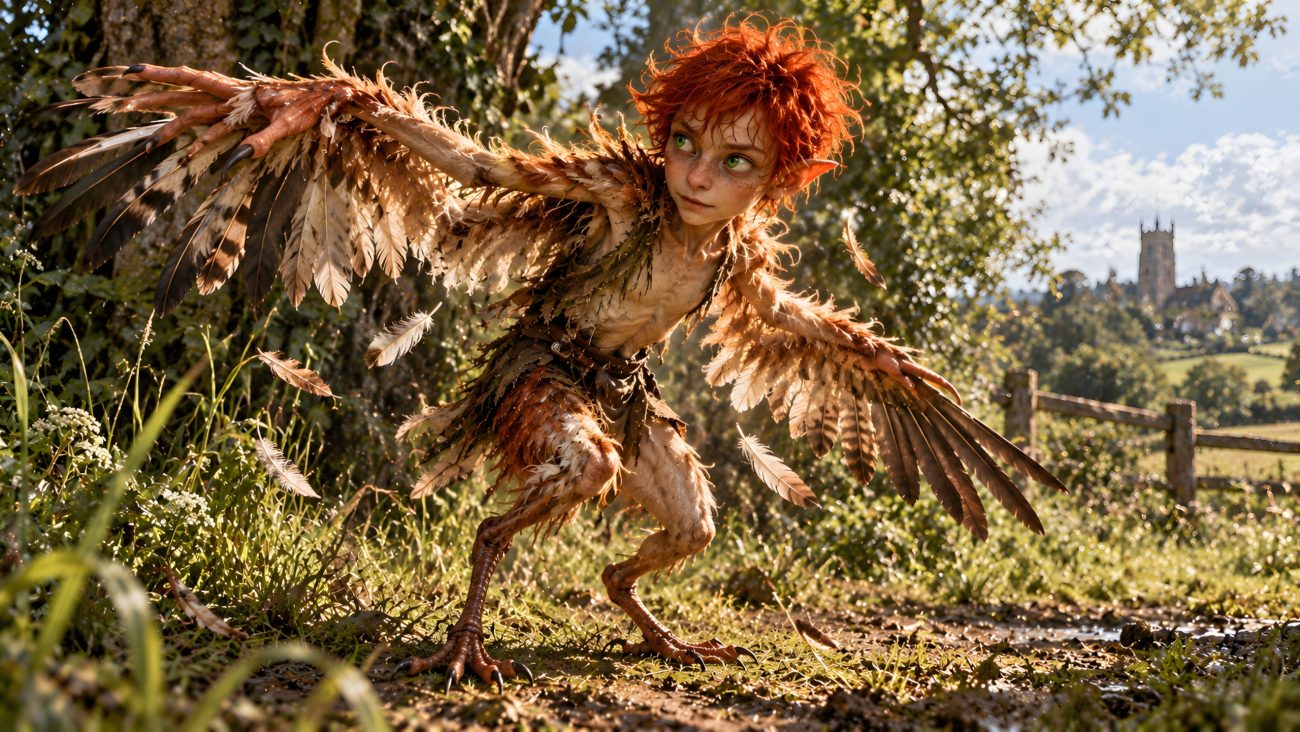
The Gaiter Spirits are small fairies of Lincolnshire and East Anglia, distinguished by their red hair and green eyes. They are able to transform themselves into birds, particularly martins, taking on the shape of ordinary birds while retaining their supernatural nature. Their strange ability allows them to move through the countryside in a form that hides their true identity.

The Gaiter Spirits are not simply malicious creatures. They are said to be grateful toward people who treat them well and can reward kindness, while those who behave badly may earn their displeasure. Their reputation therefore depends upon the character of the people who encounter them: generosity and good behavior can bring their favor, while cruelty or misconduct can lead to their condemnation.

The name appears in several forms, including Hyter-Spirits, Hayter-Spirits, and Heather Sprites. The surviving tradition also compares them with other British fairy beings, including the Scottish Ghillie Dhu, but the Gaiter Spirits remain particularly associated with the eastern English countryside and their remarkable ability to become birds.


Sources

“Gajterskie duhi.” New Bestiary (Bestiary.us). Accessed October 4, 2026. https://www.bestiary.us/gajterskie-duhi