Minairó

Tradition: Spanish Mythology, Catalan Mythology
Alternative Names: Minairons, Manairó, Menairó, Diablorí, Zaingorriak
Category: Fairy


The Myth

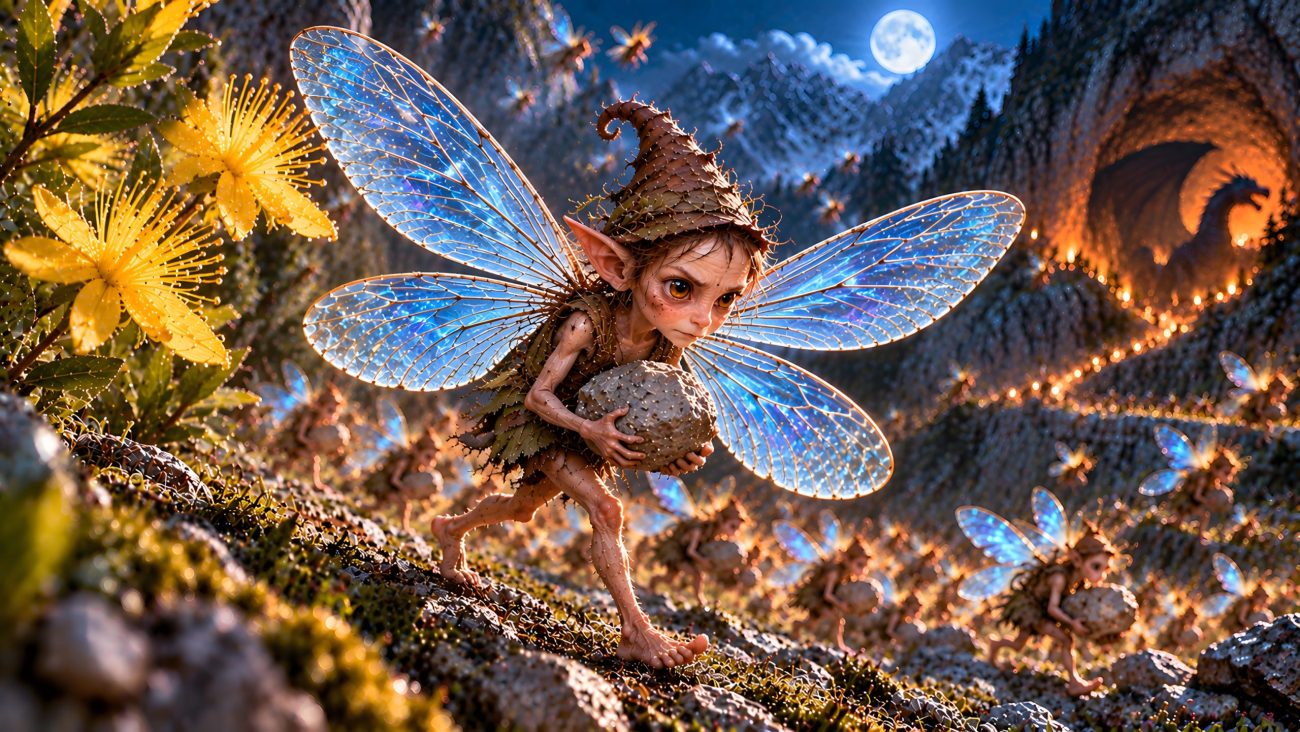
The Minairons are extraordinarily tiny supernatural beings said to be kept by their human masters inside a small needle tube or cane. They are so numerous and minute that thousands can supposedly fit inside a single container. Their exact appearance is uncertain: some people imagine them as almost invisible swarms resembling tiny mosquitoes, while others compare them to bees because of the constant buzzing they make when released. Their origin is connected with the perforate St John’s-wort, which blooms on the night of Saint John at the summer solstice. The magical plant is said to grow in deep caves guarded by giants and dragons, and it must be gathered precisely at midnight on Saint John’s Day. Some traditions instead identify the plant with the fern, while it remains uncertain whether the Minairons emerge from its seed or whether the seed itself is the Minairons.

Once released from their tube, the Minairons immediately demand work from their master, swarming around him and crying, “What will we do? What will we say?” They are tireless workers and must be given a task at once. A careless master who opens the tube accidentally can suddenly find himself surrounded by an uncontrollable multitude of tiny labourers. One famous type of story tells of a curious young man who releases them and commands them to pile rocks together. The Minairons obey so efficiently that they are said to have created many of the great screes scattered through the Pyrenees. Another tradition tells of a powerful labourer who possesses Minairons and commands them to perform agricultural work, allowing him to accomplish in a short time what would normally require several people.

Possession of a Minairon-filled cane was therefore believed to bring extraordinary prosperity to the household that controlled it. Stories remembered particular families from the Pyrenean valleys as owners of the mysterious containers, and their houses were said to have risen in wealth like mushrooms because the invisible labourers worked constantly and without payment. Yet the gift could belong to both respectable families and people who used their supernatural workforce selfishly. Other stories replace the mysterious owner with a single exceptionally strong labourer who seems capable of doing the work of several men. The Minairons thus became legendary as the ultimate source of effortless labour: tiny, restless beings who could move mountains of stone, harvest fields, and perform enormous amounts of work as long as their master kept them under control.


Sources

“Marushinyu.” New Bestiary (Bestiary.us). Accessed October 4, 2026. https://www.bestiary.us/marushinyu
Anjana

Tradition: Cantabrian mythology, Spanish Mythology
Alternative Names: Anjana
Category: Fairy


The Myth

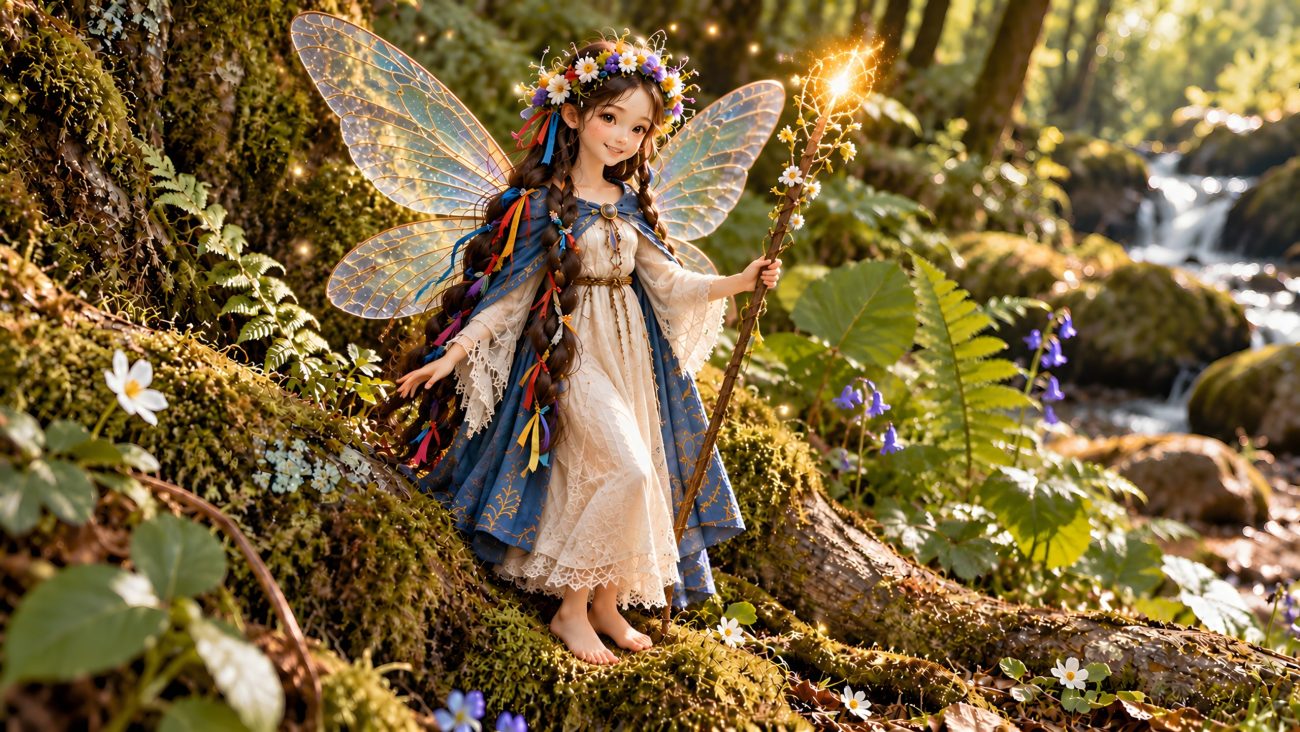
The Anjana are beautiful and delicate female fairies of Cantabrian folklore, standing only about six inches tall. They have pale skin, serene and loving eyes with black or blue pupils that shine like stars, and nearly transparent wings. Their long black or golden hair is worn in braids decorated with multicolored silk bows and ribbons, while a crown of wildflowers rests upon their heads. They wear a blue cape over a long, thin white tunic and carry a wicker or hawthorn wand that shines in a different color on each day of the week. Their voices are sweet, sometimes resembling the song of a nightingale when they are happy, while at other times they sound like a beetle moving through fallen autumn leaves.

The Anjana are regarded as the good fairies of Cantabria and are generous and protective toward human beings. Their principal enemies are the cruel Ojáncanu, whom they oppose and foil whenever he threatens people. Their nature is explained in different ways within Cantabrian tradition: some traditions describe them as heavenly beings sent by God to perform good deeds among humans, after which they return to heaven following four hundred years and never come back. Other traditions regard them as spirits of trees who watch over the forests and care for the natural world.

The Anjana belong to a wider family of benevolent female supernatural beings found throughout northern Iberian folklore. They are associated with forests, goodness, protection, and acts of kindness, standing in opposition to the destructive forces represented by beings such as the Ojáncanu. Their delicate appearance and connection with trees and heaven give them a distinctly gentle character, while their magical nature allows them to act as guardians and helpers of those in need.


Sources

“Anjana (Cantabrian mythology).” Wikipedia: The Free Encyclopedia. Wikimedia Foundation. Accessed October 4, 2026. https://en.wikipedia.org/wiki/Anjana_(Cantabrian_mythology)


Negret

Tradition / Region: Catalan Mythology, Spanish Mythology
Alternate Names: —
Category: Fairy


The Myth

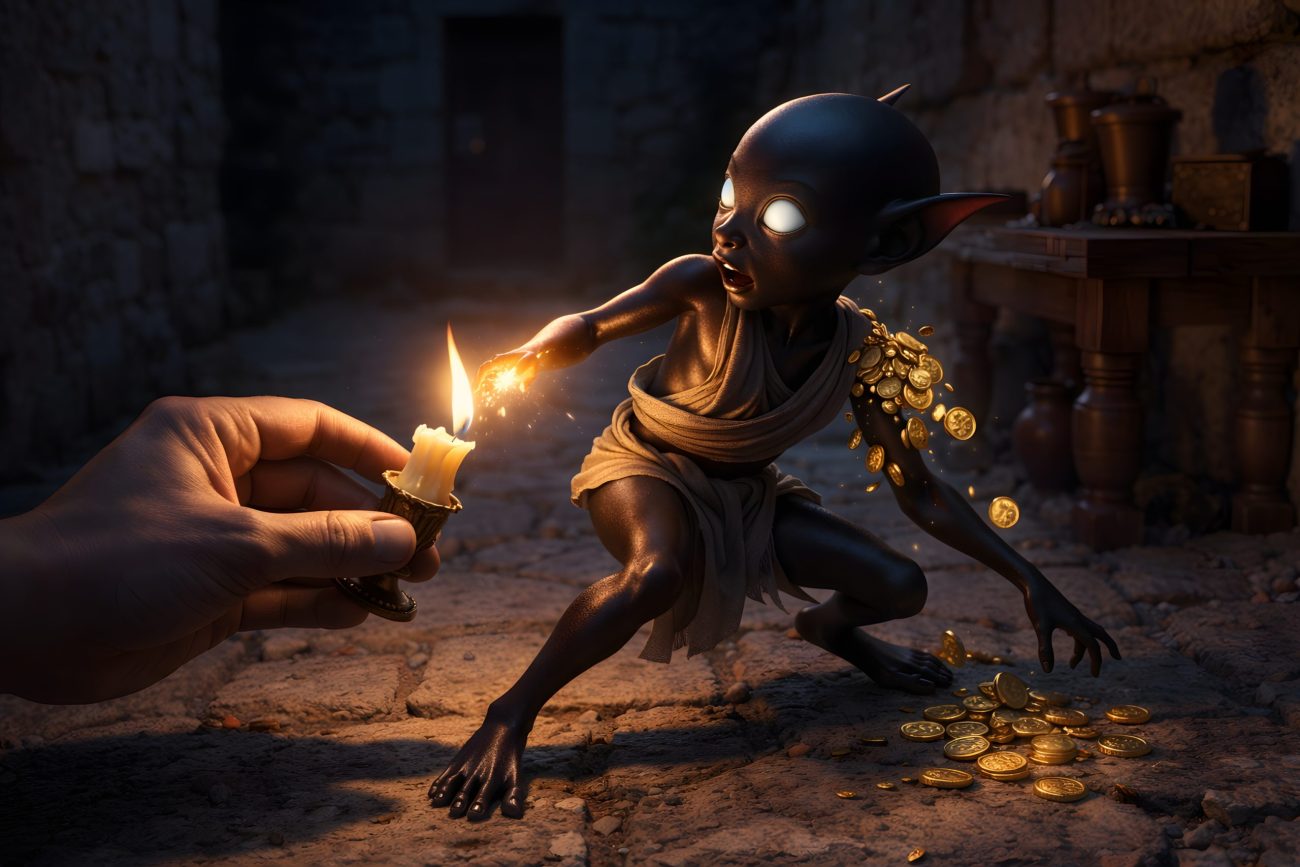
In the folklore of Majorca, a negret is a small sprite with dark skin who appears unexpectedly, often in quiet or hidden places. It is said to be no larger than a child and quick in its movements, vanishing easily if startled or pursued.

The negret is not dangerous, but it does not allow itself to be touched freely. According to tradition, if a mortal touches a negret with the flame of a candle, the creature immediately transforms into a pile of coins. The transformation is instant and irreversible: the living sprite disappears entirely, leaving only the treasure behind.

For this reason, negrets are both sought after and avoided. Some believe they guard wealth or embody hidden fortune, while others fear the act of destroying a living being for gain. Sightings are rare, and many stories end with the negret escaping before the candle flame can reach it.

The negret does not speak in most accounts and shows no clear intent beyond its presence. Whether it wanders freely or appears only when discovered by chance is unclear. Once transformed, it never returns, and no negret has ever been known to reform after becoming coins.

Thus, in Majorcan legend, the negret remains a fleeting figure: a living being whose existence balances between spirit and treasure, vanishing forever at the moment of human touch.


Sources

“Negret.” Wikipedia: The Free Encyclopedia. Wikimedia Foundation. Accessed October 4, 2026. https://en.wikipedia.org/wiki/Negret