Mooinjer Veggey

Tradition: Manx Mythology
Alternative Names: Little People, Mooinjer Veggey
Category: Fairy


The Myth

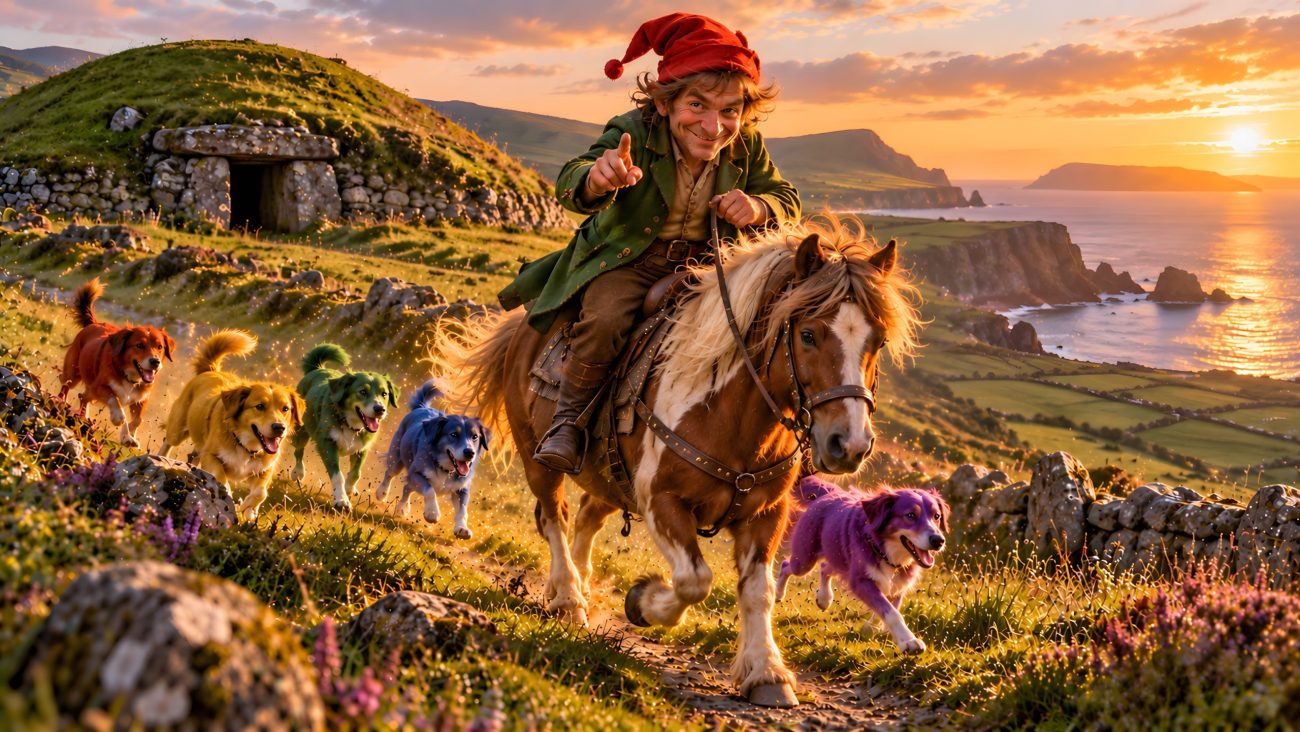
The Mooinjer Veggey, meaning “little people,” were small fairy beings of Manx folklore, usually standing between two and three feet tall and otherwise resembling human beings. They were commonly described wearing red caps and green jackets and were often seen riding horses accompanied by packs of little hounds of many different colors. They lived in the green hills of the Isle of Man, particularly around ancient burial mounds and other old earthworks. On pleasant summer evenings, people wandering near these places might hear beautiful fairy music. The fairies could make themselves visible or invisible as they wished, and anyone who heard their music was warned not to remain too long, particularly musicians, who were especially vulnerable to being entrapped by them.

The Mooinjer Veggey were not uniformly benevolent. Some were helpful spirits who could cure illness and rescue people from misfortune, while others were spiteful and dangerous, stealing children, abducting adults, and bringing bad luck upon those who offended them. Because the fairies were believed to visit human homes, Manx households maintained customs intended to keep them satisfied. A fire was traditionally left burning through the night so that the fairies could warm themselves by the embers, especially during dark and stormy weather. Bread was left for them, fresh water was placed in the household water crocks, and after baking and churning, a small piece of dough and butter was left on the wall for them to eat.

The Mooinjer Veggey were also believed to take offense at certain kinds of household work. Manx women traditionally avoided spinning on Saturday evenings because it was thought to displease the fairies. Clean water left for them was never used for ordinary purposes and was thrown away the following morning. Against their more harmful magic, salt and iron were regarded as effective protections. Thus the Mooinjer Veggey occupied an important place in Manx folklore as a hidden fairy population living alongside human communities, capable of rewarding kindness and hospitality but equally capable of bringing misfortune when neglected or offended.


Sources

“Mooinjer veggey.” Wikipedia: The Free Encyclopedia. Wikimedia Foundation. Accessed October 5, 2026. https://en.wikipedia.org/wiki/Mooinjer_veggey

Fenodyree

Tradition: Manx Mythology
Alternative Names: Phynodderee, Phynnodderee, Fynnoderee, Fenoderee
Category: Fairy


The Myth

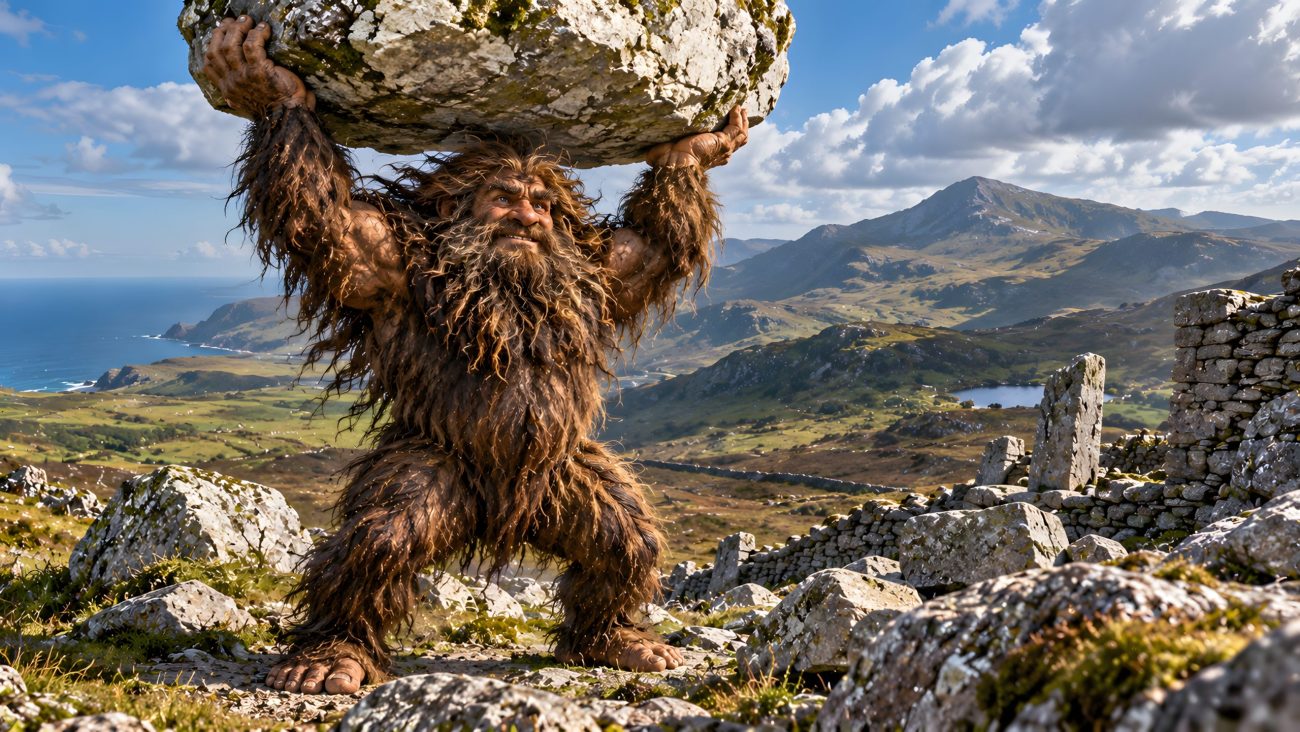
The Fenodyree was a hairy supernatural being of the Isle of Man, resembling a small, shaggy man covered almost entirely in thick body hair and usually appearing without clothing. He was considered one of the ferrishyn, the fairy folk of Manx tradition, and was renowned for his extraordinary strength and speed. Although some accounts describe him as a large and powerful creature, other traditions give him a height of only about two feet, making him enormous only by the standards of the tiny fairy people. His great strength allowed him to perform work far beyond human ability, while his astonishing speed earned him the name Yn Foldyr Gastey, “the Nimble Mower.” Geplakte markdown

The Fenodyree was generally helpful to farmers and fishermen, carrying out difficult work during the night while humans slept. He could reap and thresh fields, gather sheep before storms, herd animals through snow, repair fishing nets and boats, and perform other exhausting tasks with remarkable speed. He was particularly famous for cutting meadow grass, sometimes completing the work so quickly that people could scarcely believe it had been done by hand. In one tale, however, a farmer complained that the Fenodyree had not cut the grass close enough to the ground. Angered by the criticism, the hairy spirit abandoned the mowing and began tearing up the roots instead, pursuing the farmer so fiercely that the man barely escaped having his legs cut off. The meadow could no longer be properly mown until a knight discovered that the grass had to be cut beginning from the centre and worked outward in a circle. Geplakte markdown

Another famous tale tells how the Fenodyree gathered a farmer’s sheep from Snaefell and brought them safely into their pen, but accidentally mistook a large hare for one of the sheep and brought it along with the flock. He was also said to possess tremendous strength, once transporting enormous blocks of stone in a single night for a man building a house near Snaefell. Yet the Fenodyree had one peculiar weakness: he could not accept clothing. When the grateful builder left him a complete set of clothes as payment, the hairy creature lamented that the gift had taken away his freedom and departed sadly into the mountains, declaring that his voice would thereafter be heard in the whistling mountain winds. In this way, the Fenodyree remained a powerful but elusive helper, willing to labour for humans but unable to remain once they tried to reward him with human clothing. Geplakte markdown


Sources

“Yallery Brown.” Wikipedia: The Free Encyclopedia. Wikimedia Foundation. Accessed October 4, 2026. https://en.wikipedia.org/wiki/Yallery_Brown