Oriande

Tradition: French Mythology
Alternative Names: Oriande of Rosefleur
Category: Fairy


The Myth

Oriande was a powerful fairy who took the abandoned child Maugis, son of Beuves d’Aigremont, under her protection. After Maugis had been abducted by Sorgalant and later found by Oriande, she raised him at Rosefleur, or Rocheflor, near Mongibel on Mount Etna in Sicily. She became his guardian and guide, nurturing him until he was ready to enter the world of heroic adventure.

When Maugis had grown, Oriande set him a great trial to prove his abilities and establish his status as a true hero. She commanded him to free the miraculous horse Bayard, which was imprisoned beneath the volcanic island of Bocan, or Boucam, traditionally associated with the Lipari Islands. Maugis succeeded in overcoming the supernatural challenge and released the extraordinary horse from its underground prison.


Sources

“Oriande.” Wikipédia, l’encyclopédie libre (French Wikipedia). Wikimedia Foundation. Accessed October 5, 2026. Wikipedia
https://fr.wikipedia.org/wiki/Oriande


Fairy of Gutenberg

Tradition: Liechtenstein Mythology
Alternative Names: Fairy of Gutenberg
Category: Fairy


The Myth

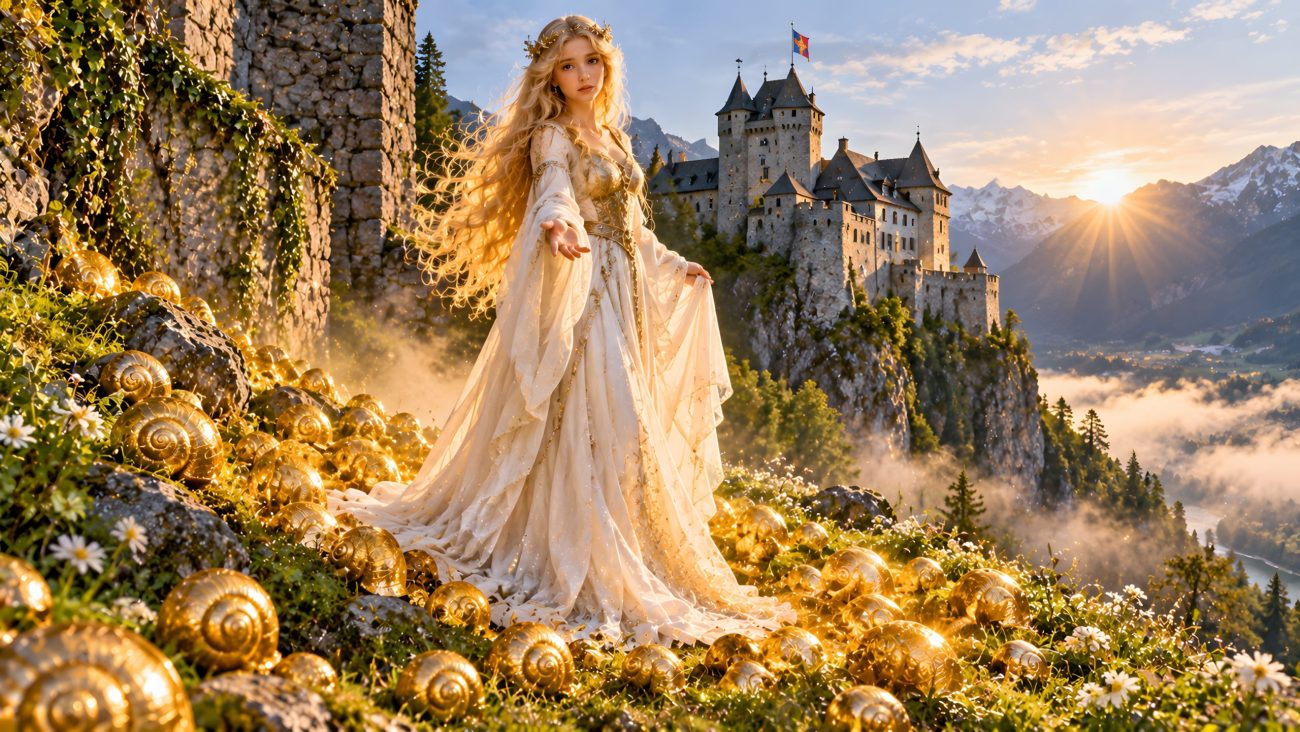
The Fairy of Gutenberg appears as an extraordinarily beautiful woman dressed in flowing white robes, with long blond hair and gentle, soulful eyes. She is an enchanted princess who has been trapped for hundreds of years and is bound to a treasure hidden near Gutenberg Castle. Every hundred years, on a particular day, she is allowed to return to the earthly world with her treasure, but she must remain there guarding it until the time passes.

One morning at sunrise, a peasant boy walking past Gutenberg Castle notices a dazzling gleam above the castle wall. Climbing the slope, he discovers countless snail shells scattered through the grass, but these are no ordinary shells: they are made entirely of gold. As he admires the treasure, the fairy appears and tells him that he can gain both her freedom and the treasure if he has enough courage. He must take her in his arms and swing her around three times without speaking or letting go. The boy eagerly agrees. He succeeds with the first turn and then the second, while the fairy sighs with growing happiness. During the third and final turn, however, he suddenly feels cold snakes in his hands. Horrified, he cries out and releases her. The snakes vanish, leaving his hands empty.

The boy has failed at the final moment. The fairy mourns that she must now guard Gutenberg’s treasure for another hundred years, and she disappears into the morning sunlight like mist. At the same instant, the golden treasure vanishes, leaving only ordinary snail shells scattered through the grass. The boy searches through the undergrowth but finds nothing and eventually returns to the road without the fortune he had imagined would buy him a farm, cows, horses, and an alpine pasture. Yet the encounter leaves him wondering whether another opportunity might await someone who passes the castle again a century later.


Sources

Dino Larese. “Die Fee von Gutenberg.” In Liechtensteiner Sagen. Basel, 1970, p. 52. Reproduced by SAGEN.at. https://www.sagen.at/texte/sagen/liechtenstein/larese/fee_gutenberg.html


Fairy of Sonnwendjoch

Tradition: Austrian Mythology
Alternative Names: Fairy of the Sonnwendjoch
Category: Fairy


The Myth

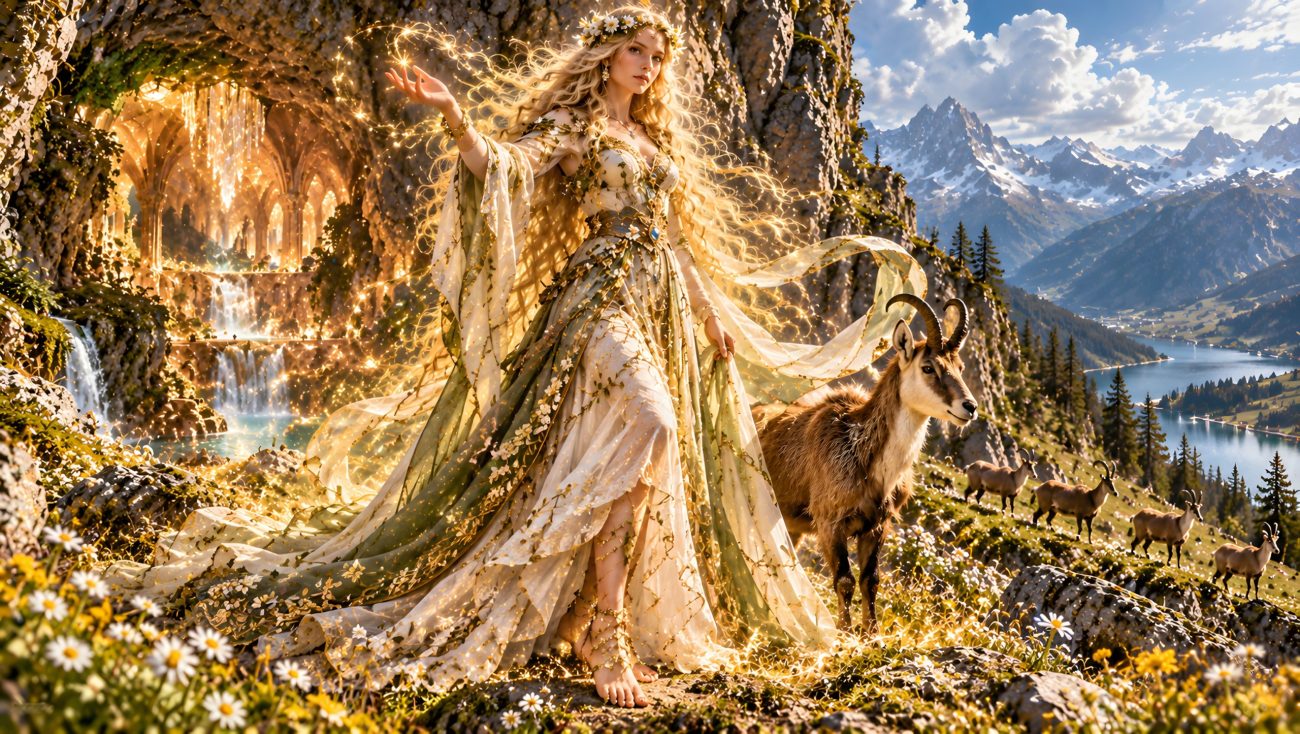
The Fairy of the Sonnwendjoch was a proud and beautiful supernatural mistress of the mountain, living deep inside the Sonnwendjoch near Rattenberg. She protected the wild creatures that lived among its slopes and rocky clefts and regarded all the animals of the mountain as her own. Within the mountain lay a magnificent hidden kingdom of glittering palaces, great halls with crystal ceilings and reddish marble walls, gardens whose trees never withered, green meadows filled with peaceful herds, and clear streams winding through the mountain’s depths.

One day, a young knight from Mehrnstein Castle was hunting a chamois near the foot of the mountain when the fairy appeared before him and demanded to know why he was hunting on her land. She warned him that every animal belonged under her protection and commanded him never again to pursue the mountain’s creatures if he wished to have her favor. The knight agreed, and the fairy led him into her hidden kingdom. She fell in love with him and gave him a magical ring as a token of their bond. From then on, the knight continued to ride out as though going hunting, but instead secretly visited the fairy inside the mountain. Although he had once been a famous hunter, he never returned with game, and his friends wondered why he no longer showed interest in hunting or in the noblewomen of the surrounding castles.

Eventually, the lord of Rattenberg invited the knight to a wedding feast. There he met a beautiful noblewoman from Innsbruck who admired the fairy’s ring and persuaded him to give it to her. The knight immediately regretted his betrayal and hurried back to the Sonnwendjoch the following morning to beg the fairy’s forgiveness. On the way, however, a white deer crossed his path and awakened his old hunting instinct, causing him to pursue it toward the mountain. He reached the rock where he had always entered the fairy’s kingdom by tapping with the ring, but the ring was gone and the entrance would not open. The fairy appeared before him holding the ring and told him that he had broken his promise three times: he had been unfaithful, had allowed the ring to leave his hand, and had once again chased one of her protected animals. She declared that he would suffer for his betrayal and disappeared forever. As the knight departed, a great mudslide thundered down the mountain and buried a wide area. He was never truly happy again, eventually leaving the Inn Valley and undertaking a pilgrimage to the Holy Land, from which he never returned.


Sources

“Die Fee vom Sonnwendjoch.” In Die schönsten Sagen aus Österreich. n.p., n.d., p. 260. Reproduced by SAGEN.at. https://www.sagen.at/texte/sagen/oesterreich/tirol/unterinntal/sonnwendjoch.html


Fayettes

Tradition: French Mythology
Alternative Names: Fayettes, Little Fairies
Category: Fairy


The Myth

The Fayettes are tiny fairies said to inhabit the Forez region of France, particularly the forests and caves around the Loire basin and Beaujolais. They are believed to descend from the ancient Greek nymphs, having escaped from the Mediterranean as Christianity spread. Though much smaller than their supposed ancestors, the Fayettes retained their magical powers. They guard caves and forests and can sometimes be seen dancing among the trees of Couroux in the Beaujolais.

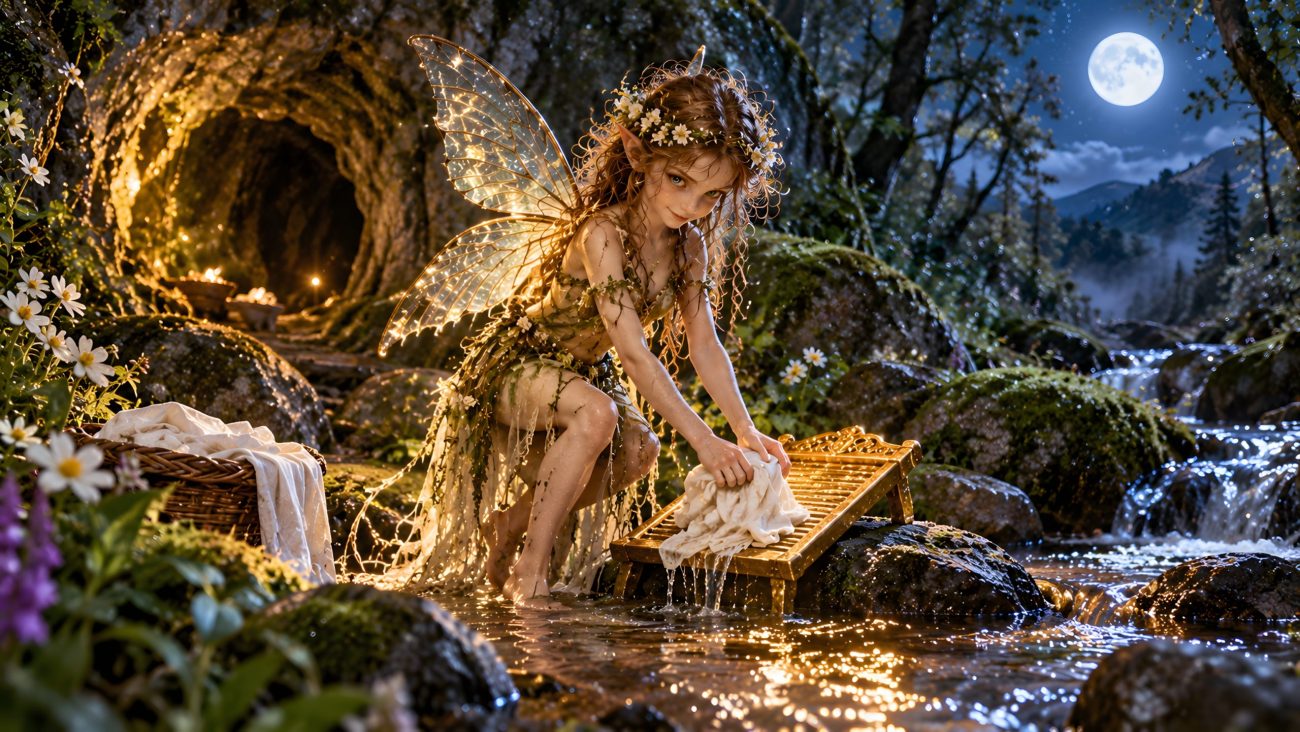
The Fayettes are notorious for stealing human children and leaving behind changelings in their place. These fairy children are difficult to satisfy and are said to possess an insatiable appetite. To recover a stolen child, the changeling can be taken to the entrance of a cave and threatened with violence. The Fayettes will then emerge and return the human child, saying, “There, here is yours; give me mine.” The fairies also emerge at night to wash their clothes beneath the moon. Travellers passing through their woodland territory are advised to sing loudly so that the Fayettes do not mistake them for enemies or threats.

At dawn, the Fayettes disappear like mist, sometimes leaving behind magical washboards made of solid gold. During the daytime they take another form, becoming moles that burrow through gardens and delight in destroying cultivated plants. According to the legend, this is why moles have their characteristic small pink hands. The Fayettes therefore move between several hidden worlds: fairies dancing in the forest by night, mysterious creatures guarding caves, and destructive little moles roaming gardens by day.


Sources

“Fayette.” A Book of Creatures. July 24, 2015. A Book of Creatures
https://abookofcreatures.com/2015/07/24/fayette/


Lavandières de Nuit

Tradition: French Mythology
Alternative Names: Washerwomen of the Night, Kannerez Noz, Bean Nighe, Mille-Lorraines, Teurdous
Category: Fairy


The Myth

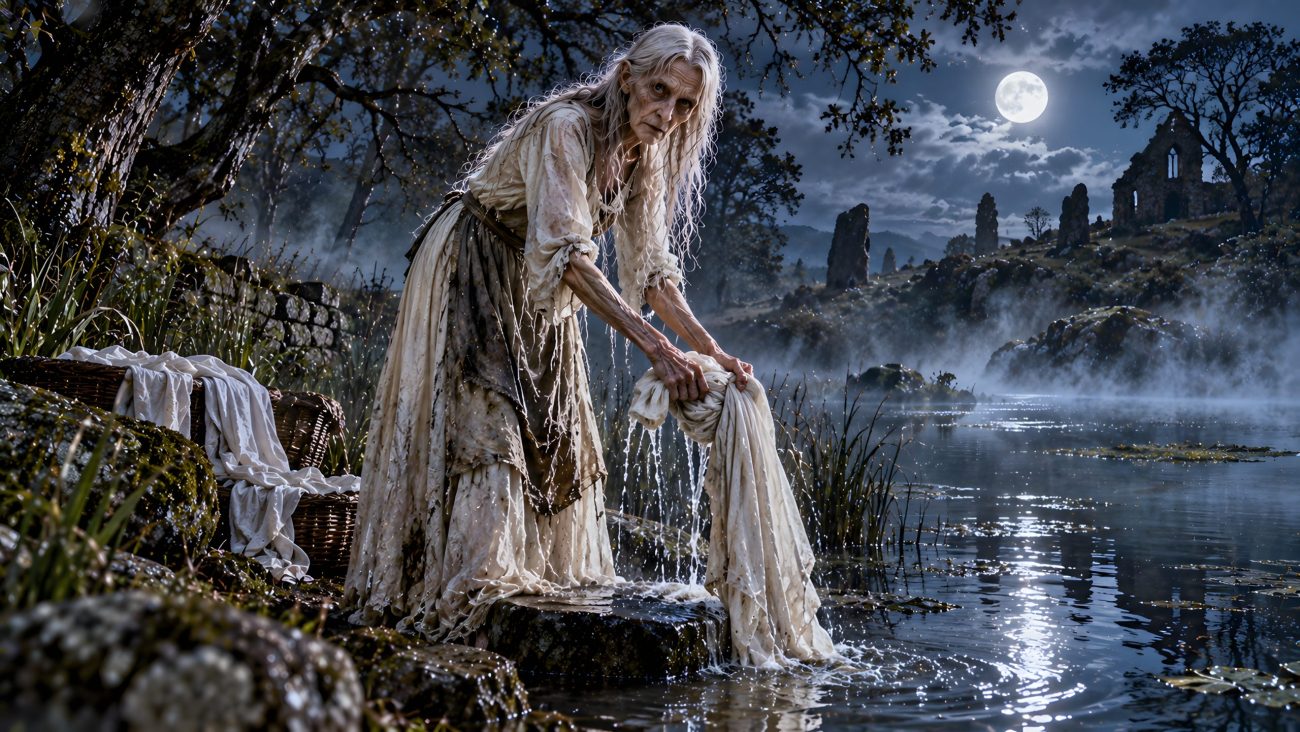
The Lavandières de Nuit are supernatural washerwomen who appear at night beside ponds, rivers, and other bodies of water. They are usually imagined as tall, gaunt, withered old women, although the Gollières a Noz of Romandie are described as beautiful as they are cruel. Some sing while they wash, earning the name Kannerez Noz, or “night singers.” Their songs are mournful and are sometimes associated with the dead; in Morbihan they are said to sing of wringing rags and the shrouds of dead wives. Some washerwomen are condemned spirits forced to wash a burial shroud as punishment for sins committed during life. Among them are women who worked at their laundry on Sundays, greedy misers who refused proper clothing to the poor, and women guilty of infanticide. In the darkest stories, the sheets they wash remain stained with blood and reveal the outline of the murdered child.

The Lavandières are especially dangerous when they encounter people at night. In Brittany, they may call upon passers-by to help wring their laundry. Those who refuse can be drowned, while those who agree may have their arms broken or be forced to continue until exhaustion. The only way to survive the task is to wring the cloth in precisely the same direction as the washerwomen, following every turn they make throughout the night. A single mistake can result in the victim being crushed and twisted to death. Another escape is to tell them, “Wring out your sins, and I will wring out mine.” Running away can also save a person, while freshly ploughed fields are places the washerwomen cannot cross. The sign of the cross and biblical verses are likewise said to protect against them. Different communities tell of their own washerwomen: the Lavandière of Chantepie endlessly washes the dirty shroud in which she buried her husband; those of Fond-de-Fond hold up the bodies of the newly dead; those around Landéda spare goodhearted people but tie sinners into knots; and several washerwomen gather at the pond of Roc-Reu, where anyone attempting to touch them is drowned.

Related traditions appear throughout the Celtic and French-speaking world. The Bean Nighe of the British Isles are women who died in childbirth and are condemned to wash the clothes of people destined to drown until the day they themselves were supposed to die. Seeing one can therefore foretell death. Some are connected with the Morrigan and wash the clothing of the dead; in one tale, Cú Chulainn encounters the daughter of Bodhbh washing bloodstained clothes while weeping, shortly before his death in battle. Around Dinan, the Teurdous is a rare male counterpart who offers to help washerwomen wring their clothes, only to break their arms if they accept. The Mille-Lorraines of Lower Normandy form fairy circles around ponds, while the Lavandière of Noes Gourdais is said to appear in the early morning with a skull instead of a head. Around Dinan, these supernatural washerwomen became so strongly associated with the night that strange sounds from frogs and toads were sometimes interpreted as their washboards and singing. There were also real women who washed clothing at night, whether because they worked during the day or wished to avoid being seen, and even thieves exploited the legend: one French warden once encountered two spectral-looking washerwomen and spent the entire night helping them wash fine clothing, only to discover afterward that the garments had been stolen from a nearby castle.


Sources

“Lavandière de Nuit.” A Book of Creatures. April 17, 2015. A Book of Creatures
https://abookofcreatures.com/2015/04/17/lavandiere-de-nuit

Kivihaldjad

Tradition: Estonian mythology
Alternative Names: Kivialused
Category: Fairy


The Myth

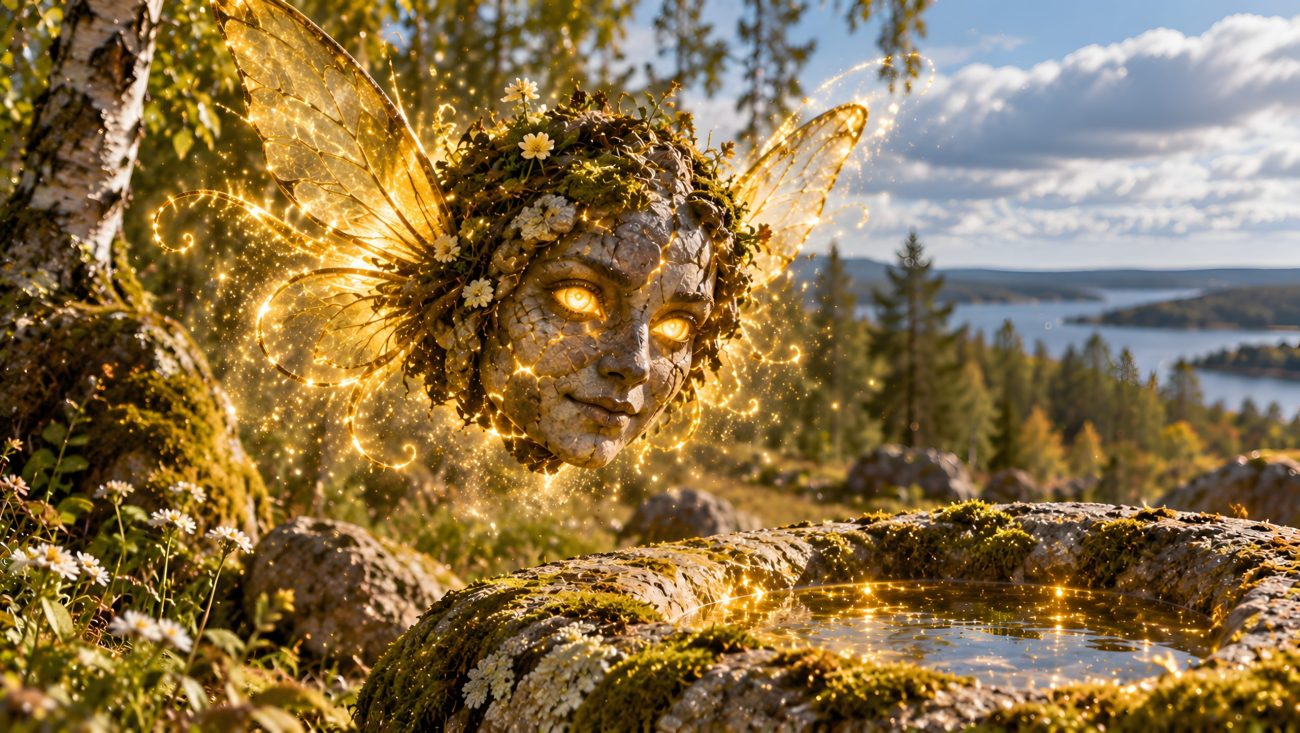
The Kivihaldjad are Estonian nature spirits believed to inhabit or dwell upon sacred offering stones. These stones were regarded as places where supernatural beings could be present, and the Kivihaldjad were specifically associated with them.

Water that collected on the surface of an offering stone was considered sacred and was believed to possess healing powers. The water could therefore be gathered and used for its supposed curative properties, linking the Kivihaldjad closely with both the sacred stone and the healing power attributed to it.


Sources

“Kivihaldjad.” Vikipeedia (Estonian Wikipedia). Wikimedia Foundation. Accessed October 5, 2026. et.wikipedia.org
https://et.wikipedia.org/wiki/Kivihaldjad


Pillywiggins

Tradition: English Mythology, Irish Mythology
Alternative Names: Pillywiggin
Category: Fairy


The Myth

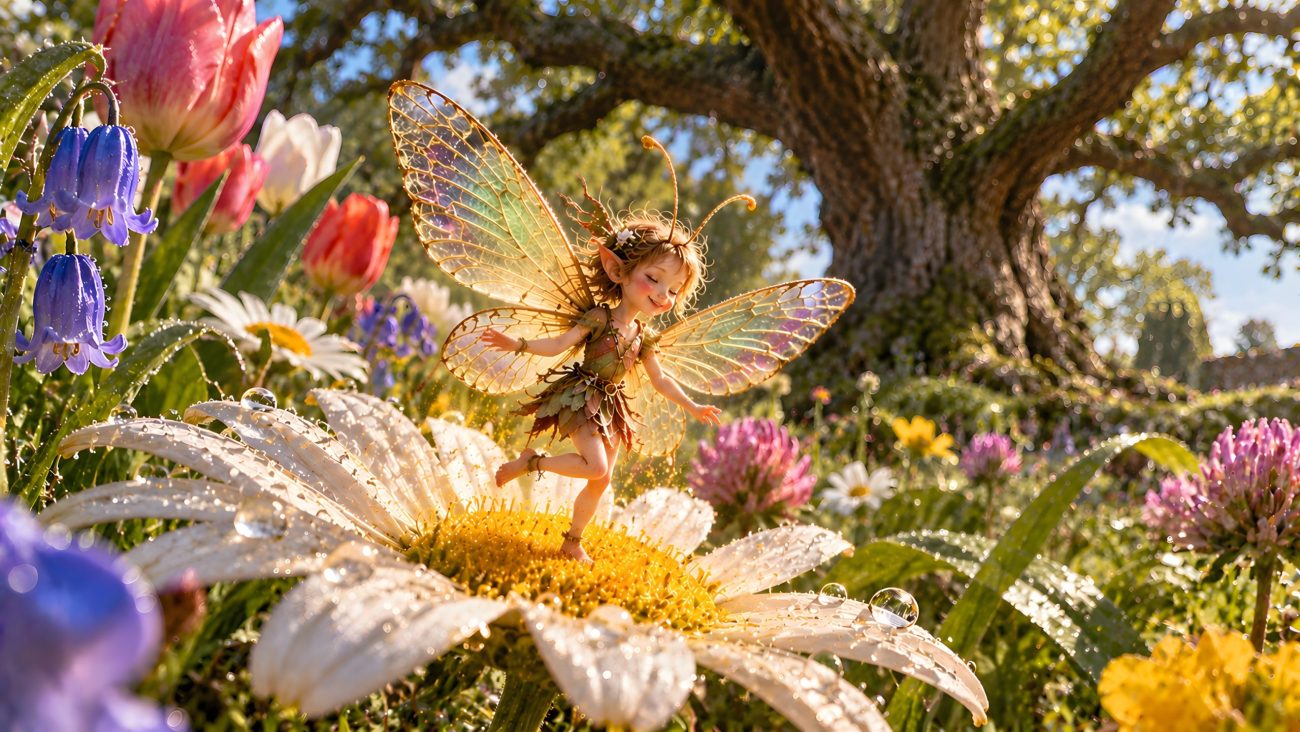
The Pillywiggins are extraordinarily tiny fairies and goblin-like nature spirits, usually only about a centimetre tall, though they are said to possess the ability to change their size. They have delicate wings and antennae resembling those of butterflies or dragonflies, and their appearance is often described as wonderfully beautiful. They live in groups and feed on dew and pollen. Their small size and winged appearance allow them to move easily among flowers, and they are sometimes imagined riding bees from blossom to blossom or appearing themselves as tiny as bees.

The Pillywiggins are guardians of small plants and flowers, living according to the rhythms of the vegetation they protect. They are particularly fond of gardens, parks, and wildflower meadows, especially places shaded by great oak trees. They spend their time dancing, playing, and moving among the flowers, largely ignoring human beings. Unlike many British fairies, they are not known for deliberately playing tricks on people, although they may occasionally appear at human celebrations such as weddings. Their strongest association is with spring flowers, and English gardening folklore particularly connects them with tulips.

The Pillywiggins are said to disappear during the colder part of the year, remaining dormant from November until spring, when the call of the cuckoo announces their return. They then resume their life among the plants, protecting the smallest flowers and celebrating the return of warmer weather. Their world is therefore closely tied to the seasonal life of the garden and forest: when the plants awaken, so do the tiny fairies that live among them.


Sources

“Pillywiggin.” Wikipedia: The Free Encyclopedia. Wikimedia Foundation. Accessed October 5, 2026. https://en.wikipedia.org/wiki/Pillywiggin


Gwragedd Annwn

Tradition: Welsh Mythology
Alternative Names: Dames of the Lower Region, Dames of Elfin Land, Wives of the Lower World, Gwraig Annwn
Category: Fairy


The Myth

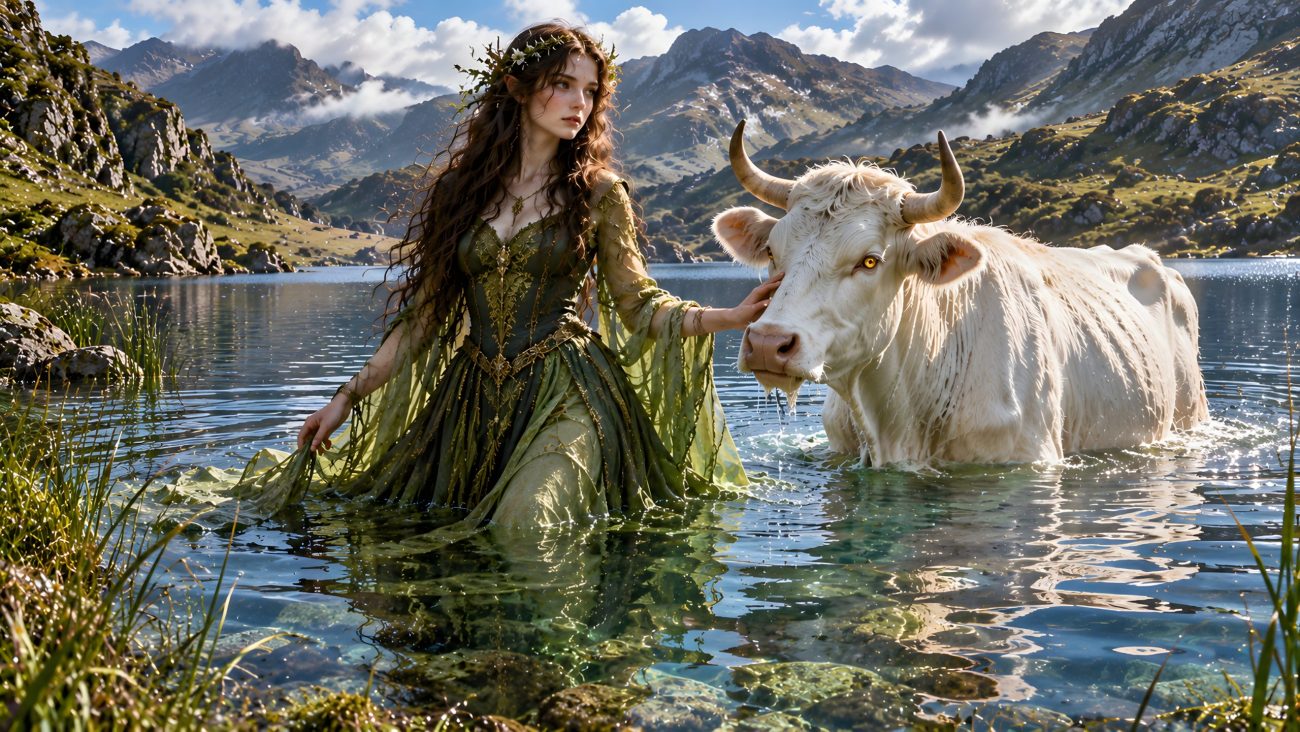
The Gwragedd Annwn are beautiful female fairies who live beneath lakes and rivers in Wales. They belong to the Tylwyth Teg, the Welsh fairy folk, and are most strongly associated with isolated and mountainous lakes such as Llyn Barfog, the “Bearded Lake,” and Crumlyn Lake. They wear green and normally remain in the lower world, but they are sometimes said to cross into the human world. Unlike mermaids and other aquatic beings, they have no fish-like or other animal features and are entirely human in appearance. They are particularly associated with lakes and rivers rather than the open sea.

One tradition explains that the Gwragedd Annwn were created when St. Patrick travelled from Ireland to Wales to meet St. David. Welsh people who saw the two saints meeting began insulting Patrick because he had left Cambria. Understanding their insults, Patrick punished them by transforming the offending people into fish. The women among them were transformed instead into lake fairies, becoming the Gwragedd Annwn. They were subsequently said to live beneath the waters, sometimes emerging into the upper world, where they could be seen by ordinary people.

The Gwragedd Annwn were also believed to keep herds of extraordinary white cattle known as Gwartheg y Llyn, the kine of the lake. One farmer managed to capture one of these cows, which produced exceptionally good milk, butter, and cheese and made him wealthy. Some traditions say its milk could heal injuries, increase intelligence, and make people cheerful. The farmer eventually bred more cattle from it and decided to slaughter the original cow. When the butcher struck its head, however, the blow passed through it without causing harm. A woman dressed in green then appeared and called the cow and almost all of its descendants back to the lake. Only one animal remained behind, and it had become completely black. This was said to be the origin of the Welsh black cattle.


Sources

“Gwragedd Annwn.” Wikipedia: The Free Encyclopedia. Wikimedia Foundation. Accessed October 5, 2026. https://en.wikipedia.org/wiki/Gwragedd_Annwn


Lazy Laurence

Tradition: English Mythology
Alternative Names: Laurence, Touch of Laurence
Category: Fairy


The Myth

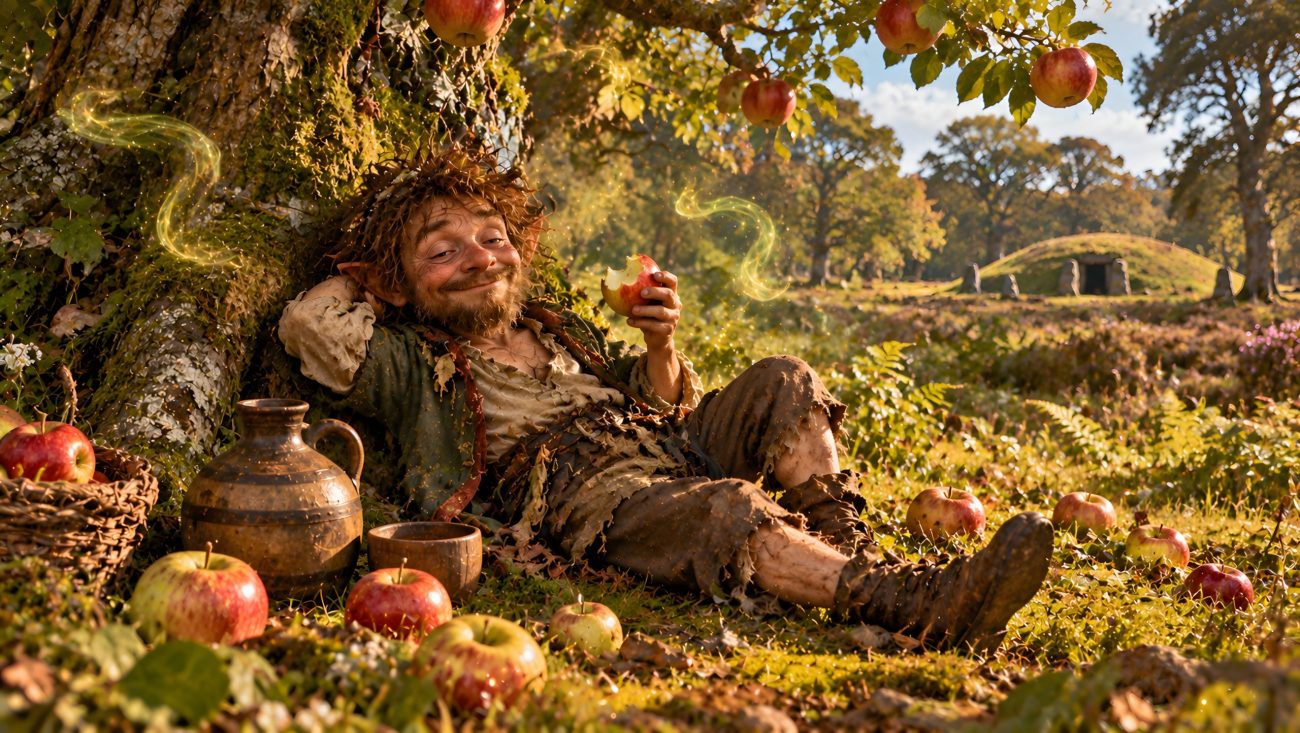
Lazy Laurence is a mischievous pixie and nature spirit associated with the New Forest of Hampshire and Dorset. He is particularly connected with orchards and apple trees, and is believed to protect orchards and the cider made from their fruit. His presence is felt through strange spells of sleepiness and confusion: he may send people dreaming beneath fruit trees, make them lazy or dithering, or give them stomach cramps. Apple gatherers and careless visitors to the forest are especially liable to feel his influence.

People once spoke of laziness as a sign that Laurence had taken hold of someone. A person who suddenly became idle might be said to have “Laurence upon him” or to have “a touch of Laurence.” He was treated with enough respect and fear that his name became attached to the local landscape, including Laurence’s Barrow, a small ancient burial mound on Beaulieu Heath. The barrow stands near other places associated with pixie lore, including Watt’s Parlour and Cold Pixies’ Cave.

Laurence’s reputation was not confined to the New Forest. Stories of him were also known in neighboring Sussex and Somerset, where he could serve as a frightening bogeyman for children, while traditions from Devon and Cornwall emphasized his laziness. In the New Forest, however, he remained especially associated with fruit trees, cider, and the strange drowsiness that could overcome people beneath their branches. His mischievous influence turned ordinary tiredness, indecision, and indigestion into signs that the elusive forest pixie had been at work.


Sources

“Lazy Laurence.” Wikipedia: The Free Encyclopedia. Wikimedia Foundation. Accessed October 5, 2026. https://en.wikipedia.org/wiki/Lazy_Laurence


Bluecap

Tradition: English Mythology
Alternative Names: Bluecap
Category: Fairy


The Myth

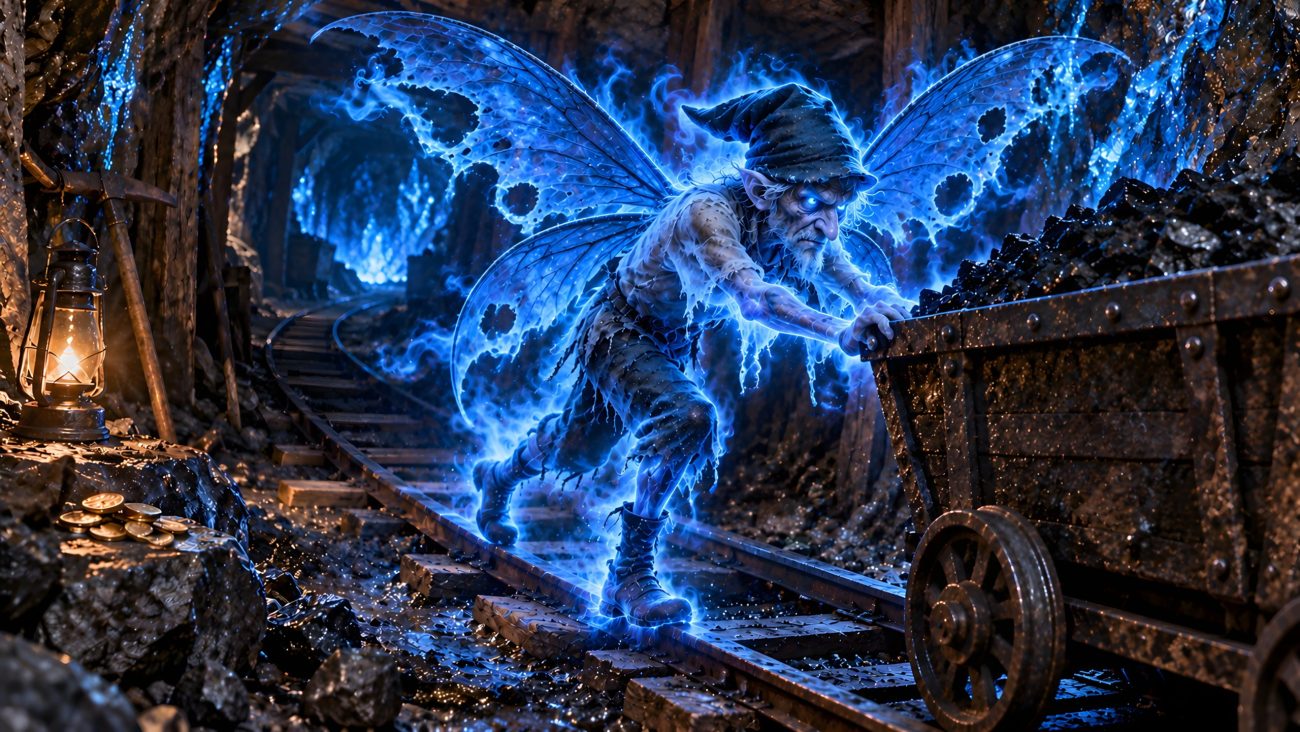
The Bluecap is a small supernatural mine spirit that appears as a flickering blue flame deep within the workings of a mine. Associated particularly with the Anglo-Scottish Borderlands, Bluecaps were generally regarded as helpful beings when treated with respect. They could lead miners toward rich deposits of valuable minerals and, like other mining spirits, could warn them of impending cave-ins and other dangers underground.

Bluecaps were also believed to be extraordinarily hard workers. Miners said that they could move heavy loads of coal through the mine, sometimes appearing as a small blue flame that settled onto a full tub of coal and carried it away with tremendous strength. Their supernatural labour was nevertheless expected to be paid like that of an ordinary mine worker. A Bluecap was owed the wages of a normal putter, the worker responsible for pushing mine wagons, and the payment had to be left for it in a secluded corner of the mine. The spirit would accept neither more nor less than what it was owed.

Not every mine spirit was so helpful. Cutty Soames, also called Old Cutty Soames, was regarded as a more troublesome being of the same general kind. Rather than assisting miners, he was known for cutting the rope or trace by which an assistant putter was attached to a loaded tub. Bluecaps therefore belonged to a hidden community of supernatural mine workers: some guided miners to wealth and helped them survive the dangers of the underground, while others could interfere with their work and put them in danger.


Sources

“Bluecap.” Wikipedia: The Free Encyclopedia. Wikimedia Foundation. Accessed October 5, 2026. https://en.wikipedia.org/wiki/Bluecap