Egbere

Tradition: Nigerian Mythology
Alternative Names: —
Category: Goblin


The Myth

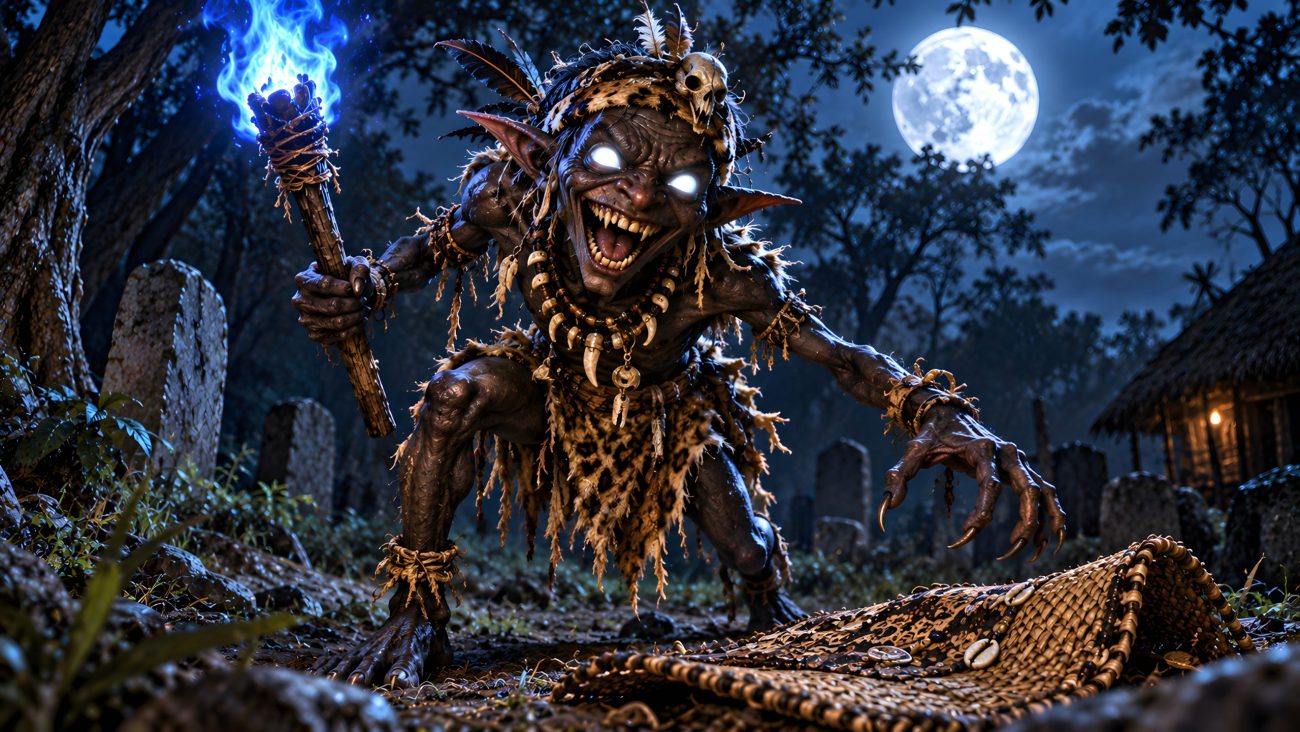
The Egbere are short, malevolent humanoid beings in Yoruba mythology that inhabit wooded areas and are active only at night. They are also associated with graves, emerging around midnight and returning to their resting places at dawn. An early account compares their nocturnal habits to those of vampires and describes them as creatures that ride sheep and bring disease upon them.

The Egbere are particularly associated with a small mat known as the mat of wealth. According to tradition, anyone who manages to take this mat from an Egbere will gain unimaginable riches. This belief makes the creatures both feared supernatural beings and potential sources of extraordinary wealth.

The Egbere are also said to cry constantly, although their tears are regarded with suspicion and their sincerity is questioned. Their combination of nocturnal activity, association with graves, harm to livestock, and connection to a mat of great value gives them a distinctive place among the supernatural beings of Yoruba folklore. Their precise physical appearance beyond their short stature is not described in the available accounts.


Sources

“Egbere.” Wikipedia: The Free Encyclopedia. Wikimedia Foundation. Accessed October 17, 2026. https://en.wikipedia.org/wiki/Egbere
Ọgbanje

Tradition: Nigerian Mythology
Alternative Names: Ogbanje
Category: Fairy


The Myth

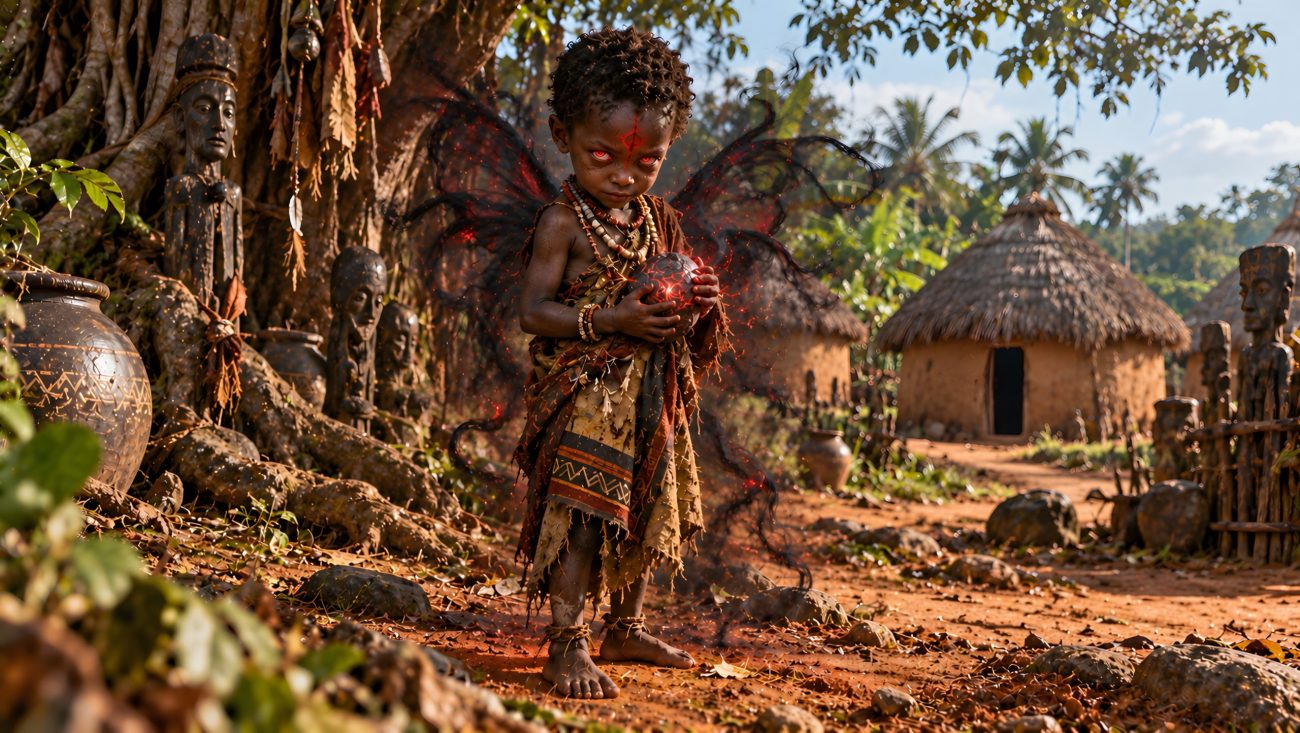
The ọgbanje was believed to be a malevolent spirit that could take the form of a child and deliberately bring suffering to a family. The name literally means “children who come and go,” reflecting the belief that the same spirit could repeatedly enter a family through different children. An ọgbanje might be born into a family and then die while still young, often before reaching puberty, only to return through another child and repeat the cycle. The spirit could also appear within an extended family rather than returning to the exact same household, and it was believed that an ọgbanje could enter the human world between conception and birth or be introduced into a group of such spirits.

The ọgbanje was believed to possess a secret stone called an iyi-uwa, which it buried somewhere hidden. This stone allowed the spirit to return to the human world and find the family it had chosen to torment. As long as the stone remained hidden, the cycle of death and return could continue. Families therefore sought the help of a priest to locate the iyi-uwa and bring it out of the ground. Once the stone was found and destroyed, the spirit was believed to lose its power to return and plague the family. A child might also be considered free from the spirit after the mother successfully gave birth to another child.

People looked for signs that a child was an ọgbanje, including distinctive birthmarks, recurring illnesses, unusual behaviour, similarities to a deceased child, or even the child’s first words. Oracles could be consulted to determine whether the spirit was believed to be present. After an ọgbanje died, some families attempted to prevent its return by cutting or mutilating the body, believing that the spirit would recognize the scars if it returned in another incarnation. Some stories even claimed that a returning child could bear the physical marks of this earlier mutilation. Through its repeated deaths and returns, the ọgbanje became a figure associated with the mysterious loss of children and the seemingly endless misfortune of a family.


Sources

“Awes-kon-wa.” Wikipedia: The Free Encyclopedia. Wikimedia Foundation. Accessed October 4, 2026. https://en.wikipedia.org/wiki/Awes-kon-wa


Madam Koi Koi

Tradition / Region: Nigerian Mythology, Ghana Mythology
Alternative names: Lady Koi Koi, Madam Moke
Category: Ghost


The Myth

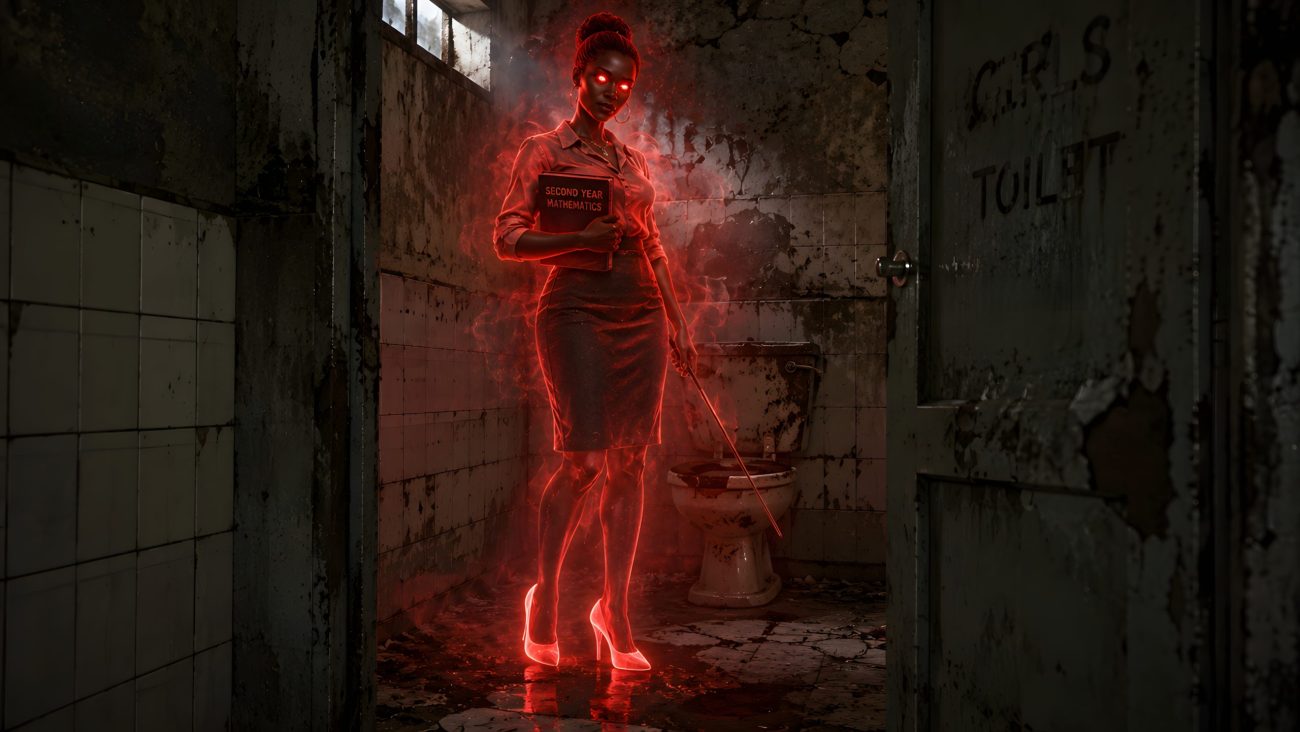
Madam Koi Koi is one of the most famous ghosts in West African folklore and is especially feared in boarding schools. She is said to haunt dormitories, hallways, toilets, and empty school buildings after dark. In day schools, she is believed to appear to students who arrive too early or remain too late.

She is usually described as a beautiful and fashionable woman wearing bright red high heels. Sometimes she wears only a single heel. Her approach is announced by the distinctive sound of her shoes striking the floor—koi, koi, koi—from which she receives her name.

According to the most common stories, she was once a secondary school teacher renowned for her beauty but feared for her cruelty. She harshly punished students and often beat them without reason. In one version, she was dismissed after injuring a student and died in a traffic accident while returning home. Before dying, she swore revenge against the school and its students.

Another tradition says that she was so sadistic that her students eventually murdered her, hiding her body outside the school grounds. One by one, those involved mysteriously disappeared, while the last surviving participant became haunted by the sound of high heels every night. Eventually, he too was found dead after investigating the source of the footsteps.

Since then, students have reported hearing the sound of heels clicking through the dormitory corridors after lights out. Some say she appears as a woman dressed in white with red shoes. Others claim she is invisible except for her heels. Looking directly at her is said to cause people to vanish.

Madam Koi Koi is blamed for strange noises, opening doors, singing, whistling, slaps delivered by unseen hands, and attacks in school restrooms. In some stories, she wanders through the halls searching for her missing shoe and demands that students return it.

Even when she cannot be seen, her presence is known by the sound that echoes through silent corridors in the middle of the night:

Koi… Koi… Koi…

And students know that Madam Koi Koi is walking once again.


Sources

Wikipedia contributors. (n.d.). Madam Koi Koi. In Wikipedia. Retrieved June 20, 2026, from https://en.wikipedia.org/wiki/Madam_Koi_Koi