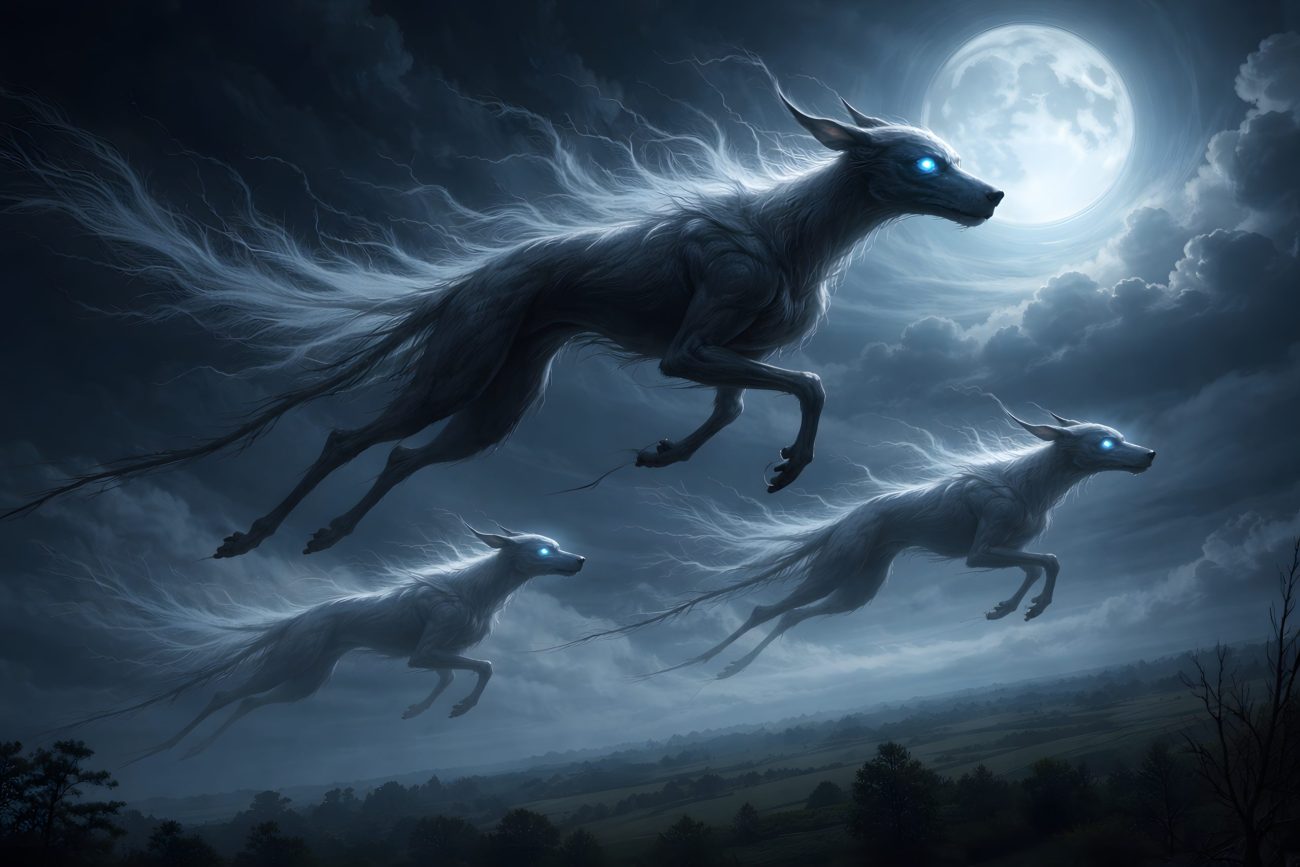
Q’ursha

Tradition / Region: Georgian Mythology
Alternate Names: Qursha, Kursha
Category: Dog


The Myth

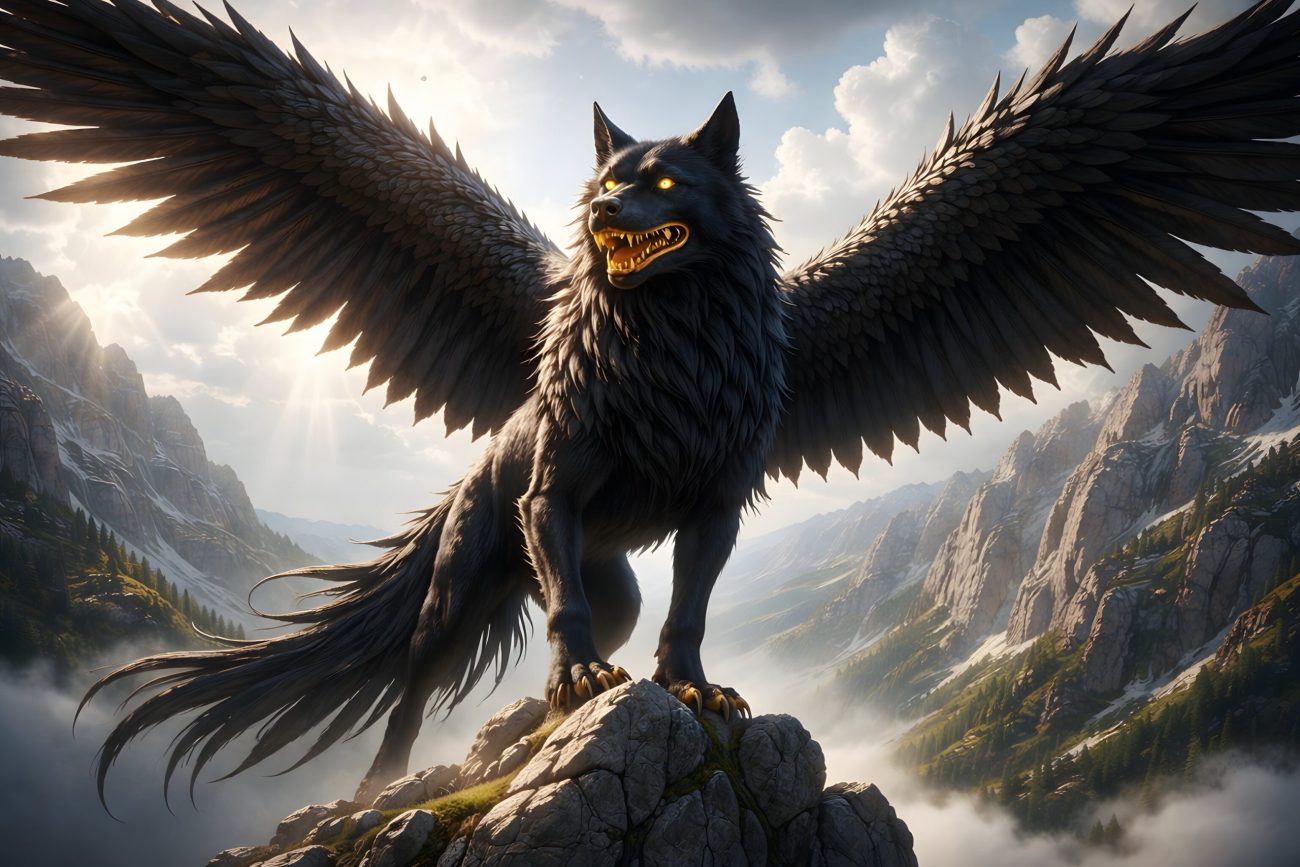
Q’ursha was a mighty and loyal dog remembered in Georgian tales as the faithful companion of heroes.

His name meant “Black-Ear,” a common name for dogs, yet the creature himself was far from ordinary. Stories say he was born from a bird, either a raven or an eagle, and in some tellings he possessed wings. He was described as enormous and powerful, with vast paws, golden lips, and eyes as large as sieves. His bark thundered across the land, and he could leap across distances as wide as fields. No prey could escape his tracking.

He is most closely linked with the great hero Amirani. Amirani, the son of a goddess and a mortal hunter, wandered the world fighting monsters and demons. When he finally grew proud enough to challenge God, he was punished and chained inside a mountain. Q’ursha was trapped there with him.

The faithful dog never ceased trying to free his master. He licked the chains day after day, slowly weakening them. Each year Amirani came close to breaking free, yet just before he could escape, the bonds were renewed, and the struggle began again.

Q’ursha also appears in the tale of the hunter Betkil. After Betkil angered the mountain goddess, he was trapped on a high peak with the dog beside him. In some versions, Betkil sent Q’ursha down the mountain for help, and the dog returned with villagers, though they could not save him. In other tellings, when starvation set in, Q’ursha urged his master to kill and eat him to survive. Betkil killed the dog but, unable to bring himself to eat his faithful companion, died soon after.

Thus Q’ursha was remembered as the devoted hound of heroes — a winged, powerful dog whose loyalty endured even in captivity, and whose faithfulness became a lasting symbol in Georgian legend and song.


Sources

Wikipedia contributors. (n.d.). Q’ursha. In Wikipedia, from https://en.wikipedia.org/wiki/Q%27ursha


Dando’s Dogs

Tradition / Region: English Mythology
Alternate Names: Devil’s Dandy Dogs
Category: Dog, Ghost


The Myth

In English tradition there is a tale of Dando, a priest who loved hunting more than he loved the duties of his church.

One Sunday, after spending the day hunting instead of attending to sacred matters, he sat with his companions drinking. They gave him ale and wine, but he demanded more and more. At last he swore that if the drink he wanted could not be found on Earth, then it must be fetched from Hell itself.

At that moment a strange huntsman appeared among them. He offered Dando a flask and gave him drink, but then seized part of the priest’s game. Dando, drunk and furious, shouted that he would follow the huntsman even to Hell to recover it.

No sooner had he spoken than the huntsman carried him away, vanishing with him in an instant. Dando’s hounds gave chase, racing after their master, but they could not catch him.

From that time on, people said that Dando was lost, taken into the otherworld by the mysterious hunter. Yet his dogs never stopped searching. On certain mornings, especially early on Sundays, their howling is said to be heard in the distance, still hunting or still seeking their vanished master.

Thus Dando’s Dogs were remembered as ghostly hounds of the Wild Hunt — forever running across the unseen fields, chasing what they can never reach and echoing through the air as a warning against sin and excess.


Sources

Wikipedia contributors. (n.d.). Dando’s dogs. In Wikipedia, from https://en.wikipedia.org/wiki/Dando%27s_dogs


Börries

Tradition / Region: Dutch Mythology
Alternate Names: Barries, Stommelstaart
Category: Dog


The Myth

In the northern provinces, stories were told of a ghostly creature known as the Börries.

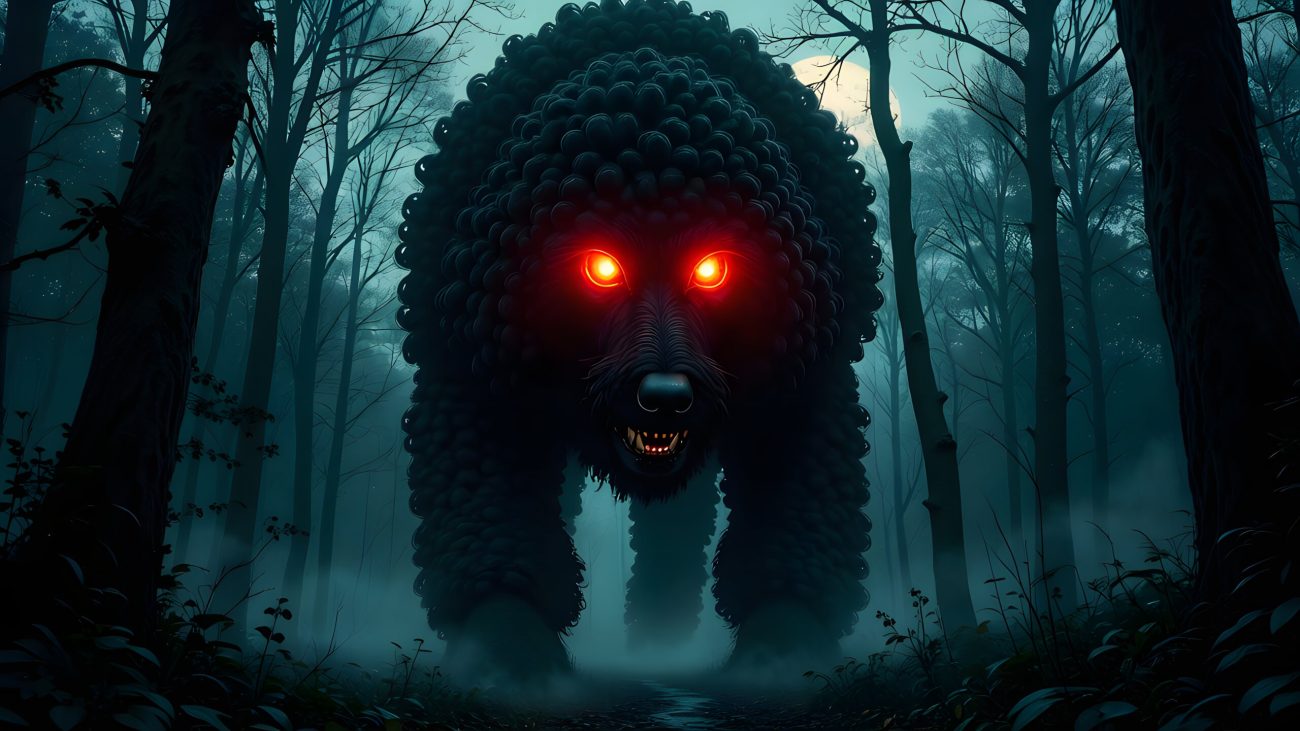
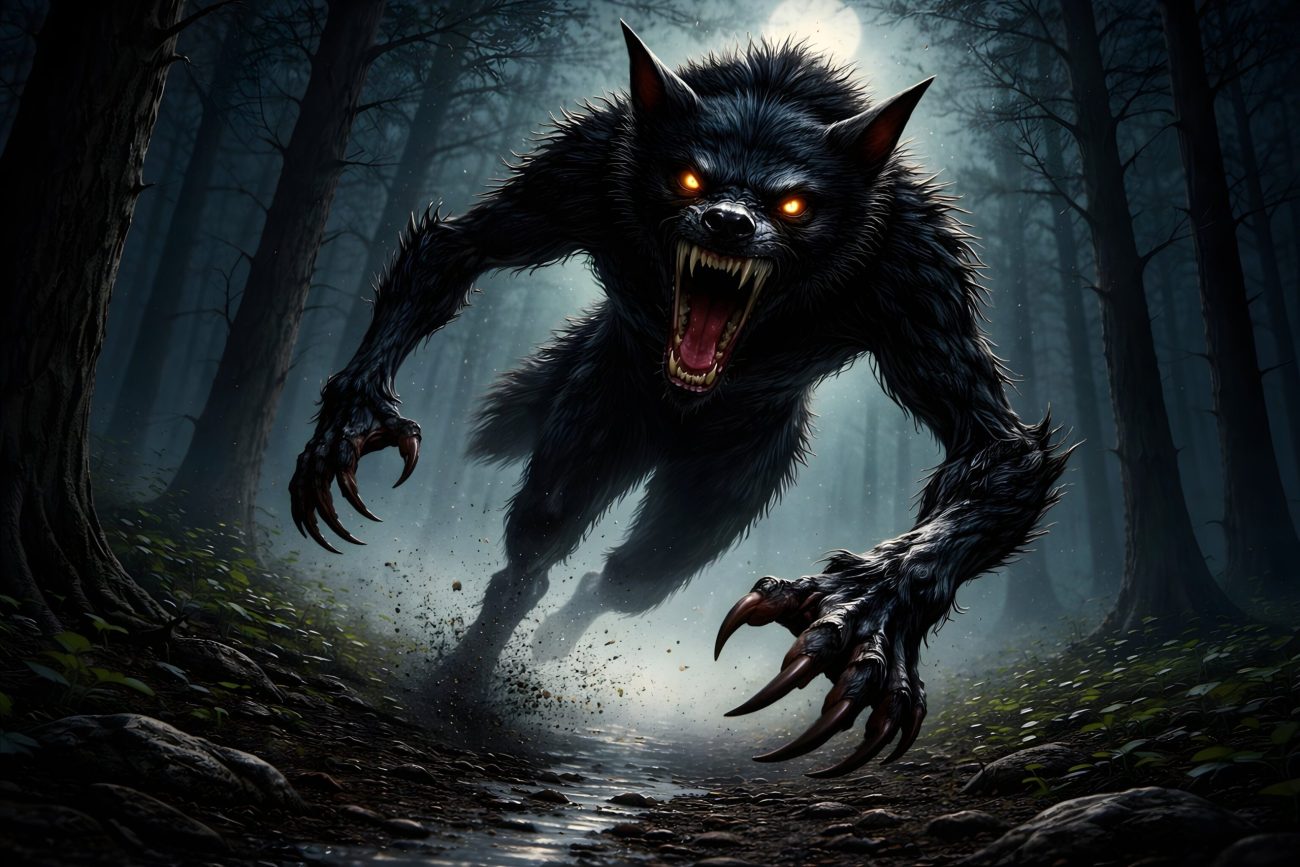
It appeared as a large black dog, often described as resembling a poodle or water dog, with glowing eyes as big as small bowls. People said it could be encountered at night on lonely mounds, crossroads, and open fields where the land lay quiet and empty.

The creature moved in a strange, swaying manner, stepping first with the legs on one side of its body and then the other, giving it an unnatural, rocking gait. Behind it stretched a rough, heavy tail that stuck straight out as it walked.

Those who met the Börries were warned to stand perfectly still. One must not move, not speak, and not even blink. If the traveler remained motionless, the beast would have no power over them. But if they showed fear or moved, it could bring danger or death.

Some tales said the Börries was a form taken by a werewolf, while others claimed it was a sign that death was near. It was sometimes said to appear with other uncanny creatures, such as a flying boar or a headless foal, making the encounter even more dreadful.

Thus the Börries was remembered as a swaying black hellhound of the northern lands — a night-roaming omen whose glowing eyes warned of danger and whose presence was often taken as a sign of approaching death.


Gallery


Sources

Abe de Verteller. (n.d.). Van aardmannetje tot zwarte juffer: Een lijst van Nederlandse en Vlaamse elfen en geesten. From https://abedeverteller.nl/van-aardmannetje-tot-zwarte-juffer-een-lijst-van-nederlandse-en-vlaamse-elfen-en-geesten/


Interpretive Lenses

Religious Readings
  • Christian Ascetic Deep Dive
Philosophical Readings
  • Nietzschean Deep Dive
Psychological Readings
  • Jungian Deep Dive
Esoteric Deep Dive
  • Hermetic Deep Dive
Political / Social Readings
  • Marxist Deep Dive

Kephn

Tradition / Region: Myanmar Mythology
Alternate Names: Swamx
Category: Dog, River dweller


The Myth

Among the Karen people, there are tales of a terrifying being known as the Kephn.

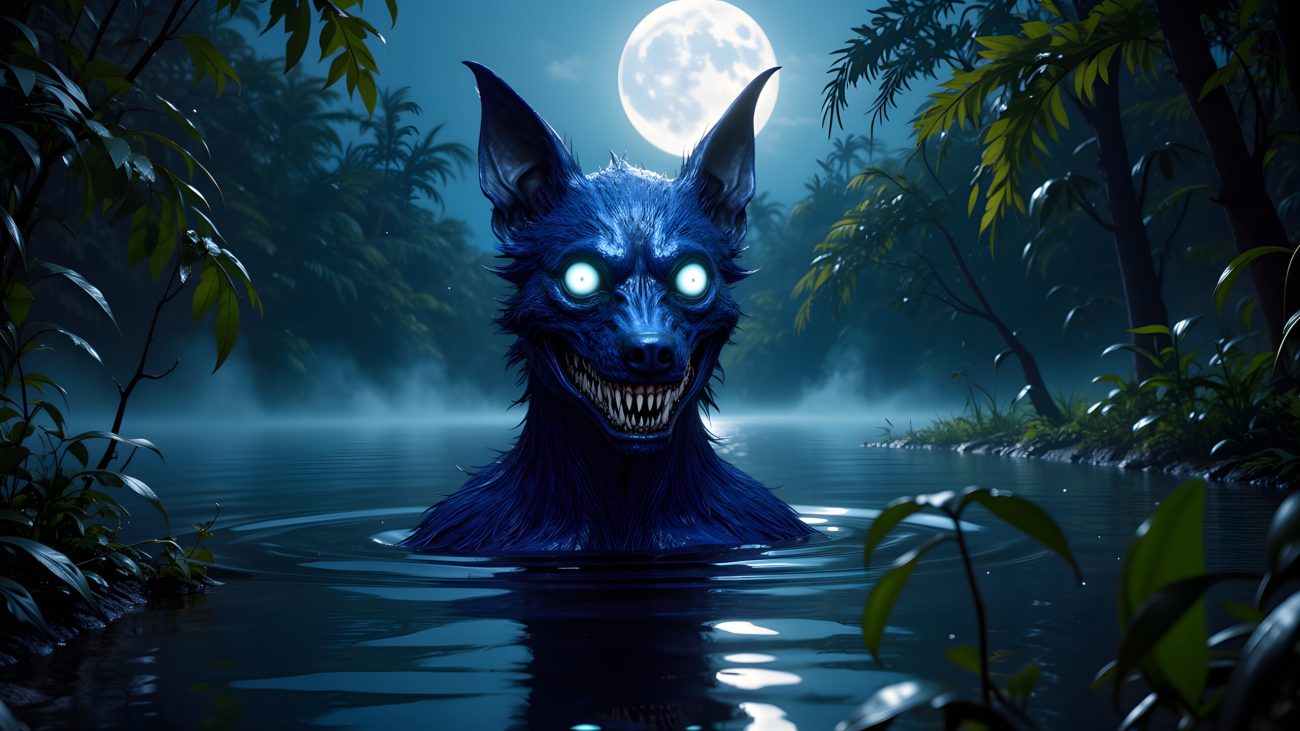
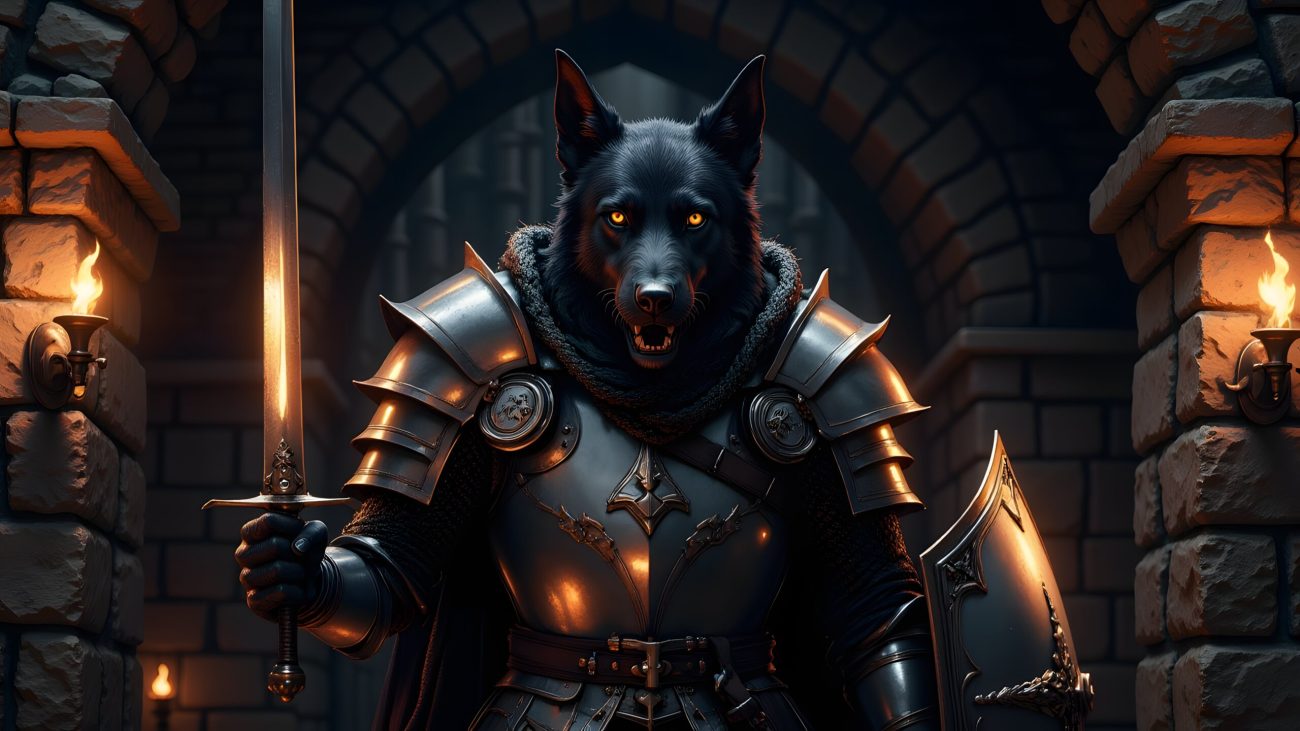
It is said to be created through dark magic and belongs to the world of malevolent spirits. In one of its most feared forms, the Kephn appears as a dog-headed demon that lives near water. It lurks in rivers, pools, and damp places, waiting for the chance to seize a victim.

The creature is driven by a constant hunger. It feeds on human blood and is believed to steal the souls of those it overcomes. Because of this, it is feared not only as a killer but as a spirit that can destroy a person beyond death.

Stories warn that such beings do not arise naturally but are brought into existence through sorcery, making them especially dangerous and unnatural. Once created, they wander in search of prey, tied to the places where darkness, water, and magic meet.

Thus the Kephn was remembered as a dog-headed demon of the waters — a being born from evil rites, forever hungry for the blood and souls of the living.


Gallery


Sources

Vampires Wiki. (n.d.). Kephn. From https://vampires.fandom.com/wiki/Kephn


Interpretive Lenses

Religious Readings
  • Christian Ascetic Deep Dive
Philosophical Readings
  • Nietzschean Deep Dive
Psychological Readings
  • Jungian Deep Dive
Esoteric Deep Dive
  • Hermetic Deep Dive
Political / Social Readings
  • Marxist Deep Dive

Koerakoonlased

Tradition / Region: Estonian Mythology
Alternate Names: Pendolls
Category: Dog


The Myth

The Koerakoonlased were originally remembered from stories connected to the feared warriors of Ivan IV. These soldiers were said to carry symbols of a dog’s head, representing their duty to track down enemies as a hound tracks its prey.

In later storytelling, this image passed from history into legend. The dog-headed symbol became something more than a sign, and people began to speak of beings who truly had such forms.

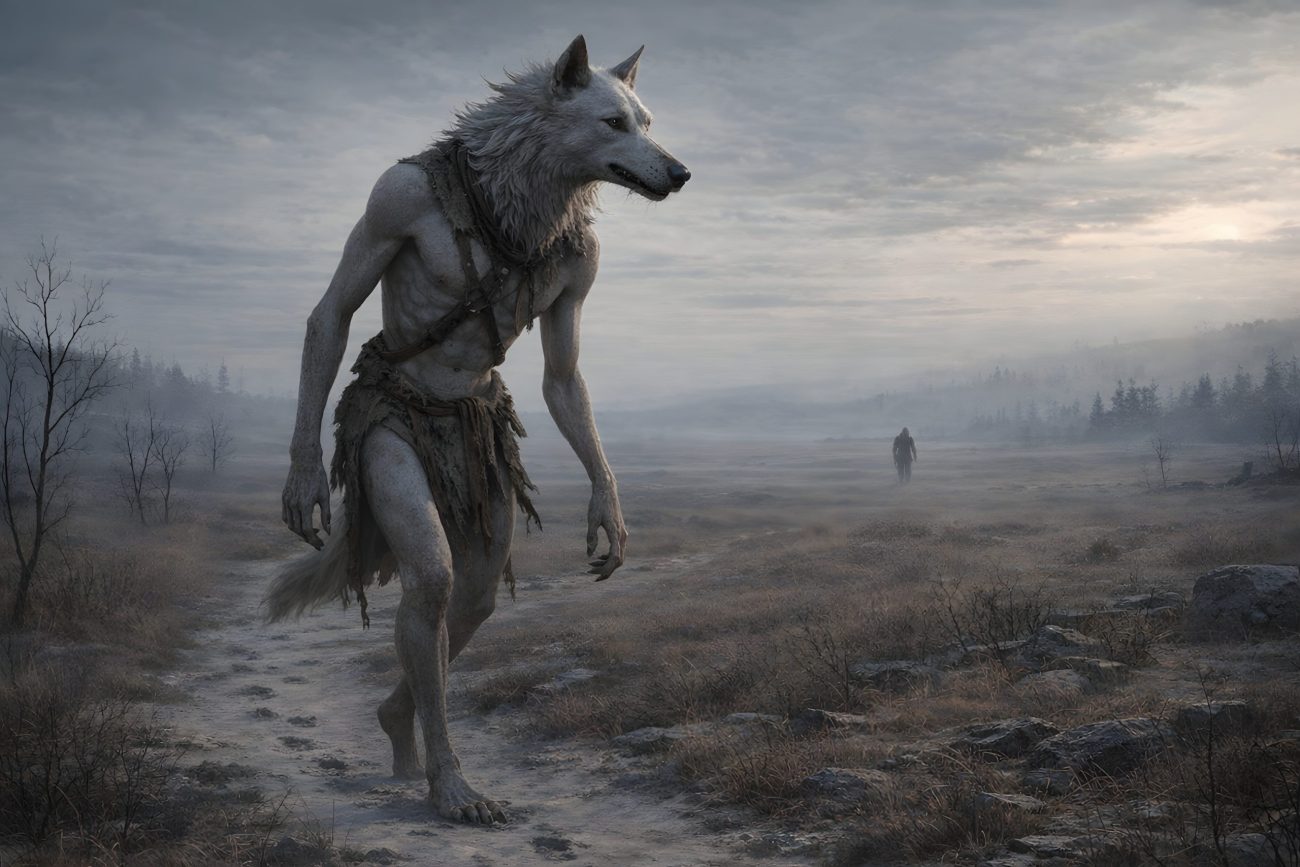
In these tales, the Koerakoonlased were imagined as creatures with the bodies of humans but the heads of dogs. They belonged to the realm of monsters and distant lands, sometimes placed beyond the known world. They were spoken of as strange and unsettling beings, neither human nor animal, living outside ordinary society.

Stories linked them with similar creatures known in other traditions, suggesting that the idea of dog-headed beings belonged to a wider world of myth. Over time, the Koerakoonlased remained in memory not as soldiers but as monstrous figures, part of folklore rather than history.

Thus they were remembered as dog-headed beings born from a symbol of power and fear, transformed by storytelling into creatures of legend.


Sources

Wikipedia contributors. (n.d.). Koerakõonlased. In Wikipedia, from https://et.wikipedia.org/wiki/Koerakoonlased


Sumpurnis

Tradition / Region: Latvian Mythology
Alternate Names: Sumpurs, Sumpurni (plural)
Category: Dog, Forest dweller


The Myth

In Latvian tradition, the Sumpurnis is a fearsome being that lives deep within the forests.

It is described as a creature with a human body but the head of a dog. Some tales say it may instead have a bird’s head, a single eye, or a single leg, but it always remains something neither fully human nor beast. The creatures wear garments made from leaves and dwell far from settlements, hidden in the wilderness.

Sumpurni are said to prey on people. They attack travelers, tear them apart, and feed on their flesh and blood. If they do not kill a victim at once, they may bind the person and keep them captive until they decide to eat them later.

Stories often portray them as the opposite of humans. Where people farm and raise animals, the Sumpurni roam as hunters. Where people eat animals, they eat human flesh. They speak in strange, unintelligible voices and live beyond the order of human society.

They were believed to have their own rulers and nobles, marked by long tails that signified status among them. Their closest kin were said to be dogs, and in some stories they were linked with werewolves, sharing with them the idea that a person might be transformed into such a creature through sorcery. In those tales, a magical belt could bind someone into the form, and only by tearing it free could the spell be broken.

Thus the Sumpurnis was remembered as a forest-dwelling dog-headed devourer — a creature of the wilds, living beyond the world of men and feared wherever the deep woods began.


Sources

Wikipedia contributors. (n.d.). Sumpurnis. In Wikipedia, from https://lv.wikipedia.org/wiki/Sumpurnis


Uridimmu

Tradition / Region: Mesopotamian Mythology
Alternate Names: Mad Dog, Gruesome Hound
Category: Dog, Demon


The Myth

Uridimmu was a strange and powerful being known in the myths and rituals of ancient Mesopotamia.

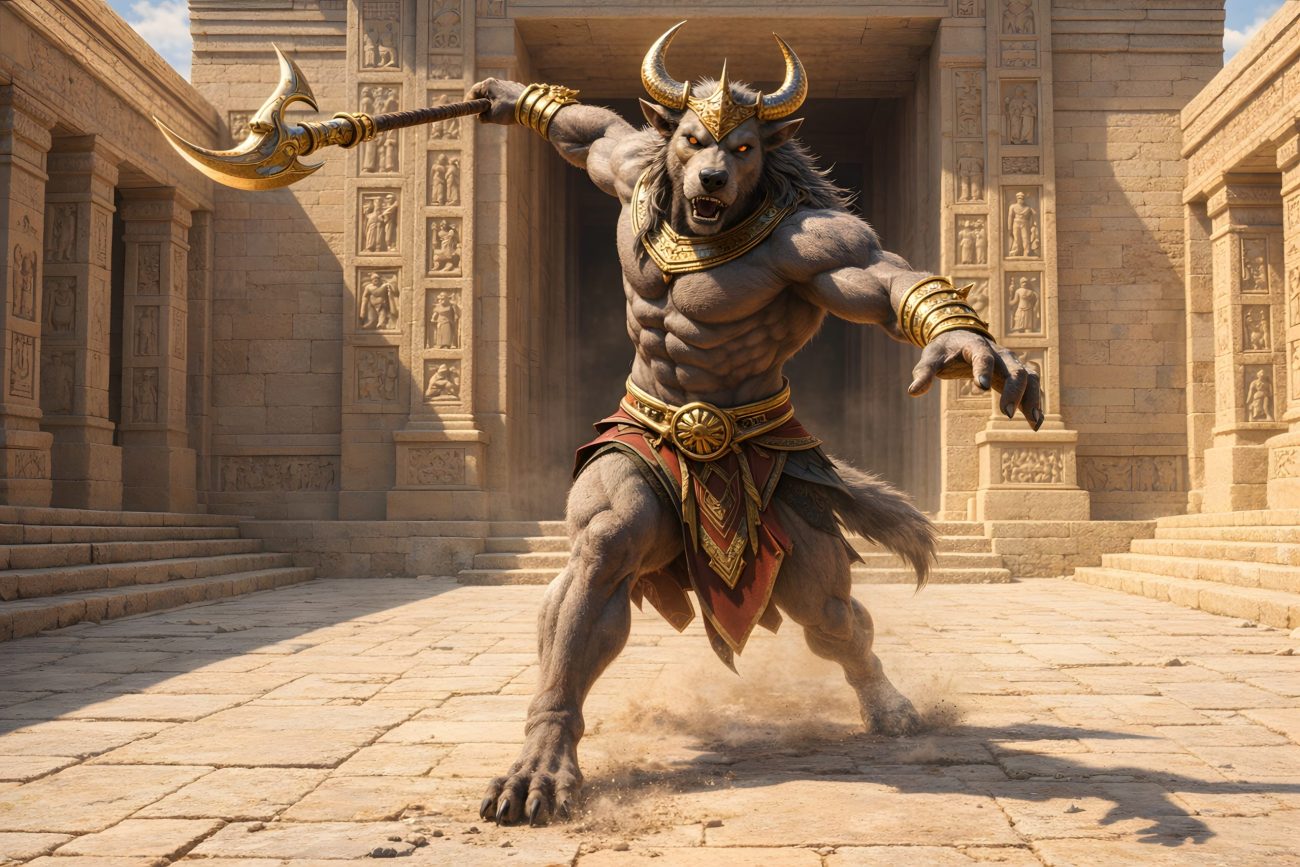
He was depicted as a creature with the body of a dog standing upright like a man, but with a human head. He often wore a horned crown and carried a staff tipped with a crescent, marking him as a being connected to divine power. His name was associated with the idea of a raging or rabid dog, suggesting both ferocity and danger.

In the stories of the gods, Uridimmu was counted among the monstrous beings born from Tiamat during the great battle between chaos and order. When Marduk defeated these creatures, their forms were later used as protective symbols. Images of Uridimmu were set on doorways and buildings so that his frightening presence would drive away evil.

Over time he was no longer remembered only as a defeated monster but also as a guardian spirit. Figures of him were placed in temples and homes as protection. In ritual tradition he appeared among the attendants of the sun god Shamash and was called upon in ceremonies connected with healing and divine aid.

Thus Uridimmu was remembered both as a creature of chaos and as a protector — a human-headed dog spirit whose image guarded doorways and whose presence was meant to keep harm away.


Gallery


Sources

Wikipedia contributors. (n.d.). Uridimmu. In Wikipedia, from https://en.wikipedia.org/wiki/Uridimmu


Interpretive Lenses

Religious Readings
  • Christian Ascetic Deep Dive
Philosophical Readings
  • Nietzschean Deep Dive
Psychological Readings
  • Jungian Deep Dive
Esoteric Deep Dive
  • Hermetic Deep Dive
Political / Social Readings
  • Marxist Deep Dive

Psoglav

Tradition / Region: Bosnian Mythology, Montenegrin Mythology
Alternate Names: Psoglavac, Psoglavec
Category: Dog, Demon


The Myth

The Psoglav was a terrifying being spoken of in Balkan tales, especially in regions of Bosnia, Montenegro, and the Istrian lands.

It was described as a monstrous creature with the body of a man but the legs of a horse. Its head was that of a dog, armed with iron teeth, and in the middle of its forehead it bore a single eye. The creature’s appearance marked it as something unnatural, neither beast nor human but a thing of dread.

Psoglavs were said to dwell in caves or in a distant dark land where the sun never shone. That place was believed to be filled with precious stones, yet empty of warmth and light, a realm suited to such creatures.

They were feared for their hunger. Stories claimed they devoured human flesh, attacking travelers and villagers, and even dug up graves to feed on the dead. Because of this, their name became associated with horror and the threat of being taken into the darkness.

Thus the Psoglav was remembered as a dog-headed demon of the shadowed lands — a cave-dwelling devourer with iron jaws and a single eye, feared wherever its legends were told.


Sources

Wikipedia contributors. (n.d.). Psoglav. In Wikipedia, from https://en.wikipedia.org/wiki/Psoglav


Orthrus

Tradition / Region: Greek Mythology
Alternate Names: Orthos, Orthus
Category: Dog


The Myth

Orthrus was a monstrous two-headed dog who guarded the cattle of the giant Geryon in the far western land of Erytheia.

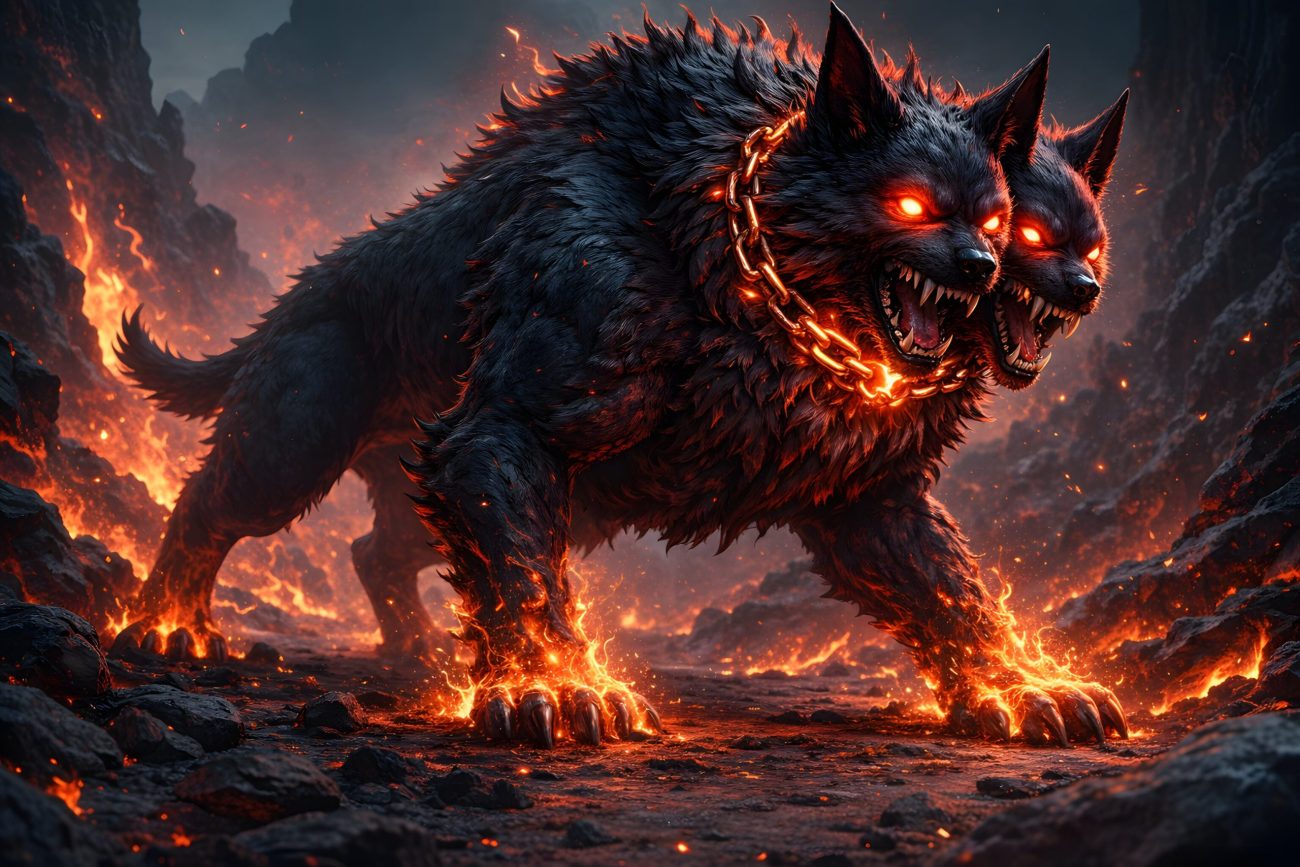
He was born of the terrible union of Echidna and Typhon, and was the brother of the fearsome Cerberus, the hound of the underworld. Like his kin, Orthrus was no ordinary beast but a powerful guardian set to protect what was entrusted to him.

Together with the herdsman Eurytion, he watched over Geryon’s famous red cattle on the distant island at the edge of the world, where the sun was said to set into the sea.

When Heracles came to claim the cattle as part of his labors, Orthrus was the first to confront him. The hero struck down the two-headed hound, killing it before facing the herdsman and finally the giant himself. With the guardians defeated, Heracles drove the cattle away and completed the task set before him.

Some later stories gave Orthrus an even darker legacy, saying that he fathered terrible creatures of his own, including the Sphinx and the Nemean Lion, though the tale differs on who their mother was.

Thus Orthrus was remembered as one of the great guardian beasts of myth — a two-headed hound of the western edge of the world, born of monsters and slain by a hero.


Sources

Wikipedia contributors. (n.d.). Orthrus. In Wikipedia, from https://en.wikipedia.org/wiki/Orthrus


Moddey Dhoo

Tradition / Region: Manx Mythology
Alternate Names: Mauthe Doog
Category: Dog, Ghost


The Myth

In the Isle of Man there was once said to haunt Peel Castle a great black spectral dog known as the Moddey Dhoo.

It appeared as a large shaggy hound, often described as resembling a black spaniel. The creature was seen moving through the rooms of the castle, but most often it lay in the guardroom beside the fire, visible to the soldiers stationed there. Over time, they grew accustomed to its presence, though it never ceased to disturb them.

The dog was said to enter and leave through a certain passage in the castle each evening and return to it again at dawn.

One night, a guard, emboldened by drink, ignored the custom that the castle gates should be locked by two men together. He took the keys alone and went down the haunted passage to deliver them. Soon afterward, he returned pale and shaken, unable or unwilling to say what he had seen.

Within a few days he died.

After this, the passage was sealed and never used again. From that time onward, the black dog was no longer seen.

Thus the Moddey Dhoo was remembered as the silent hound of Peel Castle — a spirit that walked the halls, appeared before soldiers, and vanished after leaving one final warning behind.


Sources

Wikipedia contributors. (n.d.). Moddey Dhoo. In Wikipedia, from https://en.wikipedia.org/wiki/Moddey_Dhoo