Boy

Tradition / Region: English History
Alternate Names: Boye, Puddle, Pudel
Category: Dog


The History

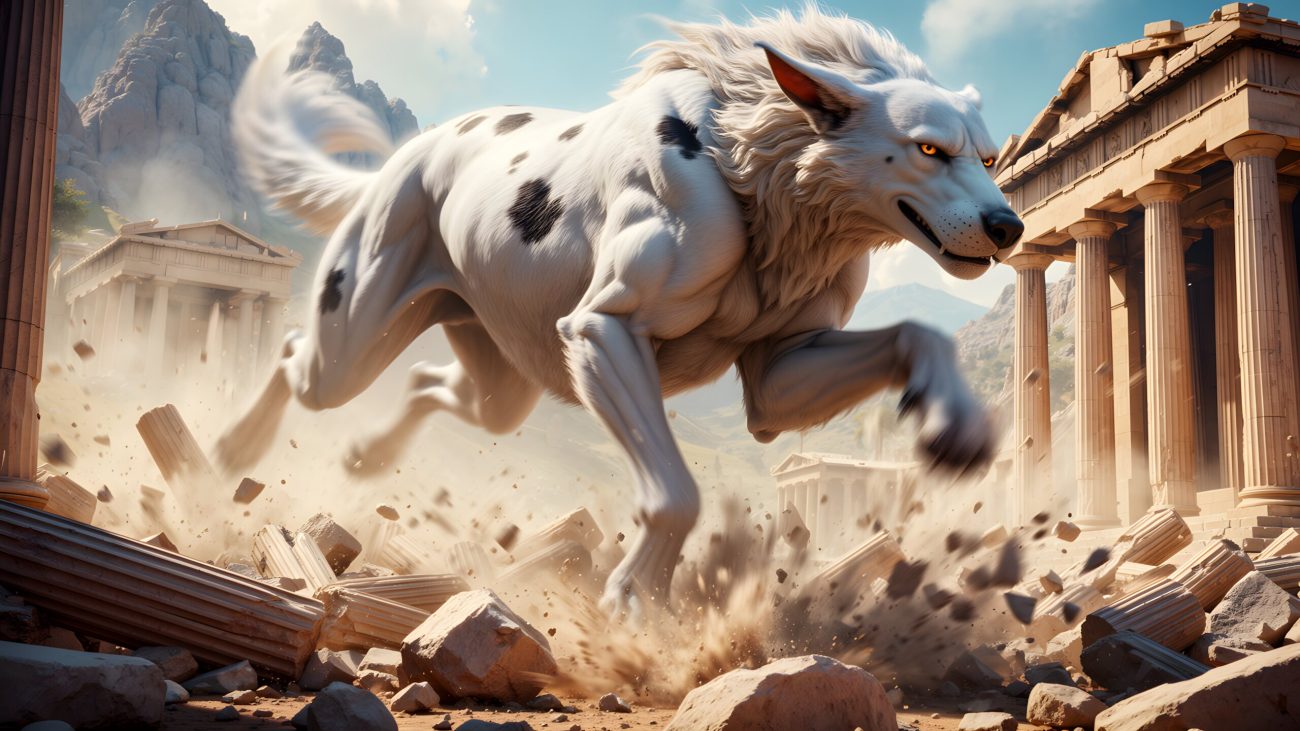
Boy was the famous white hunting dog of Prince Rupert of the Rhine during the English Civil War.

The animal was said to have first come to Rupert while he was imprisoned in Germany. Given to him as a companion, the dog remained with him afterward and followed him into the wars of England. Wherever Rupert rode, Boy was often seen beside him, even near the battlefield.

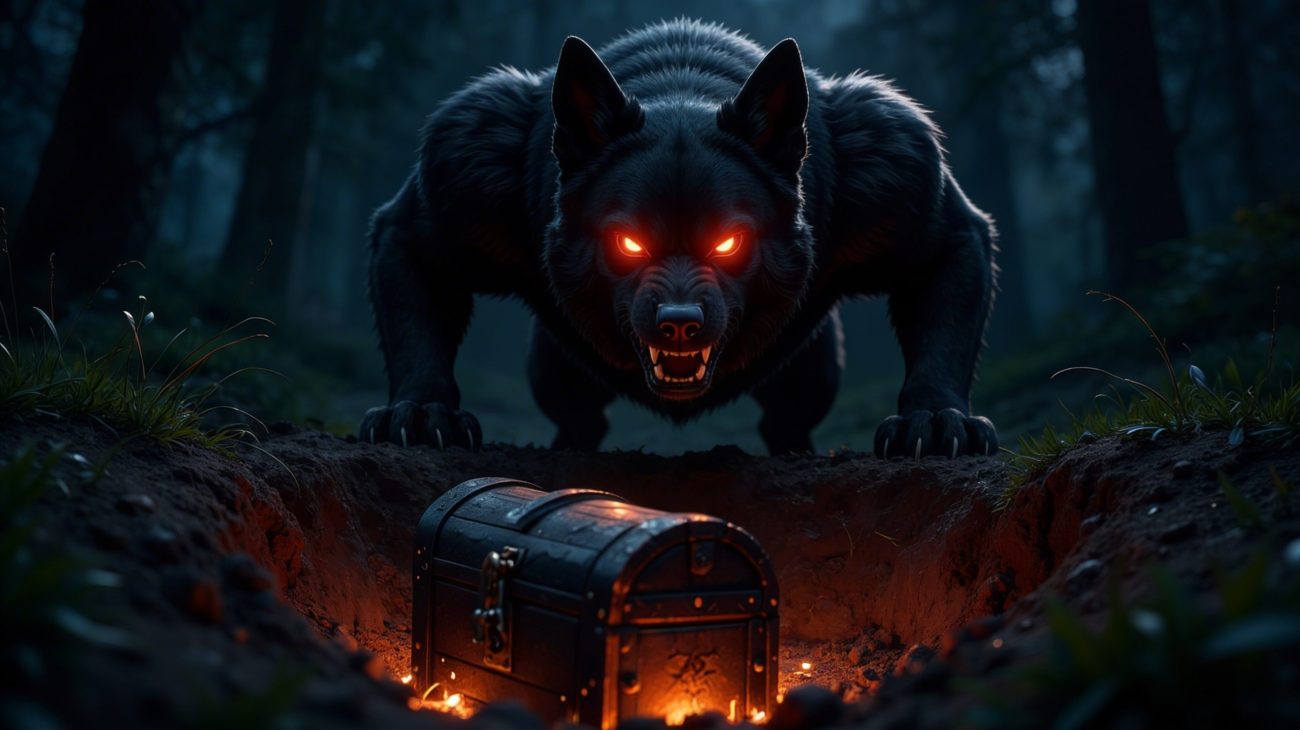
Because Rupert became a feared and controversial commander, stories quickly grew around the dog. His enemies claimed Boy was no ordinary animal but a witch’s familiar or a creature with dark powers. Some said he could catch bullets in his mouth, foretell events, or uncover hidden treasure. Others whispered that he was the Devil in disguise.

Royalist writers mocked these rumors, spinning their own exaggerated tales. In jest, some claimed Boy had once been a woman from Lapland transformed into a dog. Soldiers treated him as a mascot and even joked that he held rank among them.

Despite the strange stories, Boy was known to be devoted to his master. He followed Rupert closely and was well known among the king’s supporters. The dog was said to sleep near Rupert, accompany him on campaign, and move freely among the royal court.

In 1644, during the Battle of Marston Moor, Boy was left behind safely in camp. But he broke free and ran toward the fighting to follow Rupert. In the chaos of the battle he was killed.

Afterward, his death was widely noted, and images of the battle even showed the fallen dog. Though he had been only an animal, his fame had grown so great that his loss became part of the story of the war itself.

Thus Boy was remembered as the loyal hound of a prince — a war companion surrounded by tales of magic, feared by enemies, cherished by friends, and carried into legend by the conflict in which he died.


Gallery


Sources

Wikipedia contributors. (n.d.). Boy (dog). In Wikipedia, from https://en.wikipedia.org/wiki/Boy_(dog)


Interpretive Lenses

Religious Readings
  • Christian Ascetic Deep Dive
Philosophical Readings
  • Nietzschean Deep Dive
Psychological Readings
  • Jungian Deep Dive
Esoteric Deep Dive
  • Hermetic Deep Dive
Political / Social Readings
  • Marxist Deep Dive

El Cadejo

Tradition / Region: Costa Rica Mythology, Nicaragua Mythology
Alternate Names: Cadejo Blanco, Cadejo Negro
Category: Dog


The Myth

El Cadejo is a mysterious night-walking creature known across many lands of Central America. It is said that there are two of them — one dark and one pale — and their nature depends on which one walks beside you.

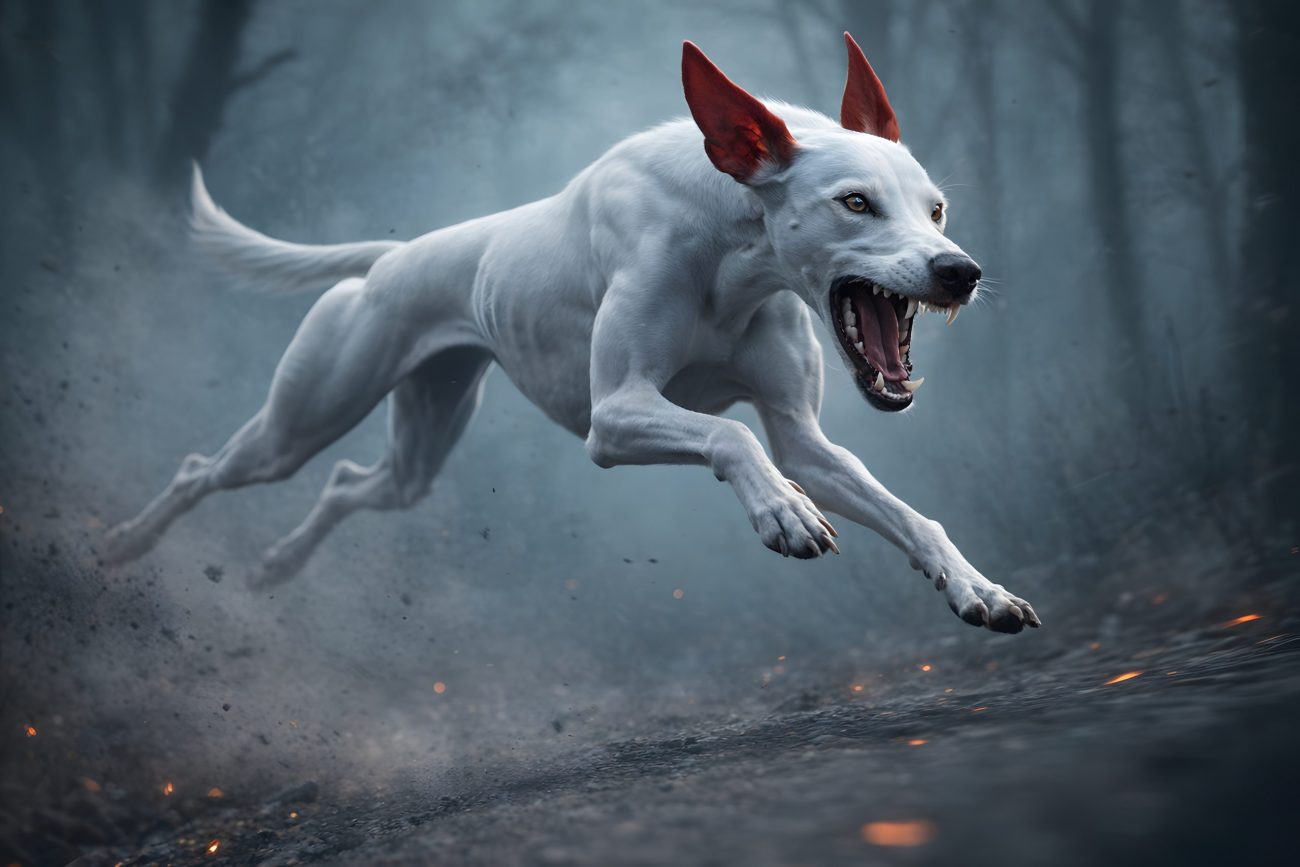
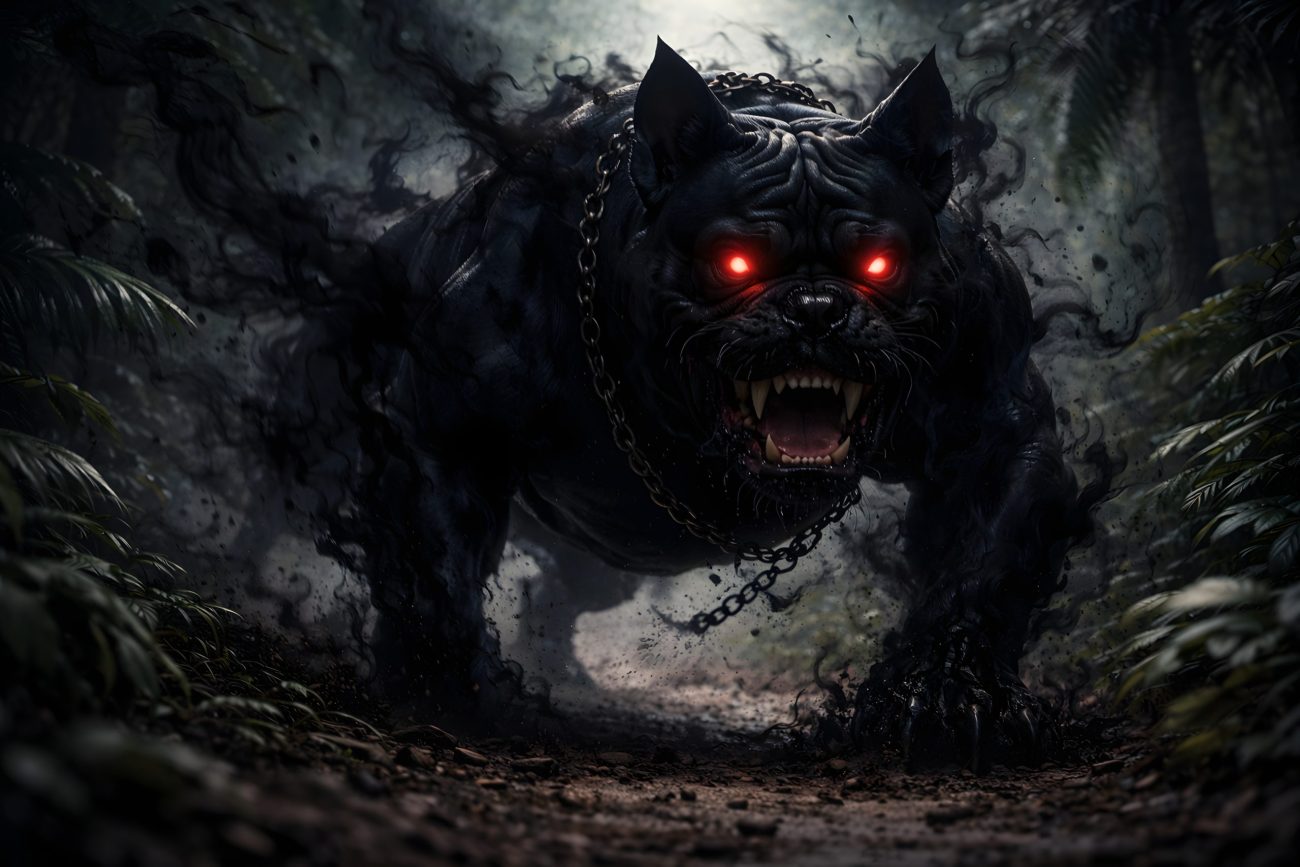
The Cadejo appears as a large dog-like beast, sometimes as big as a cow. Though shaped like a dog, it is not entirely one. Its eyes glow red in the darkness, its body gives off a strong goat-like smell, and some say its feet resemble hooves rather than paws. When it moves, the sound of dragging chains can often be heard.

One of the Cadejos is feared, while the other is said to protect. In some places the white one is the dangerous spirit that tries to trick travelers, while the black one guards the lonely and the drunk as they wander home at night. In other regions, the roles are reversed, and the dark Cadejo becomes the threatening one while the pale one is the protector.

The evil Cadejo is known to follow people silently through the night. Those who encounter it are warned never to speak to it, for doing so can drive a person mad. Turning one’s back on it is also said to bring misfortune or madness.

The other Cadejo, however, may walk beside a traveler and guide them safely home, keeping away its darker counterpart and any dangers that lurk in the night. Many believed that those who staggered through the streets alone after drinking were often unknowingly escorted by this protective spirit.

Thus El Cadejo was remembered as a double-natured hound of the night — a creature that might bring ruin or protection, depending on which form chose to follow you along the road.


Gallery


Sources

Wikipedia contributors. (n.d.). Cadejo. In Wikipedia, from https://es.wikipedia.org/wiki/Cadejo


Interpretive Lenses

Religious Readings
  • Christian Ascetic Deep Dive
Philosophical Readings
  • Nietzschean Deep Dive
Psychological Readings
  • Jungian Deep Dive
Esoteric Deep Dive
  • Hermetic Deep Dive
Political / Social Readings
  • Marxist Deep Dive

Kuon Khryseos

Tradition / Region: Greek Mythology
Alternate Names: Golden Dog
Category: Dog


The Myth

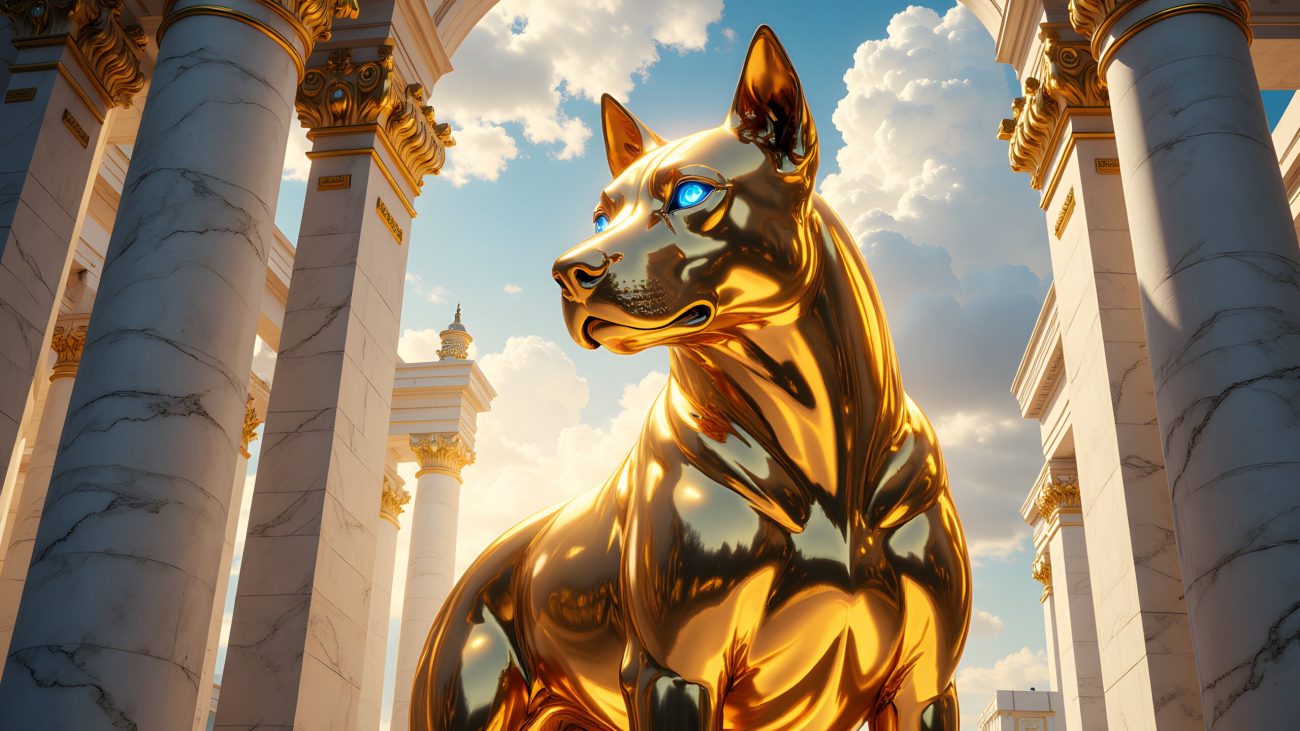
The Kuon Khryseos, the Golden Dog, was a sacred animal set to guard the infant Zeus.

When the god was hidden in a cave on the island of Crete to protect him from his father Kronos, he was nursed by the divine goat Amaltheia. Rhea, wishing to keep both child and nurse safe, appointed a golden dog to stand watch over them. The creature guarded the cave and the sacred place where Zeus was raised.

After Zeus grew to adulthood and overthrew the Titans, he honored those who had protected him. Amaltheia was placed among the stars, and the Golden Dog was also set in the heavens, remembered as a constellation so that its watch would never end.

In another tale, the dog was later stolen. A man named Pandareos took the sacred animal and carried it away, eventually giving it to Tantalos to hide. When the dog was demanded back, Tantalos denied ever having received it. Zeus, angered by the theft and the false oath, punished both men — Pandareos was transformed into stone, and Tantalos was struck down for his lie.

Because of these stories, the Golden Dog was remembered as a divine guardian, tied to the infancy of Zeus, to sacred oaths, and to the stars themselves. In some traditions it was even linked with the magical hound Lailaps, another swift and wondrous dog connected to the heroes of Crete.

Thus the Kuon Khryseos lived on in myth as the shining hound of Zeus — protector of the god in childhood and a watcher placed forever in the heavens.


Sources

Theoi Project. (n.d.). Kuon Khryseos. From https://www.theoi.com/Ther/KuonKhryseos.html


Pesanta

Tradition / Region: Catalan Mythology
Alternate Names:
Category: Dog


The Myth

In Catalan tradition, the Pesanta is a creature of the night that enters houses while people sleep.

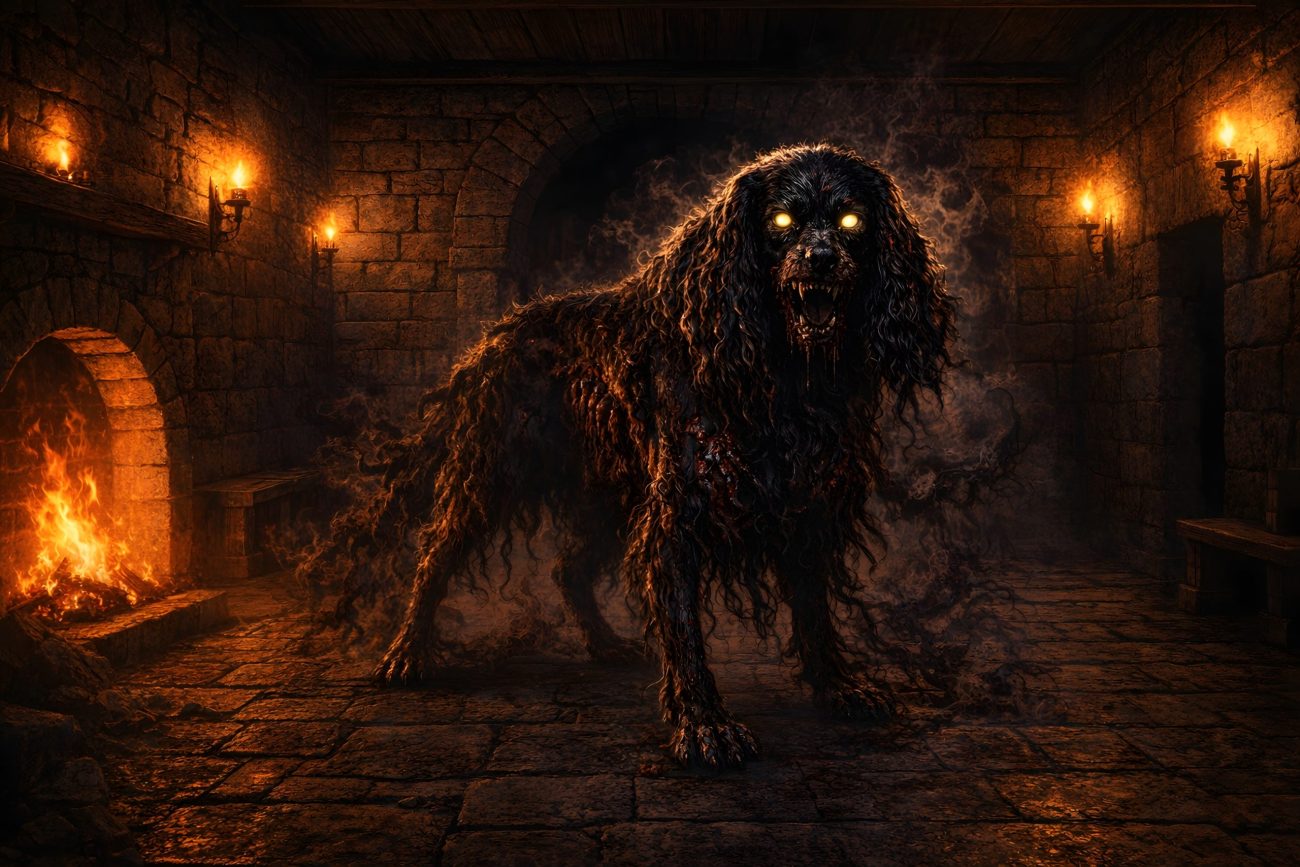
It is described as an enormous animal, sometimes appearing as a dog and sometimes as a cat. Its body is black and covered in thick hair, and its paws are said to be made of iron. Yet these paws are strange, for they have holes in them, marking the creature as something unnatural.

The Pesanta comes silently into homes after dark and climbs onto the chest of a sleeping person. There it presses down with its heavy weight, making it difficult to breathe. Those who suffer its visit cannot cry out or move, and they are left struggling beneath the creature as terror and nightmares fill their sleep.

By morning, the victim wakes exhausted, shaken, and often certain that something dreadful has visited in the night.

Thus the Pesanta was remembered as a night-walking beast — a great black dog-like spirit that crept into homes and weighed upon sleepers, bringing fear, suffocation, and dark dreams.


Gallery


Sources

Wikipedia contributors. (n.d.). Pesanta. In Wikipedia, from https://en.wikipedia.org/wiki/Pesanta


Interpretive Lenses

Religious Readings
  • Christian Ascetic Deep Dive
Philosophical Readings
  • Nietzschean Deep Dive
Psychological Readings
  • Jungian Deep Dive
Esoteric Deep Dive
  • Hermetic Deep Dive
Political / Social Readings
  • Marxist Deep Dive
Other
  • How to Invite The Kuygorozh

Black Dog of Newgate

Tradition / Region: English Mythology
Alternate Names:
Category: Dog, Ghost


The Myth

At the old Newgate Prison in London, there was once said to haunt a terrible creature known as the Black Dog of Newgate.

The story tells that during a time of famine, when hunger and misery gripped the land, a scholar was imprisoned there. He had a reputation as a sorcerer, a man said to have practiced dark arts. The prison conditions were so dreadful that the inmates, driven mad with starvation, killed and ate him.

Not long after this deed, something began to move through the prison in the night.

Prisoners reported seeing a monstrous black dog pacing the corridors and the cells. It appeared suddenly and vanished just as quickly, but its presence filled the place with dread. Those who had taken part in the killing believed the creature was the spirit of the murdered man, returned in a new form to avenge himself.

One by one, the prisoners who had been involved were said to die horribly, as though hunted down by the spectral beast. Fear spread through the prison until the survivors, half-mad with terror, broke out and fled.

But the story says the black dog did not stop there. It followed the escapees wherever they tried to hide, pursuing them until each had paid for the crime.

The tale was later told as a warning about cruelty, sin, and the brutal life within the prison walls. Some even doubted whether the beast was real at all, claiming the only “black dog” in the prison was a dark stone in the dungeon where condemned prisoners sometimes dashed out their brains in despair.

Yet the legend endured, and the image remained of a great black hound stalking the halls of Newgate — a spirit born from murder, hunger, and guilt, returning to claim the lives of those who had done wrong.


Sources

Wikipedia contributors. (n.d.). The Black Dog of Newgate. In Wikipedia, from https://en.wikipedia.org/wiki/The_Black_Dog_of_Newgate


Dip

Tradition / Region: Catalan Mythology, Spanish Mythology
Alternate Names:
Category: Dog, Vampire


The Myth

In the traditions of Catalonia there was said to be a dreadful creature known as Dip.

Dip was imagined as a black hellhound, a servant of the Devil who prowled the night in search of blood. He was not a perfect beast, for he was said to limp, lame in one leg, a mark that set him apart from ordinary dogs and revealed his infernal nature.

He was believed to haunt the lands around the village of Pratdip. When night fell, people spoke of glowing eyes watching from the darkness. The creature was said to attack cattle, sucking their blood, and to prey upon unlucky travelers. Some tales warned that drunken men returning from taverns were especially at risk, for the hellhound favored those wandering alone through the night.

Images of these terrible dogs appeared in religious artworks centuries ago, showing that the legend was already old by the early modern period. Over time the story became closely tied to the village itself, and people said its very name came from the presence of these creatures.

Though the fear of Dip faded and the sightings ceased, the memory of the blood-drinking hound remained. He was remembered as a shadow of the night, a limping black dog whose glowing eyes warned of danger and whose hunger for blood made him one of the most feared beasts of Catalan lore.


Sources

Wikipedia contributors. (n.d.). Dip (Catalan myth). In Wikipedia, from https://en.wikipedia.org/wiki/Dip_(Catalan_myth)


Tienuurshond

Tradition / Region: Dutch Mythology, Belgian Mythology
Alternate Names: Twaalfuurshond, Negenuurshond, Tienurenhond
Category: Dog, Ghost


The Myth

In parts of Utrecht and the region around Antwerp, people once spoke of a spectral animal known as the Tienuurshond.

He was said to appear on lonely roads during winter evenings. At exactly the same hour each night — most often at ten o’clock — a large black dog would come into view ahead of a traveler. Around its body hung chains that rattled as it moved, their sound echoing through the cold darkness.

The creature did not usually attack. Instead, it walked in front of the traveler, leading the way along the road as though guiding them through the night. It remained just out of reach, always ahead, never allowing itself to be caught.

Because it appeared at a fixed hour, people gave it its name: the Ten-O’Clock Dog. In some places, where it was believed to appear at other times, it was known as the Nine-O’Clock Dog or the Twelve-O’Clock Dog instead.

Thus the Tienuurshond was remembered as a chained black hound of the winter roads, a ghostly figure that emerged at the appointed hour and walked before the lonely traveler until it vanished again into the night.


Sources

Abe de Verteller. (n.d.). Van aardmannetje tot zwarte juffer: Een lijst van Nederlandse en Vlaamse elfen en geesten. From https://abedeverteller.nl/van-aardmannetje-tot-zwarte-juffer-een-lijst-van-nederlandse-en-vlaamse-elfen-en-geesten/


Shan

Tradition / Region: Chinese Mythology
Alternate Names: Shan Zi
Category: Dog

In ancient Chinese legend there is mention of a strange creature known as Shan.

It was described as a dog with the face of a human. When it encountered people, it was said to smile, an unsettling expression that marked it as something unnatural. The creature moved with great speed, running like the wind itself.

Its appearance was not considered fortunate. Wherever Shan was seen, it was believed that strong winds or destructive storms would soon follow. Because of this, its presence was taken as a sign that a wind disaster was near.

Thus Shan was remembered as a swift, human-faced dog of ill omen, whose smile foretold the coming of violent winds.


Gallery


Sources

Wikipedia contributors. (n.d.). 山𤟤. In Wikipedia, from https://zh.wikipedia.org/wiki/%E5%B1%B1%F0%A4%9F%A4


Interpretive Lenses

Religious Readings
  • Christian Ascetic Deep Dive
Philosophical Readings
  • Nietzschean Deep Dive
Psychological Readings
  • Jungian Deep Dive
Esoteric Deep Dive
  • Hermetic Deep Dive
Political / Social Readings
  • Marxist Deep Dive
Other
  • How to Invite The Kuygorozh

Wild Dogs

Tradition / Region: Chinese Mythology
Alternate Names: —
Category: Dog

The Myth

In strange tales recorded in old Chinese stories, there is mention of terrifying creatures known as the Wild Dogs.

They were not ordinary animals but monstrous beings said to roam battlefields and places of death. Their bodies were beast-like, while their heads resembled those of humans. They fed not on flesh alone but on the brains of the dead, tearing open skulls to suck out what lay within.

One story tells of a man named Li Hualong who fled into the mountains during a time of rebellion and war. Dead bodies lay everywhere across the land. When he saw soldiers approaching, he feared he would be captured and killed. To escape notice, he lay down among the corpses and pretended to be dead.

While he lay there, a creature approached. It had a human-like head and moved among the bodies, gnawing at their skulls and feeding on their brains. When it came near him, Li Hualong seized a stone and struck it in the mouth. The monster fled, leaving a trail of blood behind as it escaped into the wild.

Afterward, in the place where the creature had bled, two of its teeth were found. They were long, curved, and sharp, proof that the thing had not been a dream but one of the dreadful Wild Dogs that haunted the aftermath of war.

Thus these creatures were remembered as horrors of desolate places — dog-like monsters that followed death itself, feeding upon the fallen where no one dared remain.


Gallery


Sources

Wikipedia contributors. (n.d.). 野狗子. In Wikipedia, from https://zh.wikipedia.org/wiki/%E9%87%8E%E7%8B%97%E5%AD%90


Interpretive Lenses

Religious Readings
  • Christian Ascetic Deep Dive
Philosophical Readings
  • Nietzschean Deep Dive
Psychological Readings
  • Jungian Deep Dive
Esoteric Deep Dive
  • Hermetic Deep Dive
Political / Social Readings
  • Marxist Deep Dive
Other
  • How to Invite The Kuygorozh

Huodou

Tradition / Region: Chinese Mythology
Alternate Names: Disaster-Fighting Beast, Scourge beast
Category: Dog


The Myth

In ancient Chinese lore there is mention of a strange and dangerous animal known as the Huodou.

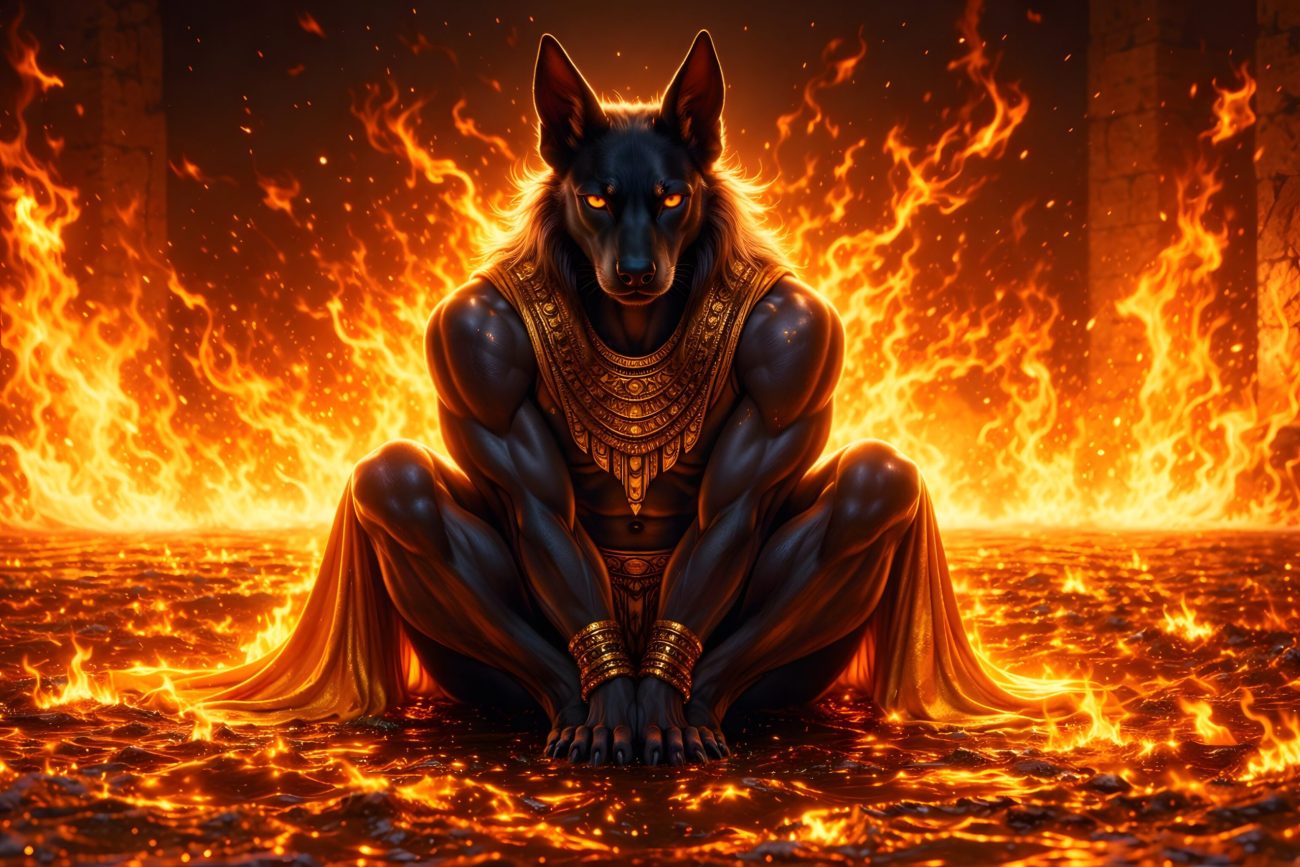
It was said to live in a distant southern land near the dark mountains. In that country, people were believed to withstand fire and even eat burning charcoal. Among them lived a creature that also fed on fire. This beast was described as black in color and shaped somewhat like a dog.

The creature’s nature was considered deeply ominous. Though it could consume flames, it was also said to breathe fire itself, spreading destruction wherever it went. Because of this, it was taken as a sign of disaster.

A later tale tells of a young man named Wu Kan, who lived alone until he discovered a mysterious white snail. When he brought it home, the snail transformed into a beautiful woman who became his wife and helped him with his household.

The local magistrate grew jealous and sought to cause them trouble. He demanded that Wu Kan bring him strange and dangerous things. Each time, the wife managed to provide what was asked. At last, the magistrate demanded a Scourge Beast.

The woman obtained a creature shaped like a dog and gave it to her husband to deliver. The beast consumed fire, but what it expelled afterward was also fire. Soon after it was brought to the magistrate’s house, flames spread from it and the building burned completely to ashes.

After this, Wu Kan and his wife disappeared, and nothing more was known of them.

Thus the Scourge Beast was remembered as a black, dog-like creature tied to fire and destruction — a being that could swallow flames yet also bring ruin wherever it appeared.


Gallery


Sources

Wikipedia contributors. (n.d.). 禍斗. In Wikipedia, from https://zh.wikipedia.org/wiki/%E7%A6%8D%E6%96%97


Interpretive Lenses

Religious Readings
  • Christian Ascetic Deep Dive
Philosophical Readings
  • Nietzschean Deep Dive
Psychological Readings
  • Jungian Deep Dive
Esoteric Deep Dive
  • Hermetic Deep Dive
Political / Social Readings
  • Marxist Deep Dive
Other
  • How to Invite The Kuygorozh