The Quauhxouilin, known as the Eagle-Fish, is a remarkable fish spoken of in Mexican tradition. Its name joins two ideas into one being: quauhtli, meaning eagle, and xouilin, a kind of fish.
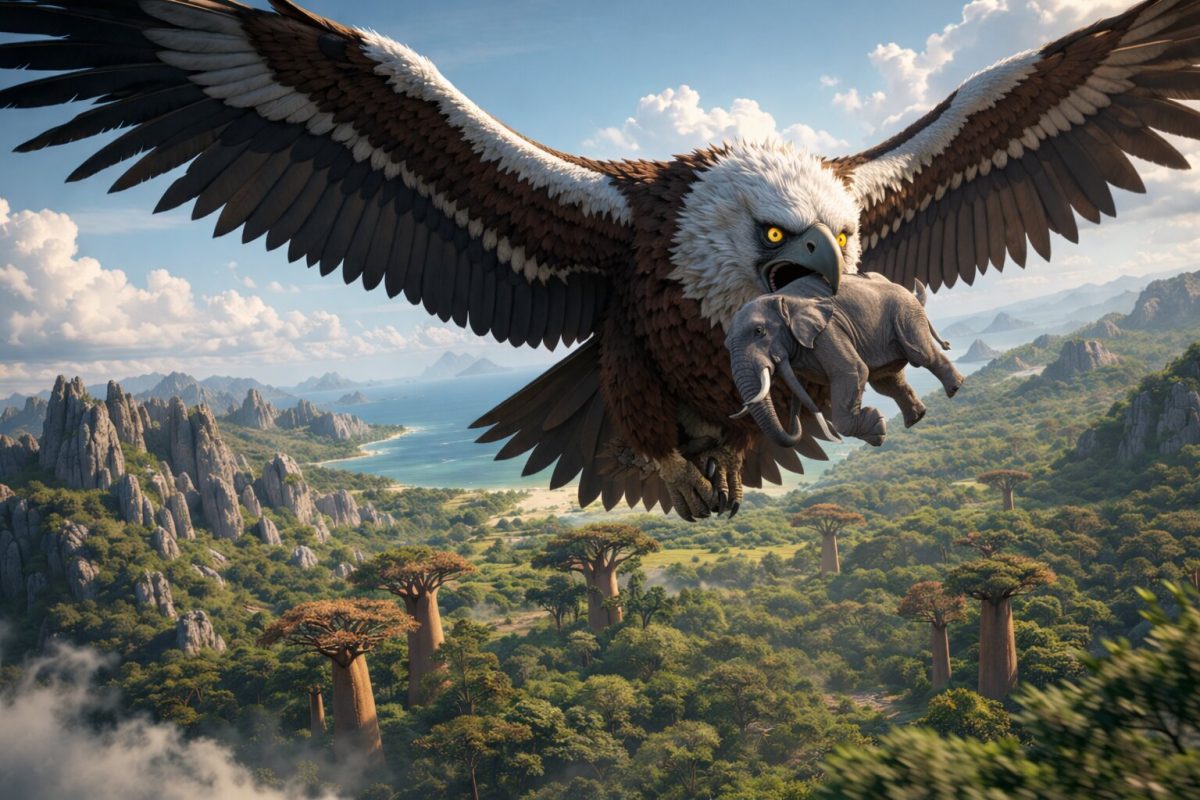
This creature bears the head of an eagle, with a curved snout shining golden-yellow, giving it the look of a bird of prey risen from the water. Its body is long, large, and smooth, moving through the water with the same effortless grace as an eagle gliding through the sky.
Unlike ordinary fish, the Quauhxouilin has no scales and no bones. Its flesh is soft throughout, and for this reason it is considered good to eat, valued not only for its strange form but also for its taste.
The Quauhxouilin stands as a fusion of sky and water—a fish shaped like a bird, uniting the domains of river and air in a single living form.
In Mordvin folklore, Bobo is a short, furry creature used by mothers and grandmothers to frighten naughty children. When children misbehaved, cried too much, or refused to go to bed, elders would warn them: “Here comes Bobo from the forest! He’ll put naughty children in a sack and carry them away!”
Through these warnings, children imagined Bobo as something small but unsettling—furry, sometimes pictured with a bird-like leg, carrying an old sack. He was meant to be frightening, but never truly terrifying. The children always knew, deep down, that their mothers and grandmothers loved them and that Bobo would not really take them away.
Bobo is said to wear a black fur coat and carry a large sack, though he never actually uses it. He lives either in the forest or in vegetable gardens near homes. Late in the evening, he comes out onto the street, peers into windows, and waits. If he hears children whining, crying, or refusing to climb onto the stove or go to sleep, he begins to make noise—rustling, stomping with his furry paw, and muttering ominously, “Bo-bo-bo!”
His role is limited to scaring children into obedience. He does not kidnap anyone. Once the children quiet down and fall asleep, Bobo returns home. There, he chooses the warmest spot to sleep, and while resting, he is said to suck his paw.
Functionally, Bobo is closely related to the Slavic Babai, serving as a familiar and half-playful figure of discipline rather than a true monster. He exists at the boundary between fear and reassurance—scary enough to enforce bedtime, but gentle enough to remain part of childhood imagination rather than nightmare.
Among the Tingyan people of northwestern Luzon, the Alans are known as wild, winged female spirits who belong to a lower order of supernatural beings. They dwell deep within forests, and at times near rivers, in places seldom visited by humans.
In appearance, the Alans resemble women, but their features are disturbing. Their faces are said to be rough and deeply wrinkled, resembling the hide of a carabao buffalo. They possess wings and are able to fly. Their fingers are inverted, and their toes point backward, emerging from their heels rather than their feet, making them frightening to behold.
The Alans are believed to live in houses much like those of humans, though far more splendid and richly furnished. These dwellings are hidden within the dark forest. At night or when unseen, the Alans are said to hang upside down from tree branches, like bats.
Despite their terrifying appearance, the Alans are credited with a nurturing role. It is believed that when they find drops of menstrual blood, a placenta, or the remains of a miscarriage, they are able to raise a child from it. These children are raised secretly, without the knowledge of their human parents. Once grown, the Alans assist the children throughout their lives, offering help and protection.
Thus, the Alans are remembered not only as fearsome forest spirits, but also as mysterious foster mothers, moving between danger and care, concealment and guardianship.
In Kiwai Papuan folklore, etengena are mythical beings associated with particular places in the natural world. They are said to dwell in large trees, springs, and similar locations where nature is dense and undisturbed. Some etengena are believed to watch over vegetable gardens, guarding them from harm or intrusion.
Etengena do not have a single fixed appearance. At times they may take on human form, while at other times they reveal themselves as animals. They are known to appear as snakes, birds, or other creatures, depending on the situation and the person who encounters them.
The idea of the etengena overlaps in part with that of the ororarora, another class of mythical beings known in Kiwai belief. Because of this, the boundaries between these beings are not always clear, and their roles and forms may blend into one another in stories and traditions.
In the villages and marshlands of Hungary, people speak of the Lidérc, a restless and many-formed spirit that moves between fire, flesh, and shadow.
On some nights it appears as a shooting star or a wandering flame, streaking low across the sky or flickering over bogs and fields. Wherever it passes, sparks leap and fires may break out, barns and pens igniting without cause. In other places it takes the shape of a fiery rod, a blazing figure, or a marsh light that lures the unwary.
But the Lidérc is most feared for the form it takes among humans.
It seeks the lonely: widows, widowers, abandoned lovers, those whose beloveds are far away or dead. Slipping through the night, it enters their homes and assumes the exact appearance of the person they long for most. It speaks gently, knows their memories, and offers comfort, affection, and desire. Night after night it returns, lying beside its victim, feeding not on blood but on life itself. The victim grows pale and weak, dizzy and thin, until at last they waste away and die, loved to death. When its prey is spent, the Lidérc abandons the body and rises again into the sky as a star, seeking another heart to consume.
Yet the Lidérc is never perfect in its disguise. One of its legs always betrays it: a scaly goose foot, a chicken’s claw, or sometimes a horse’s iron-shod hoof. Those who scatter ashes at their threshold may see the tracks—one human footstep, one monstrous—and know what has crossed their door. Garlic, cords, and household charms can bar its entry, if the danger is recognized in time.
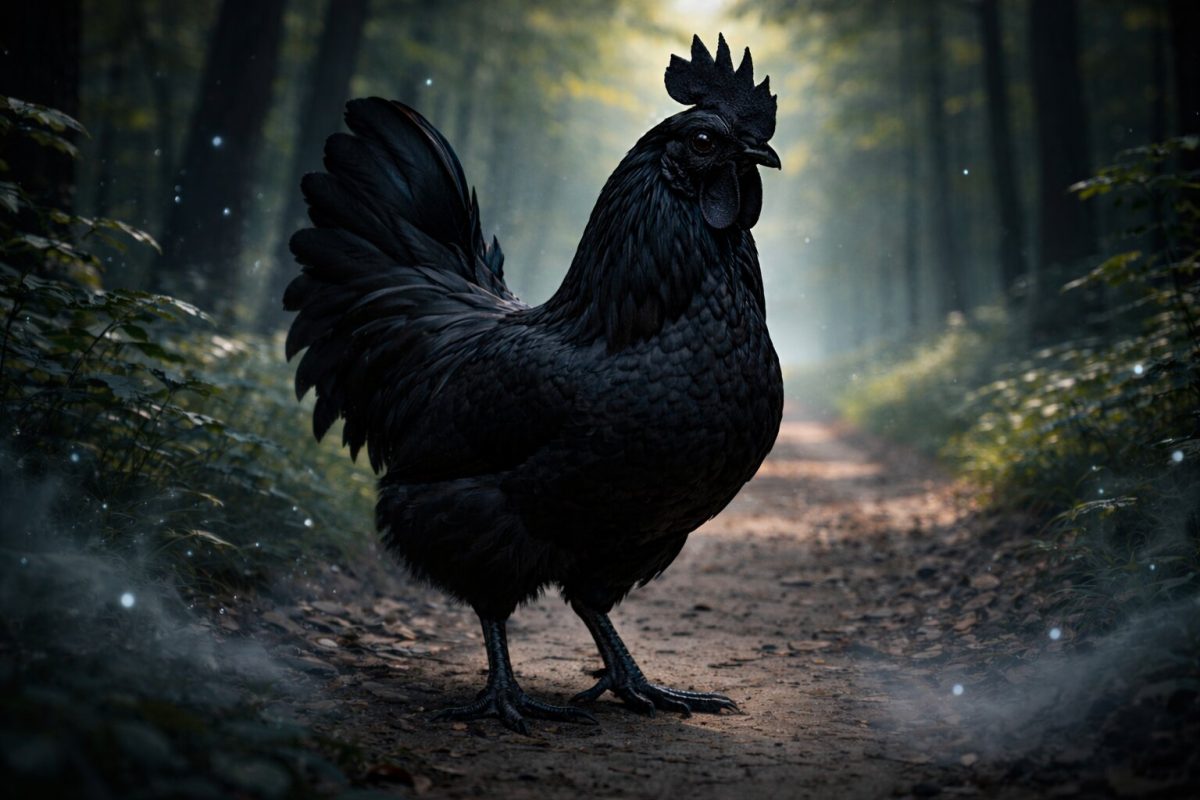
There is another kind of Lidérc as well, one born not from fire but from human greed. If the first egg laid by a black hen is hidden beneath a person’s armpit and warmed there, a strange, featherless creature will hatch. This Lidérc binds itself to its keeper, speaking with intelligence and obeying commands. It brings wealth, steals treasure, and works tirelessly, living on butter and favors. But it is never satisfied. If its master fails to give it constant tasks, it becomes restless and cruel, pestering day and night until it finally destroys the one who raised it.
The only escape is to give the Lidérc an impossible command: to carry water in a sieve, to squeeze through solid wood, to complete a task that cannot be done. Unable to endure failure, the creature will rage, weaken, and finally vanish.
Thus the Lidérc remains a warning whispered in Hungarian folklore: that desire, loneliness, and greed can summon something that looks like love or fortune—but feeds only on ruin.
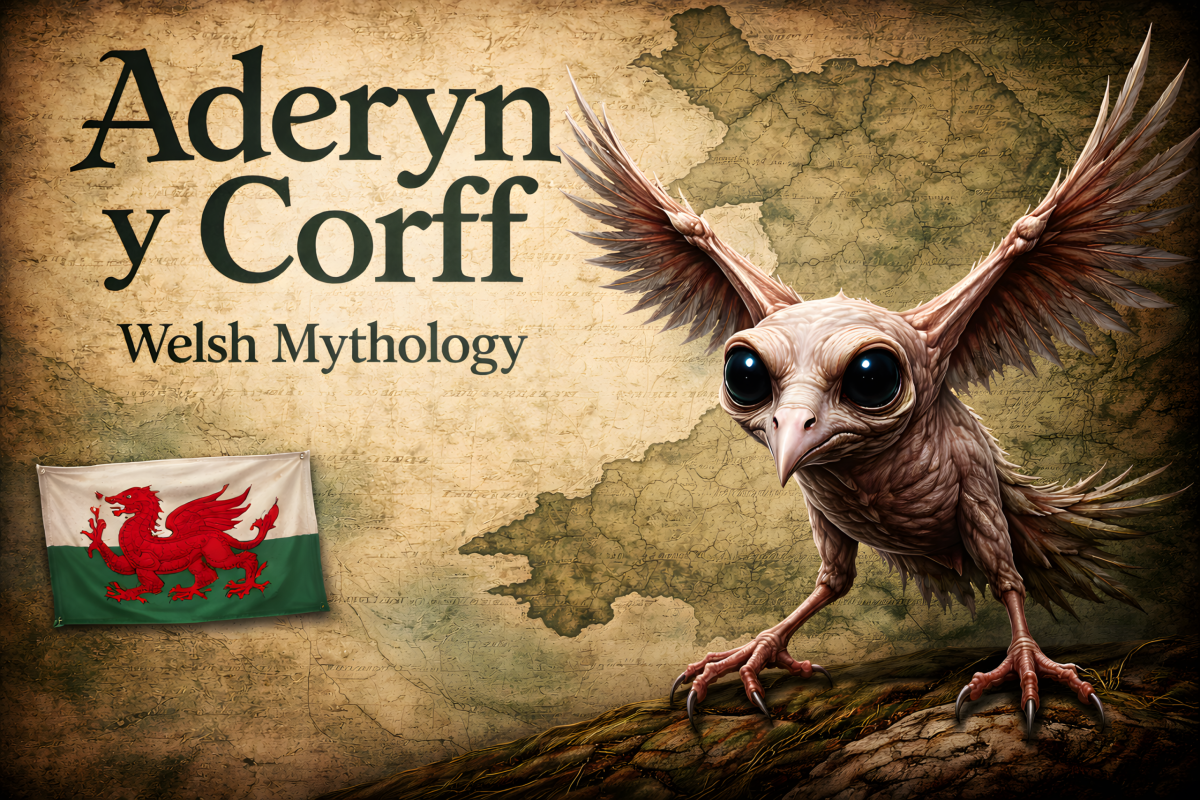
The Aderyn y Corff, the “corpse bird,” appears at the very edge of life, when death is no longer distant but imminent. In Welsh tradition, it does not wander the countryside at random nor bring vague ill fortune. It comes with purpose. When a person is near death, the bird is said to arrive outside the house, perching near a door or window, and calling softly into the night.
Its cry is described as sounding like dewch, dewch—“come, come.” This is not a threat or a warning meant to be avoided. It is a summons. The call is directed not to the living, but to the soul of the dying, inviting it to leave the body and pass onward. In this role, the Aderyn y Corff acts as a messenger between worlds, announcing that the moment of crossing has arrived.
The creature’s form marks it as something profoundly unnatural. It is said to have no feathers and no wings, yet it flies. This impossibility places it outside ordinary creation, identifying it as a being that does not belong fully to the physical world. Its movement obeys no natural law, only the logic of death and transition, reinforcing its status as a liminal presence suspended between life and the otherworld.
When it is not calling to the dying, the Aderyn y Corff is believed to dwell in another realm entirely—a plane of illusion or unreality that exists alongside the human world but rarely touches it. Death is one of the few moments when the boundary thins enough for the bird to cross over. It does not linger after its task is done. Once the soul has departed, the bird vanishes.
In many tellings, the Aderyn y Corff is closely associated with the screech owl, whose piercing nocturnal cry has long been linked to death across Europe. In Welsh usage, the name itself can refer to such owls, blurring the line between natural bird and supernatural herald. Yet folklore insists that when the call comes at the right moment, it is no ordinary owl but the corpse bird itself.
The Aderyn y Corff is feared, but not hated. It does not kill, curse, or deceive. It simply announces what cannot be changed. Its presence affirms a belief deeply rooted in Welsh tradition: death does not arrive silently. The otherworld sends a messenger first, and when the corpse bird calls, the soul is already being gathered.
Gallery
Sources
Sikes, W. (1881). British Goblins: Welsh Folk-lore, Fairy Mythology, Legends and Traditions. Sampson Low, Marston, Searle, & Rivington, p. 213.
The Raróg is a being of fire, most often seen as a flaming falcon or hawk streaking across the sky. It is not a creature of nests or forests, but one bound to heat, flame, and the upper reaches of the world. When it moves, it may blaze like a living ember, spiral through the air like a whirlwind, or descend suddenly in a flash of fire.
Some traditions tell that the Raróg may be born in an unusual way. An egg kept warm upon a household stove for nine days and nights can hatch into the spirit. Once it comes into being, it does not remain fixed in shape. At times it appears as a fiery bird, at others as a dragon-like form, a small humanoid spirit, or a spinning column of flame. Like fire itself, its nature is unstable and ever-changing.
The Raróg is said to dwell at the crown of the Slavic world tree, where it guards the entrance to Vyraj, a warm and radiant realm associated with life, renewal, and the seasonal flight of birds away from winter. From this height, it watches the boundary between the human world and a distant paradise beyond decay and cold.
In some regions, particularly in Polish folklore, the Raróg appears in a smaller and gentler form. It is described as a tiny fire-bird that can be carried in a pocket and brings good fortune to the one who possesses it. Even in this form, it remains a creature of flame, closely tied to later legends of the Firebird, whose feathers continue to glow long after being plucked.
Across all its tellings, the Raróg endures as a living embodiment of fire itself — swift, radiant, and dangerous, forever moving between worlds in flickers of flame.