Shiro (Shirodawashi)

Tradition / Region: Japanese Mythology
Alternate Names: Shirodashi, Shirodawashi (White Scrubber)
Category: Yōkai / Mountain Dweller / Cave Dweller


The Myth

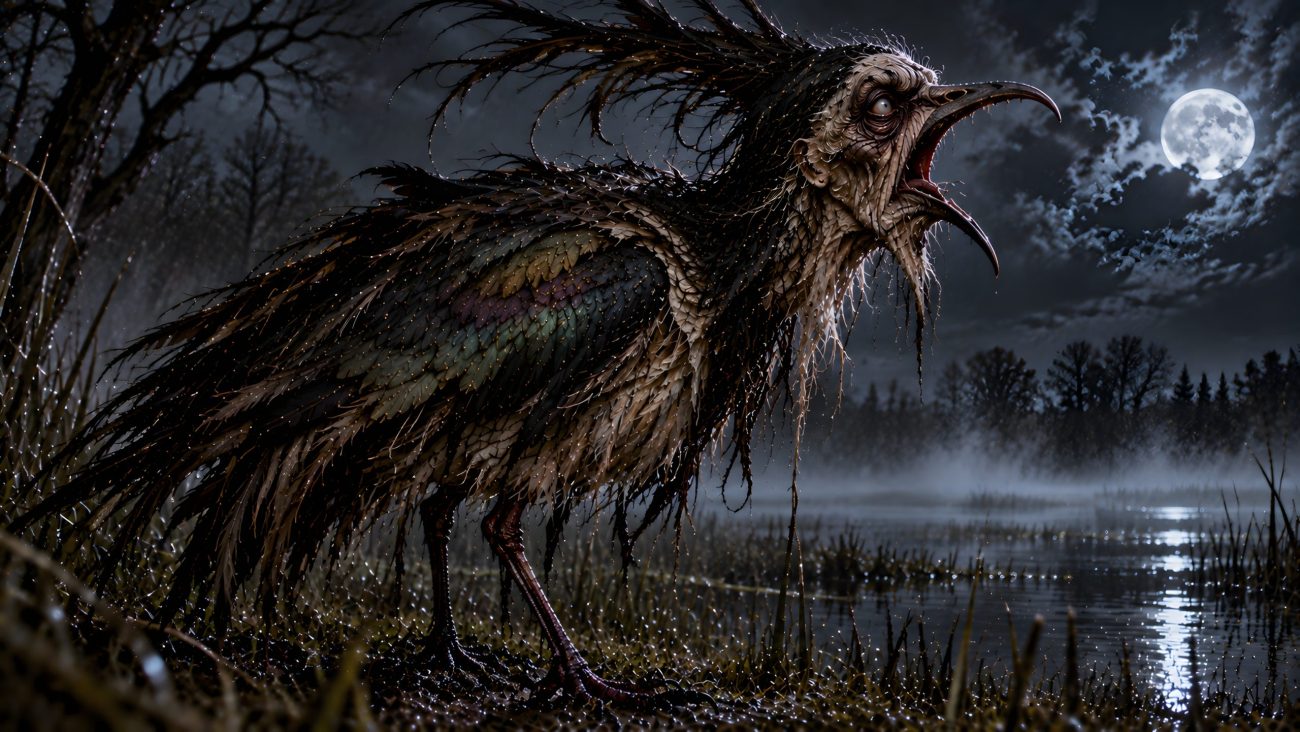
Shiro, also called Shirodawashi, was a yōkai known for his beast-like face, hooves, and a kimono patterned with scrubbing brushes. He lived in a cave near a remote mountain settlement and first appeared as a friendly and helpful figure.

A pair of monsters, Mōryō and his wife Ochiyobon, fled from Ushū to the mountains beyond Hakone and settled in a ruined house. Shiro assisted them in establishing their new home, but his friendliness soon revealed another nature. He was a heavy drinker and a troublemaker who repeatedly visited their house, demanding food, drink, and money.

Shiro became infatuated with Ochiyobon and schemed to take her for himself. One day, he borrowed a padded robe from Mōryō and never returned it. When Ochiyobon came to demand its return, Shiro claimed he had pawned it and left to retrieve it. Instead, he went to Mōryō’s shack armed with a blade and declared that Ochiyobon was now his wife. Intimidated and afraid, Mōryō surrendered, giving Shiro all his possessions, including clothing, bedding, and cosmetics.

When Ochiyobon learned what had happened, she was devastated. Shiro responded brutally, declaring that since she was now his wife, she must submit. Other monsters gathered, and even Momojii, the master of the cave dwellings, appeared. Momojii attempted to restore Ochiyobon to her husband, but Mōryō, fearing public shame, refused reconciliation and announced plans to remarry.

Abandoned, Ochiyobon grew close to Momojii, who treated her with kindness. Enraged, Shiro attacked Momojii with an oak log, but Momojii overpowered him with a massive axe and drove him away. To settle the conflict, Momojii arranged for Shiro to marry a beautiful female ghost.

Despite her beauty, the ghost suffered under Shiro’s relentless desire. Unable to endure him, she abandoned her lingering grudge against the living and wished to return to the underworld. When demons arrived to claim her, Shiro fought them fiercely. During the chaos, the ghost passed on peacefully, leaving the demons with no soul to seize. They attempted to drag Shiro to hell instead, but along the way a mysterious boy appeared and gave Shiro demon-slaying sake. The boy revealed himself to be the tanuki Kakubei, who slew the demons.

Grateful, Kakubei asked Shiro to help abduct the daughter of a fox whose marriage proposal had been rejected. Shiro eagerly agreed and joined the tanuki in attacking the wedding procession, successfully capturing the bride’s palanquin. However, he soon encountered Mikoshi Nyūdō, who defeated him and took him prisoner. Impressed by Shiro’s boldness, Mikoshi Nyūdō eventually released him, predicting he might serve a greater purpose someday.

Later, tanuki thieves stole the White Fox Jewel and entrusted it to Shiro. When monsters and foxes came to retrieve it, they heard a woman’s voice from within Shiro’s cave. Ochiyobon emerged, holding a bloodstained knife and the jewel. Having been disgraced and betrayed, she took revenge by killing Shiro and returning the treasure to its rightful owners.

Thus ended Shirodawashi, remembered as a violent, cunning, and lust-driven yōkai whose ambition and cruelty ultimately led to his downfall.


Interpretive Lenses

Religious Readings
Philosophical Readings
  • Nietzschean Deep Dive
Psychological Readings
  • Jungian Deep Dive
Esoteric Deep Dive
  • Hermetic Deep Dive
Political / Social Readings
  • Marxist Deep Dive
Other
  • How to Invite The Spirit

Zarazarazattara

Tradition / Region: Japanese Folklore (Haibara County, Shizuoka Prefecture)
Alternate Names:
Category: Yōkai / Mountain Dweller


The Myth

In Haibara County, it is told that a man once spent the night alone in a mountain hut, sitting by the hearth to keep warm. As the fire burned low, the hut lay silent except for the crackle of embers.

At one point, the man lifted the straw mat that covered the entrance. Suddenly, a round object—shaped much like a pumpkin—rolled inside the hut and came to rest beside the hearth. Startled, the man stared at it, thinking how unsettling the thing looked.

Before he could act, the round object spoke, saying, “It’s nothing. I am Zarazarazattara.”

The man felt an even deeper unease and thought to himself that he wished he had left the hut earlier. Immediately, the creature replied, “Never mind. I’ll be right there.” Realizing that the being responded to his very thoughts, the man became terrified, knowing that even thinking in silence was no protection.

Trying to act without revealing his thoughts, the man decided to tend the fire. He picked up a piece of firewood and snapped it to add fuel to the hearth. By chance, a fragment of the broken wood flew off and struck the creature where its face seemed to be.

At this, Zarazarazattara cried out, “I never thought of that,” and fled the hut at once, disappearing back into the night.

Afterward, the man was left alone by the fire, shaken but unharmed, and the strange yōkai was never seen there again.


Interpretive Lenses

Religious Readings
Philosophical Readings
  • Nietzschean Deep Dive
Psychological Readings
  • Jungian Deep Dive
Esoteric Deep Dive
  • Hermetic Deep Dive
Political / Social Readings
  • Marxist Deep Dive
Other

Oshoné

Tradition / Region: Japanese Folklore (Yatsuka-chō, Matsue City, Shimane Prefecture)
Alternate Names: Osshine (variant pronunciation)
Category: Yōkai / Water Spirit


The Myth

On a bitterly cold day in Yatsuka-chō, a fisherman waited alone in his boat at sea, watching his nets and enduring the freezing wind. As the cold deepened, he began striking a bell-like instrument to keep himself awake. Suddenly, he noticed what appeared to be a large mountain directly in front of him, looming where open water should have been.

Believing the mountain to be some illusion or object washed into the sea, the fisherman rowed toward his shore shack and pulled on the anchor rope to steady himself. Finding nothing amiss, he returned to his work. Though uneasy, he closed his eyes and continued fishing.

After some time, he opened his eyes and saw three children gathered around a bonfire burning on bamboo. The children had no hands and no feet, yet they moved about the fire as if untroubled. Realizing what he was seeing, the fisherman thought of an old tale he had heard and understood that these beings were Oshoné, a strange yōkai known from local stories.

Acting quickly, the fisherman threw shushumi leaves into the fire. As the leaves crackled and snapped loudly, Oshoné was startled. In confusion and fear, the creature scattered, fleeing with a lantern and vanishing into the pine trees of the nearby mountain.

After that night, the fisherman never saw Oshoné again, but the story remained along the waters of Yatsuka-chō, told as a strange encounter with a yōkai that appeared by the sea, took the form of limbless children, and vanished when frightened by sudden noise and flame.


Interpretive Lenses

Religious Readings
Philosophical Readings
  • Nietzschean Deep Dive
Psychological Readings
  • Jungian Deep Dive
Esoteric Deep Dive
  • Hermetic Deep Dive
Political / Social Readings
  • Marxist Deep Dive
Other

Shanjing

Tradition / Region: Chinese Folklore (Hebei Province; Anguo / Ankoku region)
Alternate Names: Mountain Spirit; One-Legged Mountain Spirit; Xiao
Category: Mountain Dweller / Demon / Spirit


The Myth

In the mountains of what is now Anguo City in Hebei Province, there was said to exist a being known as the Shanjing, the Mountain Spirit. Ancient Chinese texts describe it as a small humanoid creature, usually between one and four feet tall depending on the source, with only a single leg. Its most striking feature was its foot: the heel faced backward, an unmistakable sign that it was not a natural being.

The Mountain Spirit was said to dwell in mountainous regions and remain hidden during the day, emerging only at night. It was known to steal salt from humans, slipping into storage huts or mountain shelters under cover of darkness. Its diet consisted primarily of crabs and frogs gathered from the mountains and streams. Some accounts describe it carrying crabs in its hands as it approached human dwellings.

When encountered at night, the Mountain Spirit could attack people. However, it was believed that if a person called out the word “Ba,” the creature would lose its ability to harm them. At the same time, the Mountain Spirit was dangerous to provoke. Those who struck or injured it were said to suffer illness afterward, or find their houses consumed by fire.

Classical texts give varying descriptions of its appearance. Some portray it as human-shaped, others as resembling a small child. Several sources note that its body was hairy, its face dark or blackened, and that it laughed when it saw humans. In Daoist writings such as the Baopuzi, it is described as a nocturnal attacker and listed among spirits that could invade human homes.

The Mountain Spirit appears frequently in Chinese poetry and literature, where it is mentioned alongside other supernatural beings such as fox spirits and animal demons. These references describe it as a presence bound to mountains, night, and wild places, a being that moved between the human world and the unseen realm.

Through later transmission into Japan, the Mountain Spirit was depicted in illustrated demon compendiums, notably in Toriyama Sekien’s Konjaku Gazu Zoku Hyakki. There it appears gazing at mountain huts while holding crabs, preserving the older Chinese description of a salt-stealing, crab-eating, one-legged mountain being that emerges after dark and vanishes again before dawn.


Interpretive Lenses

Religious Readings
Philosophical Readings
  • Nietzschean Deep Dive
Psychological Readings
  • Jungian Deep Dive
Esoteric Deep Dive
  • Hermetic Deep Dive
Political / Social Readings
  • Marxist Deep Dive
Other

Unicorn

Tradition / Region: Greek Mythology
Alternate Names: Monokeros
Category: Horse


The Myth

In ancient Greek accounts, the unicorn was spoken of as a rare and formidable creature dwelling in distant forests and mountains beyond the familiar world. It resembled a powerful horse or goat-like beast, marked by a single long horn rising from the center of its forehead. Swift, strong, and fiercely independent, it could not be overtaken by hunters nor subdued by force.

The unicorn was said to possess extraordinary strength. When pursued, it could leap from great heights, landing upon its horn without injury, and vanish into rough terrain where no human could follow. Its body was lean and fast, its senses sharp, and its temperament untamable. No net or trap could hold it, and weapons were useless against its speed.

Only one method was said to succeed in capturing a unicorn. If a maiden of pure character was left alone in the forest, the creature would approach her without fear. Trusting her presence, it would rest its head in her lap, allowing hunters to seize it. Without such purity, the unicorn would never come near, fleeing at the first hint of deceit or threat.

The unicorn’s horn was believed to hold powerful properties. It could cleanse poisoned water, neutralize venom, and protect against corruption. Because of this, kings and physicians prized the horn above all treasures, though few ever possessed one. Its power was tied to the creature itself, and the horn was never obtained without consequence.

Though later traditions layered the unicorn with symbolism, in the older Greek imagination it remained a wild and dangerous being. It was neither gentle nor benevolent, but bound to strict conditions of approach. To encounter the unicorn was to face a creature that tested restraint, intention, and respect, existing beyond human command and beyond the reach of ordinary ambition.


Moku Musume

Tradition / Region: Japanese Mythology (Gunma–Nagano, Usui Pass)
Alternate Names: Shumoku Musume
Category: Yōkai / Mountain Dweller / Shark


The Myth

Moku Musume, also known as Shumoku Musume, is a yōkai known from monster paintings and traditional karuta cards. Her appearance is immediately recognizable and unlike that of any ordinary being. Her head is shaped like a shumoku, a T-shaped Buddhist mallet used to strike bells in temples. On each end of this T-shaped head are eyes, giving her vision to both sides, and her face resembles that of a hammerhead shark.

She is depicted as a female figure whose body is otherwise human, with the strange hammer-shaped head defining her supernatural nature. Because of this form, she is sometimes associated visually with Buddhist ritual objects, though her exact behavior is not described in surviving sources.

One karuta card explicitly names her as the “Shumoku Musume of Usui Pass,” suggesting that she was believed to appear at Usui Pass, the mountainous route connecting present-day Gunma and Nagano Prefectures. Travelers passing through the pass would have regarded the area as dangerous and uncanny, and the presence of Moku Musume was tied to this liminal mountain road.

Beyond her appearance and place-name association, little is recorded of her actions. She endures primarily as a visual yōkai, preserved through paintings and cards, her strange hammer-shaped head marking her as a being that belongs neither fully to the human world nor to the ordinary realm of spirits.


Interpretive Lenses

Religious Readings
  • Christian Ascetic Deep Dive
Philosophical Readings
  • Nietzschean Deep Dive
Psychological Readings
  • Jungian Deep Dive
Esoteric Deep Dive
  • Hermetic Deep Dive
Political / Social Readings
  • Marxist Deep Dive
Other
  • How to Invite The Spirit

Waterveulen

Tradition / Region: Dutch Mythology
Alternate Names:
Category: Horse


The Myth

Along the shores of the Zuiderzee near Volendam, it was said that a creature called the Waterveulen would sometimes rise from the sea. It appeared as a young horse, its body slick with seawater, its hooves shining as if made of wet stone. At dusk or in the quiet of evening, it would walk along the shoreline, watching the land from the edge of the waves.

The Waterveulen was said to take an interest in a young maiden known for her beauty. From the sea, it brought her gifts: small fish and offerings gathered from the water. The girl accepted these gifts, and over time she grew accustomed to the creature’s presence, meeting it again and again at the shore.

One day, the maiden mounted the Waterveulen. At once, it turned and ran into the sea, carrying her with it beneath the waves. The people watching from the shore saw the two disappear into the water and were never seen again.

From that time on, the Waterveulen was remembered as a being that emerged from the sea to lure humans away, leaving only the sound of the waves behind.


Abe de Verteller contributors. (n.d.). Van aardmannetje tot zwarte juffer: Een lijst van Nederlandse en Vlaamse elfen en geesten. In Abe de Verteller, from https://abedeverteller.nl/van-aardmannetje-tot-zwarte-juffer-een-lijst-van-nederlandse-en-vlaamse-elfen-en-geesten/


Brunswick Lion

Tradition / Region: German mythology
Alternative names: –
Category: Lion


The Myth

The Brunswick Lion is not merely a statue or heraldic emblem, but a moral creature shaped by medieval imagination. In the Heinrichssage, the lion emerges as an independent symbolic actor whose meaning extends far beyond the human figures around it. It embodies ideal loyalty, righteous strength, and natural justice—virtues medieval society believed could exist in animals in purer form than in people.

The lion first appears as a combatant against a dragon, a creature universally understood in medieval Europe as a manifestation of chaos, destructive violence, and spiritual corruption. By confronting the dragon, the lion positions itself as a defender of cosmic order. Unlike the dragon’s blind destruction, the lion’s violence is purposeful. It fights not from hunger or rage, but from an instinct aligned with justice, establishing it as a moral warrior.

After the dragon’s defeat, the lion’s role shifts from warrior to companion. Crucially, it is not subdued or enslaved; it chooses companionship. In medieval thought, such voluntary loyalty was the highest form of fidelity. The Brunswick Lion thus represents free allegiance—the idea that true authority is recognized rather than imposed. The lion follows not out of fear, but from recognition of shared virtue.

The legend’s defining moment comes after the death of its companion. The lion refuses food and withers away upon the grave, choosing death over a life without the bond it has sworn. This act transforms the lion into a symbol of absolute constancy. Its death is not weakness but proof of unwavering devotion, a loyalty that transcends reward, command, or survival. Medieval audiences would have read this as a moral judgment: true virtue is measured by sacrifice, not power.

Erected as a statue in the heart of Brunswick, the lion assumes an apotropaic role. Like guardian lions across Eurasia, it protects not through violence but through symbolic authority. Its stillness signifies permanence; its posture, vigilance. It stands as a reminder that strength must be restrained by virtue and power justified by loyalty.

Ultimately, the Brunswick Lion represents an ideal moral order in which courage serves fidelity and strength answers to devotion. It is remembered not as a slayer, but as a guardian; not as a conqueror, but as a witness—holding humanity to a standard it could rarely meet.


Beast of the North

Tradition / Region: French mythology
Alternative Name: –
Category: Lion


The Myth

In the forests of Creuse, during the late autumn of 1982, a disturbing presence emerged from the woodland shadows. Livestock across the region—bulls, cows, and sheep—were found brutally killed and mutilated in ways that defied ordinary explanation. The precision of the wounds, the sheer force involved, and the absence of clear tracks convinced many villagers that this was no wolf, dog, or known predator.

A single explanation began to circulate with growing certainty: a lion.

Witnesses spoke of an immense, powerful creature moving silently through the forest, watching from the trees before striking under cover of darkness. One man reportedly came face-to-face with the beast during a hunt, yet could not identify it clearly—only its overwhelming presence, its unnatural size, and its unblinking, golden gaze. These details fed the belief that something foreign, regal, and terrifying had crossed into rural France.

The idea of a lion roaming the French countryside struck at something deeper than fear of an animal. It became a symbol of nature’s refusal to remain contained, of wild forces intruding upon human order. Fields and forests once seen as familiar were reimagined as domains of an unseen sovereign predator, demanding caution and respect.

Though the attacks eventually stopped and no definitive proof was ever found, the creature was never captured, named, or explained away. The Beast of the North remained unresolved—half incident, half legend. In local memory, it endures as a reminder that even in modern times, the wilderness can still give birth to myths, and that the spirit of the lion—silent, powerful, and untamed—can appear where no one expects it, testing the boundary between the known and the unknown.


Sources

Wikipedia contributors. (n.d.). Bête de Noth. In Wikipedia, from https://fr.wikipedia.org/wiki/B%C3%AAte_de_Noth


Báihǔ

Tradition / Region: Chinese mythology
Alternative names: –
Category: Tiger, Deity


The Myth

Báihǔ, the White Tiger, is the celestial guardian of the western sky and one of the Four Symbols that structure the cosmos in ancient Chinese thought. More than a constellation, Báihǔ is a living spirit of heaven, born from early star worship and later integrated into Daoist cosmology. In classical texts it is known by many sacred titles—Jianbing, Dijun, Shengjiang, Shenjiang, and Buguijiang—each emphasizing its role as commander, judge, and enforcer of cosmic order.

The White Tiger governs the west, the element of metal, and the season of autumn, embodying discipline, justice, and controlled violence. Its form is mapped across seven constellations—Kui, Lou, Wei, Mao, Bi, Zi, and Shen—which together were understood as a celestial army. These stars did not merely mark time; they represented moral law, hierarchy, and readiness to act when order was threatened.

Báihǔ is revered as a god of war and punishment, overseeing weapons, soldiers, and righteous conflict. It protects those who act with virtue and courage, while striking down evildoers who disrupt harmony. Though fierce and terrifying, the White Tiger is not a force of chaos. It is both shield and blade: capable of averting disasters, granting prosperity, blessing marriages, and guarding the just—yet merciless toward corruption and moral decay.

Its worship flourished during the Han dynasty, when shrines were raised in places such as Weiyang, and specific festival days were dedicated to honoring its power. Long before imperial China, tribes such as the Qiang and Rong venerated the White Tiger, and later peoples—including the Yi, Bai, Buyi, and Tujia—claimed descent from it. In these traditions, Báihǔ descends to earth as a celestial king, fathering seven sons and seven daughters, anchoring human lineages to the heavens.

To behold Báihǔ in the western sky was never a neutral act. It was both reassurance and warning. Its presence affirmed that justice was being watched, that virtue had cosmic backing, and that imbalance would be corrected. Striped across the heavens and mirrored in human conduct, the White Tiger stands as an eternal reminder that order is maintained not only through mercy, but through the disciplined force that defends it.


Sources

Wikipedia contributors. (n.d.). 白虎. In Wikipedia, from https://zh.wikipedia.org/wiki/%E7%99%BD%E8%99%8E