Pontarof

Tradition: Brazilian Mythology
Alternative Names: Tebuch, Thébuch, Robber Fish, Evil Fish
Category: Fish


The Myth

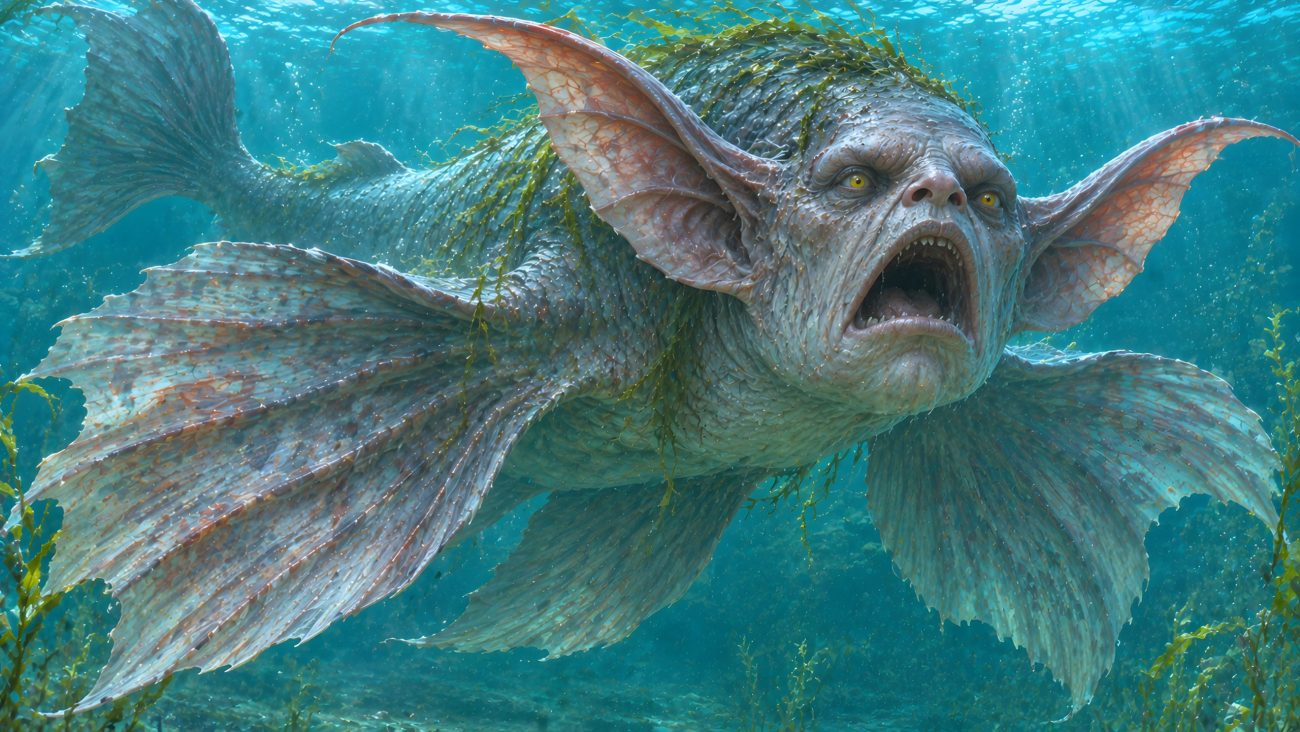
The Pontarof is a monstrous fish as large as a porpoise or even larger, though its body is shorter. Its round head resembles a human face, with unusually long ears that extend four fingers beyond the length of human ears. It also has enormous fins.

The creature inhabits a lake near Cabo de Santo Agostinho in Brazil. It waits underwater for children entering rivers to bathe. When one approaches, it seizes the child with its fins and plays with its victim like a cat with a mouse. It tosses the child into the air and catches them with its tail, continuing until the child drowns. Once its victim is dead, the Pontarof loses interest and releases the body.

The local inhabitants despise the creature and hunt it whenever they encounter it. However, they do not eat its meat.


Sources

A Book of Creatures. (2021, June 11). Pontarof. https://abookofcreatures.com/2021/06/11/pontarof/


Auñ Pana

Tradition / Region: Yanomami Mythology, Brazilian Mythology, Venezualian Mythology
Alternate Names: Pehiwetinome
Category: Fish


The Myth

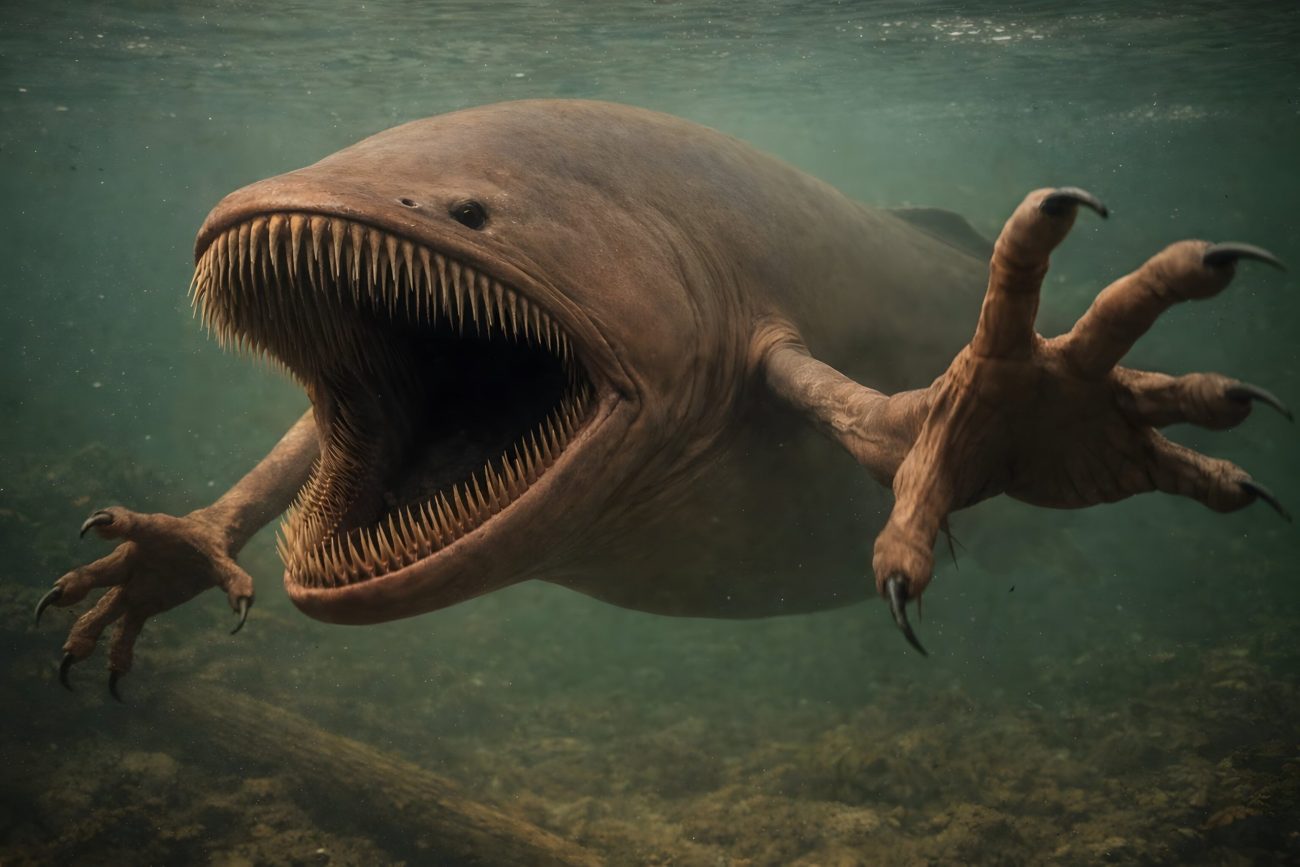
In the deep waters of the Yanomami world dwell the Auñ Pana, enormous fish feared by all who travel rivers and crossings. Though they are fish, they bear arms like humans, and their bodies are covered in coarse hair. They are said to possess dark, uncanny powers, and their hunger is for human flesh.

The Auñ Pana do not swim alone. They move in schools with creatures known as the Pehiwetinome, beings just as vast and just as murderous as themselves. Together they haunt the deepest waters, waiting for the careless or the unlucky.

Once, a group of Yanomami people attempted to cross a bridge spanning the river. As they passed over it, Auñ Pana and Pehiwetinome rose from below and began to bite through the wooden supports. Their teeth tore the bridge apart until it collapsed into the water, breaking into a drifting raft.

Some of the Yanomami survived the fall, but they did not remain human. In the aftermath of the destruction, they were transformed into monkeys and pigs, condemned to live forever changed.

Thus the Auñ Pana are remembered as beings of the depths who devour flesh, destroy human works, and blur the boundary between human and animal through terror and transformation.


Sources

A Book of Creatures contributors. (n.d.). Aun-pana. In A Book of Creatures, from https://abookofcreatures.com/2015/09/11/aun-pana/


Mastopogon

Tradition / Region: Brazilian Mythology
Alternate Names: Aegomastus, Egomastus; Houperou, Huperus
Category: Fish


The Myth

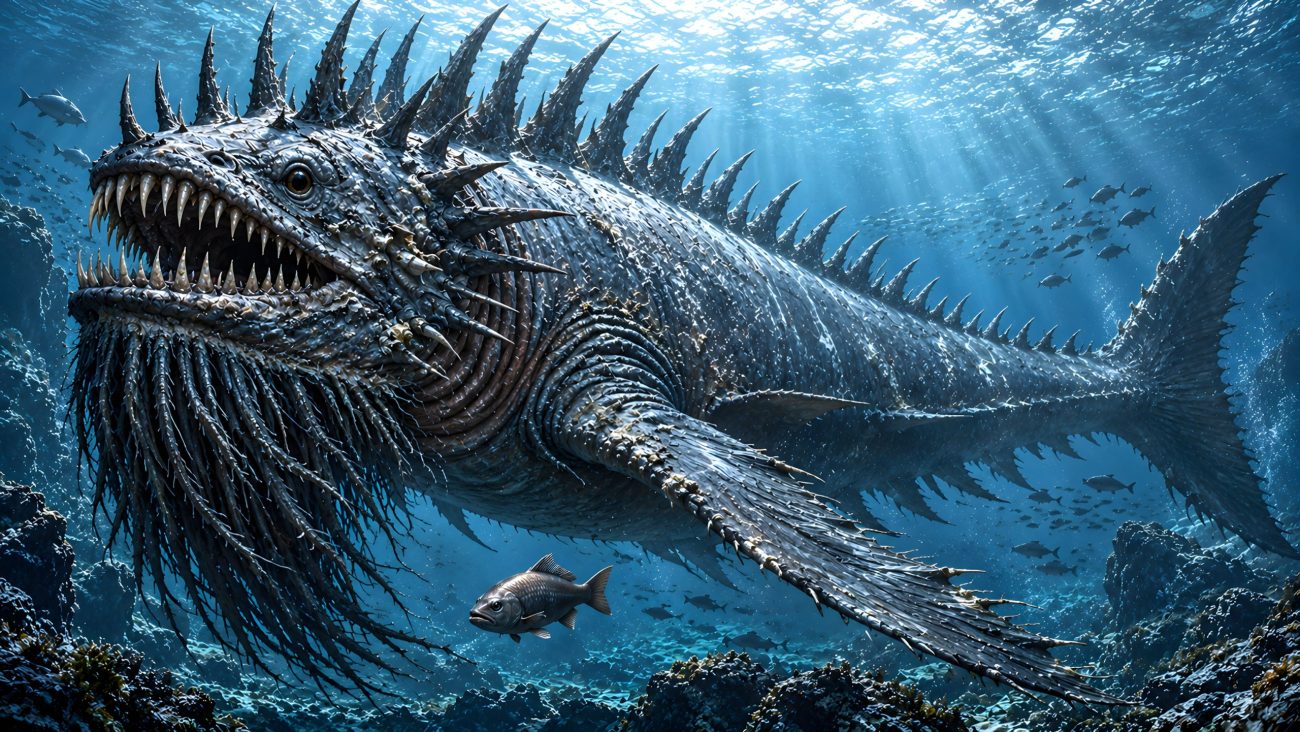
Sailors off the coast of South America once spoke of a strange fish glimpsed in deep waters, a creature with a beard hanging from its chin like the udder of a goat. Its body bore sharp, pointed fins, and along its back rose a long, threatening spine. Though unnamed at first, this creature would later be called the Mastopogon—the breast-beard.

In the same waters lived a far more feared being, known as the Houperou. It was said to be immense and ravenous, devouring all other sea creatures without mercy, save for one small carp-like fish. This lesser fish followed closely in the Houperou’s shadow, unharmed, protected by the terror its companion inspired. None dared approach the pair.

The Houperou’s skin was rough as sandpaper, like that of a dogfish. Its teeth were sharp, its strength overwhelming. Anyone it seized in the water was attacked, drowned, and torn apart. The coastal peoples, knowing its danger, shot it with arrows whenever it was seen. Some said its true name was uperu, the local word for shark, distorted by foreign tongues.

Over time, the two creatures—Mastopogon and Houperou—became entangled in description and image. Scholars depicted the Houperou as a giant pike, while the Mastopogon gained a name at last. As the years passed, their forms blurred further, until they were scarcely separable.

In later tellings, the Mastopogon was said to be a kind of Houperou, shaped like a salmon with immense thorny fins, its dorsal spine stretching nearly to the tail. The Houperou itself grew stranger still, now bearing the mammary beard beneath its jaw, ear-like knobs upon its head, rough scales, a long spined back, and a straight, powerful tail.

Thus the Mastopogon and the Houperou became one tangled legend: a single terror of the sea, half-bearded monster and half-devouring shark, born from sailors’ fear and the shifting shapes of deep water.


Sources

A Book of Creatures contributors. (n.d.). Mastopogon. In A Book of Creatures, from https://abookofcreatures.com/2016/02/26/mastopogon/