Kayeri

Tradition: Venezuelan Mythology
Alternative Names: Kayeri
Category: Forest dweller


The Myth

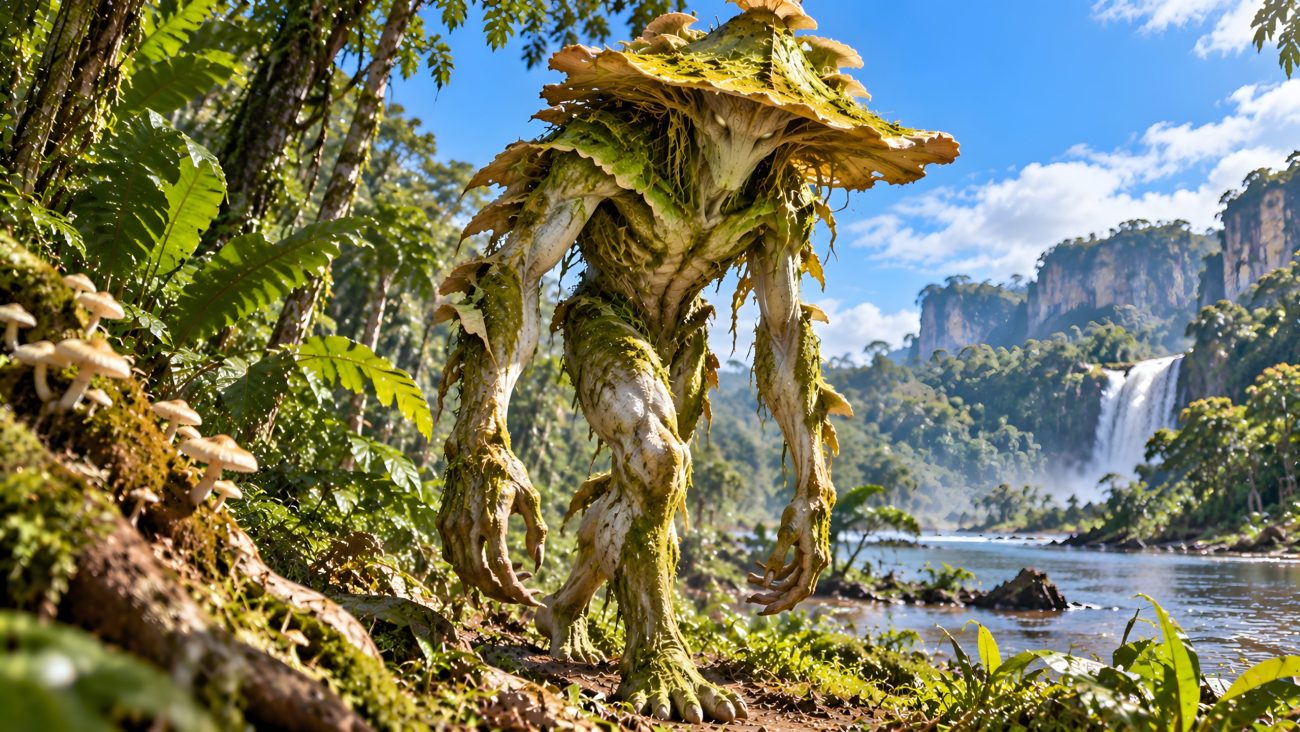
The Kayeri are mysterious humanoid beings from the mythology of the Cuiva people of Colombia and Venezuela. They are closely associated with rain and the seasonal rhythms of the forest, appearing most frequently during the rainy season and especially after a fresh downpour. During dry periods, they hide underground or beneath tree roots, using holes made by ants to reach the surface. The appearance of anthills during the rainy season is considered a sure sign that Kayeri are nearby. Their physical form is poorly defined, but they are humanoid in shape and are sometimes described wearing yellow or blue-green hats. The forest itself is filled with things associated with these beings: mushrooms are considered Kayeri, as are agoutis, the broad-leaved unkuaju plant, and Ficus vines. Dragonflies can also become Kayeri, and the coyoweri fruit is said to be their invention.

The Kayeri are exceptionally strong and fast runners, capable of seizing a cow and carrying it away with ease. They feed exclusively on cattle, devouring the flesh, entrails, horns, hooves, and bones in a single sitting, leaving absolutely nothing behind. They are also dangerous to humans, committing theft, murder, kidnapping, and other terrible acts. Male Kayeri are naturally bigamous, each having two wives, but they are also attracted to human women, whom they bewitch and entrance into coming to them. Their only known spoken sound is “mu” or “mü,” which they repeat when communicating or expressing anger.

Despite their supernatural strength, the Kayeri have one particular vulnerability: their kidneys. A bone-tipped arrow striking this spot can kill them, whereas they are otherwise nearly invulnerable. Upon death, a Kayeri transforms into an ordinary, harmless stone. One tale tells of a hunter whose two daughters were abducted by a Kayeri. The father pursued the creature and managed to strike it with a bone-tipped arrow before it could harm them. The Kayeri fell into a river and turned into a pebble. As the family fled toward safety, they heard other Kayeri nearby beating trees with sticks and crying “mu, mu, mu” in anger. Thinking quickly, the father shouted that the dead creature had fallen from its hammock and broken its back. The deception prevented further trouble, allowing him and his daughters to reach home unharmed.


Sources

“Kayeri.” A Book of Creatures. May 1, 2015. https://abookofcreatures.com/2015/05/01/kayeri/

La Bolefuego

Tradition: Colombian Mythology, Venezuelan Mythology
Alternative Names: La Candileja, Bolefuego
Category: Flame


The Myth

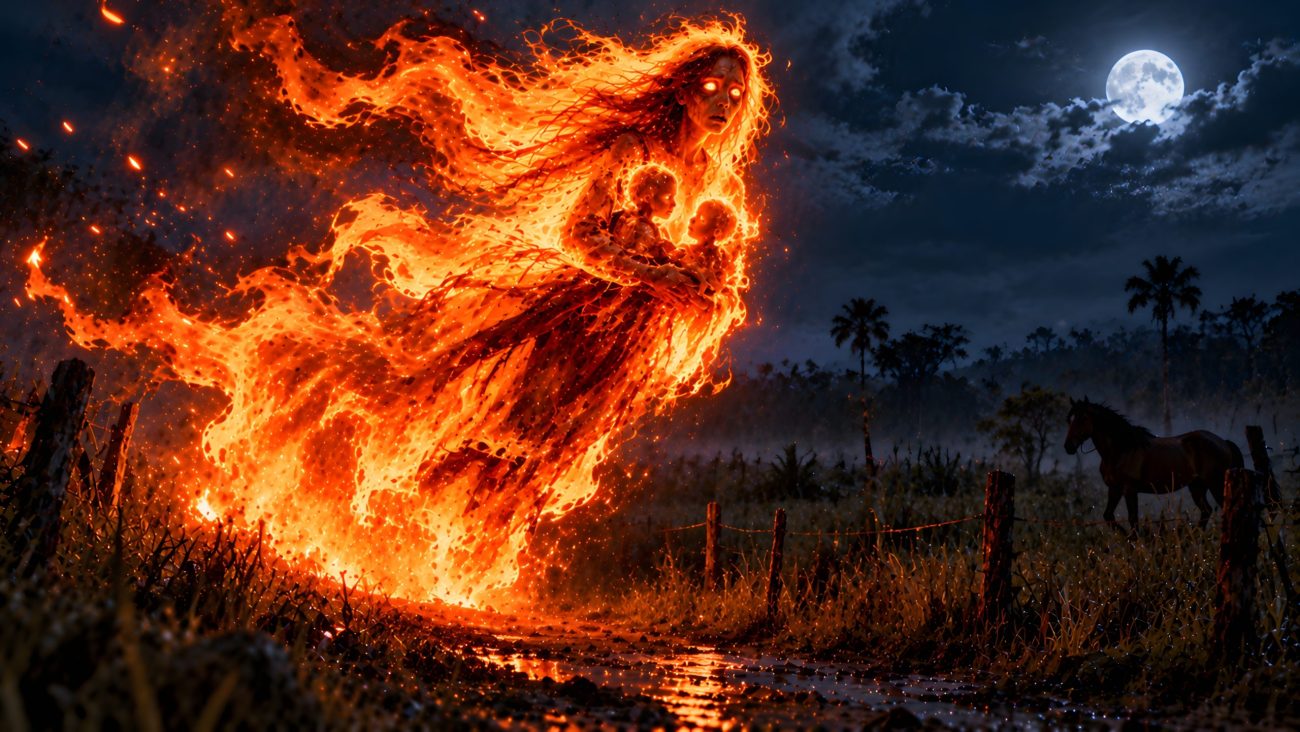
La Bolefuego, also known as La Candileja, is a terrifying supernatural apparition from the folklore of Colombia and Venezuela. It appears on dark nights across the vast plains of Los Llanos as a brilliant, flashing light resembling a lantern. Its fiery glow twists and shakes violently, moving unpredictably through the darkness as it approaches unsuspecting travellers.

According to legend, La Bolefuego is the tormented spirit of a woman who was burned alive in her own home alongside her two children. After her death, she returned as a blazing apparition, haunting the night and attacking travellers who cross her path. Her flickering light is a warning of the danger she brings, as those who encounter her may find themselves pursued by the vengeful spirit.

Unlike many other evil supernatural beings, La Bolefuego is said to be attracted to prayer. Those who face her are warned not to pray, as doing so may draw the fiery apparition closer rather than drive it away. This unusual trait makes her especially frightening, turning an act normally associated with divine protection into something that can invite danger.


Sources

“La Bolefuego.” Wikipedia: The Free Encyclopedia. Wikimedia Foundation. Accessed October 11, 2026. https://en.wikipedia.org/wiki/La_Bolefuego


Wako

Tradition / Region: Colombian Mythology, Venezuelan Mythology
Alternative names: —
Category: Cave dweller


The Myth

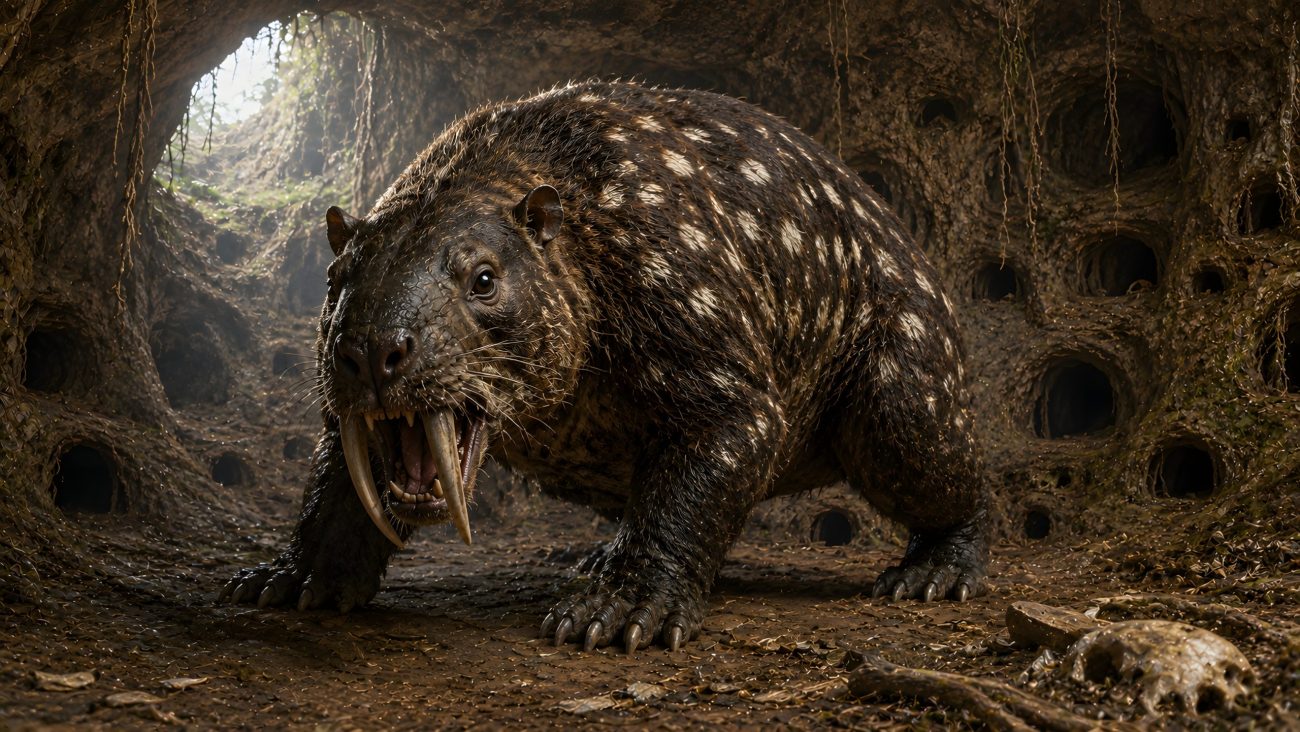
The Wako are animal spirits that resemble large pacas covered in spots, with long, vicious fangs. They live underground in large groups, digging extensive burrows filled with small entrances, passages, and places where they can hide. Their presence can be recognized by their distinctive call, which sounds like ao, ao, ao, ao.

The Wako are flesh-eating creatures that also prey upon humans. Anyone who enters their underground dwellings is pursued through the tunnels and devoured. They have one unusual weakness, however: they will not chase a person who is completely naked.

According to one story, a Cuiva man whose wife had left him decided to enter a Wako burrow, despite his son’s attempts to stop him. He began digging into a hole where a Wako had been seen. As he reached into the opening with his hand and quickly pulled it back, the disturbance frightened the creatures inside.

The Wako rushed from their burrow, calling ao, ao, ao, ao, and attacked the man. When they had finished, nothing remained of him.

Another story tells of a man whose pregnant wife had been killed and eaten by the Wako. Seeking revenge, he entered their underground dwelling and fought the creatures inside. He succeeded in destroying the entire nest of Wako.


Sources

Countess Sica. “Wako.” A Book of Creatures. March 25, 2019. Accessed August 15, 2026. https://abookofcreatures.com/2019/03/25/wako/


Auñ Pana

Tradition / Region: Yanomami Mythology, Brazilian Mythology, Venezualian Mythology
Alternate Names: Pehiwetinome
Category: Fish


The Myth

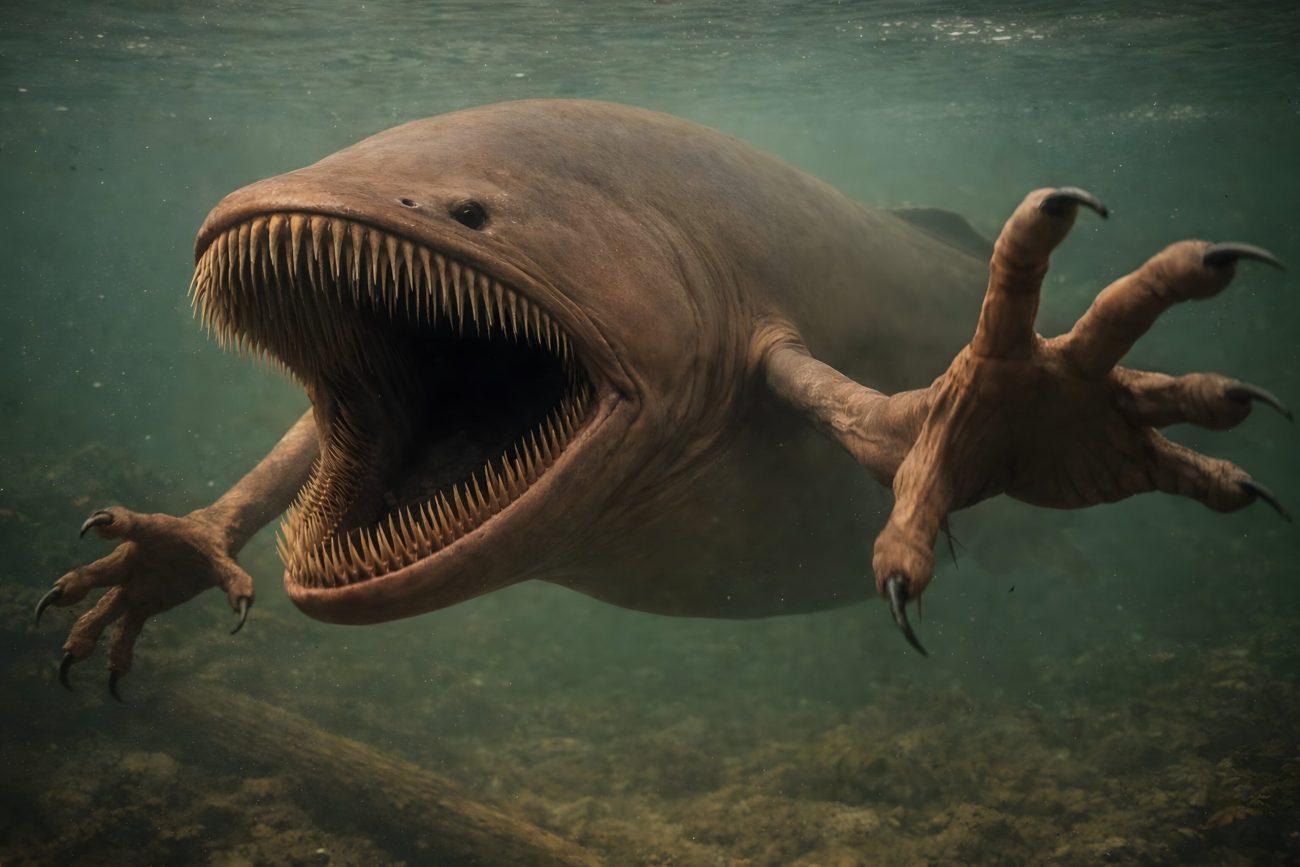
In the deep waters of the Yanomami world dwell the Auñ Pana, enormous fish feared by all who travel rivers and crossings. Though they are fish, they bear arms like humans, and their bodies are covered in coarse hair. They are said to possess dark, uncanny powers, and their hunger is for human flesh.

The Auñ Pana do not swim alone. They move in schools with creatures known as the Pehiwetinome, beings just as vast and just as murderous as themselves. Together they haunt the deepest waters, waiting for the careless or the unlucky.

Once, a group of Yanomami people attempted to cross a bridge spanning the river. As they passed over it, Auñ Pana and Pehiwetinome rose from below and began to bite through the wooden supports. Their teeth tore the bridge apart until it collapsed into the water, breaking into a drifting raft.

Some of the Yanomami survived the fall, but they did not remain human. In the aftermath of the destruction, they were transformed into monkeys and pigs, condemned to live forever changed.

Thus the Auñ Pana are remembered as beings of the depths who devour flesh, destroy human works, and blur the boundary between human and animal through terror and transformation.


Sources

A Book of Creatures contributors. (n.d.). Aun-pana. In A Book of Creatures, from https://abookofcreatures.com/2015/09/11/aun-pana/