Kori

Tradition: Colombian Mythology, Venezuelan Mythology
Alternative Names: —
Category: River dweller


The Myth

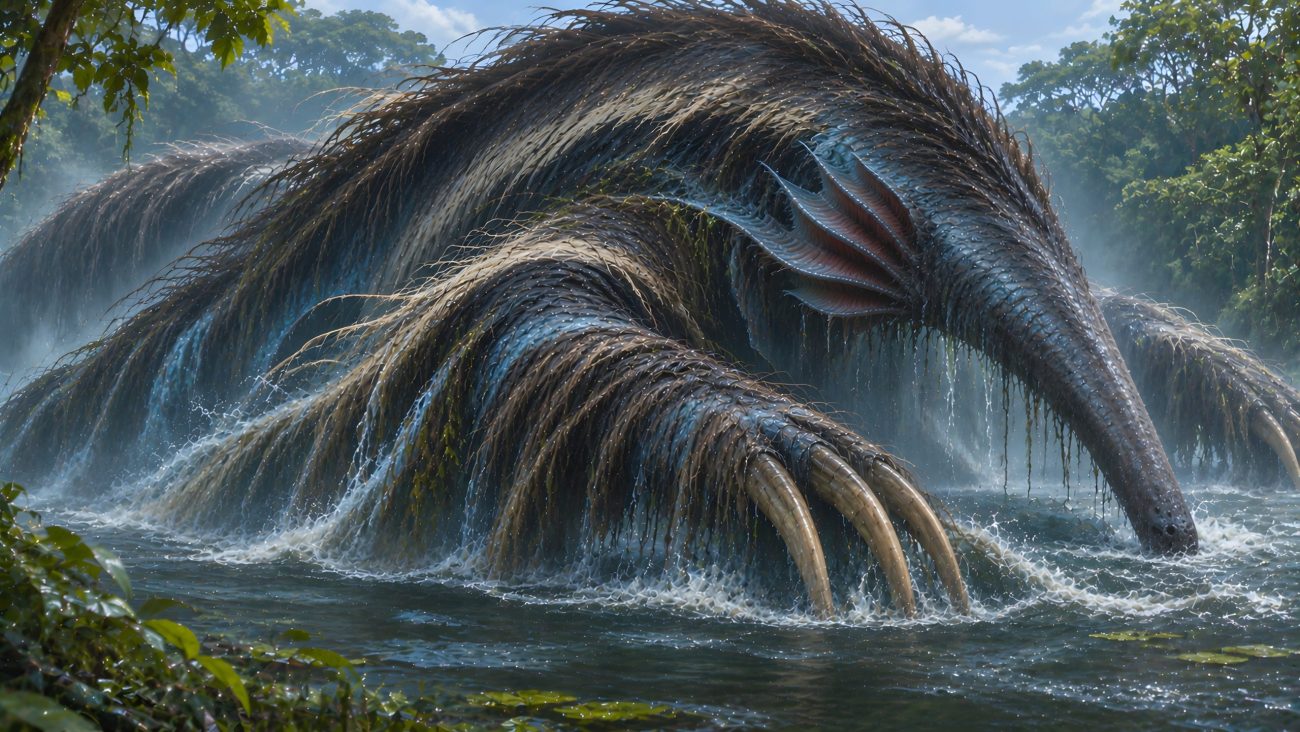
Among the Cuiva people of Colombia and Venezuela, the Kori is feared as a destructive aquatic monster that dwells beneath the waters of rivers. It resembles a giant anteater, although it is far larger than any ordinary animal. Its enormous claws allow it to dig beneath riverbanks, causing them to collapse. Such destruction is blamed for the frequent collapse of riverbanks throughout the rainforest.

The Kori possesses other formidable powers. It can summon powerful gales capable of destroying buildings and other constructions. It can also transform solid ground into water, drowning anyone caught in its path. Its presence therefore threatens both settlements and the people who live along the rivers.

One day, a Kori caused a riverbank to collapse near a Cuiva village, killing most of its inhabitants. Only one man managed to escape. He transformed himself into a howler monkey and climbed to the top of a tree, where he sat trembling as he watched the monster. Yet even this refuge could not save him. The Kori eventually brought down the tree, killing the man who had hidden among its branches.

When news of the massacre reached the Cuiva, they mourned the dead and prepared to avenge them. The father of the man who had been killed led the expedition, carrying a harpoon, while the other warriors followed with poisoned arrows.

When they found the Kori, the enormous creature was too weakened to defend itself effectively. The warriors attacked it with harpoons and poisoned arrows. In desperation, the monster attempted to transform the ground beneath them into water, but it produced only a shallow pool. The hunters continued their assault, firing poisoned arrows until the Kori finally died.

As payment for his son, the leader of the expedition cut off the monster’s enormous claws and fashioned them into a necklace. The rest of the Kori’s body was abandoned to the vultures.


Sources

A Book of Creatures. (2016, October 17). Kori. https://abookofcreatures.com/2016/10/17/kori/

Abúhukü

Tradition: Colombian Mythology
Alternative Names: Abúhuwa (plural)
Category: Goblin


The Myth

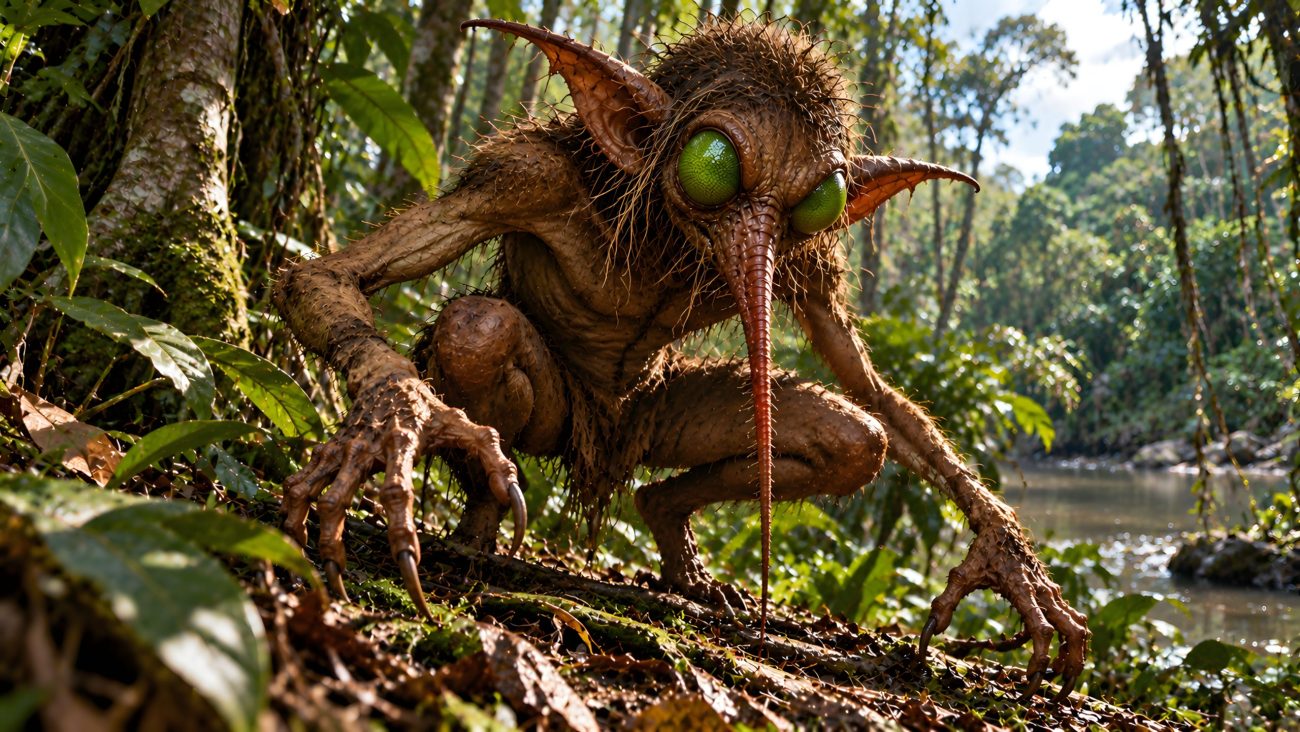
The Abúhukü is a monstrous rainforest demon of the Cubeo people of the Colombian Amazon, associated with disease, death, and evil. These nocturnal creatures are described as misty beings from the realm of darkness, with hairy bodies, foul smells, and an extra face on the back of the head. Their bodies are sticky, making it almost impossible for anyone caught in their embrace to escape. Female Abúhuwa have long, pendulous breasts and prefer to prey on men, while males attack women, often killing mothers and abducting their children to raise as their own.

The Abúhuwa kill their victims in horrifying ways. An Abúhukü may cut a hole in a person’s skull and suck out the contents of the body. Alternatively, it rolls its prey in palm leaves and tenderizes the victim before consuming them. Afterward, it leaves behind an empty skin hanging from a tree branch, a gruesome sign of its presence. The creatures are associated with the spirits of dead poisoners, murderers, and men who committed adultery, linking them to human wickedness and the dangers of the supernatural forest.

Children abducted by Abúhuwa are raised by the demons and become cannibals themselves. In the past, the creatures were believed to be far more numerous and allied with a race of evil jaguars that helped them decimate human populations. A series of floods and fires eventually reduced the numbers of both predators, giving humanity a reprieve from their attacks.

Despite their terrifying nature, Abúhuwa are said to be surprisingly stupid and can be outwitted even by children. They eventually became figures in children’s games and nursery tales, with one child playing the role of an Abúhukü in a kind of tag game. Their grotesque appearance makes them less frightening when confronted and mocked. They also have specific weaknesses: smoke from burning capsicum peppers is toxic to them, and burning peppers can drive them away. When an Abúhukü is killed, its body transforms into a sloth.

The Abúhukü also has a disturbing connection to poison-making. Its armpit hair is considered a potent ingredient in poisons, but obtaining it requires capturing the creature during a lunar eclipse. The hair from its left armpit must be cut with a corn husk, burned to ash, mixed with water into a paste, and left to dry. The resulting substance can be stored in a gourd sealed with beeswax. Through these traditions, the Abúhuwa embody the dangers of the rainforest while also occupying a place in children’s games and beliefs about supernatural poisons.


Sources

“Abuhuku.” A Book of Creatures, November 13, 2015. https://abookofcreatures.com/2015/11/13/abuhuku/


Boraro

Tradition: Tucano Mythology, Colombian Mythology
Alternative Names: The Pale Ones
Category: Forest dweller


The Myth

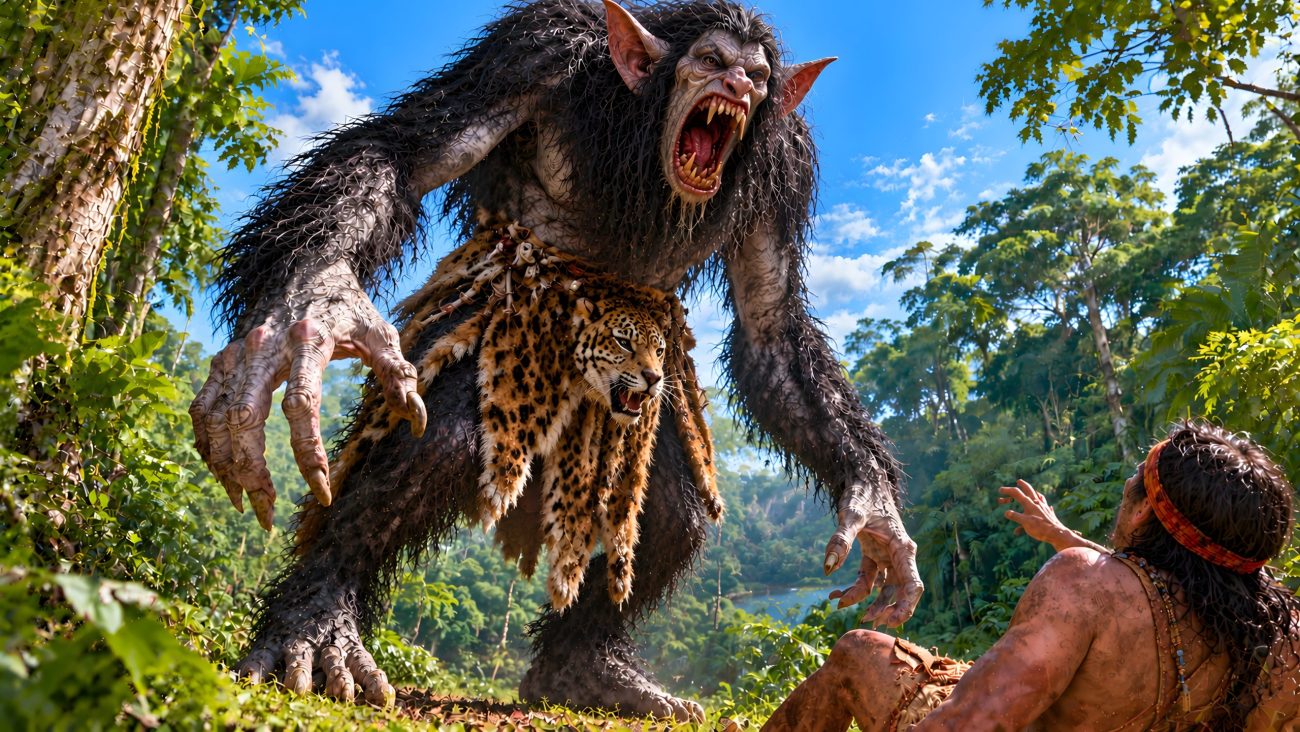
The Boraro is a terrifying forest monster from the mythology of the Tucano people of Colombia. It resembles a grotesque, towering humanoid, so tall that it reaches the size of a tree. Its skin is pale, but its enormous body is covered in thick black fur. It has large ears that point forward, fearsome fangs, and enormous pendulous genitals. Its feet face backwards, making it difficult for anyone pursuing it to determine which direction it has travelled. Despite its monstrous appearance, the Boraro serves as a protector of wildlife, defending the creatures of the forest from those who threaten them.

The Boraro possesses a horrifying method of killing its victims. Its urine is lethally poisonous, making even contact with its bodily fluids dangerous. If it catches a person in its powerful embrace, it crushes their flesh until it becomes pulp, while leaving their skin and bones unbroken. It then creates a small hole in the victim’s head and sucks out the pulped flesh. Afterward, it inflates the victim’s empty skin like a balloon and sends the unfortunate person back home in a dazed condition. The victim eventually dies from the encounter, leaving the Boraro’s attack concealed behind a seemingly intact body.

Despite its immense strength, the Boraro has several weaknesses that allow people to escape. It has no joints in its knees, making it extremely difficult for the creature to stand up again if it falls. A person can place their hands inside its backwards-facing footprints, causing its legs to stiffen and forcing it to collapse temporarily. Another method is to run backwards while facing the monster, confusing it and making it harder for the Boraro to pursue its prey. The creature can also be placated with offerings of tobacco, which may persuade it to leave a person unharmed.


Sources

“Colombian folklore.” Wikipedia: The Free Encyclopedia. Wikimedia Foundation. Accessed October 12, 2026. https://en.wikipedia.org/wiki/Colombian_folklore


La Bolefuego

Tradition: Colombian Mythology, Venezuelan Mythology
Alternative Names: La Candileja, Bolefuego
Category: Flame


The Myth

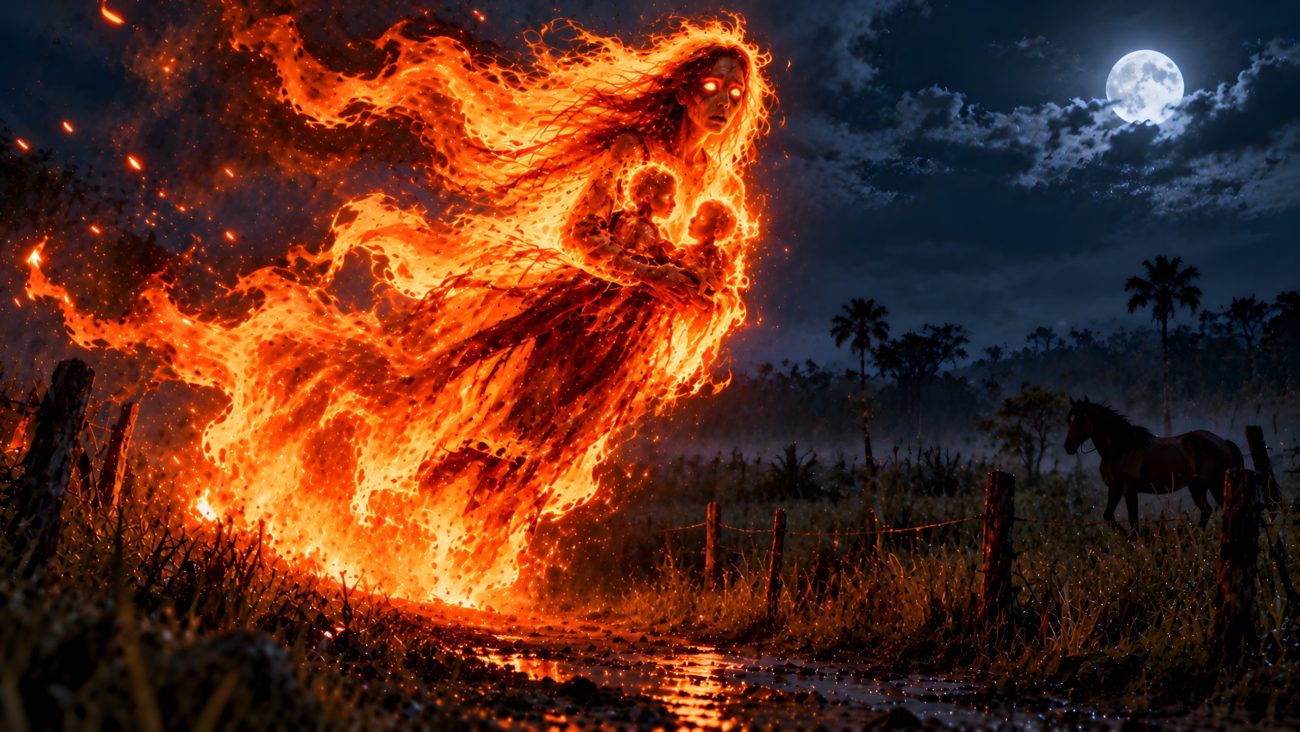
La Bolefuego, also known as La Candileja, is a terrifying supernatural apparition from the folklore of Colombia and Venezuela. It appears on dark nights across the vast plains of Los Llanos as a brilliant, flashing light resembling a lantern. Its fiery glow twists and shakes violently, moving unpredictably through the darkness as it approaches unsuspecting travellers.

According to legend, La Bolefuego is the tormented spirit of a woman who was burned alive in her own home alongside her two children. After her death, she returned as a blazing apparition, haunting the night and attacking travellers who cross her path. Her flickering light is a warning of the danger she brings, as those who encounter her may find themselves pursued by the vengeful spirit.

Unlike many other evil supernatural beings, La Bolefuego is said to be attracted to prayer. Those who face her are warned not to pray, as doing so may draw the fiery apparition closer rather than drive it away. This unusual trait makes her especially frightening, turning an act normally associated with divine protection into something that can invite danger.


Sources

“La Bolefuego.” Wikipedia: The Free Encyclopedia. Wikimedia Foundation. Accessed October 11, 2026. https://en.wikipedia.org/wiki/La_Bolefuego


Monster of Lake Tota

Tradition: Muisca mythology, Colombian Mythology
Alternative names: Devil Whale
Category: Whale, Cow


The Myth

Lake Tota, near Sogamoso in present-day Boyacá, Colombia, was considered sacred by the ancient Muisca people. According to their traditions, the lake was inhabited by a terrifying monster.

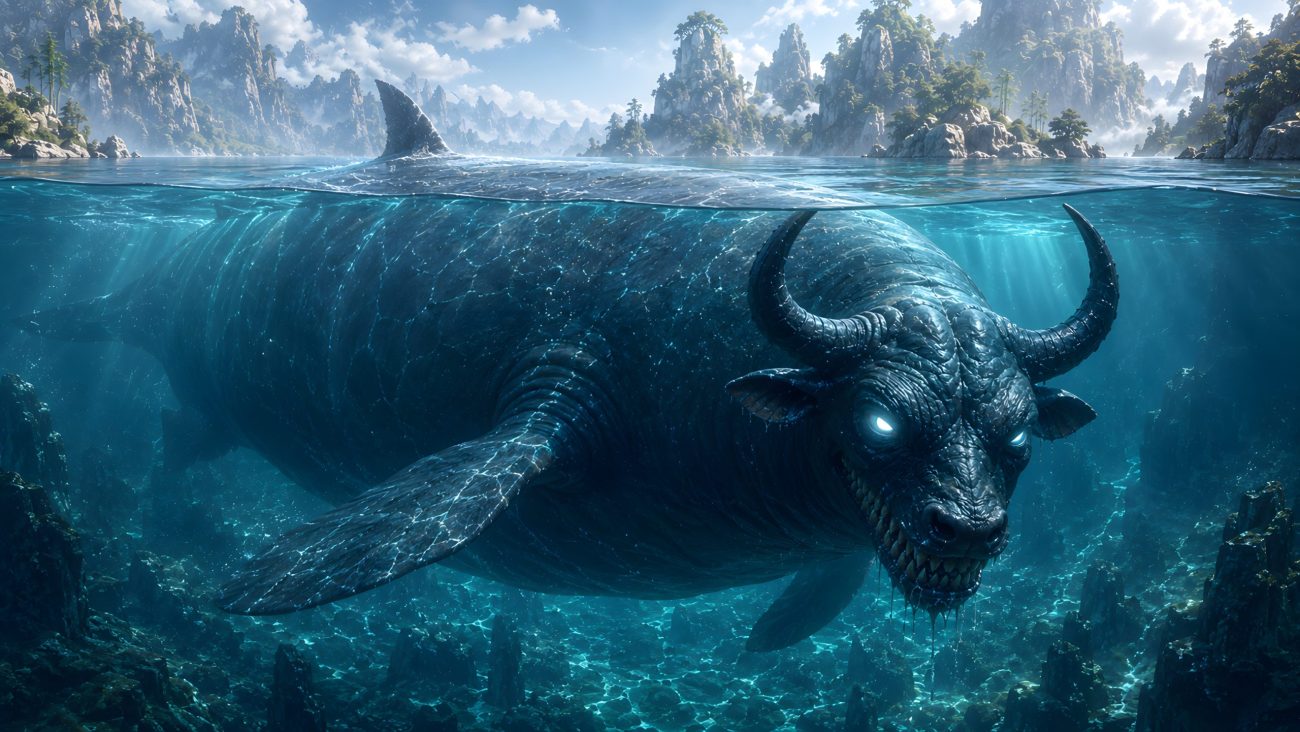
The creature was described as a huge black fish, said to be larger than a whale. It possessed the head of a bull, giving it a particularly strange and frightening appearance. Because of its enormous size and terrifying nature, the creature was also known as the “Devil Whale.”

The monster was believed to dwell within Lake Tota, a vast natural lake that was an important sacred place to the Muisca.


Sources

“Five Mystical Colombian Lakes.” Colombia.co. Accessed August 29, 2026. https://colombia.co/en/colombia-country/geography-and-environment/five-mystical-colombian-lakes


Wako

Tradition / Region: Colombian Mythology, Venezuelan Mythology
Alternative names: —
Category: Cave dweller


The Myth

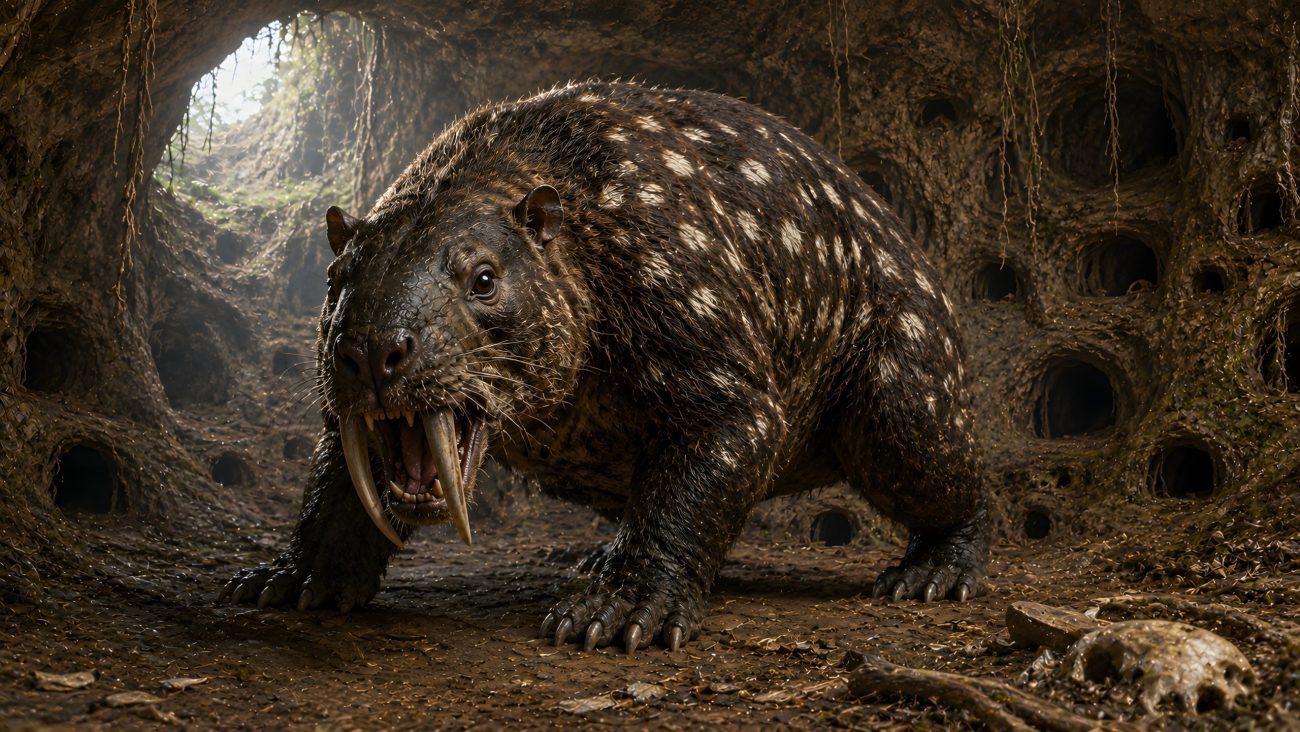
The Wako are animal spirits that resemble large pacas covered in spots, with long, vicious fangs. They live underground in large groups, digging extensive burrows filled with small entrances, passages, and places where they can hide. Their presence can be recognized by their distinctive call, which sounds like ao, ao, ao, ao.

The Wako are flesh-eating creatures that also prey upon humans. Anyone who enters their underground dwellings is pursued through the tunnels and devoured. They have one unusual weakness, however: they will not chase a person who is completely naked.

According to one story, a Cuiva man whose wife had left him decided to enter a Wako burrow, despite his son’s attempts to stop him. He began digging into a hole where a Wako had been seen. As he reached into the opening with his hand and quickly pulled it back, the disturbance frightened the creatures inside.

The Wako rushed from their burrow, calling ao, ao, ao, ao, and attacked the man. When they had finished, nothing remained of him.

Another story tells of a man whose pregnant wife had been killed and eaten by the Wako. Seeking revenge, he entered their underground dwelling and fought the creatures inside. He succeeded in destroying the entire nest of Wako.


Sources

Countess Sica. “Wako.” A Book of Creatures. March 25, 2019. Accessed August 15, 2026. https://abookofcreatures.com/2019/03/25/wako/