Mizuchi

Tradition: Japanese mythology
Alternative Names: Mi-tsu-chi, Great Mizuchi, Water Dragon
Category: Dragon


The Myth

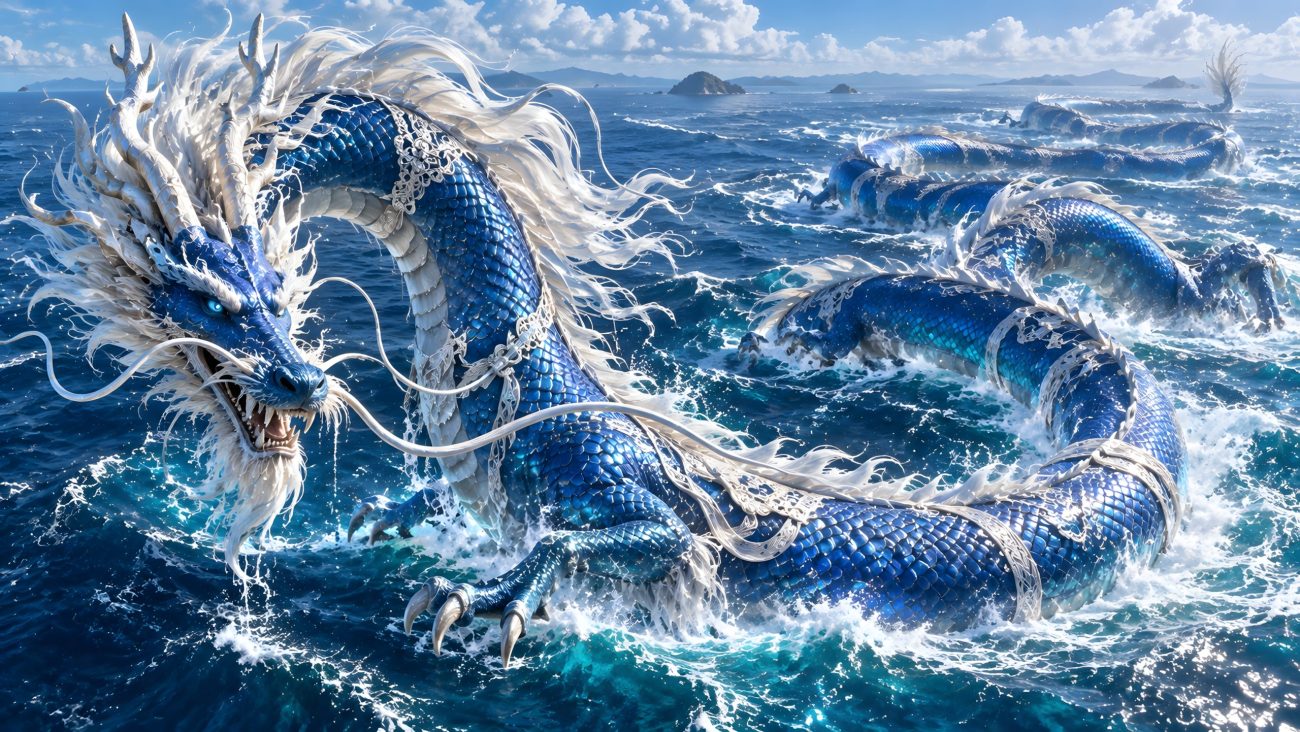
Mizuchi is a powerful water spirit appearing in the form of a great serpent or dragon, associated with rivers, pools, and dangerous waters. In ancient tradition, the creature was feared as a deadly being capable of poisoning those who came near its waters. The name itself was associated with water and spirit, and Mizuchi could be understood as a master or spirit of the water.

One of the oldest tales of the Mizuchi takes place in Kibi Province during the reign of Emperor Nintoku. At a fork in the Kawashima River lived a great water serpent that would breathe or spit venom, poisoning and killing people who passed by. The monster dwelt in a pool and had become a deadly menace to those who approached the river.

A man named Agatamori came to the pool determined to destroy the creature. Rather than simply attack it, he challenged the Mizuchi to prove its supernatural power. He threw three calabashes onto the surface of the water and declared that if the creature could make them sink, he would submit to it; if it failed, Agatamori would kill it.

The Mizuchi transformed itself into a deer and attempted to sink the floating gourds, but it could not. Agatamori then slew the monster. He searched the depths of the pool and discovered that the creature was not alone. A whole tribe of water dragons occupied a cavern beneath the water. Agatamori killed them all, and their blood turned the river red. The pool thereafter became known as Agatamori’s Pool.

Another ancient story tells of a River God whose waters repeatedly broke the great dikes along the Yodo River. An oracle commanded that two men be sacrificed to the river deity. One of them refused to accept his fate and used the same test of the floating calabash to challenge the supposed divine command. When a whirlwind came and tried to sink the gourd but failed, the man escaped his sacrifice through his own cleverness.

The River God in this story is associated by later interpreters with the Mizuchi, suggesting an ancient conception of water dragons not merely as monsters but as powerful spirits or gods of rivers who could demand offerings and even human sacrifice.

Mizuchi also appears in an ancient Japanese poem, where the speaker imagines possessing a sword powerful enough to ride into a green pool and slay the Mizuchi dwelling there. Thus the creature remained an embodiment of the dangerous and mysterious power believed to inhabit Japan’s waters.


Sources

“Mizuchi.” Wikipedia: The Free Encyclopedia. Wikimedia Foundation. Accessed October 2, 2026. https://en.wikipedia.org/wiki/Mizuchi
Marraco

Tradition: Catalan folklore, Spanish Mythology
Alternative Names: Lo Marraco
Category: Dragon


The Myth

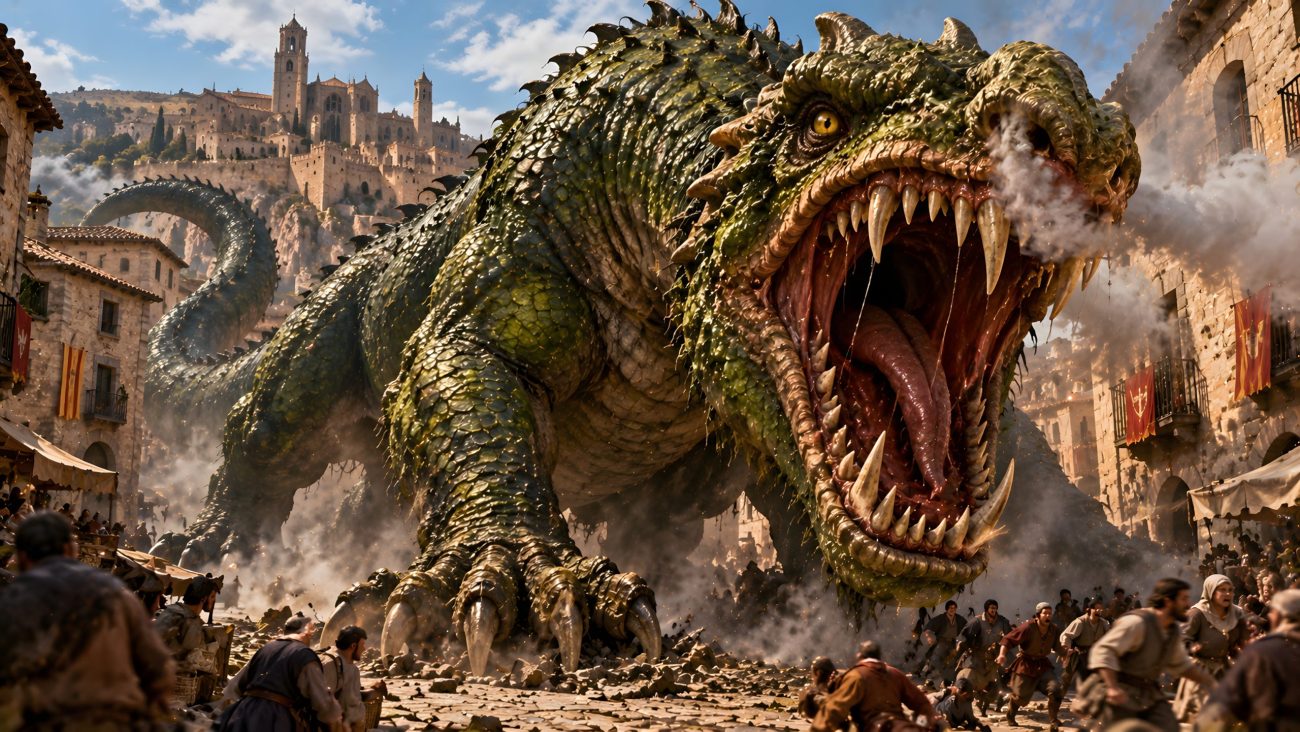
Lo Marraco is a terrifying dragon-like creature from the folklore of Lleida, said to possess an enormous mouth capable of swallowing a person whole. In tales told to frighten children, the monster lurks as a frightening threat to those who misbehave, with adults warning that the Marraco will come and devour them.

The Marraco became one of the great frightening creatures of Lleida. Its gigantic jaws were imagined as large enough to swallow children whole, making it an especially effective bogeyman. Adults used the creature to frighten disobedient children into behaving, turning its monstrous appetite into a warning passed from one generation to the next.

The creature eventually took physical form in the great processional monster of Lleida. A dragon figure had already appeared in the city’s religious processions in the sixteenth century, and another dragon was ordered to be built in 1671. In 1907, the Marraco was given a recognizable physical form as a large green dragon effigy mounted on wheels. It could emit smoke from its nostrils, giving the imaginary beast a frightening presence as it moved through the streets during celebrations.


Sources

“Marraco.” Wikipedia: The Free Encyclopedia. Wikimedia Foundation. Accessed October 2, 2026. https://en.wikipedia.org/wiki/Marraco


Lou Carcolh

Tradition: French Mythology
Alternative Names: Carcolh, The Carcolh
Category: Dragon, Mollusc


The Myth

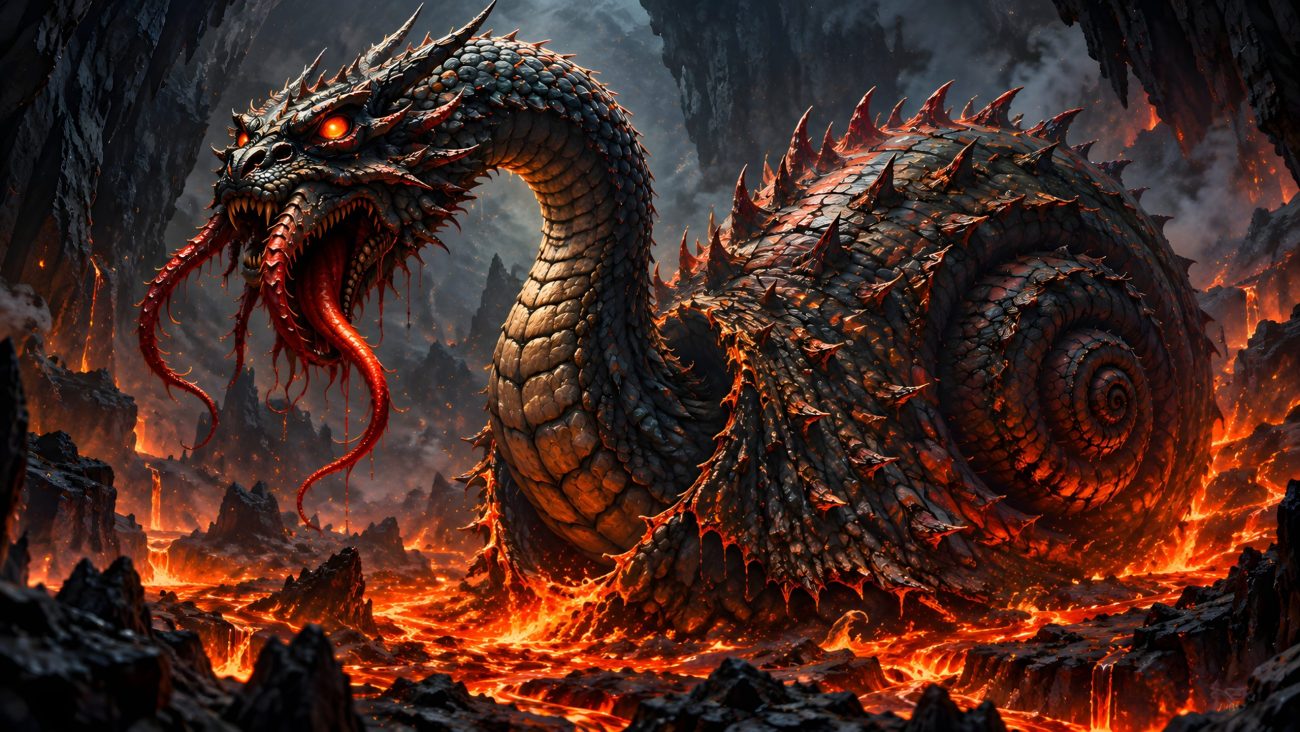
Lou Carcolh is a gigantic, slimy creature resembling a monstrous serpent combined with a snail. It has a huge shell upon its back and long, hairy tentacles capable of reaching far beyond its body. The creature is said to dwell in a cavern beneath Hastingues in the Landes of southwestern France.

The Carcolh’s approach could be detected before the beast itself appeared. A trail of thick slime would sometimes be seen stretching through the landscape, announcing that the enormous creature was drawing near. Its long tentacles were its most dangerous weapon. Hidden within or near its cavern, the Carcolh could stretch them out over a great distance, seize an unsuspecting person, and drag them back into its lair without ever revealing itself.

Hastingues itself became closely associated with the monster. The town sits upon a rounded hill, giving it the nickname “the Carcolh,” while local men were said to warn young and beautiful women with the ominous words that the Carcolh would catch them.


Sources

“Lou Carcolh.” Wikipedia: The Free Encyclopedia. Wikimedia Foundation. Accessed October 2, 2026. https://en.wikipedia.org/wiki/Lou_Carcolh


Lao Jian

Tradition: Chinese mythology
Alternative Names: Old Jian, Lao Jian, Jian Shi
Category: Dragon


The Myth

Lao Jian is a poisonous dragon of ancient Chinese mythology, a dangerous creature associated with floods and destructive waters. His presence could cause severe water damage, and his power was great enough that he had to be subdued by Li Bing, the governor and general of Shu.

During the Qin Dynasty, Li Bing confronted the poisonous dragon Jian Shi and subdued it, binding it with chains and locking it on the river. Once the dragon had been restrained, the flooding ceased.

The identity of Jian is connected with Nie Zi, a wicked dragon from the legend of Wang Niang Tan. When Nie Zi transformed himself into a dragon, his mother managed to hold onto one of his feet, preventing that foot from undergoing the transformation. He therefore remained lame, and this peculiar deformity gave rise to the name Jian.

The name is further connected with Nie Zi’s surname, Nie, which is said to echo the name of the dragon. Thus Lao Jian is remembered as the poisonous, crippled dragon whose watery power was finally restrained by Li Bing.


Sources

“老蹇 (Lǎojiǎn).” Chinese Wikipedia. Wikimedia Foundation. Accessed October 2, 2026. https://zh.wikipedia.org/wiki/%E8%80%81%E8%B9%87


Hydra of Lerna

Tradition: Greek mythology
Alternative Names: Lernaean Hydra, Hydra
Category: Dragon


The Myth

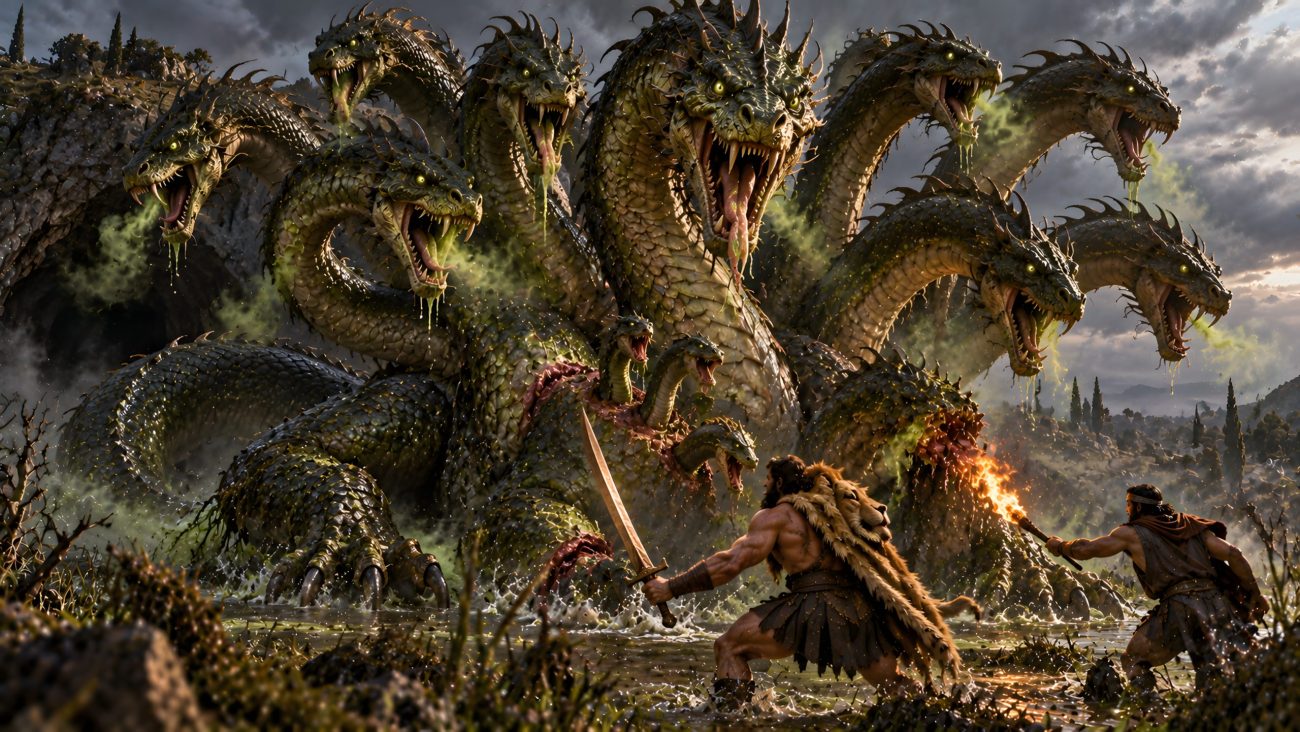
The Hydra of Lerna was a monstrous, many-headed serpent that dwelt in the waters and marshes of Lerna in the Argolid. It possessed poisonous breath and blood so deadly that even its scent could kill. Its lair was a deep cave near the spring of Amymone, from which the creature emerged to terrorize the surrounding villages. The exact number of its heads varied in ancient accounts, with different traditions giving it six, nine, fifty, or simply many heads.

The Hydra was said to be the offspring of Typhon and Echidna. Its most terrible power was the ability to regenerate its severed heads. When Heracles cut off one of them, two more could grow from the wound, making the creature seemingly impossible to destroy. In some traditions it possessed a single immortal head among its many mortal ones.

The Hydra was raised by Hera for the purpose of destroying Heracles. As the second of his Twelve Labours, Heracles was commanded by Eurystheus, king of Tiryns, to slay the monster. He came to the marshes of Lerna and covered his mouth and nose against the creature’s poisonous fumes. He then drove it from its lair by shooting flaming arrows into the cave.

Heracles attacked the Hydra with his weapon, cutting off its heads one after another. But each severed head was replaced by new ones, and the monster could not be defeated while its immortal head remained. Realizing that strength alone would not overcome it, Heracles called upon his nephew Iolaus for help.

Iolaus took a burning firebrand and, whenever Heracles severed a head, cauterized the exposed neck before another could grow. Thus the regenerative power of the Hydra was finally overcome. Hera tried to save the monster by sending a gigantic crab to distract Heracles, but he crushed it beneath his foot.

At last Heracles severed the Hydra’s immortal head with a golden sword given to him by Athena. The head remained alive and writhed even after it had been cut away, so Heracles buried it beneath a great rock beside the sacred road between Lerna and Elaius. He then dipped his arrows into the Hydra’s poisonous blood, giving them a deadly venom that would later bring death to other enemies.

The Hydra’s poison continued to haunt the stories of Heracles. He used his poisoned arrows against the Stymphalian Birds, Geryon, Ladon, and the centaur Nessus. The poisoned arrow that struck Nessus ultimately led to the death of Heracles himself, as the centaur’s tainted blood was later used upon the Tunic of Nessus. The poison was also said to have contaminated the river Anigrus in Elis, whose foul-smelling waters were believed to have become poisonous because of the Hydra’s venom.

After Heracles killed the creature, Hera placed the Hydra among the stars as the constellation Hydra. The crab she had sent to aid it was likewise raised into the heavens as Cancer.

The Hydra’s regenerative heads became a symbol of an enemy or problem that only grows more difficult when attacked carelessly. The ancient Greeks even used the expression “cutting off a hydra” for a task that seemed endlessly futile, since destroying one part only caused more to appear.


Sources

“Lernaean Hydra.” Wikipedia: The Free Encyclopedia. Wikimedia Foundation. Accessed October 2, 2026. https://en.wikipedia.org/wiki/Lernaean_Hydra


Ladon

Tradition: Greek mythology
Alternative Names: Ladon, Dragon of the Hesperides
Category: Dragon


The Myth

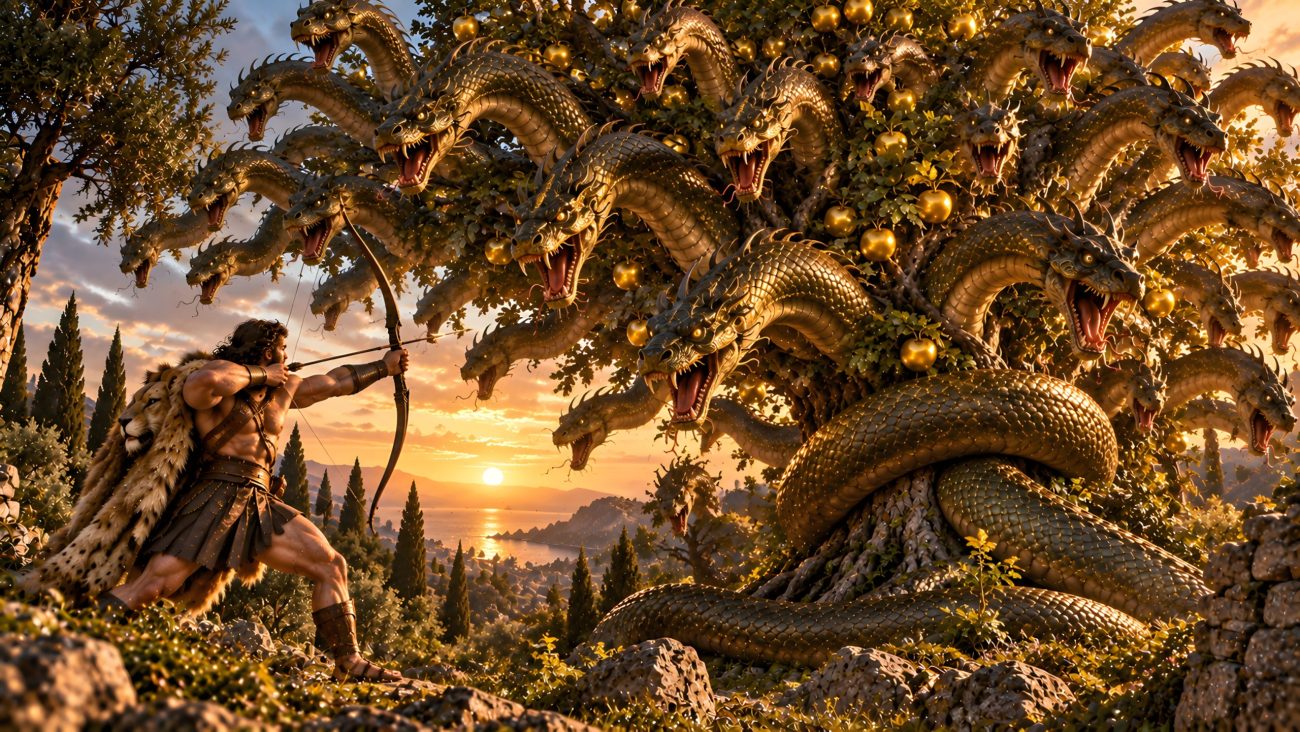
Ladon was a great serpent-like dragon that coiled around the sacred tree in the Garden of the Hesperides, guarding its golden apples. In some traditions he was said to possess a hundred heads, each capable of speaking with a different voice.

Ladon was one of the final offspring of Phorcys and Ceto according to Hesiod, while other traditions made him the child of Typhon and Echidna, Typhon alone, or even said that he sprang from the earth. He was also described in one tradition as the brother of the Nemean Lion.

During the eleventh labour of Heracles, the hero was commanded to obtain the golden apples. He came to the Garden of the Hesperides and killed Ladon with his bow and arrows before taking the precious apples.

The dragon’s death was not the end of the tale. The following day, Jason and the Argonauts passed through the region on their return from Colchis. They heard the lament of Aegle, one of the Hesperides, and saw Ladon’s body still twitching after his death.

There was also another telling in which Ladon was never killed. Instead, Heracles persuaded the Titan Atlas to retrieve the golden apples for him while Heracles took Atlas’s place and held up the heavens.

Ladon was later associated with the constellation Draco. According to the tradition attributed to Hyginus, Zeus placed the slain dragon among the stars, where it remained as the celestial image of the guardian of the golden apples.


Sources

“Ladon (mythology).” Wikipedia: The Free Encyclopedia. Wikimedia Foundation. Accessed October 2, 2026. https://en.wikipedia.org/wiki/Ladon_(mythology)


La Guita Xica

Tradition: Catalan folklore, Spanish Mythology
Alternative Names: Guita Boja, La Guita Xica, Mulaguita, La Mulassa, Mula Fera, Mula Guita
Category: Dragon, Horse


The Myth

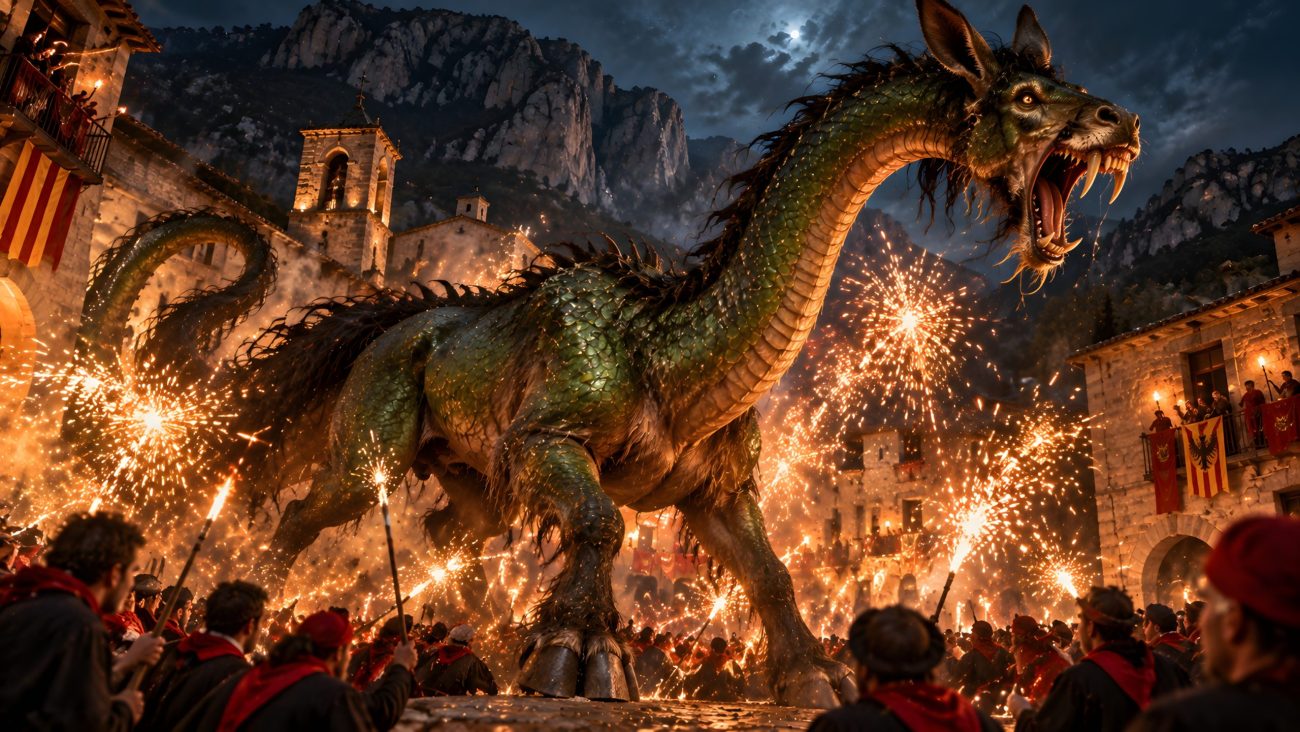
La Guita Xica is a strange dragon with the body of a mule and the features of a dragon. She has a green, horse-like body, a very long neck, and sharp fangs. Her long neck gives her an uncanny resemblance to a great serpent rising above the crowd.

Originally, La Guita Xica was regarded as a threatening demonic creature. Her nature was connected to the mule, an animal deeply familiar in the Catalan mountains but also notorious for its stubborn and unruly temperament. This wildness became part of the creature herself, making her a dangerous and unpredictable presence.

Over time, however, La Guita Xica changed from a frightening monster into a protective spirit. She became associated with the people of Catalonia and with the Eucharistic celebrations of the Patum de Berga.

During the festivals, enormous representations of La Guita Xica are brought into the town squares. The great dragon-mule moves among the celebrations and spits fireworks, transforming the once-feared creature into a spectacular guardian of the festivities.

Her many names preserve the changing image of the creature: Mulassa, Mulaguita, Guita Boja, Mula Fera, Mula Guita, and finally La Guita Xica. What began as a monstrous mule-dragon became a beloved protective figure within Catalan tradition.


Sources

“La Guita Xica.” Wikipedia: The Free Encyclopedia. Wikimedia Foundation. Accessed October 2, 2026. https://en.wikipedia.org/wiki/La_Guita_Xica


Laidly Worm of Spindleston Heugh

Tradition: English Mythology
Alternative Names: The Laidly Worm of Bamborough, Laidly Worm
Category: Dragon


The Myth

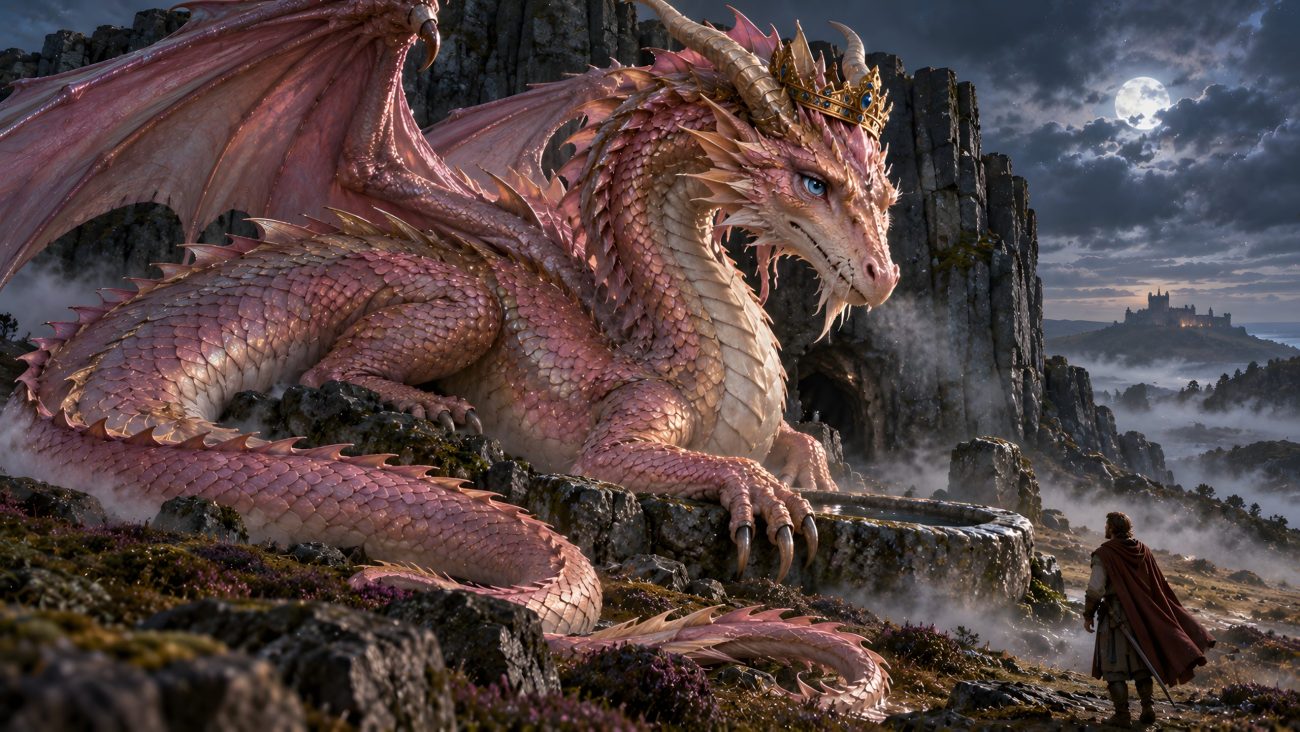
The Laidly Worm is a monstrous dragon into which Princess Margaret of Bamburgh is transformed. The creature is a fearsome worm, dwelling among the rocks and caves of Spindleston Heugh, where it becomes a terror to the surrounding land.

In the Kingdom of Northumbria, the kind king of Bamburgh loses his wife and later takes a beautiful but cruel witch as his queen. The new queen becomes jealous of the king’s daughter, Princess Margaret, whose beauty she resents. With the king’s son, Childe Wynd, away across the sea, the witch sees her opportunity to rid herself of the princess.

She casts a terrible enchantment upon Margaret, transforming her into the Laidly Worm. The curse declares that she shall remain a dragon until Childe Wynd, the king’s own son, comes to the Heugh and kisses her three times. Until then, she is doomed to remain in her monstrous form.

The dragon becomes a fearsome presence around Spindleston Heugh and must be appeased with food. In Joseph Jacobs’ telling, seven cows are set aside for the creature each day. News of the terrible worm eventually reaches Childe Wynd, who returns despite the efforts of his stepmother to prevent him from reaching his sister.

When Childe Wynd finally comes before the Laidly Worm, he does not attack the monster. Instead, he kisses the dragon three times. The enchantment is broken, and the monstrous worm is restored to Princess Margaret in her human form.

The wicked queen is punished for her sorcery, being transformed into a toad, while Childe Wynd becomes king. The tale thus ends with the princess restored, the enchantment broken, and the witch who caused it stripped of her human form.

Spindleston Heugh itself became bound to the legend. The great stone column known as the Spindlestone, or Bridle Rock, is said to be the place where Childe Wynd threw his horse’s bridle before confronting the worm. The surrounding landscape was traditionally associated with the dragon’s dwelling, including a cave and a stone trough where the Laidly Worm was said to have lived and fed.


Sources

“The Laidly Worm of Spindleston Heugh.” Wikipedia: The Free Encyclopedia. Wikimedia Foundation. Accessed October 2, 2026. https://en.wikipedia.org/wiki/The_Laidly_Worm_of_Spindleston_Heugh


Kulshedra

Tradition: Albanian mythology
Alternative Names: Kuçedra, Kulshedër, Kulshedra
Category: Dragon


The Myth

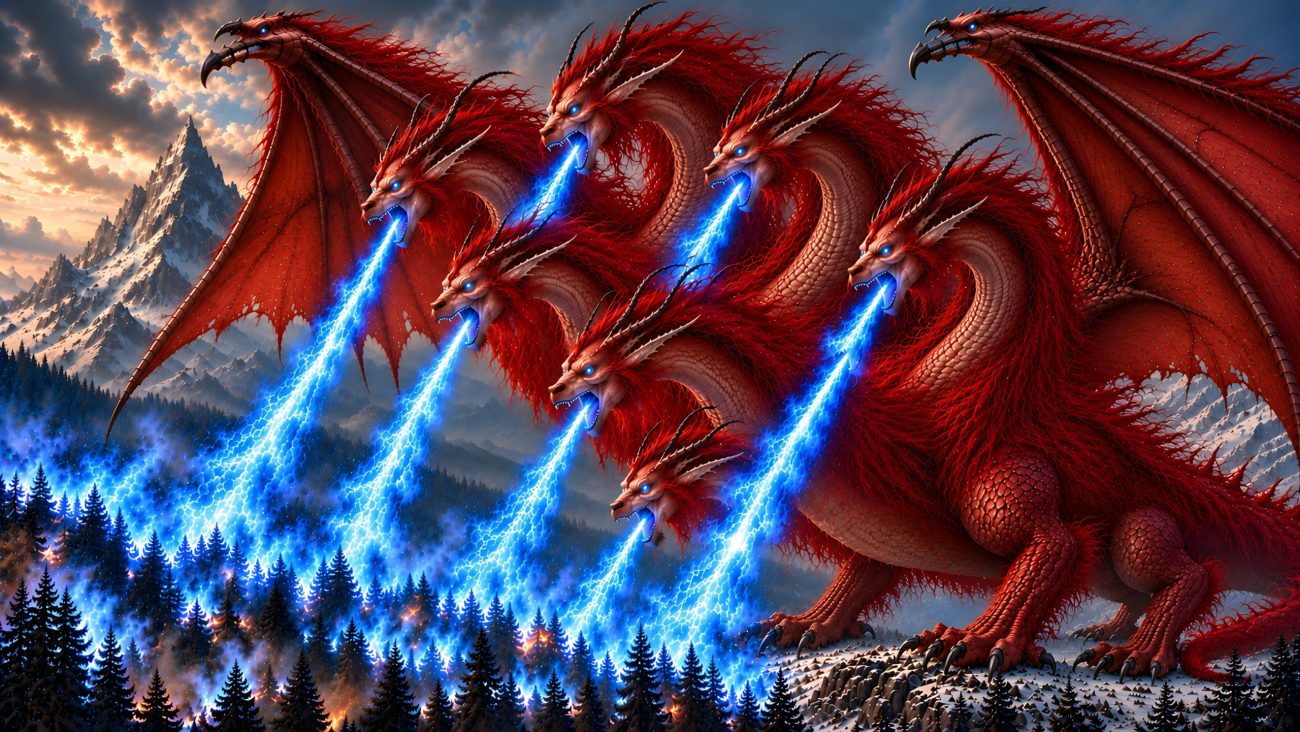
The Kulshedra is a gigantic female dragon, usually imagined as a monstrous multi-headed serpent covered in woolly red hair. She has a long tail, seven to twelve heads, and enormous pendulous breasts that hang down to the ground. She can spit fire, and her milk and urine are poisonous. She may also appear in the form of a woman, or as a female lizard, turtle, frog, or salamander.

The Kulshedra is a creature of water, storms, fire, and the earth beneath the world. She brings drought, torrents, tempests, floods, water shortages, earthquakes, and other disasters upon humanity. When her anger becomes dangerous, people may offer her human sacrifices in an attempt to persuade her to hold back the destruction.

In the southern traditions, the Kulshedra is so enormous that she surrounds the entire world. Should she ever manage to bring her mouth around to her own tail, the world itself would be destroyed. In northern traditions she can seize or possess the sun and moon, and people try to frighten her away by firing weapons into the sky, making great noise with metal objects, or ringing church bells.

The Kulshedra is opposed by the Drangue, a divine, winged hero who protects mankind. Their battles shake the natural world: thunder and violent storms erupt as the two enemies clash, while earthquakes, cyclones, and other catastrophes may accompany their struggles. Other celestial heroes can also fight her, including the Daughter of the Moon and the Sun, who uses her powers of light to protect those she loves, and Zjermi, the Fire, who is born with the sun marked upon his forehead.

The Kulshedra does not always reveal herself as a monster. She can disguise herself as an ordinary woman, hiding her true nature until the moment comes to strike. Her presence can even bring prosperity to the village where she dwells. She draws food and other nourishment toward herself with her breath, causing her own village to flourish while neighbouring villages become poor. Her children, the Shlligë, are themselves storm-bringing creatures.

The Kulshedra begins its existence as a Bolla, a demonic serpent with aquatic and chthonic qualities. The Bolla keeps its eyes closed throughout the year, opening them on Saint George’s Day, when it gazes upon the world and devours any human it sees. If it survives for the required number of years without being discovered by a human, it undergoes further transformations, passing through forms known as the Bollar and Errshaja before eventually becoming a Kulshedra.

Brave villagers sometimes seek out these serpents and kill them while they are sleeping, before they can grow into the far more dangerous Kulshedra.

In Albanian folklore, the struggle between the Kulshedra and the Drangue is the great battle between darkness and light, destruction and protection. When the dragon rises, storms and disasters threaten the world; when the celestial hero defeats her, the danger is driven back and the world is restored.


Sources

“Kulshedra.” Wikipedia: The Free Encyclopedia. Wikimedia Foundation. Accessed October 2, 2026. https://en.wikipedia.org/wiki/Kulshedra


Kuzuryū

Tradition: Japanese mythology
Alternative Names: Nine-Headed Dragon, Kuzuryū Gongen, Kuzuryū Ōkami,
Category: Dragon


The Myth

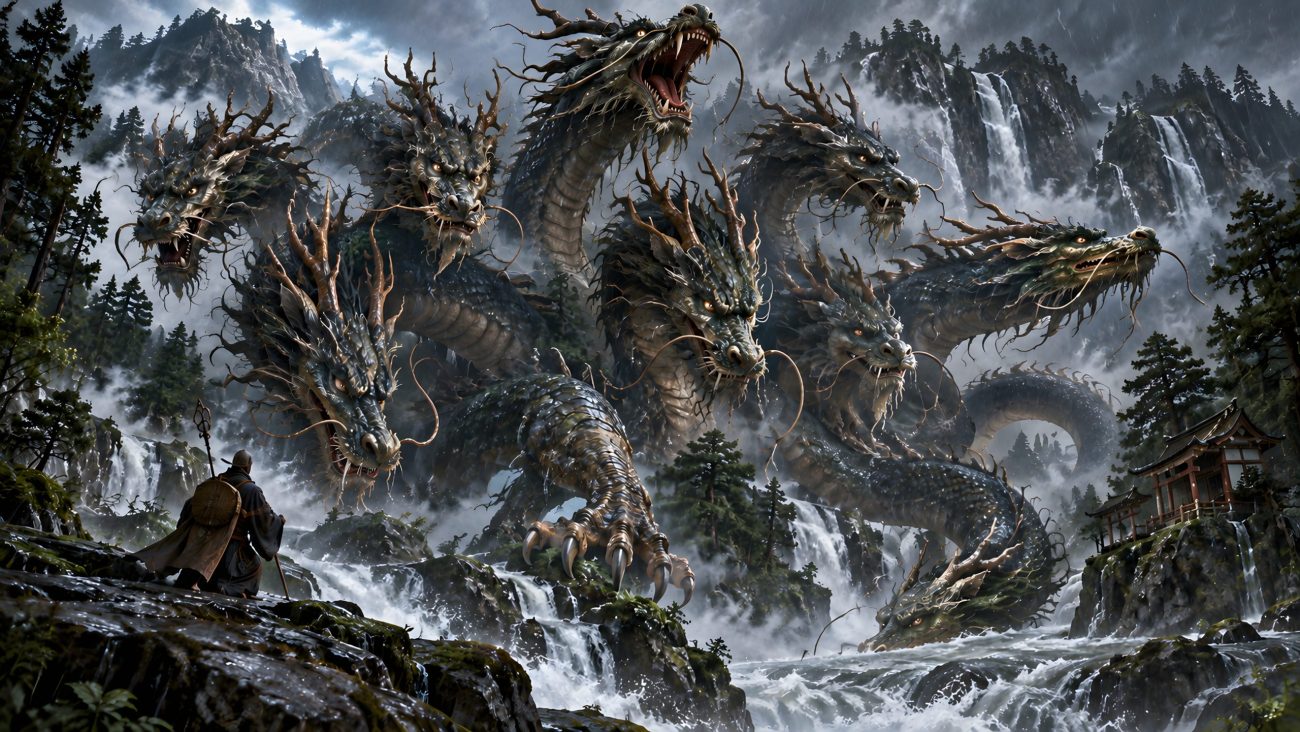
The Nine-Headed Dragon, or Kuzuryū, is a great dragon with nine heads and a single tail. It is especially associated with water, mountains, rain, and sacred places throughout Japan.

At Mount Togakushi in Shinshu, a great dragon with nine heads and one tail was said to dwell when a scholar-ascetic arrived there in search of a place where Buddhism could flourish. The dragon, also described as an oni, had become a harmful presence in the mountain. Through the power and merit of the Lotus Sutra, the ascetic overcame its harmful influence and caused the dragon to repent.

Kuzuryū then vowed to protect Mount Togakushi and urged the ascetic to establish a great temple there. Afterward, the dragon concealed itself by sealing the treasure cave with a huge rock. The cave was the place where the vajra thrown from Mount Iizuna had landed. This act was said to give Mount Togakushi its name, while the ascetic established Kenkōji Temple, later associated with Togakushi Shrine, where Kuzuryū Gongen was enshrined.

Kuzuryū became especially revered as a water god. People prayed to it for rain, and a particular ritual involved taking water from Taneike Pond to Togakushi Shrine and having prayers for rain performed over it. The water was then carried back without allowing it to touch the ground and sprinkled over the rice fields, after which rain was expected to fall.

Kuzuryū was also believed to have a fondness for pears. Offerings of pears were traditionally made to the dragon to relieve toothaches. People suffering from tooth pain could write their names and the location of the pain on pears, pray toward Mount Togakushi from a distance, and then set the pears afloat in a river.

Another legend connects the Nine-Headed Dragon directly with the creation of Mount Togakushi. When Amaterasu Ōmikami hid inside the Heavenly Rock Cave, Tajikarao no Mikoto attempted to open it. He pulled with such force that the rock was thrown down into the lower world, where it became Mount Togakushi. The Nine-Headed Dragon God appeared in response to the sound of the falling rock, and the Kuzuryū of Togakushi was regarded as a temporary manifestation of this Dragon God.

Nine-headed dragons appear in other Japanese legends as well. At Lake Ashi in Hakone, a poisonous dragon once rampaged through the waters until the monk Manmaki subdued it, after which the dragon became a god and was enshrined as Kuzuryū Daimyōjin. In Fukui, a nine-headed dragon is said to have swum along the Kuzuryū River as though carrying the floating statue of Hakusan Gongen. On Mount Onikiri in Chiba, another nine-headed dragon was defeated by Yamato Takeru and subsequently enshrined at Jinnoji Temple.

In Tadami, Fukushima, the name of the Kuguryū district is connected to another legend in which a nine-headed dragon rose from a swamp and ascended into heaven. Across these traditions, the Nine-Headed Dragon appears as a powerful supernatural being of water and mountains, sometimes dangerous and destructive, but capable of repentance and becoming a divine protector.


Sources

Takahashi, Toshihiro. “九頭竜 [くずりゅう] (Kuzuryū).” 新版TYZ 妖怪図鑑 (New TYZ Yokai Encyclopedia). October 21, 2024. https://tyz-yokai.blog.jp/archives/1082950617.html