Malgven

Tradition: French Mythology
Alternative Names: Malgwen, Malgwenn
Category: Fairy


The Myth

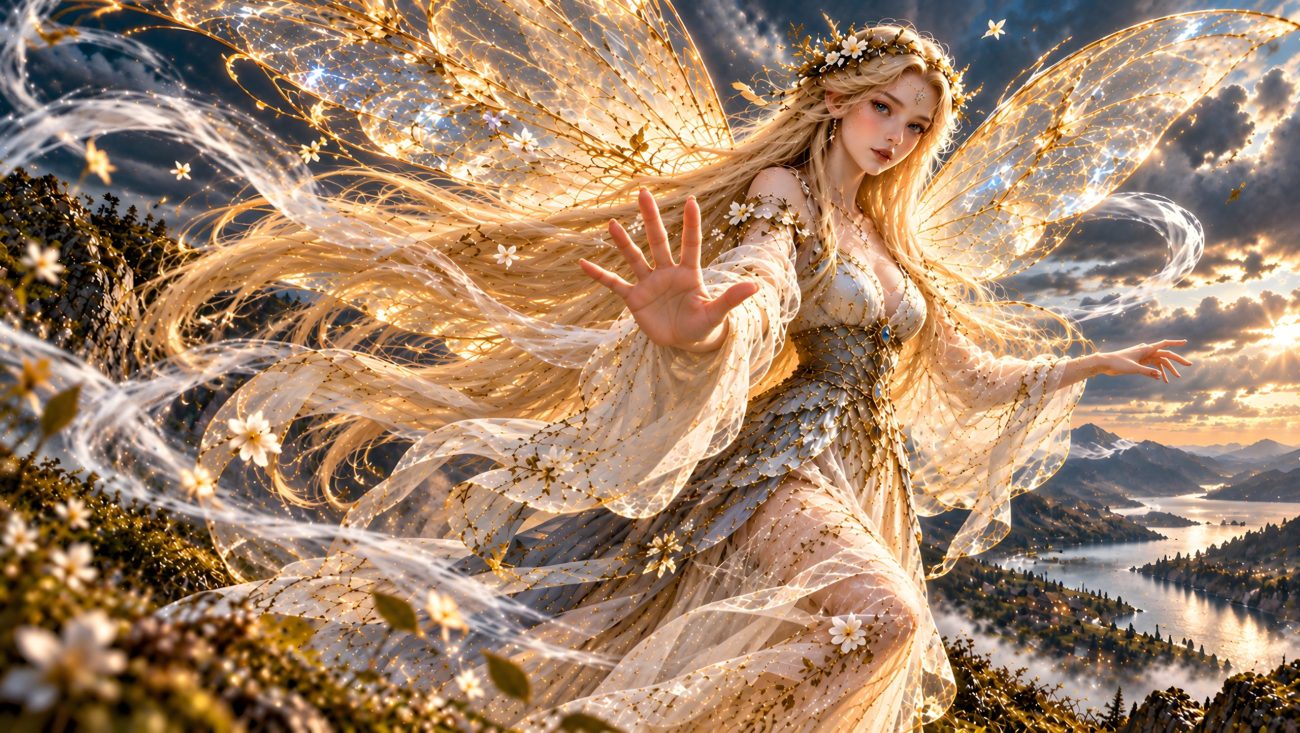
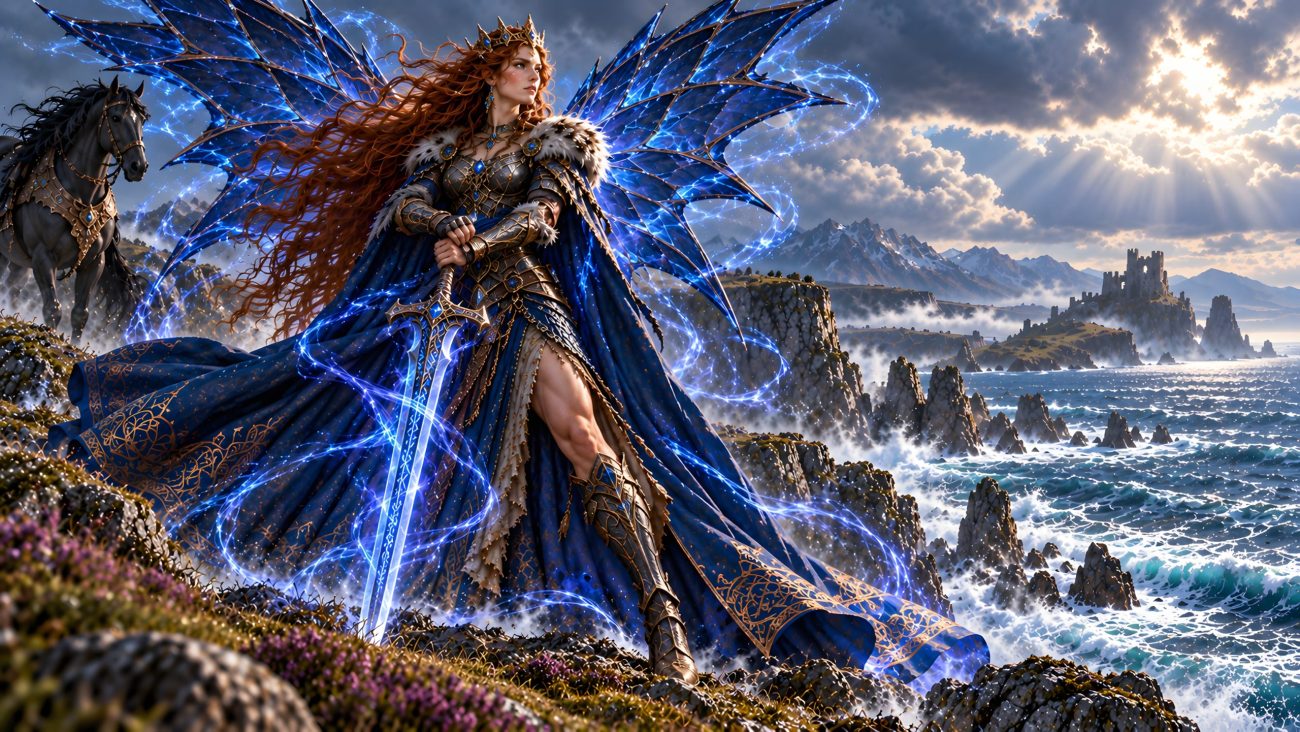
Malgven was the beautiful and formidable Queen of the North, portrayed as a warrior woman wearing shining armor and a steel chainmail corset, with a golden diadem and long flowing hair. Her hair is described as either golden or red, while her eyes were deep blue and possessed an enchanting quality. In the best-known version of her story, she was the wife of the aging King Harold and ruled a northern kingdom associated variously with Ireland, Norway, or Denmark. She was also portrayed as a Valkyrie or fairy of the North, combining supernatural beauty with the character of a powerful warrior queen.

Malgven encountered King Gradlon while he was raiding her kingdom and fell in love with him. She persuaded him to kill her husband, King Harold, and flee with her. The two escaped together on Malgven’s magical horse, Morvarc’h, riding toward Gradlon’s lands in Brittany. Their journey lasted an entire year, and during it Malgven became pregnant and gave birth to a daughter, Dahut. Malgven did not survive the birth and died, leaving Gradlon to return to Brittany with their daughter.

Malgven’s story provides the supernatural origin of Dahut in the later form of the legend of Ys. She is therefore remembered as the mysterious northern mother of the princess who would become central to the fate of the drowned city. The surviving tradition presents Malgven as a powerful otherworldly woman whose arrival brings a magical and tragic element to Gradlon’s story, joining the king of Brittany to a supernatural queen from the distant North.


Sources

“Malgven.” Wikipedia: The Free Encyclopedia. Wikimedia Foundation. Accessed October 5, 2026.
https://en.wikipedia.org/wiki/Malgven
Shtojzovalle

Tradition: Albanian mythology
Alternative Names: Shtojzorreshta, Shtozote
Category: Fairy


The Myth

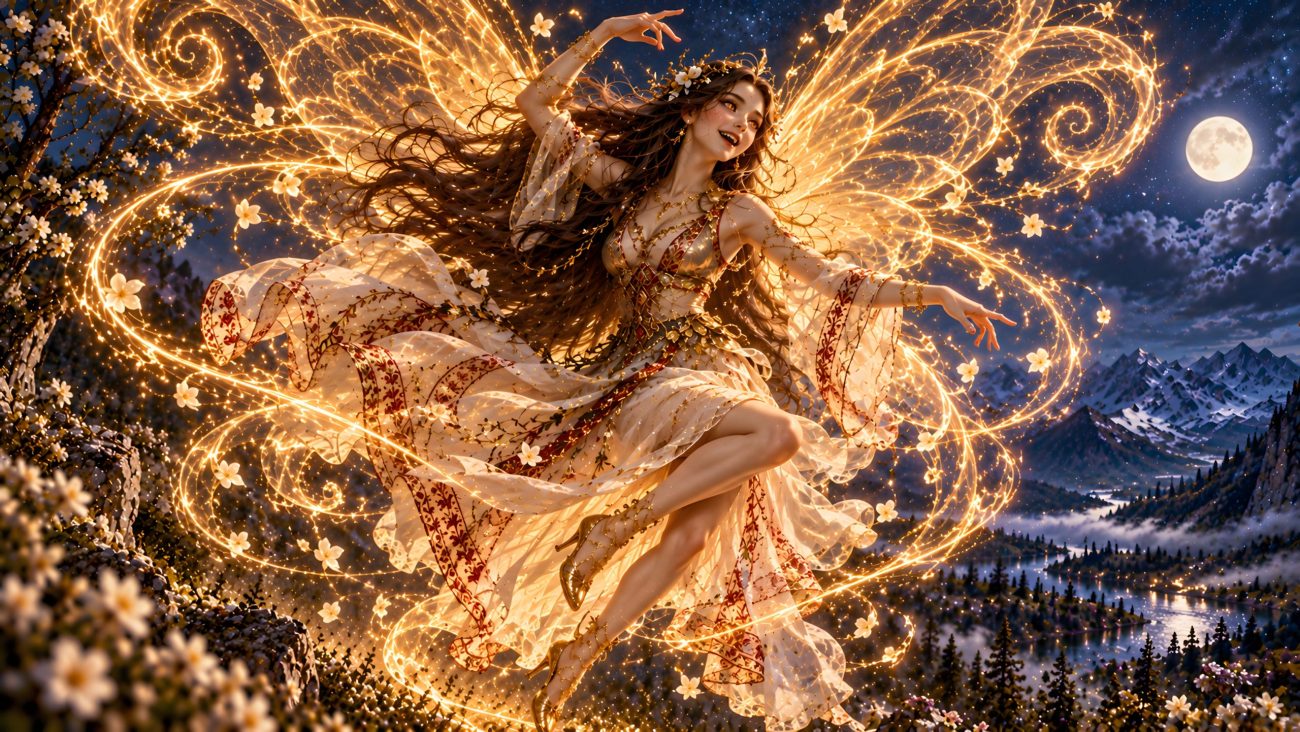
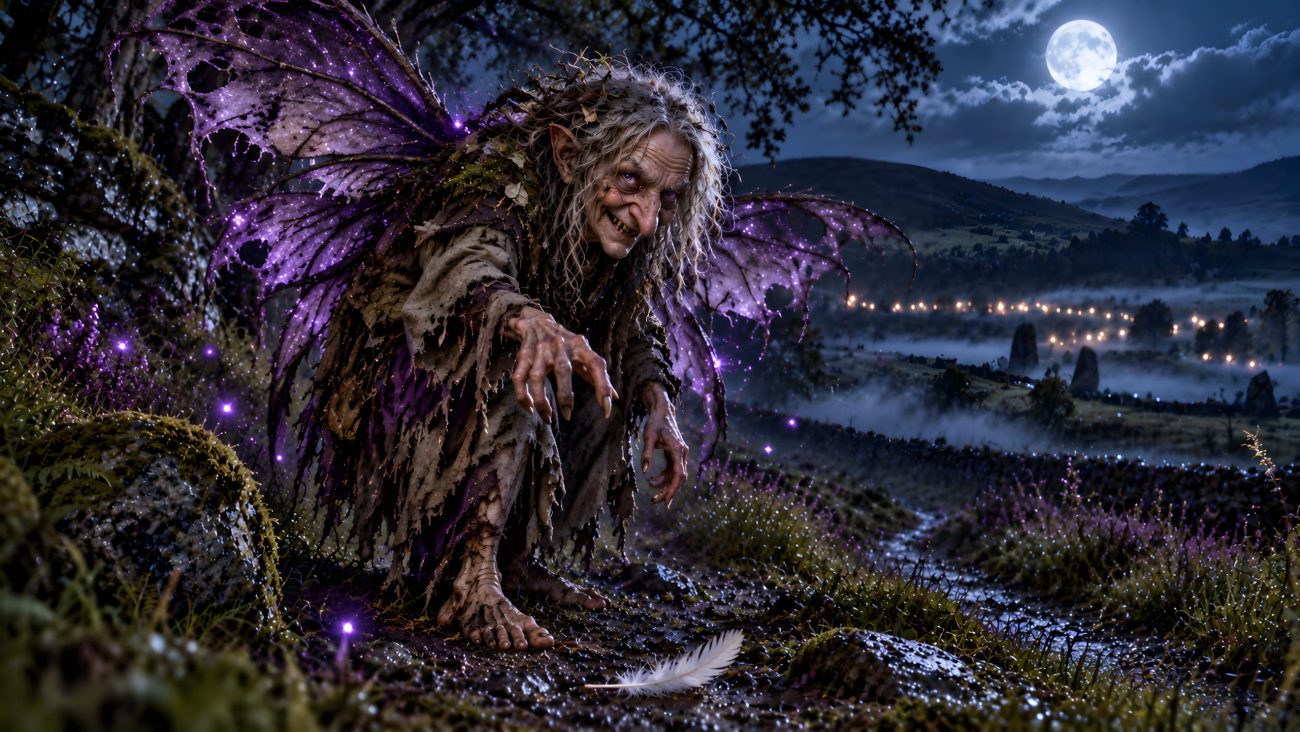
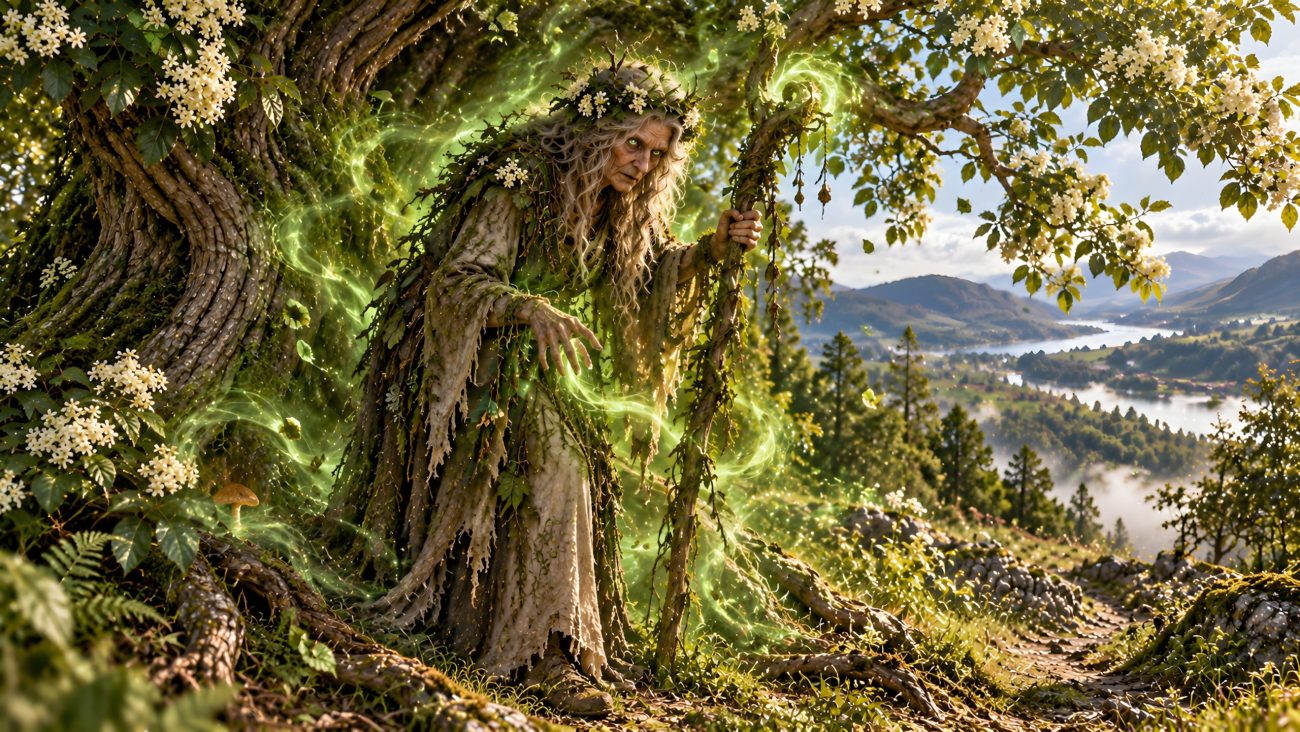
The Shtojzovalle were small supernatural beings of extraordinary beauty who lived in forests and open pastures. Both male and female, they were normally invisible to humans and could only rarely be seen. They possessed the ability to fly and spent much of their time singing and dancing. At night they were said to spin the thread of human existence, connecting them with the mysterious forces that governed human life. A person could see them only if the invisible veil before their eyes was lifted.

The Shtojzovalle could sometimes form relationships with humans, and human men were occasionally said to marry Shtojzovalle maidens. A man could keep such a fairy as his wife only if he gave her his own clothes to wear. Their presence could also become dangerous when humans disturbed their territory. If someone built a house on land inhabited by Shtojzovalle, the supernatural inhabitants would haunt it by shaking heavy iron chains. A person walking through their territory could even step on one of the invisible creatures and be devoured.

In northern Albanian Christian tradition, particularly among Catholics of Albania and Malësia, the Shtojzovalle were given another origin. When the Archangel Michael fought Satan, the angels who remained neutral were transformed into Shtojzovalle. They regretted their neutrality and wandered the forests singing and dancing while weeping over their sin. Their tears were dangerous: if a tear fell upon a human, that person would die. This belief became associated with the Albanian expression i ka rënë pika, meaning that a drop had fallen upon someone and, figuratively, that the person had died.


Sources

“Shtojzovalle.” Wikipedia: The Free Encyclopedia. Wikimedia Foundation. Accessed October 5, 2026.
https://en.wikipedia.org/wiki/Shtojzovalle


Bendith y Mamau

Tradition: Welsh Mythology
Alternative Names: Blessing of the Mothers
Category: Fairy


The Myth

The Bendith y Mamau, meaning “Blessing of the Mothers,” were the fairies of Glamorgan. They were known as supernatural beings who rode horses, visited human houses, and stole children, leaving ugly changelings in their place. People left bowls of milk outside their homes for them, hoping to keep their favor. The fairies were especially feared for taking beautiful human children and replacing them with stunted, wizened creatures that would never grow properly. Their presence belonged to the hidden fairy world that existed alongside ordinary human communities.

One story tells of a mother whose three-year-old child had been taken by the Bendith y Mamau. In his place she found a strange little wizened boy who was clearly not her own child. A cunning man told her how to discover the truth. She removed the top of a raw egg, stirred its contents, and the changeling immediately spoke with the uncanny wisdom of an ancient being. He remarked that he had lived for an impossibly long time, revealing that he was not truly a human child. The mother then followed the next part of the instructions, going to a crossroads at midnight during the full moon. There she saw the Bendith y Mamau passing by in a great fairy procession and realized that her real son was among them.

Finally, the mother was told to roast a black hen over a wood fire without plucking it. She followed the instruction and continued heating the bird until every feather had fallen away. When she looked at the changeling, the creature suddenly disappeared. The mother heard the voice of her own son outside and rushed to the door, finding that her real child had been returned to her. The strange ritual had broken the fairies’ hold over him and driven their substitute away.


Sources

“Бендит и мамай (Bendit i Mamai).” New Bestiary (Bestiary.us). Accessed October 5, 2026.
https://www.bestiary.us/bendit-i-mamai/en


Elder Mother

Tradition: English Mythology, Danish Mythology
Alternative Names: Hyldemoer, Hyldequinde, Old Lady, Old Girl
Category: Spirit


The Myth

The Elder Mother was a supernatural guardian of the elder tree, appearing in English folklore as the Old Lady or Old Girl and in Denmark as the Hyldemoer, or Elder-Mother. She was believed to dwell within elder trees and could punish people who cut their wood without first asking her permission. A woodsman was expected to politely request some of the tree’s wood and promise to give some of his own wood when he himself grew into a tree. Taking elder wood without permission could bring terrible misfortune. In one English tale, a child became dangerously ill after a cradle was repaired with elder wood without the Elder Mother’s consent. The mother believed that the spirit had pinched and tormented the child until the offending piece of elder was replaced with ash.

The Elder Mother could also appear as a witch closely associated with the elder tree. In Somerset, a farmer once saw a witch in the form of an elder tree milking his cow. He fired a silver bullet at her, but missed and was chased back to his farmhouse. His grandmother then seized a burning coal from the fire and threw it against the elder tree, setting it alight and killing the witch. In Northamptonshire, another man cut a stick from an elder and saw blood flowing from the wound in the tree. Later he encountered a local witch with a bloodied bandage on her arm, revealing the connection between the tree and the supernatural woman.

In another English legend, the elder-tree witch became the unlikely savior of England. A king and his knights marched toward Long Compton, and a witch told the king that if he could see the village after taking seven strides, he would become King of England. When the king confidently continued forward, a hill suddenly rose before Long Compton and blocked his view. The witch then declared that neither he nor his knights would become rulers of England. She transformed the king and his men into standing stones, while she herself became an elder tree. The legend was told as the origin of the Rollright Stones. In Denmark, the Hyldemoer or Hyldequinde was similarly regarded as a tree-dwelling spirit like a wood nymph or dryad, and those who built with elder wood without first seeking her permission risked being haunted or tormented by her.


Sources

“Elder Mother.” Wikipedia: The Free Encyclopedia. Wikimedia Foundation. Accessed October 5, 2026.
https://en.wikipedia.org/wiki/Elder_Mother


Yuda

Tradition: Bulgarian Mythology, Macedonian Mythology
Alternative Names: Fairy wind, Samovila, Yuda Wind
Category: Fairy


The Myth

The fairy wind appears in a Macedonian Bulgarian folk song as three powerful gusts of wind that are not ordinary winds at all, but three yudi, supernatural fairy beings. They arrive quietly at first, but then seize Stoyna, a young bride, and carry her away through the air to the great village of the yudi. There, the fairies prepare their own horo, or chain dance, and force Stoyna to join them. She dances among them while weeping for what she has left behind.

An old yuda samovila notices Stoyna’s sorrow and asks why she is crying. She questions whether Stoyna misses her mother, father, brothers, sisters, companions, or beloved, but Stoyna tells her that none of these is the cause of her grief. What weighs upon her heart is her little child. She worries about who will wrap the child, rock it to sleep, and care for it while she is gone. Her longing for the child is the only thing that makes her weep among the supernatural dancers.

The old yuda promises to help. She tells Stoyna that she will send a powerful wind through the human world and pass by the child’s home. There she will rock the child’s cradle, wrap the child, and care for it. The fairy wind therefore becomes the means by which the yuda can cross between her own supernatural world and Stoyna’s distant home, turning a frightening force that carried the young mother away into an act of compassion toward the child she left behind.


Sources

Stefan Verkovich. “Chapter 2.” In Narodni pesni na makedonskite Balgari (Folk Songs of the Macedonian Bulgarians). Liternet.bg.
https://liternet.bg/folklor/sbornici/verkovich/2.htm


Zagorkinia

Tradition: Serbian Mythology, Croatian Mythology
Alternative Names: Zagorkinia
Category: Fairy


The Myth

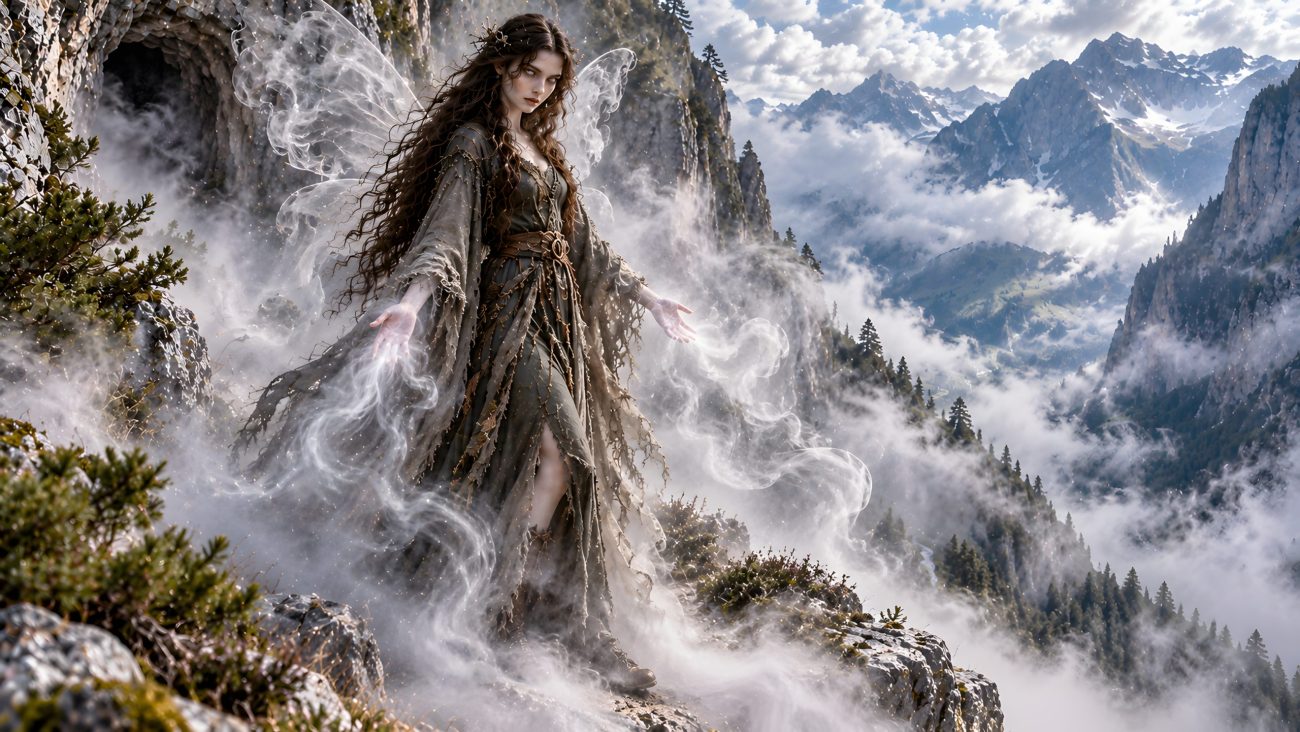
Zagorkinia was a female supernatural being belonging to the tradition of the Wiły, inhabiting remote and inaccessible mountain places. She appeared in human female form and kept her dwelling far from settlements, deep in the mountains where people rarely ventured.

Zagorkinia generally avoided humans and was usually hostile toward them. Despite this, she could show compassion toward people who became lost or suffered an accident in the mountains. Those in danger could receive her assistance, making Zagorkinia a strange and unpredictable mountain spirit: a dangerous being toward ordinary travelers, yet capable of helping those who were genuinely helpless or lost in her domain.


Sources

“Zagorkinia.” Wikipedia, wolna encyklopedia (Polish Wikipedia). Wikimedia Foundation. Accessed October 5, 2026. https://pl.wikipedia.org/wiki/Zagorkinia


Oblakinia

Tradition: Serbian Mythology, Croatian Mythology
Alternative Names: Obloučica
Category: Fairy


The Myth

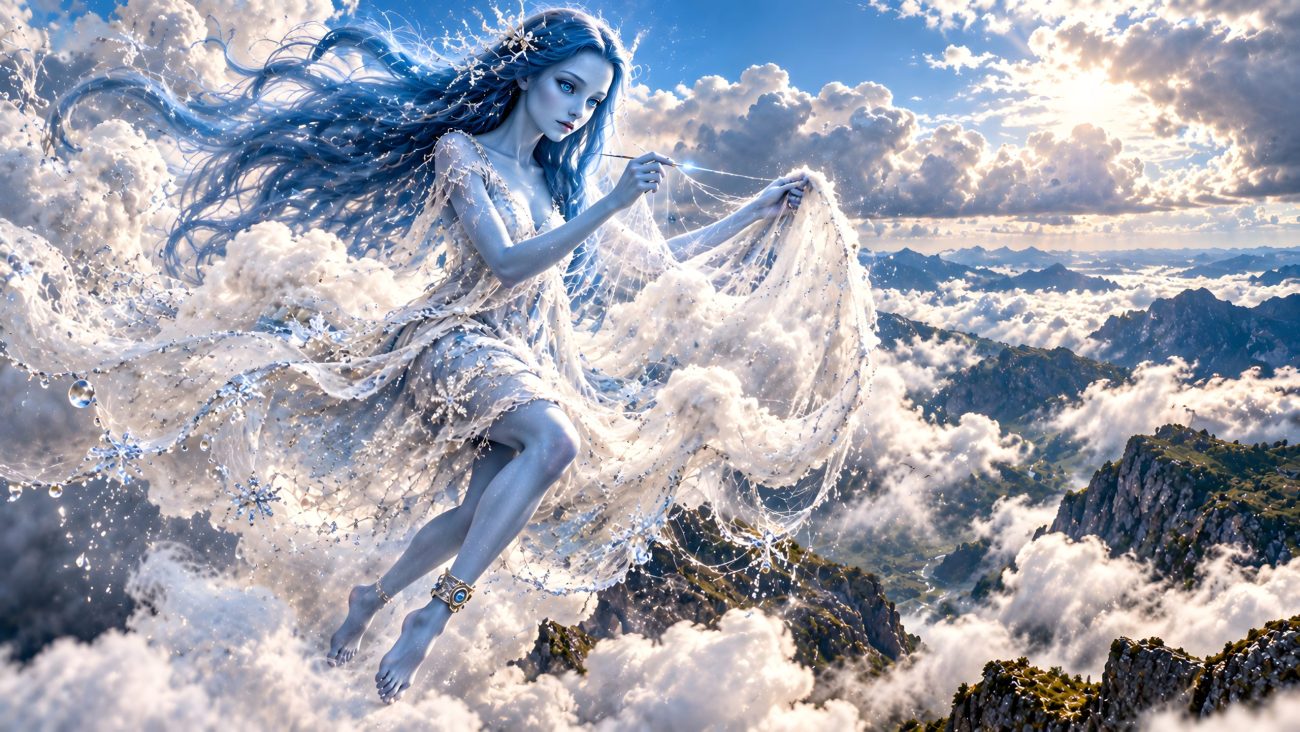
Oblakinia was a slender female supernatural being belonging to the tradition of the Wiły. She was only about half the height of an adult human, yet had the proportions of a fully grown woman. Her delicate body was blue, as was her skin, and she moved effortlessly through the air as though gliding. She had a narrow face, a high forehead, long straight blue hair, and large eyes with a blue gaze. Around one ankle she wore a silver spiral decorated with a blue stone.

Oblakinia’s main occupation was sewing magical dresses. Rather than using ordinary cloth, she fashioned her garments from the materials of the sky and the natural world: snowflakes, dewdrops, fragments of clouds, mist, and strands of spider silk. These delicate materials were woven together into supernatural clothing and decorated with various objects, giving her dresses an ethereal appearance suited to a spirit of the clouds.

As a cloud-dwelling member of the Wiła tradition, Oblakinia belonged to the supernatural world of the sky, but the surviving description gives no further account of her behavior toward humans or of particular legends concerning her.


Sources

“Oblakinia.” Wikipedia, wolna encyklopedia (Polish Wikipedia). Wikimedia Foundation. Accessed October 5, 2026.
https://pl.wikipedia.org/wiki/Oblakinia


Yōsei

Tradition: Japanese Mythology
Alternative Names: 妖精, Fairy
Category: Fairy


The Myth

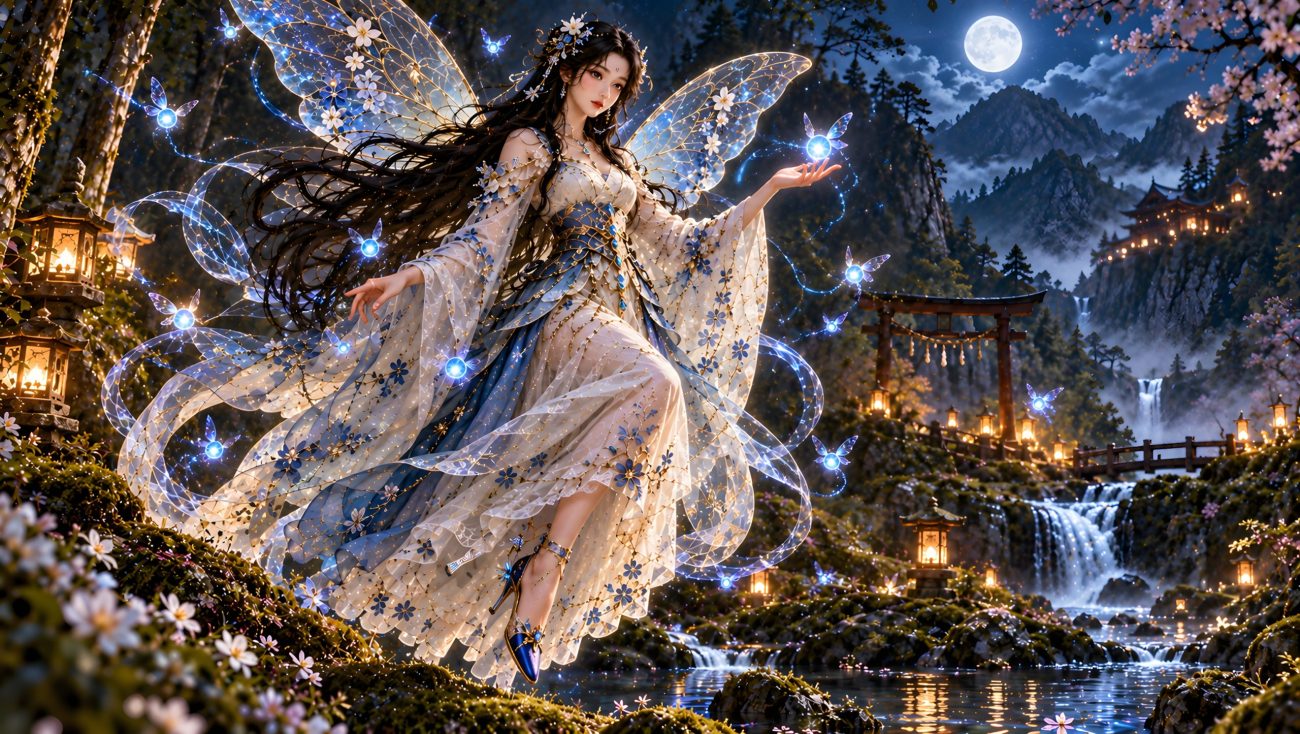
Yōsei is the Japanese term used for fairy-like supernatural beings, generally referring to small and mysterious spirits. In Japanese tradition, the word can describe beings resembling the fairies of Western folklore, while some older beliefs associate such creatures with supernatural powers that could affect the living and the dead.

One old belief from Iwate Prefecture held that yōsei could resurrect the dead, giving them an unusual and potentially frightening power over the boundary between life and death. Another tradition speaks of the small fairy-like people of Mount Hōrai, who were said to know nothing of great evil. Because they were untouched by such wickedness, their hearts never grew old, portraying them as beings of innocence and supernatural purity.

Japanese and neighboring traditions also contain several other small fairy-like peoples. Ainu folklore tells of the Koro-pok-guru, a race of small people, while Okinawan tradition has the Kijimunā, tree-dwelling spirits associated with banyan trees. Together, these traditions provide the wider Japanese folklore context in which yōsei can be understood as small, mysterious supernatural beings existing between the familiar human world and the realm of spirits.


Sources

“Yōsei.” Wikipedia: The Free Encyclopedia. Wikimedia Foundation. Accessed October 5, 2026.
https://en.wikipedia.org/wiki/Y%C5%8Dsei


Wiła

Tradition: Ukrainian Mythology, Russian Mythology, Belarusian Mythology
Alternative Names: Samowiła, Samodiva, Vila, Wila
Category: Fairy


The Myth

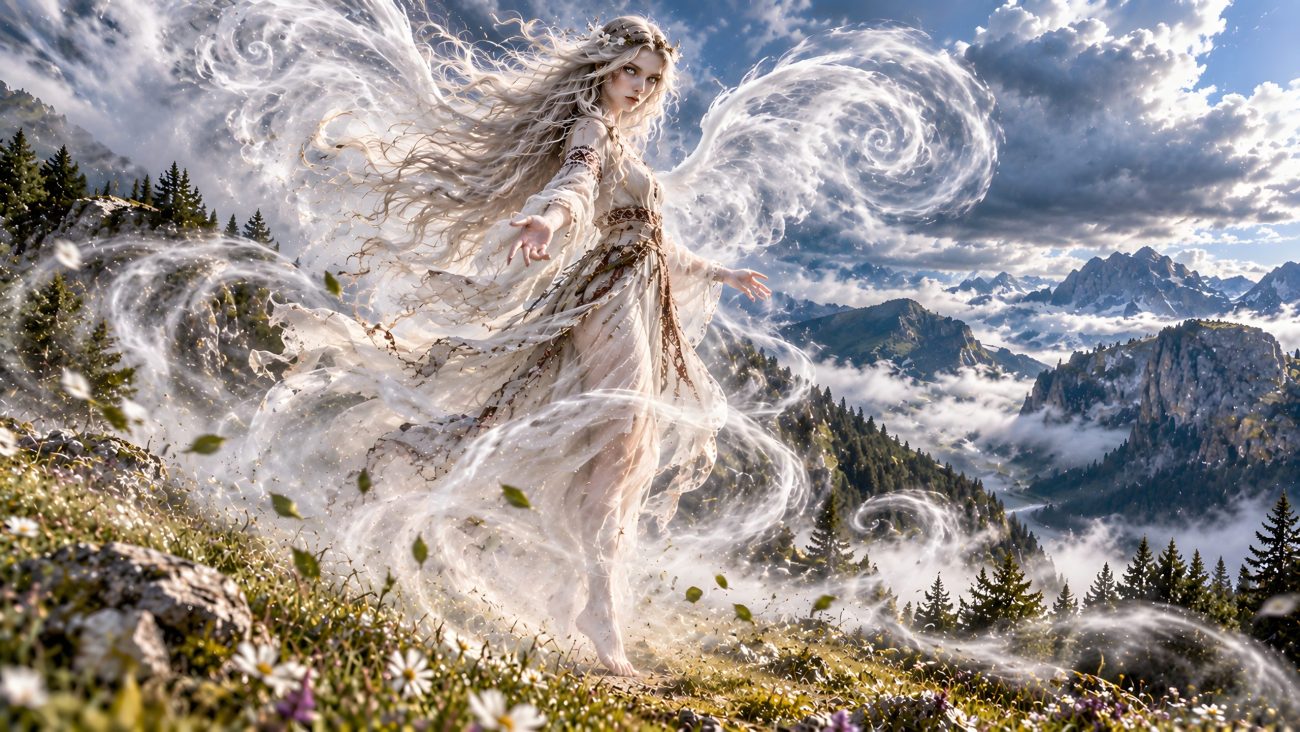
The Wiły were beautiful supernatural spirits associated with the wild places of the natural world. They were believed to originate from the souls of young women who died, and could inhabit forests, mountains, rivers, lakes, and even clouds. Forest Wiły were called samowily, while others were associated with mountains, waters, or clouds. They could appear as beautiful winged girls with pale, almost transparent bodies, usually naked or lightly clothed, but were also able to take the forms of horses, swans, falcons, and wolves. They could transform themselves into whirlwinds and were sometimes associated with serpent-like forms. In groups, they moved through the wilderness and could even ride upon clouds or move them simply by fixing their gaze upon them.

The Wiły were capricious toward humans and could be either helpful or dangerous. They might assist young men in finding wives, warn people of approaching hailstorms, help farmers in need, or reveal knowledge of the future. Their favor could therefore bring protection and prosperity, but their anger was feared. When offended, they could unleash hail, powerful winds, or drought upon fields, destroying crops and bringing hardship to entire communities. They were especially dangerous to people who encountered them directly, as they could dance with men until they died, blind them, drive them mad, or fill them with overwhelming and impossible desires.

In Western Slavic tradition the Wiła could eventually become associated with a more sinister kind of supernatural being, particularly one that brought madness to humans. The old meaning of the word itself became connected with madness, reflecting the belief that encountering these spirits could drive a person out of his senses. Their nature therefore stood between the beautiful and the terrifying: they were alluring spirits of forests, mountains, waters, and storms who could aid mortals when treated well, but whose supernatural beauty concealed a dangerous and unpredictable power.


Sources

“Wiła.” Wikipedia, wolna encyklopedia (Polish Wikipedia). Wikimedia Foundation. Accessed October 5, 2026.
https://pl.wikipedia.org/wiki/Wi%C5%82a


Tylwyth Teg

Tradition: Welsh Mythology
Alternative Names: Bendith y Mamau, Gwyllion, Ellyllon
Category: Fairy


The Myth

The Tylwyth Teg, meaning the Fair Family, were the fairy folk of Wales. They were beautiful supernatural beings, often described as fair-haired and dwelling in an Otherworld hidden beneath the earth or beneath lakes and streams. They danced together in secluded places and left behind fairy rings where they had held their celebrations. They could appear in great fairy processions riding horses through the countryside, while households sometimes left bowls of milk outside for them. The Tylwyth Teg could be generous toward those they favored, granting them wealth and good fortune, but their gifts could disappear if the recipient revealed their existence to others.

The fairies could also form relationships with humans. Fairy maidens sometimes became wives to mortal men, but their marriages were governed by strict supernatural taboos. One important prohibition concerned iron: if the fairy woman was touched by iron, she would disappear from the human world and return permanently to her own realm. The Tylwyth Teg could also be dangerous toward human families, particularly because they were said to covet beautiful, golden-haired children. They might steal a human child and leave a changeling, known as a crimbil, in its place. In one tale, a mother whose three-year-old son had been taken sought the advice of a cunning man. Following his instructions, she performed a series of strange acts, including stirring the contents of a raw egg and roasting an entire black hen over a wood fire without plucking it. The changeling revealed his supernatural nature while watching her, and after the final ritual the false child disappeared and her real son was returned.

The Tylwyth Teg were also understood as a broad fairy population containing several kinds of supernatural beings. The Ellyllon were elf-like fairies living in groves and valleys, while the Coblynau inhabited mines, the Bwbachod served as household fairies, the Gwragedd Annwn lived around lakes and streams, and the Gwyllion were mountain fairies with a more hag-like nature. The Ellyllon were said to eat toadstools and fairy butter, wear foxglove flowers as gloves, and live under the rule of Queen Mab. Across these forms, the Tylwyth Teg represented a hidden supernatural people living alongside humanity, capable of bringing prosperity and wonder but also of stealing children, enforcing their own laws, and drawing mortals into the dangerous world of the fairies.


Sources

“Tylwyth Teg.” Wikipedia: The Free Encyclopedia. Wikimedia Foundation. Accessed October 5, 2026.
https://en.wikipedia.org/wiki/Tylwyth_Teg