Elder Mother

Tradition: English Mythology, Danish Mythology
Alternative Names: Hyldemoer, Hyldequinde, Old Lady, Old Girl
Category: Spirit


The Myth

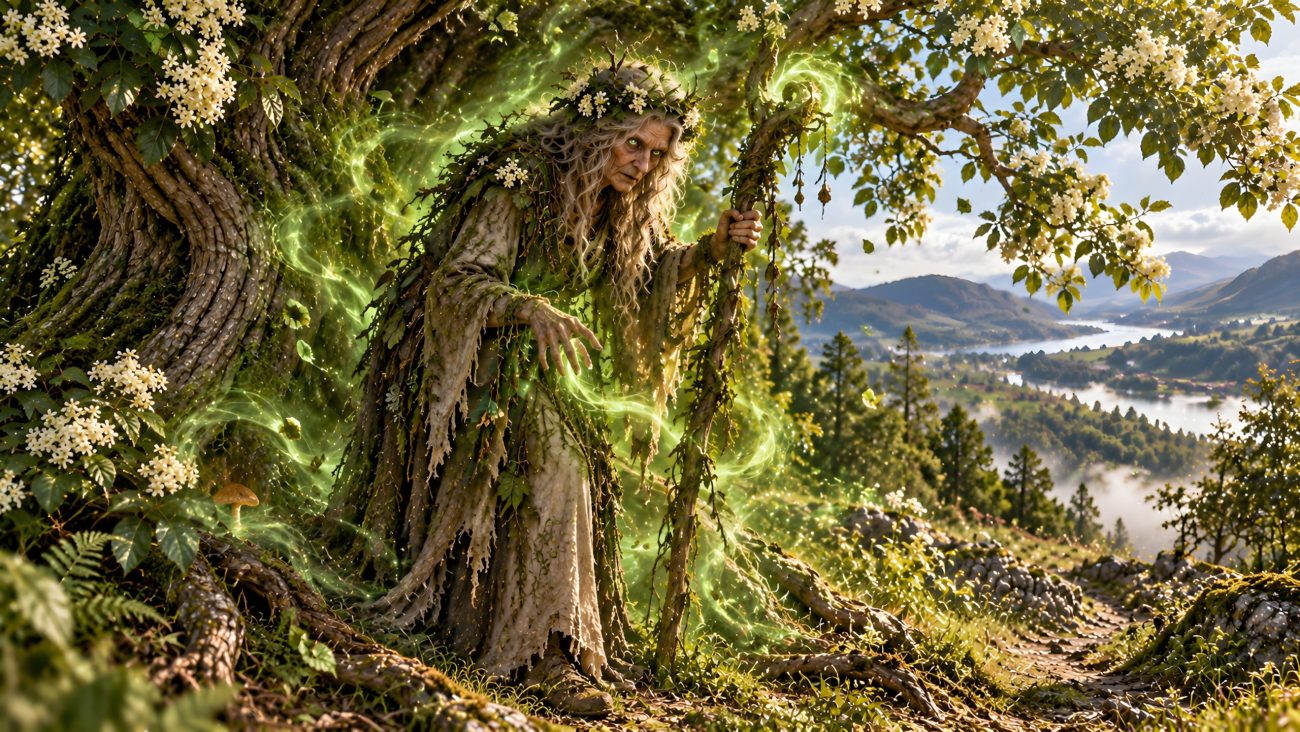
The Elder Mother was a supernatural guardian of the elder tree, appearing in English folklore as the Old Lady or Old Girl and in Denmark as the Hyldemoer, or Elder-Mother. She was believed to dwell within elder trees and could punish people who cut their wood without first asking her permission. A woodsman was expected to politely request some of the tree’s wood and promise to give some of his own wood when he himself grew into a tree. Taking elder wood without permission could bring terrible misfortune. In one English tale, a child became dangerously ill after a cradle was repaired with elder wood without the Elder Mother’s consent. The mother believed that the spirit had pinched and tormented the child until the offending piece of elder was replaced with ash.

The Elder Mother could also appear as a witch closely associated with the elder tree. In Somerset, a farmer once saw a witch in the form of an elder tree milking his cow. He fired a silver bullet at her, but missed and was chased back to his farmhouse. His grandmother then seized a burning coal from the fire and threw it against the elder tree, setting it alight and killing the witch. In Northamptonshire, another man cut a stick from an elder and saw blood flowing from the wound in the tree. Later he encountered a local witch with a bloodied bandage on her arm, revealing the connection between the tree and the supernatural woman.

In another English legend, the elder-tree witch became the unlikely savior of England. A king and his knights marched toward Long Compton, and a witch told the king that if he could see the village after taking seven strides, he would become King of England. When the king confidently continued forward, a hill suddenly rose before Long Compton and blocked his view. The witch then declared that neither he nor his knights would become rulers of England. She transformed the king and his men into standing stones, while she herself became an elder tree. The legend was told as the origin of the Rollright Stones. In Denmark, the Hyldemoer or Hyldequinde was similarly regarded as a tree-dwelling spirit like a wood nymph or dryad, and those who built with elder wood without first seeking her permission risked being haunted or tormented by her.


Sources

“Elder Mother.” Wikipedia: The Free Encyclopedia. Wikimedia Foundation. Accessed October 5, 2026.
https://en.wikipedia.org/wiki/Elder_Mother
Pesta

Tradition / Region: Danish Mythology and Norwegian Mythology
Alternate Names: —
Category: Spirit


The Myth

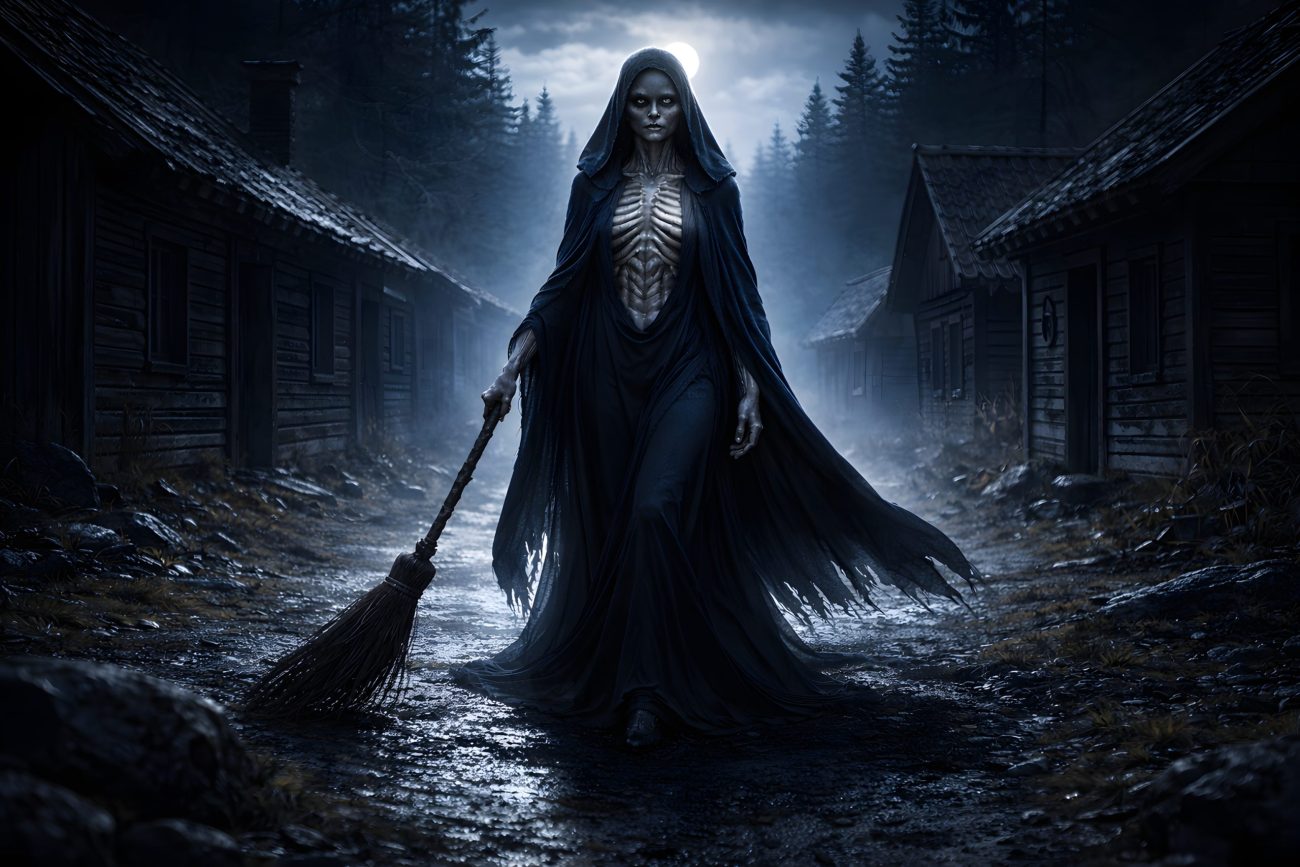
Pesta is the personification of plague and pestilence, appearing as an old woman dressed in a black robe who travels from village to village.

She wanders across the land during times of disease, bringing illness wherever she goes. Her arrival is a sign that plague has reached a place, and her presence determines the fate of its people.

It is said that she carries either a rake or a broom. If she arrives holding a rake, some people will survive the plague. If she comes with a broom, all will die, as she “sweeps” the entire population away.

Pesta moves silently but inevitably, and no one can stop her path. Villages struck by her presence are left to suffer according to what she carries.

She represents the unavoidable spread of disease:
a figure who decides survival or total destruction, depending on the tool in her hands.


Sources

Bestiary contributors. (n.d.). Pesta. In Bestiary, from https://www.bestiary.us/pesta


Hyldemoer

Tradition / Region: Danish Mythology
Alternate Names: Hyldequinde, Elder Mother, Old Lady
Category: Forest Dweller, Spirit


The Myth

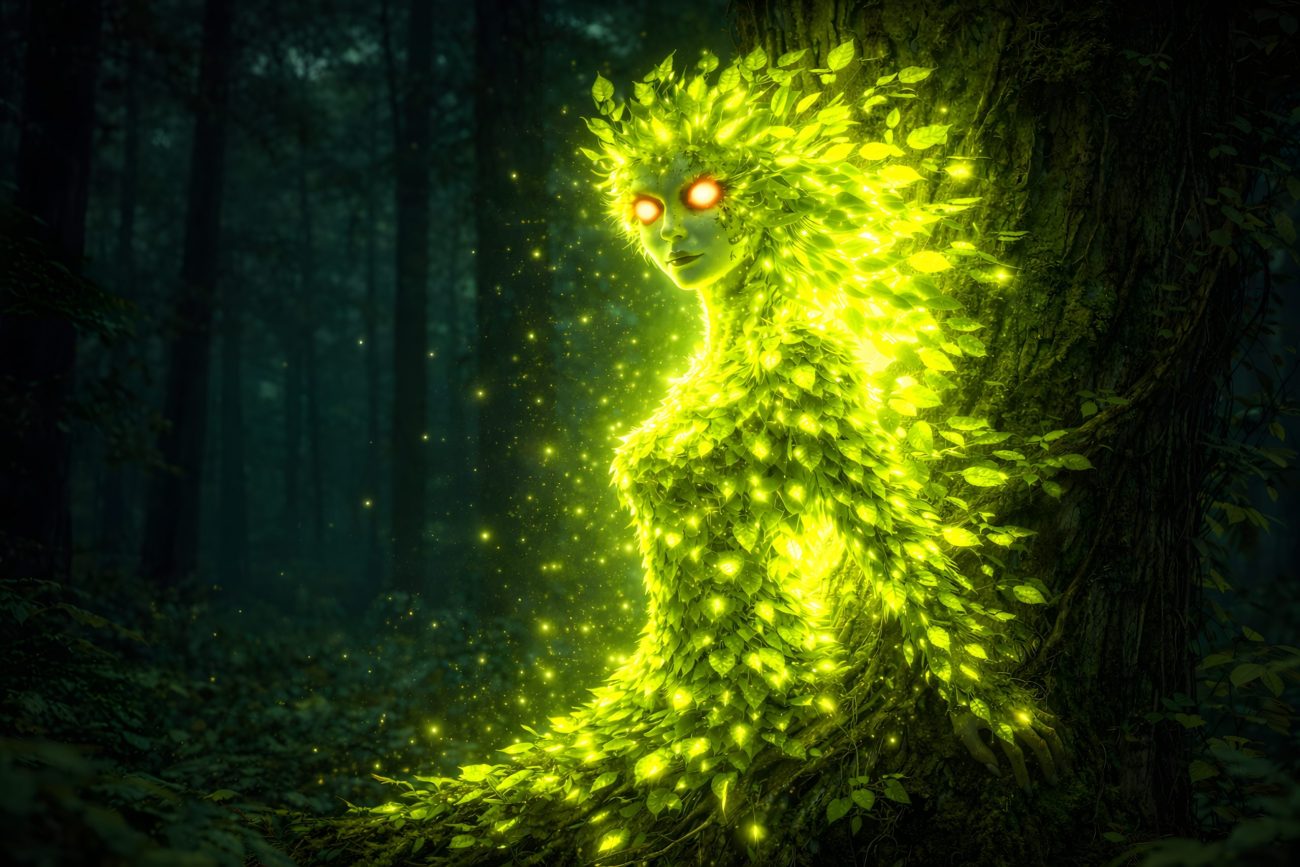
Hyldemoer is a spirit that dwells within the elder tree and guards it. She is regarded as a living presence tied directly to the tree, similar to a nymph or dryad, and her existence is inseparable from the wood itself.

She watches over all elder trees and reacts to how humans treat them. Anyone who cuts or uses elder wood without first asking permission risks provoking her anger. When offended, she brings misfortune, illness, or direct harm.

Tradition required that a person ask the Elder Mother before taking any wood. If this was not done, consequences followed. In one account, a man used elder wood to make part of a child’s cradle without permission. The spirit responded by attacking the child, leaving it in distress until the object was replaced.

In other stories, the spirit appears in human form, often as an old woman or witch. She may be seen connected to the tree itself—sometimes bleeding when the tree is cut, or appearing wounded in the same place. This reflects the belief that the tree and the spirit are one and the same.

Hyldemoer is also linked to transformation and protection. In some traditions, a woman or witch becomes an elder tree, or uses its power to act against others. In one tale, a figure associated with the elder turns a king and his men into stone and transforms herself into the tree.

The elder tree itself was considered powerful and dangerous. It could protect against evil, but only if treated correctly. If disrespected, it became a source of harm.

Hyldemoer represents a clear rule within folklore:
nature is inhabited and must be approached with respect, or it will respond with punishment.


Sources

Wikipedia contributors. (n.d.). Elder Mother. In Wikipedia, from https://en.wikipedia.org/wiki/Elder_Mother