Bès Jě’la Kòy

Tradition: Malay Mythology
Alternative Names: Spiky-Head Spirit
Category: Forest dweller


The Myth

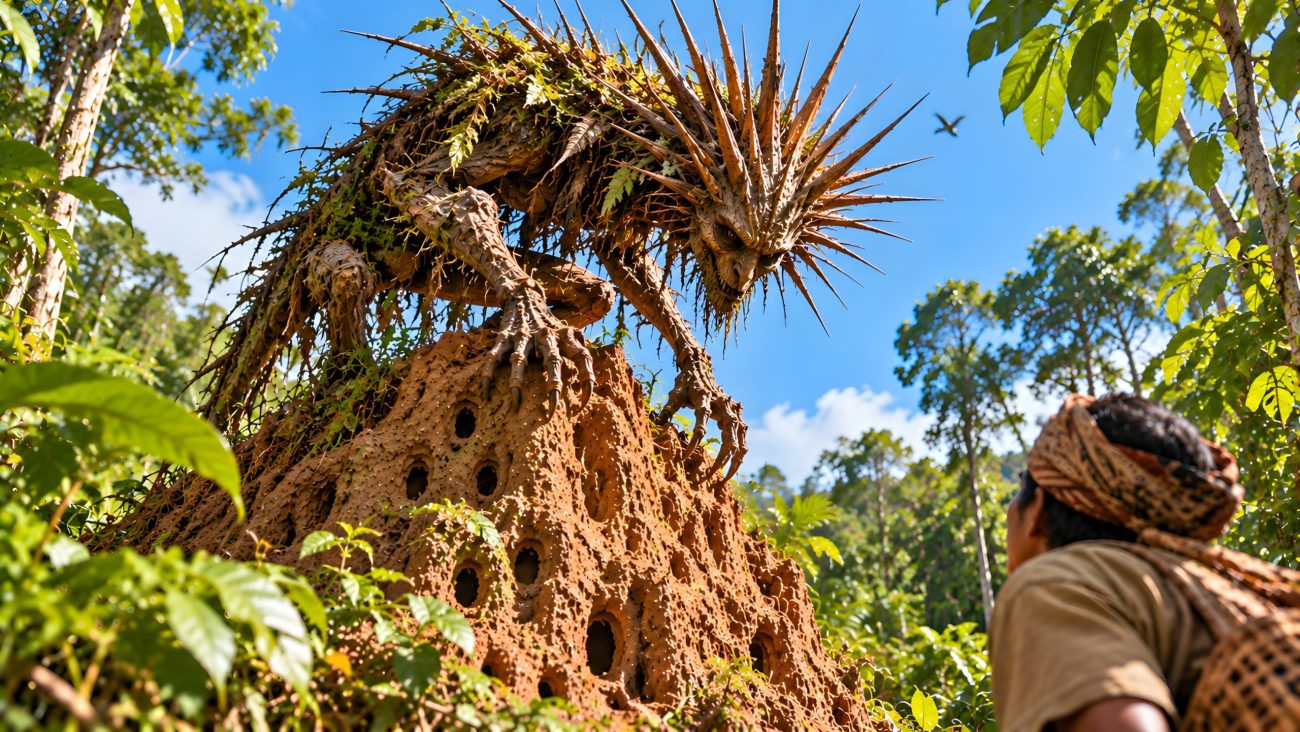
The Bès Jě’la Kòy, meaning “Spiky-Head Spirit,” is a supernatural being from the mythology of the Jah Hut people of Malaysia. It lives atop termite mounds, where it watches the world and possesses mysterious knowledge about human lifespans. Its most distinctive feature is its spiky head, which gives the spirit its name. Although its appearance is otherwise unclear, its association with termite hills makes these mounds the dwelling places of a being connected to fate and death.

The Spiky-Head Spirit knows how long every person is destined to live. When it encounters someone whose lifespan it judges to be too short, it takes that person into its termite mound. Rather than simply killing its victim, the spirit keeps them there to become its companion forever. Those taken into the mound are thus removed from the human world and drawn into the spirit’s strange, eternal existence.

The Bès Jě’la Kòy takes one person into its termite mound each year. Its quiet residence atop the mound conceals its knowledge of human fate and its power to claim a life. Anyone who encounters a termite hill may unknowingly be near a spirit that watches human lifespans and chooses someone to accompany it forever.


Sources

“Bès Jě’la Kòy.” A Book of Creatures. July 26, 2019. https://abookofcreatures.com/2019/07/26/bes-jela-koy/


Guiamala

Tradition: Mali Mythology, Senegal Mythology
Alternative Names: Guiamala, Gadda, Jaka
Category: Forest dweller


The Myth

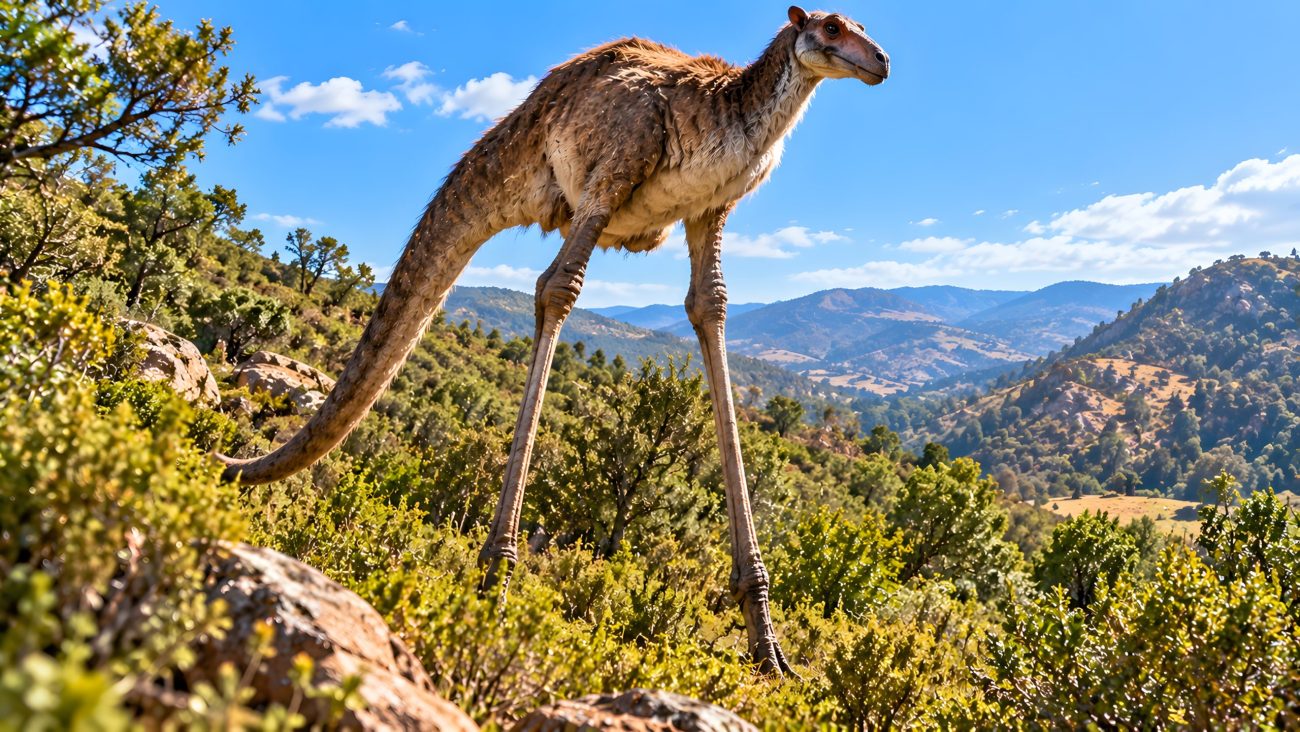
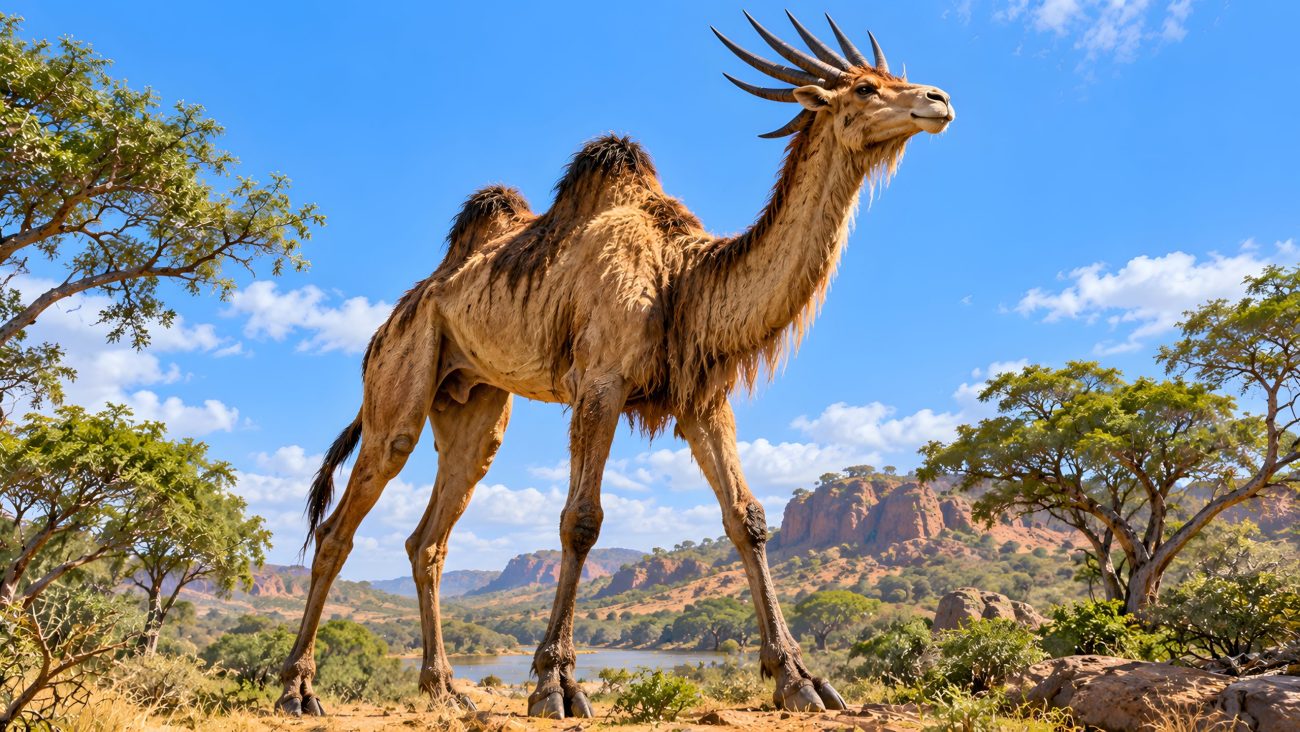
The Guiamala is an enormous, camel-like beast said to inhabit the African kingdoms of Gadoua and Giaca, east of Bambuk. It stands taller than an elephant but is considerably less bulky, with exceptionally long legs that allow it to reach heights of more than twenty feet. Its long neck supports a camel-like head, while its back bears either a single dromedary-like hump or two humps. Despite its immense size, the Guiamala is capable of moving swiftly across the landscape.

The creature’s most striking feature is its seven straight, pointed horns, each approximately two feet long. These formidable horns serve as its primary means of defense. They are black and covered with tawny hair, ending in dark, sharply pointed tips. As the horns grow, the covering hair eventually falls away, leaving the exposed horn behind. The Guiamala also possesses cloven hooves resembling those of an ox, completing its unusual combination of camel-like and bovine features.

Despite its intimidating appearance, the Guiamala is docile and harmless. It is an undemanding herbivore that feeds on thorns and other poor-quality vegetation, requiring very little food to survive. This ability makes it well suited to arid environments where other large animals might struggle to find sufficient nourishment. Its strength, speed, gentle temperament, and modest dietary needs mean that it could serve as an excellent pack animal. Its flesh is also said to be tender and edible, making the Guiamala a potentially valuable creature to those who encounter it.


Sources

“Guiamala.” A Book of Creatures. February 11, 2019. https://abookofcreatures.com/2019/02/11/guiamala/


Kayeri

Tradition: Venezuelan Mythology
Alternative Names: Kayeri
Category: Forest dweller


The Myth

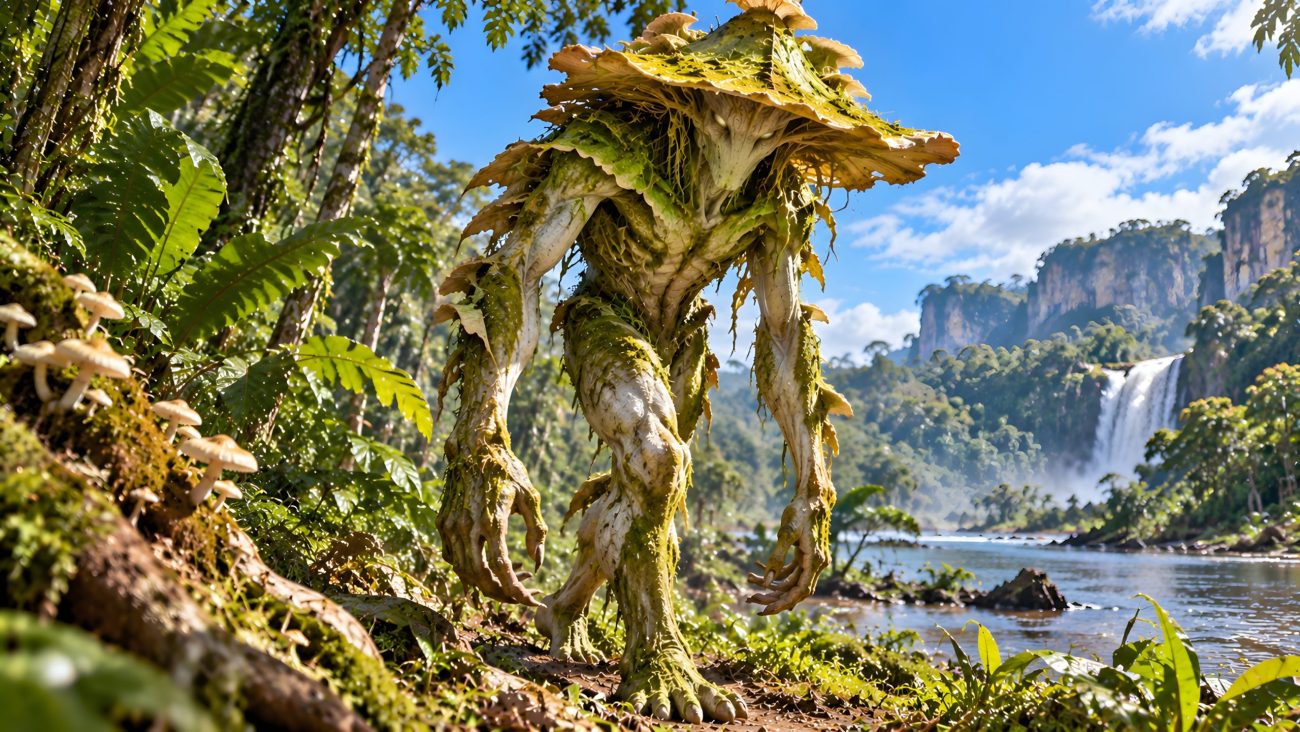
The Kayeri are mysterious humanoid beings from the mythology of the Cuiva people of Colombia and Venezuela. They are closely associated with rain and the seasonal rhythms of the forest, appearing most frequently during the rainy season and especially after a fresh downpour. During dry periods, they hide underground or beneath tree roots, using holes made by ants to reach the surface. The appearance of anthills during the rainy season is considered a sure sign that Kayeri are nearby. Their physical form is poorly defined, but they are humanoid in shape and are sometimes described wearing yellow or blue-green hats. The forest itself is filled with things associated with these beings: mushrooms are considered Kayeri, as are agoutis, the broad-leaved unkuaju plant, and Ficus vines. Dragonflies can also become Kayeri, and the coyoweri fruit is said to be their invention.

The Kayeri are exceptionally strong and fast runners, capable of seizing a cow and carrying it away with ease. They feed exclusively on cattle, devouring the flesh, entrails, horns, hooves, and bones in a single sitting, leaving absolutely nothing behind. They are also dangerous to humans, committing theft, murder, kidnapping, and other terrible acts. Male Kayeri are naturally bigamous, each having two wives, but they are also attracted to human women, whom they bewitch and entrance into coming to them. Their only known spoken sound is “mu” or “mü,” which they repeat when communicating or expressing anger.

Despite their supernatural strength, the Kayeri have one particular vulnerability: their kidneys. A bone-tipped arrow striking this spot can kill them, whereas they are otherwise nearly invulnerable. Upon death, a Kayeri transforms into an ordinary, harmless stone. One tale tells of a hunter whose two daughters were abducted by a Kayeri. The father pursued the creature and managed to strike it with a bone-tipped arrow before it could harm them. The Kayeri fell into a river and turned into a pebble. As the family fled toward safety, they heard other Kayeri nearby beating trees with sticks and crying “mu, mu, mu” in anger. Thinking quickly, the father shouted that the dead creature had fallen from its hammock and broken its back. The deception prevented further trouble, allowing him and his daughters to reach home unharmed.


Sources

“Kayeri.” A Book of Creatures. May 1, 2015. https://abookofcreatures.com/2015/05/01/kayeri/


Leucrocotta

Tradition: Indian Mythology, Ethiopian Mythology
Alternative Names: Leucocrota, Leucrocota, Leucrocuta, Crocuta
Category: Forest dweller


The Myth

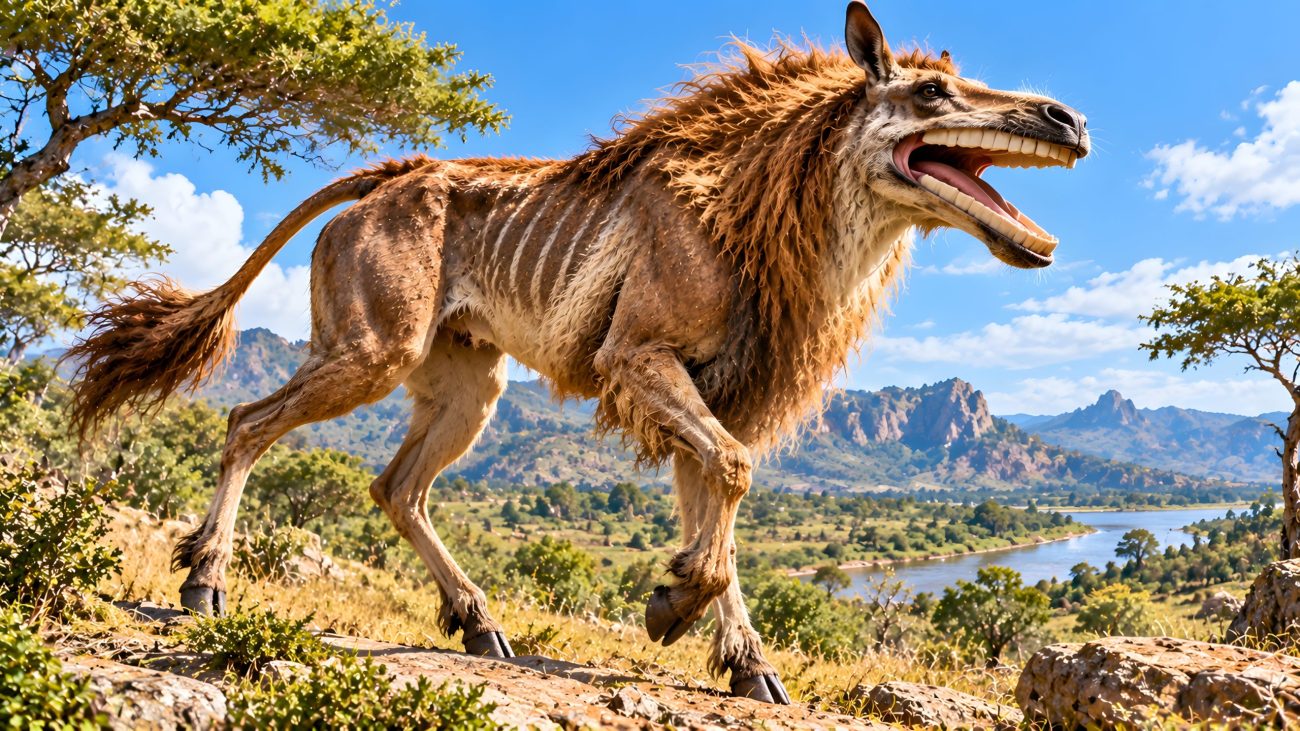
The Leucrocotta is a strange, swift-moving beast described as inhabiting Ethiopia and, in some accounts, India. It is roughly the size of a wild donkey, with the powerful build of a lion and the long, muscular hindquarters of a stag. Its body combines features of several animals: cloven hooves allow it to run swiftly, while its neck, chest, and tail resemble those of a lion. Its head is variously described as resembling a badger or a horse, and some accounts give it the head of a camel. Its most extraordinary feature is its enormous mouth, which stretches from ear to ear. Instead of ordinary teeth, the Leucrocotta possesses a single continuous piece of bone in each jaw, forming a powerful cutting surface without gums.

The Leucrocotta is known for its remarkable speed and unusual ability to imitate the human voice. It can reproduce human speech convincingly enough to deceive unsuspecting people, luring them into danger with familiar-sounding calls. Its sharp eyesight allows it to detect movement at a distance, while its powerful jaws can crush and consume almost anything. Some descriptions portray it as a hybrid born from a lioness and a hyena, combining the strength of a great cat with the cunning and endurance of a scavenging predator.

The creature became especially prominent in medieval bestiaries, where its unusual anatomy and human-like voice made it a memorable monster. Artists and writers varied its appearance, sometimes giving it the body of a donkey, the head of a horse, a lion’s chest and legs, and the hindquarters of a stag. Despite these differences, its enormous mouth, single bone-like teeth, cloven hooves, and ability to imitate people remained its defining characteristics. The Leucrocotta became a fearsome beast of the wilderness, distinguished by its speed, strange appearance, and deceptive voice.


Sources

“Leucrocotta.” A Book of Creatures. February 26, 2021. https://abookofcreatures.com/2021/02/26/leucrocotta/


Tapirê-Iauara

Tradition: Brazilian Mythology
Alternative Names: Tapir Nymph, Tapirê-Iauara, Tai-açu-iara
Category: River dweller


The Myth

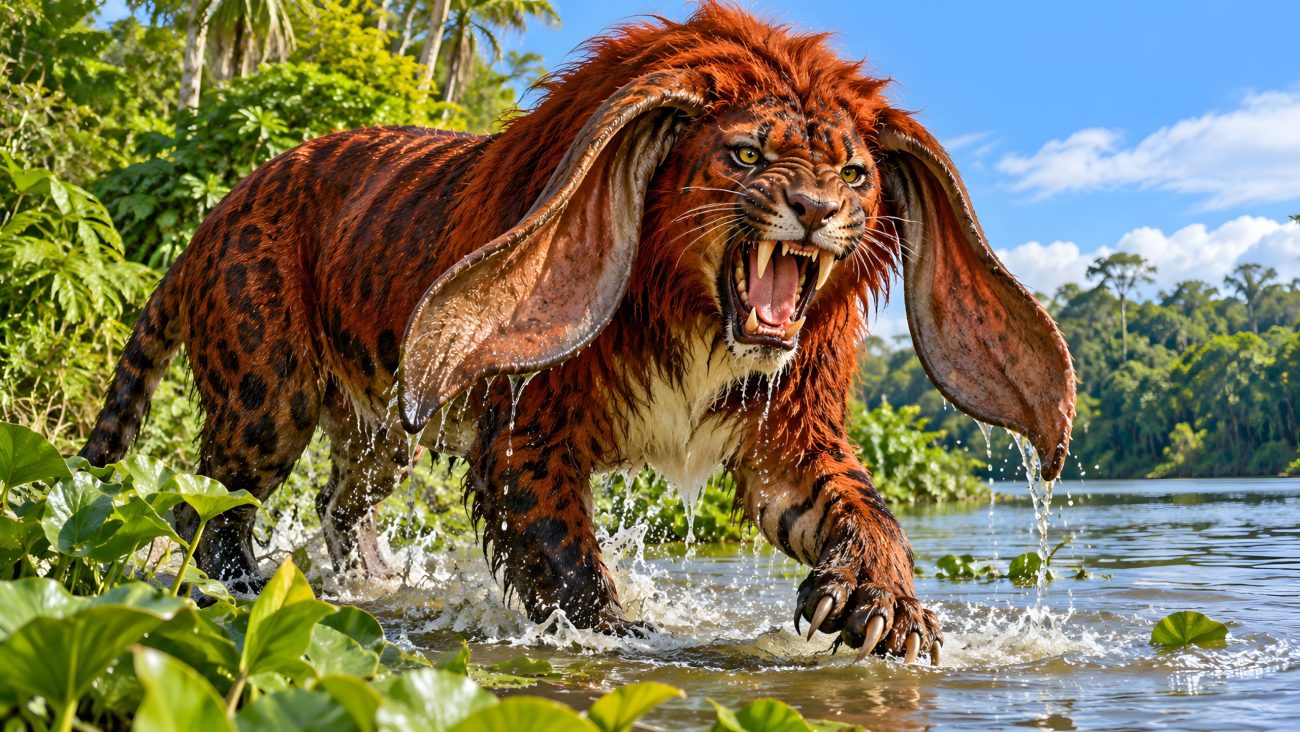
The Tapirê-Iauara, also known as the Tapir Nymph, is a terrifying aquatic monster that inhabits the rivers and waterways of the Amazon. It prefers slow-moving waters near groves of aninga plants and palm trees, generally avoiding human settlements. Its body resembles an enormous jaguar about the size of a cow, covered in reddish, waterproof fur and crowned with a thick mane. Its most distinctive features are its enormous, drooping ears, which can reach half a meter in length and flap noisily against the water as it swims. Its body may be red, golden, or black with a cream-colored patch on its chest. Depending on the account, it has jaguar legs, donkey-like hooves, horse legs, duck feet, or large otter paws. Despite its name, it bears little resemblance to a tapir.

The Tapirê-Iauara is usually heard and smelled before it is seen. Its enormous ears slap against the water as it approaches, while its overpowering stench spreads through the surrounding area. At a distance, the smell is merely nauseating, but anyone caught close to the creature may faint or even die from the putrid odor. The monster can also mesmerize its prey, leaving victims motionless before it suddenly pounces. Its diet includes large fish, capybaras, caimans, and humans, making it a formidable predator of the Amazonian waterways.

Fishermen particularly fear the Tapirê-Iauara because it is attracted to fish catches and the foul breath produced by eating poorly cooked fish. It may approach a fishing boat to inspect the catch or attack the fishermen themselves. Fast, persistent, and difficult to kill, it weakens its victims with its stench before tearing them apart with its sharp teeth and claws. One fisherman reportedly had to fire twelve bullets from a small rifle into a pursuing Tapirê-Iauara before the beast finally died. Other fishermen have lost their catches to the monster, while some have been dragged into the river and devoured.

The creature’s foul odor is believed to possess a supernatural power beyond physical harm. In some accounts, the stench can cause a person’s shadow, and therefore their soul, to depart from their body. Anyone who suffers this fate becomes assombrado, a condition that can supposedly be reversed by inhaling the fumes of a fire made from leaves, sticks, and the bones of undercooked piranhas. The Tapirê-Iauara has two known weaknesses: it cannot climb trees, and it is repelled by caraña resin. Those who fear an encounter are advised to carry the resin and seek refuge in a sturdy tree, choosing secure branches in case the creature’s odor causes them to faint. Around Parintins, a similar monster called the Tai-açu-iara appears as a black, pig-like creature with jaguar paws and may be another form of the same beast.


Sources

“Tapirê-iauara.” A Book of Creatures. August 14, 2015. https://abookofcreatures.com/2015/08/14/tapire-iauara/
Hinge-Tailed Bingbuffer

Tradition: American Mythology
Alternative Names: Hinge-Tailed Bingbuffer
Category: Forest Dweller


The Myth

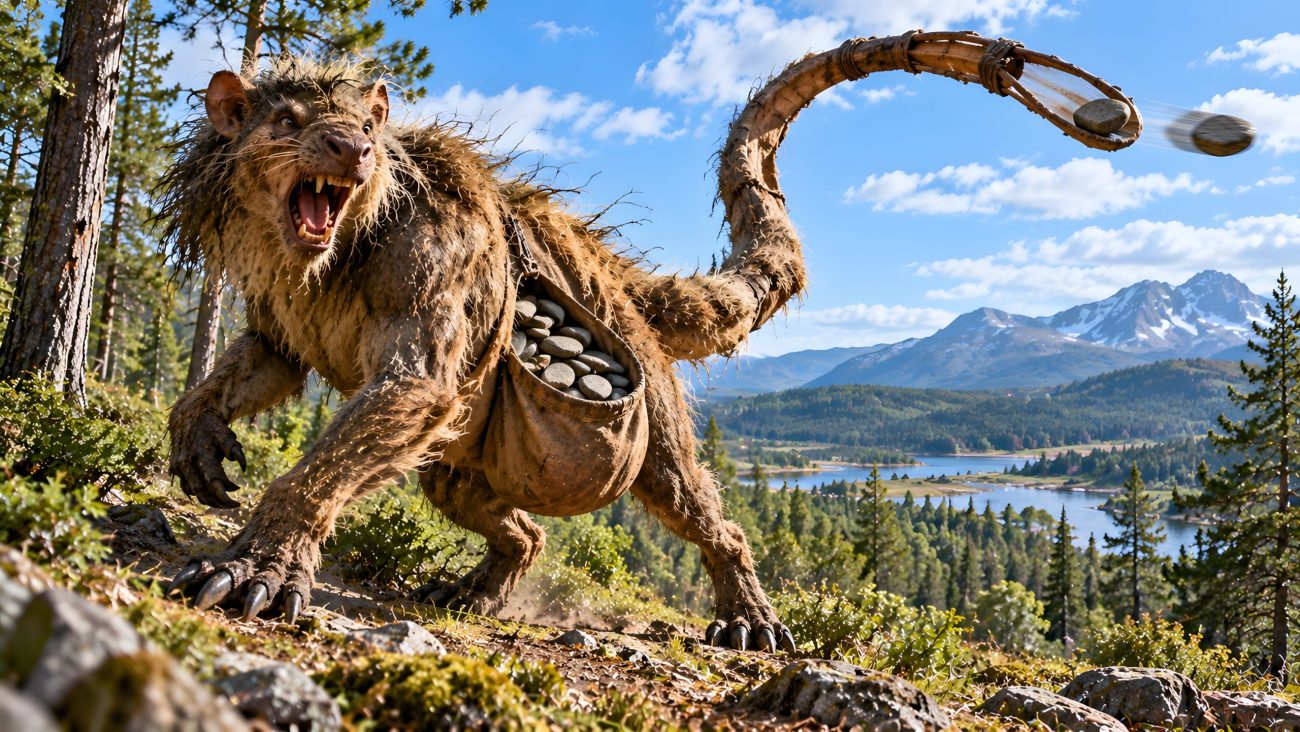
The Hinge-Tailed Bingbuffer is a bizarre terrestrial beast known for its unusual method of carrying and firing stones. It possesses a large pouch on one side of its body, where it stores a bundle of broad pebbles. These stones serve as ammunition for the creature’s peculiar hunting technique. Its most distinctive feature is its hinged tail, whose terminal tip functions like a sling or launching mechanism.

When the Bingbuffer encounters a target, it loads stones from its pouch and positions them at the end of its tail. It then swings the tail like a sling, launching the pebbles toward its victim with considerable force. The creature is described as bold and barbaric, using its stone projectiles in a grim and relentless attack. Its technique allows it to bombard targets from a distance rather than relying on its teeth or claws.

The Hinge-Tailed Bingbuffer is portrayed as a territorial and aggressive beast that continues its bombardment until its opponents are dead. Its combination of a specialized stone pouch and a sling-like tail makes it an unusual example of a creature whose body is adapted for projectile attacks. Anyone entering its territory risks being targeted by a relentless barrage of stones.


Sources

Schwartz, Alvin, and Glen Rounds. Kickle Snifters and Other Fearsome Critters. New York: Bantam Books, 1978.


Tripodero

Tradition: American Mythology
Alternative Names: Tripodero
Category: Forest Dweller


The Myth

The Tripodero is a strange beast said to inhabit the chaparral and foothill forests of California. It has two contractile, telescopic legs and a tail resembling that of a kangaroo. Its unusual anatomy allows it to raise itself above the surrounding brush whenever it wishes, surveying the landscape before retracting its legs into a compact form to move through dense vegetation. The Tripodero is not particularly large, but it is solidly built, with a small head and a powerful body.

The creature’s most remarkable ability is its telescopic movement. As it travels through the brush, it periodically extends its legs to lift itself above the vegetation and observe its surroundings. If it spots game within a range of ten rods, it aims its snout and shoots itself upward until it reaches the correct height. It then releases a tremendous burst of air, knocking its victim senseless with a sudden blast. The Tripodero carries a supply of clay pellets in its left jaw, which it uses to attack its prey.

Once the victim has been stunned, the Tripodero retracts its legs and uses its tail to brush away the surrounding vegetation. It then remains beside its helpless prey, waiting until the last bone has been cracked and eaten. The creature’s combination of telescopic limbs, powerful blasts of air, and patient hunting makes it a formidable predator of California’s dense foothill forests.


Sources

Cox, William T. Fearsome Creatures of the Lumberwoods, with a Few Desert and Mountain Beasts. St. Paul, MN: Press of Judd & Detweiler, Inc., 1910. https://archive.org/details/fearsomecreature00coxw


Central American Whinttosser

Tradition: American Mythology
Alternative Names: Whinttosser
Category: Forest Dweller


The Myth

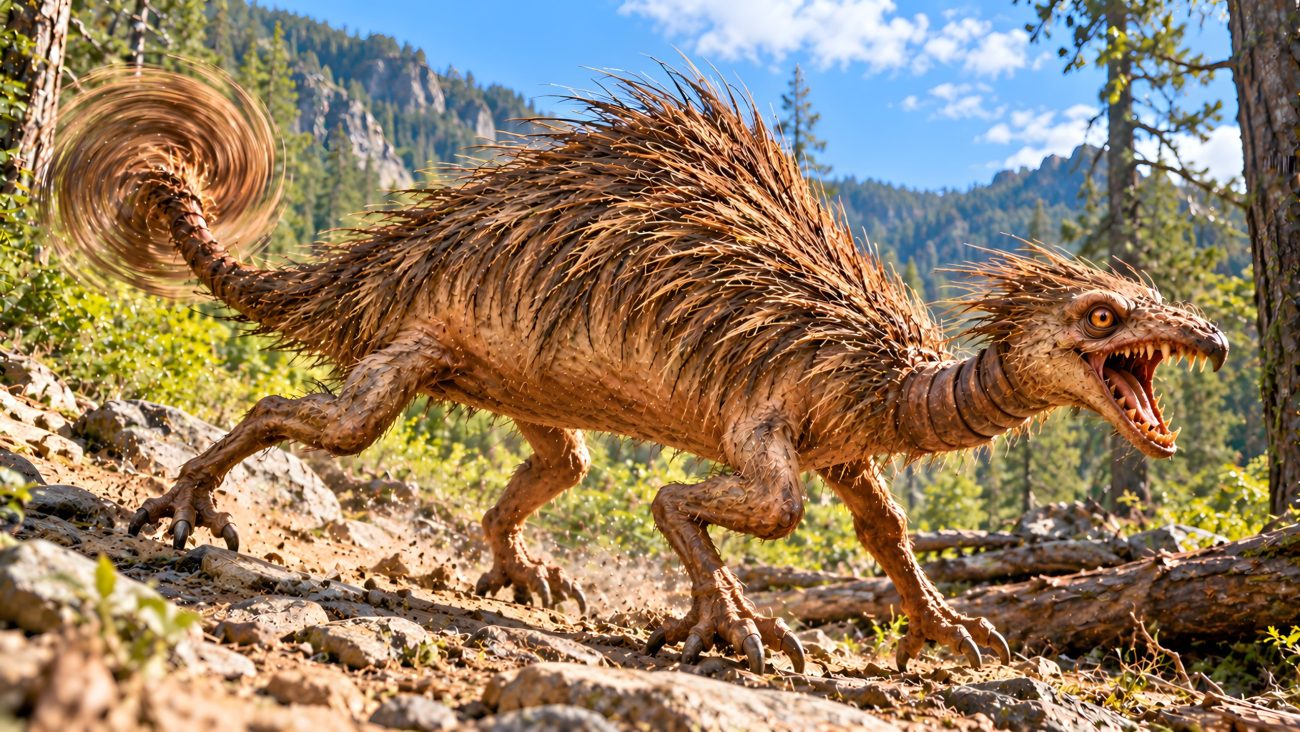
The Central American Whinttosser is an unusual creature reported in the Coast Ranges of California, said to have originated from the region of the Isthmus. It is not particularly large, but its peculiar body is perfectly suited to moving through unstable terrain. Its body is long and triangular, with three complete sets of legs, allowing it to remain steady even when the ground shakes during an earthquake. Its head is fastened to its body by a swivel-like neck, while its short, tapering tail can be spun around at astonishing speed. The creature’s hair is bristly, and all its strands point forward toward its head.

The Whinttosser is a restless and troublesome beast, seemingly constructed for passing through unusual terrain and making mischief. Its tail can spin so rapidly that it resembles a revolving mechanism, and the creature can move in a variety of directions without losing its balance. It is said that a cat’s nine lives are nothing compared with the Whinttosser’s ability to survive. The creature may be shot, clubbed, or even impaled on a pike without stopping its wriggling, whirling movements or its screams of rage. The only reliable way to kill it is to force all its feet onto the surface of a flume pipe, causing them to strike in three different directions at once until the creature tears itself apart.


Sources

Cox, William T. Fearsome Creatures of the Lumberwoods, with a Few Desert and Mountain Beasts. St. Paul, MN: Press of Judd & Detweiler, Inc., 1910. https://archive.org/details/fearsomecreature00coxw


Tunche

Tradition: Peruvian Mythology
Alternative Names: El Tunche
Category: Forest Dweller


The Myth

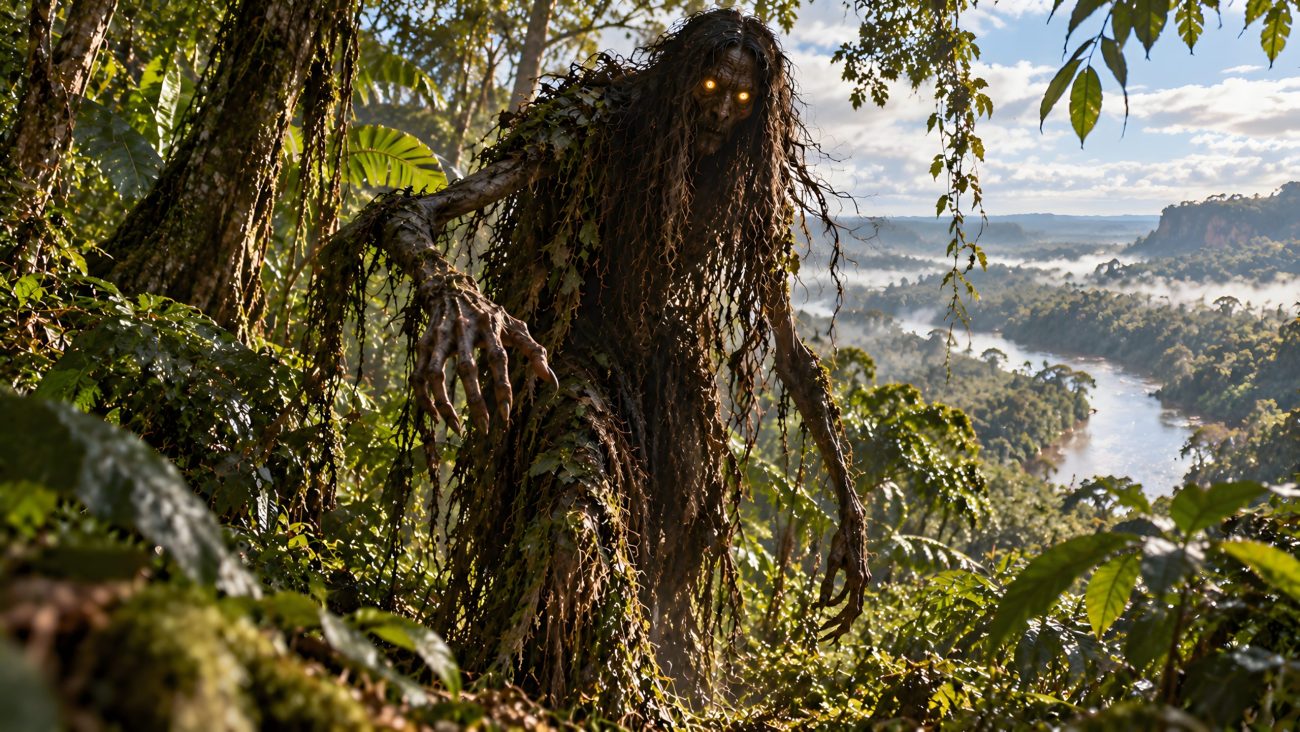
The Tunche is a malevolent supernatural being that wanders through the depths of the Peruvian Amazon rainforest. It is often described as a tall, shadowy figure with bright, glowing eyes, although it can also take the appearance of an attractive person or even someone familiar to its intended victim. This ability to imitate loved ones makes the Tunche particularly deceptive, as travellers may believe they are following someone they know when they are actually being led deeper into the wilderness. Its most distinctive feature is its eerie, high-pitched whistle, which echoes through the forest and announces its presence.

The Tunche uses its haunting whistle to confuse and lure people away from safety. Those who follow the sound may become hopelessly lost among the dense trees, unable to find their way back to their communities. The creature is blamed for mysterious disappearances in which victims eventually die from disease, animal attacks, or the dangers of the jungle. Sometimes the whistle seems to come from nearby, only to sound farther away when a person approaches, drawing the unfortunate traveller deeper into the forest. Those who recognize the sound and understand the danger are warned not to follow it.

In some traditions, the Tunche is more than a predator that hunts the lost. It is also regarded as a guardian of the Amazon rainforest, collecting the souls of people who die within its depths and punishing those who disrespect or damage the land. Its presence serves as a warning against wandering alone, disturbing the natural world, or ignoring the dangers of the wilderness. Whether appearing as a dark silhouette, a deceptive familiar face, or an unseen presence marked by a chilling whistle, the Tunche remains one of the most feared beings of the Peruvian jungle.


Sources

“El Tunche: The Peruvian Boogeyman.” Cultural Bytes. https://cultural-bytes.org/el-tunche-the-peruvian-boogeyman

“Popular Legends and Myths of Peru: The Tunche.” Machu Picchu Terra. https://www.machupicchuterra.com/guide/popular-legends-myths-peru/#legend-tunche


Schrat

Tradition: German Mythology
Alternative Names: Schratt, Schraz, Waldschrat, Schrätel, Schrättlein, Schratln
Category: Forest Dweller


The Myth

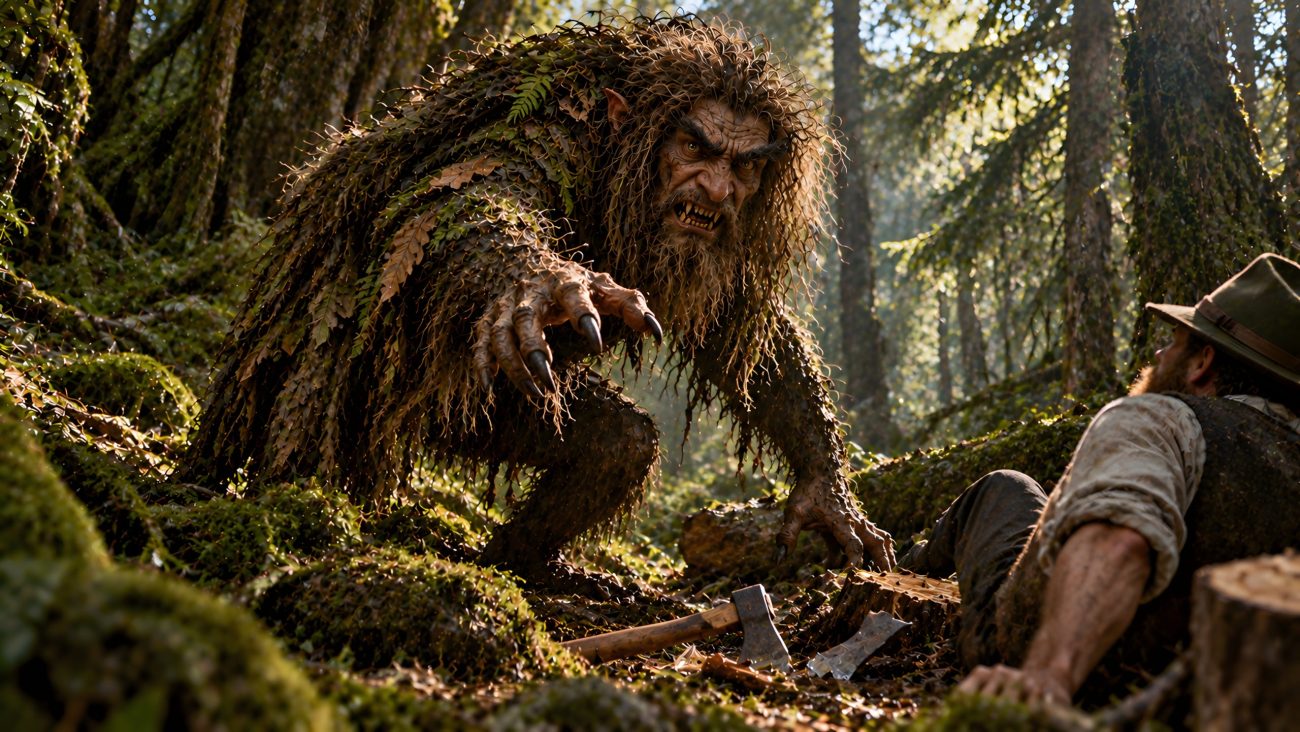
The Schrat is a mysterious supernatural creature that can appear as a hairy, ragged humanoid or a small, solitary forest spirit. Its wild appearance is often described as partly animal-like, with shaggy hair, thick eyebrows that grow together above the eyes, and wolf-like teeth. Some forms are dwarf-sized, while others resemble a hunched, unkempt wild man. The Waldschrat, or Forest Schrat, inhabits the deepest and darkest woods, preferring places untouched by human activity. It is a solitary creature that avoids people but may become troublesome when humans enter its territory.

The Waldschrat is known for its malicious pranks and its hostility toward woodcutters. It enjoys teasing people who venture into the forest, but anyone who offends it may suffer more serious consequences. The creature can break a woodcutter’s axe in two or cause trees to fall in the wrong direction, turning ordinary work into a dangerous ordeal. It dislikes the destruction of its woodland home and may abandon a forest when the trees are cut down. Although it is often mischievous rather than openly murderous, its supernatural tricks can place people in grave danger.

Other forms of the Schrat are associated with houses, stables, and the terrifying experience of nightmares. As a household spirit, it may haunt buildings and disturb their inhabitants or livestock. In its more sinister form, the Schrat becomes a nightmare demon that attacks sleeping people. It can slip into a room through a keyhole or enter through a window in the shape of a black hen. Once inside, it sits heavily on the sleeper’s chest or presses against the throat, making breathing difficult and leaving the victim trapped beneath an oppressive weight.

The Schrat is therefore both a creature of the wilderness and a spirit that can invade the safety of the home. In the forest, it punishes those who disturb its domain; at night, it torments people while they sleep. Its many forms share a connection with mischief, fear, and supernatural oppression, making the Schrat an unpredictable being whose presence can turn an ordinary forest journey or a peaceful night’s rest into a frightening encounter.


Sources

“Schrat.” Wikipedia: The Free Encyclopedia. Wikimedia Foundation. Accessed October 12, 2026. https://en.wikipedia.org/wiki/Schrat