Rahara

Tradition: Yanomami Mythology, Venezuelan Mythology, Brazilian Mythology
Alternative Names: “The Beast”
Category: River dweller


The Myth

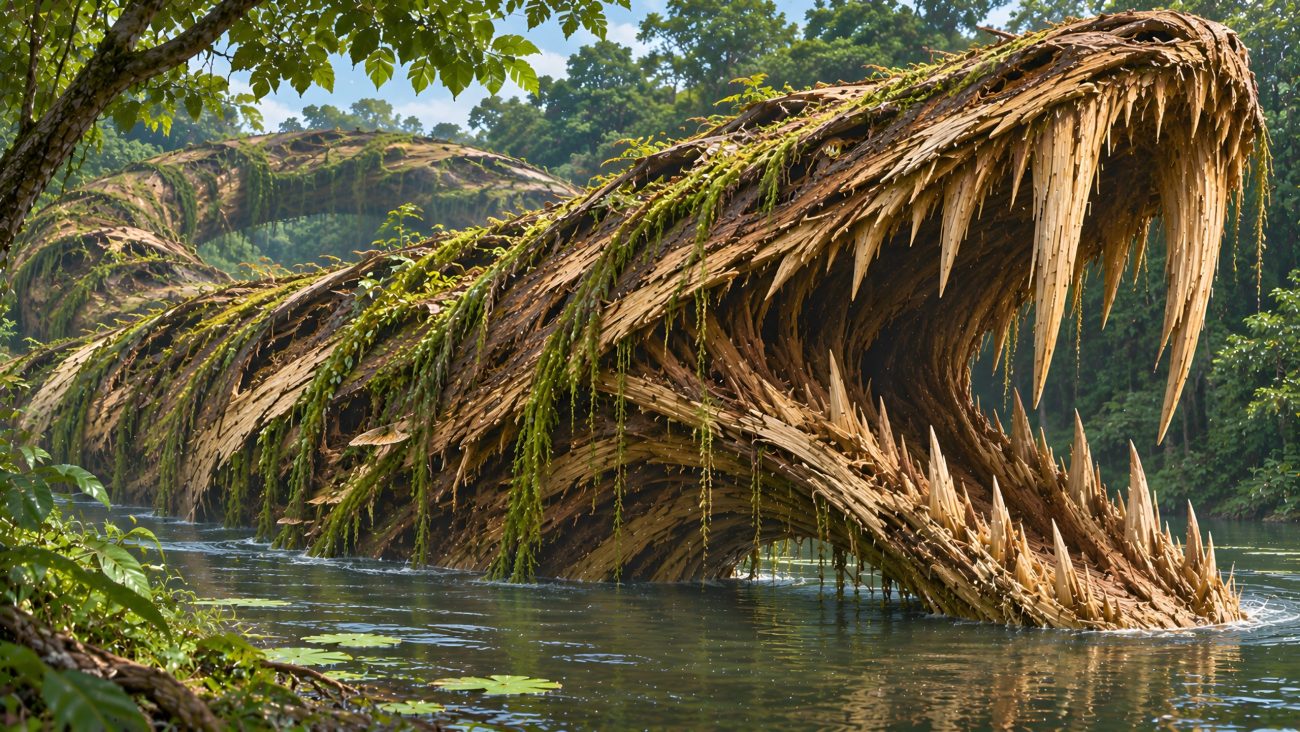
The Rahara is a monstrous aquatic creature from Yanomami mythology, said to inhabit deep, permanent lagoons in Brazil and Venezuela. According to tradition, it once lived in a large lagoon called Akrawa before moving upstream along the Orinoco River in search of suitable lagoons. It can also enlarge smaller lagoons to accommodate itself. A lagoon inhabited by a Rahara never dries out and can be identified by tracks leading into the water but none leading out.

The Rahara is considered the uncle of the anaconda and grows to an even greater size. Its serpentine body has been compared to a rotten papaya tree or a manioc strainer, and it may or may not have feet. It can draw people towards itself and swallow them whole.

The creature is attracted to fire because it expects to find food there. It may also burst from its underwater hole to swallow anyone who says its name aloud. For this reason, people generally refer to it as “the beast.” When in a good mood, Raharas make a snapping sound that alerts others to their presence. Silence, however, is dangerous.

Raharas are associated with hoatzins and curassows, which roost above their lagoons and attract hunters. Snakes are also connected with these creatures. In one account, a talking boa constrictor was shot dead by a hunter and transformed into a living baby Rahara. The hunter kept it as a pet in a water-filled palm spathe until it grew large enough to devour the entire village that had adopted it.

Raharas are also held responsible for floods, tsunamis, and other water-related disasters. People are advised to avoid their known haunts and refrain from drinking, bathing, or fishing in their waters.

One story tells of a messenger who ignored these warnings and bathed in a pond inhabited by a Rahara. The creature immediately swallowed him. Trapped inside its belly, the man called for help, prompting villagers to arrive with bamboo lances. They began stabbing the Rahara, but the messenger continued shouting that they were hurting him. The villagers ignored his cries until both the man and the creature were dead.


Sources

A Book of Creatures. (2016, December 5). Rahara. https://abookofcreatures.com/2016/12/05/rahara/

Tapirê-Iauara

Tradition: Brazilian Mythology
Alternative Names: Tapir Nymph, Tapirê-Iauara, Tai-açu-iara
Category: River dweller


The Myth

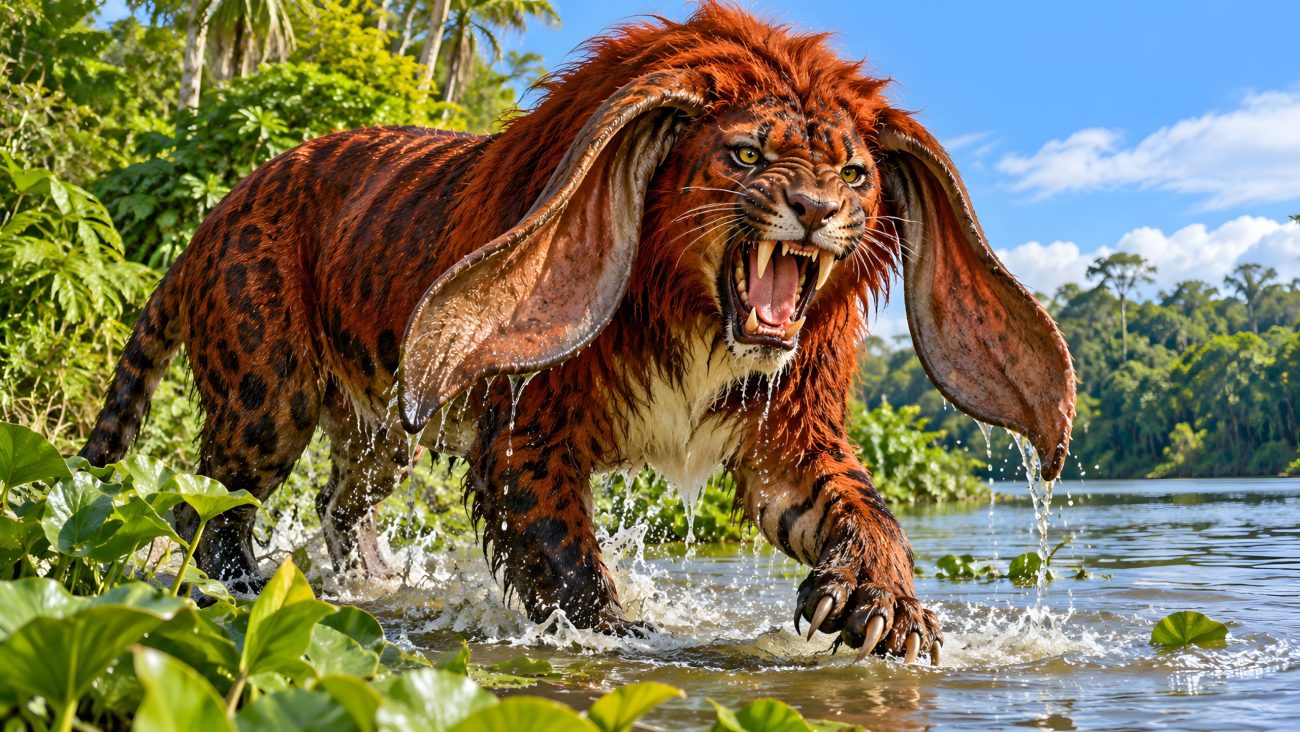
The Tapirê-Iauara, also known as the Tapir Nymph, is a terrifying aquatic monster that inhabits the rivers and waterways of the Amazon. It prefers slow-moving waters near groves of aninga plants and palm trees, generally avoiding human settlements. Its body resembles an enormous jaguar about the size of a cow, covered in reddish, waterproof fur and crowned with a thick mane. Its most distinctive features are its enormous, drooping ears, which can reach half a meter in length and flap noisily against the water as it swims. Its body may be red, golden, or black with a cream-colored patch on its chest. Depending on the account, it has jaguar legs, donkey-like hooves, horse legs, duck feet, or large otter paws. Despite its name, it bears little resemblance to a tapir.

The Tapirê-Iauara is usually heard and smelled before it is seen. Its enormous ears slap against the water as it approaches, while its overpowering stench spreads through the surrounding area. At a distance, the smell is merely nauseating, but anyone caught close to the creature may faint or even die from the putrid odor. The monster can also mesmerize its prey, leaving victims motionless before it suddenly pounces. Its diet includes large fish, capybaras, caimans, and humans, making it a formidable predator of the Amazonian waterways.

Fishermen particularly fear the Tapirê-Iauara because it is attracted to fish catches and the foul breath produced by eating poorly cooked fish. It may approach a fishing boat to inspect the catch or attack the fishermen themselves. Fast, persistent, and difficult to kill, it weakens its victims with its stench before tearing them apart with its sharp teeth and claws. One fisherman reportedly had to fire twelve bullets from a small rifle into a pursuing Tapirê-Iauara before the beast finally died. Other fishermen have lost their catches to the monster, while some have been dragged into the river and devoured.

The creature’s foul odor is believed to possess a supernatural power beyond physical harm. In some accounts, the stench can cause a person’s shadow, and therefore their soul, to depart from their body. Anyone who suffers this fate becomes assombrado, a condition that can supposedly be reversed by inhaling the fumes of a fire made from leaves, sticks, and the bones of undercooked piranhas. The Tapirê-Iauara has two known weaknesses: it cannot climb trees, and it is repelled by caraña resin. Those who fear an encounter are advised to carry the resin and seek refuge in a sturdy tree, choosing secure branches in case the creature’s odor causes them to faint. Around Parintins, a similar monster called the Tai-açu-iara appears as a black, pig-like creature with jaguar paws and may be another form of the same beast.


Sources

“Tapirê-iauara.” A Book of Creatures. August 14, 2015. https://abookofcreatures.com/2015/08/14/tapire-iauara/