Hodag

Tradition: American Mythology
Alternative Names: Hodag, Nasobatilus hystrivoratus
Category: Forest dweller


The Myth

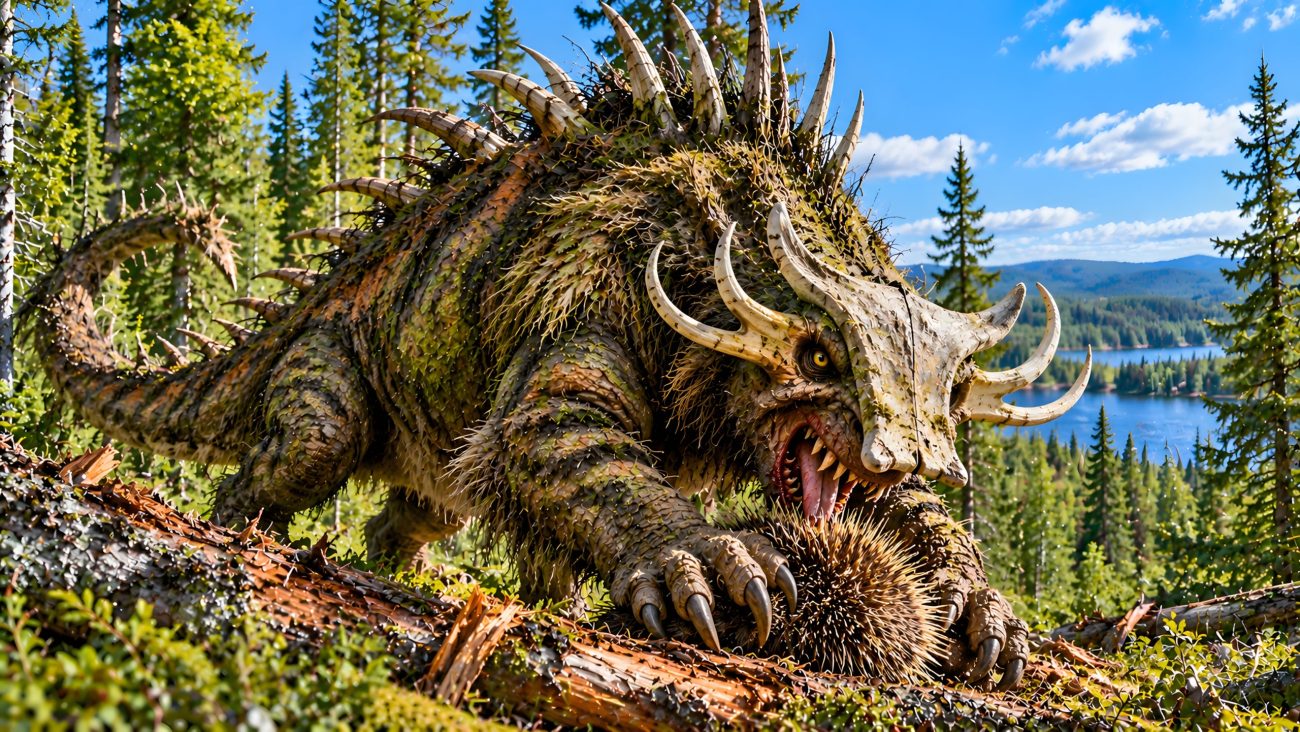
The Hodag is a strange and fearsome beast said to inhabit the lumber woods of Wisconsin and Minnesota. It has a mottled, striped, and checkered body covered in bristling hair, with horns and spines running along its back. Its most distinctive feature is a large, spade-shaped bony growth protruding from the front of its head, with unusual prongs extending from its eye sockets so that it can see only straight ahead. Although its appearance is fearsome, the Hodag is described as slow, deliberate, and intelligent, moving with surprising precision through the forest.

The Hodag is a skilled hunter of porcupines, which form its principal food. When it spots one rolled up among the branches of a spruce tree, the creature begins to lick its eyes until they resemble small pieces of ice. It then moves around the tree, cutting through the roots until the spruce begins to topple. As the tree falls, the Hodag catches it with a rush of air, causing the roots and branches to crack and break. The porcupine tumbles from its hiding place, and the Hodag catches it before it can escape. It then straddles the fallen tree, follows its prey to the ground, and crushes the porcupine with its huge front feet before swallowing it headfirst.

During autumn, the Hodag prepares for winter by stripping the bark from spruce and pine trees and covering its body with the fibrous material. It gathers a patch of hardwood leaves beneath the trees, rolling around until the leaves are packed tightly into a thick, warm mantle. Wrapped in this natural covering, the Hodag spends the winter hidden in the woods, emerging again when the weather grows warmer.


Sources

Cox, William T. Fearsome Creatures of the Lumberwoods, with a Few Desert and Mountain Beasts. St. Paul, MN: Press of Judd & Detweiler, Inc., 1910. https://archive.org/details/fearsomecreature00coxw
Hinge-Tailed Bingbuffer

Tradition: American Mythology
Alternative Names: Hinge-Tailed Bingbuffer
Category: Forest Dweller


The Myth

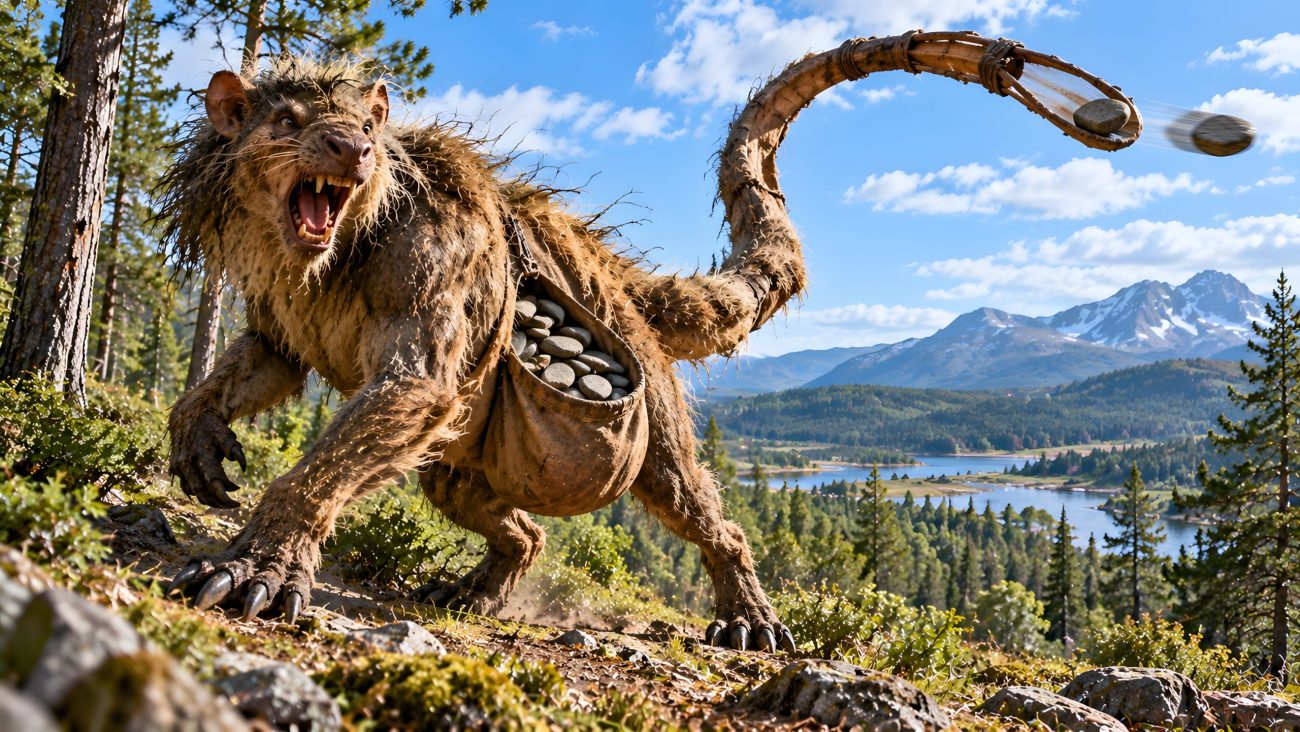
The Hinge-Tailed Bingbuffer is a bizarre terrestrial beast known for its unusual method of carrying and firing stones. It possesses a large pouch on one side of its body, where it stores a bundle of broad pebbles. These stones serve as ammunition for the creature’s peculiar hunting technique. Its most distinctive feature is its hinged tail, whose terminal tip functions like a sling or launching mechanism.

When the Bingbuffer encounters a target, it loads stones from its pouch and positions them at the end of its tail. It then swings the tail like a sling, launching the pebbles toward its victim with considerable force. The creature is described as bold and barbaric, using its stone projectiles in a grim and relentless attack. Its technique allows it to bombard targets from a distance rather than relying on its teeth or claws.

The Hinge-Tailed Bingbuffer is portrayed as a territorial and aggressive beast that continues its bombardment until its opponents are dead. Its combination of a specialized stone pouch and a sling-like tail makes it an unusual example of a creature whose body is adapted for projectile attacks. Anyone entering its territory risks being targeted by a relentless barrage of stones.


Sources

Schwartz, Alvin, and Glen Rounds. Kickle Snifters and Other Fearsome Critters. New York: Bantam Books, 1978.


Tripodero

Tradition: American Mythology
Alternative Names: Tripodero
Category: Forest Dweller


The Myth

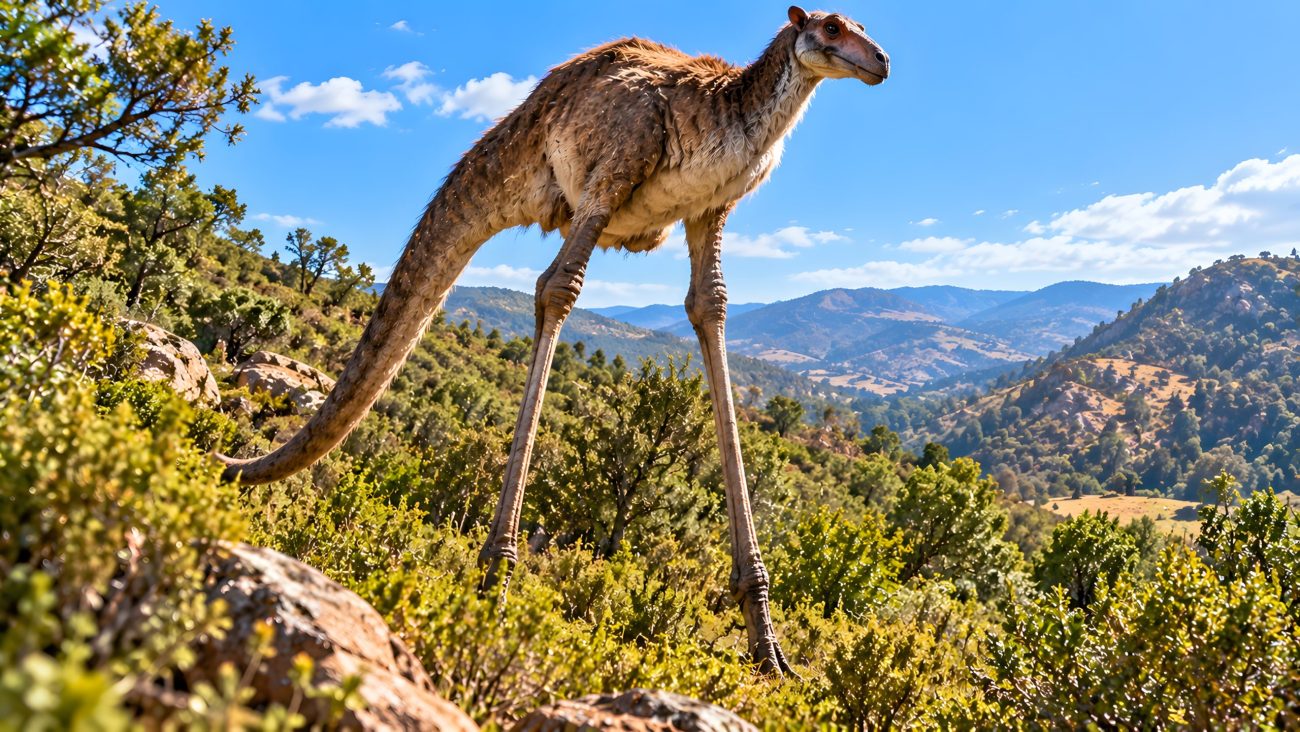
The Tripodero is a strange beast said to inhabit the chaparral and foothill forests of California. It has two contractile, telescopic legs and a tail resembling that of a kangaroo. Its unusual anatomy allows it to raise itself above the surrounding brush whenever it wishes, surveying the landscape before retracting its legs into a compact form to move through dense vegetation. The Tripodero is not particularly large, but it is solidly built, with a small head and a powerful body.

The creature’s most remarkable ability is its telescopic movement. As it travels through the brush, it periodically extends its legs to lift itself above the vegetation and observe its surroundings. If it spots game within a range of ten rods, it aims its snout and shoots itself upward until it reaches the correct height. It then releases a tremendous burst of air, knocking its victim senseless with a sudden blast. The Tripodero carries a supply of clay pellets in its left jaw, which it uses to attack its prey.

Once the victim has been stunned, the Tripodero retracts its legs and uses its tail to brush away the surrounding vegetation. It then remains beside its helpless prey, waiting until the last bone has been cracked and eaten. The creature’s combination of telescopic limbs, powerful blasts of air, and patient hunting makes it a formidable predator of California’s dense foothill forests.


Sources

Cox, William T. Fearsome Creatures of the Lumberwoods, with a Few Desert and Mountain Beasts. St. Paul, MN: Press of Judd & Detweiler, Inc., 1910. https://archive.org/details/fearsomecreature00coxw


Central American Whinttosser

Tradition: American Mythology
Alternative Names: Whinttosser
Category: Forest Dweller


The Myth

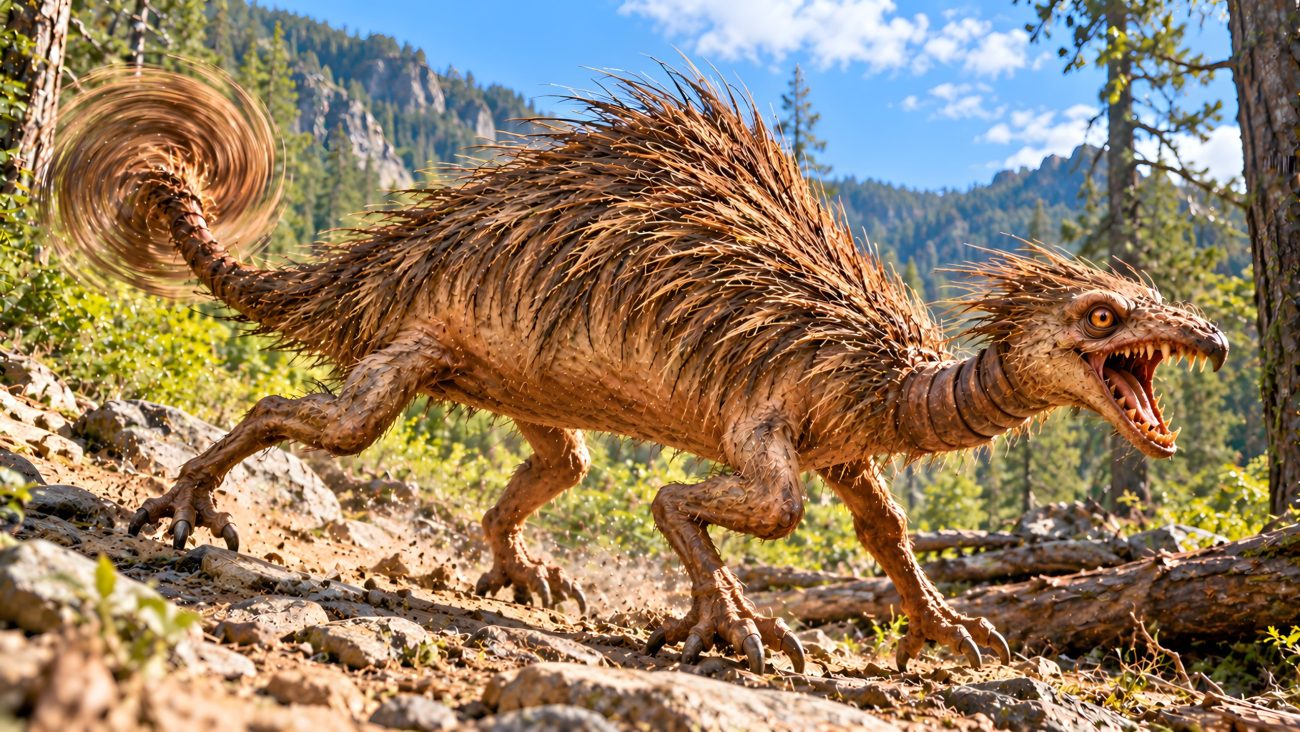
The Central American Whinttosser is an unusual creature reported in the Coast Ranges of California, said to have originated from the region of the Isthmus. It is not particularly large, but its peculiar body is perfectly suited to moving through unstable terrain. Its body is long and triangular, with three complete sets of legs, allowing it to remain steady even when the ground shakes during an earthquake. Its head is fastened to its body by a swivel-like neck, while its short, tapering tail can be spun around at astonishing speed. The creature’s hair is bristly, and all its strands point forward toward its head.

The Whinttosser is a restless and troublesome beast, seemingly constructed for passing through unusual terrain and making mischief. Its tail can spin so rapidly that it resembles a revolving mechanism, and the creature can move in a variety of directions without losing its balance. It is said that a cat’s nine lives are nothing compared with the Whinttosser’s ability to survive. The creature may be shot, clubbed, or even impaled on a pike without stopping its wriggling, whirling movements or its screams of rage. The only reliable way to kill it is to force all its feet onto the surface of a flume pipe, causing them to strike in three different directions at once until the creature tears itself apart.


Sources

Cox, William T. Fearsome Creatures of the Lumberwoods, with a Few Desert and Mountain Beasts. St. Paul, MN: Press of Judd & Detweiler, Inc., 1910. https://archive.org/details/fearsomecreature00coxw


Teakettler

Tradition: American Mythology
Alternative Names: None known
Category: Forest Dweller


The Myth

The Teakettler is a small, elusive woodland creature named after the peculiar sound it makes, which resembles the whistling hiss of a boiling teakettle. Clouds of steam pour from its nostrils as it moves through the forest, giving it an unusual appearance and making its presence known even when the animal itself remains hidden.

Unlike ordinary animals, the Teakettler prefers to walk backward rather than forward. It is rarely seen, and only a handful of woodsmen have ever claimed to encounter one. Its strange call, steaming nostrils, and backward gait make it one of the more unusual creatures said to inhabit the North American wilderness.


Sources

Schwartz, Alvin, and Glen Rounds. Kickle Snifters and Other Fearsome Critters. New York: Bantam Books, 1978. Originally published in 1976. https://archive.org/details/kicklesniftersot00schw


Rubberado

Tradition / Region: American Mythology
Alternate Names: —
Category: Forest dweller


The Myth

The Rubberado is a strange and comical creature known for its unusual body and peculiar way of moving. It cannot leap, fly, jump, climb, swim, run, walk, creep, or crawl. Instead, the Rubberado moves in only one way: it bounces.

From the moment it begins moving, the Rubberado bounces endlessly from place to place. Each time it lands, it laughs, and then springs up again, continuing this motion without pause. Its movement is uncontrollable and repetitive, as though its body were made entirely of rubber.

The Rubberado is said to have a tasty smell, though it is not edible. Anyone foolish enough to try to eat it is warned of the consequences. If a person does so, they will begin to bounce and laugh uncontrollably, just like the Rubberado itself. This condition does not pass quickly—the victim will continue to bounce and laugh for days and days, unable to stop.

Because of this, the Rubberado is regarded less as a dangerous creature and more as a source of endless trouble and ridicule. Its presence brings chaos not through violence, but through uncontrollable motion and laughter, turning anyone who interferes with it into a living reflection of its own absurd nature.

The Rubberado remains a reminder that not all monsters threaten with teeth or claws—some punish curiosity with laughter that never ends.


Gallery


Sources

Schwartz, A., & Rounds, G. (1978). Kickle Snifters and Other Fearsome Critters.


Interpretive Lenses

Religious Readings
  • Christian Ascetic Deep Dive
Philosophical Readings
  • Nietzschean Deep Dive
Psychological Readings
  • Jungian Deep Dive
Esoteric Deep Dive
  • Hermetic Deep Dive
Political / Social Readings
  • Marxist Deep Dive
Other
  • How to Invite The Rubberado

Tote-Road Shagamaw

Tradition / Region: American Mythology
Alternate Names: —
Category: Bear


The Myth

The Tote-Road Shagamaw is a strange forest creature spoken of by loggers and woodsmen from the Rangeley Lakes to the Allagash, and across into New Brunswick. Its existence is said to explain a long-standing mystery that has caused confusion, arguments, and even fistfights among experienced men of the woods.

The trouble begins with tracks. One day, men swear they have found bear tracks near camp. Soon after, these reports are denied and replaced by claims that the tracks belong to a moose instead. Such disagreements are taken seriously, since accusing a woodsman of confusing bear and moose tracks is considered a grave insult. Only a few old timber cruisers and rivermen are said to know the true explanation.

One such man was Gus Demo of Oldtown, Maine, who had hunted, trapped, and logged in the woods for forty years. While traveling through the forest, he came upon tracks that were clearly those of a moose. After following them for about eighty rods, the tracks abruptly became unmistakable bear tracks. After another eighty rods, they changed back again into moose tracks. Gus soon noticed that this change occurred exactly every quarter of a mile, and that the tracks always followed a tote road or blazed survey line through the forest.

Eventually, Gus came close enough to see the creature itself. He observed that it had front feet like a bear’s and hind feet like those of a moose. It moved with great care, pacing steadily and taking exactly one yard per step. After walking for a time, the creature suddenly stopped, looked all around, and then turned sharply as if pivoting on a point. It then inverted itself, walking on its front feet alone, and continued on its measured path.

By examining the witness trees, Gus realized that the place where the Shagamaw inverted itself was a section corner. From this, he reasoned that the creature must once have been a highly imitative animal. By watching surveyors, timber cruisers, and trappers patiently follow straight lines through the forest, it had taken on the same habit.

According to this explanation, the Shagamaw can count only as high as 440, which equals a quarter of a mile measured in yards. When it reaches that limit, it must turn itself over to continue counting again from the beginning. Thus, the creature endlessly walks the tote roads, confusing men by leaving alternating bear and moose tracks, and quietly measuring the forest one quarter-mile at a time.

The Tote-Road Shagamaw remains a symbol of the woods’ ability to deceive even experienced eyes, and a reminder that not every mystery in the forest can be solved by tracks alone.


Sources

Cox, W. T. (1910). Fearsome Creatures of the Lumberwoods: With a Few Desert and Mountain Beasts.