Bodach

Tradition: Scottish Mythology
Alternative Names: Bodaich, Bodach Glas, Old Grey Man
Category: Forest Dweller


The Myth

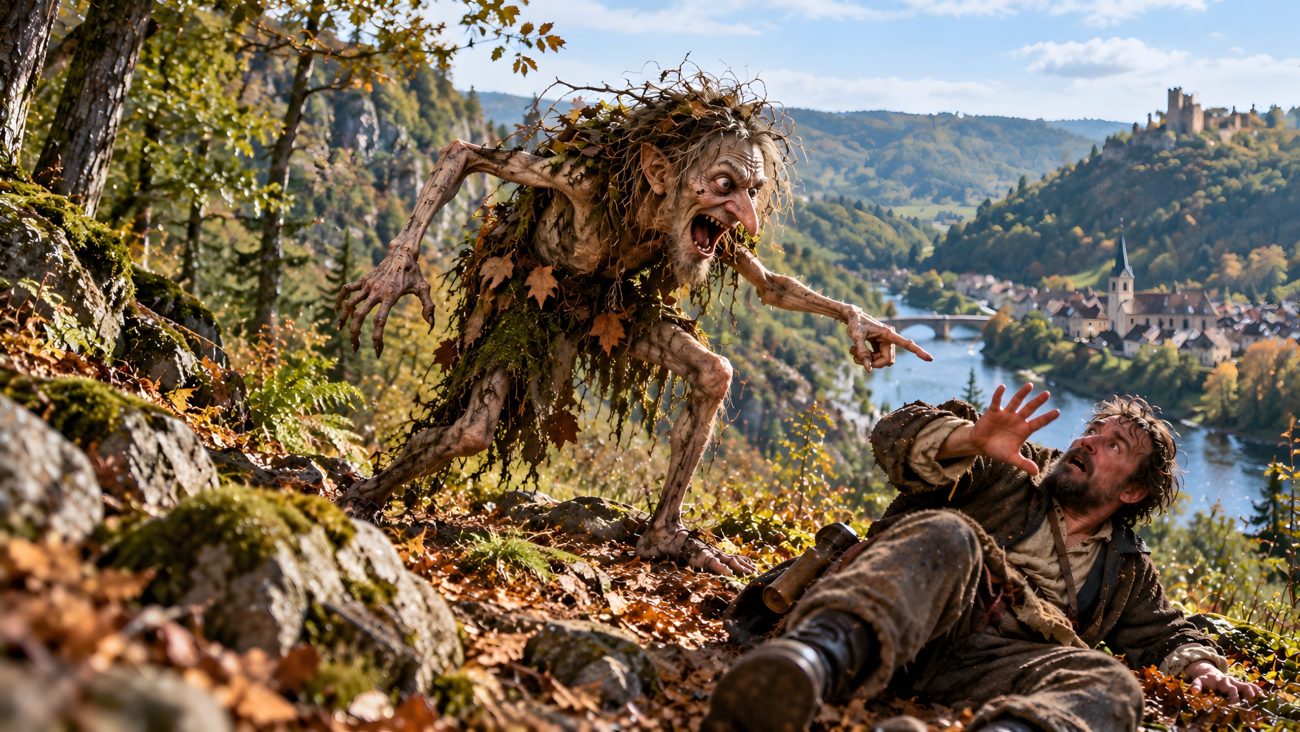
The Bodach is a mysterious, frightening old man who appears in Scottish mythology as a trickster and bogeyman. He is often imagined as a sinister, ragged figure whose appearance inspires fear and distrust. In some tales, he wears old, striped clothing beneath a worn cloak, with his ears sticking through the fabric and water splashing from his shoes. He may carry a sword projecting from behind him and hold three blackened holly spears in his hand. His strange, disheveled appearance makes him seem both comical and threatening, concealing a cunning nature beneath his shabby exterior.

The Bodach is particularly feared as a kidnapper of naughty children. According to Scottish tales, he comes down the chimney at night to seize children who misbehave, carrying them away as punishment. Parents use stories of the Bodach to frighten children into obedience, warning them that the old man may appear if they refuse to behave. The creature is also associated with trickery and deception, sometimes attempting to confuse people with riddles or lure them into dangerous situations.

A particularly ominous form is the Bodach Glas, or Old Grey Man, whose appearance foretells death. Those who encounter him may receive a warning of their impending doom. In one tale, a mysterious Bodach attempts to trick a traveller with a riddle, hoping to approach him and steal his money. The Bodach is also associated in some stories with Manannán mac Lir, a supernatural figure who disguises himself as a ragged, peculiar old man. Whether appearing as a child-stealing bogeyman, a cunning trickster, or a harbinger of death, the Bodach embodies the frightening uncertainty of encounters with mysterious strangers and supernatural beings.


Sources

“Bodach.” Wikipedia: The Free Encyclopedia. Wikimedia Foundation. Accessed October 12, 2026. https://en.wikipedia.org/wiki/Bodach
Khakaturi

Tradition: Māori Mythology, New Zealand Mythology
Alternative Names: Hakaturi, Hākuturi, Tini-o-hakaturi, Te-Tini-O-Hakaturi
Category: Forest Dweller


The Myth

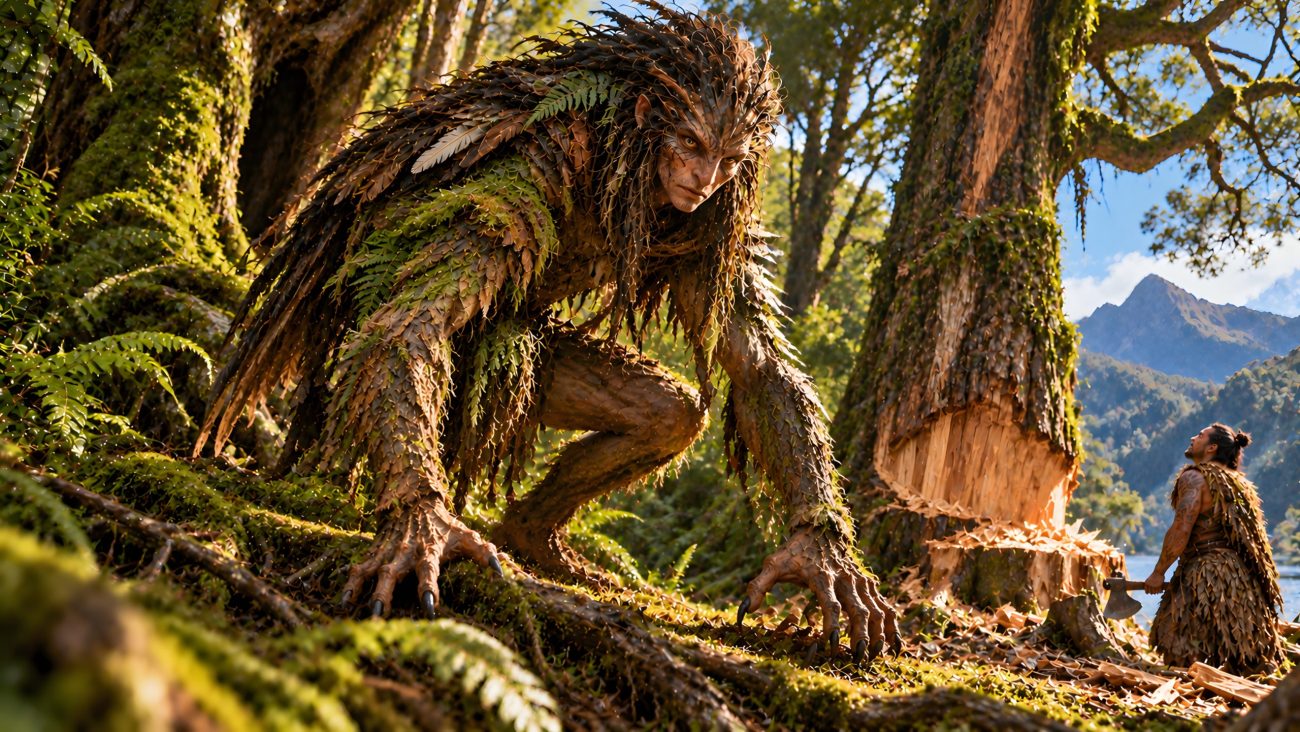
The Khakaturi are supernatural nature spirits who guard the forests of New Zealand. They are servants of Tāne, the great god of forests, birds, and the natural world. These spirits can take the form of birds and insects, but they are also capable of appearing in human-like shapes. Their appearance is often associated with bow-legged bodies, and they can remain hidden from human sight while watching over the woodland. The Khakaturi are protective of their forest home and can become aggressive when people disturb it or take its resources without permission.

One Māori tale tells of a warrior who cut down a tree to make a canoe. After spending the night in the forest, he returned the following morning to find the felled tree standing upright again, as though it had never been touched. The Khakaturi had restored the tree through their supernatural powers. The warrior realized that he had angered the forest spirits and that his actions had to be corrected. Only through repentance could he escape punishment for disturbing their domain.

The Khakaturi eventually spared the warrior, and over the following night they helped him by creating a better canoe, enabling him to return home faster than the wind. The tale demonstrates that the spirits can punish those who disrespect the forest, but they may also show mercy to those who acknowledge their wrongdoing. As guardians of the woodland, the Khakaturi protect the trees and creatures under Tāne’s care, reminding people that the natural world is not theirs to exploit without consequence.


Sources

“Khakaturi.” New Bestiary (Bestiary.us). Accessed October 11, 2026. https://www.bestiary.us/khakaturi


Ved

Tradition: Croatian Mythology
Alternative Names: Vedi
Category: Forest Dweller


The Myth

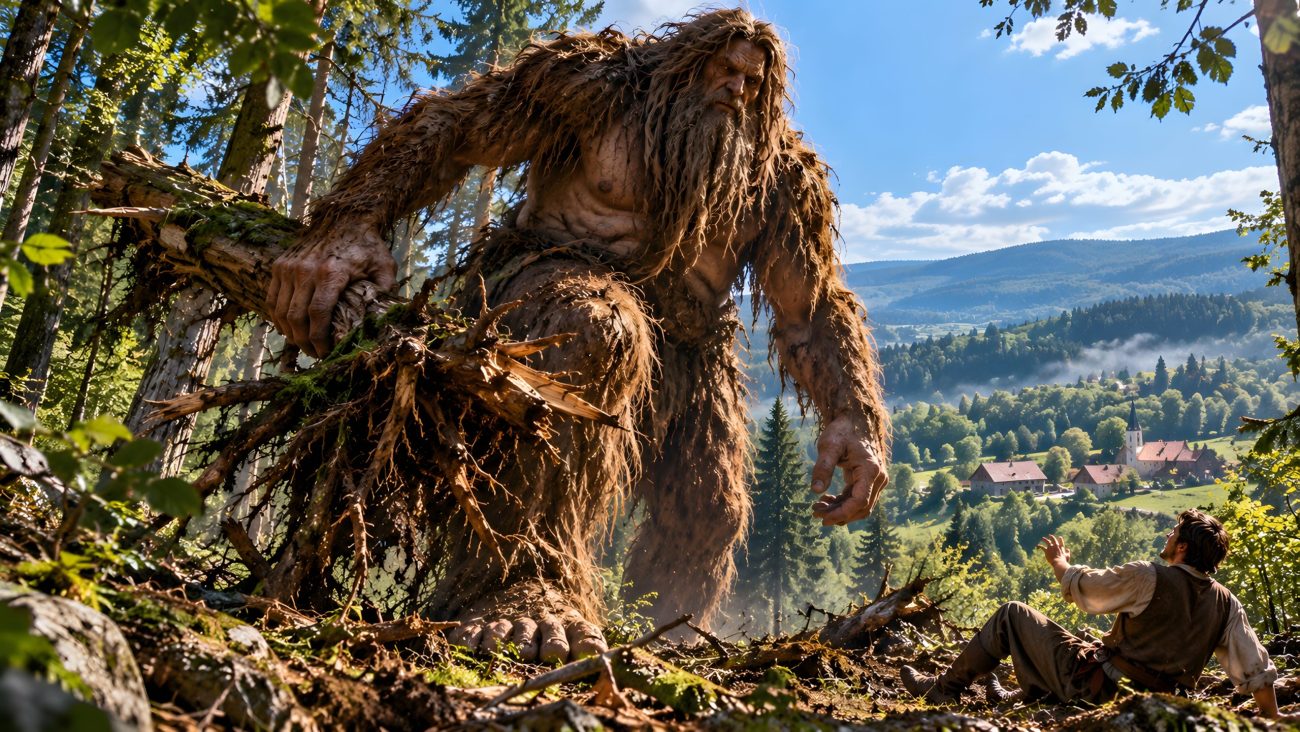
The Ved is a gigantic, hairy humanoid creature from the forests of Bilogora in northern Croatia. A Ved can grow as tall as a peasant’s house and possesses enormous physical strength, allowing it to uproot trees and carry incredibly heavy loads. Its chest is so vast and powerful that it can create storms simply by blowing. When a Ved speaks or sings, its voice carries over enormous distances, echoing through the surrounding wilderness. The Vedi live deep within the forests, where they build their own towns and organize themselves into separate tribes.

There are two kinds of Vedi: good and bad. The bad Vedi, also known as forest Vedi, avoid human settlements and remain hidden in their woodland homes. They usually leave people alone, but a young man who encounters one deep in the forest may be seized and carried away to its town. There, the unfortunate captive is kept as a slave and often mistreated by his master. Eventually, he is released, but he returns home severely weakened and emaciated after his ordeal.

The good Vedi, by contrast, maintain close relationships with human households. Each family is believed to have its own Ved, a devoted supernatural protector who helps with everyday work and comes to the family’s aid during times of trouble. Their loyalty can be so intense that they may harm the Vedi belonging to neighboring households. When people fear that a flood, storm, or other disaster is approaching, they pray to God for their own Ved to help them and ask that other households’ Vedi cause them no harm. According to the stories, the Vedi respond swiftly to these prayers, rushing to rescue the people under their protection.

Over time, encounters with the Vedi became increasingly rare. By the middle of the nineteenth century, the last accounts of them visiting people had been recorded, and eventually only certain individuals were believed capable of seeing them. The Vedi remain mysterious giants of the Croatian wilderness, feared for their immense strength but also remembered as powerful guardians who could protect families from natural disasters.


Sources

“Ved (mythology).” Wikipedia: The Free Encyclopedia. Wikimedia Foundation. Accessed October 12, 2026. https://en.wikipedia.org/wiki/Ved_(mythology)


Basajaun

Tradition: Basque Mythology, Spanish Mythology
Alternative Names: Baxajaun, Basajun, Ancho, Antxo
Category: Forest Dweller


The Myth

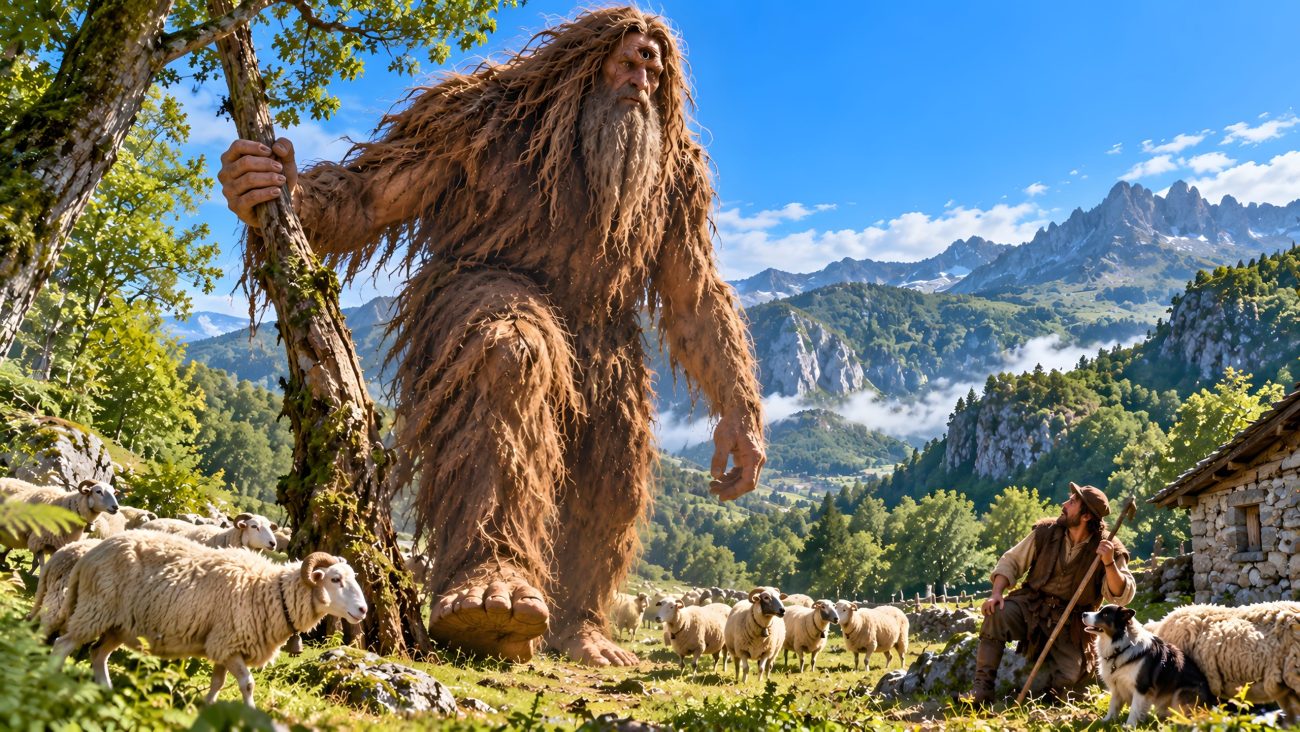
The Basajaun, whose name means “Lord of the Forest,” is a towering, human-like creature covered from head to toe in thick hair that hangs down to his knees. He walks upright like a man and possesses tremendous strength and remarkable agility, moving through the wilderness faster than a stag. One of his feet resembles an ordinary human foot, while the other is rounded like the stump of a tree, leaving peculiar circular footprints. In some tales, he has a single eye in the middle of his forehead. The Basajaun lives in remote forests, mountain caves, and highland wilderness, where he guards the natural world and watches over the creatures that inhabit it.

Despite his frightening appearance, the Basajaun is often a protector of livestock. He watches over sheep flocks, keeping wolves away and warning shepherds when dangerous storms approach. When the sheep’s bells suddenly begin ringing together, shepherds know that the Basajaun is nearby and guarding their animals. His howling cries echo through the mountains when danger draws near, giving people time to bring their livestock into safety. However, the Basajaun can also be terrifying and dangerous. In some stories, he captures people who enter his territory, and he may demand food or offerings from shepherds. Those who fail to respect him risk provoking his anger.

The Basajaun is also associated with the origins of human skills and craftsmanship. He is said to have been the world’s first farmer, blacksmith, and miller, possessing the knowledge needed to cultivate grain, work iron, build saws, and construct mill mechanisms. In some tales, the clever hero San Martin Txiki steals these secrets from the Basajaun and teaches them to humanity. The creature is also associated with ancient stone structures, including dolmens, which are sometimes attributed to beings like him.

In one tale, shepherds leave bread for the Basajaun as an offering during their evening meal. When most of the shepherds neglect this custom, the creature steals their clothes. The youngest shepherd, who remembered to leave bread, is spared and eventually receives a scrawny cow from the Basajaun. Following the creature’s instructions, the young man strikes the cow with a hazel rod 101 times, and the single animal becomes a herd of 101 cattle. This story reveals another side of the Basajaun: although powerful and sometimes frightening, he can reward those who respect him and follow his instructions. He remains a mysterious lord of the wilderness, capable of protecting animals, teaching valuable skills, and punishing those who disregard his power.


Sources

“Basajaun.” Wikipedia: The Free Encyclopedia. Wikimedia Foundation. Accessed October 12, 2026. https://en.wikipedia.org/wiki/Basajaun


Wildeman

Tradition: Dutch Mythology
Alternative Names: Wild Man, Wilde Man
Category: Forest Dweller


The Myth

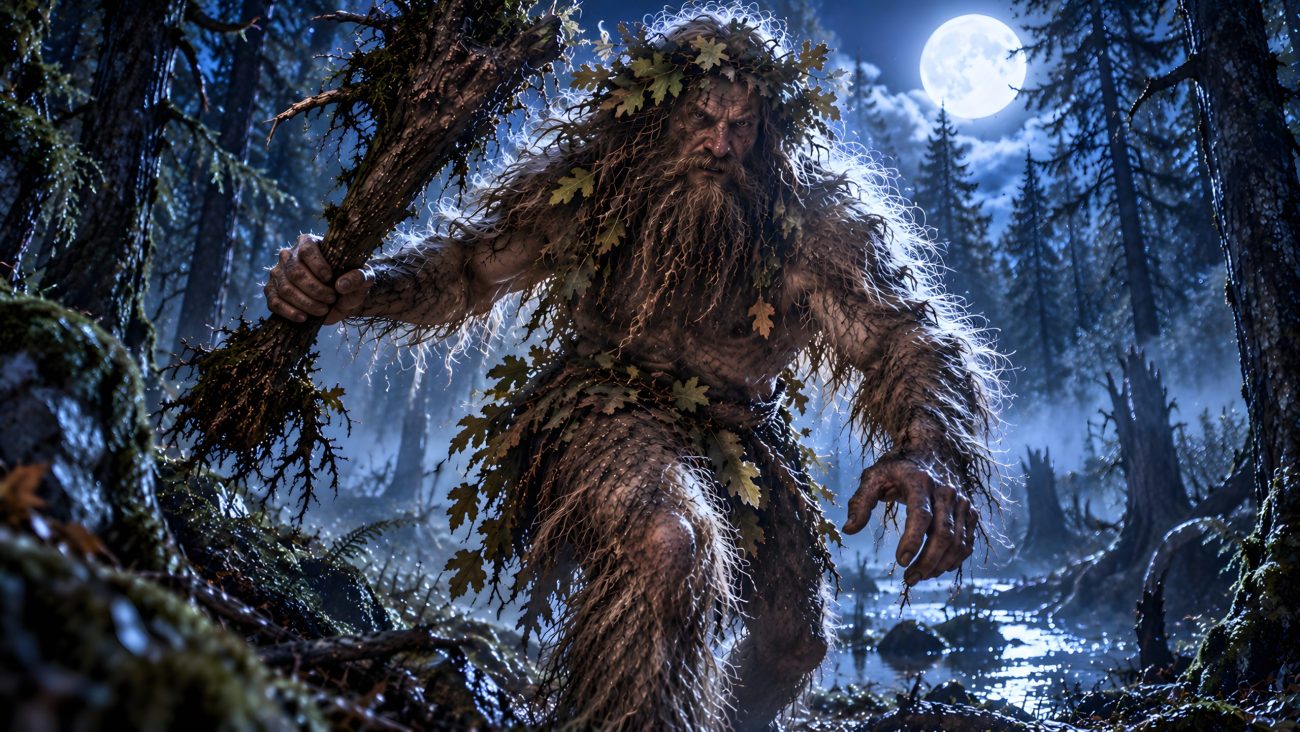
The Wildeman is a wild, powerful humanoid who lives alone in the depths of the forest. His entire body is covered in thick hair, and he behaves in a savage, uncontrolled manner. He usually wears little clothing, with an apron of oak leaves around his waist and a wreath of leaves around his head. In his hand, he carries a heavy club or an uprooted young tree, which serves as a weapon and a symbol of his immense strength. Despite his uncivilized appearance and wild behavior, the Wildeman is not necessarily evil and may possess a noble heart.

In an Overijssel fairy tale, the Wildeman is portrayed as an extraordinarily strong and uncivilized savage who lives alone in the woods. Despite his rough nature, he helps his brother marry a princess, demonstrating that kindness and loyalty can exist beneath his fearsome exterior. The Wildeman also appears in the sixteenth-century Dutch prose romance of Malegijs. In this tale, the enchantress Oriande discovers a Wildeman on an island. After she shaves him, he is revealed to be a handsome man. He eventually marries the fairy Crisiole in the mountain of the elves.

The Wildeman also appears in heraldry, where his powerful, untamed figure serves as a symbol on coats of arms. He is represented in the heraldic traditions of cities including Sneek, ‘s-Hertogenbosch, Antwerp, and Bergen op Zoom. Occasionally, a wild woman appears alongside or in place of him. Through these stories and representations, the Wildeman embodies the untamed strength of the wilderness, while his occasional acts of loyalty and nobility reveal a more honorable nature beneath his savage appearance.


Sources

“Van aardmannetje tot zwarte juffer: Een lijst van Nederlandse en Vlaamse elfen en geesten.” Abe de Verteller. https://abedeverteller.nl/van-aardmannetje-tot-zwarte-juffer-een-lijst-van-nederlandse-en-vlaamse-elfen-en-geesten/


Hantsje Plus

Tradition: Dutch Mythology
Alternative Names: Hantsje Pik
Category: Forest Dweller


The Myth

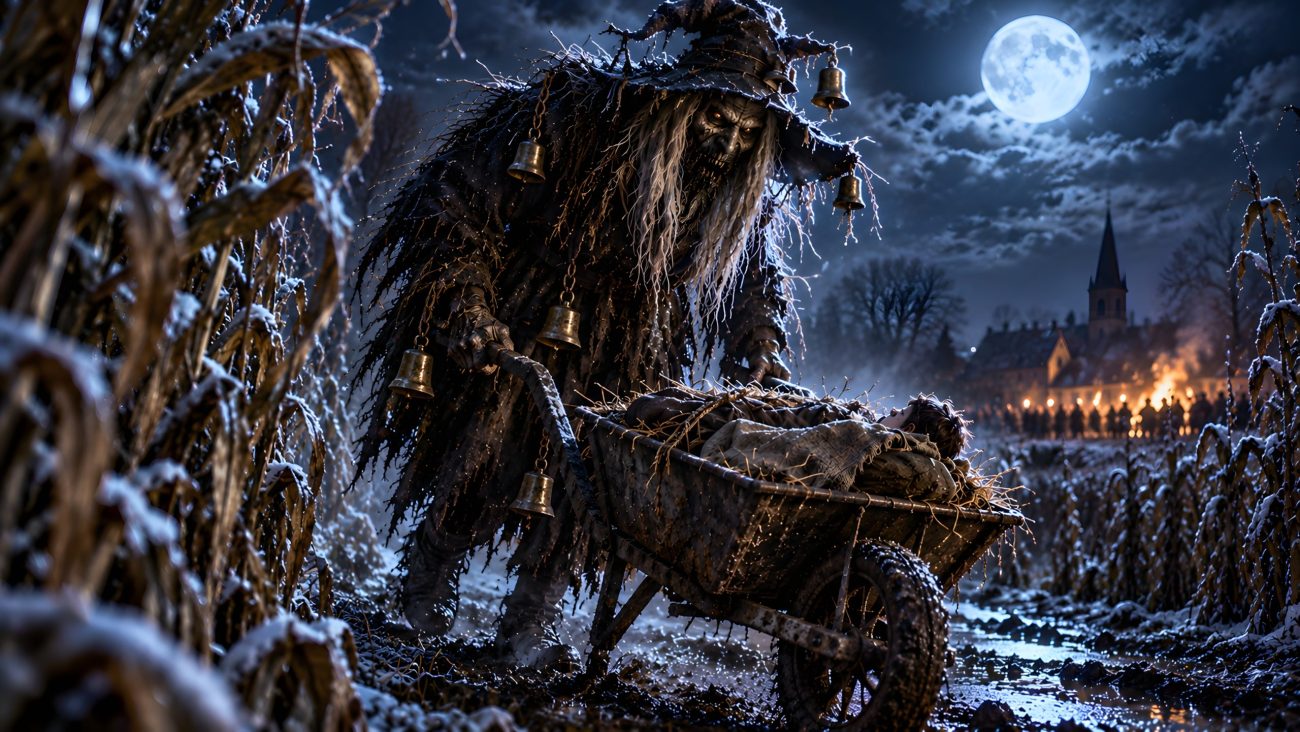
Hantsje Plus is a frightening bogeyman from Frisian folklore who wanders through the cornfields with a wheelbarrow. He is feared for abducting naughty children and those who stray into the fields, carrying them away in his wheelbarrow. His presence serves as a warning to children to behave themselves and stay away from places where they might encounter the mysterious figure.

Hantsje Plus was also associated with a traditional winter celebration held in the Frisian Woodlands shortly before Christmas. During this festival, people rang bells, made loud noises, and built a large bonfire. The noisy festivities were dedicated to Hantsje Plus, whose figure remained part of local winter customs. In the village of Grou, he was known as the black servant of Sint Pieter. His alternative name, Hantsje Pik, was also used as a name for the Devil, linking the bogeyman with darker supernatural traditions.


Sources

“Van aardmannetje tot zwarte juffer: Een lijst van Nederlandse en Vlaamse elfen en geesten.” Abe de Verteller. https://abedeverteller.nl/van-aardmannetje-tot-zwarte-juffer-een-lijst-van-nederlandse-en-vlaamse-elfen-en-geesten/


Ngoyama

Tradition: Kenyan Mythology
Alternative Names: Ngoyama
Category: Forest Dweller


The Myth

The Ngoyama is a strange forest creature from the folklore of the Pokomo people of Kenya. It appears as a human man with a tail and an iron claw embedded in the palm of one hand. The claw resembles an iron nail and can plunge into a person if the creature catches them. It is a dangerous feature that makes the Ngoyama a frightening presence in the forests and bushes where it lives.

Despite its fearsome appearance, the Ngoyama is not always hostile. In one tale, a man encountered the creature wandering through the bushes while eating raw meat. Taking pity on it, he decided to care for it and taught it how to make fire and cook its food. The Ngoyama gradually became civilized and, to some extent, behaved like a human being. However, one day it reverted to its former wild state, attacked the man who had helped it, and ate him. The tale portrays the Ngoyama as a creature that may learn human ways but remains unpredictable and dangerous, capable of turning against even those who show it kindness.


Sources

“Ngoyama.” New Bestiary (Bestiary.us). Accessed October 11, 2026. https://www.bestiary.us/ngoyama


Capelobo

Tradition: Brazilian Mythology
Alternative Names: Cupelobo, Cupélobo
Category: Forest Dweller


The Myth

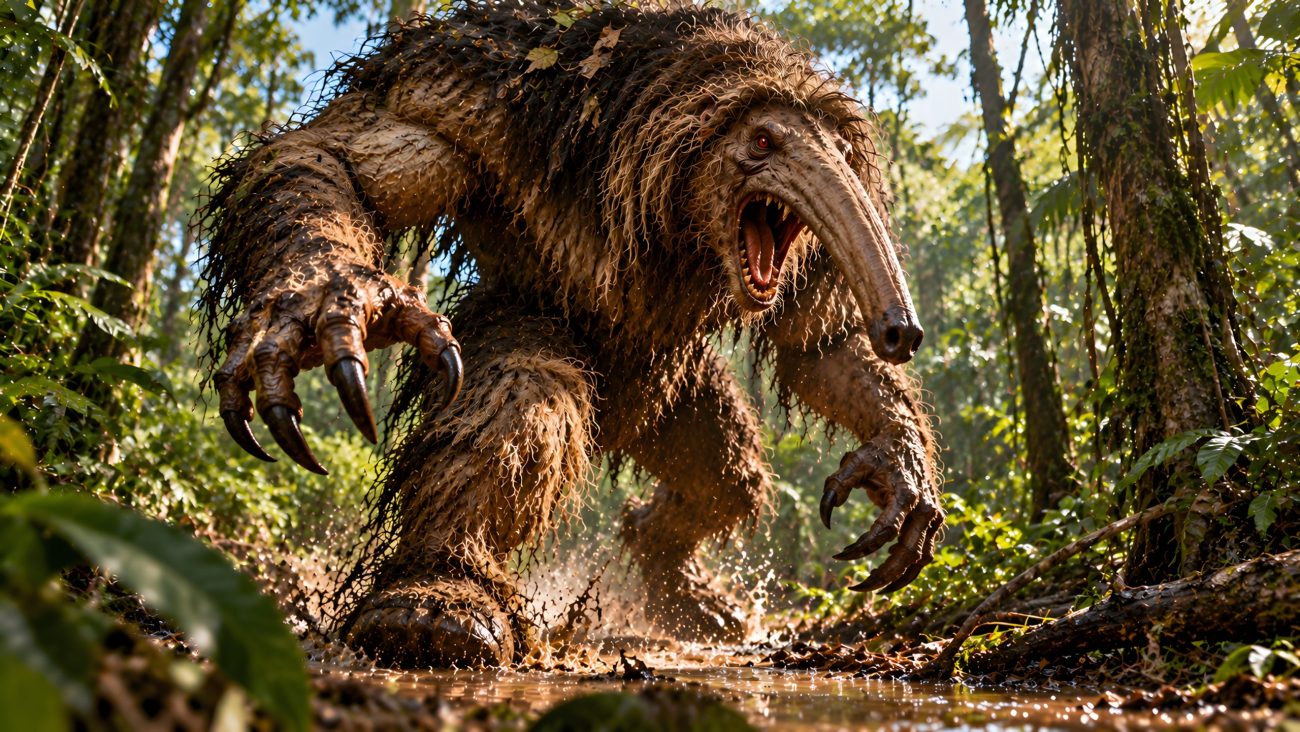
The Capelobo is a terrifying shapeshifting monster that prowls the forests of northern Brazil, particularly in the regions of Pará and Maranhão. It can appear as a large, shaggy animal resembling a tapir, with long black hair and the elongated snout of a pig or dog. In other versions, its snout resembles that of a giant anteater, while its body takes on a more humanoid shape. The creature has short, sturdy legs and unusually round feet, leaving strange, circular tracks in the forest. It is also known for its piercing screams, which announce its presence among the trees.

The Capelobo is a fearsome predator that hunts after dark, sometimes raiding forest camps to snatch newborn puppies and kittens. It attacks people by crushing them in a deadly embrace, biting their necks to drink their blood, or thrusting its long snout into their heads to suck out their brains. Its appetite for blood and brains makes it one of the most dreaded creatures of the Brazilian wilderness. In some traditions, it is believed that elderly Indigenous men can transform into the monster, taking on its shaggy, beast-like form.

Despite its immense strength and fearsome appearance, the Capelobo has one vulnerable spot: its navel, which is hidden beneath long strands of fur. A shot or arrow striking this precise point is said to be the only reliable way to kill it. Hunters therefore fear confronting the creature, as its thick coat conceals the one place where it can be wounded. Known in Maranhão as the Cupelobo, the monster remains a dreaded presence in the forests, where its screams warn of its approach and its strange tracks reveal the passage of a deadly hunter.


Sources

“Capelobo.” Wikipedia: The Free Encyclopedia. Wikimedia Foundation. Accessed October 11, 2026. https://en.wikipedia.org/wiki/Capelobo


Headless Calf

Tradition: Luxembourg Mythology
Alternative Names: The Ghost of the Chapel at Mertert
Category: Sheep


The Myth

The ghost haunting the road between Mompach, Mertert, and Wasserbillig is a mysterious supernatural being capable of taking the forms of various animals. For generations, it haunted the place where a road from Mompach joined the main road between Mertert and Wasserbillig. The location was notorious for strange accidents involving travellers and wagon drivers. Horses would suddenly fall, wheels would break, and sometimes all four wheels of a wagon would break at once.

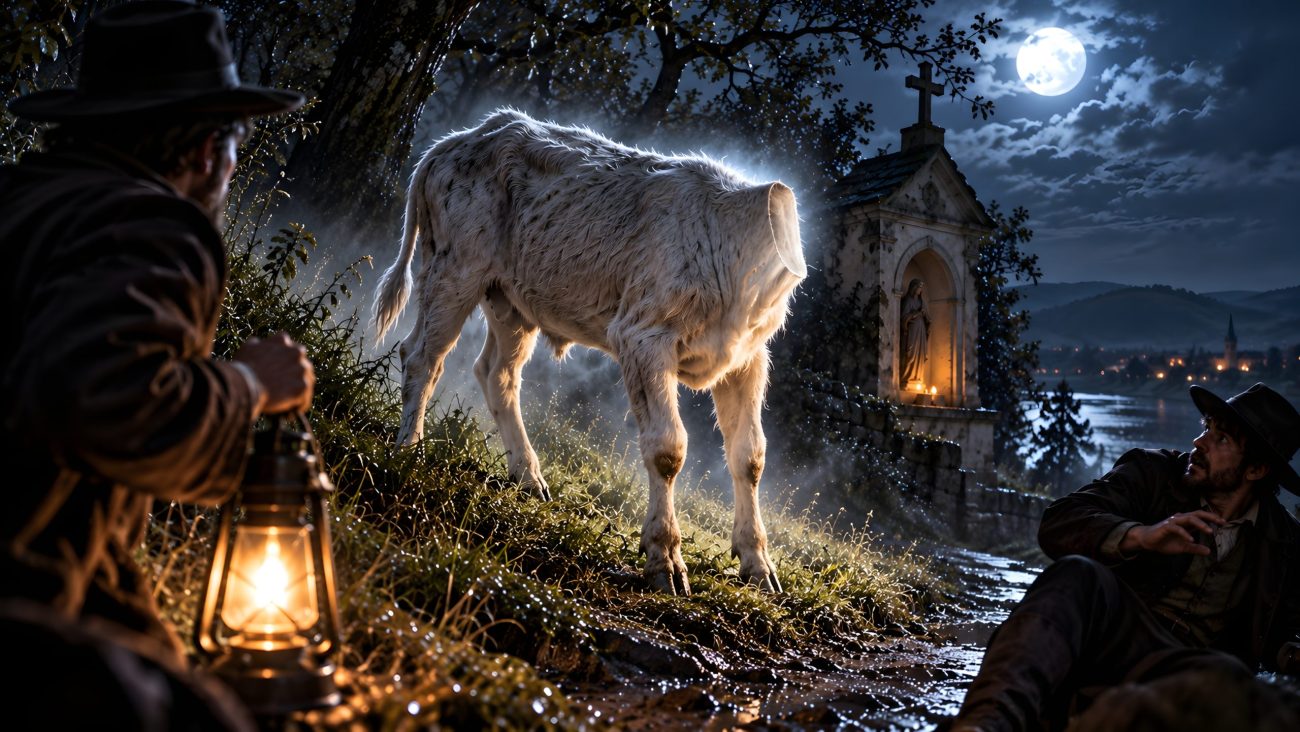
One moonlit night, a bold boatman was walking from Mertert to Wasserbillig with a companion when they noticed a calf standing on a small slope beside the road. The boatman climbed up to catch it, but slipped back down as soon as he reached for the animal. He tried again, only for the same thing to happen. This time, however, the calf had transformed into a sheep. Frustrated, he made a third attempt, carefully crawling up the steep slope. Once again, he slipped, and when he looked up, the sheep had become a headless calf.

Alarmed, the boatman abandoned his attempts and turned toward his companion, who had already fled. He hurried away himself, but the headless calf followed closely beside him all the way to Wasserbillig. There, in the sudden stillness of the night, he heard a strange rustling in the trees, and the apparition finally disappeared. After a cross at the haunted spot was replaced by a chapel, the ghost seemed to have been subdued and appeared only rarely.


Sources

La Fontaine, Edmond de. Luxemburger Sagen und Legenden. Luxemburg: Jos. Beffort, 1882.


Leemännchen

Tradition: Luxembourg Mythology
Alternative Names: Leemänchen
Category: Forest Dweller


The Myth

The Leemännchen is a ghostly being that haunts the wooded areas of Aspelt and Rumelange, as well as the surroundings of Gentingen along the Our River. It delights in leading travellers astray, confusing them as they make their way through the darkness. Although its appearance is not described, its presence can be recognised by its eerie cries echoing through the night.

One night, a traveller who had drunk enough wine to feel unusually courageous passed through the area and heard the Leemännchen calling out. Irritated by the noise, he shouted at the spirit, telling it to keep quiet and boasting that he knew the way better than it did. Immediately, an invisible hand struck him so violently on the head that he staggered twenty paces away.

The blow left a permanent mark. For the rest of the traveller’s life, the five fingerprints of the Leemännchen remained visible on his skull, where no hair would ever grow again. The encounter taught him that mocking the ghostly guide was a dangerous mistake, even for someone who believed himself brave enough to face the darkness.


Sources

La Fontaine, Edmond de. Luxemburger Sagen und Legenden. Luxemburg: Jos. Beffort, 1882.