Hira

Tradition / Region: Malian Mythology
Alternative names: Hira
Category: Cow


The Myth

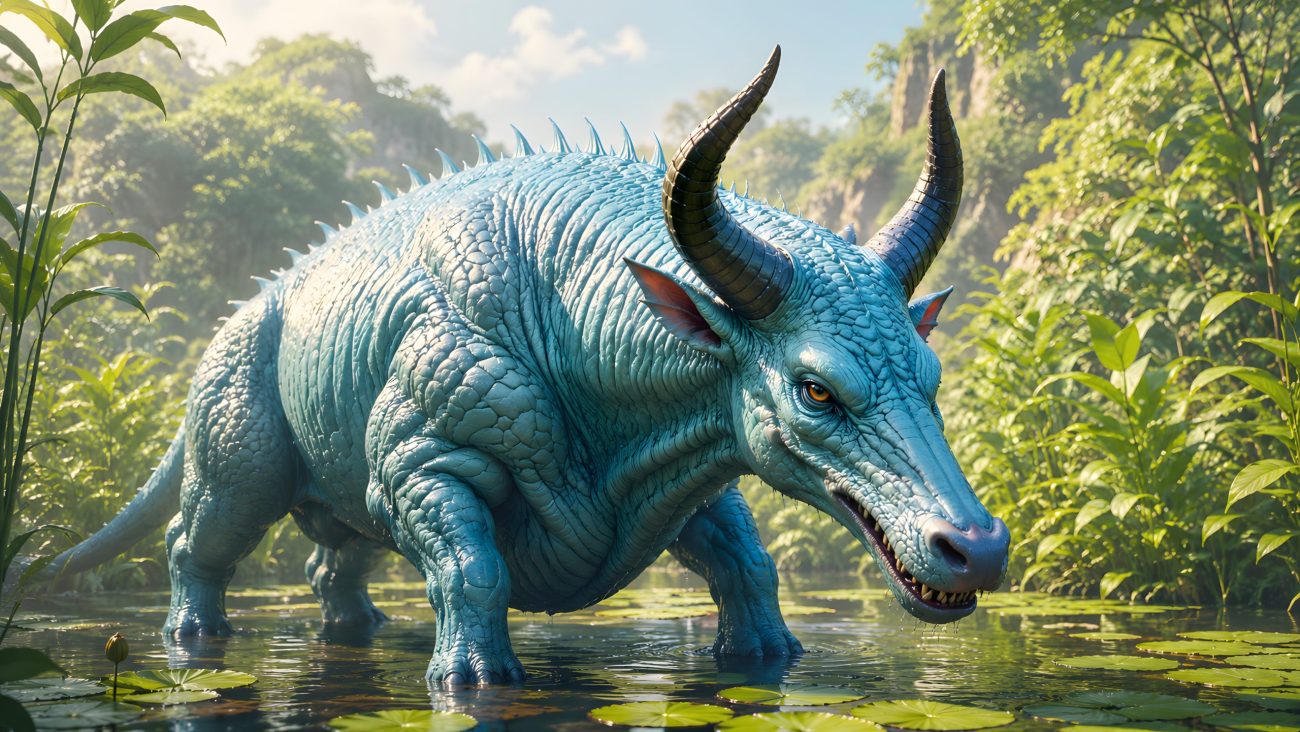
The Hira is a gigantic and ferocious buffalo known for its immense strength and brutality. It appears in the epic traditions of the Songhai people, particularly among the Bozo communities who lived along the Niger River.

According to the legend of Moussa Gname, a woman once fell asleep beneath a tree inhabited by a spirit and became pregnant by the spirit. Her son was named Moussa, or Mousa-Djinni, and his spirit father later taught him the magical knowledge needed for hunting.

When the Hira began ravaging the countryside, Moussa and his fiancée confronted the monster. Both were skilled in hunting magic, and together they succeeded in defeating the Hira.

A second Hira later appeared and proved equally difficult to kill. A diviner revealed that the monster could only be defeated through the help of a female elephant. The chief’s girlfriend secretly took the form of a female elephant and waited near a pond.

When the Hira came to the pond to drink, he approached the disguised elephant and began licking her. While he was distracted, she pulled four hairs from his tail and secretly gave them to Moussa.

The following day, Moussa confronted the Hira. Instead of fighting the enormous buffalo, he simply showed the monster the hairs taken from its tail. The Hira immediately lay down, allowing Moussa to kill it.


Sources

“Hira (mythical monster).” Wikipedia: The Free Encyclopedia. Wikimedia Foundation. Accessed August 16, 2026. https://en.wikipedia.org/wiki/Hira_(mythical_monster)

Nommo

Tradition / Region: Dogon Mythology, Malian Mythology
Alternate Names: Nummo
Category: Mermaid


The Myth

In the beginning, the sky god Amma created the first living being: Nommo.

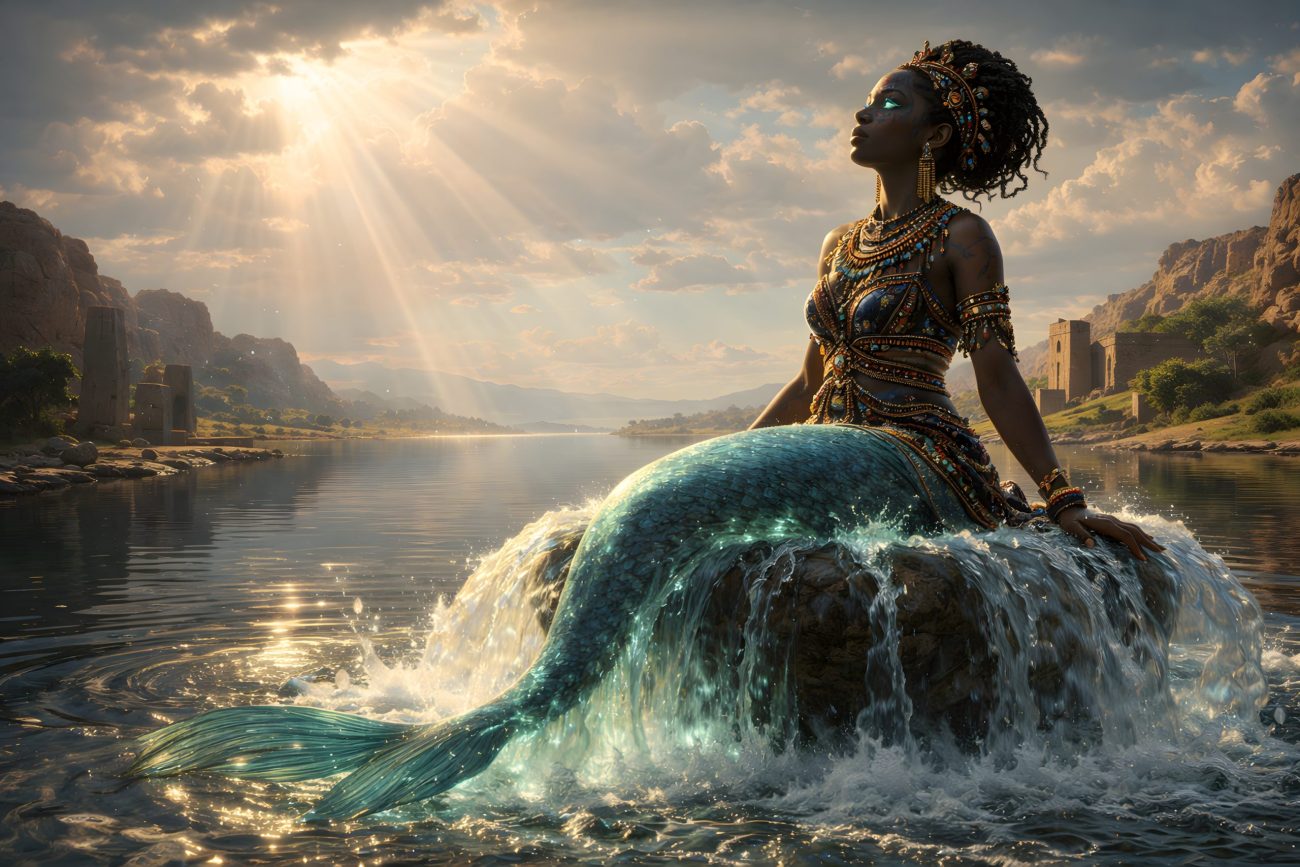
Nommo was not like humankind. He was amphibious and radiant, formed with both male and female nature within him. He belonged to the waters and carried within himself the life of the world.

After his creation, Nommo transformed and multiplied, becoming four pairs of twin beings. These were the Nommos, the first ancestors.

But one of the twins rebelled. This being sought to break free from the harmony Amma had established and brought disorder into the universe.

To restore balance, Amma made a sacrifice. One of the Nommos was offered up. His body was dismembered and scattered across the world. Wherever a piece of him fell upon the earth, sacred places were established. These became shrines, marking the spots where the life of Nommo touched the land.

Yet Nommo was not destroyed.

He descended from the sky in a great vessel, accompanied by fire and thunder. When he reached the earth, he created water and entered it, for he could not live without it. The waters became his dwelling.

Nommo then divided himself again, giving his own body to humankind as sustenance. The world drank of him, and in doing so, received life. He gave human beings their vital force and the principles by which they live.

From him came order, knowledge, and sacred authority. From him also came the first Hogon, the spiritual leader of the Dogon.

Thus Nommo remains the ancestor of humanity, the master of water, the one whose body became the nourishment of the world.


Sources

Wikipedia contributors. (n.d.). Nommo. In Wikipedia, The Free Encyclopedia. Retrieved February 14, 2026, from https://en.wikipedia.org/wiki/Nommo