Ji-ji-bon-da

Tradition: Abenaki Mythology, Russian Mythology
Alternative Names: Dzi-dzi-bon-da, Dzee-dzee-bon-da
Category: Forest dweller


The Myth

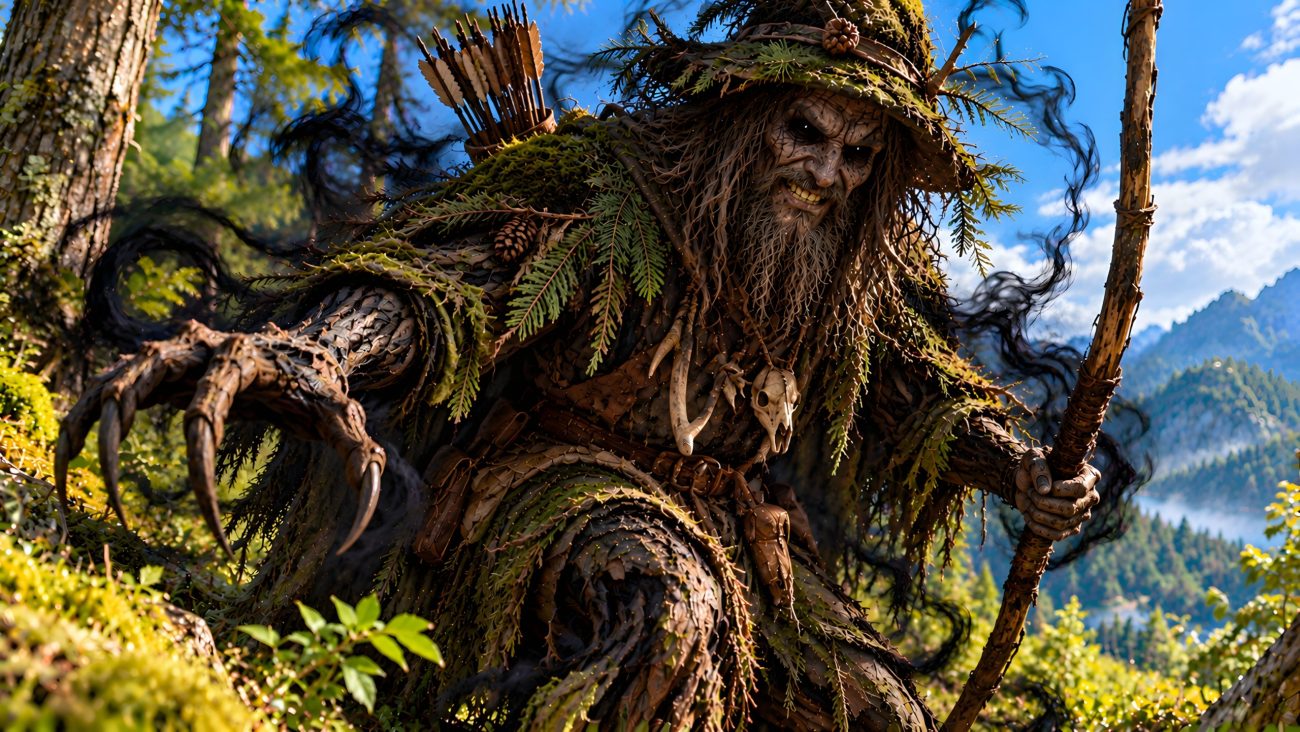
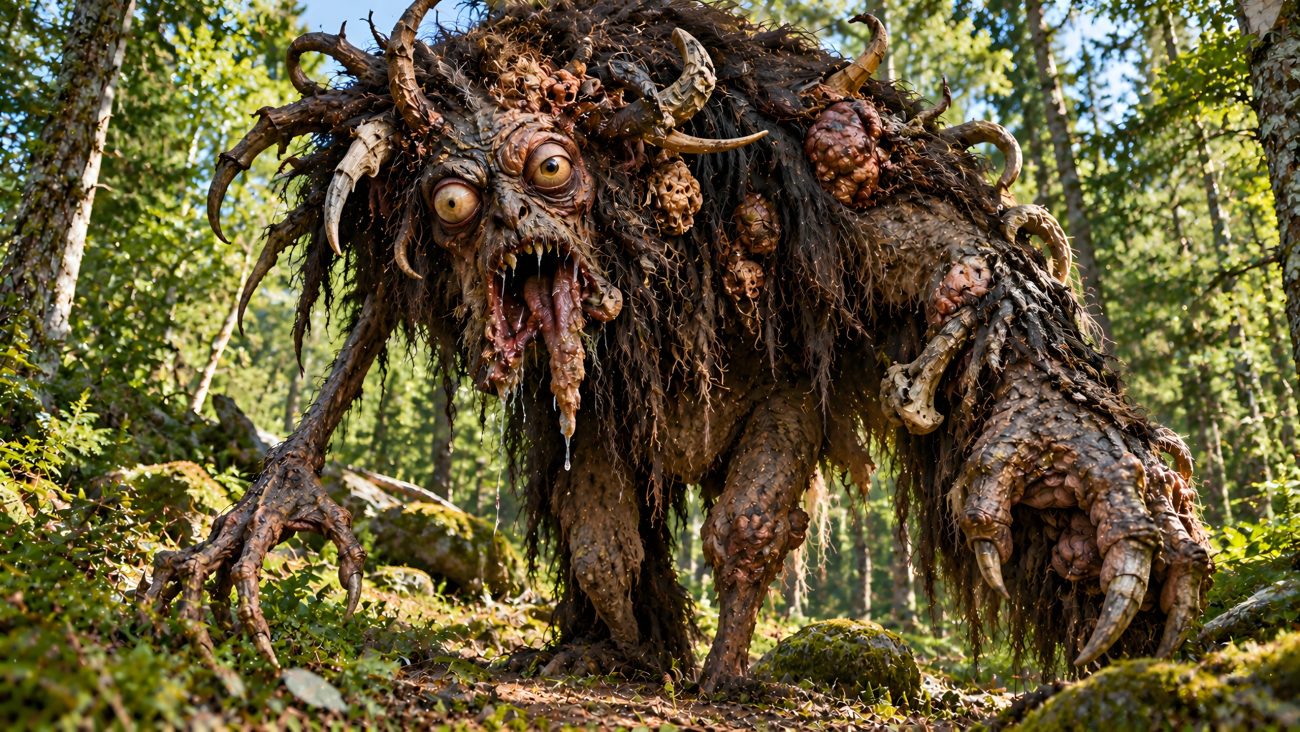
Ji-ji-bon-da is a grotesque monster from Abenaki mythology, so hideous in appearance that it is afraid of its own reflection. Its body is a nightmarish mass of twisted limbs, shaggy fur, and contorted flesh. It has a monstrous face with bulging eyes, a gaping mouth, and numerous long, crooked horns that curve outward from its head and body. Wild tufts of dark hair and fur surround its misshapen form, while its long, clawed limbs give it a hunched and unsettling appearance. Every part of the creature seems unnaturally distorted, making it a frightening sight even to supernatural beings.

Despite its monstrous appearance, Ji-ji-bon-da is distinguished by its fear of its own ugliness. Its twisted body and hideous features are so horrifying that it cannot bear to look at itself. The creature embodies grotesque deformity and self-directed terror, a monster whose own appearance becomes the source of its fear.


Sources

“Дзи-дзи-бон-да (Dzi-Dzi-Bon-Da).” New Bestiary (Bestiary.us). Accessed October 12, 2026. https://www.bestiary.us/dzi-dzi-bon-da/ru


Boraro

Tradition: Tucano Mythology, Colombian Mythology
Alternative Names: The Pale Ones
Category: Forest dweller


The Myth

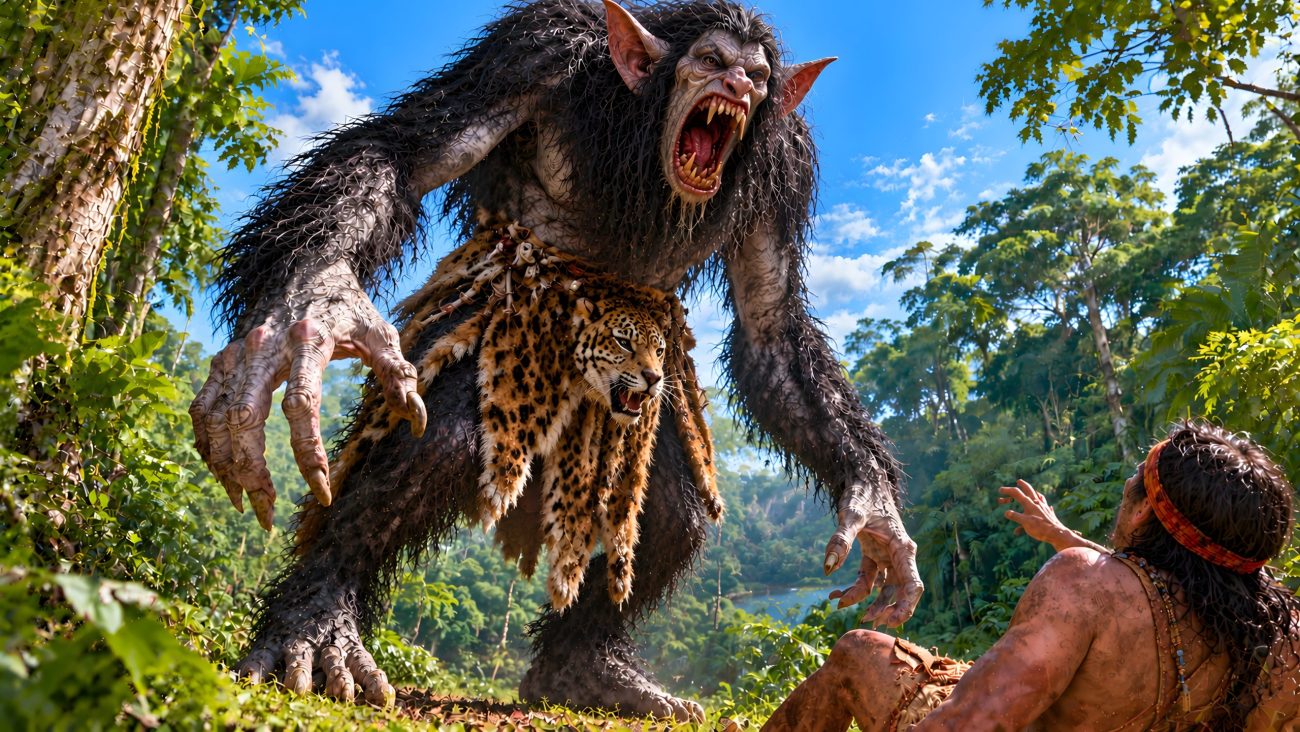
The Boraro is a terrifying forest monster from the mythology of the Tucano people of Colombia. It resembles a grotesque, towering humanoid, so tall that it reaches the size of a tree. Its skin is pale, but its enormous body is covered in thick black fur. It has large ears that point forward, fearsome fangs, and enormous pendulous genitals. Its feet face backwards, making it difficult for anyone pursuing it to determine which direction it has travelled. Despite its monstrous appearance, the Boraro serves as a protector of wildlife, defending the creatures of the forest from those who threaten them.

The Boraro possesses a horrifying method of killing its victims. Its urine is lethally poisonous, making even contact with its bodily fluids dangerous. If it catches a person in its powerful embrace, it crushes their flesh until it becomes pulp, while leaving their skin and bones unbroken. It then creates a small hole in the victim’s head and sucks out the pulped flesh. Afterward, it inflates the victim’s empty skin like a balloon and sends the unfortunate person back home in a dazed condition. The victim eventually dies from the encounter, leaving the Boraro’s attack concealed behind a seemingly intact body.

Despite its immense strength, the Boraro has several weaknesses that allow people to escape. It has no joints in its knees, making it extremely difficult for the creature to stand up again if it falls. A person can place their hands inside its backwards-facing footprints, causing its legs to stiffen and forcing it to collapse temporarily. Another method is to run backwards while facing the monster, confusing it and making it harder for the Boraro to pursue its prey. The creature can also be placated with offerings of tobacco, which may persuade it to leave a person unharmed.


Sources

“Colombian folklore.” Wikipedia: The Free Encyclopedia. Wikimedia Foundation. Accessed October 12, 2026. https://en.wikipedia.org/wiki/Colombian_folklore


Buschgroßmutter

Tradition: German Mythology
Alternative Names: Buschgrossmutter, Pusch-Grohla, Buschmutter, Buschweibchen, Buschweiblein, Buschweibel, Buschkathel
Category: Forest dweller


The Myth

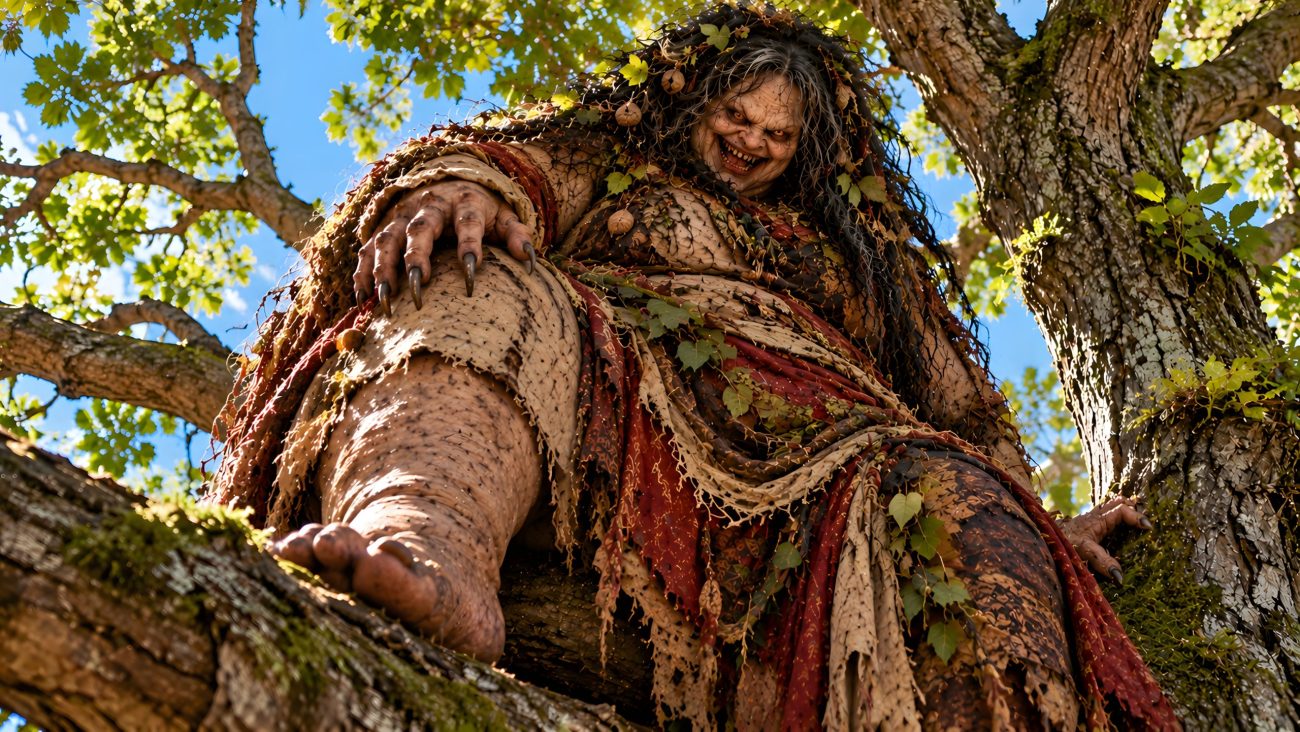
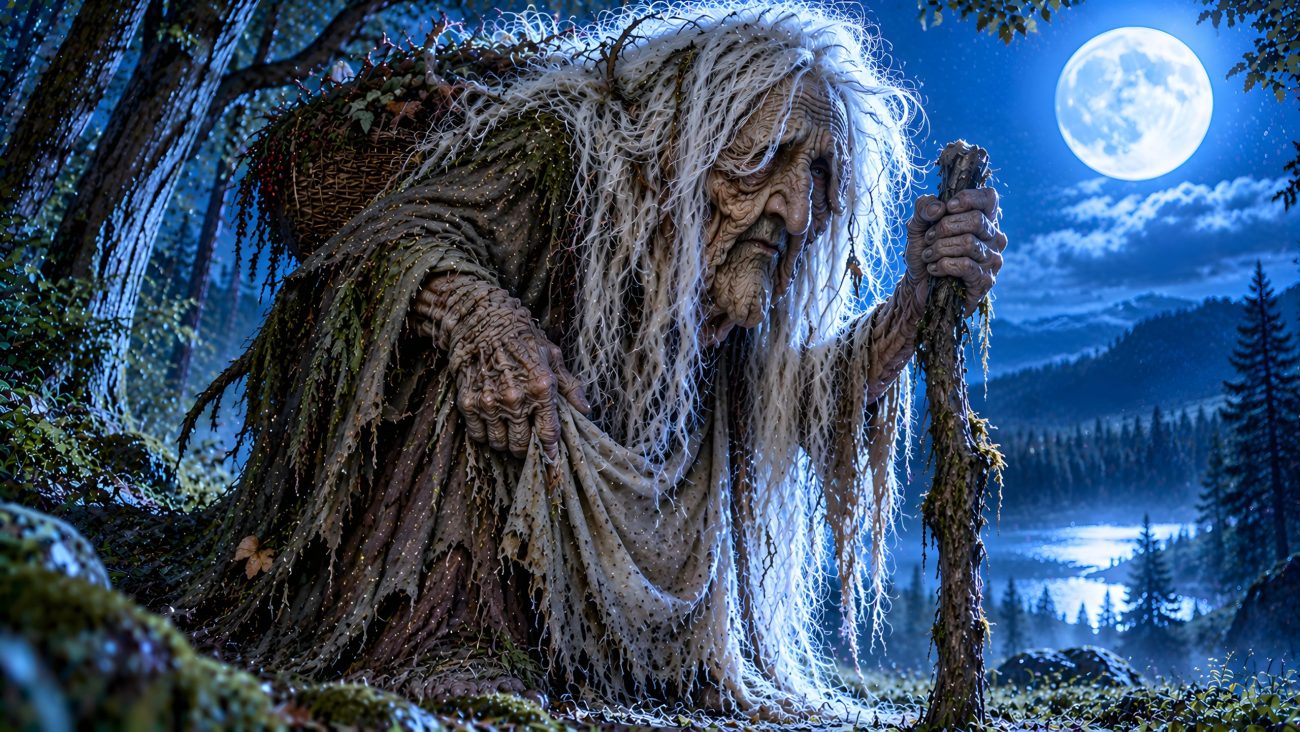
The Buschgroßmutter is an ancient female forest spirit who dwells in the deepest woods and reveals herself to humans only once every hundred years. She appears as a small, hunched, horribly wrinkled old woman with a hideous face and wide, staring eyes. Her long white hair hangs in tangled, unkempt strands, crawling with lice, while some descriptions give her an iron head. She walks unsteadily on feet covered in moss and carries a gnarled stick or crutch. Her clothing consists of a tattered dress, and she often wears an apron gathered as though it contains something precious. She may also carry a basket on her back. Her presence is sometimes associated with strange weather: when mist rises over the mountains in spring or autumn, people say the Buschgroßmutter is cooking, while during April hailstorms she climbs across the veiled mountain slopes.

The Buschgroßmutter is a mysterious being whose behaviour can be either generous or cruel. Sometimes she approaches people and asks them to comb or remove the lice from her tangled hair. Although her head is as cold as ice and the task may freeze the helper’s hands, those who patiently assist her can receive extraordinary rewards. She may give them an endless ball of yarn, a spindle wrapped in a hundred strands of thread, or green and yellow leaves that transform into gold if they are kept rather than thrown away. However, anyone who mocks or insults her risks terrible punishment. She may breathe upon the offender, causing painful rashes and other illnesses, or leap onto their back and cling to them, bringing further misfortune.

In some regions, the Buschmutter is especially malicious toward people who enter her woodland domain. She attacks children gathering berries, steals their harvest, and smashes the jars in which they store their fruit. She also sneaks into pastures and milks herdsmen’s cows until their udders are empty, then violently strikes sleeping cowherds with her crutch to wake them. Parents sometimes invoke her name to frighten children away from dangerous places in the forest.

Although she usually wanders alone, the Buschgroßmutter is sometimes accompanied by a band of female forest spirits called the Moosfräulein, or Moss Maidens, who are regarded as her daughters. During the holy nights, she travels through the countryside with them in a small cart or wagon, and people avoid crossing her path. The Buschgroßmutter is said to be extraordinarily ancient, older even than the moss spirits themselves. In one tale, a hunched and half-blind moss woman encounters three sleeping charcoal burners in the forest and mistakes their six legs and single head for some strange creature she has never seen before. Astonished by the discovery, she hurries home to tell her grandmother, who is said to be nine times older than herself.


Sources

“Buschgroßmutter.” Wikipedia: The Free Encyclopedia. Wikimedia Foundation. Accessed October 12, 2026. https://en.wikipedia.org/wiki/Buschgro%C3%9Fmutter
Abasy

Tradition: Yakut Mythology, Russian Mythology
Alternative Names: Abaasy, Abaahsy, Abaasylar (plural)
Category: Forest dweller


The Myth

The Abasy are evil spirits from Yakut mythology that inhabit the upper, middle, and lower worlds. They are described in various forms, sometimes appearing as monstrous beings resembling a man the size of a larch tree, a one-eyed or one-legged giant, or a huge stone-like monster. Some Abasy are born from black stones that initially resemble children. As they grow older, their bodies increasingly resemble stone, and they begin consuming everything around them, including people.

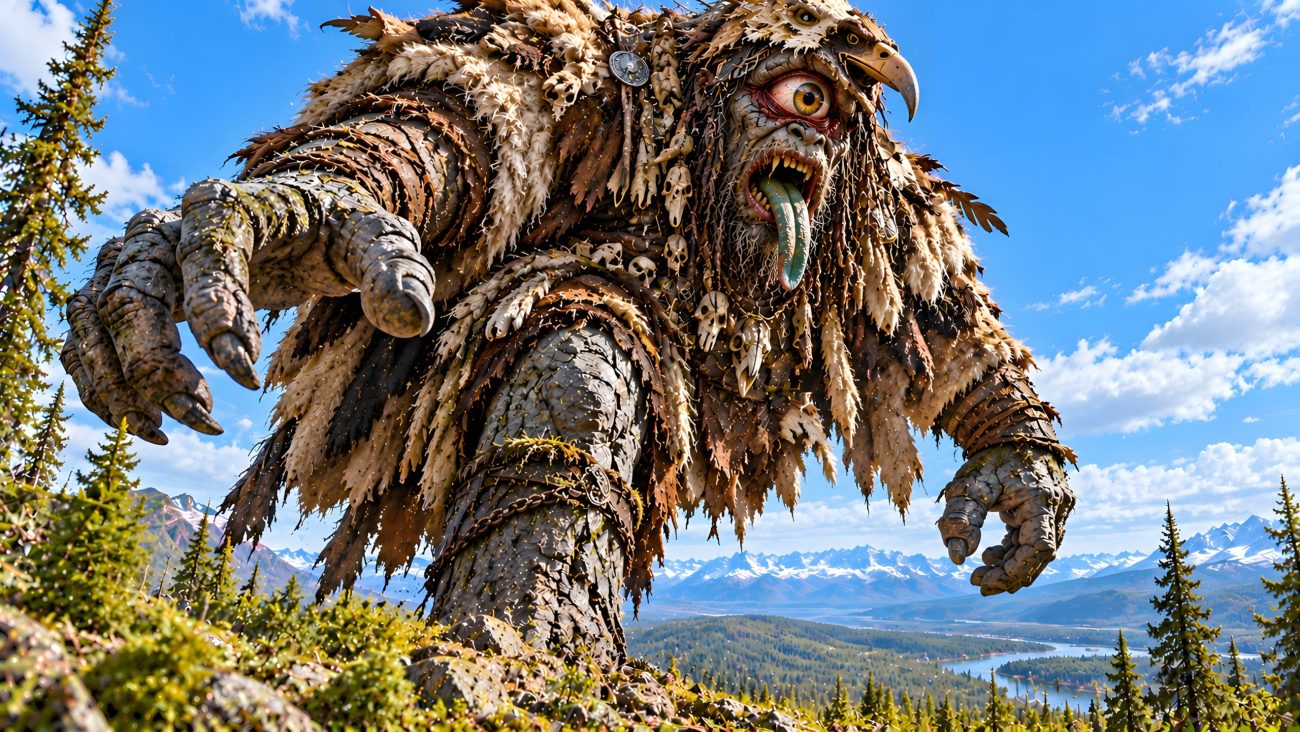
One description of an Abasy depicts a terrifying giant wearing eight garments of mail and a solid iron suit. His long fur coat is made from the hides of twenty oxen, while his clothing is adorned with the skins of dead calves. He wears a cap made from the skin of a dead eagle and has an enormous head, a crooked nose, and a huge mouth filled with a long, green-blue tongue. One eye sits within a deep, mountain-like hollow surrounded by red eyelids. His neck resembles a massive tree trunk, and his head hangs forward like that of a hunchbacked old man. The giant constantly chatters and grumbles, laughing and mumbling as the earth trembles beneath him. His voice echoes through the forests and mountains, and when he finally speaks clearly, his words reveal his immense and frightening nature.

The Abasy are dangerous beings that bring harm, disease, and misfortune to humanity. They may tempt people into committing crimes, send illnesses among communities, and destroy crops and animals. Their influence can extend to entire families and settlements, bringing suffering to those who encounter them. In some traditions, people offer the soul of a sick or deceased person to an Abasy in exchange for the threatened person’s soul. These demons are feared as powerful enemies of humankind, capable of consuming people and spreading destruction throughout the worlds they inhabit.


Sources

“Абасы (Abasy).” New Bestiary (Bestiary.us). Accessed October 12, 2026. https://www.bestiary.us/abasy


Bòrowô Cotka

Tradition: Polish Mythology
Alternative Names: Borowa Auntie
Category: Forest dweller


The Myth

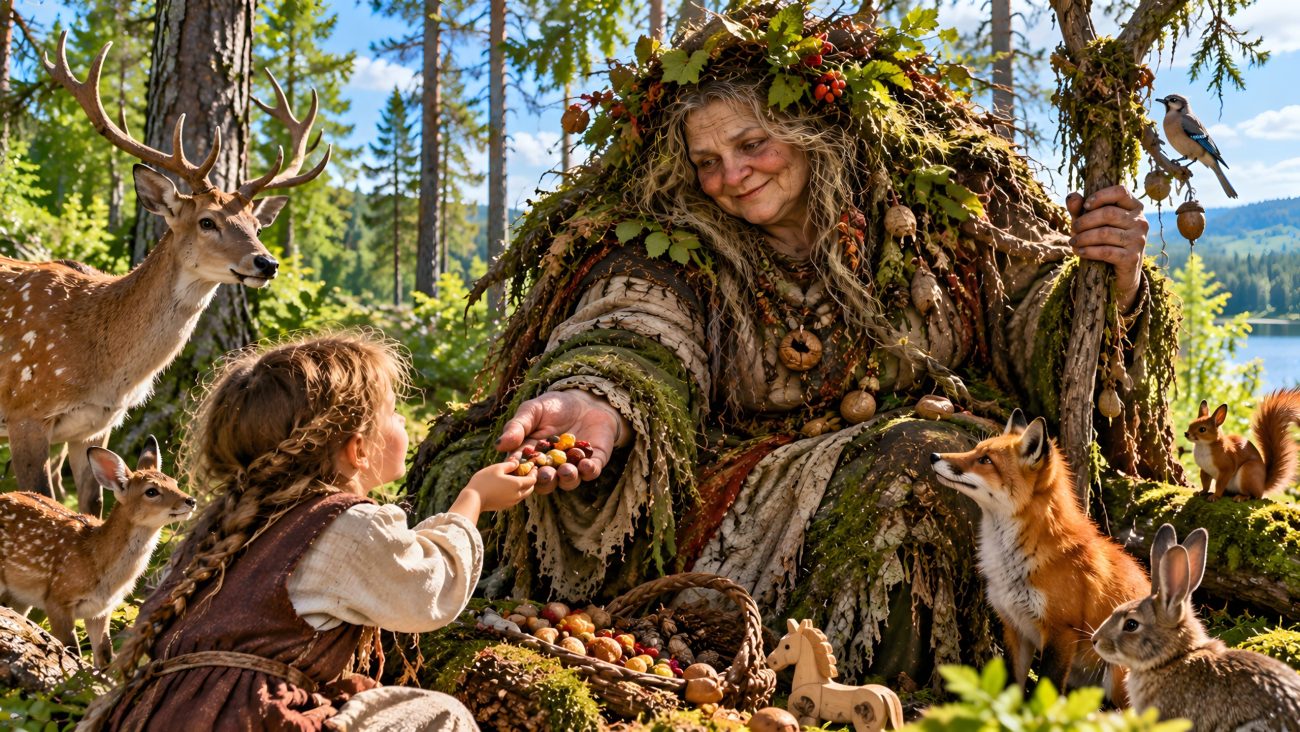
Bòrowô Cotka, meaning Borowa Auntie, is a benevolent female forest spirit who protects the animals and wildlife of the woods. She watches over the forest and its inhabitants, ensuring that children who become lost among the trees are not left helpless. Kind and generous toward lost children, she gives them toys, candy, and nuts, helping them find comfort and protection in the wilderness. She also shields them from dangerous supernatural beings, including witches and the Maniewid.

Although Bòrowô Cotka is gentle toward children and forest animals, she punishes those who mistreat the woodland. People who destroy trees or frighten the forest’s wildlife risk being transformed by her into junipers. Through this power, she defends the natural world against those who damage it, turning destructive intruders into part of the forest they have harmed. Bòrowô Cotka is remembered as a protective guardian whose kindness offers safety to the innocent, while her supernatural punishment warns against cruelty toward nature.


Sources

“Bòrówô Cotka.” Kaszëbskô Wikipedijô (Kashubian Wikipedia). Wikimedia Foundation. Accessed October 12, 2026. https://pl.wikipedia.org/wiki/B%C3%B2row%C3%B4_Cotka


Mapinguari

Tradition: Brazilian Mythology
Alternative Names: Mapinguary, Kida harara, Kida so’emo, Owoj, Owojo, Juma
Category: Forest dweller


The Myth

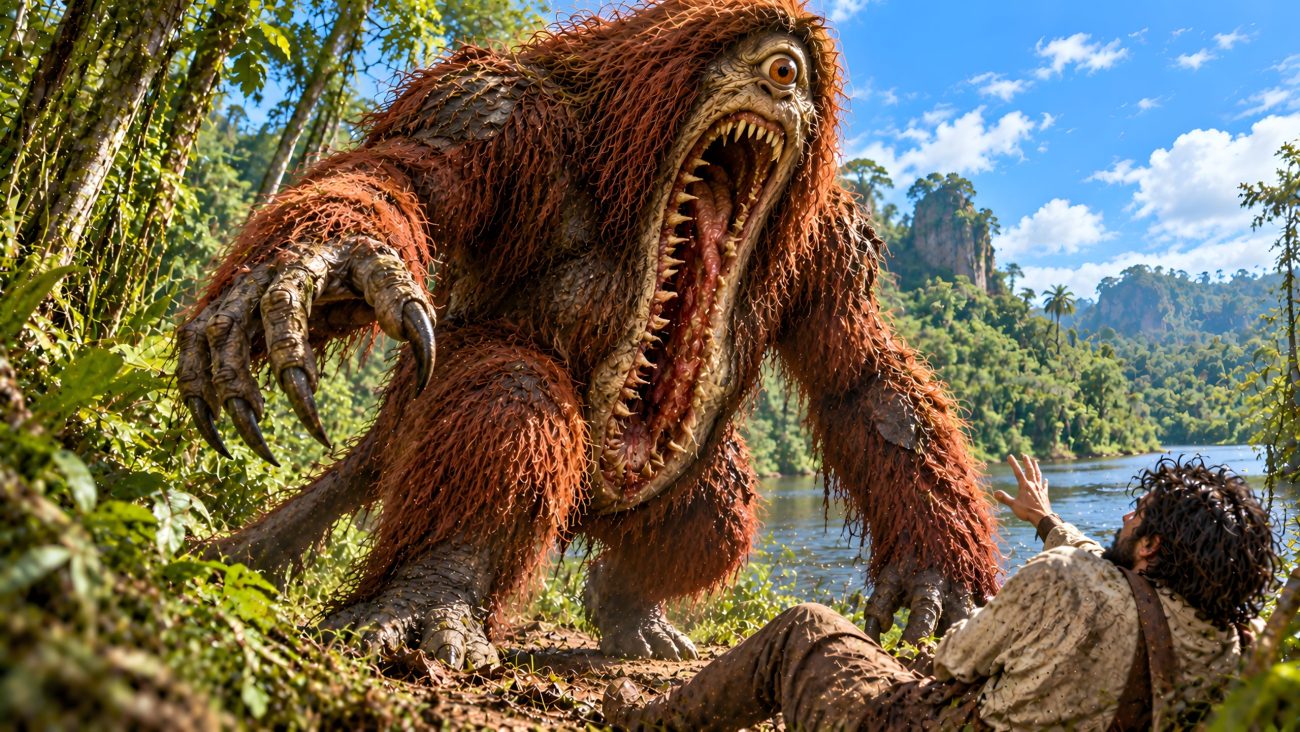
The Mapinguari is a terrifying monster that roams the vast forests of the Amazon. It is often described as a gigantic, hairy, ape-like creature with long red, brown, or black fur and an extremely foul smell. Its body may be as large as a human or considerably bigger, and its face resembles that of a monkey. The creature has powerful claws like those of a jaguar and unusual feet that point backwards, sometimes resembling the hooves of a donkey. Some descriptions give it a hard, crocodile-like hide or a shell like that of a turtle, making its body extraordinarily difficult to injure. Its thick coat is said to protect it from bullets, leaving only its navel as a vulnerable spot.

The Mapinguari has several horrifying features that distinguish it from other forest monsters. In some accounts, it possesses a single enormous eye in the middle of its forehead, while others place the eye in its abdomen. Its mouth may stretch vertically from its face down to its stomach, creating a huge opening through which it devours its victims. The creature is a fearsome man-eater that may hide in the dim depths of the forest before suddenly charging at unsuspecting travellers. It announces its presence with a tremendous scream resembling a human cry or a peal of thunder. When it catches someone, it often begins by chewing the victim’s head slowly, although some stories describe it consuming the entire body piece by piece.

One tale tells of a rubber tapper who returned to his hut on a Sunday and discovered that the Mapinguari was devouring his companion. The monster had enormous, jaguar-like claws and a mouth extending from its face to its stomach. The encounter was remembered as a punishment for working on the Sabbath, while other stories warn that the creature deliberately hunts people who venture out on Sundays and holidays. The Mapinguari is not always portrayed as a flesh-eater, however, as some accounts describe it tearing down palm trees to feed on their tender hearts and fruits.

Some traditions claim that people who reach an exceptionally old age may transform into Mapinguari. Other stories describe the creature as a former shaman or an ancient ruler of the region who became a monstrous being. Whether it is a transformed human or a terrifying spirit of the wilderness, the Mapinguari remains a dreaded inhabitant of the Amazonian forests, feared for its overwhelming strength, horrible stench, strange body, and appetite for human flesh.


Sources

“Mapinguari.” Wikipedia: The Free Encyclopedia. Wikimedia Foundation. Accessed October 12, 2026. https://en.wikipedia.org/wiki/Mapinguari


Degder

Tradition: Somali Mythology
Alternative Names: Dhegdheer, Degdheer, Xayawada, Jeger
Category: Forest dweller


The Myth

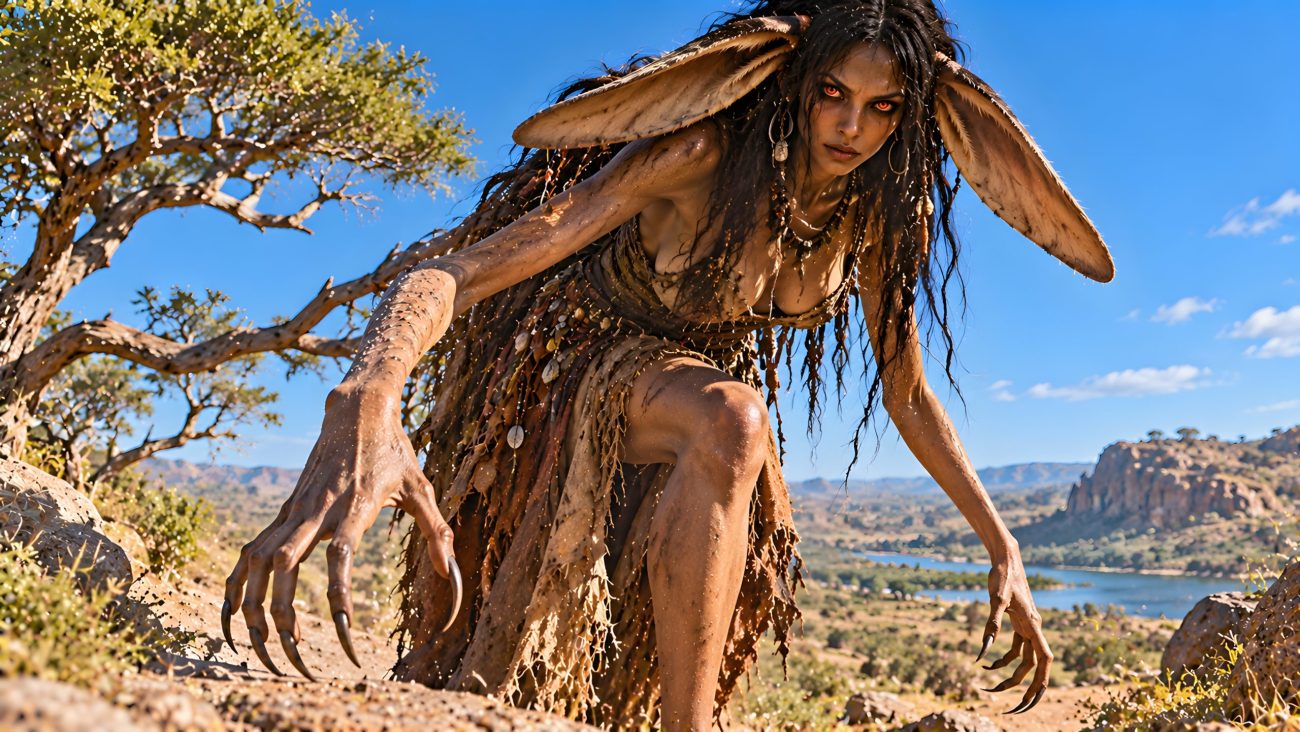
Degder is a terrifying female cannibal from Somali mythology, appearing as a tall, powerful woman with long, donkey-like ears, extremely long arms, and sharp claws. Her ears are so sensitive that she can hear the footsteps of her prey from many kilometres away. She has blood-red eyes, keen vision, and an exceptionally strong sense of smell, allowing her to detect humans and animals from a great distance. Despite her enormous size and strength, Degder is remarkably fast and can run quickly in pursuit of her victims. Her voice resembles a roaring hurricane, and her immense weight makes her movements thunderous, although her speed gives her prey little time to escape.

Degder is feared as a man-eating monster who hunts people and devours their flesh. She is especially dangerous to children and travellers who wander into her territory. Despite her monstrous nature, some stories describe her as having once been a beautiful young girl. In one tale, she becomes engaged to a man named Gardere, whose name means “long-bearded.” After they marry and begin raising a family, Degder reveals her true nature by eating her own children. Gardere eventually discovers her secret and flees, but Degder pursues him. He manages to escape by cutting off her long donkey-like ears, depriving her of her extraordinary hearing and weakening her ability to track her prey.

Degder also appears in stories about children who disobey their parents or violate important conditions. In one tale, she becomes the stepmother of a child whose father has remarried. When the child discovers her true identity, she begins to hunt the family. Other tales describe children being punished for breaking promises or failing to follow instructions, with Degder pursuing them when they enter her territory. She is particularly associated with forested areas and places where her victims may become lost. Her extraordinary hearing, speed, and appetite for human flesh make her one of the most feared monsters in Somali mythology.


Sources

“Degder.” New Bestiary (Bestiary.us). Accessed October 12, 2026. https://www.bestiary.us/Degder


Black Hiesel

Tradition: Czech Mythology
Alternative Names: Black Hiesel of Zassau
Category: Forest dweller


The Myth

The Black Hiesel was a notorious poacher from Zassau who roamed the Wallerer woods, hunting stags and deer while evading the lawful hunters. He possessed extraordinary supernatural protection: no bullet, blade, or iron weapon could harm him. Lead bullets softened against his skin, and even when the marksmen surrounded him and fired at close range, he emerged unharmed. His resilience made him a source of fear and frustration among the local hunters, who watched helplessly as he continued to kill the forest’s game.

Hiesel also possessed the power to transform himself into other forms. When the Wallerer marksmen cornered him, he could become a young green fir tree or a withered hare. His pursuers would pass him without recognizing him, sometimes standing nearby while discussing their plans to capture him. Hidden in these disguises, Hiesel listened to everything they said and escaped their traps. His ability to blend into the forest made him nearly impossible to catch, and the hunters gradually grew uneasy and lost their courage.

Eventually, the marksmen managed to overpower Hiesel, but ordinary weapons remained useless against him. Unable to kill him with bullets, blades, or iron, they resorted to a different method: they smashed his skull with a drum. Thus ended the career of the seemingly invulnerable poacher whose supernatural toughness and shapeshifting had long allowed him to defy the hunters of the Wallerer woods.


Sources

Hans Watzlik. “Hiesel.” In Böhmerwald-Sagen. Budweis: Böhmerwalder Dorfbücher, 1921, Heft 5. Reproduced by SAGEN.at. https://www.sagen.at/texte/sagen/tschechien/watzlik/hiesel.html


Batibat

Tradition: Philippine Mythology
Alternative Names: Bangungot, Batíbat
Category: Forest dweller


The Myth

The Batibat is a terrifying female demon from Ilocano mythology, appearing as an ancient, grotesquely obese woman who dwells in trees. She lives within the trunks and branches of old trees, remaining hidden as long as her woodland home is undisturbed. When her tree is cut down and its timber is used to construct a house, she may become homeless and take refuge in the remaining wood, particularly when it is made into a support post. Angered by the destruction of her home, the Batibat becomes a dangerous presence within the household.

The Batibat forbids people from sleeping near the post that contains her dwelling. If someone ignores this warning and falls asleep nearby, she reveals her monstrous form and attacks the sleeper. She presses down upon the victim, suffocating them while invading their dreams and trapping them in terrifying nightmares. The victim may awaken unable to move or breathe properly, experiencing the frightening sensation of an unseen weight crushing their body. This attack is associated with sleep paralysis and is the origin of the creature’s connection to nightmares.

Despite her terrifying power, the Batibat has a weakness that allows victims to escape her grip. Someone trapped in her nightmare can bite their own thumb or wiggle their toes to awaken themselves. By performing one of these actions, the victim may break free from the demon’s supernatural hold and escape the suffocating dream. The Batibat remains a feared spirit of the household, a displaced guardian of trees who takes revenge on those who sleep too close to the remains of her former home.


Sources

“Batibat.” Wikipedia: The Free Encyclopedia. Wikimedia Foundation. Accessed October 12, 2026. https://en.wikipedia.org/wiki/Batibat


Sinad

Tradition: Indian Mythology
Alternative Names: Sénad, Sinad
Category: Forest dweller


The Myth

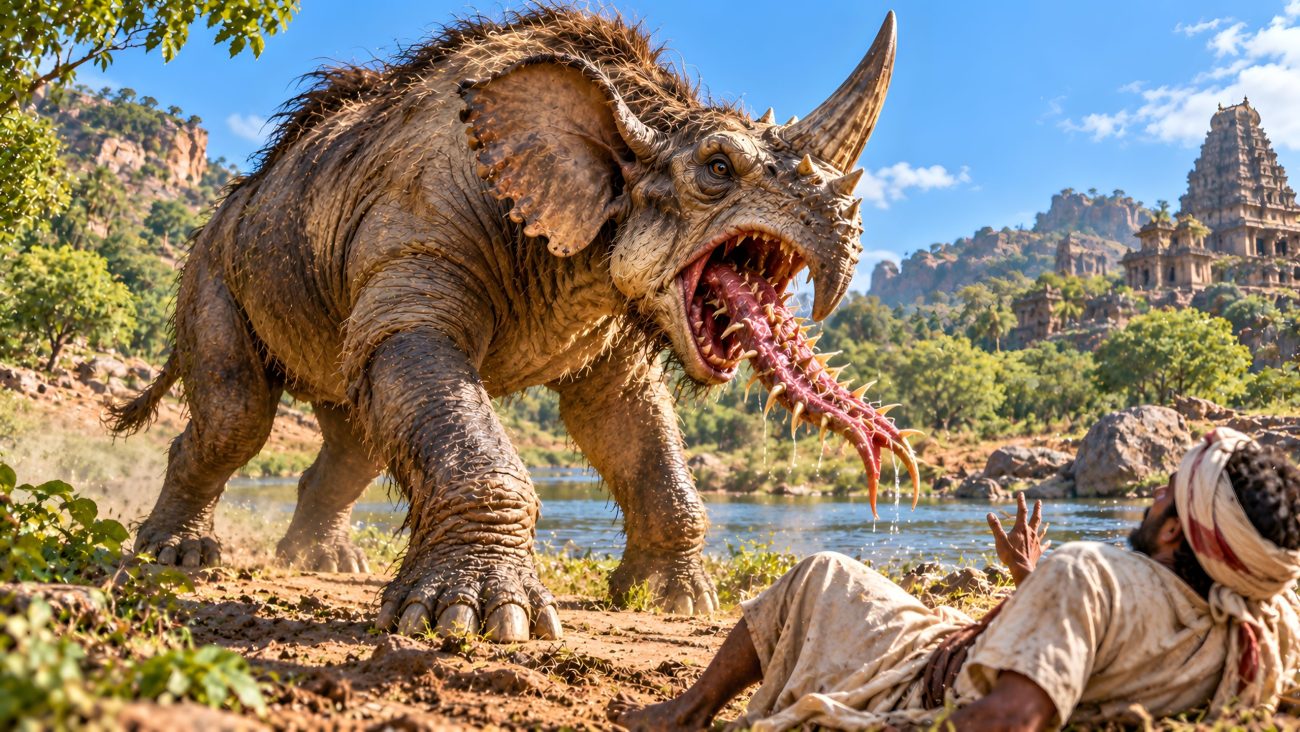
The Sinad is a strange and dangerous creature described as resembling an elephant, though smaller than one and larger than an ox. Its exact appearance varies between accounts. Some depictions show it with an elephant-like body, while others portray it with one or two horns, resembling the fearsome unicorn-like beast known as the Karkadann. Its most distinctive feature is its sharp, thorn-covered tongue, a deadly weapon capable of tearing flesh from bone.

The Sinad is notorious for its horrifying method of giving birth. When a female is ready to deliver her young, the calf pushes its head out of the mother’s womb but remains inside while it grows strong enough to survive. During this time, it feeds on grass and waits until it is mature enough to escape. The mother, following what would ordinarily be a natural maternal instinct, attempts to lick her offspring clean. However, her thorny tongue strips the flesh from the calf’s body, threatening to kill it. The young Sinad must therefore remain hidden inside its mother until it is strong enough to wriggle free and gallop away to safety.

The Sinad’s deadly tongue is also associated with the Karkadann, and the two creatures are sometimes depicted similarly. Some accounts describe the use of the Karkadann’s tongue as a form of torture, with victims suffering terrible injuries when the beast licks them. The Sinad thus combines the appearance of a powerful animal with one of the most unusual and horrifying traits found among legendary beasts: a mother whose attempt to care for her young can destroy them.


Sources

“Sinad.” A Book of Creatures. April 6, 2015. https://abookofcreatures.com/2015/04/06/sinad/