Sinad

Tradition: Indian Mythology
Alternative Names: Sénad, Sinad
Category: Forest dweller


The Myth

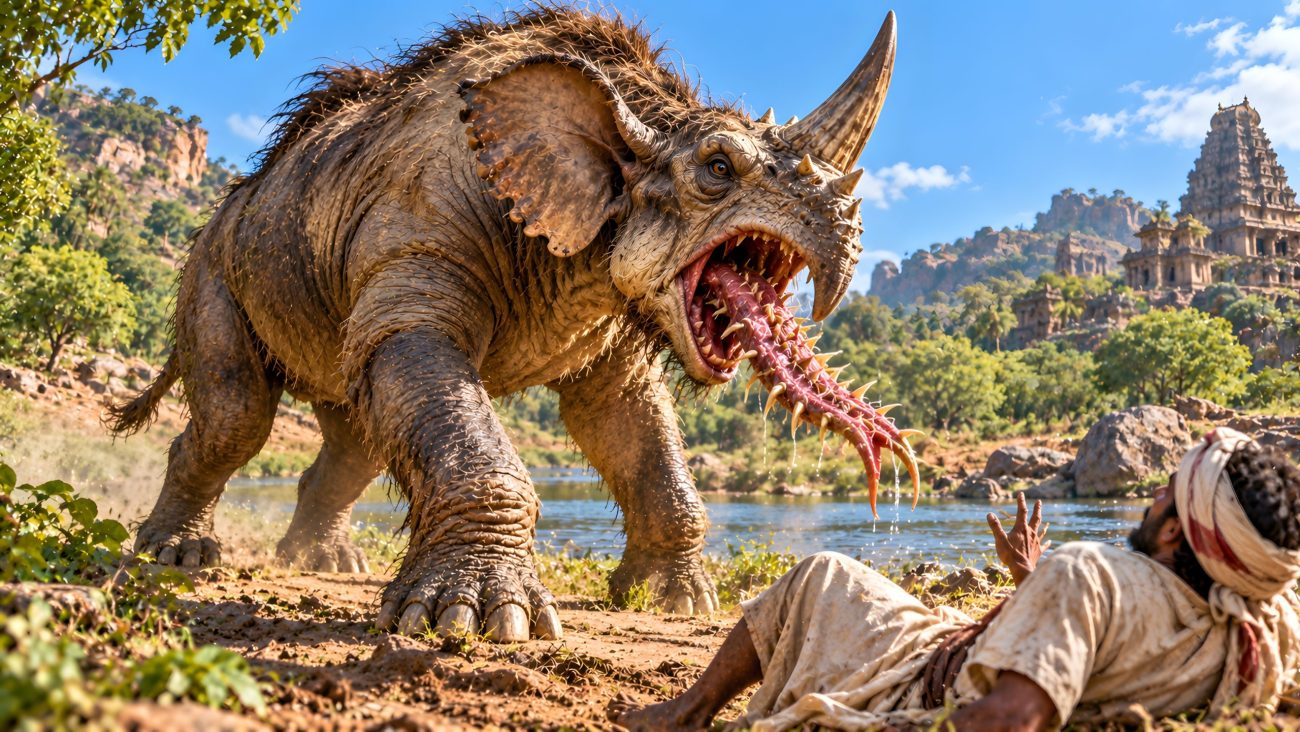
The Sinad is a strange and dangerous creature described as resembling an elephant, though smaller than one and larger than an ox. Its exact appearance varies between accounts. Some depictions show it with an elephant-like body, while others portray it with one or two horns, resembling the fearsome unicorn-like beast known as the Karkadann. Its most distinctive feature is its sharp, thorn-covered tongue, a deadly weapon capable of tearing flesh from bone.

The Sinad is notorious for its horrifying method of giving birth. When a female is ready to deliver her young, the calf pushes its head out of the mother’s womb but remains inside while it grows strong enough to survive. During this time, it feeds on grass and waits until it is mature enough to escape. The mother, following what would ordinarily be a natural maternal instinct, attempts to lick her offspring clean. However, her thorny tongue strips the flesh from the calf’s body, threatening to kill it. The young Sinad must therefore remain hidden inside its mother until it is strong enough to wriggle free and gallop away to safety.

The Sinad’s deadly tongue is also associated with the Karkadann, and the two creatures are sometimes depicted similarly. Some accounts describe the use of the Karkadann’s tongue as a form of torture, with victims suffering terrible injuries when the beast licks them. The Sinad thus combines the appearance of a powerful animal with one of the most unusual and horrifying traits found among legendary beasts: a mother whose attempt to care for her young can destroy them.


Sources

“Sinad.” A Book of Creatures. April 6, 2015. https://abookofcreatures.com/2015/04/06/sinad/

Zabraq

Tradition: Indian Mythology
Alternative Names: Rukh, Phalmant
Category: Forest dweller


The Myth

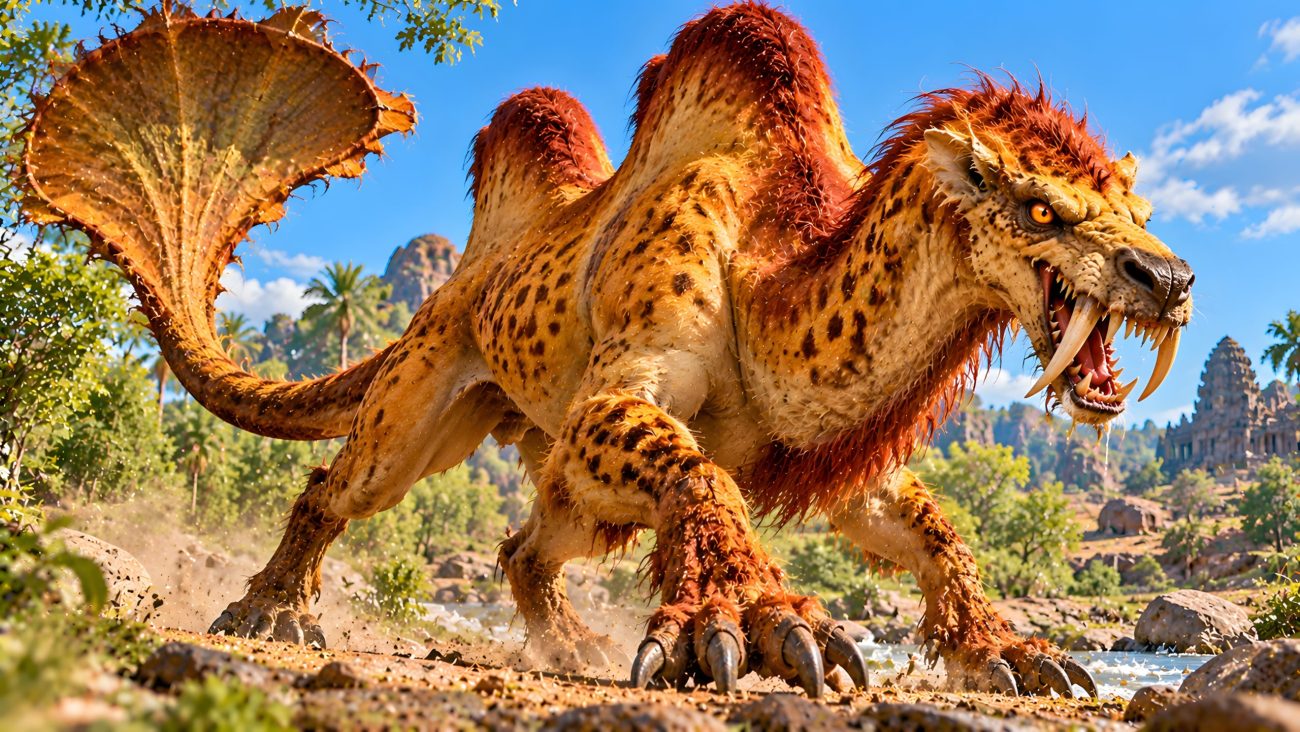
The Zabraq is a fearsome and exotic beast described as smaller than a cheetah, with yellowish-red fur and flashing eyes. It is extraordinarily swift and can leap distances of thirty to fifty cubits or more in a single bound. Other descriptions portray it as a camel-like creature with two humps, tusks, and a large membranous tail. Some accounts instead depict it as an enormous, hideous monster with bristling claws and teeth. Its most terrifying feature is its ability to weaponize its own urine and dung, which are intensely corrosive and can burn like fire.

Zabraqs hunt animals as large as elephants, killing their prey by flinging caustic urine from their powerful tails. The tail can flatten and take on a shovel-like shape, allowing the beast to collect urine and dung before hurling the mixture at its victims. Almost no animal is safe from its attacks, although the Zabraq is said to avoid rhinoceroses. It also hunts humans and eagerly devours them when given the opportunity.

Those pursued by a Zabraq may try to escape by climbing a teak tree, which the beast cannot scale. However, even this refuge can be dangerous. The creature leaps upward in an attempt to seize its prey, then sprays its burning urine into the air, scorching anything it touches. If it cannot reach its victim, the frustrated beast turns towards the tree’s roots and roars furiously until clots of blood erupt from its mouth, causing it to collapse and die.

Every part of the Zabraq is said to be deadly. Its bile and testicles can be used to create powerful poisons, and weapons coated with these substances cause immediate death. Some accounts extend this deadly quality to its flesh, blood, saliva, and dung. The Zabraq is therefore remembered as a swift and vicious predator whose unnatural bodily weapons make it dangerous even to those who believe they have escaped its reach.


Sources

Countess Sica. “Zabraq.” A Book of Creatures. April 20, 2015. https://abookofcreatures.com/2015/04/20/zabraq/


Leucrocotta

Tradition: Indian Mythology, Ethiopian Mythology
Alternative Names: Leucocrota, Leucrocota, Leucrocuta, Crocuta
Category: Forest dweller


The Myth

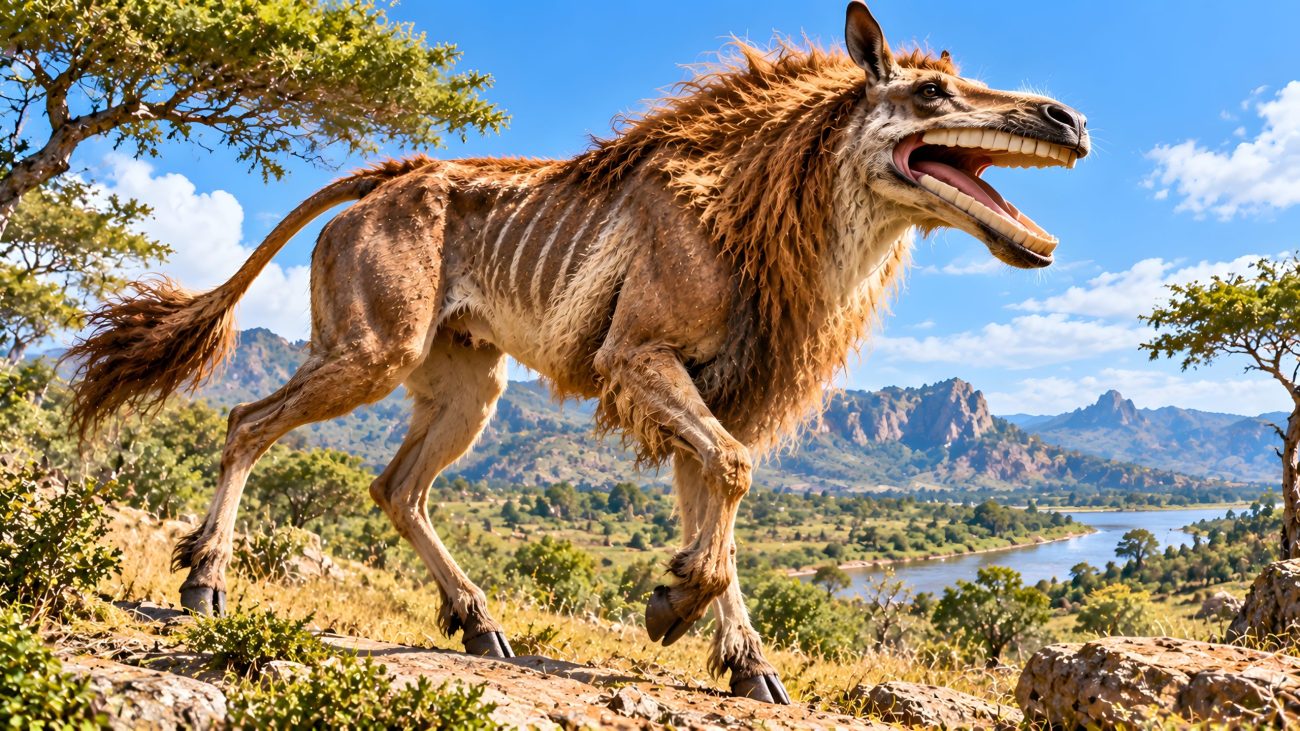
The Leucrocotta is a strange, swift-moving beast described as inhabiting Ethiopia and, in some accounts, India. It is roughly the size of a wild donkey, with the powerful build of a lion and the long, muscular hindquarters of a stag. Its body combines features of several animals: cloven hooves allow it to run swiftly, while its neck, chest, and tail resemble those of a lion. Its head is variously described as resembling a badger or a horse, and some accounts give it the head of a camel. Its most extraordinary feature is its enormous mouth, which stretches from ear to ear. Instead of ordinary teeth, the Leucrocotta possesses a single continuous piece of bone in each jaw, forming a powerful cutting surface without gums.

The Leucrocotta is known for its remarkable speed and unusual ability to imitate the human voice. It can reproduce human speech convincingly enough to deceive unsuspecting people, luring them into danger with familiar-sounding calls. Its sharp eyesight allows it to detect movement at a distance, while its powerful jaws can crush and consume almost anything. Some descriptions portray it as a hybrid born from a lioness and a hyena, combining the strength of a great cat with the cunning and endurance of a scavenging predator.

The creature became especially prominent in medieval bestiaries, where its unusual anatomy and human-like voice made it a memorable monster. Artists and writers varied its appearance, sometimes giving it the body of a donkey, the head of a horse, a lion’s chest and legs, and the hindquarters of a stag. Despite these differences, its enormous mouth, single bone-like teeth, cloven hooves, and ability to imitate people remained its defining characteristics. The Leucrocotta became a fearsome beast of the wilderness, distinguished by its speed, strange appearance, and deceptive voice.


Sources

“Leucrocotta.” A Book of Creatures. February 26, 2021. https://abookofcreatures.com/2021/02/26/leucrocotta/