Tradition: German Mythology
Alternative Names: Buschgrossmutter, Pusch-Grohla, Buschmutter, Buschweibchen, Buschweiblein, Buschweibel, Buschkathel
Category: Forest dweller
The Myth
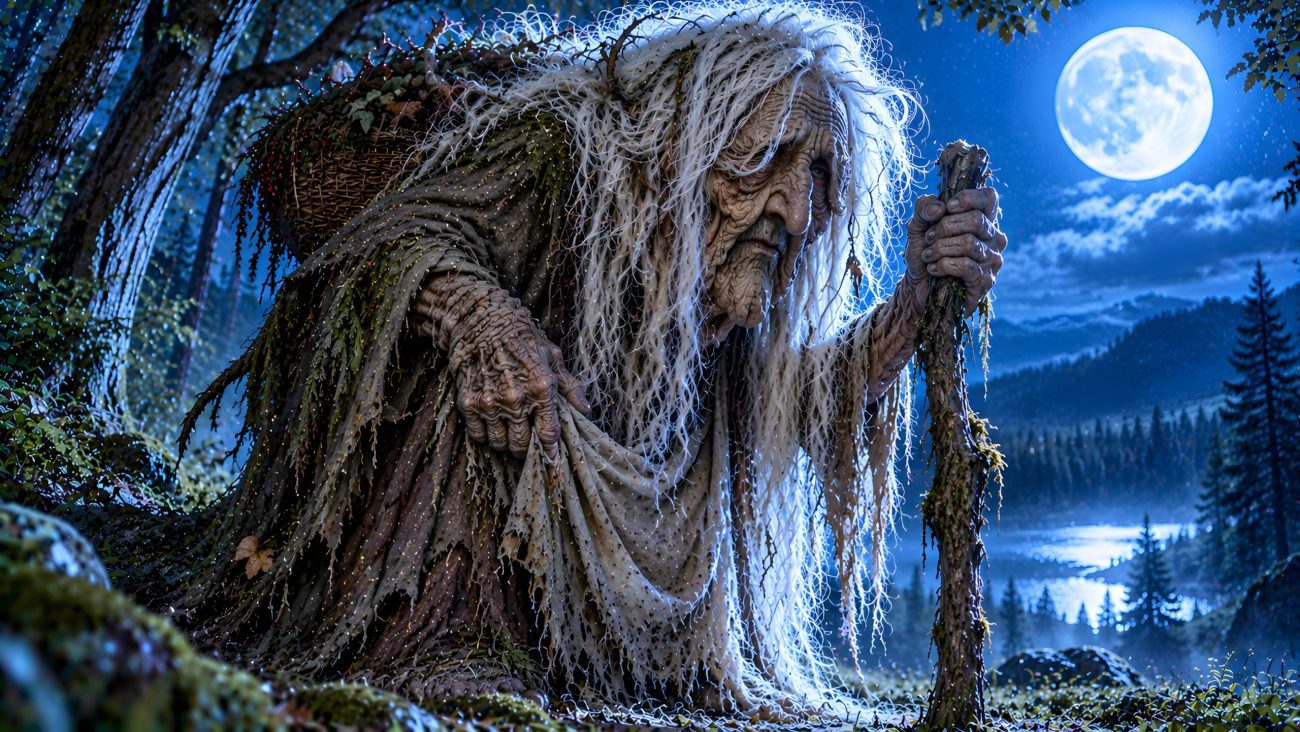
The Buschgroßmutter is an ancient female forest spirit who dwells in the deepest woods and reveals herself to humans only once every hundred years. She appears as a small, hunched, horribly wrinkled old woman with a hideous face and wide, staring eyes. Her long white hair hangs in tangled, unkempt strands, crawling with lice, while some descriptions give her an iron head. She walks unsteadily on feet covered in moss and carries a gnarled stick or crutch. Her clothing consists of a tattered dress, and she often wears an apron gathered as though it contains something precious. She may also carry a basket on her back. Her presence is sometimes associated with strange weather: when mist rises over the mountains in spring or autumn, people say the Buschgroßmutter is cooking, while during April hailstorms she climbs across the veiled mountain slopes.
The Buschgroßmutter is a mysterious being whose behaviour can be either generous or cruel. Sometimes she approaches people and asks them to comb or remove the lice from her tangled hair. Although her head is as cold as ice and the task may freeze the helper’s hands, those who patiently assist her can receive extraordinary rewards. She may give them an endless ball of yarn, a spindle wrapped in a hundred strands of thread, or green and yellow leaves that transform into gold if they are kept rather than thrown away. However, anyone who mocks or insults her risks terrible punishment. She may breathe upon the offender, causing painful rashes and other illnesses, or leap onto their back and cling to them, bringing further misfortune.
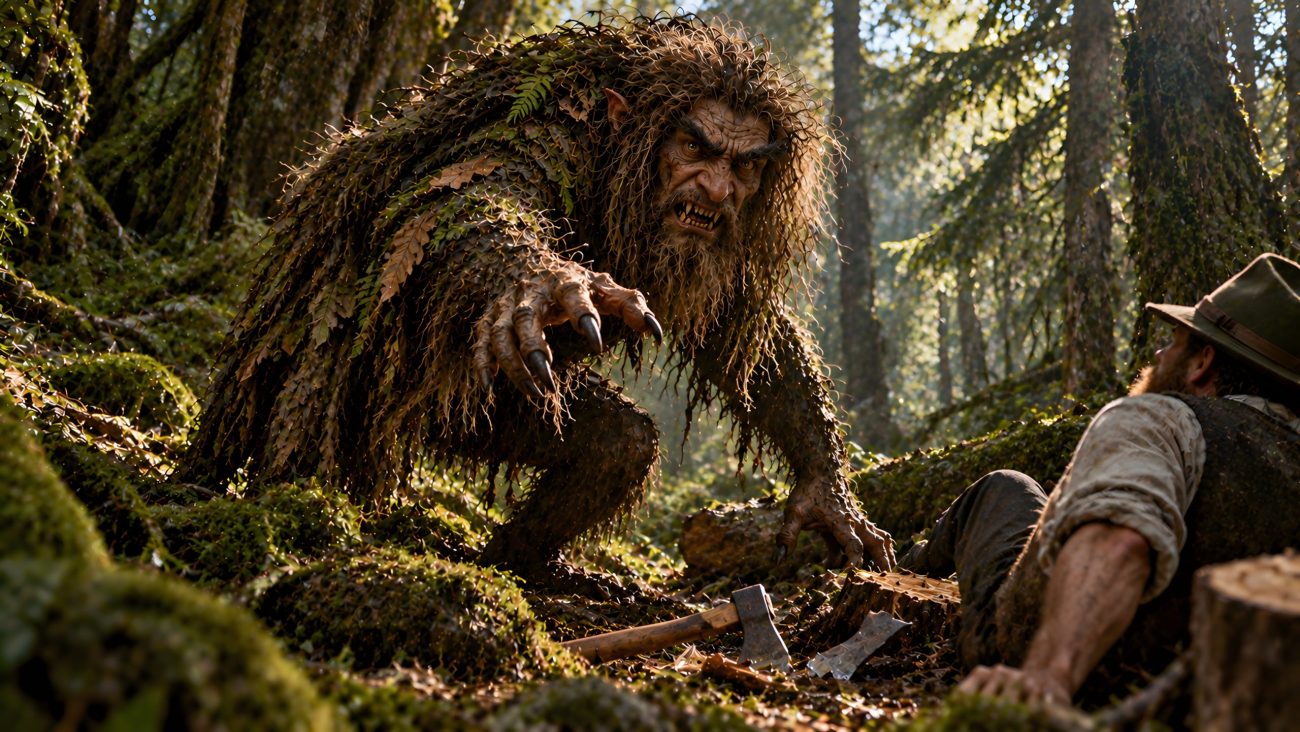
In some regions, the Buschmutter is especially malicious toward people who enter her woodland domain. She attacks children gathering berries, steals their harvest, and smashes the jars in which they store their fruit. She also sneaks into pastures and milks herdsmen’s cows until their udders are empty, then violently strikes sleeping cowherds with her crutch to wake them. Parents sometimes invoke her name to frighten children away from dangerous places in the forest.
Although she usually wanders alone, the Buschgroßmutter is sometimes accompanied by a band of female forest spirits called the Moosfräulein, or Moss Maidens, who are regarded as her daughters. During the holy nights, she travels through the countryside with them in a small cart or wagon, and people avoid crossing her path. The Buschgroßmutter is said to be extraordinarily ancient, older even than the moss spirits themselves. In one tale, a hunched and half-blind moss woman encounters three sleeping charcoal burners in the forest and mistakes their six legs and single head for some strange creature she has never seen before. Astonished by the discovery, she hurries home to tell her grandmother, who is said to be nine times older than herself.
Sources
“Buschgroßmutter.” Wikipedia: The Free Encyclopedia. Wikimedia Foundation. Accessed October 12, 2026. https://en.wikipedia.org/wiki/Buschgro%C3%9Fmutter