Huan

Tradition: Chinese Mythology
Alternative Names: 狡 (Jiǎo)
Category: Cat


The Myth

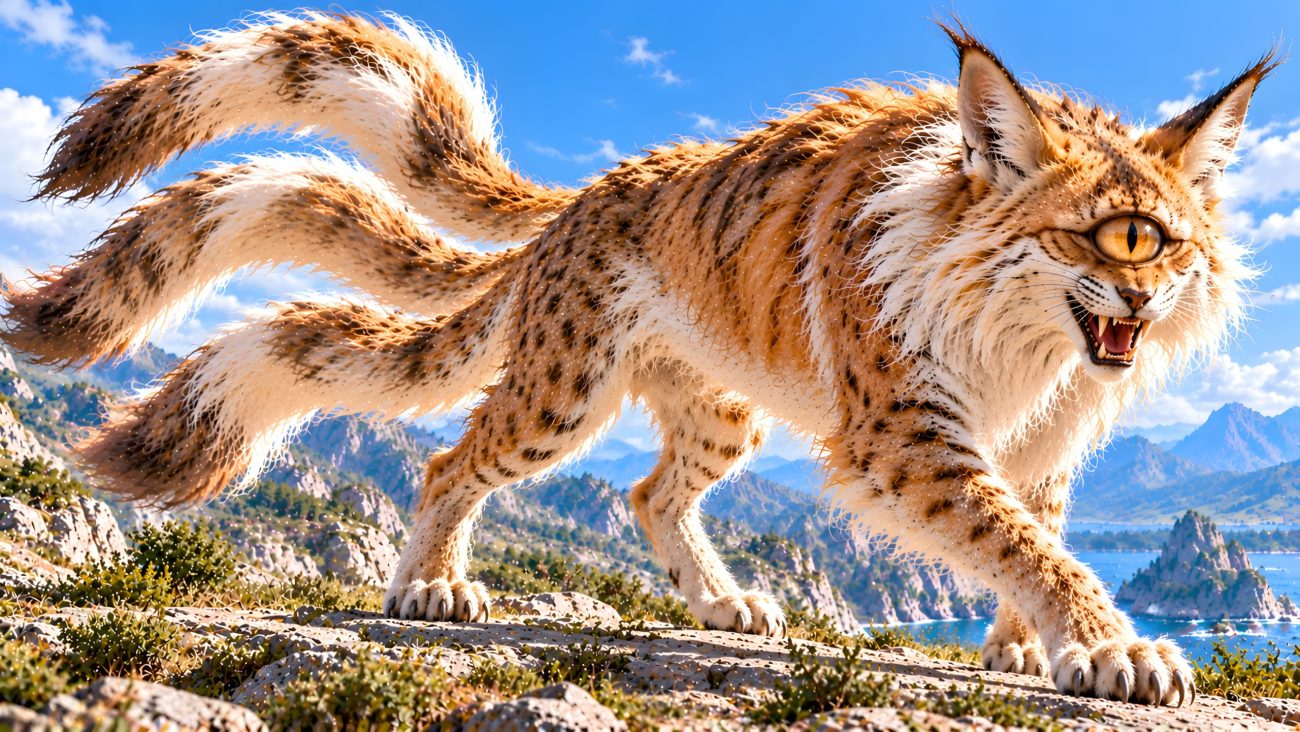
The Huan is a strange mythical wildcat described in the Classic of Mountains and Seas. It has a single eye and three tails, giving it an unusual appearance unlike that of an ordinary feline. Its body resembles a wildcat, and its peculiar features distinguish it from other supernatural beasts.

The Huan inhabits the region of Mount Zhangwei, near the waters of the Western Sea. It is capable of producing many different kinds of sounds, despite its strange feline form. Its fur and unusual body are associated with a remarkable protective property: wearing its skin is said to protect a person against evil forces and cure jaundice. This makes the Huan not only an extraordinary creature but also a source of supernatural protection.


Sources

“Khuan.” New Bestiary (Bestiary.us). Accessed October 12, 2026. https://www.bestiary.us/khuan/en


Gumiho

Tradition: Korean Mythology
Alternative Names: Kumiho, Kumiyŏu, Nine-Tailed Fox, Yeou, Bulyeou, Baegyeou, Maegu, Hogwi
Category: Fox


The Myth

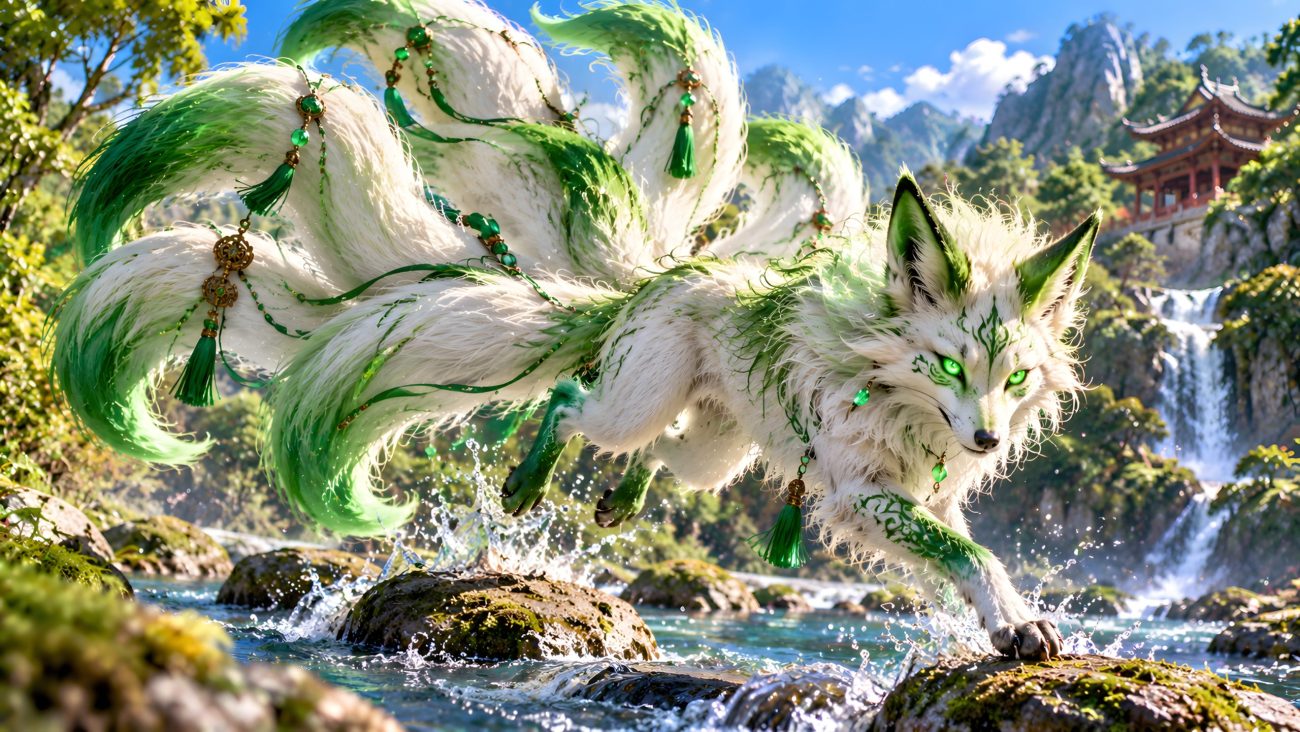
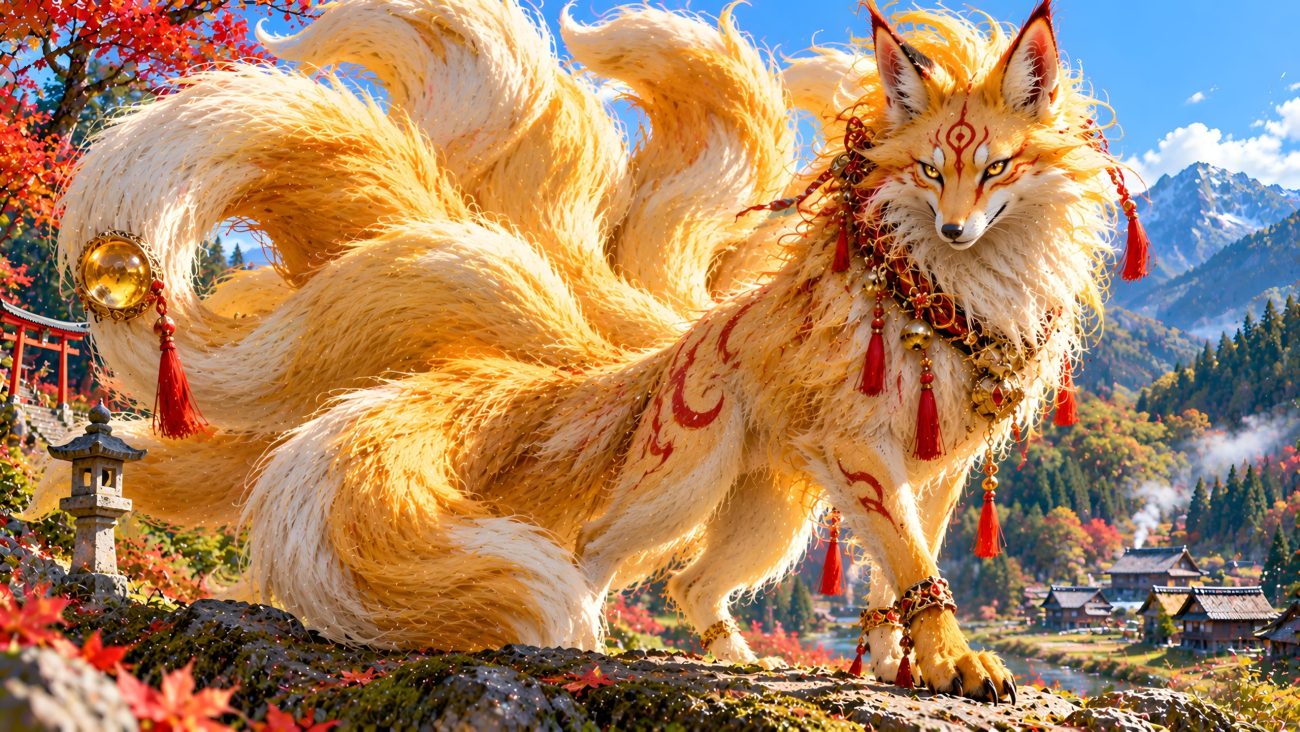
The Gumiho is a supernatural fox from Korean mythology, most famously known for its nine tails and its ability to assume human form. It is often portrayed as a beautiful woman or, in some stories, a Buddhist monk, concealing its true nature behind a convincing disguise. Although the Gumiho is commonly depicted as sly, deceptive, and dangerous, not every fox spirit is evil. Some accounts describe foxes that help humans or act as supernatural guardians of the mountains. Korean mythology also includes other fox spirits, such as the Bulyeou, or fire fox; the Baegyeou, or white fox; the Maegu, or fox demon; and the Hogwi, or fox ghost.

Gumiho are frequently portrayed as threatening beings that deceive people and disturb the natural and divine order. In some tales, they oppose dragons, which are revered as sacred creatures that protect the kingdom. While dragons represent divine protection and stability, fox spirits may bring disorder, misfortune, and even the downfall of a kingdom. Certain legends describe foxes defeating multiple dragons, demonstrating that these creatures possess supernatural powers formidable enough to challenge even mighty divine beings. Despite their dangerous reputation, their extraordinary abilities make them more than ordinary animals, and some traditions portray them as beings with powers comparable to those of dragons.

Fox spirits are also associated with mountain passes and other places believed to be haunted by supernatural creatures. Mountain crossings known as yeougogae, meaning fox pass, are often connected with tales of mysterious foxes and strange encounters. The Gumiho’s reputation extends into everyday language, where the word can describe a sly or cunning person, particularly a woman. Its image therefore combines supernatural danger, deceptive beauty, and extraordinary magical power, making the nine-tailed fox one of the most recognizable creatures in Korean mythology.


Sources

“Gumiho.” Wikipedia: The Free Encyclopedia. Wikimedia Foundation. Accessed October 12, 2026. Section: “Korean Fox Spirit Tales by Period.” https://en.wikipedia.org/wiki/Gumiho#Korean_Fox_Spirit_Tales_by_Period


Guixiang and Yunxiang

Tradition: Chinese Mythology
Alternative Names: Gui Xiang, Yun Xiang
Category: Fox


The Myth

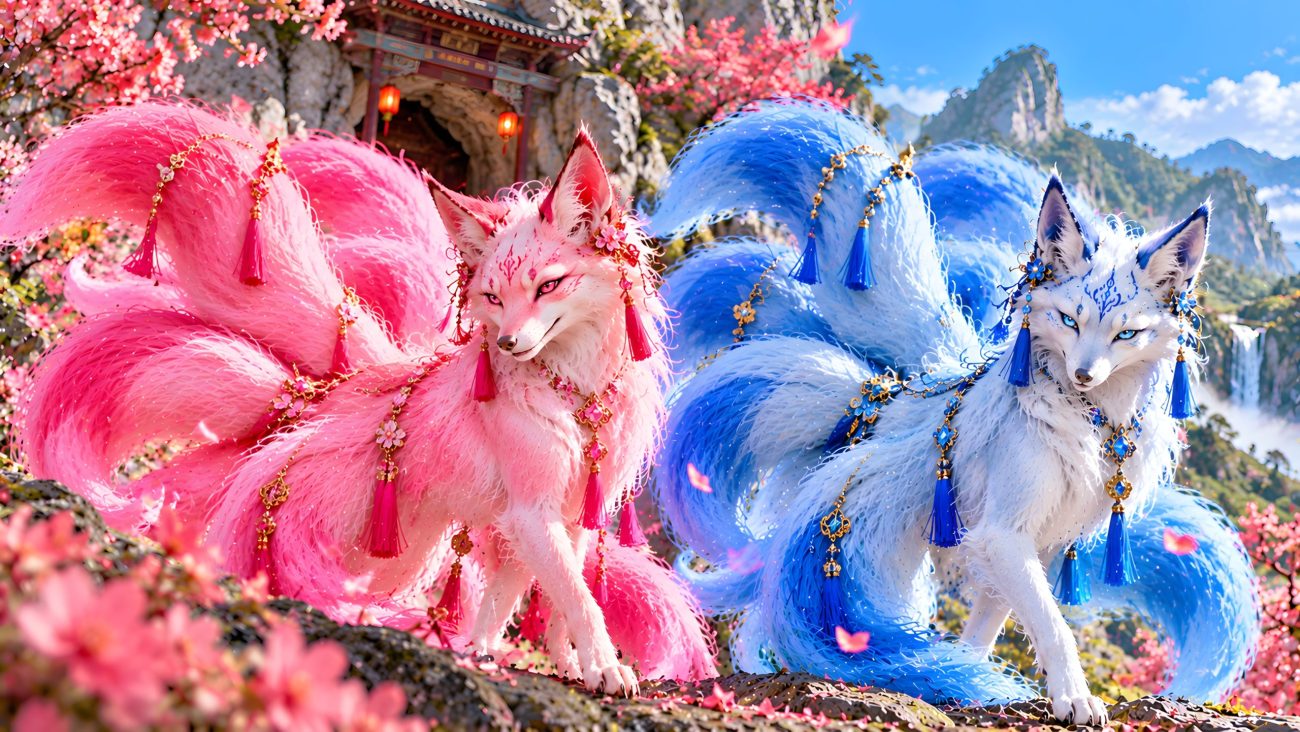
Guixiang and Yunxiang are two female fox demons who inhabit Peach Blossom Cave on Green Peak Ridge, approximately thirty li from a city in Jiangxi, China. Both have cultivated their supernatural powers for more than a hundred years, allowing them to transform themselves into beautiful women. They specialize in absorbing the yang essence of men to strengthen their magical abilities. One day, after hearing that a theatrical performance would take place during a temple festival at Puning Temple, the two fox spirits disguise themselves as beautiful women and travel to the city to enjoy the festivities.

During their adventures, the fox demons encounter Chun Mingmei, a wealthy young man from Jiangxi. After finding him unconscious, they revive him and carry him back to their cave. There, Guixiang and Yunxiang both become involved with the young man, with Guixiang eventually withdrawing while Yunxiang remains with him. Their supernatural powers and alluring human disguises allow them to ensnare the young man within their hidden dwelling.

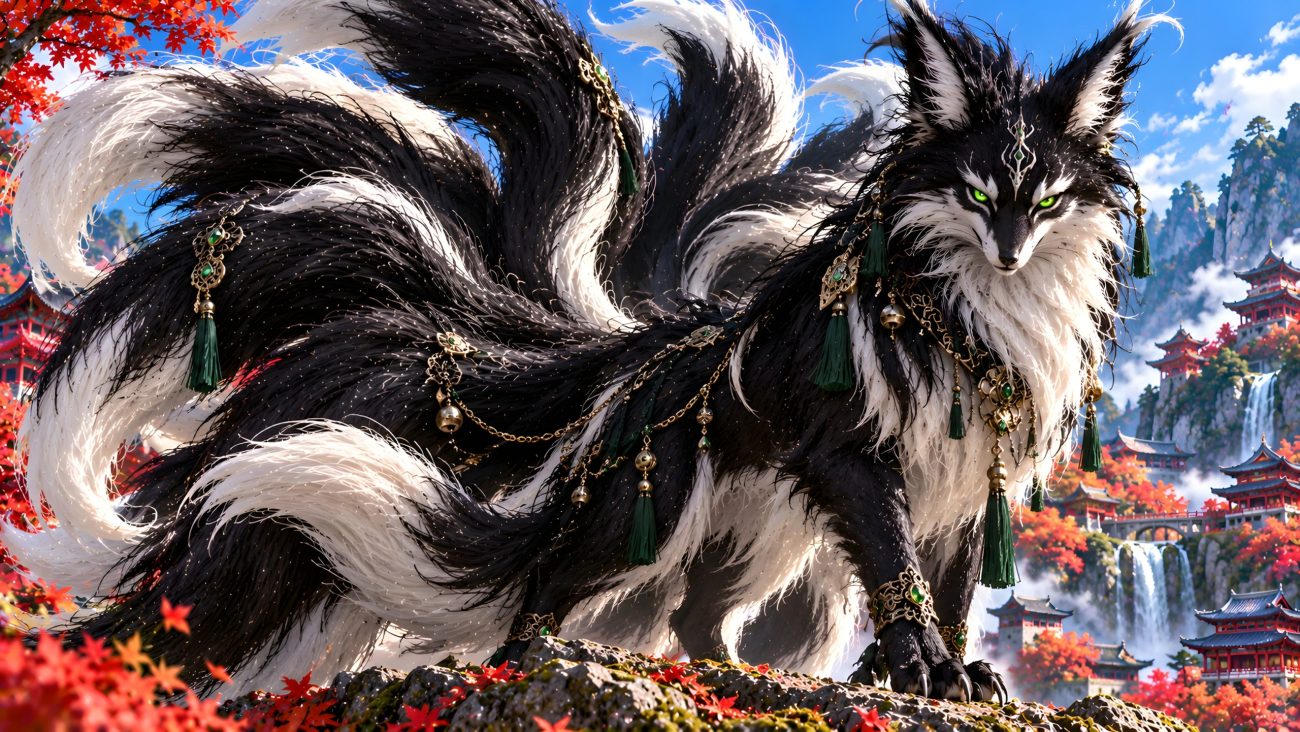
Eventually, the Thunder God discovers the fox demons and captures them, allowing Chun Mingmei to leave the cave. On his journey home, he encounters Yue Su, a benevolent fox immortal who rescues him and escorts him back. Yue Su is herself an ancient supernatural fox, having once been a great black fox that lived five hundred years earlier and was wounded by a hunter’s arrow. Unlike Guixiang and Yunxiang, whose powers are used to ensnare men, Yue Su acts as a protector and rescuer.


Sources

“桂香和云香 (Guìxiāng hé Yúnxiāng).” Chinese Wikipedia. Wikimedia Foundation. Accessed October 12, 2026. https://zh.wikipedia.org/wiki/%E6%A1%82%E9%A6%99%E5%92%8C%E4%BA%91%E9%A6%99


Brunnmigi

Tradition: Norse Mythology
Alternative Names: Well-Pisser
Category: Fox


The Myth

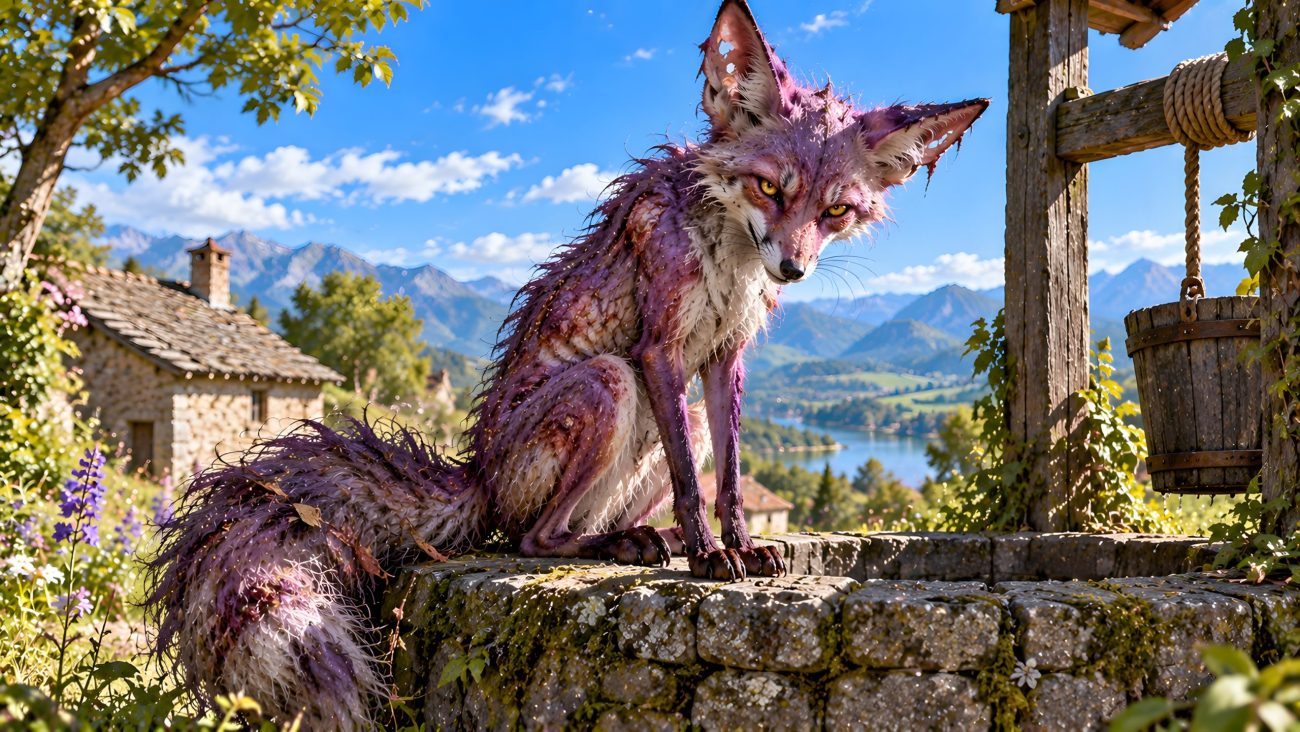
The Brunnmigi is a large, foul creature associated with the defilement of wells. Its name means “well-pisser,” reflecting its infamous habit of contaminating sources of drinking water. The creature appears in a tale involving King Hjörleifr, who encounters it during his adventures. Although its precise appearance is not described, the Brunnmigi is portrayed as a large beast whose presence threatens the cleanliness of wells and the water upon which people depend.

The Brunnmigi is also associated with foxes, as the name appears as a poetic term for these animals. This connection links the creature to the fox’s place in Norse tradition, although the Brunnmigi’s identity and its relationship to ordinary foxes remain unclear. Its defining characteristic is its association with polluted wells, making it a strange and unpleasant beast remembered for its distinctive behaviour.


Sources

“Brunnmigi.” Wikipedia: The Free Encyclopedia. Wikimedia Foundation. Accessed October 12, 2026. https://en.wikipedia.org/wiki/Brunnmigi


Tsukitokko

Tradition: Japanese Mythology
Alternative Names: Konotsukitokkou, Tokkuo, Tokkuodori
Category: Fox, Bird


The Myth

Tsukitokko is a frightening supernatural creature associated with the story of Oishi Hyoroku, a young samurai from Satsuma who set out to defeat a fox known for tricking people and shaving their heads. The fox used its supernatural powers to transform into various monsters, confronting Hyoroku with a succession of terrifying apparitions. Exhausted and terrified, Hyoroku eventually wished aloud for dawn to arrive, hoping that the horrors of the night would soon end.

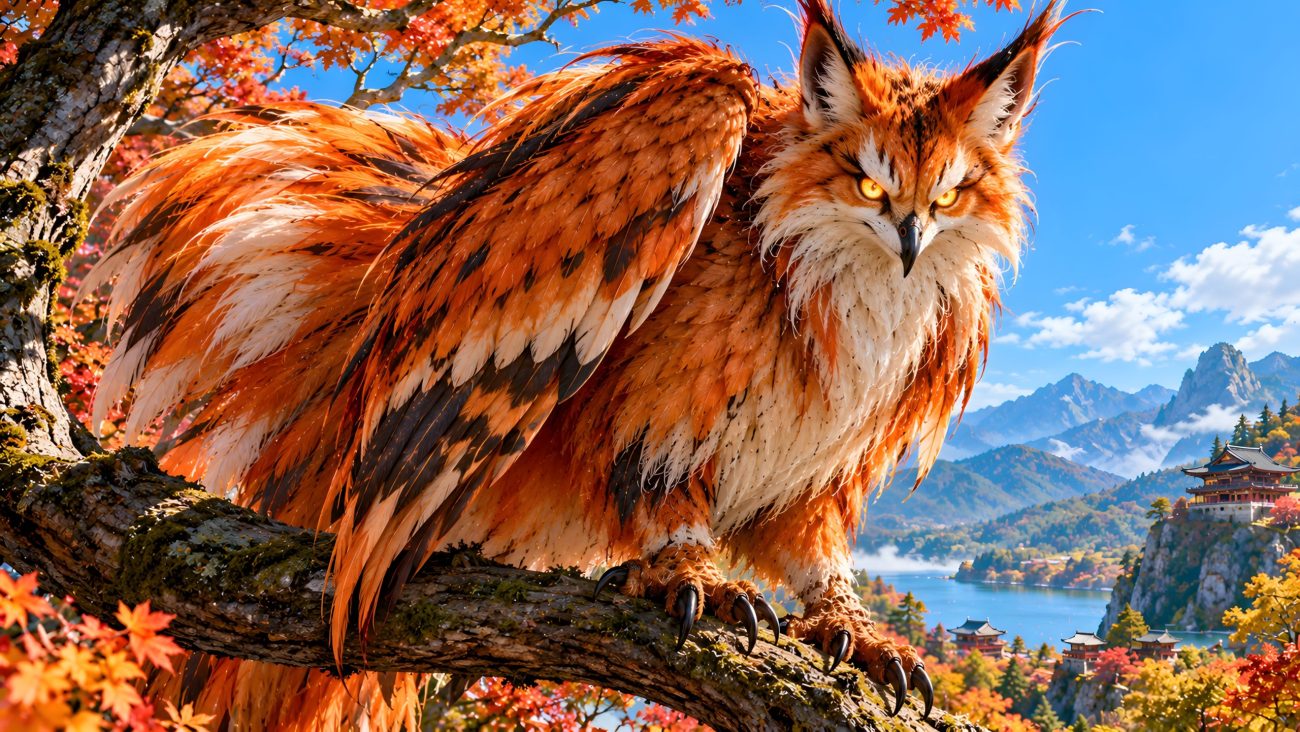
A monstrous figure suddenly appeared before him, declaring that it was Tsukitokko and questioning what he would do when morning came. The creature emerged with such force that it seemed ready to pounce at any moment. Its two eyes shone ominously, its beak was pointed, and wings extended from both sides of its body. Startled by this new apparition, Hyoroku leapt up and fled in panic, heedless of the thorns beneath his feet.

Tsukitokko is thought to be another disguise assumed by the mischievous fox. Its appearance resembles a gigantic owl, connecting it to the expression Konotsukitokkou, used in the Satsuma region to represent the sound of an owl hooting. The owl itself was also known as a tokkuo or tokkuodori. Through its imposing, birdlike form, Tsukitokko became one of the many monstrous disguises that terrified Hyoroku during his ill-fated fox hunt.


Sources

“月徳狐 (Tsukitokko).” 新版TYZ 妖怪図鑑 (New TYZ Yokai Encyclopedia). https://tyz-yokai.blog.jp/archives/1010654382.html


Teumessian Fox

Tradition: Greek Mythology
Alternative Names: Teumesian Fox, Teumessia Fox, Teumessian Vixen
Category: Fox


The Myth

The Teumessian Fox was a gigantic supernatural fox sent by the gods to ravage the countryside around Thebes as punishment for the descendants of Cadmus. Emerging from the region of Teumessus, the monstrous creature preyed upon the people of the land, devouring livestock and carrying off children. Its speed was extraordinary, allowing it to leap over hunting nets and escape every hound sent after it. No hunter could catch it, for the fox was destined never to be captured. To protect their people, the Thebans were forced to sacrifice a child every thirty days, which the beast would seize and devour.

When Creon, ruler of Thebes, asked Amphitryon to help free the land from the creature, he agreed on the condition that the fox be destroyed. Since ordinary hunting was useless, Amphitryon sought the help of Cephalus, an Athenian hero who possessed the magical hound Laelaps. This extraordinary dog was destined to catch whatever it pursued, making it the perfect hunter for a beast that could never be caught. Cephalus brought Laelaps to Thebes, and the hound was unleashed upon the fox. The two supernatural animals raced across the plain, the fox twisting and doubling back while the hound followed relentlessly, seemingly always on the verge of seizing its prey.

Zeus witnessed the impossible chase between two creatures whose destinies could not both be fulfilled: the fox could never be caught, yet the hound could never fail to catch its quarry. To resolve this divine paradox, Zeus transformed both animals into stone. The chase was frozen forever, with the fox captured in the appearance of flight and the hound poised to pounce upon it. Some versions of the myth associate the fox’s destruction with the wrath of Dionysus, while others connect the hunt with the hero Oedipus. In every telling, the Teumessian Fox remains a fearsome creature whose supernatural fate could only be ended by divine intervention.


Sources

Aaron J. Atsma. “Alopex Teumesios (Teumessian Fox).” Theoi Greek Mythology. https://www.theoi.com/Ther/AlopexTeumesios.html


Hồ Ly Tinh

Tradition: Vietnamese Mythology
Alternative Names: Hồ Tiên, Hồ Ly, Hồ Tinh, Hồ Yêu, Yêu Hồ, Cáo Chín Đuôi, Cáo Tinh, Cửu Vĩ Hồ, Cửu Vĩ Thiên Hồ
Category: Fox


The Myth

Hồ Ly Tinh are supernatural foxes capable of cultivating magical powers and transforming into humans and other beings. According to one tradition, a fox that cultivates its powers for a hundred years develops three tails and becomes a Tam Vĩ Yêu Hồ, or three-tailed demon fox. After a thousand years, it may reach the form of a Lục Vĩ Ma Hồ, a six-tailed ghost fox. Eventually, a fox that attains nine tails becomes a Cửu Vĩ Hồ, or nine-tailed celestial fox, gaining the ability to assume human form. Each tail represents one of its lives, and the fox must have its tails cut off before it can be killed. These spirits have no single nature: some are benevolent and help humans, while others use their transformations and magic to deceive, torment, or devour people.

One famous nine-tailed fox lived for more than a thousand years in a rocky mountain west of the ancient citadel of Thăng Long, near the Lỗ Giang River. It could transform into a demon, a man, a beautiful woman, or a handsome young man. Using these disguises, it mingled with crowds, sang with young people, seduced men and women, and lured them into a deep mountain cave. There, it captured its victims and gradually devoured them. The fox terrorized the surrounding countryside until Lạc Long Quân, a powerful dragon lord, ordered the forces of the Water Palace to flood its lair. The fox fled, but the pursuing forces broke into its den and killed it. The flooded cave became a deep pool known as Xác Cáo, meaning Fox Corpses, which was identified with present-day West Lake in Hanoi. A temple was subsequently established to suppress the evil spirit.

Not all Hồ Ly Tinh are dangerous. During the struggle against the Ming army, the future emperor Lê Thái Tổ was once saved while hiding in Lam Sơn. As enemy soldiers approached, he saw a girl dressed in white floating in a river. He buried her carefully before hiding again. When the soldiers nearly discovered him, a white fox suddenly appeared and drew them away from his hiding place. Lê Thái Tổ believed that the fox was the spirit of the girl who had saved him. In gratitude, he honored her as a guardian of the country and established her worship under the names Hồ Ly Phu Nhân, Hộ Quốc Phu Nhân, and Hộ Quốc Hồ Thần. Her image combined the head of a beautiful young woman with the body of a fox, representing a supernatural protector rather than a malevolent creature.


Sources

“Hồ ly tinh.” Wikipedia: The Free Encyclopedia. Wikimedia Foundation. Accessed October 12, 2026. https://en.wikipedia.org/wiki/H%E1%BB%93_ly_tinh


Kūko

Tradition: Japanese Mythology
Alternative Names: Kūko (空狐), Inari Kūko, Sky Fox
Category: Fox


The Myth

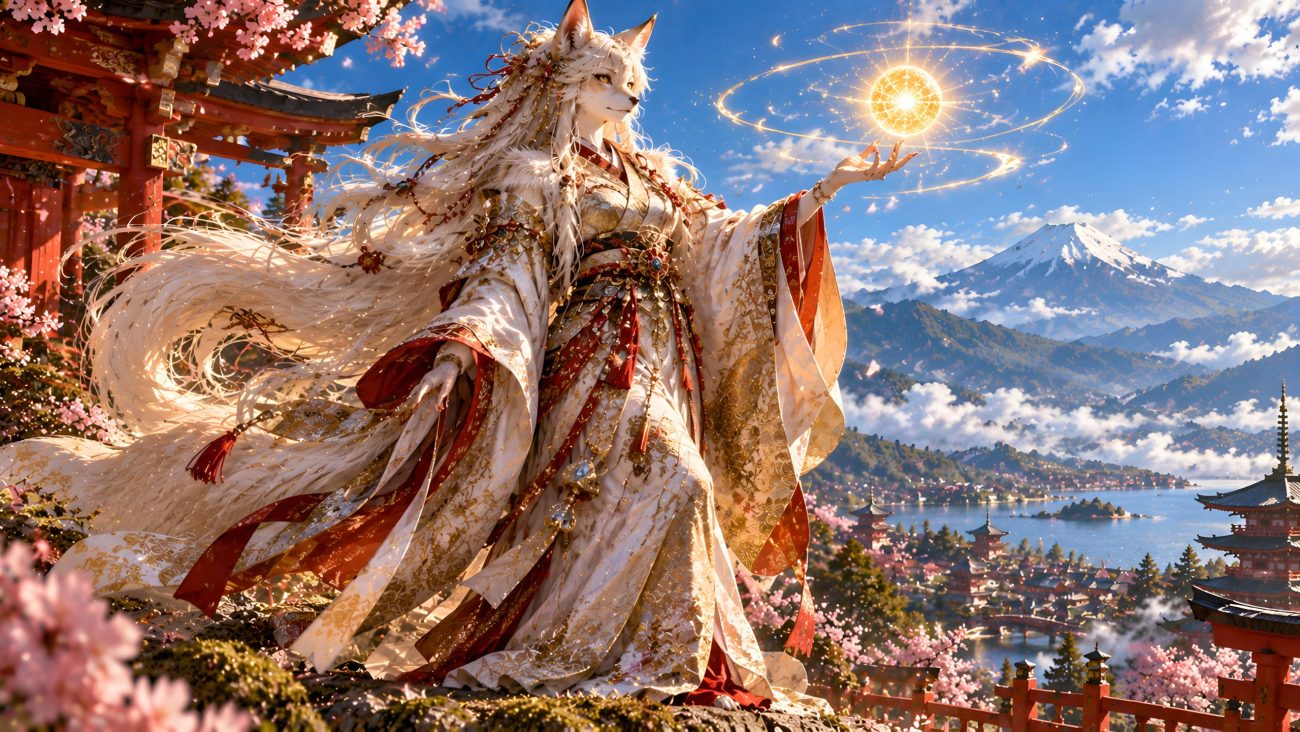
Kūko are exceptionally ancient and powerful benevolent fox spirits known as zenko, or good kitsune. After reaching three thousand years of age, a tenko may ascend to the rank of kūko, becoming a being of pure spirit with magical powers comparable to those of the gods. Unlike younger kitsune, kūko have no physical bodies and require no food or other sustenance. Their appearance becomes more human-like, and they lose their tails entirely, although their ears retain their distinctive foxlike shape. They possess extraordinary abilities, including telepathy, clairvoyance, and the power to see into the future.

Despite their immense power and great age, kūko rank below tenko in kitsune society. This is because they have reached a stage resembling retirement from active service to Inari, the deity associated with fox spirits. Rather than carrying out duties directly, they act as revered elders and trusted advisers. When they interact with humans, their intentions are benevolent. They may bring prosperity to temples and households, help honest people gain recognition for their talents, or temporarily possess a foolish but good-hearted person to teach them valuable lessons. Unlike the harmful possession associated with malevolent fox spirits, a kūko’s possession does not cause illness or mental disturbance.

One account describes a kūko who had lived in Kyoto for a long time before travelling to Edo. During his journey, he stopped at the home of a samurai named Nagasaki Genjirō and temporarily inhabited the body of one of the samurai’s fourteen-year-old servants. Speaking through the boy, the spirit explained the different ranks of foxes and the distinction between benevolent zenko and harmful yako. For five days, he entertained Genjirō and his neighbours with stories about the Genpei War, the Battle of Dannoura, and the Battle of Sekigahara. Before departing, the kūko used his powers to cure the boy’s illnesses. As a final gesture of gratitude for the hospitality he had received, he left Genjirō a signed calligraphic scroll containing the secret inner teachings of Hakke Shinto.


Sources

“Kuuko.” Yokai.com: The Database of Japanese Folklore. https://yokai.com/kuuko/


Kitamu-Inkyo

Tradition: Japanese Mythology
Alternative Names: Kitamu Inkyo, North-facing Hermit
Category: Fox


The Myth

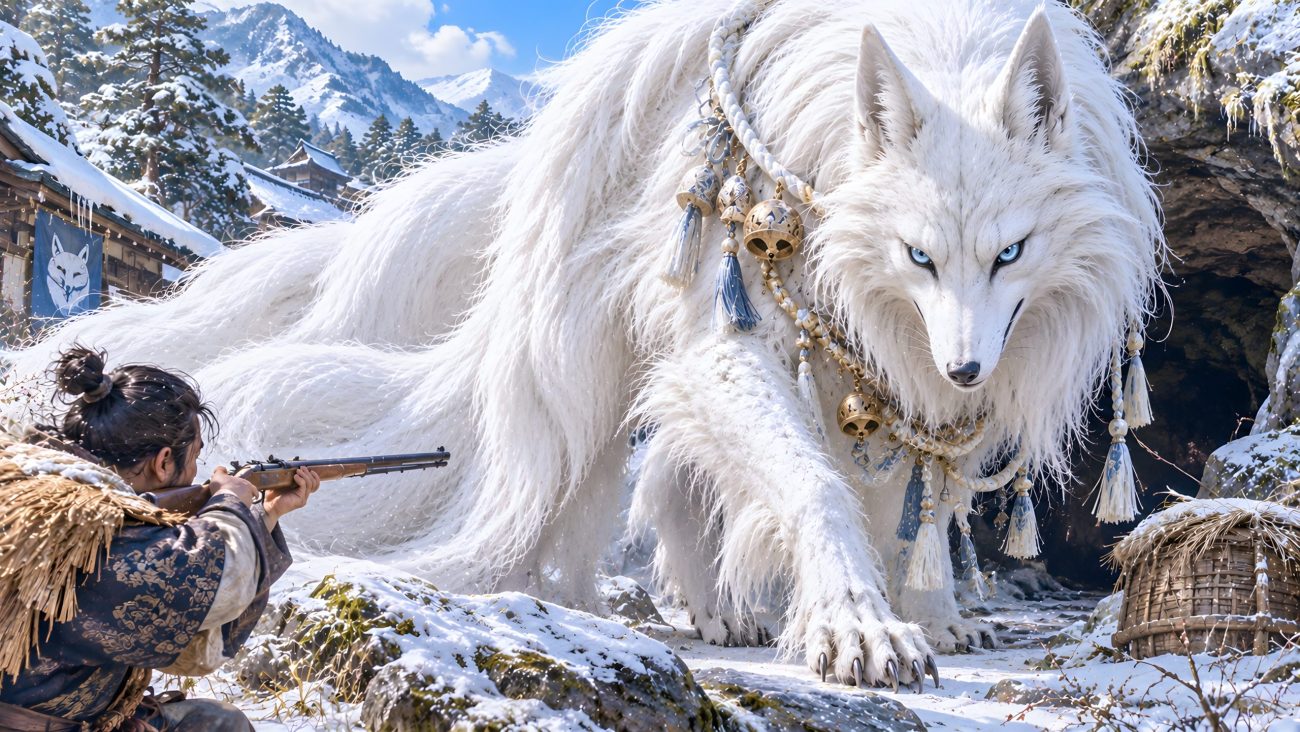
Kitamu-Inkyo is a powerful shapeshifting fox from the mountains of Aomori Prefecture, feared for its cunning disguises and deadly schemes. It belongs to a hierarchy of exceptionally old foxes, each possessing greater size and supernatural power than the last. Among them are Old Man Higashiyama, a fox as large as a fawn, and the Old Man of the Sunset, a fox as large as a calf. Kitamu-Inkyo surpasses them both, appearing as an enormous old fox whose long white fur drags along the ground. It possesses such mastery of transformation that it can impersonate a human being convincingly and devise elaborate plans to deceive its enemies.

The creature’s story begins with a hunter named Minomi Tozo, who once spotted a young fox stripping the feathers from a pheasant. The fox transformed the featherless bird into a baby, turned a horse bone into beautiful sandals, and fashioned a baby carrier from plants before disguising itself as a woman carrying a child. It entered a house pretending to be Kinko, the daughter of the household’s owner. Tozo followed and exposed the deception by holding a knife to the supposed baby’s throat, causing it to revert to a pheasant and fly away. That night, a fox disguised as Tozo’s wife lured him into shooting his real wife, who was hiding in the latrine. Devastated by the trick, Tozo vowed to hunt down the evil foxes responsible. While hiding in a cave, he overheard a gathering of foxes discussing how to kill him. Their leader decided that Kitamu-Inkyo should disguise itself as Tozo’s older brother, a Buddhist monk from Kyoto, and visit his home to murder him.

Having heard the plot, Tozo prepared an ambush at his house, sealing its openings and hiding a large dog in a boat in the garden. When Kitamu-Inkyo arrived disguised as the monk, accompanied by an impressive procession, Tozo welcomed the visitors and served them sake. At a signal from the hunter, the doors were shut, the young men attacked with mallets, and the dog sprang from its hiding place. Many foxes were killed, but Kitamu-Inkyo escaped through a smoke vent in the roof. Tozo pursued the white fox across the mountains until he reached a strange village where metal objects were forbidden and a young woman was to be sacrificed to a terrifying local god. Tozo volunteered to take her place and hid inside a wicker basket placed at the entrance of the monster’s cave. When the creature reached for the basket’s lid, Tozo shot it through the throat. The next morning, the villagers discovered a huge dead fox deep inside the cave: Kitamu-Inkyo at last lay defeated. Grateful for his bravery, the villagers welcomed Tozo, and he married the young woman he had saved.


Sources

“北村隠居 (Kitamu-inkyo).” 新版TYZ 妖怪図鑑 (New TYZ Yokai Encyclopedia). https://tyz-yokai.blog.jp/archives/1065549434.html


Goro Kitsune

Tradition: Japanese Mythology
Alternative Names: Goro Fox, Hachi no Goro Kitsune
Category: Fox


The Myth

Goro Kitsune is a powerful shapeshifting fox said to be the reincarnation of an ancient golden nine-tailed fox. He lives in a deep den in Hachi no Nekoyama, near the border between Hachi and Takashima villages in Niigata Prefecture. According to legend, he spent five hundred years digging his enormous den. About four kilometres from its entrance stands the sacred stone Buddha of Hachi, whose body contains a pillar from the Dragon Palace. Even Goro Kitsune cannot touch this sacred figure. The fox has glass-inlaid eyes, an enormous tail large enough to wrap around his body, and a golden jewel at its tip. By placing the jewel against his mouth, blowing on it, and performing a somersault, he can transform into almost anything, from a beautiful princess to a huge blue ogre or a cute, one-eyed boy buying tofu.

Goro Kitsune delights in playing tricks on the villagers, particularly by staging false fires and supernatural fox weddings. In the middle of the night, he makes the village fire bell ring, sending everyone rushing outside, only for them to discover that there is no fire. His fox weddings are even more elaborate: on moonless nights, he illuminates mountain paths with hundreds of lanterns, creating the appearance of a grand wedding procession. When villagers approach, the procession vanishes. Eventually, people become accustomed to these deceptions, so Goro adds songs to his lantern-lit processions to make them convincing again. One autumn, early snowfall buries the foxes’ food, and Goro advises the foxes of Tsumari and Matsunoyama to steal the villagers’ rabbits and chickens. The thefts cause an uproar, and the villagers decide to hunt him down. They smoke out his den with burning cedar leaves and chilli peppers, but the old stonemason who emerges is actually Goro in disguise. After escaping, he tricks the villagers once more by making the village bell ring, sending them rushing home to find nothing wrong.

Unable to catch Goro, the villagers ask Myoya Zenji, a highly respected Buddhist monk known affectionately as Myoya-sama, to deal with the fox. When the monk enters Goro’s den, the fox transforms into a tiny ant and attempts to escape by clinging to a spiderweb. However, Myoya recognizes him and calls him by name, breaking his disguise. The monk rebukes Goro for abandoning the greatness of his former life as a legendary fox in China and becoming a petty thief in Japan. He threatens to kill the fox if he continues his wicked behaviour, and Goro finally apologizes and promises to reform. As proof of his sincerity, he reluctantly surrenders his golden jewel. Unable to accept the loss of his powers, Goro seeks help from Otama, an old tanuki who possesses a similar magical jewel. She lends him hers, allowing him to disguise himself as an elderly woman and trick Myoya into returning his own treasure. Yet the monk later approaches Goro with sake and fried tofu, pretending to reconcile with him. Once Goro becomes drunk and demonstrates his transformations, Myoya challenges him to become small enough to fit inside a sake bottle. Goro transforms into an ant and crawls inside, whereupon the monk seals the bottle and buries it in the ground. Goro is then made to guard the Thirteen Buddhas, and from that day onward, he can no longer cause mischief.


Sources

“ゴロギツネ (Gorogitsune).” 新版TYZ 妖怪図鑑 (New TYZ Yokai Encyclopedia). https://tyz-yokai.blog.jp/archives/1013072032.html